Table of Contents
Are you used to the habit of checking your portfolio too often? It can do more harm than good. If you are shocked to hear this, here are 5 reasons why. Read this blog till the end to learn how often you should ideally check your portfolio and top practical tips to break your habit.
Key Takeaways
- Reduced Stress: Constant monitoring triggers “Myopic Loss Aversion,” making you feel the pain of losses twice as much as the joy of gains.
- Lower Costs: The lesser number of times you check means less impulsive trading thus saving you from high transaction costs and STCG (Short-Term Capital Gains) taxes.
- Better Compounding: Leaving your investments alone allows the power of compounding to work effectively with no human interference.
- Rational Decisions: Staying away from daily ‘market noise’ helps you focus on long-term goals like retirement or child education rather than temporary dips.
- Time Freedom: Freeing yourself from the screen lets you focus on your primary income source or spend time with family.
Learn Stock Marketing with a Share Trading Expert! Explore Here!
Introduction
1: What is a stock?

In these times of smartphone revolution, checking your investment balance has become as easy as checking a WhatsApp message. The first thing that several Indian investors do when the market opens at 9:15 AM is log into their brokerage app.
Whether you are stuck in traffic on the way to work, taking a quick tea break, or sitting in a meeting, the temptation to see if your Nifty 50 holdings are “in the green” is simply irresistible. This habit is often fueled by the excitement of the Indian bull market and the surge of new “fin-fluencers” talking about daily gains.
However, what feels like “staying informed” is actually one of the most dangerous habits for your wealth. While it is natural to care about your hard-earned money, checking your portfolio too often can lead to emotional exhaustion and poor financial choices. This behavior shifts your perspective from being an “investor” to being a “spectator,” and unfortunately, spectators often pay a heavy price.
In this blog, we will explore why the best thing you can do for your money is often to just leave it alone and look the other way.
The Psychology of “Myopic Loss Aversion”
Why does looking at your portfolio feel so stressful during a market dip? Science has an answer called Loss Aversion. Studies show that humans feel the pain of a loss nearly twice as intensely as the pleasure of a gain. If you find ₹1,000 on the street, you feel happy; but if you lose ₹1,000 from your wallet, you feel a deep sense of regret that far outweighs that happiness.
When you are checking your portfolio too often, you are exposing yourself to the natural “zig-zag” of the stock market. On any given day, the probability of the market being up is nearly 50/50. This means if you check daily, you will see “red” almost half the time. Because losses hurt more, those “red” days will weigh heavily on your mind, even if your portfolio is actually growing over the months and years.
This frequent exposure to small losses creates an illusion of risk where there is none. You start thinking the market is “crashing” when it is merely “breathing.” This mental fatigue often leads investors to panic and sell great stocks at the wrong time, right before a massive recovery.
The Trap of “Market Noise”

The Indian stock market is influenced by a million things—global oil prices, US Federal Reserve meetings, monsoon updates, and even political rumors. These factors create “noise”—short-term price movements that have nothing to do with the actual quality of the companies you own.
When you fall into the habit of checking your portfolio too often, you start treating this noise as “signal.” You might see a 2% drop in a blue-chip stock and think something is fundamentally wrong, when in reality, it is just a routine market fluctuation or a large institutional investor rebalancing their holdings.
By ignoring the daily charts, you filter out the noise and keep your eyes on the “signal,” which is the long-term growth story of India’s economy. Remember, a company’s stock price and its actual business performance rarely move in a perfectly straight line together over the short term.
The Illusion of Control
Many Indian investors feel that by watching the markets closely, they can “control” their outcomes. This is a cognitive bias. Whether you stare at the screen for ten hours or ten minutes, the market will move according to global economic forces and corporate earnings.
The danger of checking portfolios too often is that it gives you false confidence that you can “outsmart” the market. You might think, “I’ll sell today while it’s high and buy back when it drops 2% tomorrow.” This is known by the term market timing and it is too difficult. Most people end up selling at a low price and buying back at a higher price due to the simple reason that they let their emotions drive their decisions.
A study conducted by JPMorgan Asset Management’s research using the data for the last 20 years shows that the best days in the market tend to closely follow the worst days. Out of the total 10 best days in the market, 7 of them happened within two weeks of the 10 worst days.
Once you step back and think with a calm mind, you realise that you cannot control the market. However it is very much possible to control your behavior and your reaction to it.
Stock Market Training Reviewed & Monitored by SEBI Registered Investment Advisor
Trusted, concepts to help you grow with confidence. Enroll now and learn to start investing the right way.
Know moreHidden Costs: Taxes and Commissions
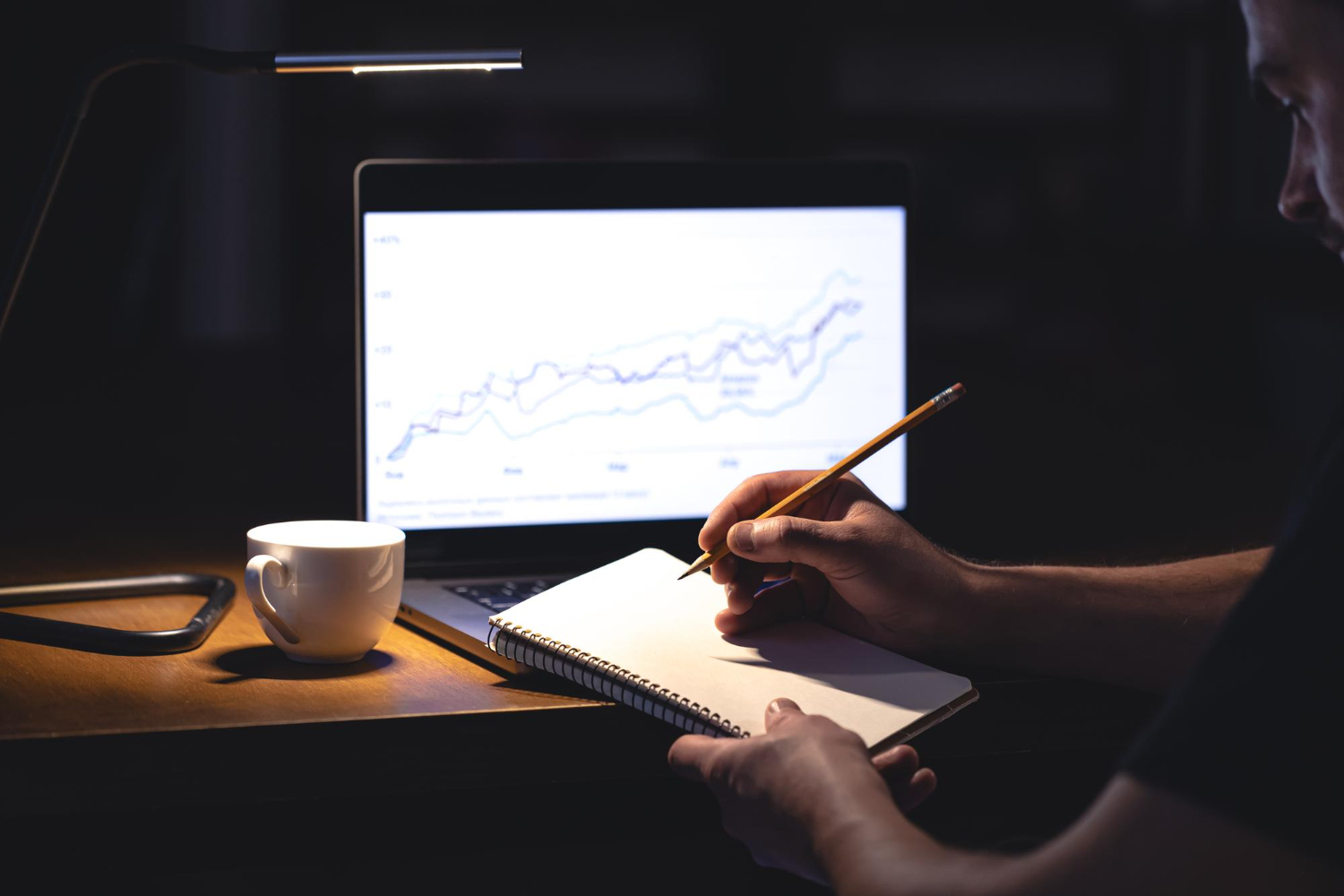
Every time you “tweak” your portfolio based on a daily observation, you pay a price. In India, frequent trading is not free; it attracts several layers of costs:
1. STT (Securities Transaction Tax):
A small but mandatory tax on every buy and sell transaction. For your information, from 1st April 2026 onwards, STT on Futures have been increased from the earlier 0.02% to 0.05%.
Also note that STT on options premium and exercise of options both have been raised from the earlier 0.1% and 0.125% to 0.15%.
2. Brokerage Charges and DP Charges:
Fees paid to your platform for executing and maintaining your trades.
3. Capital Gains Tax:
This is the big one. If you sell a stock or mutual fund held for less than a year, you are taxed at a higher rate (Short-Term Capital Gains) compared to the more favorable Long-Term Capital Gains (LTCG) rates.
It is to be noted that for equity mutual funds, the current STCG Tax Rate in India is 20% whereas the LTCG Tax Rate is just 12.5%.By checking portfolios too often, you are more likely to make “tactical” moves that result in “churn.” Over 10 or 20 years, these small taxes and fees can eat away lakhs of rupees from your final corpus.
A “silent” portfolio that sits untouched is almost always more profitable than one that is constantly being traded.
Let Compounding Do the Heavy Lifting
Warren Buffett, the legendary investor once said that the stock market is a device for transferring money from the impatient to the patient. Compounding is like a small plant. If you keep pulling it out of the soil every day to see if the roots are growing, the plant will eventually die.
Your wealth needs “uninterrupted” time to grow. In the Indian context, the power of compounding is immense due to the high growth rates of our economy. The day you stop worrying about daily fluctuations, your Systematic Investment Plans (SIPs) and stocks get the breathing space they need.
History shows that the Indian markets have rewarded those who stayed invested through crises like the 2008 global financial crash, the 2016 demonetization, or the 2020 pandemic. For example, between 2020 and 2025, the pace of wealth creation registered a compound annual growth rate (CAGR) of 38 percent and this is way higher than the BSE Sensex’s 21 percent CAGR during the same period, reveals the Motilal Oswal Wealth Creation Study.
Those who were checking their portfolios too often during those times likely panicked and exited, while those who ignored the screens saw their wealth multiply during the subsequent recovery.
Learn Stock Marketing with a Share Trading Expert! Explore Here!
Focus on Your Real “Income Producer”
For 95% of investors, their primary source of wealth is their job or their business, not their stock portfolio. Your portfolio is a tool to grow the money you earn. However, the habit of checking stock prices every hour drains your mental energy. It could be better utilised to improve your professional skills or grow your business.
Assume that you spend two hours a day looking at stock charts. If your total investment is only ₹5 lakhs, even a 10% gain only gives you ₹50,000. On the other hand, if you spent those same two hours improving your skills at work, you might earn a promotion or a raise that brings in lakhs of additional income every year for the rest of your life.
By not checking your investments frequently, you free up your “bandwidth” to focus on what actually makes you rich: your career.
How Often Should You Actually Check?

If daily is too much, what is the right frequency? For most retail investors in India, a quarterly review (every 3 months) is more than enough.
- Quarterly: Check if your asset allocation (the mix of gold, equity, and debt) has shifted significantly. For example, if your stocks have performed so well that they now make up 80% of your portfolio instead of your target 60%, you might need to rebalance.
- Annually: Do a deep dive. See if the fundamental reasons you bought a stock or fund still hold true. Is the company still growing? Has the mutual fund manager changed?
- Life Events: Check when you have a major life change, like marriage, a new child, or a job change, as your goals and risk appetite might need updating.
Practical Tips to Break the Habit
If you find yourself addicted to the “refresh” button, here are a few ways to stop:
- Delete the App: You don’t need the brokerage app on your phone. Access it via a laptop once a month.
- Turn off Notifications: Disable all price alerts and market news “breaking news” notifications.
- Automate Everything: Set up your SIPs and automatic bank transfers so you don’t have to manually log in to invest.
- Find a Hobby: Often, we check our portfolios out of boredom. Finding a productive hobby can keep your mind off the ticker tape.
Conclusion
Investing is a marathon, not a 100-meter sprint. The more you look at your portfolio, the more you are tempted to act. And in the world of long-term investing, “acting” is often the enemy of “earning.” By breaking the habit of checking your investments every day, you protect your mental peace and avoid unnecessary taxes. Doing so, you let the power of India’s growth story work in your favor.
Successful investing is inherently boring. It involves picking good assets and then having the discipline to do absolutely nothing for years. So, delete that extra tracking app, turn off the market news notifications, and go enjoy a walk, a book, or time with your family. Your future self will thank you for your “laziness” and your steadfast patience.
|
RELATED POSTS |
|
| How to Read a Stock Chart for Beginners | |
| Can Investing in Stocks Help You Save Taxes in India? | |
Stock Market Training Reviewed & Monitored by SEBI Registered Investment Advisor
Trusted, concepts to help you grow with confidence. Enroll now and learn to start investing the right way.
Know moreFrequently Asked Questions
Is it bad to check my portfolio once a week?
Weekly is better than daily, but still too frequent. It can lead to unnecessary anxiety over normal market volatility that doesn’t affect long-term goals.
What if a major market crash happens and I don't know?
Crashes are inevitable. Unless you need the money immediately, knowing about a crash usually leads to panic selling. Staying unaware often helps you ride it out.
Does frequent checking help in "buying the dip"?
Trying to time the dip usually fails for retail investors. It is more effective to automate your investments via SIPs which buy the dip for you.
Will I miss profits if I don't sell at the peak?
No one can consistently predict a peak. Long-term wealth is built by staying invested through cycles, not by trying to time every top and bottom.
How do I stop the urge to check my app?
Remove the app from your home screen or disable biometric login. Making it slightly harder to log in can effectively break the habit over time.
Should I check my portfolio during a "Bull Run"?
Market euphoria is dangerous. Seeing high paper profits might tempt you to invest more than you can afford at dangerously high valuation levels.
Is a monthly check-in okay?
Monthly is fine if you are only checking to ensure SIPs were processed. However, avoid making any investment changes based on just one month’s data.