Table of Contents
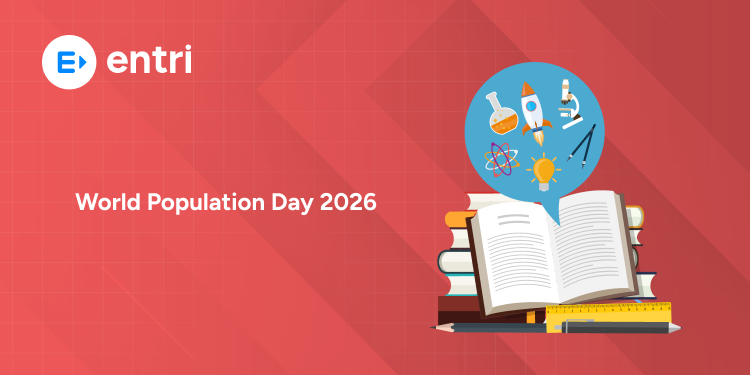
Every year on July 11, the world pauses to reflect on one of the most defining forces shaping our future — population. World Population Day 2026 falls on Saturday, July 11, and this year’s observance carries special significance for young people everywhere, including the millions of students and aspirants shaping India’s future workforce. In this article let us check on the observation of World Population Day 2025 including the theme, history, quiz, and population statistics.
When is World Population Day 2026?
World Population Day is observed every year on July 11. In 2026, it falls on Saturday, July 11, 2026. The day is a United Nations observance dedicated to raising awareness about global population issues such as family planning, gender equality, maternal health, human rights, and sustainable development.
World Population Day 2026 – Objectives
1: Who was the first woman President of India?
- Raise awareness of global population issues and their link to sustainable development
- Promote reproductive health and reproductive rights for all individuals
- Highlight gender equality and the empowerment of women and girls
- Draw attention to family planning access and unmet needs for contraception
- Encourage youth-centered policies, given the theme’s focus on young people’s hopes and aspirations
- Support the UN Sustainable Development Goals (SDGs), particularly those related to health, education, and gender equality
Free UPSKILLING Courses!
Take your first step toward mastering in-demand skills, acing interviews, and securing top-tier jobs with Entri's free upskilling courses.
Start Learning!Significance of World Population Day 2026
Population size and structure directly shape a country’s economy, environment, healthcare systems, education infrastructure, labor markets, and social policies. A rapidly growing young population can create either a demographic dividend (a productive, growing workforce) or a demographic burden (unemployment, resource strain) depending on how well a country invests in education, healthcare, and jobs. On the other end, ageing populations in countries like Japan and parts of Europe raise concerns about shrinking workforces and rising healthcare costs. World Population Day is a reminder that population is not just a number — it is closely tied to human rights, opportunity, and the sustainability of the planet’s resources.
History and Objectives of World Population Day
World Population Day traces its origin to July 11, 1987, known as the “Day of Five Billion,” the date on which the world’s population was estimated to have crossed 5 billion people. This milestone drew massive public interest, prompting the Governing Council of the United Nations Development Programme (UNDP) to formally establish World Population Day in 1989. The goal was to create an annual reminder for governments, organizations, and citizens to focus on the urgency of population-related issues, particularly their connection with environment, development, and human rights.
History and Background
- 1804: World population reached 1 billion
- 1927: World population reached 2 billion
- 1959: World population reached 3 billion
- 1974: World population reached 4 billion
- 1987: World population reached 5 billion (Day of Five Billion, July 11)
- 1999: World population reached 6 billion
- 2011: World population reached 7 billion
- 2022: World population reached 8 billion
- 2026: World population stands at approximately 8.2 to 8.3 billion
Theme of World Population Day 2026
The official theme for World Population Day 2026 is “Realizing the hopes and aspirations of young people – today and for the future.” Set by the United Nations Population Fund (UNFPA), the theme draws on findings from the Demographic Futures Survey, one of the largest global surveys of its kind, which captured the views of more than 108,000 internet-connected young adults aged 18 to 39 across 73 countries. The accompanying report, titled “Lives, Choices and Futures: What young people want and what shapes their decisions about relationships and parenthood,” offers a global snapshot of what young adults want from relationships, family life, and the future — and what stands in their way.
This year’s theme is a deliberate shift in tone. Rather than framing population purely as a numbers problem, it centers on choice, agency, and opportunity for the world’s youth.
Free UPSKILLING Courses!
Take your first step toward mastering in-demand skills, acing interviews, and securing top-tier jobs with Entri's free upskilling courses.
Start Learning!India’s Demographic Dividend: Why This Theme Matters Here
India’s population context makes this year’s theme especially relevant. Key facts:
- India’s population in 2026 stands at approximately 1.476 billion, with a modest annual growth rate of around 0.86%.
- India’s median age is approximately 29 years — meaning half the country’s population is under 29. Compare this to a median age of around 40 in the US, 40 in China, and 48 in Japan.
- Nearly 65-68% of India’s population falls in the working-age bracket (15-64 years), giving India one of the largest working-age populations on the planet.
- Around 20% of the world’s under-25 population lives in India alone.
- India’s demographic dividend window is expected to peak between 2036 and 2041, and close by around 2055.
World Population in 2026: Key Facts
- The current global population in 2026 is estimated at around 8.2–8.3 billion people
- The global population grows by roughly 200,000 to 220,000 people per day, net of births and deaths
- Roughly 100 million people are added to the world every 14 months
- The global population is projected to reach approximately 8.5 billion by 2030
- The UN projects world population will reach around 9.7 billion by 2050
- Population is expected to peak somewhere between 10.3 and 10.9 billion in the 2080s, before beginning a gradual decline
- India officially overtook China as the world’s most populous nation in April 2023 and continues to widen the gap
- China’s population has been declining since 2022 due to below-replacement fertility (around 1.0 births per woman)
Top 10 Most Populous Countries in the World – 2026 Estimates
| Rank | Country | Estimated Population (2026) | Share of World Population |
|---|---|---|---|
| 1 | India | ~1.46–1.47 billion | ~17.8% |
| 2 | China | ~1.41–1.42 billion | ~17.2% |
| 3 | United States | ~340–349 million | ~4.2% |
| 4 | Indonesia | ~283–287 million | ~3.5% |
| 5 | Pakistan | ~245 million | ~3.0% |
| 6 | Nigeria | ~230–237 million | ~2.8% |
| 7 | Brazil | ~218 million | ~2.6% |
| 8 | Bangladesh | ~175 million | ~2.1% |
| 9 | Russia | ~144 million | ~1.7% |
| 10 | Mexico / Ethiopia | ~130 million each | ~1.6% |
Note: Figures are UN medium-variant estimates for 2026 and may vary slightly depending on source (UN DESA, World Bank, Worldometer, World Population Review).
Population Day 2026 – Key Demographic Trends to Know
- India and China together: India and China combined account for nearly 35% of the entire world’s population.
- Africa’s rise: Sub-Saharan Africa is projected to contribute roughly 56% of all global population growth between 2025 and 2050. Nigeria is expected to overtake the United States to become the world’s third most populous country sometime between the 2040s and 2050.
- Ageing societies: China, Japan, South Korea, and much of Europe face shrinking and ageing populations, creating pressure on pension systems and healthcare.
- Youthful India: India’s fertility rate has fallen to around 2.0 (close to replacement level), but its much younger age structure means the population will keep growing for another two to three decades before stabilizing.
- Reproductive choice gap: According to UNFPA’s State of World Population report, a survey across 14 countries covering more than a third of the global population found that 18% of adults of reproductive age expect to end up with fewer or more children than they actually wanted — largely due to cost of living, job insecurity, and housing, not lack of desire for children.
World Population Day 2026 Quotes
- “Every State has the primary duty to protect its own population from grave and sustained violations of human rights, as well as from the consequences of humanitarian crises, whether natural or man-made” – Pope Benedict XVI
- “By Improving Health, Empowering Women, Population Growth Comes Down” – Bill Gates.
- “When The Family Is Small, Whatever Little They Have They Are Able To Share. There Is Peace” – Philip Njuguna
- “Almost half of the population of the world lives in rural regions and mostly in a state of poverty. Such inequalities in human development have been one of the primary reasons for unrest and, in some parts of the world, even violence” – A. P. J. Abdul Kalam
- “As a woman leader, I thought I brought a different kind of leadership. I was interested in women’s issues, in bringing down the population growth rate… as a woman, I entered politics with an additional dimension that of a mother” – Benazir Bhutto
How is World Population Day Observed – Activities & Celebrations
- Seminars, workshops, and panel discussions organized by the UN, UNFPA, and partner NGOs
- Awareness campaigns on social media using hashtags and infographics
- Debates, essay competitions, and slogan contests in schools and colleges
- Public lectures and youth talks focused on demographic change
- Donation drives and advocacy campaigns by organizations working on reproductive health and family planning
- Government-led programs highlighting national population policies
World Population Day Quiz 2026 – Questions & Answers
A) India
B) China
C) United States
3. Which region of the world is currently experiencing the fastest population growth?
A) Europe
B) Africa
C) South America
A) 40%
B) 50%
C) 57%
5. Which country is projected to contribute most to global population growth by 2050?
A) India
B) Nigeria
C) Indonesia
A) 60 years
B) 72 years
C) 80 years
A) Mortality rate
B) Fertility rate
C) Birth rate
A) Africa
B) Asia
C) Europe
A) 6 billion
B) 5 billion
C) 7 billion
Want More Engaging Questions?
Download our FREE PDF packed with insightful quiz questions to test your knowledge!
🔽 Click below to get your free copy now! 🔽
World Population Day Quiz 2026 PDF
World Population Day 2026 arrives at a moment when global demographic conversations are shifting. It’s no longer just about the raw number of people on the planet — it’s about whether individuals actually have the freedom and support to make their own choices about relationships, family size, and their futures. With India firmly established as the world’s most populous nation, China’s numbers declining, and Africa driving the next wave of global population growth, understanding these shifts is essential — both for informed citizenship and for anyone preparing for competitive exams where current affairs and demography are frequently tested topics.
Free UPSKILLING Courses!
Take your first step toward mastering in-demand skills, acing interviews, and securing top-tier jobs with Entri's free upskilling courses.
Start Learning!Frequently Asked Questions
What is World Population Day and why is it celebrated?
World Population Day is observed on July 11 every year. It was established by the United Nations to raise awareness about population issues. The day focuses on challenges like overpopulation, family planning, and gender equality. It highlights the impact of population growth on health, environment, and development. The aim is to encourage policies that support sustainable population management.
Who started World Population Day and when was it established?
World Population Day was established by the United Nations Development Programme (UNDP). The idea was first suggested in 1989. It was in response to the world population reaching 5 billion on July 11, 1987. The UN General Assembly officially recognized the day later. Since then, it has been observed globally to address population concerns.
What are the main issues highlighted on World Population Day?
World Population Day focuses on population growth, reproductive health, and family planning. It also addresses gender equality, poverty, and maternal health. Education and healthcare access are key discussion points. The day highlights the link between population dynamics and sustainable development. Governments and organizations use it to promote awareness campaigns and solutions.
How does overpopulation affect the environment?
Overpopulation increases demand for natural resources like water, food, and energy. It leads to deforestation, loss of biodiversity, and higher pollution levels. Urban areas face overcrowding and poor waste management. Environmental degradation becomes a major concern in overpopulated regions. Addressing population growth can help reduce environmental stress.
What is the connection between population and poverty?
High population growth often leads to increased poverty levels. Resources like education, jobs, and healthcare become limited in overpopulated areas. Families may struggle to provide basic needs for all members. Population pressure can slow down economic development and infrastructure growth. Promoting family planning can help break the cycle of poverty.
How does World Population Day promote gender equality?
The day emphasizes the importance of empowering women and girls. It focuses on providing access to education and reproductive healthcare for women. Gender equality helps women make informed family planning decisions. Educating girls can lead to smaller, healthier families in the future. World Population Day advocates for equal rights and opportunities for women.
What role does family planning play in controlling population growth?
Family planning allows individuals to decide the number and spacing of their children. It helps reduce unintended pregnancies and improves maternal health. Access to contraception and education is key to effective family planning. It contributes to slowing down population growth in high-density areas. Governments often promote family planning through awareness programs on this day.
How does population growth impact healthcare systems?
Rapid population growth puts pressure on healthcare resources. Hospitals may become overcrowded, and medical staff may face heavy workloads. Maternal and child health services often struggle to meet demand. Access to vaccines, medicines, and treatments becomes limited in such conditions. Effective population control helps improve overall healthcare quality.
Why is educating young people important on World Population Day?
Educating youth creates awareness about reproductive health and responsible family planning. It helps them make informed decisions in adulthood. Youth education reduces early marriages and unintended pregnancies. It also promotes gender equality and health awareness among young people. World Population Day often focuses on youth engagement for sustainable population solutions.
How can individuals participate in World Population Day?
People can join local awareness events, seminars, or online campaigns. Sharing educational content on social media helps spread the message. Volunteering with organizations promoting reproductive health is another option. Students and teachers can organize workshops or discussions on population topics. Small actions can create a big impact on population awareness and policy change.