Table of Contents
Personal training is a great career for folks who love working out, eating well, guiding others, and seeing them achieve. A personal trainer’s job is to help their customers improve their physical health in all areas, from strength to mobility to endurance to general physical fitness. They may be self-employed or employed by fitness facilities, hotels, sports complexes, wellness centers, and studios.
“Loving fitness is not enough to get into this industry. A good personal trainer has the right education, current certification, relevant professional experience, exceptional communication skills, business sense, and a desire to learn.
Build a customer base, get your feet wet, and start a thriving profession with this blog post.
Key Takeaways:
- Beginning a fitness career requires a personal training certification.
- Physical education, fitness, and exercise science may aid.
- PTs need good communication, motivation, observation, and time management.
- Online presence, recommendations, and networking build clientele.
- For job advancement, gain experience and qualifications.
- A personal trainer might become a senior trainer, fitness manager, online trainer, consultant, or independent fitness professional.
Become a General Fitness Trainer and turn your passion into a Profession!
How Can You Start a Career as a Personal Trainer?

It is necessary to have education, certification, and experience in order to begin a career as a personal trainer. The following are some common job paths:
- The fundamentals of exercise, anatomy, fitness, and nutrition should be learned.
- Make a decision regarding a degree: To become a certified personal trainer, you should enroll in a trusted program.
- Acquire exposure to the actual world: Under the guidance of the teacher, participants will perform fitness demonstrations and customer evaluations.
- Develop your most important abilities: Your ability to communicate, motivate yourself, organize, and manage your time ought to be improved.
- Your initial job should be at a fitness center, wellness center, or sports club. Possibilities are abundant.
- Increase the size of your customer base by utilizing recommendations, networking, and a respectable web presence. This will allow you to get customers.
- Maintaining your education by obtaining higher certifications or specializing in specific areas such as strength training, sports fitness, or group training is an approach that is absolutely necessary.
You can progress from being an entry-level trainer to becoming a specialized or senior fitness expert as you gain experience and learn new things.
Educational Requirements
One of the first steps on the path to becoming a personal trainer is to acquire an appropriate educational foundation from the beginning.
There are a variety of entry points into the field of personal training, however there are some jobs that need you to acquire a degree from an accredited university. A recognized personal training certification is the most common way for individuals to enter the business; a four-year degree is not required.
On the other hand, obtaining a formal education could be beneficial, particularly if you intend to concentrate in senior fitness, sports, exercise science, or wellness professions or if you want to transfer into these fields.
If you want to be a personal trainer, do you need to do a degree program?
Most of the time, you don’t need a degree from an approved university to start working as a personal trainer. The majority of fitness centers and organizations are looking for:
- An industry-recognized accreditation in the personal training industry
- Training in first aid or cardiac resuscitation that involves practical use of knowledge
- Effective communication ability
- Real-world experience
- Professional conduct
Obtaining a degree in a field that is linked to exercise science, sports science, physical education, kinesiology, or any other related topic can provide a more in-depth understanding of the subject matter and may be beneficial for the development of a long-term career.
Additionally, it may be beneficial for you if you have an interest in areas such as strength and conditioning, sports performance, exercise programming, fitness management, or additional academic study.
Establishing Your Expertise Prior to Obtaining Certification
To be successful in the training industry, aspiring trainers should have a solid understanding of essential principles such as the following:
- The human anatomy
- The physiology of exercise
- The patterns of movement
- Conditioning and strength training
- Fitness for the cardiovascular system
- Adaptability and mobility are essential.
- The technique of exercise
- The fundamentals of program design
- Exams of physical fitness
- The principles of training
- Motivation of the client
- The protection of health and safety
A skilled trainer should not only know how to demonstrate an exercise, but also understand the reasoning behind its selection.
Choosing the Right Certification
For those who are interested in entering the field of personal training, one of the most significant decisions they must make is selecting an appropriate certification.
There are a great number of organizations that provide fitness certifications; however, these organizations may vary in terms of their curriculum, evaluation techniques, recognition, requirements for ongoing education, and acceptable geographic locations.
What to Look For in a Certification?
Before you enlist, think about:
1. Acknowledgments
Find out if gyms and fitness jobs in your target market would accept the qualification.
2. Course of Study
Select a curriculum that includes topics such as exercise physiology, anatomy, program design, safety, client assessment, exercise technique and professional practice.
3. Evaluation
A genuine program should test your understanding, not just provide you a certificate for taking online sessions.
4. Clinical Experience
If feasible, go for a program with practical elements. Personal training is a hands-on job therefore knowing how to instruct movement is quite vital.
5. Ongoing Education
Fitness info, takes time to build. A suitable certification path will offer opportunity for continued professional development.
6. The relation to your career
Think where you wish to work. A certification that is valid for one country or workplace may not be valid for another.
Certification is Just the Beginning of the Process
The mere fact that someone has obtained certification does not necessarily make them an effective trainer.
Obtaining certification does provide you with a professional basis, but, in order to become a successful trainer, you will need to practice and gain experience.
When it comes to you needing to get familiar with
- Providing examples of exercises;
- Clear instructions are being given.
- Adjusting the method in a suitable manner
- Programming that is organized and ordered
- Adapting workout routines
- Maintaining a variety of client requirements
- Keeping tabs on advances
- Establishing connections with other professionals
Turn Your Passion for Fitness into a Profession
Learn practical skills, get certified, and step into the growing fitness industry with confidence.
Join the CourseEssential Skills for Personal Trainers
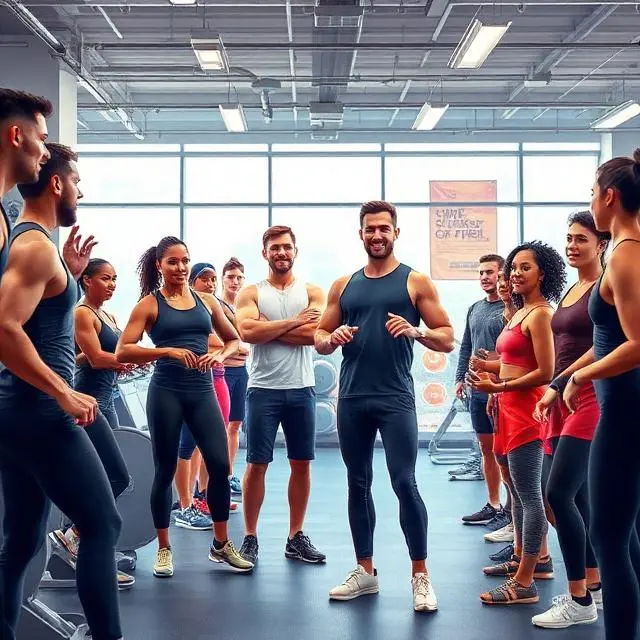
There is more to being successful as a personal trainer than simply having knowledge about fitness. Individuals need to possess technical, communication, and interpersonal abilities in order to comprehend their clientele and assist them in achieving their fitness objectives in a secure and efficient manner.
The following are extremely important skills:
- Explanations of routines, directions, and fitness principles are examples of strong communication abilities.
- Each of these aspects—exercise habits, anatomy, workout planning, and nutrition—is included in the realm of fitness.
- Customers need to maintain a consistent and positive attitude about training in order to be motivated.
- Develop your observational skills by paying attention to the activity as it unfolds and recognizing areas in which there is room for development.
- Appointments with clients, training sessions, and other responsibilities should be handled very effectively.
- It is important that workouts be adapted to the specific abilities, fitness level, and requirements of each individual client.
- As each individual advances at their own unique pace, it is important to maintain patience and empathy.
- Clients’ confidence is bolstered by leaders, who also direct them through physical activity.
- One can identify clients, promote their services, and work independently with the assistance of business skills.
Finding Your First Clients
When you are trying to develop a successful career as a personal trainer, one of the most critical steps is to find your first clients. In the beginning, you should concentrate on collecting experience, establishing trust, and developing a solid reputation in the professional world. It is possible to begin by submitting applications for positions in fitness centers and gyms, where you can have the chance to work with new fitness center members.
Other excellent methods for finding your first clients include the following:
- Take advantage of recommendations by requesting that pleased customers suggest your services to their friends and family.
- Establish a professional web presence: Use social media platforms to share instructional content, workout ideas, and helpful fitness recommendations.
- Establish local connections by establishing relationships with wellness communities, sports clubs, and fitness professionals.
- Hold introductory sessions: It is important to provide suitable trial or introductory sessions in order to assist potential clients in comprehending your learning methodology.
- Establish a profile that is professional: Drawing attention to your credentials, talents, experience, and areas of specialization is essential.
- Putting the customer experience first: To create long-term connections and referrals, it is important to provide training that is not just safe but also individualized and supportive.
Your client network has the potential to steadily expand thru recommendations and professional contacts as you gain expertise and receive favorable feedback that you have received.
Also read: Career Opportunities for Fitness Trainers in Kerala
Career Growth Opportunities
There are numerous chances for professional development that are available to those who choose a career as a personal trainer. You will be able to advance into specialized or leadership jobs within the fitness industry as you gain experience, improve your skills, and achieve advanced certifications.
Opportunities for professional advancement include the following:
- Working with a higher number of clients and taking on additional responsibilities inside a fitness establishment are the obligations of a senior personal trainer.
- Managing trainers, client programs, and the day-to-day operations of the fitness center is the responsibility of the fitness manager.
- Strength training, sports fitness, group training, and elder fitness are some of the topics that a specialized trainer like you should concentrate on.
- An online personal trainer provides individualized fitness counsel and training regimens through various internet platforms.
- The role of a fitness consultant is to guide individuals or businesses regarding fitness and wellness programs.
- Create your own clientele and work as a freelance or self-employed trainer to establish yourself as an independent trainer.
- Experienced professionals have the potential to eventually launch and run their fitness business, whether it is a gym or a fitness center.
Through participation in ongoing education and keeping abreast of emerging fitness trends, personal trainers have the opportunity to broaden their scope of knowledge, increase the number of clients they serve, and advance into more senior positions.
Become a General Fitness Trainer and turn your passion into a Profession!
Turn Your Passion for Fitness into a Profession
Learn practical skills, get certified, and step into the growing fitness industry with confidence.
Join the CourseConclusion
For individuals who are interested in beginning a career as a personal trainer, it is necessary to possess a combination of fitness knowledge, professional certification, excellent people skills, and practical experience. You have the ability to create a successful career in the fitness sector by selecting the appropriate certification, obtaining practical experience, establishing a clientele, and continuing to enhance your talents.
Turn Your Passion for Fitness into a Profession
Learn practical skills, get certified, and step into the growing fitness industry with confidence.
Join the CourseFrequently Asked Questions
How do I start a career as a personal trainer?
Start by learning the fundamentals of fitness, completing a recognized personal training certification, gaining practical experience, and applying for entry-level fitness jobs.
Do I need a degree to become a personal trainer?
A degree is not always required. However, qualifications in exercise science, sports science, physical education, or related fields can be beneficial.
Where can personal trainers work?
Personal trainers can work in gyms, fitness centres, wellness facilities, hotels, sports clubs, rehabilitation settings where appropriately qualified, or as independent and online trainers.
How can I get my first personal training clients?
You can find your first clients through gyms, professional networking, referrals, social media, fitness events, and community activities.
Is personal training a good career choice?
Personal training can be a good career for people who enjoy fitness, working with others, and helping clients achieve realistic health and fitness goals.
Can personal trainers work independently?
Yes. Experienced trainers can work independently by offering one-to-one sessions, small-group training, or online coaching, subject to local requirements and professional scope.
Can I become a personal trainer without experience?
Yes. Beginners can start by completing a recognized certification and gaining practical experience through internships, gym roles, or supervised training.
How can a personal trainer increase their income?
Experienced trainers can expand their income through additional qualifications, specialized training, private clients, small-group sessions, online coaching, or developing their own fitness business.