Table of Contents
It takes only an afternoon for someone new to learn how to do crocheting using a crochet hook, a ball of yarn, and only three types of stitching techniques.
First, master the chain stitch, followed by the single and double crochet techniques. It will take only one week to make a scarf or even washcloths if done daily. It does not take any special talent.
KEY TAKEAWAYS
- Crochet uses one hook and one active loop. This makes it easier than knitting.
- A beginner needs only a 5mm hook, worsted weight yarn, and scissors. Total cost is under ten dollars.
- The chain stitch is the foundation for every crochet project.
- Single crochet is the shortest and tightest stitch. It makes dense, warm fabric.
- Double crochet works up twice as fast. It creates softer, drapier fabric.
- Most beginners make mistakes with tension and counting. Both improve with practice.
- Start with a washcloth or a simple scarf. Save blankets and hats for later.
- Fifteen minutes of practice each day builds skill faster than three hours once a week.
Start Your Fashion Journey Today! Learn Advanced Designing & Boutique Skills with Experts!
INTRODUCTION
You’ve seen pictures of crochet blankets on social media a 100 times and admired that gorgeous crochet bag someone made at that craft fair last weekend. You’ve probably watched a video or two of people just whipping through yarn with a hook and thought “Wow that looks extremely difficult”. But here’s the thing, it really isn’t – at least not once you get the hang of it.
The thing about crochet that makes it look really complicated is the finished fabric itself – all those loops and knots. But guess what ? They’re not magic – they’re just one super simple motion that you repeat hundreds of times. A kid could learn this motion – or even an adult with zero craft experience like me. And guess what ? You can learn it too.
Master Fashion Designing and Create Your Signature Style
Unlock your creative potential with our expert-led Fashion Designing course. Build in-demand skills and step confidently into the world of fashion!
Begin Your Fashion Career Today!WHAT IS CROCHET ANYWAY ?
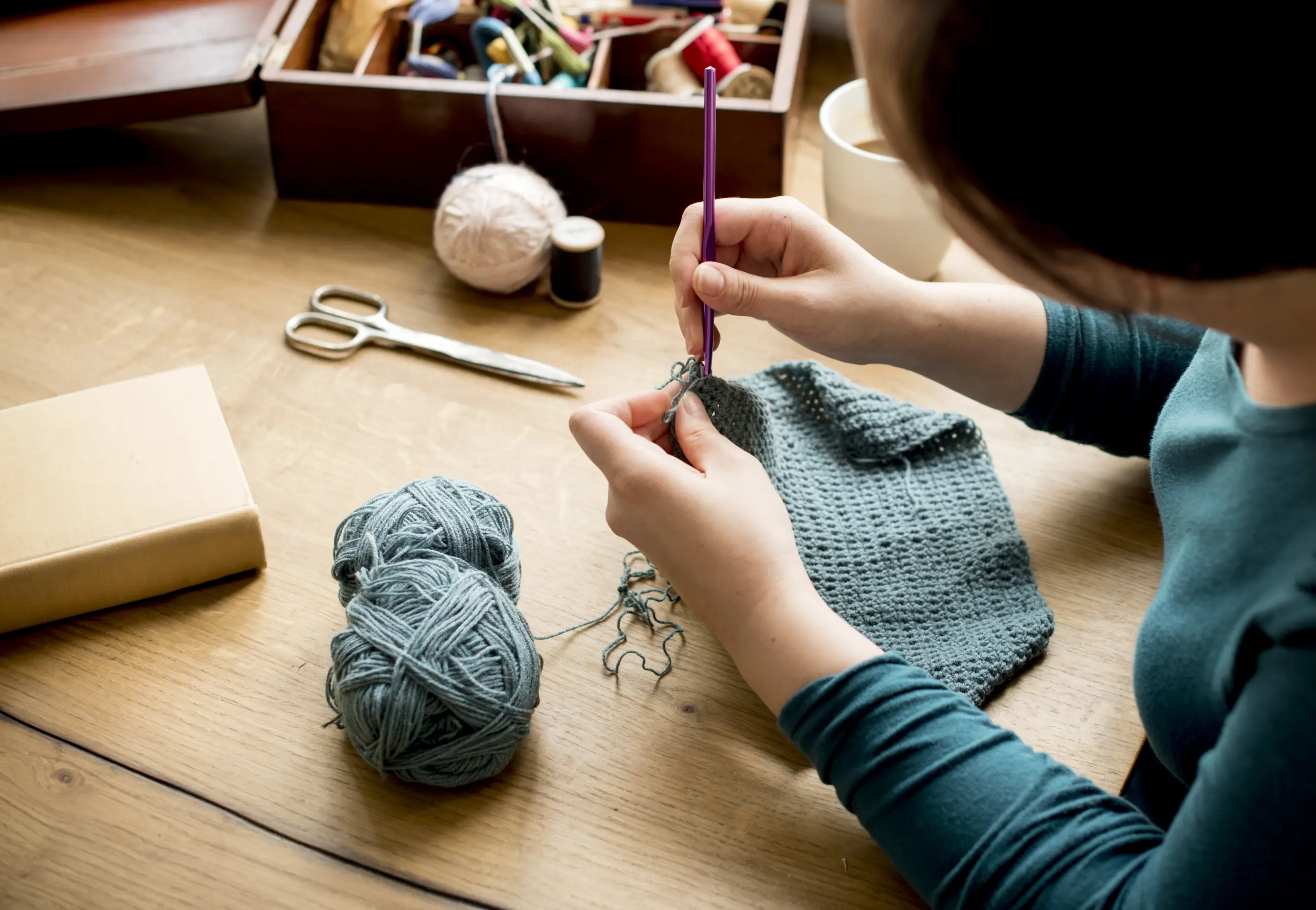
Crochet is this thing where you make fabric out of yarn with a single hook. You just keep pulling loops of yarn through other loops with that hook and each new loop just locks into the one before it – and before you know it you have a chain of knots that’s flexible and durable.
The name comes from the French word “Croche” which means hook. And that’s literally the only tool you need – nothing fancy, no machines or looms, just a hook and your two hands.
Unlike knitting crochet only keeps one loop active at a time, the rest of them are all good to go and just sit there below the one you’re working on – so you can just leave your hook down and walk away when you need to and go back to it tomorrow. No lost stitches, no confusion.
Crochet fabric has a bit of a knotted, textured look to it – it feels thicker and less stretchy than most clothes you buy. Which is actually a good thing – because it makes it perfect for things like bags, baskets and blankets that need to keep their shape.
WHY LEARN CROCHET?
People take up crochet for a whole bunch of different reasons. And honestly, they’re all great reasons.
The first reason is stress relief. There’s something about the repetition of crochet that just calms your mind. Your hands are moving, your breathing slows down, and before you know it all your worries have faded into the background. There are a bunch of doctors who actually recommend crochet for people with anxiety or insomnia.
The second reason is all about creativity. With crochet you can take a ball of yarn and turn it into something really useful – a hat, for instance, or a gift for a friend. You get to choose the colours, the pattern, and the shape. And the best part is, you’ll never make the same thing twice as another crocheter might.
The third reason is just plain practical. Handmade items can be really useful – a crochet blanket to keep you warm, a crochet bag to carry the groceries, a crochet hat to keep your ears from freezing on a cold winter walk. And the thing is, they often work way better than store-bought versions because they’re made with love.
Basic Crochet Supplies
You don’t have to break the bank when you’re starting out. Basic tools can teach you just as much as fancy ones.
Crochet Hook
Don’t go out and buy a fancy hook right off the bat. Just get a medium-sized aluminum one that’s a H or 5mm. It’ll work just fine with most of the yarn you’ll buy. They don’t cost much, and are a lot smoother to work with than plastic ones, which have a nasty habit of breaking. And don’t bother with tiny hooks – they’re a nightmare for beginners.
Yarn
For most projects, you’re going to want worsted weight yarn in a light-coloured solid. That way you can see all the stitches clearly, and light colours like cream or light blue are much easier to work with than dark ones. Acrylic yarn is your best bet – it’s soft, washable and really forgiving.
Scissors
Any old scissors will do – just keep them handy next to your crochet bag. You’ll be cutting the end of the yarn off every time you finish a project.
Yarn Needle
This is a blunt needle with a big eye, and it’s essential for weaving in all the loose ends when you’re finished with a project. You can pick one up for about $2.
Stitch Markers
Stitch markers are those little plastic rings that you use to keep your place in a pattern. But if you don’t want to spend money on them, safety pins work just as well. And trust me, you don’t need to break the bank as a beginner.
That’s it, that’s all you really need to get started: hook, yarn, scissors, needle, and markers. And you know what? Everything fits in a small bag, and you won’t have to spend more than $15.
Master Fashion Designing and Create Your Signature Style
Unlock your creative potential with our expert-led Fashion Designing course. Build in-demand skills and step confidently into the world of fashion!
Begin Your Fashion Career Today!UNDERSTANDING CROCHET PATTERNS
Crochet Patterns – a Secret Language or Not?
At first glance, they can seem like a secret code – full of abbreviations & other symbols you’ve probably never seen before. But don’t worry – it’s actually pretty easy to figure out.
Every pattern basically gives you four things : the size hook you’ll need to use, the weight of yarn you should go with – and what stitches you’ll be doing.
Here are the most common abbreviations you’ll come across most of the time.
ch means chain – this is the stitch you use to get started.
sc is short for single crochet – the shortest stitch going.
dc is short for double crochet – that’s just twice as tall as a single crochet.
tr is short for treble crochet – so that’s three times as tall as a single crochet
sl st means slip stitch – used to join two sections of the work together
st just means stitch – so don’t get confused
rep is short for repeat – which is what you do a lot
A pretty simple pattern might look like this.
Chain 20. Then make a single crochet in the second chain from your hook. Make one in every chain across. Then slip one in and turn. Just keep repeating that row till your thing measures 10 inches.
See how it works? Using all these abbreviations saves a ton of space on the pattern. Read it first to get a feel for the full picture. Then go back and read it one step at a time.
Essential Crochet Terms You Need to Know
Learning these five basic terms will save you a ton of confusion – and a lot of time wasted.
Tension is just what it sounds like – how tightly or loosely you hold the yarn. If you pull it too tight, your fabric will be all stiff. And if you let it go loose, it will just flop about. Most beginners pull it way too tight. Just relax your hands a bit.
Gauge means how many stitches fit into one inch of fabric. Patterns list a gauge so you can get the size you’re supposed to be getting. Want to check your gauge? Just make a little square and measure it.
Turning chain is just the extra chain you make at the end of a row to get the hook up to the right height for the next row. If you’re doing single crochet, you need one turning chain. If you’re doing double crochet, you need two.
Work even is just a nice way of saying keep going without adding any more or taking any away. Just crochet one stitch in every stitch from the row below.
Fasten off – now this one’s simple. Cut the yarn and pull the tail through the last loop. This gives you a lock on your work so it wont unravel.
BASIC CROCHET TECHNIQUES
These three stitches are the foundation of everything you will ever make.
The Chain Stitch
Make a slip knot on your hook. This is your first loop. Hold the hook in your right hand like a pencil. Hold the yarn in your left hand with gentle tension.
Wrap the yarn over the hook from back to front. This is called a yarn over. Pull the yarn through the loop on your hook. One chain stitch is complete. Repeat this motion until you have a chain of the desired length.
The Single Crochet
Insert your hook into the second chain from the hook. Yarn over. Pull the yarn through the chain. You now have two loops on your hook. Yarn over again. Pull through both loops. One single crochet stitch is complete.
Repeat this stitch into every chain across the row. At the end, make one chain to turn your work. Now start a new row of single crochet.
The Double Crochet
Yarn over before inserting your hook. Insert the hook into the fourth chain from the hook. Yarn over again. Pull through the chain. You now have three loops on your hook. Yarn over and pull through two loops. You now have two loops left. Yarn over and pull through the last two loops.
Double crochet is twice as tall as single crochet. It works up faster. It makes softer, drapier fabric.
COMMON BEGINNER MISTAKES
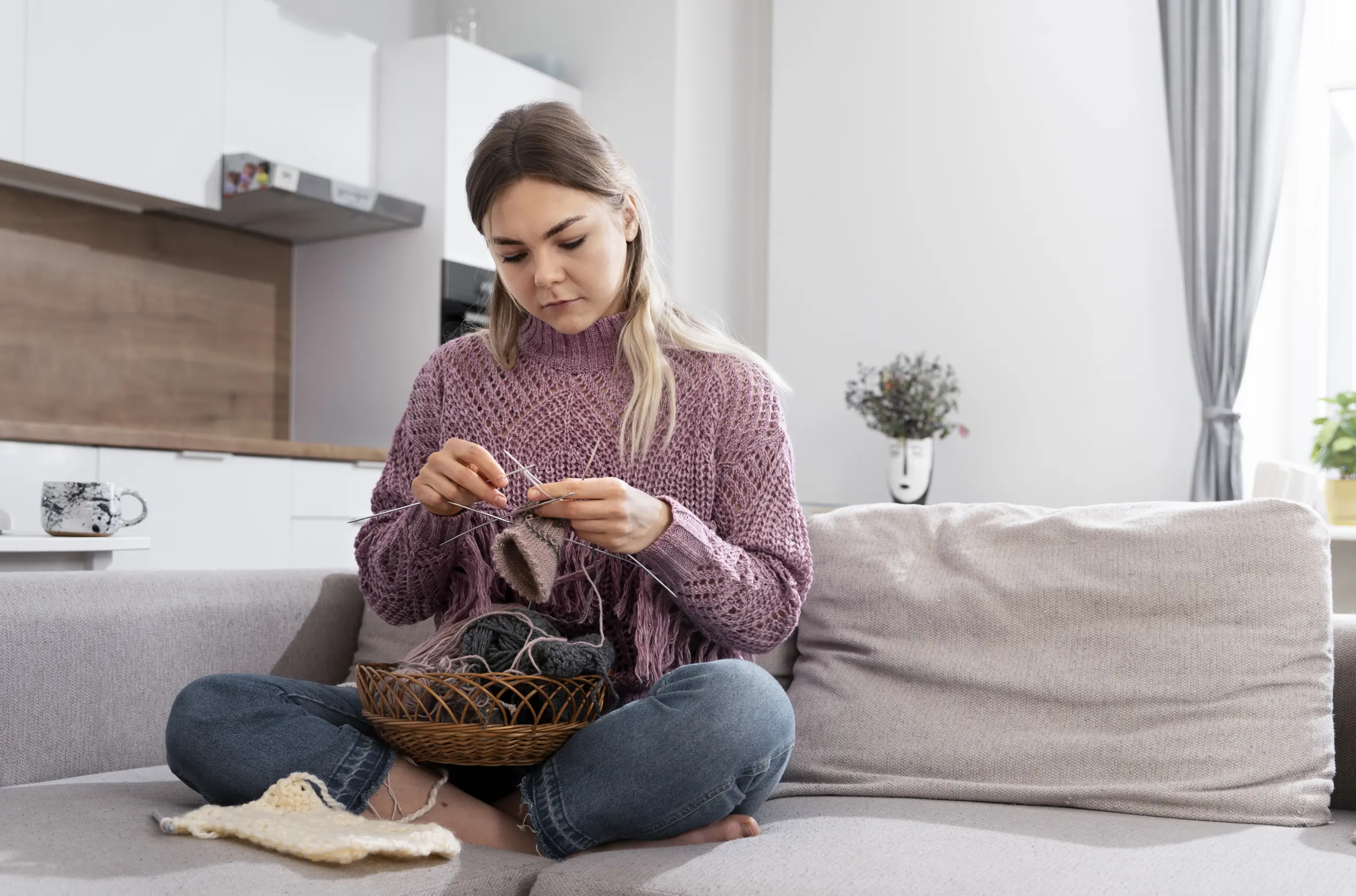
Every beginner makes these mistakes. Knowing about them will save you frustration.
Mistake One – Crocheting too tight
Beginners death grip the hook and yarn. The stitches become so tight that inserting the hook feels impossible. Relax your hands. Loosen your grip. Let the yarn flow.
Mistake Two – Losing count
Counting stitches matters. Losing count leads to uneven edges. Use stitch markers every ten stitches. Mark your place on paper. Slow down.
Mistake Three – Twisted chains
The starting chain twists when the first row is too tight. Make the chain looser. Use a hook one size larger just for the chain. Then switch back to the correct hook for the rest of the project.
Mistake Four – Adding or dropping stitches
Missing the first stitch or last stitch of a row changes the width. Count your stitches at the end of every row. If the number is wrong, pull out the row and try again.
EASY PROJECTS TO START WITH
Start small. Finish quickly. Build confidence.
Cotton Washcloth
Use 100 percent cotton yarn. Chain 21 stitches. Single crochet in the second chain from the hook. Single crochet in each chain across. You should have 20 stitches. Chain 1 and turn. Repeat this row until the square measures 8 inches. Fasten off and weave in the ends.
This project teaches chain, single crochet, and turning. It takes two hours.
Simple Scarf
Use worsted weight acrylic yarn. Chain 15 stitches. Double crochet in the fourth chain from the hook. Double crochet in each chain across. Chain 2 and turn. Repeat until the scarf measures 60 inches. Add fringe to both ends.
This project teaches double crochet and working evenly. It takes one week of evening practice.
TIPS FOR FASTER LEARNING
Practice for fifteen minutes every day. Daily practice builds muscle memory faster than weekend marathons.
Watch the same YouTube video multiple times. First watch it once without your hook. Watch it again while following along. Then watch it a third time to catch details you missed.
Use light coloured smooth yarn. Fuzzy yarn hides the stitches. Dark yarn hides the stitches. Save those for later.
Do not restart the same row twenty times. Complete the row even if it looks bad. Finished bad work teaches more than perfect unfinished work.
Join a beginner crochet group online. Ask questions. Share photos of your progress. Other beginners will help you.
Start Your Fashion Journey Today! Learn Advanced Designing & Boutique Skills with Experts!
CONCLUSION
You now know everything you need to start crocheting, you have the tools list and you have the basic stitches. You have the beginner projects. The only thing missing is action.
Buy a hook and a skein of yarn today. Make your first chain tonight. Start making ten chains. Make a hundred chains. Make them crooked and tight and uneven. That is how everyone starts.
Within one week, your hands will learn the rhythm. Your chains will straighten out. Your stitches will even up. And you will hold something you made from a string. That feeling is worth every frustrated moment.
Master Fashion Designing and Create Your Signature Style
Unlock your creative potential with our expert-led Fashion Designing course. Build in-demand skills and step confidently into the world of fashion!
Begin Your Fashion Career Today!Frequently Asked Questions
How long does it take for a complete beginner to learn crochet?
Most people learn the basic chain stitch in fifteen minutes. The single crochet stitch takes another fifteen minutes to master. You can finish a small washcloth within two to three hours of total practice time. A simple scarf takes about one week of evening practice.
What is the best yarn for a beginner to practice with?
Worsted weight acrylic yarn in a light solid colour is the best choice. Light colours like cream, yellow, or light blue show each stitch clearly. Acrylic is cheap, soft, and forgiving. Avoid dark colours, fuzzy yarns, and 100 percent cotton until you have more practice.
Why do my crochet stitches look uneven and full of holes?
Uneven tension is the most common beginner problem. Most beginners pull the yarn too tight. Relax your grip on the hook. Let the yarn flow more freely. Consistent tension comes with time. Every beginner makes uneven work for the first few days of practice.
What size crochet hook should a beginner buy first?
A size H or 5mm aluminum hook is perfect for beginners. This medium size matches worsted weight yarn, which is the standard thickness. Aluminum hooks slide through yarn smoothly and cost only three to five dollars. Avoid tiny hooks or plastic hooks as a beginner.
How do I fix a mistake without ripping out all my work?
Crochet makes fixing mistakes very easy. Pull the hook out of the current loop. Gently pull the yarn to undo stitches one at a time. Stop when you reach the mistake. Insert the hook back into the correct loop. Resume crocheting. This process is called frogging.
Can I teach myself crochet using only free online videos?
Yes, thousands of people have taught themselves using free YouTube videos. Search for beginner crochet tutorial or learn to crochet. Watch the video all the way through first. Then play it again and follow along. Pause and rewind as often as you need.
What is the first project a beginner should try to make?
A cotton washcloth is the best first project. It is small, flat, and useful. You only need to know the chain stitch and single crochet. The project takes about two hours to finish. Completing something quickly builds confidence to try larger projects.
Why does my starting chain look twisted and crooked?
A twisted chain usually means your foundation chain is too tight. Make your chain much looser than you think is necessary. You can also use a hook one size larger just for the chain. Then switch back to the correct hook size for the rest of the project.
How much does it cost to start crocheting as a beginner?
A beginner setup costs under fifteen dollars. A size H aluminum hook costs three to five dollars. One skein of worsted weight acrylic yarn costs four to six dollars. Small scissors and a yarn needle add another three dollars. That is everything you need.