Table of Contents
You don’t need a Computer Science degree to make it into this system validation engineer role – though it does help to have some knowledge of the field. To get there, all you have to do is follow a pretty straightforward 5-step path that blends an engineering degree, some basic hardware know-how, scripting skills, regular lab work, and an industry-recognized certification.
With this approach, you should be able to land a high-demand job like this within 18 to 24 months. System validation engineers are in high demand – and get paid pretty well, too – with median salaries ranging from $80,000 to $130,000 a year.
A system validation engineer is the person who puts electronic systems through their paces before they’re shipped out to customers. Think of the person who takes a look at your laptop’s USB ports before tossing it in a box and sending it on its merry way – that’s validation work in a nutshell.
Key Takeaways
-
You do not need a Computer Science degree to become a system validation engineer. An engineering degree in Electrical, Computer Engineering, or CS works well.
-
The role focuses on breaking electronic systems on purpose before they ship to customers. You test hardware, write automation scripts, and report bugs to design teams.
-
A straightforward 5-step path leads to this job in 18 to 24 months: engineering degree, hardware protocols, scripting skills, lab experience, and certification.
-
Master five key communication protocols in order: I2C, SPI, USB, PCIe, and Ethernet. These are the languages that chips and devices use to talk to each other.
-
Python is the most important scripting language for test automation. Learn PyTest framework. Bash or PowerShell helps with operating system level tasks.
-
Real lab experience with oscilloscopes matters more than theory. Learn to set voltage per division, time per division, trigger level, and capture single events.
Who is a System Validation Engineer?

A system validation engineer’s job is basically to test out computer systems, chips, and electronic products to make sure they actually work like they’re supposed to. They’ll come up with a test plan, write some code to automate the testing process, track down any failures that pop up & report back to the design team on what they find. They work in a lab, surrounded by oscilloscopes, logic analyzers, servers & other equipment.
Unlike design engineers, who are generally coming up with new ideas, a system validation engineer’s job is essentially to find all the ways to break things on purpose – to see where the weak spots are. Their one big question is always this: will this system actually work in the real world?
Kickstart your embedded systems career and turn your tech passion into high-demand skills!
Master Embedded Systems Programming!
Launch your tech career with our Embedded Systems Course, designed for hands-on learning and industry readiness.
Know MoreThe Core Explanation: A Step by Step Guide
Becoming a system validation engineer follows a pretty straightforward 5-step plan. Each step builds on the one that came before it – so don’t skip any of them if you want to make it in this field.
Step 1: Get a Bachelor’s Degree in Engineering
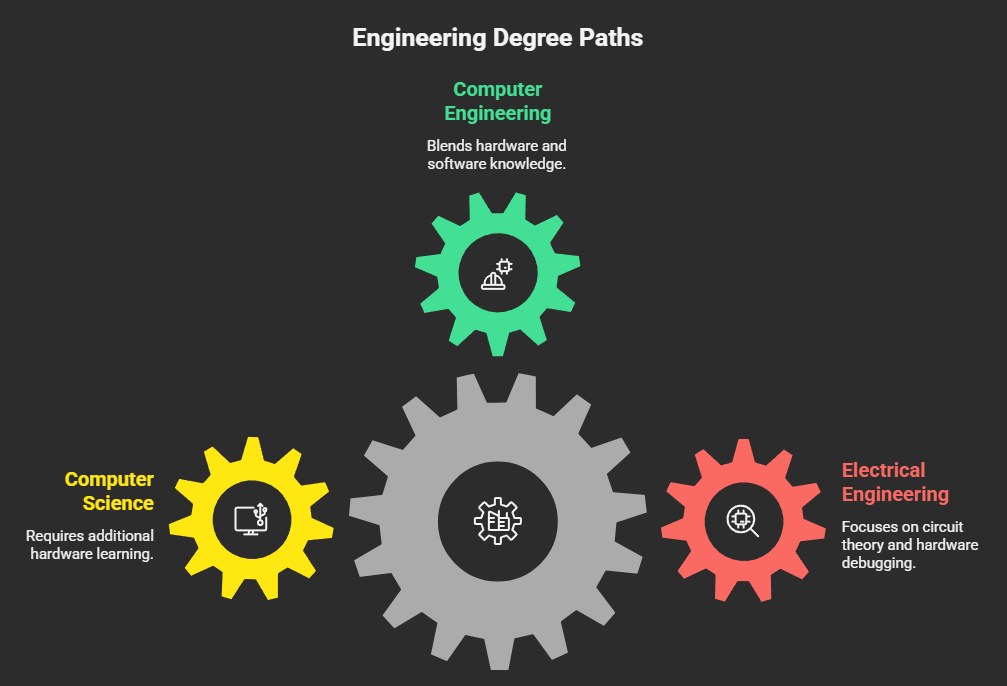
For all intents & purposes, just about every system validation engineer starts out with a 4-year degree in Electrical Engineering, Computer Engineering or Computer Science. Recruiters tend to weed out resumes right off the bat if you don’t have that.
Electrical engineering is probably the best choice, since it teaches circuit theory, signal processing, and hardware debugging. Computer engineering splits the difference between hardware & software, while computer science can be a bit of a tougher sell on its own because it requires a lot of extra learning on the hardware side.
Step 2: Master Hardware Interfaces and Protocols
System validation is all about making sure the various bits talk to each other properly. The thing that gets in the way of testing is not understanding how those bits work in the first place. Master these five key communication protocols in this order:
I2C and SPI – these are the two wire interfaces that are just about everywhere. From sensors to displays to memory chips – they all speak these languages. Get to know your way around the data sheets and spend some quality time with an oscilloscope to capture their signals.
USB, everybody knows one – keyboards, external drives, you name it. Start with version 2.0, it’s the simplest and most widely used. Get a handle on enumeration, endpoints and power delivery.
Step 3: Learning to Write Scripts for Test Automation
Manual testing just can’t scale – modern system validation needs to run thousands of tests automatically. You’ll need to get two scripting languages under your belt:
First up is Python – the one that most companies use. Learn how to write test scripts that get devices configured, send commands, read the results and log any failures. Don’t forget to get to know the PyTest framework. Python will also help you parse log files and generate test reports.
Bash or PowerShell is what you’ll need to use when you’re fiddling with the operating system level. You’ll need to write scripts that run on Linux or Windows so make sure you learn basic commands, how to manipulate files and control processes.
Step 4: Get Lab Experience With Real Equipment
Theory is all well and good, but at the end of the day it counts for nothing if you freeze up in front of an oscilloscope – a real one, I mean, not just a picture in a textbook. Validation engineers spend their fair share of time in labs, so you really need to get in there and get your hands dirty before you even start looking for your first job.
First things first you need to learn the oscilloscope inside and out. Know how to set the voltage per division, the time per division, the trigger level and the probe compensation. Then put that knowledge to the test by trying to capture a single event like a power up sequence. As for triggering go for the problem signal, not the one that’s working as it should.
Step 5: Get Certified & Network Your Way To Your First Job
Getting certified isn’t necessary but it can sure help get you noticed – especially if you come up empty handed in the experience department. The best entry level cert for a validation job is the CompTIA Linux+ because most labs run Linux.
If your looking to get into automated tests then go for the Certified LabVIEW Developer cert but if you’ve got your heart set on serious hardware validation then the IPC CID (Certified Interconnect Designer) is your ticket – it’ll show you understand printed circuit boards.
Networking is a million times more effective than just putting up a resume on some online job site. Join the IEEE as a student member and get yourself to some of the local chapter meetings. If you can afford it , try to get yourself to DesignCon or Embedded World conferences – find some validation engineers on Linked in and ask for a 15 minute chat – just make sure you’ve got three decent questions ready to ask about what their daily grind is like.
Most people will just ignore your request but the ones that don’t might just be able to point you in the direction of a job opening.
Skills Required for System Validation Engineers
The best system validation engineers build competency across four skill domains. Weakness in any domain creates blind spots that will cost you during debugging.
Technical Hardware Skills
- Reading circuit schematics and datasheets
- Operating oscilloscopes, logic analyzers, and multimeters
- Understanding signal integrity basics like rise time and noise margins
- Knowledge of X86 and ARM processor architectures
- Power measurement and battery life testing
Software and Automation Skills
- Python scripting with PyTest framework
- Bash or PowerShell for OS level tasks
- Basic C programming to understand firmware code
- Version control with Git for managing test scripts
- Continuous integration tools like Jenkins or GitHub Actions
Debugging and Analytical Skills
- Writing clear bug reports with reproduction steps
- Root cause analysis to find where the failure starts
- Statistical sampling for deciding how many units to test
- Creating test plans that cover normal and edge cases
- Reading error logs and crash dumps efficiently
Soft Skills That Matter
- Explaining technical problems to non technical managers
- Documenting everything because memory lies
- Patience during long test runs that fail at the last second
- Collaboration with design engineers who hate hearing their code broke
- Attention to detail when tiny timing differences kill the whole system
Career Path and Salary Progression for System Validation Engineers

Your salary grows fast as you move through four career stages. Each stage requires new skills and brings more responsibility.
Entry Level (0 to 2 years):
Junior validation engineers run existing tests, log results, and learn the lab equipment. They make $65,000 to $85,000. Most start as contractors at large tech companies. Take the contract job. The experience is worth more than the permanent title somewhere else.
Mid Level (2 to 5 years):
Validation engineers write their own test plans, automate new test cases, and mentor junior staff. They earn $85,000 to $115,000. At this level, you specialize in one domain like USB validation, memory testing, or power management.
Senior Level (5 to 10 years):
Senior validation engineers design the whole test strategy for a product. They choose which tests to run, how many units to test, and what equipment to buy. They earn $115,000 to $150,000. Many also get stock grants that add another $20,000 to $50,000 per year.
Staff or Principal Level (10+ years):
These engineers set validation standards across entire product lines. They review other teams’ test plans and consult on the hardest bugs. They earn $150,000 to $200,000 plus significant stock. At this level, your name goes on patents, and companies recruit you directly without job postings.
Beyond base salary, system validation engineers typically receive bonus targets of 10% to 20% and health benefits. Remote work is possible for software heavy validation roles, but hardware focused roles require lab access and in person work.
Master Embedded Systems Programming!
Launch your tech career with our Embedded Systems Course, designed for hands-on learning and industry readiness.
Know MoreIs System Validation a Good Career in 2026?
Yes, system validation is a viable career choice for a number of reasons.
Job security is high.
Companies must validate every product before shipping. Cutting out the validation team to save money risks sending broken products, which costs a lot more in returns and reputation damage. The validation budgets remain steady even when people are laid off, as the work is required.
Artificial intelligence (AI) does not yet replace the job.
AI can write test scripts and generate test data. But AI cannot hold an oscilloscope probe, decide which edge case matters, or argue with a designer about a timing violation. The physical and judgment-based components of validation protect AI from automation.
Barriers to entry protect your salary.
Not everyone wants to learn hardware protocols and sit in a lab. The difficulty keeps supply low and wages high compared to web developers or IT support roles.
The work is always interesting.
Every new product brings new bugs. You will not do the same thing every day. One week, you test a laptop’s response to heat. The next week, you check a server’s memory errors. The variety keeps your job from getting boring.
After five years of validation, you can transition into design engineering, technical program management, applications engineering, or sales engineering. As a validation engineer, you know the way products work, not just how they should behave on paper. That knowledge can be transferred to many other positions.
Kickstart your embedded systems career and turn your tech passion into high-demand skills!
Conclusion
Forget the genius – there is a path to becoming a system validation engineer. Get the engineering degree. Learn the protocols. Practice scripting. Touch real lab equipment. Get one certification and talk to people in the industry.
Within two years of focused effort, you can land a job well above the median American salary with strong protection against automation. Every year, the world produces more electronic devices. Each device needs to be tested before it gets to a customer. This creates your opportunity.
Start today by picking one of the protocols listed above and creating a circuit that uses it. Break it on purpose. Fix it. Write down what you learned. That one afternoon of hands-on work puts you ahead of every candidate who watched YouTube videos about validation.
Master Embedded Systems Programming!
Launch your tech career with our Embedded Systems Course, designed for hands-on learning and industry readiness.
Know MoreFrequently Asked Questions
What does a system validation engineer do every day?
A system validation engineer runs tests on electronic systems, finds bugs, and reports problems to the design team. They write automated test scripts, work with lab equipment like oscilloscopes, and document every failure they find. Their main goal is proving the product works before it ships to customers.
Do I need a master's degree to become a system validation engineer?
No. A bachelor’s degree in electrical engineering, computer engineering, or computer science is enough for most jobs. Master’s degrees help for senior roles or specialized areas like memory validation or high speed interface testing. But most hiring managers value hands on lab experience more than advanced degrees.
Which programming language should I learn first for validation work?
Learn Python first. It is the most common language for writing test automation scripts in validation labs. Python is easy to learn, works on every operating system, and has libraries for controlling lab equipment. After Python, learn Bash for Linux tasks or PowerShell for Windows environments.
How long does it take to become a system validation engineer?
Most people need 18 to 24 months from starting their studies to landing their first job. This includes completing a four year degree, but the timeline assumes you are already in school or have a degree in a related field. Self taught candidates with no degree typically need 2 to 3 years of dedicated practice.
Is system validation harder than software development?
No, it is different. Software development requires building complex systems from scratch. Validation requires breaking existing systems and finding hidden problems. Validation uses less abstract thinking and more hands on debugging. Some people find validation easier because the work is more concrete and visual.
Can I work remotely as a system validation engineer?
Partly yes. Software focused validation roles allow remote work because you only need a computer and network access. Hardware validation roles require physical lab access for oscilloscopes, logic analyzers, and test boards. Most system validation engineers work hybrid schedules with some lab days and some remote days.
What is the toughest part of being a system validation engineer?
Finding intermittent bugs that happen only once every thousand test runs. These bugs are extremely hard to reproduce and fix. You might spend weeks capturing the same failure while changing one variable at a time. The patience required for this work frustrates many new engineers in their first year.
Which industries hire the most system validation engineers?
Computer hardware companies hire the most, including Dell, HP, Lenovo, and Apple. Semiconductor companies like Intel, AMD, and Nvidia are also major employers. Automotive companies need validation engineers for electric vehicle electronics. Medical device companies and aerospace firms hire them for safety critical systems.
What certification helps the most for entry level jobs?
CompTIA Linux+ helps the most because validation labs almost always run Linux based test systems. Linux+ proves you can navigate the command line, write basic scripts, and troubleshoot operating system issues. This certification costs around $350 and takes 2 to 4 weeks of study for most people.