Table of Contents
Key Takeaways:
Learn German language in your own language! Get free Demo Classes Here!
Many international students choose Cologne because it offers a great mix of education and culture. At the same time, it is important to know that living costs can be moderate. Students usually need around €700 to €1,200 per month for rent, food, transport, and other daily expenses. Understanding these costs helps students plan their budget and enjoy a comfortable life in Cologne.
Why Choose Cologne for Studies?
- Cologne is a good city for studying and living
- It has a friendly and international environment
- Students should plan their budget properly
- Knowing costs in advance helps manage money better
- With planning, student life in Cologne is comfortable and enjoyable
Cologne – Student City Overview
- Cologne is a very popular city for students in Germany
- It is known for friendly people and a lively environment
- The city has good universities like the University of Cologne
- Many international students come here every year
Student Life in Cologne
- Cologne has a strong international student community
- Students from many countries live and study here
- It is easy to make friends and feel comfortable
- The city has many festivals, events, and cafes
- Student activities happen throughout the year
- Life in Cologne is active and enjoyable
Study and Lifestyle Balance
- Cologne offers a good balance between study and daily life
- Universities have good facilities and learning support
- Public transport is well-developed and easy to use
- Libraries and study spaces are available for students
- Many part-time job opportunities are also available
- The city feels relaxed and student-friendly
Cost of Living
- Living cost in Cologne is moderate to high
- Rent is the biggest monthly expense
- Food and transport also cost money
- Expenses depend on your lifestyle
- Some students spend more, some spend less
Average Monthly Cost of Living in Cologne
Here is a simple breakdown of the average monthly expenses for students living in Cologne:
| Expense Category | Monthly Cost (€) |
|---|---|
| Rent | 350 – 800 |
| Food | 150 – 300 |
| Transport | 0 – 100 |
| Health Insurance | 110 – 120 |
| Miscellaneous | 100 – 200 |
Accommodation Costs in Cologne
1: How do you say "Good Morning" in German?
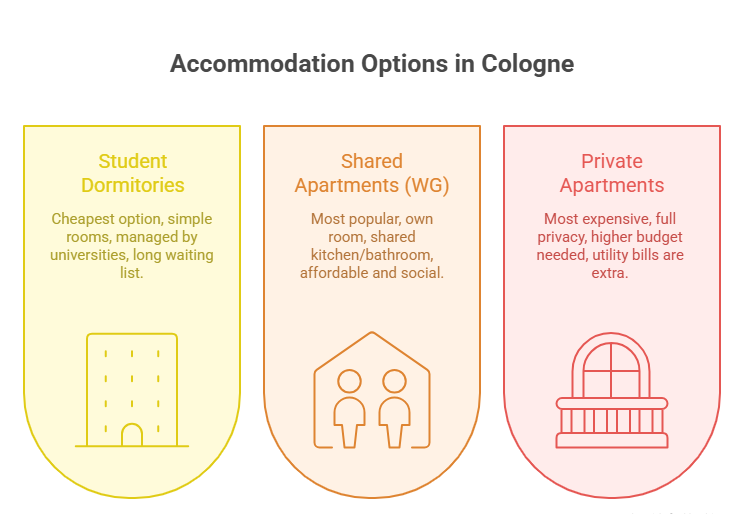
Accommodation is the biggest monthly expense for students in Cologne. The cost depends on the type of housing you choose and the location.
Student Dormitories
- Student dorms are the cheapest housing option for students
- Monthly rent is about €250 to €450
- Rooms are simple but have basic facilities
- Managed by universities or student housing services
- Main problem: long waiting list, so apply early
- Best for students who want low-cost and simple living
Shared Apartments (WG)
- Most popular housing option for students in Cologne
- Rent is around €350 to €650 per month
- You get your own room
- Kitchen and bathroom are shared with others
- Rent and bills are shared, so it saves money
- Good for social life and making friends
- Many students choose this because it is affordable and comfortable
Private Apartments
- Most expensive housing option
- Rent starts from €700 and can go above €1,000 in city areas
- You get full privacy and your own space
- Best for students with higher budget
- Utility bills (electricity, water, internet) are extra
- Total cost becomes higher compared to other options
Tips for Students
- Start searching for accommodation early (3–6 months before)
- Use platforms like WG-Gesucht for shared flats
- Choose areas slightly outside the city center to save money
- Shared housing is the best option for most students
Free German A1 Mock Tests – Powered by AI!
Test your skills on our interactive platform. Get instant feedback from our AI to help you communicate better and track your progress. Start your free German mock test now.
Test Your German A1 for FreeFood and Grocery Expenses
- Food is an important part of a student’s monthly cost
- Spending depends on your eating habits and lifestyle
- On average, students spend €150 to €300 per month on food
Monthly Budget Breakdown
Eating Out vs Cooking
- Cooking at home:
- This is the cheapest and healthiest option
- You can buy food items and cook simple meals at home
- It helps you save a lot of money every month
- Good for students who want to stay within budget
- Eating out:
- Convenient but more expensive
- A simple meal can cost around €8 to €15
- Restaurant meals can quickly increase your monthly expenses
- Best to eat out only occasionally
Popular Budget Supermarkets
Cologne has many affordable supermarkets where students can save money:
- Aldi:
- Very low prices
- Basic and essential groceries at good quality
- Lidl:
- Budget-friendly and widely available
- Offers fresh food, snacks, and daily essentials
|
Goethe 2026 Exam Dates: Multiple Test Centers |
|
| Trivandrum Goethe Exam Dates | Kochi Goethe Exam Dates |
| Chennai Goethe Exam Dates | Coimbatore Goethe Exam Dates |
Transportation Costs
- Transport in Cologne is easy, safe, and student-friendly
- Most students do not need a car
- Public transport is good and affordable
- Students mainly use the semester ticket to save money
Semester Ticket Benefits
- Included in university fees or available at a fixed price
- Gives unlimited travel for one semester (about 6 months)
- Can use buses, trams, S-Bahn, and regional trains
- No need to buy daily or monthly tickets
- Saves a lot of money
- Helps travel to university, city areas, and nearby towns
Public Transport System
Cologne has a good transport network
- Buses: for short trips
- Trams: fast travel inside the city
- S-Bahn trains: for suburbs and nearby cities
- Regional trains: for longer travel
- Transport is regular, reliable, and easy to use
Cycling Culture
- Cycling is very common among students
- Many safe cycle lanes are available
- Bicycles are cheap and eco-friendly
- Good for short-distance travel
Health Insurance for Students
- Health insurance is required for all students in Germany, including Cologne
- You must have it to join a university
- It is also needed for your student visa
- Without health insurance, you cannot complete your admission or visa process
It is an important part of your monthly living cost.
Why Health Insurance is Important
- Required for university admission
- Needed for student visa approval
- Covers medical treatment, doctor visits, and emergencies
- Gives safety and peace of mind while studying abroad
Public Health Insurance
Public insurance is the most common choice for students.
- Cost is usually around €110 – €120 per month
- Covers most basic medical needs
- Includes doctor visits, hospital care, and medicines
- Accepted everywhere in Germany
- Reliable and widely used by international students
Private Health Insurance
Private insurance is another option, but less common for students.
- Cost may vary depending on the plan
- Sometimes cheaper for short-term or special cases
- Offers flexible packages, but coverage may differ
- Not always accepted for all student situations
Public vs Private (Simple Comparison)
- Public Insurance: Safe, standard, widely accepted, fixed cost
- Private Insurance: Flexible, but depends on plan and conditions
Free German A1 Mock Tests – Powered by AI!
Test your skills on our interactive platform. Get instant feedback from our AI to help you communicate better and track your progress. Start your free German mock test now.
Test Your German A1 for FreeOther Expenses to Consider
Internet Costs
- Many student flats already include WiFi in rent
- If not included, internet costs €20 to €40 per month
- Students use it for classes, assignments, and daily use
- In shared flats, the cost is split
Mobile Plans
- Mobile plans are cheap in Germany
- Cost is about €10 to €30 per month
Entertainment
- Includes movies, cafes, outings, and social activities
- Costs around €50 to €100 per month
Study Materials
- Includes books, notebooks, printing, and stationery
- Some courses provide free materials, but not all
- Average cost is around €20 to €50 per month
- Digital resources can help reduce costs

Total Monthly Budget Estimate
- Your monthly cost in Cologne depends on your lifestyle, housing, and spending habits
- On average, students need about €700 to €1,200 per month
1. Budget Lifestyle (€700 – €850/month)
For students who want to save money
- Stay in student dorms or shared apartments (WG)
- Cook most of your meals at home
- Use semester ticket for transport
- Spend very little on entertainment
- Focus only on basic needs
2. Moderate Lifestyle (€850 – €1,000 per month)
This is the most common lifestyle for students
- Live in shared apartments (WG)
- Cook at home and eat out sometimes
- Spend normal money on travel and fun activities
- Buy study materials and daily needs
3. Comfortable Lifestyle (€1,000 – €1,200+ per month)
For students who want more comfort
- Live in private rooms or good shared apartments
- Eat out more often
- Spend more on shopping, travel, and entertainment
- Enjoy a relaxed and easy lifestyle
Tips to Save Money in Cologne as a Student
2. Cook at Home
- Cooking at home is cheaper than eating outside
- Home cooking is healthy and saves money
- Eating out should be only sometimes because it is costly
3. Share Accommodation
- Living in shared flats (WG) helps reduce rent
- Electricity, water, and internet bills are also shared
- Student dorms are another cheap option
- Saves more money than living in a private apartment
4. Buy Second-Hand Items
- You can buy used furniture, books, and electronics
- This helps you save a lot of money
- It is much cheaper than buying new products
Is Cologne Expensive for Students?
Learn German language in your own language! Get free Demo Classes Here!
Conclusion
- Cologne is a good city for students because it has a balance of cost and good student life
- Rent can be high in some popular areas
- Students can save money by sharing rooms or flats
- They can also use student discounts
- Cooking at home helps save more money
- On average, students spend €700 to €1,200 per month
- The cost depends on their lifestyle and how they spend money
- Cologne is a good and affordable city if students plan their budget well
- It also offers a lively student life, good education, and many opportunities
Free German A1 Mock Tests – Powered by AI!
Test your skills on our interactive platform. Get instant feedback from our AI to help you communicate better and track your progress. Start your free German mock test now.
Test Your German A1 for FreeFrequently Asked Questions
How much does it cost to live in Cologne as a student?
On average, students need around €700 to €1,200 per month. This includes rent, food, transport, health insurance, and other daily expenses. The exact cost depends on your lifestyle and accommodation type.
Is Cologne expensive for international students?
Cologne is moderately expensive. It is cheaper than Munich but slightly more expensive than some smaller German cities. With proper budgeting, it is still affordable for students.
What is the average rent for students in Cologne?
Student rent usually ranges from €350 to €800 per month. Shared flats (WG) are cheaper, while private apartments in central areas are more expensive.
What are the cheapest accommodation options in Cologne?
The cheapest options are student dormitories and shared apartments (WG). Dorms are the most affordable, but they often have waiting lists, so early application is important.
How much do students spend on food in Cologne?
Students usually spend around €150 to €300 per month on food. Cooking at home and shopping from budget supermarkets like Aldi and Lidl helps reduce costs.
Is public transport expensive in Cologne?
No, public transport is affordable for students. Most students use a semester ticket, which allows unlimited travel within selected zones at a fixed cost.
Is health insurance mandatory for students in Cologne?
Yes, health insurance is compulsory in Germany. Students usually pay around €110 to €120 per month, and it is required for university enrollment and visa approval.
Can students save money while living in Cologne?
Yes, students can save money by choosing shared housing, cooking at home, using student discounts, buying second-hand items, and managing their monthly budget carefully.