Table of Contents
🎯 Answer First
An HR Generalist role is usually reached through education, skills, and experience. Entry-level HR positions are often taken first. Different HR functions are then learned gradually. More responsibilities are given over time. Eventually, an HR Generalist position can be achieved.
Many HR tasks are handled by HR Generalists. Which include: Recruitment, employee support, payroll assistance, compliance etc. Strong communication skills are often preferred. A good understanding of HR operations matters. Continuous skill development supports career progression.
Is being an HR your dream? Enrol now for our course on Human Resource!
Key Takeaways:
- HR Generalists Handle Diverse Responsibilities: Multiple HR functions are managed. Including: Recruitment, employee relations, payroll, and compliance .
- Experience Plays a Key Role: Many HR careers begin with small positions. Experience teaches: Practical knowledge, workplace skills etc.
- Education and Certifications Add Value: Relevant qualifications are often preferred. Professional profiles strengthen through certifications.
- Communication and HR Knowledge Are Essential: Strong communication skills are needed. A good understanding of HR processes helps.
- Technology Skills Improve Career Prospects: Modern HR operations depend on digital tools. Greater efficiency can be achieved through HR software knowledge.
- Strong Career Growth Opportunities Are Available: Advancement opportunities can be explored across industries. Leadership and specialized HR roles can eventually be pursued.
👥 Understanding the Role of an HR Generalist
HR Generalists play an important role. They support both employees and organizations. Their work covers many areas. This makes the role diverse and dynamic.
Who Is an HR Generalist?
An HR Generalist handles various human resource activities. They act as a link between employees and management. They support workforce needs across departments. Their responsibilities often vary daily.
Unlike specialists, Generalists manage several functions. They develop broad HR knowledge. This versatility makes them valuable professionals.
Typical workplaces include:
- Private companies.
- Startups.
- Manufacturing firms.
- IT organizations.
- Healthcare institutions.
- Educational institutions.

Key Responsibilities of an HR Generalist
The role includes several duties. Each function contributes to organizational success.
Recruitment and Onboarding
Hiring remains a major responsibility.
Tasks often include:
- Posting job openings.
- Screening resumes.
- Scheduling interviews.
- Coordinating hiring processes.
- Supporting onboarding activities.
Good recruitment strengthens organizations.
Employee Engagement
Employees perform better when engaged.
HR Generalists often manage:
- Employee activities.
- Recognition programs.
- Workplace initiatives.
- Feedback collection.
- Team-building efforts.
Engagement improves workplace culture.
Payroll and Benefits Administration
One expects good compensation.
Common responsibilities include:
- Payroll coordination.
- Leave tracking.
- Benefits administration.
- Attendance monitoring.
- Employee records management.
Accuracy remains important.
Performance Management
Organizations evaluate employee performance regularly.
HR Generalists may assist with:
- Performance reviews.
- Goal setting.
- Feedback discussions.
- Development planning.
- Appraisal processes.
Performance systems encourage growth.
HR Compliance
Compliance protects organizations.
Responsibilities may include:
- Policy implementation.
- Documentation management.
- Labor law awareness.
- Record maintenance.
- Workplace regulation compliance.
Why HR Generalists Are Important in Organizations
Organizations depend on people. HR professionals support workforce management.
HR Generalists contribute through:
- Employee support.
- Talent acquisition.
- Policy administration.
- Workplace communication.
- Organizational development.
Their work influences employee experiences. It also supports business objectives.
Become an HR Expert – Enroll in Our HR Management Course Today!
Unlock the secrets to effective Human Resource Management with our expert-led course! Learn recruitment, employee relations, performance management, and more to build a thriving workplace. Start your journey toward a successful HR career today!
Know More🚀 HR Generalist Career Path Explained
Professionals begin with entry-level positions. Career growth occurs gradually. Experience often leads to bigger roles.
Typical Entry-Level Positions
Most HR careers start with foundational roles.
HR Assistant
HR Assistants provide administrative support.
Common duties include:
- Maintaining records.
- Scheduling interviews.
- Managing documentation.
- Updating employee information.
This role builds basic HR knowledge.
HR Coordinator
HR Coordinators handle operational tasks.
Responsibilities often include:
- Recruitment support.
- Employee communication.
- Onboarding coordination.
- Event organization.
Coordination skills become important.
Recruitment Executive
Recruitment Executives focus on hiring activities.
Typical duties include:
- Candidate sourcing.
- Resume screening.
- Interview scheduling.
- Candidate communication.
This role develops recruitment expertise.
Talent Acquisition Associate
Talent Acquisition Associates support hiring strategies.
Responsibilities may include:
- Candidate engagement.
- Employer branding.
- Recruitment campaigns.
- Hiring coordination.
Many HR careers begin here.
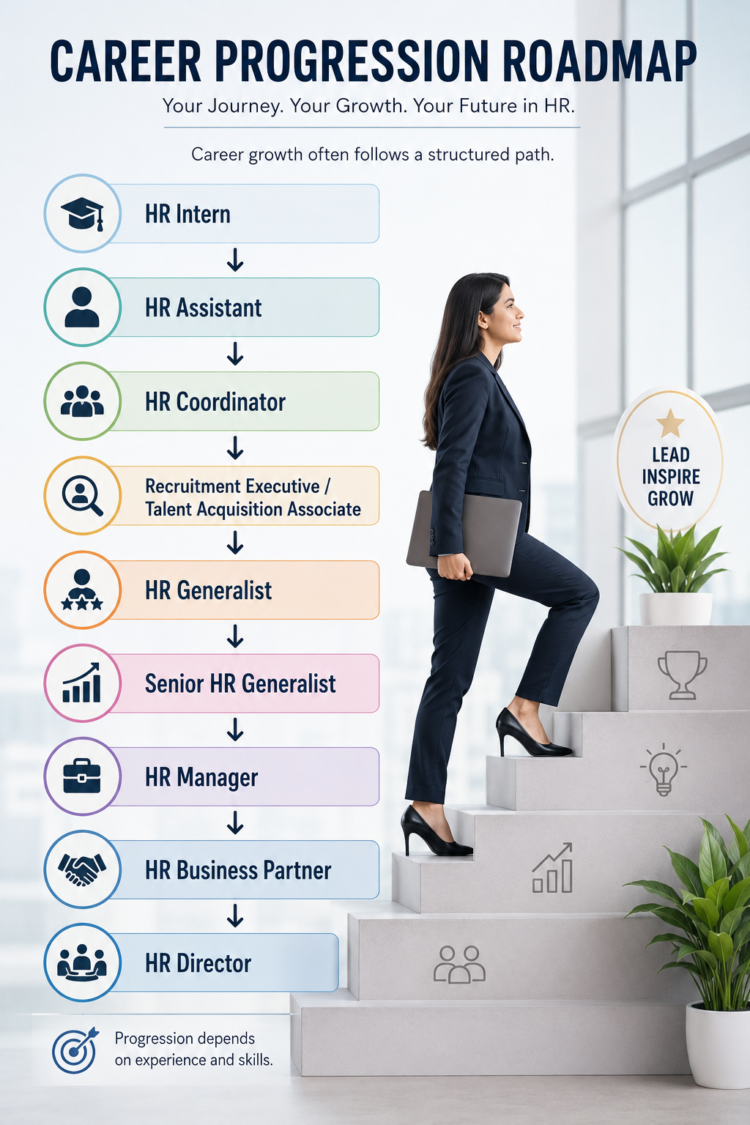
Career Progression Roadmap
Career growth often follows a structured path.
Typical HR Career Ladder
HR Intern
⬇
HR Assistant
⬇
HR Coordinator
⬇
Recruitment Executive / Talent Acquisition Associate
⬇
HR Generalist
⬇
Senior HR Generalist
⬇
HR Manager
⬇
HR Business Partner
⬇
HR Director
Progression depends on experience and skills.
Growth Opportunities Beyond HR Generalist
Many career paths become available.
HR Manager
HR Managers oversee HR operations.
Responsibilities include:
- Team leadership.
- Policy implementation.
- Workforce planning.
- Strategic initiatives.
Management responsibilities increase significantly.
Talent Management Specialist
This role focuses on employee development.
Areas often include:
- Learning programs.
- Leadership development.
- Succession planning.
- Employee growth strategies.
Organizations value talent development.
HR Business Partner
HR Business Partners support business goals.
Responsibilities often include:
- Workforce planning.
- Organizational development.
- Leadership collaboration.
- Strategic HR initiatives.
This role combines business and HR knowledge.
HR Director
HR Directors lead entire HR departments.
Responsibilities include:
- Strategic planning.
- Policy development.
- Organizational leadership.
- Workforce strategy.
This position represents advanced career growth.
🎓 Educational Requirements to Become an HR Generalist
Education provides a strong starting point. It helps build business and people-management knowledge.
Degrees That Can Help
Several educational backgrounds support HR careers.
Human Resource Management
This degree focuses directly on HR topics.
Common subjects include:
- Recruitment.
- Employee relations.
- Compensation.
- Labor laws.
It provides specialized knowledge.
Business Administration
Business knowledge benefits HR professionals.
Topics often include:
- Management.
- Operations.
- Organizational behavior.
- Business strategy.
Business understanding supports career growth.
Psychology
Psychology helps understand people.
Relevant areas include:
- Human behavior.
- Motivation.
- Communication.
- Workplace interactions.
These skills support employee management.
Commerce
Commerce graduates frequently enter HR careers.
Useful topics include:
- Business operations.
- Finance basics.
- Organizational management.
- Administrative functions.
Commerce provides strong foundations.
Is a Degree Mandatory?
A degree often improves opportunities. However, it is not always mandatory.
Many employers value:
- Practical experience.
- Relevant certifications.
- HR skills.
- Professional knowledge.
Skills often matter alongside education.
Certifications That Add Value
Certifications strengthen professional profiles.
Popular options include:
- HR Certification Programs.
- Talent Acquisition Certifications.
- Payroll Management Courses.
- Labor Law Certifications.
- HR Analytics Programs.
- HRMS Training Courses.
Certifications demonstrate commitment to learning.
🛠️ Essential Skills Every HR Generalist Must Develop
Strong skills support career success. HR professionals work with people daily. Technical knowledge also matters.
Recruitment and Talent Acquisition
Hiring remains a core responsibility.
Important abilities include:
- Resume screening.
- Interview coordination.
- Candidate evaluation.
- Talent sourcing.
Recruitment skills improve hiring outcomes.
Employee Relations and Conflict Resolution
Workplaces occasionally experience conflicts.
HR professionals should understand:
- Problem-solving.
- Mediation techniques.
- Employee communication.
- Workplace relationships.
Healthy relationships improve workplace culture.
Communication and Interpersonal Skills
Communication affects every HR function.
Important skills include:
- Active listening.
- Verbal communication.
- Written communication.
- Relationship building.
Strong communication creates trust.
Payroll and Compensation Basics
Payroll knowledge remains valuable.
Important areas include:
- Salary structures.
- Attendance tracking.
- Benefits administration.
- Compensation processes.
Understanding payroll improves effectiveness.
HR Compliance and Labor Laws
Compliance knowledge protects organizations.
Important topics include:
- Employment regulations.
- Workplace policies.
- Documentation standards.
- Legal requirements.
Knowledge reduces compliance risks.
Data Management and HR Analytics
Data influences HR decisions.
Useful skills include:
- Reporting.
- Data analysis.
- Record management.
- Workforce metrics.
Data-driven decisions improve outcomes.
HR Software and Technology Skills
Technology supports modern HR operations.
Common tools include:
- HRMS platforms.
- ATS software.
- Payroll systems.
- Employee portals.
Technology skills improve productivity.
💡 Pro Tip
Build both people skills and technical skills. Employers value balanced HR professionals.
Is being an HR your dream? Enrol now for our course on Human Resource!
Become an HR Expert – Enroll in Our HR Management Course Today!
Unlock the secrets to effective Human Resource Management with our expert-led course! Learn recruitment, employee relations, performance management, and more to build a thriving workplace. Start your journey toward a successful HR career today!
Know More🛤️ Step-by-Step Guide to Becoming an HR Generalist
Building an HR career takes time. Skills and experience matter greatly. Following a structured approach helps. Each step builds professional readiness.
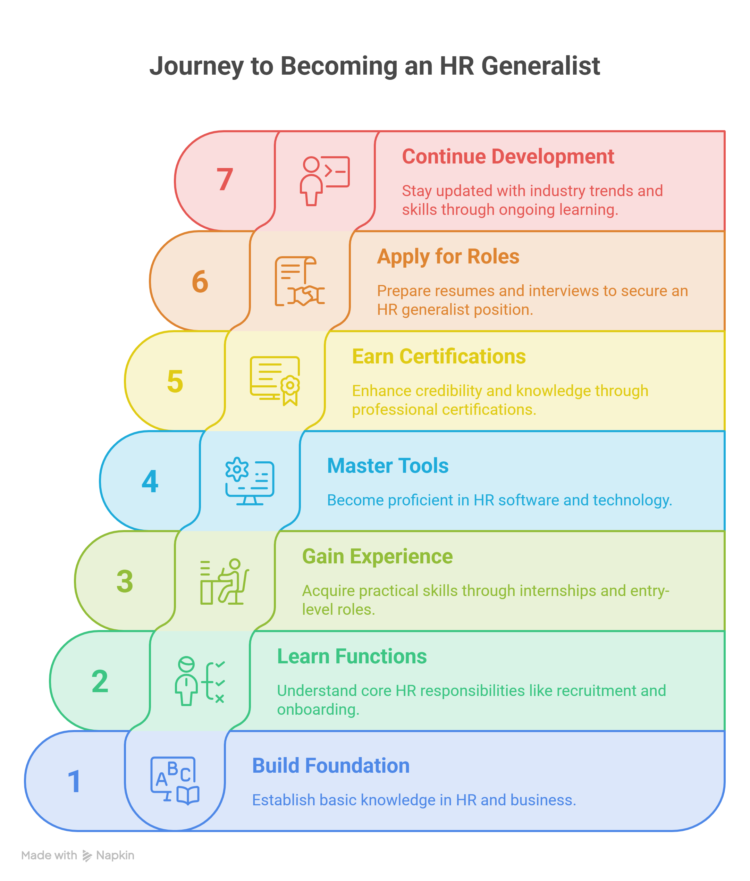
Step 1: Build a Strong Educational Foundation
Education provides basic knowledge.
Helpful areas include:
- Human resources.
- Business administration.
- Psychology.
- Commerce.
A strong foundation supports future learning.
Focus on Business Knowledge
HR professionals work with organizations.
Useful topics include:
- Management principles.
- Organizational behavior.
- Workplace communication.
- Business operations.
Business knowledge improves decision-making.
Step 2: Learn Core HR Functions
HR Generalists manage many responsibilities.
Important functions include:
- Recruitment.
- Onboarding.
- Employee relations.
- Payroll support.
- Compliance.
Understanding each area is essential.
Study HR Processes
Learning should go beyond theory.
Focus on:
- Hiring workflows.
- Employee lifecycle stages.
- Documentation procedures.
- Policy implementation.
Practical knowledge creates confidence.
Step 3: Gain Practical Experience
Experience remains highly valuable.
Employers often seek practical exposure.
Ways to gain experience include:
- Internships.
- Entry-level positions.
- Volunteer opportunities.
- HR support roles.
Experience develops workplace understanding.
Learn Through Daily Tasks
Small responsibilities build expertise.
Examples include:
- Scheduling interviews.
- Maintaining records.
- Assisting onboarding.
- Supporting recruitment.
These tasks develop HR skills.
Step 4: Master HR Tools and Software
Technology plays a major role.
Modern HR teams use software daily.
Important tools include:
- HRMS platforms.
- ATS systems.
- Payroll software.
- Employee databases.
Technical skills improve efficiency.
Become Comfortable With Digital Systems
Employers value technology skills.
Benefits include:
- Faster workflows.
- Better organization.
- Improved reporting.
- Accurate records.
Technology knowledge increases employability.
Step 5: Earn Relevant Certifications
Certifications strengthen professional profiles.
They also demonstrate learning commitment.
Benefits include:
- Additional knowledge.
- Better credibility.
- Industry recognition.
- Career development.
Learning should remain continuous.
Step 6: Apply for HR Generalist Roles
Applications require preparation.
Important areas include:
- Resume quality.
- Interview preparation.
- Professional networking.
- Skill development.
Preparation improves opportunities.
Highlight Relevant Experience
Employers value practical examples.
Demonstrate experience with:
- Recruitment.
- Employee support.
- Documentation.
- HR technology.
Relevant experience attracts attention.
Step 7: Continue Professional Development
Learning never stops in HR.
Workplaces continue evolving.
Professional development may include:
- Workshops.
- Seminars.
- Certifications.
- Industry events.
Continuous learning supports growth.
💡 Pro Tip
Consistency matters more than speed.
⚖️ HR Generalist Skills vs HR Specialist Skills
Both roles contribute significantly. However, responsibilities differ.
| Aspect | HR Generalist | HR Specialist |
|---|---|---|
| Scope of Work | Multiple HR functions | One specific HR area |
| Areas of Responsibility | Broad responsibilities | Focused expertise |
| Career Focus | Overall HR operations | Specialized functions |
| Skill Requirements | Versatile skill set | Deep technical knowledge |
| Organizational Role | Supports many departments | Supports specific functions |
Key Difference
- Generalists handle many responsibilities.
- Specialists focus deeply on one area.
- Both career paths offer growth.
💻 Tools and Technologies Used by HR Generalists
Technology improves HR efficiency. Most organizations use digital tools.
HRMS Platforms
HRMS systems manage employee information.
Common uses include:
- Employee records.
- Attendance tracking.
- Leave management.
- Workforce reporting.
Examples
- BambooHR.
- Zoho People.
- SAP SuccessFactors.
- Workday.
Applicant Tracking Systems (ATS)
ATS platforms support recruitment.
Common functions include:
- Resume management.
- Candidate tracking.
- Interview scheduling.
- Recruitment reporting.
Examples
- Greenhouse.
- Lever.
- Workable.
- iCIMS.
Payroll Software
Payroll systems improve accuracy.
Common tasks include:
- Salary processing.
- Tax calculations.
- Attendance integration.
- Benefits administration.
Examples
- ADP.
- Paychex.
- Gusto.
- Razorpay Payroll.
Employee Engagement Tools
Engagement platforms improve workplace experiences.
Common uses include:
- Surveys.
- Feedback collection.
- Recognition programs.
- Employee communication.
Examples
- Culture Amp.
- Officevibe.
- Kudos.
- 15Five.
HR Analytics Platforms
Analytics supports decision-making.
Organizations track:
- Turnover rates.
- Hiring metrics.
- Employee engagement.
- Workforce trends.
Examples
- Visier.
- Tableau.
- Power BI.
- Workday Analytics.
⚠️ Challenges HR Generalists Commonly Face
HR roles can be rewarding. They can also be demanding.
Managing Multiple HR Functions
Generalists handle many responsibilities.
Examples include:
- Recruitment.
- Payroll support.
- Employee relations.
- Compliance activities.
Prioritization becomes important.
Handling Employee Conflicts
Conflicts occur in workplaces.
Examples include:
- Team disagreements.
- Communication issues.
- Workplace misunderstandings.
- Performance concerns.
Conflict resolution skills matter greatly.
Staying Updated With Labor Laws
Regulations change frequently.
HR professionals must monitor:
- Employment laws.
- Policy updates.
- Compliance requirements.
- Workplace regulations.
Knowledge remains essential.
Balancing Employee and Business Needs
Organizations have business goals.
Employees have workplace expectations.
HR professionals often balance:
- Productivity.
- Employee satisfaction.
- Compliance.
- Organizational objectives.
Finding balance requires judgment.
🌟 Benefits of Choosing a Career as an HR Generalist
HR careers offer many advantages. The role provides broad exposure.
Diverse Career Exposure
Generalists work across functions.
Benefits include:
- Broader experience.
- Varied responsibilities.
- Continuous learning.
- Greater versatility.
Every day feels different.
Strong Career Growth Potential
Career progression remains attractive.
Advantages include:
- Promotion opportunities.
- Leadership pathways.
- Specialized roles.
- Management positions.
Growth often depends on performance.
Opportunities Across Industries
Almost every organization needs HR support.
Industries include:
- Information technology.
- Healthcare.
- Manufacturing.
- Retail.
- Education.
Opportunities remain widespread.
Leadership Development
HR professionals interact with leaders regularly.
This exposure develops:
- Communication abilities.
- Decision-making skills.
- Strategic thinking.
- Workplace influence.
Leadership potential increases gradually.
Competitive Salary Prospects
Compensation often grows with experience.
Income may increase through:
- Promotions.
- Certifications.
- Specializations.
- Leadership roles.
Growth rewards professional development.
🤔 Is HR Generalist a Good Career Choice?
Many professionals choose HR careers. The role offers stability and growth.
Who Should Consider This Career?
This career suits individuals who enjoy:
- Working with people.
- Solving workplace issues.
- Communication.
- Organization.
- Continuous learning.
People-focused professionals often succeed.
Industries Hiring HR Generalists
Demand exists across sectors.
Examples include:
- Technology companies.
- Healthcare organizations.
- Manufacturing firms.
- Educational institutions.
- Financial services.
HR remains essential everywhere.
Future Demand and Job Outlook
Organizations continue growing.
Workforces require proper management.
Demand remains driven by:
- Talent acquisition.
- Employee engagement.
- Compliance requirements.
- Organizational development.
Future opportunities remain promising.
🚫 Common Mistakes to Avoid When Pursuing an HR Generalist Career
Avoiding mistakes improves career progression.
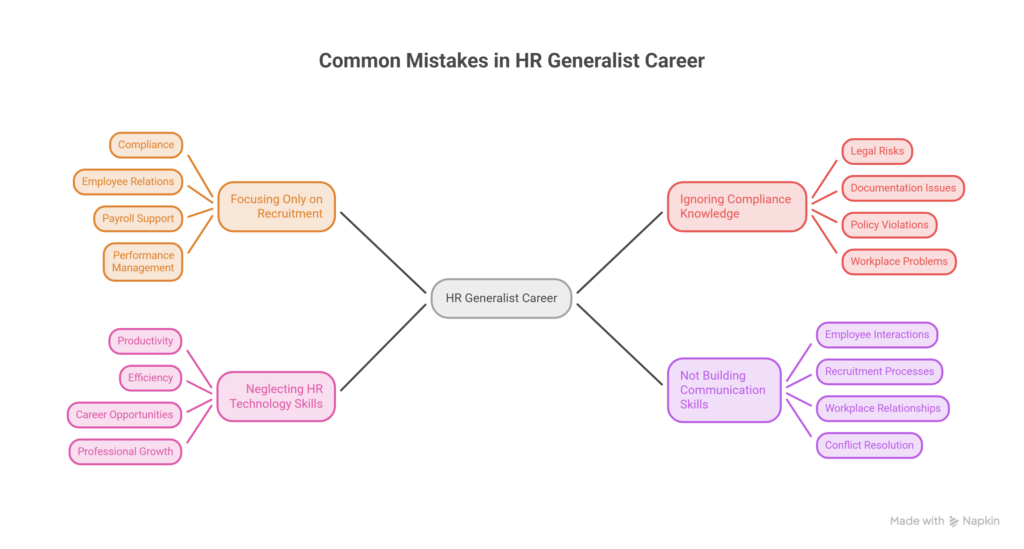
Focusing Only on Recruitment
Recruitment is important.
However, HR involves more areas.
Examples include:
- Compliance.
- Employee relations.
- Payroll support.
- Performance management.
Broader knowledge creates value.
Ignoring Compliance Knowledge
Compliance affects organizations significantly.
Lack of knowledge may create:
- Legal risks.
- Documentation issues.
- Policy violations.
- Workplace problems.
Compliance knowledge remains essential.
Neglecting HR Technology Skills
Technology supports modern HR operations.
Ignoring software may limit:
- Productivity.
- Efficiency.
- Career opportunities.
- Professional growth.
Technology skills matter greatly.
Not Building Communication Skills
Communication influences every HR activity.
Weak communication may affect:
- Employee interactions.
- Recruitment processes.
- Workplace relationships.
- Conflict resolution.
Strong communication creates success.
🏆 Conclusion
Becoming an HR Generalist requires education, skills, and experience. The role covers many HR functions. This creates diverse learning opportunities. It also develops valuable workplace skills.
Career growth opportunities remain strong. HR Generalists can progress into leadership roles. They can also pursue specialized career paths. Organizations across industries continue hiring HR professionals.
Success requires continuous learning. Knowledge of HR functions remains important. Technology skills also matter greatly. With dedication and practical experience, HR Generalist can become a rewarding long-term career.
| Related Links | |
| Top Human Resource Blogs to Follow | How to build a remote HR career |
| HR Certification vs HR Degree | Which one to choose? | 15 HR Intern Interview Questions and Sample Answers |
Become an HR Expert – Enroll in Our HR Management Course Today!
Unlock the secrets to effective Human Resource Management with our expert-led course! Learn recruitment, employee relations, performance management, and more to build a thriving workplace. Start your journey toward a successful HR career today!
Know MoreFrequently Asked Questions
What qualification is required to become an HR Generalist?
Most employers prefer a degree in HR, Business Administration, Commerce, or Psychology. Relevant certifications can also add value.
Can I become an HR Generalist without an HR degree?
Yes, many professionals enter HR from different backgrounds. Certifications and practical experience can improve opportunities.
How many years does it take to become an HR Generalist?
Many professionals reach HR Generalist roles within one to three years. The timeline depends on experience and career progression.
What skills are most important for HR Generalists?
Communication, recruitment, and employee relations skills are important. Knowledge of HR processes and technology is also valuable.
Is HR Generalist a stressful job?
The role can be challenging at times. Good planning and communication can help manage responsibilities effectively.
What is the average salary of an HR Generalist?
Salary varies by experience, industry, and location. Higher qualifications and experience often increase earning potential.
Which certification is best for HR professionals?
HR Management, Talent Acquisition, and HR Analytics certifications are popular choices. They help strengthen professional skills.
What is the difference between an HR Generalist and HR Manager?
HR Generalists handle various HR functions. HR Managers oversee teams and broader HR strategies.
Is HR Generalist a good career in India?
Yes, HR Generalist remains a strong career option. Many industries continue hiring HR professionals.
What software should HR professionals learn?
HRMS platforms, ATS tools, and payroll software are commonly used. Knowledge of these tools improves efficiency and employability.