Table of Contents
AI will not replace content writers. But it is a fact we cannot ignore that it has already replaced the kind of writing that used to define entry-level jobs. So, it depends on what kind of writer you are.
Commodity work such as product descriptions and generic listicles has largely moved to AI. Therefore, demand is rising fast for writers who can bring strategy, subject-matter expertise, and editorial judgment.
Content-related roles are being redefined around collaboration with AI rather than replacement, even as writing rates for basic SEO content have collapsed toward zero. Also, salaries for AI-augmented content strategists have climbed higher than usual.
Join Our Online Next Gen AI Digital Marketing Course & Learn the Fundamentals!
Key Takeaways
- AI handles commodity content but not original reporting or high‑stakes work.
- Content roles shift to AI plus human. Basic writing rates fell.
- Google AI Overviews cut organic CTR by ~40% to 60%. Sources matter.
- Domain experts (finance, healthcare, law, technical) are in demand.
- Key skills – prompt engineering, fact‑checking, SEO/AEO/GEO, original voice.
- AI‑only publishing risks search visibility and trust.
- Biggest risk – Staying a commodity writer instead of a content strategist.
Why this Question Matters Right Now
1: What is the primary goal of SEO (Search Engine Optimization)?

Content teams everywhere are recalibrating. Search behaviour has changed dramatically. AI Overviews now show up on close to half of all Google searches. When they appear, organic click-through rates typically fall by 40% to 60% depending on the query type.
Cited brands earn significantly more organic clicks per impression than uncited brands on the same AI Overview query.
That single fact reshapes the entire debate. It is not just “will AI write the article”. It is “will AI’s summary of the article be the only thing most users ever see.” Writers who understand this shift are already adapting their approach: writing to be cited, not just to rank.
Become an AI-powered Digital Marketing Expert
Master AI-Driven Digital Marketing: Learn Core Skills and Tools to Lead the Industry!
Explore CourseWhich Content Tasks has AI Actually Taken Over?
| Task Type | AI’s Current Role | Why |
| Product descriptions, catalog copy | Mostly automated | Template-driven, spec-based, low creative demand |
| Short news blurbs, summaries | Mostly automated | Pattern-based aggregation from existing sources |
| First-draft SEO listicles | AI drafts, human edits | Needs fact-checking, unique angle, brand voice |
| How-to guides, explainers | Hybrid | AI structures, humans verify and personalise |
| Investigative or opinion journalism | Human-led | Requires original reporting, judgment, accountability |
| Technical/regulated content (finance, medical, legal) | Human-led, AI-assisted | Requires domain expertise and liability accountability |
The market for basic SEO articles, product descriptions, social media posts, and press releases has contracted sharply, with content mills largely replaced by AI content tools.
But original reporting, investigative journalism, thought leadership, creative writing, brand voice development, and content strategy remain firmly in human hands. This is because the value has shifted from writing volume to writing quality, originality, and strategic thinking.
What the Data Says about Jobs

The numbers on this topic vary depending on the source and methodology, but a consistent pattern shows up across independent studies:
- 73% of content roles are being redefined for AI collaboration, not replacement.
- Industry data shows hybrid workflows: AI handles stages, not whole jobs.
- 72% of content marketers use AI as a production accelerator alongside writers.
- 78% of AI-using creators report higher productivity and income.
- AI handles research, first drafts, and repurposing; writers keep expertise and audience relationships.
- Commodity content roles could shrink 40% to 60% by 2028.
- Rates for pure commodity writing have fallen; strategic, expert-led roles pay more.
The takeaway isn’t that writing jobs are vanishing. It is that the definition of a content writer is split into two very different tracks:
- Commodity production (increasingly automated)
- Strategic, expert-led content (increasingly valuable)
Skills Content Writers Need to Build Now
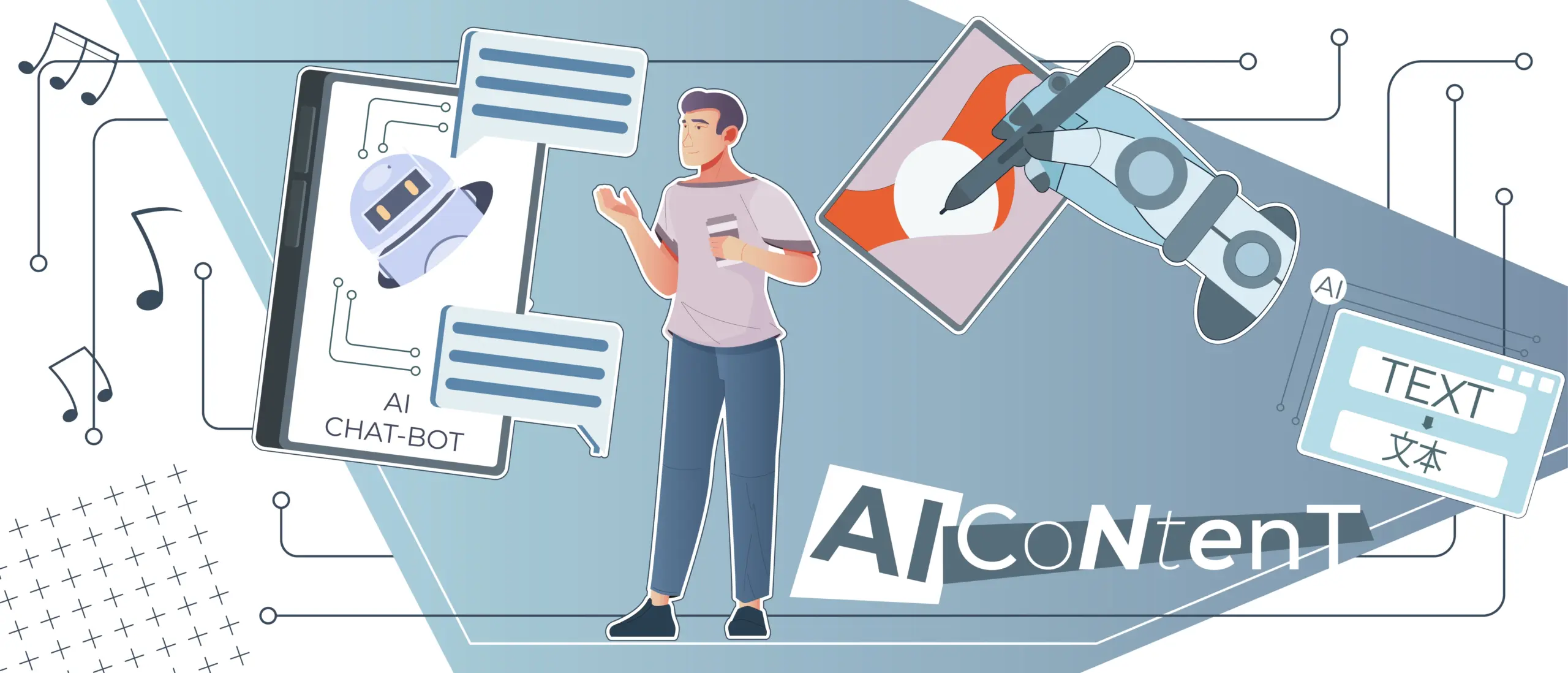
- Prompt engineering – writing precise, constrained prompts that produce usable, accurate first drafts instead of generic filler.
- Fact-checking and editorial judgment – catching AI hallucinations, verifying data, and correcting citations before publishing.
- Domain expertise – specialising in a field (finance, engineering, healthcare, education) where accuracy carries real consequences and generic AI output isn’t good enough.
- SEO, AEO, and GEO fluency – structuring content for both traditional search rankings and AI-generated answers, since more searches now resolve inside AI summaries rather than on the page.
- Original voice and storytelling – the one thing AI genuinely cannot replicate: a distinct perspective shaped by real experience.
- Data literacy – reading traffic, engagement, and conversion metrics to know what’s actually working, not just what sounds good.
Become an AI-powered Digital Marketing Expert
Master AI-Driven Digital Marketing: Learn Core Skills and Tools to Lead the Industry!
Explore CourseHow Content Workflows are Changing
| Workflow Model | How it Works | Best for |
| Writer + AI assistant | Writer drafts direction, AI generates first pass, writer edits and fact-checks | Solo creators, freelancers |
| Editor-led curation | AI produces multiple draft options, editors select and refine the strongest | Mid-size content teams |
| Subject-matter expert model | SME provides core insight, AI expands into full-length content, SME verifies | Regulated or technical niches |
| Agency scale model | AI handles volume and templates, humans lead strategy and client-facing decisions | Agencies managing multiple accounts |
Building Trust into AI-Assisted Content
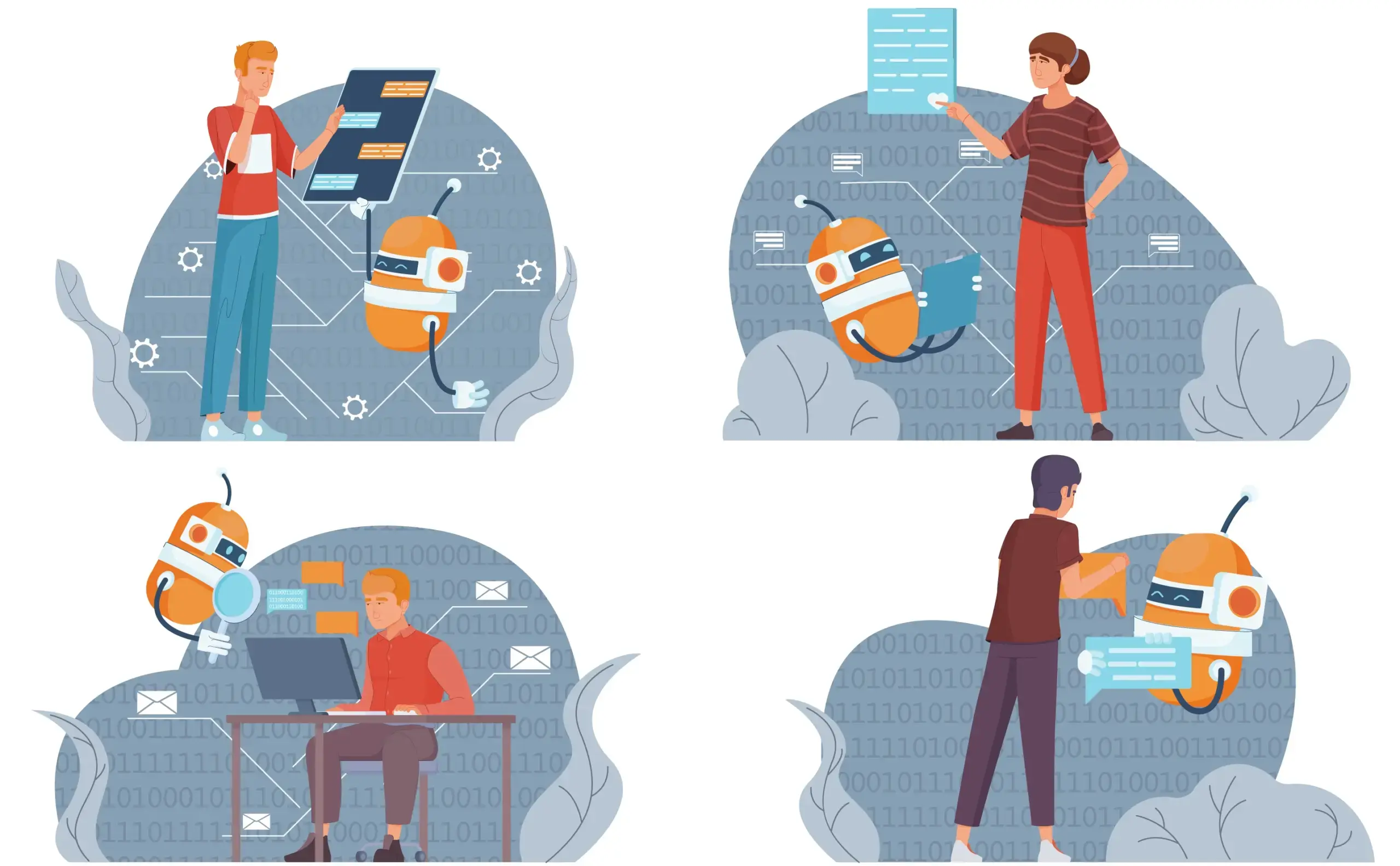
AI-generated text can contain factual errors, outdated data, or invented citations. Therefore, a verification layer is not optional at all.
It is that one important factor which separates content that ranks. Not just that, it gets cited from content that quietly loses trust over time. Here is a reliable checklist:
- Verify every fact with a primary or authoritative source before publishing.
- Independently confirm any AI-suggested citation or URL.
- Run plagiarism and originality checks on final drafts.
- Add an editorial pass for tone, brand voice, and factual compliance.
- Maintain version history to trace human edits and accountability.
Metrics that Matter for AI-Assisted Content
| Metric | Why it Matters |
| Organic traffic and keyword rankings | Core visibility signal, now harder to earn as AI Overviews absorb clicks |
| Citation rate inside AI Overviews/AI answers | Increasingly as important as traditional ranking |
| Dwell time and engagement | Signals whether content actually satisfies intent, not just matches keywords |
| Conversion rate | Ties content performance to real business outcomes |
| Fact-check correction rate | Quality-control metric for AI-assisted drafts |
Kickstart your Dream career with Online Performance Marketing Course in Kerala. Enrol Now!
Conclusion
AI continues to change what it means to be a content writer. But it has not ended the profession at all. It is just making the commodity end of the spectrum disappear. The generic, templated, low-stakes writing that AI now produces is faster and cheaper than any human could.
What is growing is everything AI still cannot do reliably on its own. You need original reporting, with subject-matter expertise. Also brand storytelling, and the editorial judgment needed to keep content accurate and trustworthy in a search landscape increasingly filtered through AI summaries.
The writers who thrive from here won’t be the ones competing with AI on speed. They will be the ones who treat it as a research and drafting tool. Also, add the expertise and verification AI cannot provide, and build content that is worth citing.
Frequently Asked Questions
Will AI completely replace content writers?
No. AI has automated routine, templated writing, but strategy, fact-checking, domain expertise, and original voice remain human-led tasks that AI cannot reliably replicate.
Which content writing jobs are most at risk from AI?
Roles focused on product descriptions, generic listicles, and short news summaries face the highest automation risk, since these tasks are template-driven and pattern-based.
Which writing roles are safest from AI automation?
Investigative journalism, opinion writing, technical and regulated content, and brand storytelling remain largely human-led because they require original reporting, judgment, and accountability.
How is Google's AI Overview affecting content writers?
AI Overviews now appear on a large share of searches and reduce organic click-through rates significantly, making citation-worthy, well-structured content more important than simply ranking higher.
What skills should a content writer learn to stay relevant?
Prompt engineering, fact-checking, SEO/AEO fluency, domain specialisation, and data literacy are the core skills separating in-demand writers from those being automated out.
Do businesses lose SEO ranking by publishing AI-only content?
Search platforms increasingly reward verified, well-sourced, expert-backed content, so AI-only content without human editorial oversight risks lower trust and visibility over time.
Are domain experts more valuable than generalist writers now?
Yes. Writers with real expertise in fields like finance, healthcare, or technology are in higher demand because AI cannot reliably self-certify accuracy in high-stakes topics.
Will AI reduce demand for content writers in the next few years?
Demand for commodity writing is expected to keep shrinking, but demand for content strategists who can manage AI-assisted workflows and ensure quality is rising.
What is the biggest mistake writers make when adapting to AI tools?
Treating AI as a replacement for their own judgment instead of using it as an assistant — skipping fact-checking or original insight is what actually puts a writer’s work at risk of losing trust and traffic.
Can AI write SEO-friendly content on its own?
AI can generate structurally sound drafts quickly, but human-led intent mapping, fact verification, and editorial polish still determine whether that content actually ranks and earns trust.