
Table of Contents
Things You Should Never Pack — Answer First
Some items should never enter checked baggage. Power banks must stay in cabin baggage. Spare lithium batteries also require cabin carriage. Essential medicines should remain accessible. Passports and valuables should stay with passengers.
Other items are completely prohibited onboard. These include explosives and fireworks. Flammable fuels are also prohibited. Corrosive chemicals can create serious risks. Toxic and infectious materials face strict restrictions.
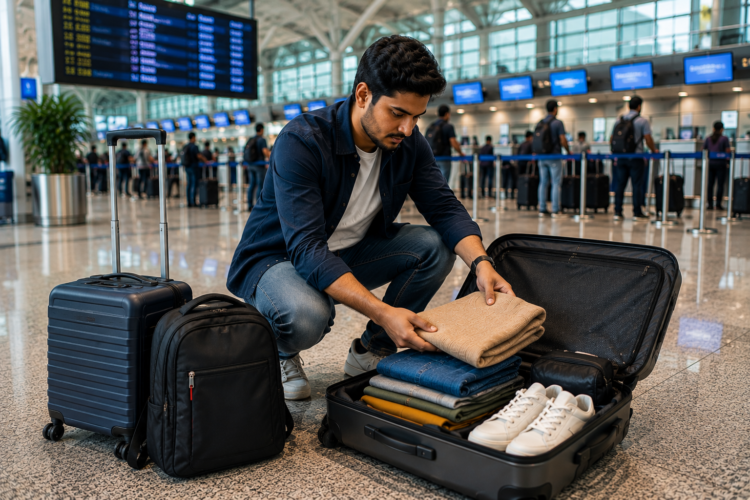
Items That Should Stay in Cabin Baggage
- Power banks.
- Spare lithium batteries.
- Essential medicines.
- Important documents.
- Cash.
- Jewellery.
- Valuable electronics.
- Medical devices.
- Travel identification.
- Critical personal items.
Completely Prohibited Items
Some items cannot travel in passenger baggage.
These commonly include:
- Fireworks.
- Flares.
- Explosives.
- Ammunition.
- Flammable fuels.
- Lighter refills.
- Paint thinners.
- Corrosive chemicals.
- Toxic substances.
- Infectious materials.
- Certain compressed gases.
Some special goods require separate approval. Others require specialised cargo transportation.
What Happens If Restricted Items Are Found?
Security staff may remove restricted items. Authorities may confiscate prohibited goods. Some cases can cause travel delays. Serious violations may trigger further investigation.
Airlines can refuse carriage of restricted items. Passengers may also face additional security checks.
Why Airlines Restrict Certain Items in Checked Luggage
Checked luggage travels inside aircraft holds. Passengers cannot access these bags during flights. This creates additional safety concerns.
Certain hazards need immediate attention. Battery fires are one major example. Crew members have limited hold access. Hidden hazards can become difficult to manage.
Battery-Related Risks
Lithium batteries require special attention.
Common examples include:
- Power banks.
- Spare batteries.
- Camera batteries.
- Laptop batteries.
- Drone batteries.
- Gaming device batteries.
Spare batteries should remain in cabin baggage. Their terminals should also remain protected.
Why Can Batteries Become Dangerous?
Damaged batteries can overheat unexpectedly. Overheating can cause thermal runaway. This can produce intense heat. It may also create smoke or flames.
Cabin transportation allows faster detection. Crew members can respond more quickly.
Fire-Related Risks
Some materials can ignite easily.
Examples include:
- Petrol.
- Diesel.
- Lighter fuel.
- Paint thinner.
- Flammable solvents.
- Certain aerosols.
- Fuel additives.
Such materials can create dangerous vapours. They can also ignite under certain conditions.
Chemical Risks
Some chemicals can damage aircraft systems. Others can seriously harm people.
Restricted examples include:
- Strong acids.
- Strong alkalis.
- Mercury.
- Wet-cell batteries.
- Certain pesticides.
- Oxidising chemicals.
- Certain bleaching agents.
These substances require specialised handling. Passenger baggage is unsuitable for many chemicals.
Explosive Risks
Explosive materials present serious aviation risks.
These include:
- Fireworks.
- Flares.
- Ammunition.
- Explosive devices.
- Detonating components.
- Certain novelty explosives.
These materials require specialist transportation arrangements.
✈️ Start Your Aviation Career Today
Explore career-focused insights on airport jobs, ground staff roles, and aviation training. Learn about salaries, skills, certifications, and hiring trends to start and grow your career in the aviation industry.
Join NowEssential Items You Should Always Keep in Your Carry-On
Carry-on baggage should contain travel essentials. These items should remain accessible throughout travel.
Checked baggage can become temporarily unavailable. Delayed bags can create major inconvenience.
1. Travel Documents
Important documents should stay accessible.
Keep these inside your cabin bag:
- Passport.
- Government identification.
- Boarding pass.
- Visa documents.
- Travel insurance.
- Booking confirmations.
- Emergency contacts.
- Important certificates.
Never place irreplaceable documents inside checked luggage.
2. Essential Medicines
Medicines should remain easily accessible. Checked baggage can become temporarily unavailable.
Carry essential medicines such as:
- Prescription medicines.
- Emergency medicines.
- Inhalers.
- Insulin supplies.
- Medical devices.
- Prescribed accessories.
Keep medicines properly labelled. Carry prescriptions when appropriate.
3. Power Banks
Power banks belong in cabin baggage. They should not enter checked luggage. Keep them protected from physical damage. Battery terminals should avoid accidental contact.
4. Spare Lithium Batteries
Loose batteries require special handling.
Examples include:
- Camera batteries.
- Laptop batteries.
- Drone batteries.
- Rechargeable battery packs.
- Replacement lithium batteries.
These should remain in cabin baggage. Their terminals should remain protected.
5. Valuable Electronics
Keep expensive electronics nearby.
These may include:
- Laptops.
- Tablets.
- Cameras.
- Smartphones.
- Gaming devices.
- Smartwatches.
Checked baggage can face rough handling. Theft or accidental damage is also possible.
6. Cash and Financial Items
Cash should remain with passengers.
Carry:
- Cash.
- Credit cards.
- Debit cards.
- Cheques.
- Bank documents.
- Important receipts.
Avoid placing these inside checked luggage.
7. Jewellery and Valuables
Jewellery should remain in cabin baggage.
Examples include:
- Gold jewellery.
- Watches.
- Precious stones.
- Expensive accessories.
- Family heirlooms.
These items can be difficult to replace. Their financial value can also be significant.
8. Essential Personal Items
Keep important daily items nearby.
These can include:
- Prescription glasses.
- Contact lens supplies.
- Hearing devices.
- Essential chargers.
- Personal care items.
- Important keys.
Delayed luggage can make these items difficult.
Restricted or Prohibited Items in Checked Baggage
Not every restricted item is completely banned. Some items require cabin transportation. Others require prior approval.
Understanding these differences prevents packing mistakes.
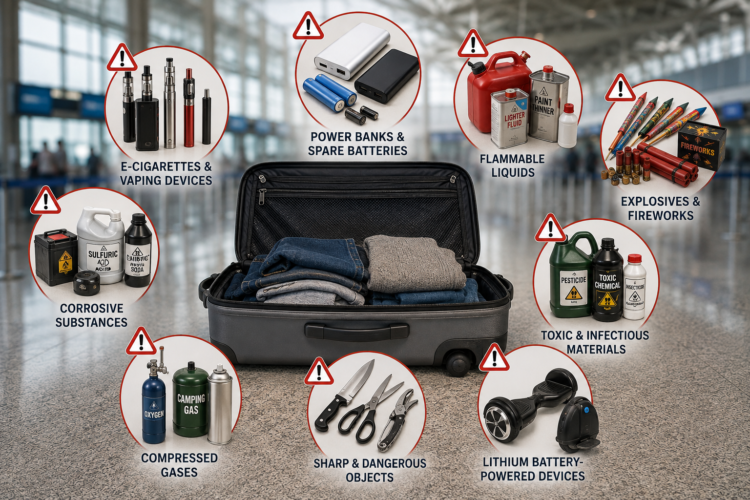
Power Banks and Spare Batteries
These should never enter checked baggage.
Power banks are spare lithium batteries. They need safer handling during transportation.
E-Cigarettes and Vaping Devices
Electronic smoking devices require special handling.
Examples include:
- E-cigarettes.
- Vaping devices.
- Personal vaporizers.
- Electronic smoking devices.
Some airlines prohibit these devices completely. Destination regulations may also apply.
Flammable Liquids
Flammable liquids create serious fire risks.
Examples include:
- Petrol.
- Diesel.
- Lighter fuel.
- Paint thinner.
- Solvents.
- Fuel additives.
- Certain industrial liquids.
These should not enter passenger baggage.
Explosives and Fireworks
Explosives are prohibited in passenger baggage.
Examples include:
- Fireworks.
- Flares.
- Ammunition.
- Explosive devices.
- Pistol caps.
- Detonating materials.
Such materials require specialised transportation.
Corrosive Substances
Corrosive materials can damage aircraft systems.
Examples include:
- Strong acids.
- Strong alkalis.
- Mercury.
- Wet-cell batteries.
- Certain chemical cleaners.
These substances can also injure handlers.
Toxic and Infectious Materials
Certain substances can create serious health risks.
Examples can include:
- Insecticides.
- Weed killers.
- Toxic chemicals.
- Infectious substances.
- Certain biological materials.
These materials require specialised transportation controls.
Compressed Gases
Compressed gases can create significant risks.
Restricted examples include:
- Butane.
- Oxygen cylinders.
- Camping gas.
- Gas cartridges.
- Compressed oxygen.
- Certain aerosol gases.
Approved medical equipment can have exceptions. Approval may still be required.
Sharp and Dangerous Objects
Some sharp objects face strict restrictions. Certain items may enter checked baggage.
Examples can include:
- Large knives.
- Swords.
- Certain scissors.
- Sharp tools.
- Blades.
- Sporting weapons.
Always verify the specific airline requirements.
Lithium Battery-Powered Devices
Some devices face additional restrictions.
These can include:
- Hoverboards.
- Segways.
- Balance wheels.
- Self-balancing boards.
- Similar motorised devices.
Some lithium-powered devices may be prohibited completely.
Key Packing Rule
Do not assume checked baggage is safer. Some items become riskier there. Others remain prohibited everywhere.
Always identify each item’s category:
- Cabin-only items.
- Checked-only items.
- Approval-required items.
- Completely prohibited items.
This approach prevents common packing mistakes.
✈️ Start Your Aviation Career Today
Explore career-focused insights on airport jobs, ground staff roles, and aviation training. Learn about salaries, skills, certifications, and hiring trends to start and grow your career in the aviation industry.
Join NowFrequently Asked Questions
Can power banks be packed in checked baggage?
No, power banks should not be packed in checked baggage because they contain lithium batteries that can create fire risks. They should generally be carried in cabin baggage according to airline and aviation safety requirements.
Can laptops be placed inside checked baggage?
Laptops are best carried inside cabin baggage because they contain lithium-ion batteries and can also be damaged during baggage handling. Keeping them nearby also makes security screening and access during travel easier.
Should medicines be packed in checked baggage?
Essential medicines should preferably remain in cabin baggage because checked luggage can be delayed or misplaced. Prescription medicines should remain properly labelled, and supporting medical documents may be useful when required.
Can jewellery be packed in checked baggage?
Jewellery should not be packed in checked baggage because valuable items can be lost, damaged, or stolen during handling. Gold, precious stones, expensive watches, and sentimental jewellery should remain with the passenger.
What happens when prohibited items are found in checked baggage?
Airport security staff may remove or confiscate prohibited items before travel. Depending on the item and circumstances, passengers may also face additional screening, delays, refusal of carriage, or further investigation.
Can spare lithium batteries go inside checked baggage?
Spare lithium batteries should generally remain in cabin baggage rather than checked luggage. Their terminals should also be protected to prevent accidental contact, short circuits, or damage.
Can flammable liquids be carried in checked baggage?
Common flammable liquids such as petrol, lighter fuel, paint thinner, and certain solvents are generally prohibited in passenger baggage. These substances can create fire hazards and may require specialised transportation instead.
Can electronic cigarettes be packed in checked baggage?
Electronic cigarettes and vaping devices should not be placed casually inside checked baggage because they contain batteries and may have specific carriage restrictions. Airline policies and destination regulations should always be checked before travelling with these devices.
What items should always remain in cabin baggage?
Important documents, essential medicines, cash, valuables, power banks, spare batteries, and necessary electronics should remain in cabin baggage. Keeping these items nearby protects them from baggage delays and allows easier access during the journey.
How can travelers check whether an item is allowed?
Travelers should check the operating airline’s current baggage policy before packing unusual or potentially restricted items. Airport security requirements and destination regulations should also be reviewed because rules can differ between airlines and routes.