Table of Contents
Instrumentation Engineers help industries measure and control processes. They work with instruments, sensors, control systems etc. Their work includes installation, calibration, maintenance, and troubleshooting. Many industries depend on their expertise. These include manufacturing, power generation, pharmaceuticals, and oil and gas.
Automation continues growing across industries. This creates strong demand for skilled professionals. Instrumentation Engineering remains a promising career choice.
Get Career oriented MEP training with Expert Mentors! Get Free Demo Here!
Introduction
Modern industries depend on accurate measurements. Every process generates valuable information. Instruments collect this information continuously. Control systems use this data effectively. Together, they improve efficiency and reliability.
Automation continues growing worldwide. Smart technologies are becoming common. Industries increasingly depend on automation systems. This creates demand for skilled professionals.
Instrumentation Engineers support these systems. They help industries monitor operations. They also improve process control. Their expertise remains valuable across sectors. Career opportunities continue expanding globally.
What is Instrumentation Engineering?
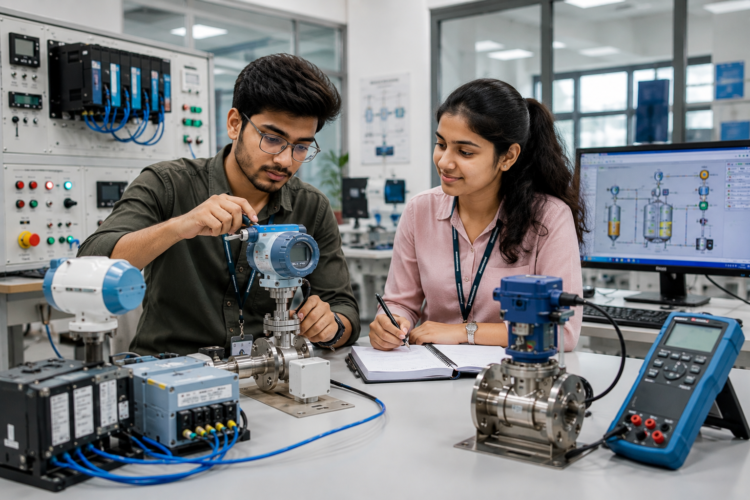
Instrumentation Engineering focuses on measurement and control. It helps industries monitor important processes. Accurate information improves operational performance. Reliable systems support productivity and safety.
Definition and Scope
Instrumentation Engineering deals with industrial instruments. These devices measure process conditions continuously. Engineers work with sensors and controllers. They also support automation systems.
The field combines measurement and control technologies. It supports efficient industrial operations. Modern facilities depend on accurate information. Instrumentation Engineers help maintain this reliability.
Core Responsibilities of an Instrumentation Engineer
Instrumentation Engineers perform several important tasks.
Responsibilities include:
- Selecting industrial instruments.
- Configuring control systems.
- Testing measurement devices.
- Monitoring process performance.
- Troubleshooting technical issues.
- Supporting automation projects.
- Maintaining instrument accuracy.
- Preparing technical documentation.
These responsibilities improve reliability and productivity. Engineers help maintain efficient operations. Accurate measurements remain a major priority.
Industries that Depend on Instrumentation Engineers
Many industries require instrumentation systems. Measurement and control remain essential everywhere.
Industries include:
- Oil and Gas.
- Power Generation.
- Pharmaceuticals.
- Manufacturing.
- Chemical Processing.
- Water Treatment.
- Renewable Energy.
These sectors depend on accurate measurements. This creates steady demand for professionals. Career opportunities remain highly diverse.
Master MEP Design with Industry-Leading Training!
Gain in-depth knowledge of Mechanical, Electrical, and Plumbing (MEP) Design with expert-led courses. Learn HVAC, fire safety, sustainable building strategies, and BIM applications to excel in the construction industry.
Know MoreWhy Choose a Career in Instrumentation Engineering?
Instrumentation Engineering offers strong opportunities. Demand continues increasing across industries. Technology adoption supports future growth. The profession remains highly relevant.
Industry Demand and Job Stability
Modern industries require accurate measurements. Process control supports daily operations. Reliable systems improve efficiency and safety.
Automation adoption continues increasing globally. Smart technologies require accurate monitoring. Industries actively hire skilled professionals. This supports strong career stability.
Opportunities across Multiple Sectors
Instrumentation skills apply across many industries. This creates excellent career flexibility. Opportunities remain available worldwide.
Professionals can work in manufacturing plants. Others support power generation facilities. Many work on automation projects. Renewable energy also creates opportunities.
Role in Industrial Automation and Digital Transformation
Automation depends on reliable information. Instruments provide this information continuously. Control systems use collected data effectively.
Digital transformation continues accelerating globally. Smart factories require accurate monitoring. Instrumentation remains a key foundation. Engineers play an important role.
Career Benefits
- Strong job stability.
- Multiple industry options.
- Global opportunities.
- Technology-focused work.
- Continuous learning opportunities.
- Long-term career growth.
Educational Path to Become an Instrumentation Engineer
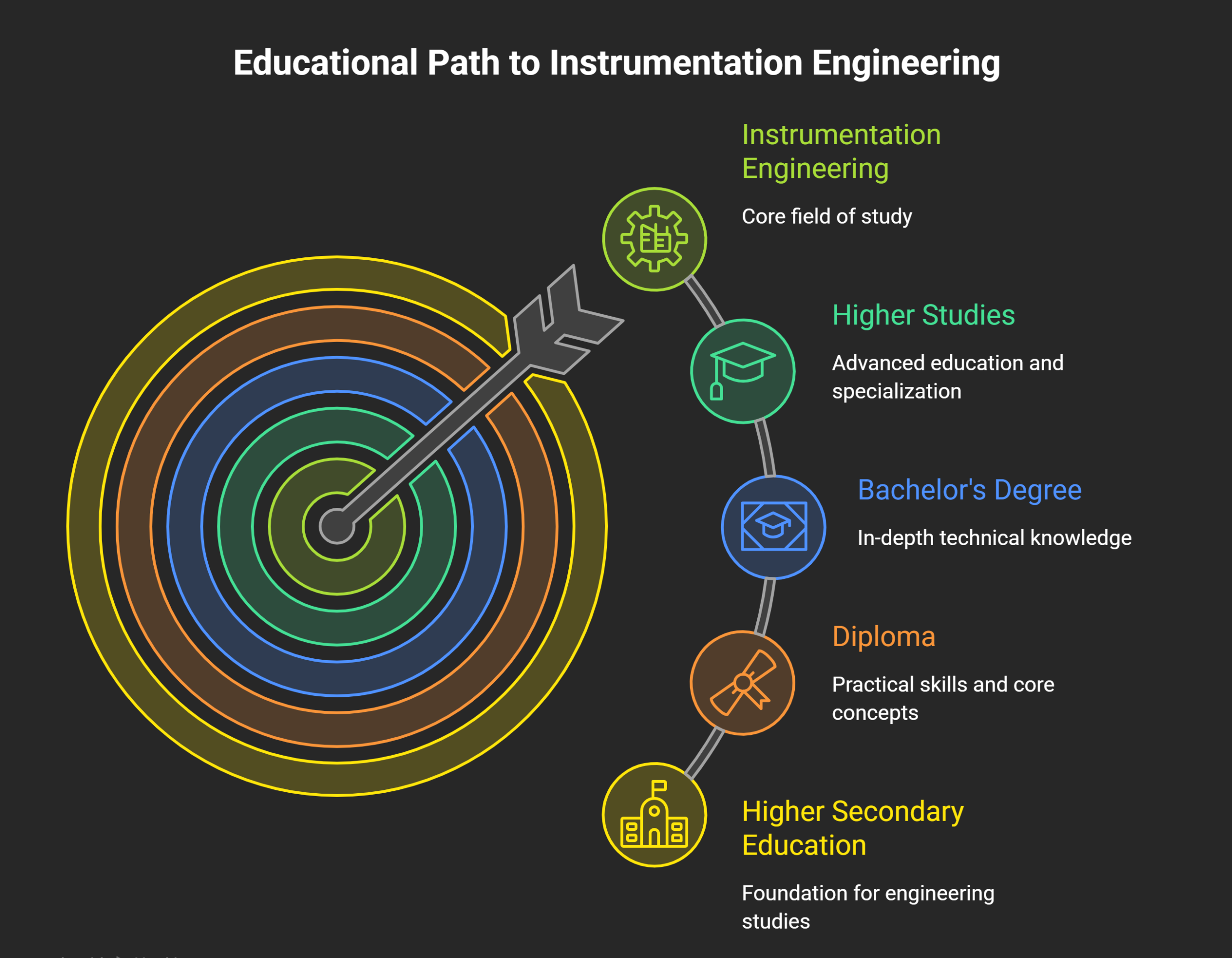
Education provides technical foundations. Strong fundamentals support future success. Students can choose different pathways. Each route offers valuable opportunities.
Complete Higher Secondary Education
The journey usually begins after school. Science subjects provide strong foundations. These subjects support engineering studies later.
Required Subjects
Students should study:
- Physics.
- Chemistry.
- Mathematics.
These subjects develop analytical abilities. They also improve technical understanding.
Minimum Eligibility Criteria
Most institutions require passing grades. Admission requirements vary by institution. Better academic performance improves opportunities.
Diploma Route
A diploma offers a practical pathway. Many students choose this option. Programs focus heavily on technical skills.
Diploma in Instrumentation Engineering
Diploma programs teach core concepts. Students learn instrumentation fundamentals thoroughly. Laboratory activities improve technical understanding. Hands-on learning builds confidence.
Topics often include measurements and control. Automation fundamentals are also covered. Practical exposure improves employability significantly.
Career Opportunities After Diploma
Diploma holders can pursue:
- Instrument Technician.
- Calibration Technician.
- Maintenance Technician.
- Junior Instrumentation Roles.
These positions provide valuable experience. Practical exposure supports future growth.
Bachelor’s Degree Route
Many students choose engineering degrees. Employers often prefer engineering graduates. Degree programs provide deeper technical knowledge.
B.Tech/B.E. in Instrumentation Engineering
Degree programs cover instrumentation technologies extensively. Students study process control and automation. PLC and SCADA concepts receive attention. Projects strengthen practical understanding.
Graduates often access broader opportunities. Technical depth improves employability significantly.
Alternative Engineering Branches
Related branches can also support entry.
- Electrical Engineering.
- Electronics Engineering.
- Mechatronics Engineering.
- Control Engineering.
These disciplines share common concepts. Additional training may still help.
Higher Studies and Specializations
Advanced education improves expertise. It also supports career growth.
Popular options include:
- Instrumentation Engineering.
- Automation Engineering.
- Control Systems.
- Industrial Electronics.
These programs provide advanced knowledge. Specialized skills improve career prospects.
Essential Technical Skills for Instrumentation Engineers
Technical skills determine employability. Employers seek professionals with practical knowledge. Strong foundations improve career growth.
Process Control Systems
Process control remains a core skill. Industries depend on stable operations. Control systems improve consistency and efficiency.
Applications include:
- Maintaining process stability.
- Improving operational efficiency.
- Supporting automated systems.
- Reducing process variations.
PLC Programming
PLCs control industrial equipment and processes. Programming skills remain highly valuable. Many automation projects depend on PLC systems.
Applications include:
- Equipment control.
- Production automation.
- Process management.
- System integration.
SCADA Systems
SCADA systems support industrial monitoring. They provide real-time operational information.
Applications include:
- Data collection.
- Process visualization.
- Alarm management.
- Remote monitoring.
Sensors and Transducers
Sensors measure important process variables. Accurate measurements support reliable operations.
Applications include:
- Pressure measurement.
- Temperature monitoring.
- Flow monitoring.
- Level measurement.
Industrial Automation
Industrial automation improves efficiency and productivity. Many industries now depend on automated systems. Automation reduces manual intervention. It also improves operational consistency.
Applications include:
- Automated process control.
- Production optimization.
- Smart manufacturing.
- Industrial integration.
Automation knowledge remains highly valuable. Industries continue investing in modern technologies. This creates strong opportunities for professionals.
Calibration and Maintenance
Calibration ensures measurement accuracy. Accurate instruments improve operational performance. Regular maintenance prevents unexpected failures. It also improves system reliability.
Applications include:
- Instrument testing.
- Performance verification.
- Fault prevention.
- Reliability improvement.
Well-maintained systems perform better. They also reduce operational downtime.
Industrial Safety Standards
Safety remains important across industries. Engineers must understand industry regulations. Compliance supports safer operations.
Applications include:
- Safety monitoring.
- Risk reduction.
- Regulatory compliance.
- Process protection.
Safety knowledge improves professional value. Many industries prioritize compliance expertise.
Master MEP Design with Industry-Leading Training!
Gain in-depth knowledge of Mechanical, Electrical, and Plumbing (MEP) Design with expert-led courses. Learn HVAC, fire safety, sustainable building strategies, and BIM applications to excel in the construction industry.
Know MoreSoft Skills Required for Success
Technical knowledge alone is insufficient. Professional skills also influence career growth. Employers value these abilities greatly.
Problem-Solving Ability
Industrial systems occasionally develop faults. Engineers must identify causes quickly. Strong troubleshooting improves efficiency. Experience strengthens this ability over time.
Good problem-solvers remain highly valuable. Industries depend on quick solutions. Effective troubleshooting reduces downtime significantly.
Analytical Thinking
Instrumentation Engineers work with process information daily. They analyze data regularly. Better analysis improves decision-making.
Analytical thinking helps identify trends. It also supports process improvements. This skill remains valuable throughout careers.
Communication Skills
Engineers work with different teams. Clear communication improves collaboration. Technical information must remain understandable.
Good communication supports project success. It also improves workplace relationships. Engineers often explain technical concepts.
Team Collaboration
Industrial projects require teamwork. Different departments support common goals. Strong collaboration improves outcomes.
Successful projects require coordination. Teamwork improves productivity significantly. It also supports efficient execution.
Attention to Detail
Small errors can create problems. Accuracy remains extremely important. Engineers must verify information carefully.
Attention to detail improves reliability. It also supports safer operations. This skill remains valuable throughout careers.
Certifications that Can Boost Your Career
Certifications strengthen technical knowledge. They also improve professional credibility. Many employers value certified professionals.
Automation Certifications
Popular options include:
- Industrial Automation Certification.
- Automation Systems Training.
- Process Automation Programs.
These certifications improve automation expertise. They also support career growth.
PLC and SCADA Certifications
PLC and SCADA certifications remain highly valuable.
Popular options include:
- Siemens PLC Certification.
- Allen-Bradley PLC Training.
- WinCC SCADA Certification.
- Ignition SCADA Training.
These certifications improve employability. Practical knowledge becomes easier to demonstrate.
Industrial Safety Certifications
Safety certifications strengthen workplace readiness.
Popular options include:
- Industrial Safety Certification.
- Process Safety Training.
- Occupational Safety Programs.
Safety expertise improves professional value. Many industries prioritize compliance knowledge.
Process Control Certifications
Process control remains a core discipline.
Popular options include:
- Process Control Certification.
- Control Systems Training.
- Industrial Process Programs.
These certifications strengthen technical foundations. They support advanced career opportunities.
Gain Practical Experience
Practical experience improves employability significantly. Employers value hands-on learning. Real-world exposure strengthens technical abilities.
Internships
Internships provide industry exposure. Students learn workplace procedures. They also observe industrial operations.
Benefits include:
- Industry experience.
- Professional networking.
- Practical learning.
- Better job readiness.
Industrial Training
Industrial training bridges theory and practice. Students work with industrial equipment. This improves technical understanding.
Training builds confidence significantly. It also improves workplace readiness.
Live Projects
Projects demonstrate practical abilities. Employers often value project experience.
Benefits include:
- Technical confidence.
- Problem-solving experience.
- Portfolio development.
- Industry relevance.
Projects strengthen resumes considerably.
Automation Lab Experience
Laboratory experience remains highly valuable. Students work with real equipment. Hands-on learning improves understanding.
Exposure to PLCs and SCADA helps. Automation practice improves employability significantly.
Instrumentation Engineer Career Roadmap
Career growth occurs gradually. Experience creates new opportunities. Technical expertise supports progression.
Entry-Level Roles
Most professionals begin with junior positions.
Common roles include:
- Trainee Engineer.
- Instrument Technician.
- Junior Instrumentation Engineer.
- Maintenance Engineer.
These positions build practical knowledge. Industry exposure improves technical skills.
Mid-Level Career Growth
Experience brings greater responsibilities. Engineers manage larger systems and projects.
Common positions include:
- Instrumentation Engineer.
- Automation Engineer.
- Control Systems Engineer.
- Project Engineer.
These roles involve technical decision-making. Leadership responsibilities may also increase.
Senior-Level Opportunities
Senior professionals manage complex operations. Their expertise supports critical projects.
Common positions include:
- Senior Instrumentation Engineer.
- Lead Engineer.
- Engineering Specialist.
- Technical Consultant.
Advanced expertise improves career opportunities. Experience becomes highly valuable.
Leadership and Management Roles
Experienced professionals may enter management positions. Leadership opportunities increase with experience.
Suggested Career Progression
Trainee Engineer
⬇
Instrumentation Engineer
⬇
Senior Instrumentation Engineer
⬇
Lead Engineer
⬇
Project Manager
⬇
Plant Operations Manager
Leadership roles involve planning activities. They also support strategic decisions.
Industries Hiring Instrumentation Engineers
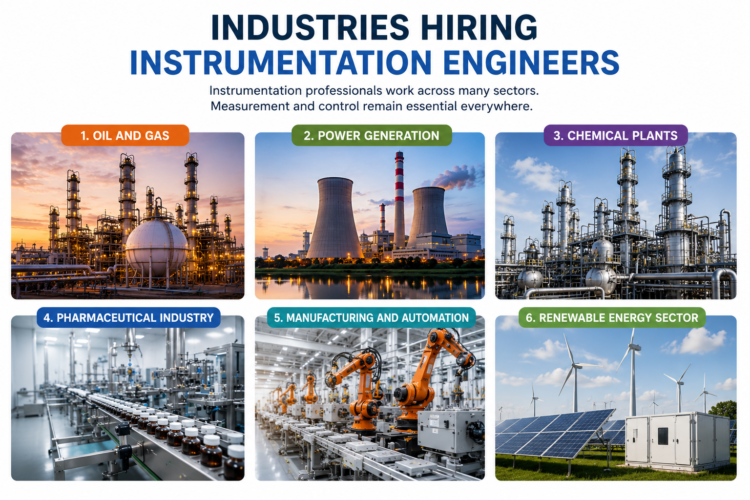
Instrumentation professionals work across many sectors. Measurement and control remain essential everywhere.
Oil and Gas
Opportunities include:
- Refinery operations.
- Pipeline monitoring.
- Process control.
- Safety systems.
Power Generation
Opportunities include:
- Thermal plants.
- Hydroelectric facilities.
- Nuclear plants.
- Grid monitoring.
Chemical Plants
Opportunities include:
- Process monitoring.
- Quality control.
- Automation systems.
- Plant maintenance.
Pharmaceutical Industry
Opportunities include:
- Process validation.
- Production monitoring.
- Compliance systems.
- Quality assurance.
Manufacturing and Automation
Opportunities include:
- Factory automation.
- Production control.
- Equipment monitoring.
- Smart manufacturing.
Renewable Energy Sector
Opportunities include:
- Solar facilities.
- Wind farms.
- Energy storage systems.
- Smart energy management.
Instrumentation Engineering vs Related Engineering Fields
| Factor | Instrumentation Engineering | Electrical Engineering | Mechanical Engineering |
|---|---|---|---|
| Primary Focus | Measurement and Control | Electrical Systems | Mechanical Systems |
| Core Technologies | PLC, SCADA, Sensors | Power Systems | Machines and Equipment |
| Industry Applications | Automation Industries | Power Industries | Manufacturing Industries |
| Automation Involvement | High | Moderate | Moderate |
| Career Opportunities | Control and Automation | Electrical Systems | Mechanical Operations |
Salary and Career Prospects
Instrumentation Engineering offers strong earning potential. Experience and expertise influence salaries significantly.
Entry-Level Salary Expectations
Freshers typically earn between ₹3 LPA and ₹6 LPA. Skills and certifications can improve starting salaries.
Mid-Career Earnings
Experienced professionals often earn ₹6 LPA to ₹15 LPA. Specialized expertise increases earning potential.
Factors Affecting Salary
Important factors include:
- Experience level.
- Technical skills.
- Certifications.
- Industry sector.
- Geographic location.
Global Career Opportunities
Instrumentation skills remain valuable worldwide. Many countries require skilled professionals. International opportunities continue expanding.
Advantages and Challenges of Becoming an Instrumentation Engineer
The profession offers many benefits. However, it also presents challenges.
| Advantages | Challenges |
|---|---|
| High industry demand | Continuous upskilling required |
| Diverse career opportunities | Industrial fieldwork |
| Strong automation growth | Complex troubleshooting |
| Global employability | Technology changes |
| Long-term stability | Safety responsibilities |
Get Career oriented MEP training with Expert Mentors! Get Free Demo Here!
Common Mistakes to Avoid When Pursuing this Career
Avoiding common mistakes improves career growth. It also strengthens employability.
Ignoring Automation Technologies
Automation drives modern industries. Learning automation improves opportunities. PLC and SCADA skills remain valuable.
Focusing Only on Theory
Theory remains important. Practical experience matters equally. Employers value hands-on knowledge.
Neglecting Industrial Exposure
Industrial exposure improves understanding. Internships and training strengthen technical confidence. Real-world learning remains important.
Avoiding Certification Programs
Certifications improve credibility. They also strengthen technical knowledge. Employers often value certified professionals.
Conclusion
Instrumentation Engineering remains a promising career choice. Industries continue depending on measurement and control systems. Automation growth increases demand further.
The profession offers strong career opportunities. It combines technology with practical problem-solving. Continuous learning supports long-term success. With the right skills and experience, Instrumentation Engineering can provide a stable and rewarding career path.
Master MEP Design with Industry-Leading Training!
Gain in-depth knowledge of Mechanical, Electrical, and Plumbing (MEP) Design with expert-led courses. Learn HVAC, fire safety, sustainable building strategies, and BIM applications to excel in the construction industry.
Know MoreFrequently Asked Questions
Is Instrumentation Engineering a good career?
Yes, Instrumentation Engineering offers strong career growth and job stability. Demand continues increasing due to automation and smart manufacturing.
What qualifications are required to become an Instrumentation Engineer?
A Diploma or B.Tech/B.E. in Instrumentation Engineering or a related field is commonly required. Additional certifications can improve job opportunities.
Can diploma holders become Instrumentation Engineers?
Yes, diploma holders can begin in technical roles and gain experience. Further education and certifications can support career advancement.
Which industries offer the highest demand for Instrumentation Engineers?
Oil and gas, manufacturing, pharmaceuticals, power generation, and chemical industries hire Instrumentation Engineers regularly. Renewable energy also offers growing opportunities.
What software should Instrumentation Engineers learn?
Important tools include PLC software, SCADA platforms, and AutoCAD. Learning automation software can improve employability.
Is coding required for Instrumentation Engineering?
Advanced coding is usually not required. However, basic programming knowledge can help with automation and control systems.
What is the average salary of an Instrumentation Engineer?
Freshers often earn between ₹3 LPA and ₹6 LPA. Salaries generally increase with experience and specialized skills.
What certifications are most valuable for Instrumentation Engineers?
PLC, SCADA, Industrial Automation, and Safety certifications are highly valuable. They improve technical skills and career prospects.
What is the difference between Instrumentation and Electrical Engineering?
Instrumentation focuses on measurement and control systems. Electrical Engineering focuses on power systems and electrical equipment.
What are the future prospects of Instrumentation Engineering?
Future opportunities remain strong due to automation growth. Smart factories and Industrial IoT continue creating new career paths.