Table of Contents
MEP engineering inside a data centre is different from MEP engineering on a hospital or office tower. It is a specialist, mission-critical work in HVAC, power and fire protection. Therefore, it pays a clear premium over general MEP roles.
Employers are hunting for engineers who understand tight thermal tolerances, redundant power architecture, and code-driven fire suppression. These are crucial as a single MEP failure in a data hall can take down services for millions of users.
Join our MEP Course Online and Build a Successful Career!
Key Takeaways
- Data‑centre MEP pays more than commercial/residential MEP.
- Core pillars – HVAC, critical power, fire systems.
- Commissioning (FAT/SAT) boosts pay most.
- India’s capacity to grow ~10x due to AI, cloud, tax holiday.
- Vendor certs, ASHRAE, NFPA are quick differentiators.
- Gulf (UAE/SA/Qatar) offers tax‑free, high packages.
Why MEP Matters More in a Data Centre

In a typical building, MEP systems keep occupants comfortable. In a data centre, they keep servers alive.
Tolerances are tighter, redundancy is non-negotiable (N+1, 2N configurations are standard), and every system has to be tested, documented and handed over. This has to be done against strict uptime and safety standards.
That is why recruiters weight commissioning exposure, standards familiarity (ASHRAE TC 9.9, NFPA 75/72, Uptime Institute Tier definitions), and hands-on troubleshooting far more heavily than academic pedigree alone.
Master MEP Design with Industry-Leading Training!
Gain in-depth knowledge of Mechanical, Electrical, and Plumbing (MEP) Design with expert-led courses. Learn HVAC, fire safety, sustainable building strategies, and BIM applications to excel in the construction industry.
Know MoreMarket Snapshot: Why Hiring is Accelerating
| Indicator | Latest estimate | What it means for MEP hiring |
| India data centre market size | ~USD 9.79 billion (2025), projected to reach ~USD 21 billion by 2031 (~13.6% CAGR) | Sustained multi-year demand for design, execution and commissioning talent |
| India data centre capacity growth | Projected to grow roughly 10x over the next decade (KPMG India, 2026) | Long hiring runway, not a short-term spike |
| Global new capacity (2026–2030) | Nearly 100 GW coming online worldwide, roughly doubling global capacity | Parallel demand in Gulf and Southeast Asian markets, raising mobility options |
| Concentration in India | ~90% of current capacity sits in Mumbai, Chennai, Delhi NCR and Bengaluru; Hyderabad emerging fast | Metro hubs remain the strongest job markets, with Hyderabad rising quickly |
These figures are drawn from CBRE, KPMG India, and industry market-research aggregators tracking 2025–2026 activity.
So treat them as directional estimates rather than fixed forecasts. The underlying trend (sustained, multi-year build-out) is well supported across sources.
The Three Core MEP Domains

HVAC / Thermal Management
CRAC/CRAH units, chilled-water and DX systems, hot-aisle/cold-aisle containment, economizers, and increasingly liquid cooling for high-density AI racks. Engineers here do load calculations, CFD airflow modelling, and containment design.
Critical Power
UPS topology selection (N, N+1, 2N), diesel generator synchronisation, automatic transfer switches, switchgear, and power-quality monitoring. This is the highest-stakes domain because power failure has zero grace period.
Fire Protection & Detection
VESDA (aspirating smoke detection), clean-agent and inert-gas suppression systems, and alarm integration, all built around NFPA 75 and NFPA 72 compliance.
Most engineers enter through one domain and build cross-functional fluency, since real projects require all three to work together. Also, commissioning engineers, by definition, need working knowledge of all of them.
Role-by-Role: What You’ll Do and What You’ll Earn

Indian salary figures below are compiled from multiple 2026 industry salary trackers and placement-portal aggregates for MEP, HVAC and commissioning roles in data centre and mission-critical projects.
Treat them as indicative bands rather than guarantees, since pay varies by employer, city and project type. Gulf figures are directional. Consolidated, standardized salary data for the region’s data centre MEP workforce is still limited industry-wide.
| Role | Core focus | India (entry) | India (mid) | India (senior) |
| HVAC/Thermal Design Engineer | Load calcs, CRAC/CRAH specs, containment design | ₹4–7 LPA | ₹8–15 LPA | ₹16–30 LPA |
| Critical Power/Electrical Engineer | UPS, generators, switchgear, protection coordination | ₹4.5–8 LPA | ₹9–18 LPA | ₹18–35 LPA |
| Fire Protection Engineer | VESDA, suppression design, NFPA compliance | ₹4–7.5 LPA | ₹8–16 LPA | ₹16–30 LPA |
| Commissioning/Validation Engineer | FAT/SAT, functional testing, O&M handover | ₹4–7 LPA | ₹8–16 LPA | ₹18–38 LPA |
| Site/Project MEP Manager | Delivery, contractor and QA/QC management | — | ₹14–24 LPA | ₹24–45+ LPA |
| O&M / Facilities Engineer | Preventive maintenance, alarm response, shift ops | ₹3.5–6.5 LPA | ₹7–13 LPA | ₹12–22 LPA |
Two things are worth flagging honestly.
- Data centre exposure typically adds a premium of roughly 10% to 20% over equivalent general-MEP roles at the same experience level
- Commissioning consistently out-earns pure design work once you cross the mid-career mark
That gap widens further in Gulf markets, where mission-critical commissioning specialists are in acute short supply.
Master MEP Design with Industry-Leading Training!
Gain in-depth knowledge of Mechanical, Electrical, and Plumbing (MEP) Design with expert-led courses. Learn HVAC, fire safety, sustainable building strategies, and BIM applications to excel in the construction industry.
Know MoreSkills and Certifications that Actually Move the Needle
| Skill area | Beginner-level credential | Advanced credential |
| HVAC & thermal | ASHRAE short course | Advanced ASHRAE / CFD simulation training |
| Critical power | UPS vendor foundation course | Protection coordination (ETAP/SKM) |
| Fire protection | NFPA 75/72 awareness training | Clean-agent/VESDA design certification |
| Commissioning | Commissioning fundamentals course | Advanced commissioning & validation training |
| BMS/controls | Vendor BMS introduction | SCADA and remote-operations training |
Tools Worth Learning:
- AutoCAD MEP
- Revit MEP
- ETAP or SKM for power studies
- Basic CFD/airflow simulation software
Vendor-specific training from UPS and chiller manufacturers is often free or low-cost and carries real weight with recruiters. This is because it signals you can work with the exact equipment installed on site.
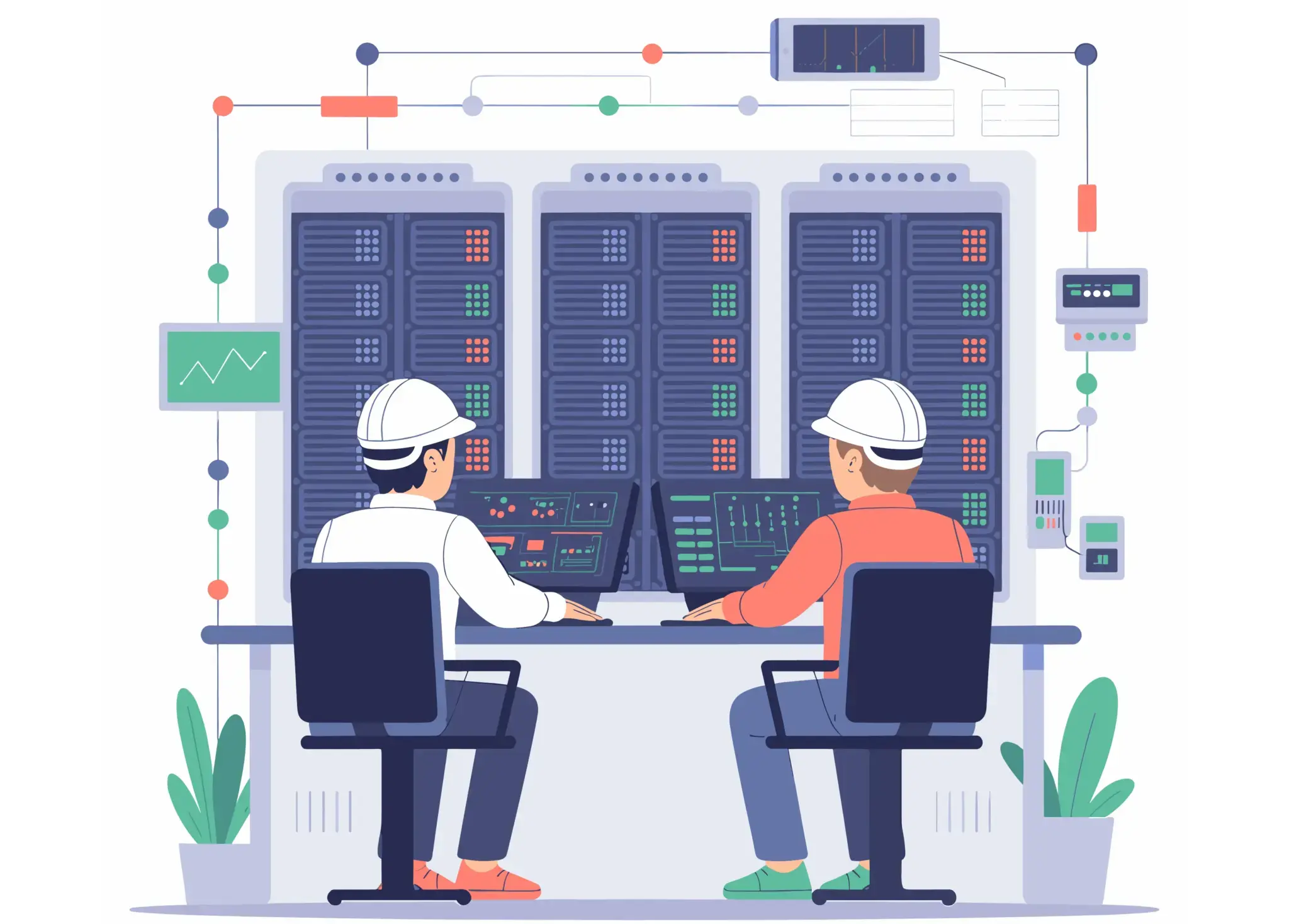
A 12-Month Roadmap to Break Into Data Centre MEP
1. Months 0 to 3 – Foundations:
Refresh core electrical/thermodynamics concepts, complete a basic Revit/AutoCAD MEP course, and take an ASHRAE thermal short course. Build one sample project like an HVAC load calculation for a mock server room.
2. Months 3 to 6 – Domain Depth:
Study UPS topologies and generator synchronisation basics. Complete an NFPA awareness course. Look for internships or site-visit opportunities to see live commissioning work.
3. Months 6 to 9 – Tools and Hands-on Exposure:
Learn basic CFD/airflow simulation, and try to shadow or assist on FAT/SAT testing if you can access a live project.
4. Months 9 to 12 – Certification and Portfolio:
Complete one advanced certification (ASHRAE, ETAP, or a commissioning fundamentals course) and compile two case studies. A design project and a commissioning or O&M example is good to show in interviews.
Standards and Compliance You’re Expected to Know
Recruiters and interview panels commonly probe familiarity with
- ASHRAE TC 9.9 guidance for data centre thermal environments
- NFPA 75 (protection of information technology equipment)
- NFPA 72 (fire alarm and signalling code)
- Uptime Institute Tier classifications
- Relevant national electrical codes
You don’t need to memorise every clause. But you should be able to explain what redundancy tier your last project targeted and how the fire-suppression design met code.
Join our MEP Course Online and Build a Successful Career!
Conclusion
Data centre MEP work sits at the intersection of two strong tailwinds. India’s decade-long data centre build-out and the global shift toward AI-driven, high-density computing. That combination means the hiring window here isn’t a short-term spike.
It is a structural, multi-year opportunity for HVAC, power and fire-protection engineers who invest in the right certifications. This is especially the case in commissioning experience.
Start with one domain, build fluency across the other two, document real project outcomes. The pay and progression will follow.
|
RELATED POSTS |
|
|
MEP Engineer Salary in Chennai 2026: Freshers to Experienced |
MEP Engineers in GCCs: Opportunities Beyond Site Execution Roles |
| BIM Modeler Salary in Singapore | |
Master MEP Design with Industry-Leading Training!
Gain in-depth knowledge of Mechanical, Electrical, and Plumbing (MEP) Design with expert-led courses. Learn HVAC, fire safety, sustainable building strategies, and BIM applications to excel in the construction industry.
Know MoreFrequently Asked Questions
Do I need a mechanical engineering degree to work in data centre MEP?
No. Electrical engineering and general MEP backgrounds are equally valid entry points. What matters more is gaining hands-on exposure to HVAC, power or fire-protection systems through internships, certifications or site work.
Which is the highest-paying MEP specialisation in data centres?
Commissioning and validation engineering typically commands the highest pay at the mid-to-senior level, because it requires cross-domain knowledge and carries direct responsibility for system reliability at handover.
What certifications help the most for data centre MEP roles?
ASHRAE thermal courses, UPS or chiller vendor certifications, and NFPA 75/72 awareness training are the most commonly requested credentials. Commissioning-specific courses add further weight for mid-career roles.
How long does it take to become a mid-level data centre MEP engineer?
Most engineers reach mid-level in roughly 3–5 years, with real project and commissioning exposure shortening that timeline. Certifications alone, without hands-on work, tend to extend it.
Are data centre MEP jobs available outside major metros?
Currently, close to 90% of India’s operational data centre capacity is concentrated in Mumbai, Chennai, Delhi NCR and Bengaluru, though Hyderabad is emerging quickly. Opportunities in smaller cities remain limited for now but are expected to grow as edge and colocation facilities expand.
Why is fire protection engineering different in data centres compared to other buildings?
Data centres use specialised early-detection systems like VESDA and clean-agent suppression instead of standard sprinklers, since water damage would destroy server hardware. Designs must comply closely with NFPA 75 and NFPA 72 codes.
Is commissioning experience mandatory to get hired?
It’s not mandatory for entry-level roles, but it becomes increasingly important from the mid-career stage onward. Engineers without commissioning exposure can still progress through design or operations tracks, just typically at a slower pace.
What does a typical day look like for a data centre O&M engineer?
It involves monitoring building management systems, running preventive maintenance checks, responding to alarms, and coordinating with vendors for repairs. Shift-based working is common in this role.
What tools should a beginner in data centre MEP learn first?
Start with AutoCAD MEP or Revit MEP for design work, plus a power-analysis tool like ETAP for electrical engineers. Basic CFD or airflow simulation knowledge is valuable for HVAC-focused engineers.
What is the long-term career growth path in data centre MEP?
Engineers typically progress from design or O&M roles into commissioning, then into senior technical or project management positions such as MEP Manager or Facilities Manager. Specialising early and documenting measurable project outcomes like PUE improvements or successful commissioning accelerates this progression.