Table of Contents
How Can Graduates Get Airport Jobs?
Graduates can apply for many airport jobs. Airport careers cover several departments and functions. Some roles require specific technical qualifications. Others accept graduates from different academic backgrounds.

Who Can Get an Airport Job?
Graduates from many streams can apply. Common backgrounds include:
- Business administration.
- Hospitality management.
- Tourism management.
- Aviation management.
- Commerce.
- Engineering.
- Computer applications.
- Finance.
- Human resources.
- Logistics.
Eligibility depends on the specific position. Employers also consider relevant skills.
Best Airport Jobs for Graduates
Popular airport positions include:
- Airport ground staff.
- Passenger service executive.
- Customer service executive.
- Airport operations executive.
- Cargo executive.
- Airport sales executive.
- Airline reservation executive.
- Airport administrative executive.
- Airport finance executive.
- Airport HR executive.
Technical positions require specialized qualifications. Entry-level roles often accept fresh graduates.
What Qualifications Are Usually Required?
Most graduate roles require graduation. Specific degree requirements vary by position.
Employers may also consider:
- Communication skills.
- Computer knowledge.
- Customer service skills.
- English proficiency.
- Teamwork abilities.
- Professional behaviour.
- Shift flexibility.
Some positions may require additional certifications.
What Does Airport Hiring Usually Involve?
Airport recruitment follows several common stages.
The process may include:
- Application submission.
- Resume screening.
- Initial interview.
- Skill assessment.
- Document verification.
- Background verification.
- Medical assessment.
- Final selection.
- Joining formalities.
The exact process varies between employers.
What Salary Can Graduates Expect?
Airport salaries vary by position and employer. Entry-level salaries are usually moderate. Experience can improve earning potential significantly.
Salary depends on several factors.
These include:
- Job position.
- Employer.
- Airport location.
- Relevant skills.
- Work experience.
- Shift requirements.
- Technical specialization.
Additional allowances may apply for certain roles.
Why Airport Careers Are Popular Among Graduates
Airport careers attract many young professionals. The aviation industry offers diverse career paths. Graduates can work beyond passenger-facing positions.
1. Multiple Career Options
Airports require many professional teams.
These include:
- Operations.
- Customer service.
- Security.
- Cargo.
- Finance.
- Administration.
- Human resources.
- Technical services.
This creates varied employment opportunities.
2. Dynamic Work Environment
Airport jobs involve fast-paced workplaces. Employees interact with different people daily. International airports offer multicultural exposure.
This experience can build professional confidence.
3. Career Advancement Opportunities
Entry-level roles can lead toward promotions. Employees can develop experience across departments.
Career growth may involve:
- Senior executive roles.
- Supervisory positions.
- Management positions.
- Specialist roles.
- Department leadership.
Progress depends on skills and performance.
4. Aviation Industry Exposure
Airport employees learn operational processes. They understand passenger movement systems. Some roles involve cargo and logistics.
This experience can support future opportunities.
✈️ Start Your Aviation Career Today
Explore career-focused insights on airport jobs, ground staff roles, and aviation training. Learn about salaries, skills, certifications, and hiring trends to start and grow your career in the aviation industry.
Join NowCan You Get an Airport Job After Graduation?
Yes, graduates can enter airport careers. A degree meets many entry-level requirements. However, eligibility varies between employers.
Suitable Degrees for Airport Jobs
| Degree Background | Suitable Roles |
|---|---|
| Business | Operations, sales, administration |
| Commerce | Finance, accounts, administration |
| Hospitality | Passenger service |
| Tourism | Travel services |
| Engineering | Technical roles |
| Computer Applications | IT support |
| Human Resources | Recruitment |
| Logistics | Cargo operations |
Relevant skills can strengthen applications.
Can Fresh Graduates Apply?
Yes, many entry-level roles accept fresh graduates. Previous airport experience is not always required.
Graduates can begin with:
- Ground operations.
- Passenger assistance.
- Customer service.
- Cargo coordination.
- Reservation services.
- Administrative support.
Experience can support future promotions.
Why Communication Skills Matter
Airport employees interact with many passengers. Clear communication improves customer experiences.
Important skills include:
- Spoken English.
- Active listening.
- Professional communication.
- Polite conversation.
- Conflict management.
- Problem-solving.
Additional languages can provide an advantage.
Is Shift Work Common?
Yes, airport operations often run continuously. Employees may work different schedules.
Common shifts include:
- Morning shifts.
- Evening shifts.
- Night shifts.
- Rotating shifts.
- Weekend shifts.
- Holiday shifts.
Shift flexibility can improve job opportunities.
Best Airport Jobs You Can Apply for After Graduation
Airport careers include operational and corporate roles. Graduates can choose based on their qualifications.
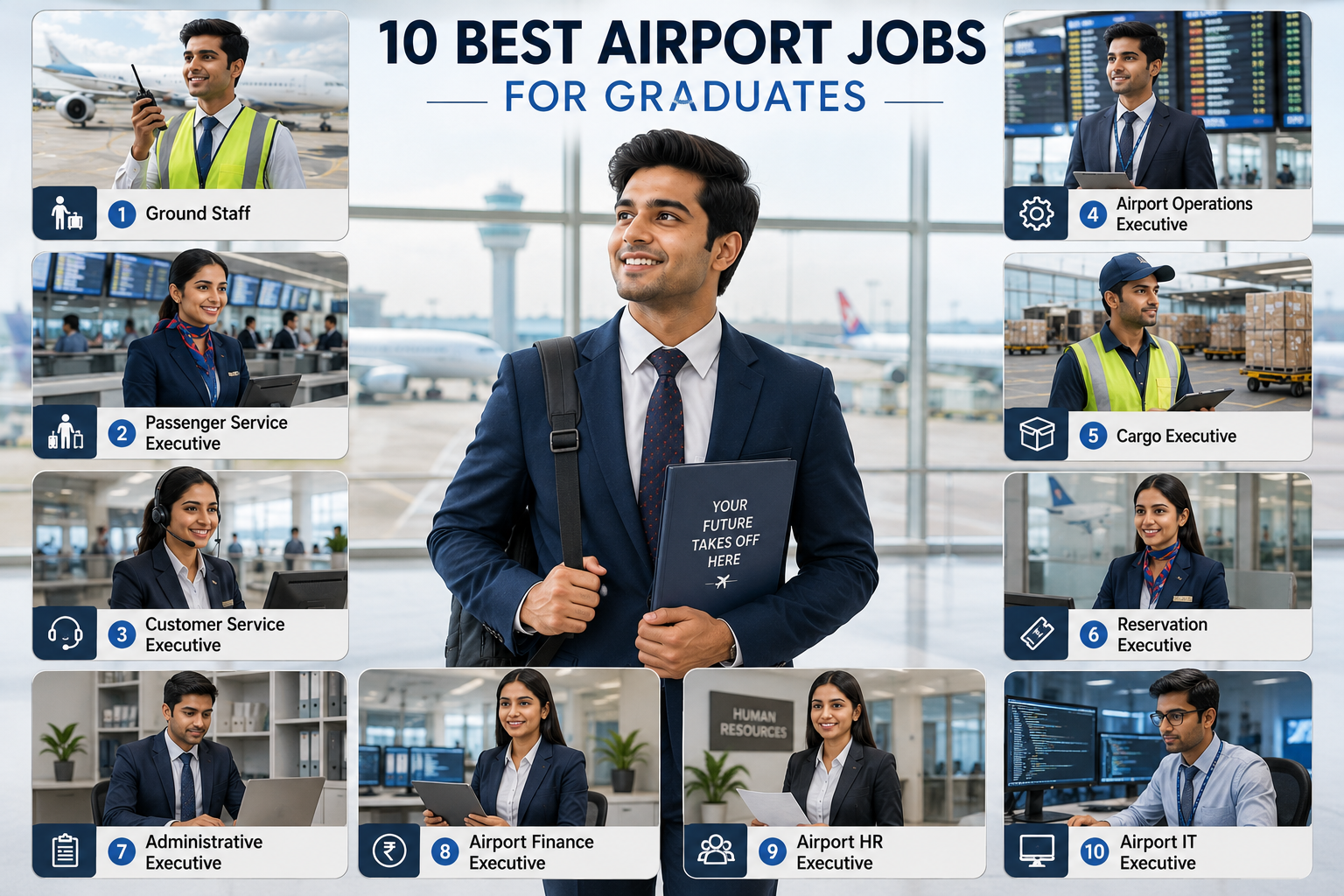
1. Airport Ground Staff
Ground staff support airport operations. They interact directly with passengers.
Typical duties include:
- Passenger assistance.
- Check-in support.
- Boarding coordination.
- Baggage assistance.
- Queue management.
- Travel information.
Strong communication skills are valuable.
2. Passenger Service Executive
Passenger service executives assist travelers. They handle several customer-facing responsibilities.
Typical duties include:
- Check-in assistance.
- Boarding support.
- Passenger queries.
- Special assistance.
- Flight information.
- Complaint handling.
Patience is important for this role.
3. Airport Operations Executive
Operations executives support daily airport activities. Their work involves departmental coordination.
Responsibilities can include:
- Operational monitoring.
- Team coordination.
- Documentation.
- Schedule coordination.
- Issue reporting.
Organizational skills are especially useful.
4. Airport Customer Service Executive
Customer service roles focus on passengers. Employees handle questions and service requests.
Important skills include:
- Communication.
- Patience.
- Active listening.
- Problem-solving.
- Professional behaviour.
These roles suit strong communicators.
5. Cargo Executive
Cargo teams manage airport freight operations. They coordinate shipments and documentation.
Responsibilities can include:
- Cargo documentation.
- Shipment coordination.
- Inventory tracking.
- Cargo handling.
- Delivery coordination.
Logistics knowledge can provide an advantage.
6. Airline Reservation Executive
Reservation executives manage travel bookings. They assist passengers with flight services.
Duties may include:
- Ticket reservations.
- Booking modifications.
- Passenger queries.
- Schedule information.
- Cancellation assistance.
Computer skills are important.
7. Airport Sales Executive
Sales teams promote aviation-related services. They may work with corporate customers.
Responsibilities can include:
- Customer acquisition.
- Client communication.
- Service promotion.
- Relationship management.
- Sales reporting.
Business graduates may fit these roles.
8. Airport Administration Executive
Administrative employees support airport offices. Their work involves documentation and coordination.
Typical responsibilities include:
- Record management.
- Data entry.
- Office coordination.
- Scheduling.
- Report preparation.
Computer proficiency is highly useful.
9. Airport Finance Executive
Finance teams manage financial processes. Commerce graduates may suit these positions.
Responsibilities can include:
- Invoice processing.
- Account reconciliation.
- Expense tracking.
- Payment coordination.
- Financial reporting.
Accounting knowledge can strengthen applications.
10. Airport Human Resources Executive
HR teams manage employee-related activities. Graduates can enter junior HR positions.
Responsibilities may include:
- Recruitment support.
- Employee records.
- Interview coordination.
- Attendance management.
- Training coordination.
HR qualifications can provide an advantage.
Skills That Improve Your Chances of Getting Hired
A degree alone may not guarantee selection. Employers also evaluate practical skills.
Communication Skills
Clear communication supports passenger interactions. It also improves teamwork between departments.
Computer Skills
Basic computer knowledge is widely useful. Candidates should understand common office applications.
Useful skills include:
- Word processing.
- Spreadsheets.
- Email communication.
- Data entry.
- Presentation software.
Customer Service Skills
Airport employees frequently assist passengers. Good service can improve passenger experiences.
Important qualities include:
- Patience.
- Empathy.
- Active listening.
- Problem-solving.
Teamwork
Airport operations require constant coordination. Employees work alongside several departments.
Time Management
Airport operations follow strict schedules. Employees must complete tasks efficiently.
Adaptability
Airport environments can change quickly. Employees should remain calm during disruptions.
✈️ Start Your Aviation Career Today
Explore career-focused insights on airport jobs, ground staff roles, and aviation training. Learn about salaries, skills, certifications, and hiring trends to start and grow your career in the aviation industry.
Join NowStep-by-Step Process to Get an Airport Job
Getting an airport job needs proper preparation. Graduates should follow a structured approach. This improves their chances of getting selected.
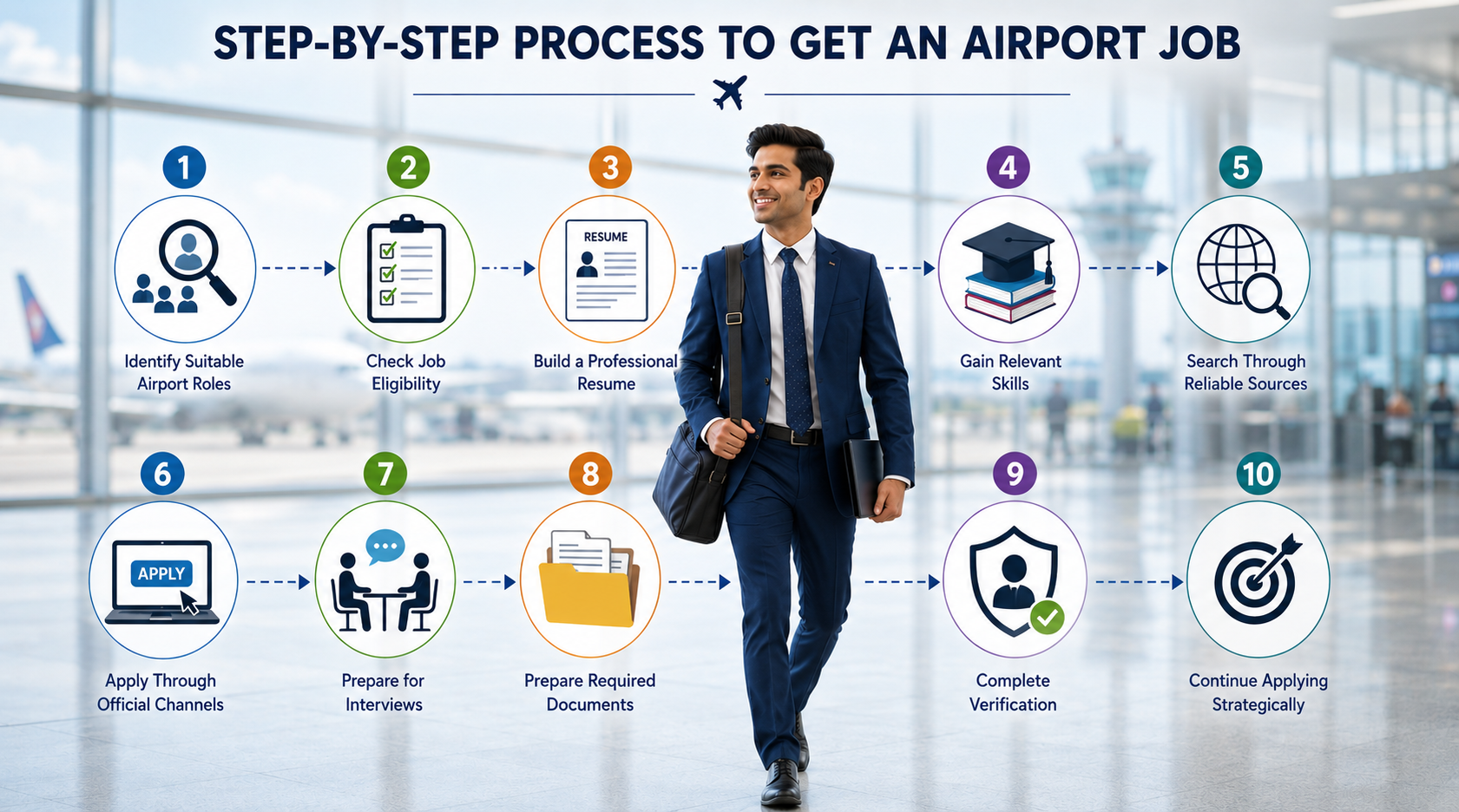
1. Identify Suitable Airport Roles
Start by identifying suitable job positions. Match roles with educational qualifications.
Consider these areas:
- Ground operations.
- Passenger services.
- Airport administration.
- Cargo operations.
- Customer service.
- Airport finance.
- Airport HR.
- Airport IT.
Avoid applying for unrelated positions.
2. Check Job Eligibility
Read every job description carefully. Check the required educational qualifications. Also check experience requirements and age limits.
Review these requirements:
- Degree requirement.
- Required specialization.
- Communication skills.
- Computer skills.
- Language requirements.
- Work experience.
- Shift availability.
Apply only after checking eligibility.
3. Build a Professional Resume
Create a clear aviation-focused resume. Keep the resume simple and professional.
Include:
- Educational qualifications.
- Relevant certifications.
- Internship experience.
- Computer skills.
- Language skills.
- Communication skills.
- Academic achievements.
- Relevant projects.
Avoid unnecessary personal information.
4. Gain Relevant Skills
Develop skills before applying widely. Short courses can support skill development.
Useful areas include:
- Airport operations.
- Customer service.
- Aviation basics.
- Travel management.
- Computer applications.
- Communication.
- Foreign languages.
Practical knowledge can strengthen applications.
5. Search Through Reliable Sources
Look for vacancies through reliable channels. Airport companies regularly announce recruitment opportunities.
Check:
- Official airport websites.
- Airline career pages.
- Airport operator websites.
- Government recruitment portals.
- Verified employment platforms.
- Aviation recruitment agencies.
Avoid suspicious recruitment advertisements.
6. Apply Through Official Channels
Submit applications through official platforms. Follow the application instructions carefully.
Keep copies of submitted applications. Save important recruitment communications.
7. Prepare for Interviews
Airport interviews often test communication skills. Employers may also assess customer service abilities.
Prepare answers about:
- Educational background.
- Career goals.
- Communication skills.
- Customer handling.
- Teamwork.
- Problem-solving.
- Shift flexibility.
- Aviation interest.
Practice speaking clearly and confidently.
8. Prepare Required Documents
Keep important documents ready beforehand.
Common documents include:
- Degree certificate.
- Mark sheets.
- Government identification.
- Resume.
- Passport photographs.
- Experience certificates.
- Training certificates.
Requirements can vary between employers.
9. Complete Verification
Selected candidates may undergo verification. Background checks can be part of recruitment.
Medical assessments may also apply. Airport security requirements can vary by role.
10. Continue Applying Strategically
Do not depend on one application. Apply for multiple suitable positions.
Track applications using a simple list.
Record:
- Company name.
- Job title.
- Application date.
- Interview date.
- Application status.
- Follow-up details.
This keeps the job search organised.
Do You Need an Airport Management Course?
An airport management course is not mandatory. Many airport jobs accept graduates directly. However, relevant training can improve job readiness.
When Can a Course Help?
A course can provide industry knowledge. It can also introduce airport-related terminology.
Training may cover:
- Airport operations.
- Passenger handling.
- Airline operations.
- Aviation safety.
- Cargo management.
- Travel services.
- Airport security.
- Customer service.
This knowledge can support entry-level applications.
Who Should Consider Airport Management Training?
Graduates without aviation exposure may benefit. Career changers can also consider relevant training. It can help candidates understand industry operations. It may also improve confidence during interviews.
Is a Degree Still Important?
A course does not replace every degree requirement. Some positions require specific academic qualifications. Technical roles may need specialized education. Management roles may require additional experience.
Therefore, check individual job requirements carefully.
Can Short-Term Courses Be Useful?
Yes, short courses can build specific skills. Choose courses with practical industry content.
Look for training covering:
- Airport operations.
- Ground handling.
- Customer service.
- Aviation terminology.
- Reservation systems.
- Safety procedures.
Course quality should be checked beforehand.
Airport Jobs vs Airline Jobs
Airport and airline jobs are related. However, their responsibilities can differ significantly. Airport jobs focus on airport operations. Airline jobs focus more on carrier operations.
| Factor | Airport Jobs | Airline Jobs |
|---|---|---|
| Main focus | Airport operations | Airline operations |
| Employers | Airport operators | Airlines |
| Common roles | Operations, security | Cabin crew, reservations |
| Work areas | Terminals, facilities | Aircraft, offices |
| Passenger interaction | Often high | Often high |
| Career paths | Airport management | Airline management |
| Technical roles | Infrastructure | Aircraft operations |
Airport Career Examples
Airport careers can include:
- Ground operations.
- Passenger services.
- Cargo handling.
- Airport administration.
- Facility management.
- Security coordination.
- Airport finance.
Airline Career Examples
Airline careers can include:
- Cabin crew.
- Flight operations.
- Reservations.
- Airline sales.
- Revenue management.
- Airline customer service.
- Aircraft maintenance.
Both sectors offer career opportunities. The preferred sector depends on interests.
Salary Expectations After Graduation
Airport salaries vary across different positions. Freshers often earn ₹18,000–₹30,000 monthly. Experience can significantly increase earning potential.
Fresh graduates usually enter junior roles. Their starting salaries depend on several factors.
Factors Affecting Airport Salaries
Salary can depend on:
- Job position.
- Employer.
- Airport location.
- Educational qualification.
- Industry experience.
- Technical skills.
- Shift responsibilities.
- Additional certifications.
Major aviation hubs can offer better opportunities. Specialized roles can also offer higher salaries.
Entry-Level Airport Roles
Fresh graduates commonly enter junior positions. Starting salaries often range from ₹18,000–₹35,000 monthly.
Common entry-level positions include:
- Ground staff.
- Passenger service executive.
- Customer service executive.
- Cargo executive.
- Reservation executive.
- Administrative executive.
Salary growth usually follows experience and performance.
Specialized Roles Can Pay More
Technical positions often have higher salary structures. Experienced specialists may earn ₹40,000–₹80,000 monthly.
Examples include:
- Aviation IT.
- Aircraft maintenance.
- Airport engineering.
- Aviation safety.
- Revenue management.
- Aviation analytics.
Additional qualifications can support salary progression.
Experience Improves Earning Potential
Experience can significantly influence salary growth. Senior professionals may earn ₹60,000–₹1,00,000 monthly.
Career progression may involve:
- Junior executive.
- Executive.
- Senior executive.
- Supervisor.
- Assistant manager.
- Manager.
Actual progression depends on employer policies.
Additional Benefits May Apply
Some airport employers provide additional benefits. These vary according to the organization.
Possible benefits include:
- Transport facilities.
- Medical coverage.
- Travel benefits.
- Shift allowances.
- Performance incentives.
- Paid leave.
- Employee discounts.
Always check the employment offer carefully.
Common Mistakes Fresh Graduates Should Avoid
Fresh graduates can make several avoidable mistakes. Careful preparation can prevent most problems.
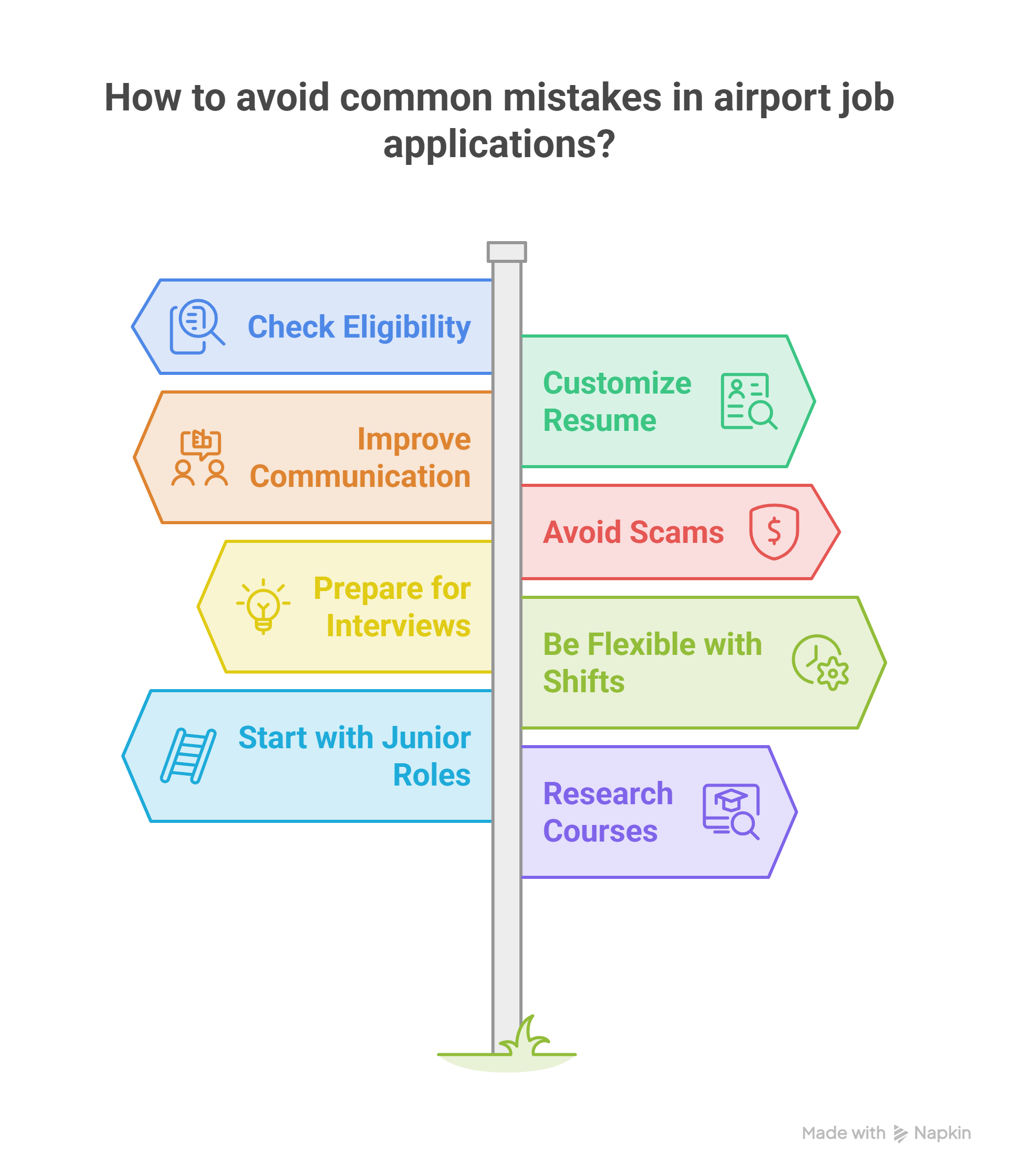
1. Applying Without Checking Eligibility
Read the complete job description first. Avoid applying for unsuitable positions.
2. Using a Generic Resume
Customize resumes for relevant airport roles. Highlight skills matching the position.
3. Ignoring Communication Skills
Airport roles involve frequent passenger interaction. Practice clear and professional communication.
4. Paying Unverified Recruitment Fees
Be cautious about recruitment scams. Avoid paying suspicious agents or individuals.
Use official recruitment channels whenever possible.
5. Ignoring Interview Preparation
Research the employer before interviews. Understand the position and its responsibilities.
6. Rejecting Shift-Based Work
Airport operations often involve different shifts. Flexibility can increase available opportunities.
7. Expecting Management Roles Immediately
Fresh graduates usually start with junior positions. Experience supports future management opportunities.
8. Choosing Courses Without Research
Not every aviation course provides equal value. Check the curriculum and training quality.
Career Growth in the Aviation Industry
Aviation can offer long-term career opportunities. Career progression usually depends on performance.
Employees can move into senior positions. Additional skills can accelerate professional development.
Possible Career Progression
A typical pathway can include:
Entry-level Executive → Senior Executive → Supervisor → Assistant Manager → Manager
Some professionals later move into specialized departments.
These can include:
- Airport operations.
- Aviation safety.
- Cargo management.
- Revenue management.
- Human resources.
- Airport administration.
- Aviation technology.
Continuous learning remains important. Additional certifications can support career advancement.
Networking can also create useful opportunities. Professional experience remains especially valuable.
Final Thoughts
Graduates can build rewarding airport careers. Many roles accept candidates without experience.
Start by choosing suitable entry-level positions. Build communication and technical skills early. Apply through reliable recruitment channels.
Relevant training can improve job readiness. Experience can gradually lead toward management roles. With consistent effort, aviation can offer long-term growth.
✈️ Start Your Aviation Career Today
Explore career-focused insights on airport jobs, ground staff roles, and aviation training. Learn about salaries, skills, certifications, and hiring trends to start and grow your career in the aviation industry.
Join NowFrequently Asked Questions
Can graduates get airport jobs without experience?
Yes, many airport positions accept fresh graduates. Entry-level roles often provide training after selection.
Which degree is best for airport jobs?
Degrees in aviation, management, hospitality, tourism, and commerce can help. The best degree depends on the specific airport role.
What airport jobs are suitable for fresh graduates?
Ground staff, passenger services, cargo, reservations, and administration are common options. Customer service and airport operations roles are also suitable.
Is an airport management course mandatory?
No, an airport management course is not mandatory. However, relevant training can improve industry knowledge and job readiness.
What skills are important for airport jobs?
Communication, customer service, teamwork, and computer skills are valuable. English proficiency and shift flexibility can also improve employability.
How can graduates apply for airport jobs?
Graduates can check official airport and airline career pages. Verified recruitment platforms can also list suitable vacancies.
What is the airport job selection process?
The process usually includes application screening and interviews. Some positions may also require tests, verification, or medical assessments.
Do airport jobs offer career growth?
Yes, employees can progress into senior and managerial positions. Additional skills, experience, and certifications can support advancement.
Are airport jobs available for commerce graduates?
Yes, commerce graduates can pursue several airport roles. Finance, administration, sales, and customer service are potential options.