
Table of Contents
Gold remains a trusted asset globally. People still ask: is-gold-a-good-investment today? Its demand rises during uncertain financial times. Many investors use gold for safety. It protects wealth against currency decline. History shows gold survives every crisis. It carries emotional value in India. People also view it as backup savings. Gold continues to symbolise security.
Modern investors also look at returns. They want stability with low risk. Gold offers safety, not quick profit. It balances a long-term portfolio. Investments need diversification for security. Gold plays that stable role well.
Even small allocation gives confidence. It supports growth by reducing risk.
Learn Stock Marketing with a Share Trading Expert! Explore Here!
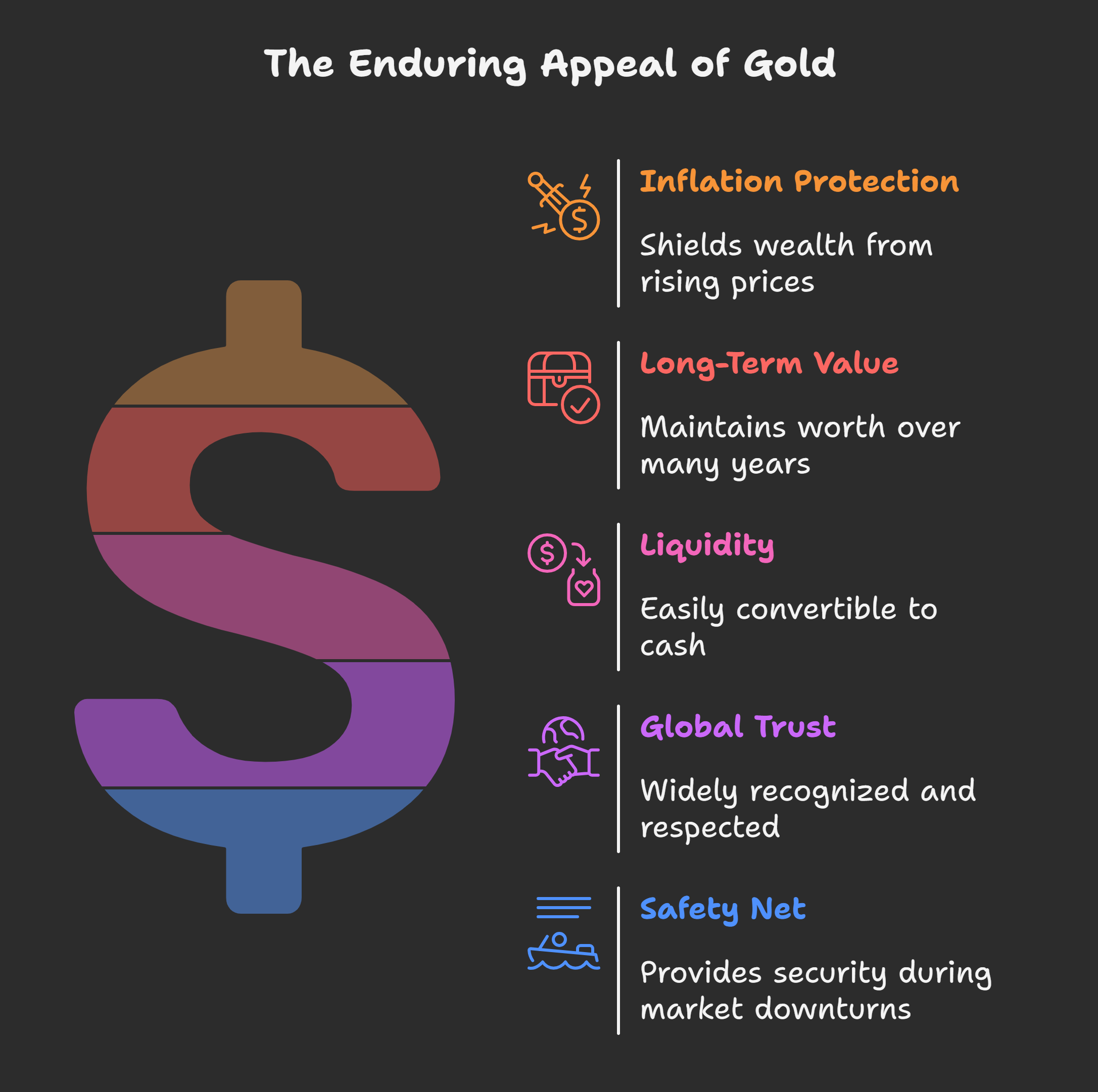
Why do people still choose gold?
-
It protects wealth during inflation.
-
It stays valuable over decades.
-
Easy to sell anytime.
-
Trusted by generations worldwide.
-
Acts as safety during market crashes.
1. Introduction
Gold is seen as a timeless asset. People across generations trust its value. It maintains worth even during tough times. Investors treat it as safe protection. Gold behaves differently during market stress. That is why many prefer gold. Emotions also influence gold buying habits. In India, gold equals family security. It is both tradition and safety.
Global investors also rely on gold. They use gold during uncertain periods. It protects savings from global shocks. Wars or recessions boost gold demand. Economic fear pushes people toward gold. It offers comfort when markets crash. That trust keeps demand always steady. Gold therefore remains widely relevant.
Before investing, evaluation is important. Every asset has pros and limits. Gold gives safety, not quick profit. It cannot replace growth investments. It supports overall financial planning well. For many, gold is backup wealth. But it should be balanced wisely. Right allocation gives better stability.
Why understanding gold matters today
-
Markets are uncertain globally now.
-
Inflation affects purchasing power directly.
-
Investors seek safe and stable assets.
-
Gold protects value during economic stress.
-
It improves long-term portfolio balance.
2. Historical Significance of Gold
1: What is a stock?

2.1 Gold as a Store of Value
Gold has held value for centuries. Kings and traders trusted gold universally. It was used before paper currency existed. People used gold for major transactions. It acted like natural money everywhere. Gold remained valuable across all regions. Its worth never depended on governments. That made gold truly timeless wealth.
Why gold stayed valuable
-
It is rare and limited.
-
It cannot be destroyed easily.
-
It holds universal acceptance.
-
It maintains value across eras.
2.2 Gold as Currency in History
Gold coins were official currency earlier. Empires kept reserves in gold. It built trust during trade deals. Merchants accepted gold without hesitation. The “gold standard” backed currencies globally. Nations stored gold for financial strength. Strong reserves signaled strong economy. Gold enabled global financial stability.
| Time Period | Role of Gold | Purpose |
|---|---|---|
| Ancient Era | Medium of exchange | Trade and wealth |
| Medieval Era | Royal treasure | Power and control |
| Colonial Era | Reserve asset | Global trade settlement |
| Early 1900s | Currency backing | Gold standard system |
| Modern Era | Financial hedge | Crisis protection |
2.3 Gold During Crises and Inflation
Gold protects wealth during inflationary periods. When currency weakens, gold strengthens. People buy gold during economic fear. It acts like financial insurance always. Stock crashes push money toward gold. That demand increases its long-term value. Hence gold behaves like crisis shield. It preserves purchasing power effectively.
Examples of gold stability
-
During recessions, gold stays strong.
-
During wars, demand increases fast.
-
During inflation, value rises steadily.
-
When markets fall, gold outperforms.
| Economic Situation | Currency Impact | Gold Impact |
|---|---|---|
| Inflation spike | Value declines | Gold rises |
| Market crash | Stocks drop | Gold gains |
| War or tension | Fear increases | Demand rises |
| Policy uncertainty | Trust falls | Gold strengthens |
2.4 Why History Still Matters Today
Old patterns repeat during stress. Gold reacts similarly in every crisis. Human trust keeps gold relevant always. That is why investors still choose gold. History supports gold’s strong reputation. It worked before, so trust remains.
Gold is popular for many solid reasons. It protects value during unstable situations. People trust it for financial security. It balances overall investment risk smartly. Gold protects money from inflation impact. When prices rise, gold usually rises too. It keeps purchasing power more stable. Currency loses value, gold holds value. Gold moves opposite to currency decline. Supply is limited, demand stays strong. People prefer hard assets during inflation. Value preserved without government control. Gold is extremely easy to liquidate. It sells quickly in most markets. You can convert gold into cash immediately. No long waiting period is required. Instant selling options everywhere. Buyers available in all regions. Quick emergency cash possible. No complex process involved. Gold reduces overall portfolio risk. It balances volatile assets like stocks. Gold performance differs from equities. It helps maintain portfolio stability. Provides safety cushion. Limits heavy portfolio loss. Works during stock crashes. Supports long-term confidence. Gold performs best in uncertain times. People choose gold during global fear. It is trusted during wars or recessions. Safety perception boosts demand further. During geopolitical tension. During banking failure fears. During market panic phases. During currency instability. Invest Smart, Learn Faster – Mutual Fund Course for Kerala Gold is useful but not perfect. It carries some important limitations. Understanding these helps wiser investing. Gold must be used with balance. Gold does not pay interest. Gold does not give dividends. It only grows through price rise. There is no cash flow. Income seekers gain nothing monthly. Growth depends only on appreciation. It cannot replace salary income. Passive income sources work better. Gold prices fluctuate frequently. Short-term charts show wide swings. Quick buying may feel risky. Timing mistakes reduce gains. Sudden global news updates. Rupee-dollar movement changes. Trader speculation spikes prices. Demand supply imbalance occurs. Physical gold needs safe storage. Jewel gold carries making charges. Selling deducts wastage cost also. Security costs reduce final return. Locker rent yearly. Insurance expenses possible. High making charges. Resale deduction applied. Gold depends on global events. Dollar strength affects gold price. US interest rates move gold. Global demand impacts valuation. US monetary policies. Global recession signals. Currency fluctuations globally. Central bank decisions. Gold can be purchased in many forms. Each method suits different investor needs. Some offer safety, some offer liquidity. Your choice depends on goals. Physical gold includes jewellery, coins, bars. It is the traditional buying method. People prefer it for cultural reasons. However, it carries extra expenses. Tangible real asset. Trusted for generations. Emotionally valued in India. Easy for gifting. Making charges apply. Storage risk exists. Resale deduction possible. Security costs added. Gold ETFs are easy market products. They track gold price digitally. No storage cost is required. They allow transparent trading anytime. Gold mutual funds invest in ETFs. They suit non-Demat investors easily. Both provide safer gold exposure. Returns follow gold movement closely. SGBs are issued by RBI. They give fixed interest annually. Value also grows if price rises. Storage cost is zero here. 2.5% yearly interest income. Zero making charges. Tax benefit on maturity. Very safe government instrument. Digital gold is app-based purchase. You can buy micro quantities easily. It suits small new investors well. Platform stores gold safely. Instant purchase online. No minimum limit required. Easy liquidity option available. Convenient for beginners. Platform charges sometimes apply. Not regulated like SGBs. Long holding risk exists. Conversion may need extra fee. Trusted, concepts to help you grow with confidence. Enroll now and learn to start investing the right way.
Gold works best during unstable conditions. It protects portfolios during market fear. Investors prefer gold when risk increases. It balances other assets efficiently. Gold outperforms most assets during inflation. Rising prices reduce currency strength. People shift toward safer assets. Gold preserves true purchasing power. Value stays relatively stable. Currency erosion gets offset. Price appreciation creates protection. Public confidence remains high. Gold reacts strongly to global uncertainty. Fear increases safe-haven demand quickly. People buy gold during crises worldwide. It becomes a trust-based shield. Wars or geopolitical conflicts. Financial market crashes. Recession or slowdown warnings. Global banking instability. Gold works best as partial allocation. Not entire wealth, but balanced share. It complements other asset classes. Acts like long-term protection layer. Keep moderate exposure only. Avoid full dependency on gold. Use gold for stability buffer. Let other assets drive growth. Invest Smart, Learn Faster – Mutual Fund Course for Kerala Gold is useful but not complete. It gives safety, not heavy growth. Other assets grow wealth faster. Each asset plays different roles. Stocks give higher long-term growth. Gold protects, stocks create wealth. Stocks move with economic performance. Gold moves with global fear. Real estate builds long-term assets. Gold is simpler and more liquid. Property offers rental income. Gold offers easier exit option. FDs give stable interest earnings. Gold does not provide interest. FDs are predictable income sources. Gold is inflation protection tool. Mutual funds create long-term growth. Gold secures capital during stress. Mutual funds suit wealth building. Gold is support, not core asset. It protects, but rarely multiplies. A smart portfolio blends both. Balance gives better financial health. Gold remains a reliable safety asset today. It protects wealth during unstable market periods. People trust gold across generations globally. Its value survives inflation and financial shocks. Gold stabilizes portfolios during economic fear. It works best as long-term protection. Not a growth tool, but a hedge. Gold maintains confidence when markets fall. It supports financial security steadily. Gold should not replace growth assets. It must stay a supporting investment. Balanced allocation gives better wealth outcomes. Even small holding improves portfolio strength. Right timing enhances inflation protection. Long-term patience improves gold benefits. Disciplined allocation ensures reliable stability. Gold works best with diversification. RELATED POSTS Trusted, concepts to help you grow with confidence. Enroll now and learn to start investing the right way.
Yes, gold is widely considered a safe-haven investment due to its ability to preserve wealth over time. It is not dependent on the performance of any single economy or stock market, making it reliable during financial crises. Investors turn to gold when currencies weaken or stock markets decline. Historically, gold has maintained its value even during wars, recessions, and periods of high inflation. While it does not generate income like dividends or interest, its stability and universal acceptance make it a trusted option for long-term wealth protection. Financial experts recommend allocating between 5% to 15% of your total investment portfolio to gold. This allocation is enough to provide stability without reducing the potential for higher returns from growth-oriented assets like stocks or mutual funds. Too much gold in a portfolio may limit income and growth opportunities because it does not provide regular returns. A moderate allocation helps hedge against inflation and market volatility. Individual allocation may vary depending on risk tolerance, financial goals, and current economic conditions. Gold does not provide regular income in the form of dividends or interest, unlike stocks or fixed deposits. Its returns are mainly based on price appreciation over time or, in the case of Sovereign Gold Bonds (SGBs), a fixed interest of 2.5% per annum. Physical gold, digital gold, and ETFs do not generate recurring income and rely solely on market price movement. Investors looking for regular cash flow need to complement gold with other income-generating assets. However, its value preservation and safe-haven characteristics make gold a critical component for long-term security. There are multiple ways to invest in gold depending on your preferences, risk appetite, and convenience. Physical gold includes jewellery, coins, and bars, which are tangible but involve storage costs and making charges. Gold ETFs and mutual funds allow digital exposure and are easier to trade without storage concerns. Sovereign Gold Bonds (SGBs) offer government-backed safety with additional annual interest and tax benefits on maturity. Digital gold platforms provide a convenient way to invest small amounts instantly, although some may charge fees for buying or converting gold. Choosing the right method depends on whether your focus is safety, liquidity, or long-term returns. Gold is considered a hedge against inflation because its value generally rises when the purchasing power of currency declines. During periods of high inflation, prices of goods and services increase, but gold prices typically move upward, helping investors preserve real wealth. This happens because gold is a finite resource with consistent demand globally, unlike fiat currencies that can be printed in unlimited supply. By including gold in a portfolio, investors reduce the negative impact of inflation on their overall wealth. Its ability to maintain purchasing power makes it a critical tool in wealth preservation strategies. Physical gold is tangible, culturally significant, and emotionally valued, especially in countries like India. However, it comes with higher costs such as making charges for jewellery, storage, and insurance. Digital gold and Gold ETFs provide easier access and trading convenience, often at lower costs. ETFs can be traded on stock exchanges, giving flexibility, while digital gold can be purchased in micro amounts through apps. The choice depends on your investment goals, risk tolerance, and whether you prioritize convenience or traditional ownership. Yes, gold prices are influenced by global economic and geopolitical factors. A strong US dollar often reduces gold prices, while a weaker dollar can push them higher. Interest rate changes, inflation expectations, and central bank policies also significantly affect gold demand and pricing. Additionally, geopolitical tensions, wars, and financial crises increase investor demand for gold as a safe-haven asset. Global supply and demand dynamics, including mining output and investor sentiment, further impact its market price. Understanding these factors helps investors make informed decisions about timing and allocation. Gold generally does not outperform stocks or mutual funds over the long term in terms of wealth creation. Stocks and mutual funds offer higher growth potential through capital appreciation and dividends, making them better for aggressive long-term wealth building. Gold’s primary advantage is stability and safety, especially during market downturns or economic uncertainty. By including gold in a portfolio, investors can reduce overall volatility and protect against financial risks. It is best used as a hedge or complementary asset rather than the main growth driver. Yes, Sovereign Gold Bonds (SGBs) are considered one of the safest ways to invest in gold. They are issued and backed by the Government of India, eliminating the risk of theft or market manipulation associated with physical gold. SGBs offer 2.5% annual interest on the invested amount in addition to capital gains from gold price appreciation. They also provide tax benefits if held until maturity, including exemption from capital gains tax. SGBs are suitable for long-term investors who want secure returns with additional income. The best time to invest in gold is during periods of inflation, global uncertainty, or geopolitical tensions. Gold acts as a safe-haven asset when markets are volatile or currencies weaken. Long-term investors can also benefit by investing regularly through small allocations, regardless of short-term price fluctuations. Timing the market is less important than maintaining consistent exposure to hedge against future risks. Gold performs best as part of a diversified portfolio rather than as the sole investment, providing stability and peace of mind.3. Advantages of Investing in Gold
3.1 Hedge Against Inflation
Why gold hedges inflation
Condition
Currency Impact
Gold Effect
High inflation
Value falls
Price rises
Weak Rupee
Savings erode
Gold gains
Cost of living rise
Loss grows
Hedge works
3.2 High Liquidity
Liquidity benefits
3.3 Portfolio Diversification
Asset Type
Nature
Risk Level
Correlation with Gold
Equity
Growth asset
High
Low correlation
Bonds
Fixed income
Low
Medium correlation
Real estate
Physical asset
Moderate
Low correlation
Gold
Hedge asset
Low
Negative correlation
Why gold improves balance
3.4 Safe-Haven Asset
When gold becomes safe haven
Situation
Risk Level
Gold Behaviour
War fears
Extreme
Prices rise
Global recession
High
Demand spikes
Stock crash
High
Stability improves
Policy fear
Moderate
Hedge increases
Summary of Gold Benefits
Advantage
Key Benefit
Inflation Hedge
Protects purchasing power
Liquidity
Easy buying and selling
Diversification
Reduces total risk
Safe Haven
Works during crises
4. Risks & Limitations of Gold Investment
4.1 No Regular Income
Why this matters
Asset Type
Gives Income?
Example
Gold
No
Physical, ETF
Stocks
Yes
Dividends
FD
Yes
Fixed interest
Real estate
Yes
Rent
4.2 Short-Term Price Volatility
Causes of volatility
Duration
Movement
Risk
Short term
High
Volatile
Medium term
Moderate
Manageable
Long term
Stable
Strong
4.3 Storage and Extra Charges
Extra costs in physical gold
Type
Hidden Cost
Impact
Jewellery
Making charge
Lower resale
Coins/Bars
Storage cost
Extra expense
Digital
No storage cost
Easier holding
4.4 Global Influence on Prices
Key price influencers
Factor
Gold Impact
Strong dollar
Price weakens
Weak dollar
Price rises
High rates
Demand reduces
Crisis fear
Demand increases
Summary of Gold Limitations
Limitation
Impact
No income
Slower returns
Volatility
Short-term risk
Storage charges
Lower profit
Global influence
Price uncertainty
5. Ways to Invest in Gold
5.1 Physical Gold
Pros
Cons
Type
Use Case
Limitation
Jewellery
Cultural use
High charges
Coins
Savings purpose
Storage needed
Bars
Bulk investment
Resale difficulty
5.2 Gold ETFs & Gold Mutual Funds
Feature
ETF
Gold Fund
Storage
No
No
Liquidity
High
Moderate
Demat Needed
Yes
No
Pricing
Market-linked
NAV-linked
5.3 Sovereign Gold Bonds (SGBs)
Benefits of SGBs
Feature
SGB Benefit
Safety
Government backed
Return
Interest + growth
Storage
None required
Taxation
Maturity exempt
5.4 Digital Gold
Pros
Cons
Comparison Table of Gold Investment Options
Option
Storage Need
Liquidity
Extra Benefit
Suitability
Physical
Yes
Medium
Tangible asset
Traditional buyers
ETF
No
High
Market access
Active traders
Gold Fund
No
Medium
No Demat needed
New investors
SGB
No
Low-Medium
Interest income
Long-term holders
Digital
No
High
Small ticket size
Beginners
Stock Market Training Reviewed & Monitored by SEBI Registered Investment Advisor
6. When Does Gold Work Best as an Investment?
6.1 During Inflationary Cycles
Why it helps in inflation
Situation
Currency Effect
Gold Result
High inflation
Value drops
Price climbs
Weak Rupee
Savings shrink
Hedge strengthens
Commodity rise
Costs soar
Gold benefits
6.2 During Global Uncertainty
Events that boost gold demand
Event Type
Market Impact
Gold Behaviour
War fears
Panic rises
Price increases
Recession talk
Growth weakens
Gold stabilizes
Banking stress
Trust falls
Gold gains
Policy shocks
Volatility rises
Demand grows
6.3 As a Portfolio Allocation
Ideal usage strategy
Allocation Range
Investor Type
Benefit
5%
Conservative
Backup security
10%
Balanced
Risk reduction
15%
Cautious
Crisis protection
Key Points
Condition
Gold Performance
Inflation
Strong
Uncertainty
Strong
Stability
Moderate
Long-term
Reliable
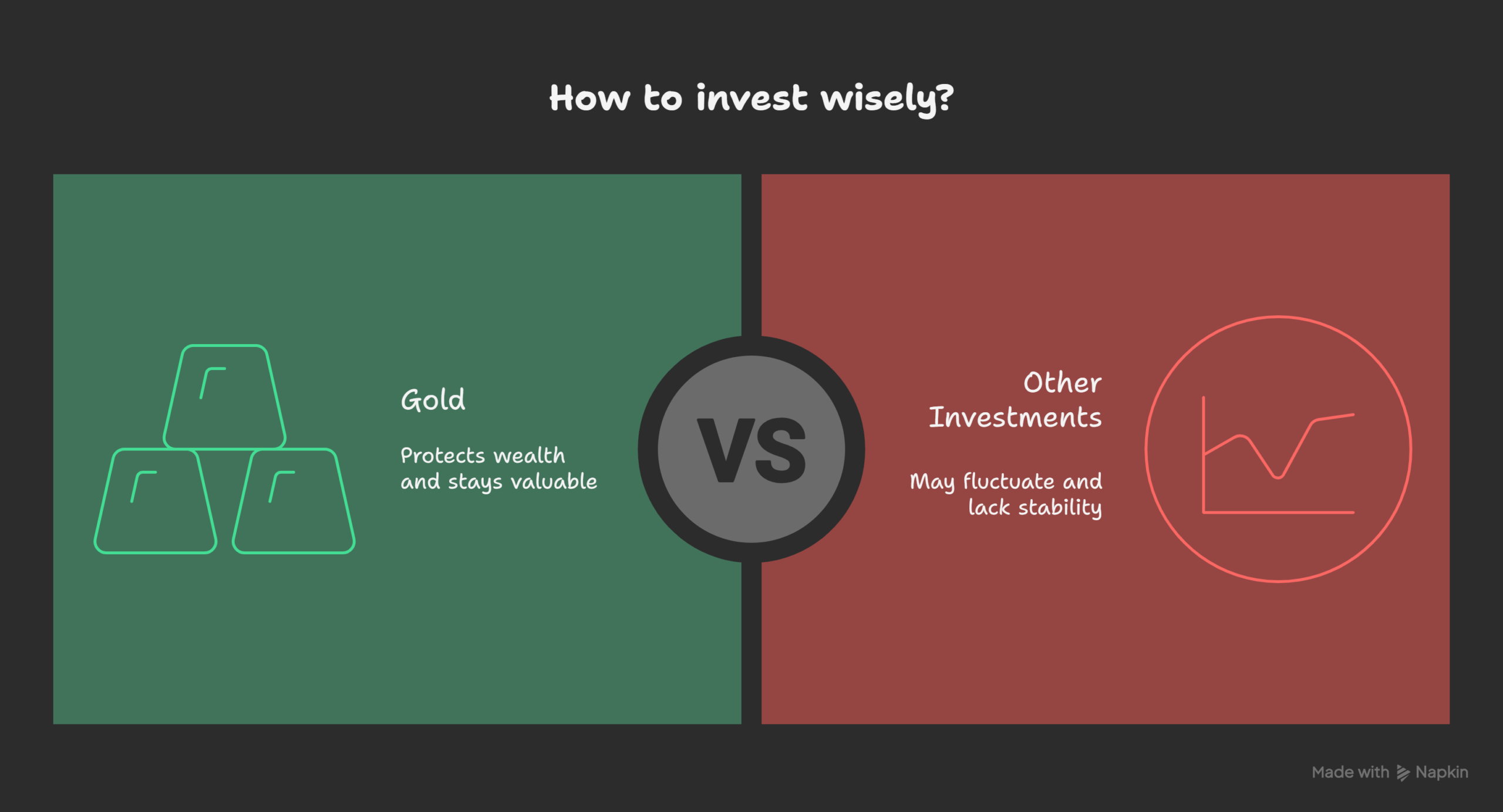
7. Gold vs Other Investments
7.1 Gold vs Stocks
Factor
Gold
Stocks
Return
Moderate
High
Risk
Low
High
Income
None
Dividends
Growth
Slow
Strong
7.2 Gold vs Real Estate
Factor
Gold
Real Estate
Liquidity
High
Low
Income
None
Rent possible
Entry cost
Low
Very high
Maintenance
None
High
7.3 Gold vs Fixed Deposits
Factor
Gold
FD
Income
None
Yes
Risk
Low
Very low
Inflation hedge
Strong
Weak
Liquidity
High
Medium
7.4 Gold vs Mutual Funds
Gold suits risk balancing purpose.
Factor
Gold
Mutual Fund
Purpose
Safety
Growth
Volatility
Moderate
Market-linked
Return
Steady
Compounding
Usage
Hedge
Wealth creation
7.5 Where Gold Fits
Quick Summary Table
Investment Type
Primary Benefit
Limitation
Best For
Gold
Stability
No income
Safety hedge
Stocks
Growth
High risk
Long-term gain
Real Estate
Asset building
Low liquidity
Wealth build
FD
Guaranteed return
Low return
Safe income
Mutual Funds
Compounding
Market swings
Long-term goals
8. Conclusion
Gold Rate in Kerala Today
The Ultimate Guide to Personal Finance in India
Electronic Gold Receipts (EGR): What It Is, How It Works & Why It Matters for Investors
Stock Market Training Reviewed & Monitored by SEBI Registered Investment Advisor
Frequently Asked Questions
Is gold a safe investment?
How much gold should I hold in my portfolio?
Does gold give regular income?
What are the best ways to invest in gold?
How does gold protect against inflation?
Is physical gold better than digital gold or ETFs?
Do global factors affect gold prices?
Can gold outperform stocks or mutual funds?
Are Sovereign Gold Bonds safe?
When is the best time to invest in gold?