Table of Contents
To become a yoga instructor in India, you need to complete a recognised Yoga Teacher Training (YTT) programme – typically a 200-hour course – and earn a certification from a body like Yoga Alliance.
The path blends personal practice with structured training, anatomy, pedagogy, and real teaching hours. India is currently ranked among the fastest-growing job markets for yoga instructors globally, with full-time professionals earning between ₹3 lakh and ₹10 lakh per year depending on experience, specialisation, and teaching format.
Get Certified, Be Confident! Join Our Yoga Teacher Training Course!
Key Takeaways
- A 200-hour YTT is the minimum to teach professionally.
- Yoga Alliance RYT 200 and RYT 500 are the most recognised credentials.
- Beginner instructors in India earn about ₹15,000 to ₹25,000/month.
- Experienced instructors can earn ₹30,000 to ₹50,000/month or more.
- Specialties (prenatal, therapeutic, corporate) boost earnings.
- Teaching online and building a personal brand multiplies income.
What does a Yoga Instructor Do?
1: Which of these is the primary goal of yoga practice?
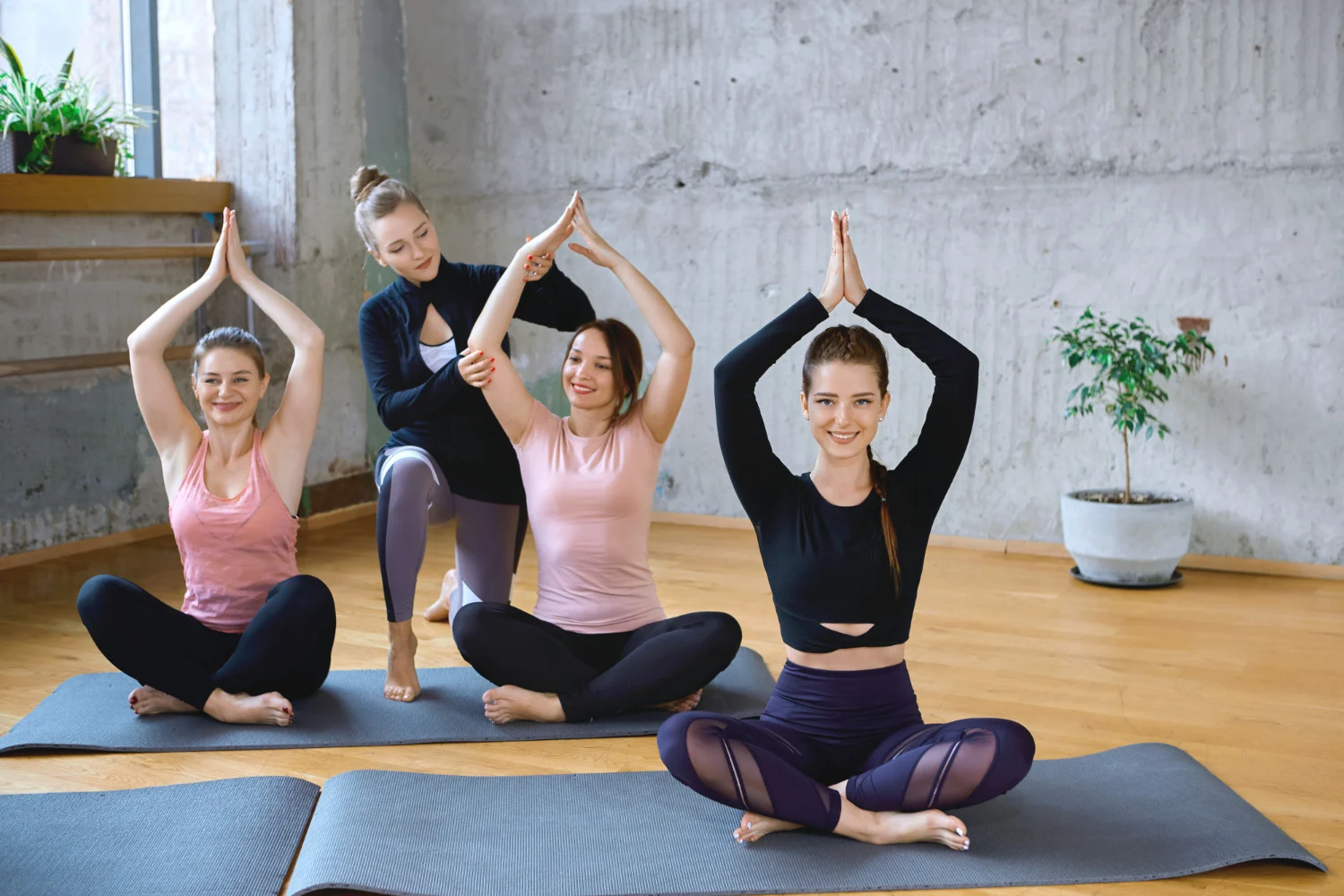
A yoga instructor leads students through physical postures (asanas), breathwork (pranayama), and mindfulness practices. All of this is tailored to different levels and needs. But the role goes beyond conducting classes.
Certified yoga teachers design lesson plans, give personalized modifications, understand anatomy and injury prevention, and build long-term relationships with their students.
Modern yoga instructors work across studios, gyms, corporate wellness programmes, hospitals, schools, online platforms, and yoga retreats. Some build entire teaching businesses independently as freelancers.
Become a Certified Yoga Instructor
Yoga Teacher Training Course by Entri App: Master authentic yoga techniques, earn certification, and build a successful career as a professional yoga instructor.
Join Now!How to Become a Yoga Instructor
To become a yoga instructor is to follow a 200 or 500-hour yoga teacher training with a reputed yoga school. These are offered in various formats, lasting from a few weeks to a few years. You can choose between attending in-person yoga teacher training or online yoga teacher training. Selecting the right training course involves considering the style of yoga you wish to learn, the time you are willing to dedicate, and the learning environment you want to surround yourself with.
One of the first choices when considering yoga teacher training is whether to do a 200-hour or a 500-hour training. Today, 200 training hours appear to be the global minimum required to be recognized as a yoga instructor. After a 200-hour yoga instructor training, some yoga teachers will pursue their learning with an additional 300-hour yoga instructor certification.
To form a foundation and gain experience you can consider your 200-hour yoga teacher training course to become a yoga instructor.
A 300-hour yoga instructor certification is a bit like doing your Master’s degree; which allows you to specialize in a particular style or approach, but it’s not required for everybody.
Steps to Become a Yoga Instructor

Step 1: Build a Consistent Personal Practice
Before you teach, you must practise, seriously and sincerely. Most reputable YTT programmes expect applicants to have at least six months to one year of regular yoga practice. This isn’t just a formality. Your personal practice is the foundation on which your teaching credibility and body awareness are built.
During this stage, explore different yoga styles – Hatha, Vinyasa, Ashtanga, Yin – and find the lineage that resonates with you. Attend various classes, work with experienced teachers, and observe how instruction is structured. This exposure will help you make informed decisions about the style of training you want to pursue.
Step 2: Choose the Right Yoga Teacher Training (YTT) Programme
This is the most important decision in your journey. A quality YTT programme determines your depth of knowledge and long-term teaching confidence.
The three most common training levels are:
| Certification Level | Hours Required | Scope |
| 200-Hour YTT | 200 contact hours | Foundation; beginner to teach |
| 300-Hour YTT | 300 additional hours | Advanced pedagogy and depth |
| 500-Hour YTT | 200 + 300 combined | Senior teaching roles, specialisations |
When evaluating programmes, look for:
- Affiliation with Yoga Alliance or the Quality Council of India (QCI) under Ayush Ministry
- Qualified faculty with E-RYT 500 designation or higher
- A curriculum that covers asana practice, anatomy, philosophy, teaching methodology, and practicum
- Adequate supervised teaching hours
India has several globally respected yoga schools – particularly in Rishikesh, Mysuru, and Pune. They offer internationally recognised 200-hour and 500-hour programmes.
Step 3: Complete Your Yoga Teacher Training
Once enrolled, give the programme your full commitment. A standard 200-hour YTT covers:
- Asana practice and alignment – the physical postures and how to safely instruct and adjust them
- Anatomy and physiology – understanding the body, joints, muscle groups, and common injuries
- Pranayama and breathwork – conscious breathing techniques and their effects on the nervous system
- Yoga philosophy – the Yoga Sutras of Patanjali, the Bhagavad Gita, and the eight limbs of yoga (Ashtanga)
- Teaching methodology – sequencing, cueing, class design, and communication
- Practicum – supervised teaching hours where you instruct real students under faculty observation
Most residential programmes in India span 28 to 30 days when done intensively. Online and weekend-format courses extend this over several months.
Step 4: Get Certified – Register with Yoga Alliance or Ayush
After completing your training, registering your credentials makes you officially recognised in the industry.
Yoga Alliance (International):
The globally dominant body. After completing a 200-hour YTT at a Yoga Alliance Registered School (RYS), you can register as a Registered Yoga Teacher (RYT 200). This credential is accepted by studios and employers in India and internationally.
Ministry of Ayush / QCI (India):
The Government of India has established its own yoga certification framework under the Quality Council of India. The Level 1 certification (Yoga Protocol Instructor) is particularly relevant for those seeking roles in government schools, AYUSH wellness centres, or public health initiatives.
Many serious instructors pursue both – the international recognition of Yoga Alliance alongside the domestic credibility of the QCI/Ayush framework.
Step 5: Accumulate Teaching Hours and Real Experience
Certification alone does not make you a confident teacher – hours in front of students do. After completing your training, start teaching as soon as possible:
- Assist senior teachers at local studios
- Offer free or low-cost community classes to build experience
- Volunteer at yoga workshops, wellness events, or NGO programmes
- Sub for classes when instructors are unavailable
Aim to log your teaching hours formally if you plan to eventually upgrade to RYT 500 or E-RYT (Experienced Registered Yoga Teacher) status, as Yoga Alliance requires documented hours.
Step 6: Choose Your Teaching Niche and Specialise
The yoga industry rewards specificity. Instructors who develop expertise in a particular style or population often earn more and attract a loyal student base. Popular specialisations include:
- Prenatal and postnatal yoga – a high-demand niche requiring additional training
- Therapeutic yoga – working with injury recovery, chronic illness, or mental health
- Children’s yoga – particularly relevant for school-based programmes
- Corporate wellness yoga – growing rapidly as Indian companies invest in employee wellbeing
- Aerial or Yin yoga – niche but growing in urban markets
- Senior yoga – addressing mobility, balance, and chronic pain in older populations
Specialisation training typically ranges from 20 to 100 hours of additional coursework.
Step 7: Build Your Brand and Teaching Business
In 2026, a yoga instructor’s career is as much about visibility as it is about skill. Building a sustainable teaching practice requires intentional effort:
- Social media presence:
Instagram and YouTube remain the strongest platforms for yoga instructors to demonstrate expertise, build community, and attract students.
- Website and booking system:
Even a simple website with a booking link and a clear description of your teaching style adds professionalism.
- Online classes:
Platforms like Zoom, Udemy, and YouTube allow you to reach students beyond your city and create passive income streams.
- Workshops and retreats:
Higher-value offerings that also deepen student relationships and increase income per student.
Experienced instructors offering private sessions in India charge ₹500 to ₹3,000 per session, with RYT 500-certified teachers at the higher end of that range.
Yoga Instructor Salary in India: What to Expect
Earnings in this profession vary significantly based on format, location, and specialisation.
| Teaching Format | Typical Earnings |
| Studio/gym employment (beginner) | ₹15,000–₹25,000/month |
| Studio/gym employment (experienced) | ₹30,000–₹50,000/month |
| Private sessions | ₹500–₹3,000 per session |
| Corporate wellness programmes | ₹1,500–₹5,000 per session |
| Online classes (subscription model) | Variable; scalable with audience |
India is one of the fastest-growing job markets for yoga instructors globally, driven by rising wellness awareness, corporate health initiatives, and the government’s active promotion of yoga through the Ministry of Ayush and International Day of Yoga.
Become a Certified Yoga Instructor
Yoga Teacher Training Course by Entri App: Master authentic yoga techniques, earn certification, and build a successful career as a professional yoga instructor.
Join Now!Types of Yoga Certification Recognised in India
| Body | Certification | Recognition |
| Yoga Alliance (USA) | RYT 200, RYT 500, E-RYT | International |
| Quality Council of India (Ayush) | Level 1, Level 2, Level 3 | National (India) |
| IAYT | Certified Yoga Therapist | Therapeutic/clinical settings |
Career Paths for Yoga Instructors in India
Once certified, you have multiple career directions to consider:
- Studio or gym instructor – the most common entry point; structured, regular income
- Corporate yoga trainer – companies in India’s metros actively hire yoga instructors for employee wellness
- Freelance and private instructor – higher hourly rates with flexible scheduling
- Online yoga teacher – expanding reach with recorded and live digital classes
- Yoga school faculty – requires E-RYT designation; you teach trainers, not just students
- Retreat facilitator – hosting or co-facilitating yoga retreats in India or abroad
- Yoga therapist – requires additional IAYT-accredited training; works in clinical or rehabilitation settings
Learn Yoga from the best teachers in the industry! Join the Entri app!
Conclusion
Becoming a yoga instructor is a structured journey that begins with personal practice and moves through formal training, certification, and deliberate career building.
The 200-hour YTT is the essential first step, but it is what you do after certification that shapes the depth and earnings of your career. This includes the teaching hours, the specialisations, and the community you build.
India’s yoga industry is actively growing, supported by international demand for Indian yoga traditions, government-led wellness initiatives, and a rising corporate wellness sector. If you approach this path with seriousness and consistency, a career as a yoga instructor can be both professionally fulfilling and financially rewarding.
Become a Certified Yoga Instructor
Yoga Teacher Training Course by Entri App: Master authentic yoga techniques, earn certification, and build a successful career as a professional yoga instructor.
Join Now!Frequently Asked Questions
What are some professions that are similar to being a yoga instructor?
Is the 50 hour yoga teacher training a certification course?
Yes. Students receive a YogaMea School certification after completing the 50 hour yoga teacher training course. However, students will become eligible to register for the Yoga Alliance RYT 200 only after completing all four phases of 50 hour training for a total of 200 hours.
What does RYT 200 stand for in yoga?
RYT 200 is an acronym which stands for Registered Yoga Teacher 200-Hour. He 200-Hour means you have studied and accumulated 200 hours of information and study time.
How long does it take to become a certified yoga instructor?
The 200-hour Yoga Teacher Training Courses in Italy and India with YogaMea School are a 28 day commitment. Students can arrive early and leave later if they choose to spend a few extra days taking in the sights. Upon completion of a 200-Hour Yoga Teacher Training course, students are equipped to teach others; whether in private one-on-one classes or public classes.
Are government jobs available for yoga instructors in India?
Yes. The Ministry of Ayush, state health departments, government schools, the Sports Authority of India, and defence establishments recruit yoga instructors. QCI-level certification strengthens eligibility for these roles.
Is Yoga Alliance certification valid in India?
Yes. Yoga Alliance RYT credentials are internationally recognised, including in India, and are preferred by most urban studios, gyms, and corporate wellness programmes.
How long does it take to become a certified yoga instructor?
A 200-hour intensive programme can be completed in 28–30 days at a residential school. Part-time or online formats typically span 3 to 6 months. Advanced 500-hour programmes take longer, often 6 months to a year.