Table of Contents
Data‑centre construction is booming in Asia and the Middle East: India leads on volume while the Gulf competes on pay and speed.
India’s surge is demand‑driven by hyperscalers, 5G, AI workloads and data‑localisation. The Gulf’s growth is investment‑driven, fuelled by sovereign AI funds, free‑zone incentives and large hyperscaler deals.
India reached 1,520 MW of operational capacity in 2025 after adding a record 387 MW that year. The UAE hosts over 400 MW of GCC colocation, and Saudi Arabia’s Humain‑Nvidia programme pledged $10 billion for AI‑ready sites.
Kickstart Your Embedded Systems Career and Turn Your Tech Passion into High-Demand Skills!
Key Takeaways
- India added 387 MW in 2025, +103% from 2024.
- Mumbai, Delhi‑NCR, Chennai – ~75% of new supply; Hyderabad and Kolkata rising.
- UAE and Saudi growing ~19% to 24% CAGR via sovereign AI funds.
- India – volume and faster progression.
- The Gulf – higher pay and hyperscale exposure.
- Top roles – commissioning engineers, MEP leads, BIM coordinators.
- Uptime, TIA‑942, BICSI plus commissioning experience drive hiring.
Why this Boom Matters Right Now

The factors that have turned data centres into critical national infrastructure almost overnight are:
- Cloud adoption
- AI training workloads
- Stricter data-residency rules
For engineers and project professionals, this means steady, high-skill hiring in India’s civil, MEP, BIM and commissioning functions. This is alongside premium pay for turnkey and modular expertise in the Gulf.
The short-term advantage sits with the Gulf, where hyperscale and modular projects accelerate real-world experience and pay faster.
The long-term volume play is India, where operators are scaling teams across tier-1 and tier-2 cities. They create more entry points and faster internal promotions.
Master Embedded Systems Programming!
Launch your tech career with our Embedded Systems Course, designed for hands-on learning and industry readiness.
Know MoreMarket Drivers: India vs the Gulf
India’s build-out is driven by hyperscaler investment, telecom edge rollouts, and the Digital Personal Data Protection Act pushing data-residency compliance.
Mumbai remains the anchor market with its submarine cable landings and reliable grid. It commands the largest share of new supply, followed by Delhi-NCR and Chennai.
Hyderabad, Kolkata and Visakhapatnam are the emerging high-CAGR markets as land and power costs rise in the metros.
India’s overall market was valued at roughly $9.8 billion in 2025 and is projected to more than double by 2031.
The Gulf’s story is different as it is capital-led, and not just demand-led. The UAE and Saudi Arabia are racing to build sovereign AI infrastructure. They are backed by government-linked funds and hyperscaler mega-deals.
Microsoft alone has committed over $15 billion to UAE data centre infrastructure since 2023. Whereas Saudi Arabia’s Humain project has attracted a $10 billion Nvidia partnership for 500 MW of AI-ready capacity.
Free zones in both countries streamline customs and land approvals. This makes the region a magnet for turnkey EPC contractors and modular, factory-built construction.
Quick Comparison:
India wins on project volume, cost-competitive delivery and career breadth across tiers. The Gulf wins on capital intensity, project speed and expatriate compensation.
Project Types, Timelines and CAPEX
Most builds fall into four categories:
- Hyperscaler campuses
- Wholesale colocation
- Edge/micro-sites
- Enterprise retrofits
CAPEX per MW runs consistently higher in the Gulf due to imported equipment and turnkey margins.
| Project type | Typical size | India CAPEX/MW | Gulf CAPEX/MW | Delivery time |
| Hyperscaler campus | 50–200+ MW | $6–10M | $8–14M | 18–36 months |
| Wholesale colocation | 5–50 MW | $5–9M | $7–12M | 12–24 months |
| Edge site | 0.1–5 MW | $0.6–1.5M | $0.8–2M | 3–9 months |
| Enterprise retrofit | 0.5–10 MW | $1–4M | $1.5–5M | 6–18 months |
Note:
Figures are industry-range estimates; actuals vary with power availability, permitting and how much of the build uses modular, factory-assembled components.
Skills, Roles and Pay: Where the Money is
The roles operators are struggling to fill on both sides of this boom are:
- Commissioning engineers
- MEP design leads
- BIM coordinators
- Site managers
- QA/QC engineers
| Role | Core skills | Certifications that matter | India pay band (annual) |
| Commissioning engineer | UPS, HVAC, ATS testing | Uptime Institute / manufacturer training | ₹4–15 LPA (entry to mid) |
| MEP design lead | MV distribution, cooling design | Revit/BIM, PE where applicable | ₹7–30 LPA |
| BIM coordinator | Revit, clash detection, ISO 19650 | Autodesk/Revit certification | ₹4–28 LPA |
| Site/QA-QC manager | Construction management, ITPs | OSHA/EHS, Uptime Tier audit familiarity | ₹3.5–35 LPA |
Pay climbs sharply with experience and certification on both sides.
In the Gulf, expatriate data centre professionals typically earn tax-free packages with housing, transport and flight allowances layered on top of base pay.
A UAE data centre manager, for instance, earns roughly AED 180,000 to AED 282,000 in base salary alone, before allowances.
That tax-free structure, not just the headline number, is usually what makes Gulf compensation feel significantly higher than an equivalent India role.
Master Embedded Systems Programming!
Launch your tech career with our Embedded Systems Course, designed for hands-on learning and industry readiness.
Know MoreTechnical Standards that Employers Actually Check
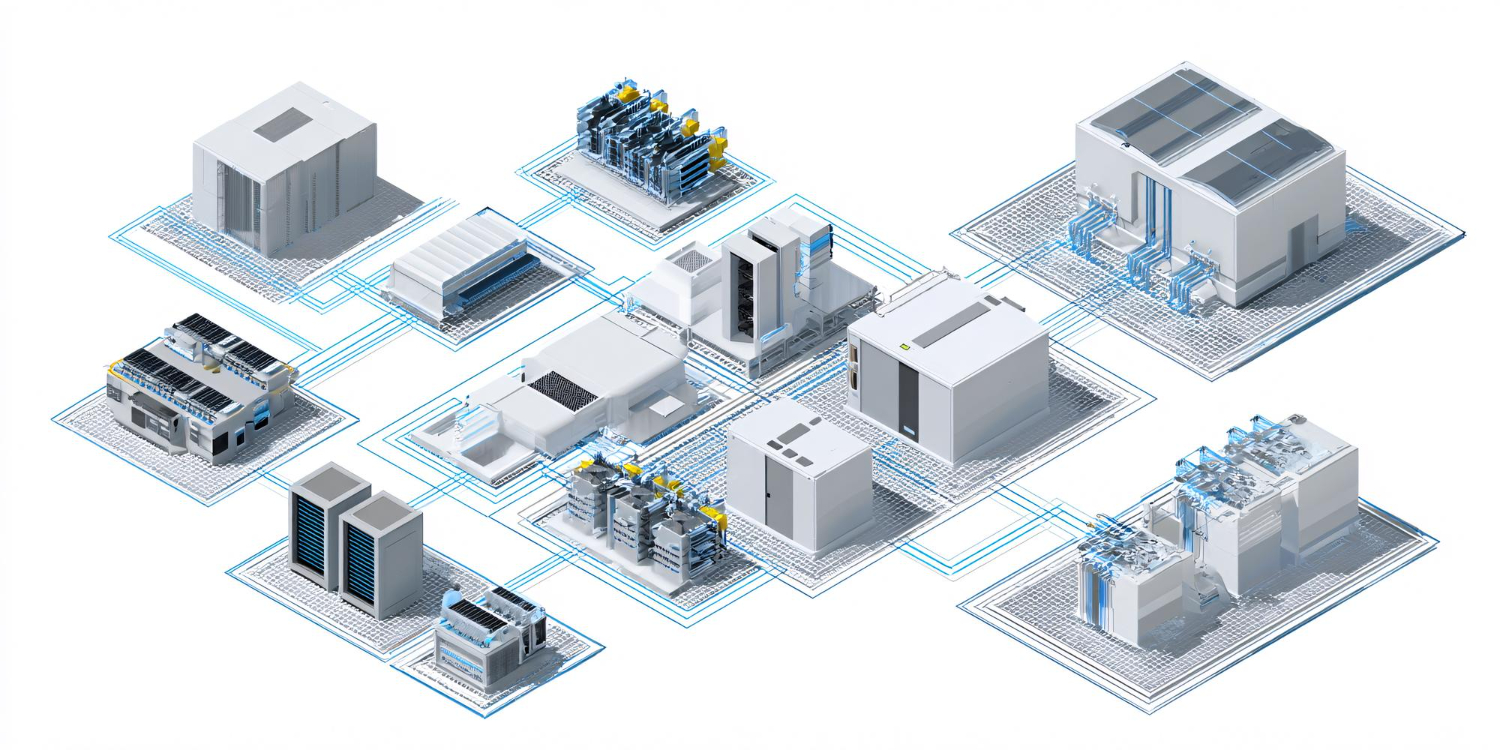
Design and delivery on both sides increasingly align to the same global benchmarks:
- TIA-942 for infrastructure standards
- Uptime Institute Tier certification for reliability
- ISO 27001 for security
Cooling strategy is where the two markets diverge. Gulf sites must engineer around extreme ambient heat. They must push heavier investment in chilled-water systems and redundant thermal management.
On the other hand, Indian sites contend with variable seismic zones and monsoon-driven groundwater issues. They demand detailed geotechnical work upfront.
Carrier-neutral connectivity, diverse fibre routing and direct hyperscaler peering are non-negotiable on both fronts. Also, renewable PPAs are becoming a default expectation rather than a bonus.
Risks Worth Planning for
Grid instability, import and customs delays, permitting hold-ups and a genuine shortage of commissioning-trained technicians are the recurring risks on both sides.
Projects that hedge early consistently outperform those that don’t. These are the ones securing power letters of intent, favouring modular construction where schedules are tight, and investing in a real training pipeline for technicians.
A Practical Checklist if You’re Targeting the Gulf
- Get Uptime Institute, TIA‑942 or BICSI plus vendor commissioning courses.
- Document hands‑on commissioning and BIM project experience.
- Expect Gulf recruiters to verify practical exposure, not titles.
- Check labour contract details and confirmed allowances (housing, transport, flights).
- Budget for cultural and climate adjustment.
- Plan 2 to 3 months for relocation.
Kickstart Your Embedded Systems Career and Turn Your Tech Passion into High-Demand Skills!
Conclusion
India and the Gulf are not competing markets for data centre talent. They are complementary ones. India offers scale, steady demand and a faster route to more responsibility earlier in your career.
The Gulf offers accelerated exposure to hyperscale, modular projects and materially higher take-home pay once allowances are factored in.
The smartest career move isn’t necessarily picking a side. It is building the certifications and hands-on commissioning experience that make you employable in either market as this build-out keeps accelerating through 2030.
Master Embedded Systems Programming!
Launch your tech career with our Embedded Systems Course, designed for hands-on learning and industry readiness.
Know MoreFrequently Asked Questions
Which is growing faster right now, India or the Gulf?
India is growing faster in absolute capacity, adding 387 MW in 2025 alone. The Gulf is growing faster in capital intensity, with UAE and Saudi markets expanding at 19% to 24% CAGR.
Which Indian cities have the most data centre construction jobs?
Mumbai, Delhi-NCR and Chennai lead on volume, together accounting for most new supply. Hyderabad, Kolkata and Visakhapatnam are the fastest-growing emerging hubs for new roles.
What certifications matter most for data centre careers?
Uptime Institute training, TIA-942 familiarity, BICSI and Revit/BIM certification are the most recognised credentials. Manufacturer-specific commissioning courses for UPS, chillers and gensets also carry real weight with hiring managers.
How long does it take to build a typical data centre?
Timelines range from 3 to 9 months for small edge sites to 18 to 36 months for large hyperscaler campuses. Modular, factory-built construction can compress these timelines significantly on both sides.
Why is CAPEX per MW higher in the Gulf than in India?
Gulf projects rely more heavily on imported equipment, logistics and turnkey EPC margins. India benefits from cheaper local labour, materials and a more mature domestic supply chain.
Are modular data centres actually cheaper to build?
Modular construction can raise upfront CAPEX per MW slightly but usually lowers schedule risk and long-term operating costs. It’s increasingly the preferred approach for hyperscale and Gulf projects that need fast go-live dates.
Do Gulf employers sponsor visas and relocation for data centre roles?
Many do, especially for senior or hard-to-find specialist roles like commissioning and MEP design. Most still expect candidates to already hold relevant certifications before extending an offer.
How does cooling design differ between India and the Gulf?
Gulf sites need heavier investment in chilled-water and thermal management systems due to extreme ambient heat. Indian sites focus more on seismic-zone geotechnical planning and monsoon-related groundwater management.
What is the biggest risk in data centre construction projects?
Grid instability and delays in securing reliable power are the most consistent risks across both markets. Import and customs delays are an added factor for Gulf projects relying on imported equipment.
Is data centre construction a stable long-term career path?
Yes. India’s market is projected to more than double by 2031, and the Gulf’s hyperscale segment is expanding at over 20% annually through 2030. Both trajectories point to sustained, multi-year hiring demand for skilled construction and commissioning professionals.