Table of Contents
ANSWER
Construction projects are constantly losing information – designs get changed, the team changes and data gets stuck in a multitude of disconnected systems. This results in the usual suspects of rework, delays and cost overruns. The good news is that ISO 19650 is the international standard that finally addresses all this. It provides a framework for handling all the data across an entire project’s lifecycle – from initial concept right through to design, construction and operation.
What Does ISO 19650 Actually Do?

ISO 19650 in Easy To Understand Terms
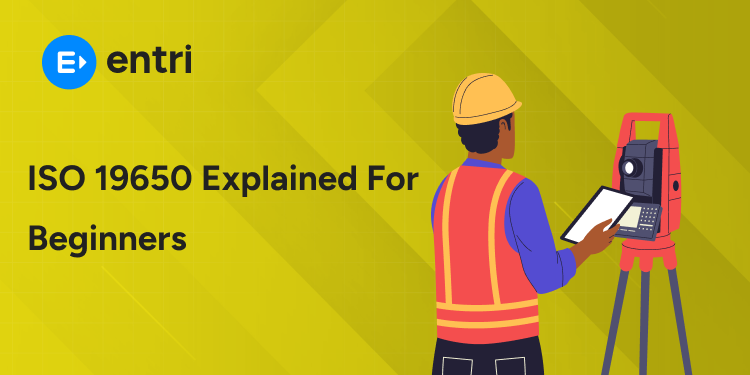
ISO 19650 is an international standard for managing information over the course of an entire building project. It shows you how to share, record, version and keep information in order among all the parties involved in a project. Think of it as a set of guidelines for collaboration – it gives you the rules and responsibilities needed to make sure the right information gets to the right people at the right time.
Put another way, it’s not telling you which software to use or how to design a building – it defines the processes and people that will ensure you get the right data to the right people on time.
Get Career Oriented BIM Certification Course with Expert Mentors! Get Free Demo Here!
Why Did We Need ISO 19650
The standard was put together to fix some very specific and expensive problems in the construction industry :
- Information all over the place: Teams spend up to 30% of their time sorting out issues that stem from bad information, or having missing information in the first place
- Rework is rife: Almost half of all rework is caused by poor communication and bad project information
- Money down the drain: Fragmented data and poor communication cost the sector a whopping $177 billion a year in wasted labour
ISO 19650 gives everyone a common language and a way to work that prevents all these issues.
The Journey Towards ISO 19650
ISO 19650 didn’t just appear out of thin air – it evolved from earlier British standards (BS 1192 & PAS 1192)
| National Standards (UK) | International Standards |
|---|---|
| BS 1192:2007+A2:2016 | BS EN ISO 19650-1 |
| PAS 1192-2 | BS EN ISO 19650-2 |
| PAS 1192-3 | BS EN ISO 19650-3 |
| PAS 1192-5 | BS EN ISO 19650-5 |
The principles remain similar, but ISO 19650 raises them to an international level with updated terminology and a more scalable structure.
The Parts of ISO 19650
ISO 19650 is published in several parts, each addressing a different aspect of information management.
| Part | Focus | Project Stage |
|---|---|---|
| Part 1 | Concepts and principles | All stages |
| Part 2 | Information management process | Delivery phase (design, construction, commissioning) |
| Part 3 | Operational phase | Asset management and facility management |
| Part 4 | Information exchange | All stages |
| Part 5 | Security-minded approach | All stages |
Part 1 lays out the clear principles that everyone involved in the asset life cycle needs to understand. Part 2 spells out the specific requirements for information management all the way from design through to when the project finally wraps up
Get Career Oriented BIM Certification Course with Expert Mentors! Get Free Demo Here!
Key ISO 19650 Terms Every Beginner Needs to Know
The standard comes with its own language. Getting to grips with these terms is crucial .
The Appointing Party: That’s the client or asset owner – the one who decides what information they need & picks the suppliers to provide it .
The Lead Appointed Party: Usually the main designer or lead contractor. Theyre responsible for making sure all the info gets to the appointing party on time .
Appointed Parties: Think of these as the non-lead designers, sub-contractors and manufacturers – they all chip in with their bit of information as part of the team .
Common Data Environment (CDE): This is what youd call the agreed source of information for a project. Essentially its the place where all the info gets collected, stored and shared .
Information Containers: These are the bits of information like drawings, specifications or 3d models. ISO 19650 recommends a naming system so you can keep everything tidy – heres an example: 7001-BBH-XX-00-DR-A-0001 for instance .
Information Requirements: These are the things you need to know . These include
- OIR (Organizational Info Requirements): This is what the organisation needs to move their goals forward.
- AIR (Asset Information Requirements): This is what you need to get the asset up & running smoothly.
- PIR (Project Info Requirements): These are specifically for each project.
- EIR (Exchange Information Requirements): This is what you need to get the ball rolling with a new supplier or contract.
BIM Execution Plan (BEP): This is the plan that explains how theyre going to manage the information on a project – what they need to do & when .
How the ISO 19650 Process Actually Works
So here is how the information management process unfolds step by step :
- Getting Started: The appointing party figures out what info they need and how well theyre set up to handle it .
- Inviting Tenders: The appointing party sends out the EIR (Exchange Information Requirements) to any potential suppliers
- Tender Response: The bidders send back their proposed plans for managing the information along with showing they can actually deliver the goods .
- Picking Suppliers: The appointing party chooses the suppliers they want to work with
- Getting Up & Running: The team gets mobilized , finalises the BEP & sets up the CDE
- Building the Picture: The team starts churning out information as agreed with the rules and procedures in place .
- Handing Over Info: Info is handed over in stages as agreed
- Winding Down the Project: Final checks get done, validation happens & its handed over for the operational phase
The 2026 update to ISO 19650-2 has now added a ninth stage to the process to cover the whole asset lifecycle .
ISO 19650 vs PAS 1192: What Changed?
| Feature | PAS 1192 | ISO 19650 |
|---|---|---|
| Scope | UK-specific | International |
| Terminology | UK-centric | Updated, more accessible |
| Structure | Less flexible | More scalable and flexible |
| Applicability | UK projects | Global projects |
The core principles are similar, but ISO 19650 uses updated terminology and a more scalable structure that can be applied to any asset or project, regardless of scale or complexity .
Who Needs ISO 19650 and How It Affects Projects

Clients (Appointing Parties): Define information requirements, assess supplier capability, and receive information that supports their business goals .
Architects and Designers (Lead or Appointed Parties): Produce design information according to agreed standards, collaborate through the CDE, and deliver coordinated models .
Engineers (Appointed Parties): Produce discipline-specific information, coordinate with other disciplines, and ensure their models integrate with the federated model.
Contractors (Lead or Appointed Parties): Produce construction information, manage the CDE during construction, and deliver as-built information.
Facility Managers: Receive structured, reliable information for operating and maintaining the asset.
Get Career Oriented BIM Certification Course with Expert Mentors! Get Free Demo Here!
Benefits and Challenges of ISO 19650
| Benefits | Challenges |
|---|---|
| Reduces rework and delays | Implementation is a major organizational change |
| Improves collaboration and communication | Requires investment in people, processes, and technology |
| Ensures information is reliable and traceable | Varies in complexity across different regions and digital maturity levels |
| Supports better decision-making | Needs consistent application across the supply chain |
| Increases predictability of outcomes | Can be difficult to balance with local practices |
Conclusion
ISO 19650 is the international standard for managing information across the entire lifecycle of a built asset. It provides a structured framework that reduces rework, improves collaboration, and ensures that reliable information is available to support decisions.
The standard is built on a few key concepts: the Common Data Environment (CDE), information requirements (OIR, AIR, PIR, EIR), and defined roles for appointing and appointed parties. It evolved from the UK’s PAS 1192 standards but is now applicable globally.
For beginners, the most important takeaway is this: ISO 19650 is about people and processes, not just technology. It defines how teams should collaborate, what information they should produce, and when they should deliver it. Understanding this framework is essential for anyone working in modern construction and asset management.
Frequently Asked Questions
What is ISO 19650 in simple terms?
ISO 19650 is an international standard for managing information across the entire lifecycle of a built asset using BIM. It tells you how to exchange, record, version, and organize information among all parties involved in a project. Think of it as a rulebook for collaboration, not a software guide.
Why was ISO 19650 created?
It was created to solve expensive problems in construction. Teams spend up to 30% of their time resolving issues caused by inconsistent information. Nearly half of all rework stems from poor communication. Fragmented data costs the sector an estimated $177 billion annually in lost labour.
What are the main parts of ISO 19650?
Part 1 covers concepts and principles. Part 2 covers the delivery phase (design, construction, commissioning). Part 3 covers the operational phase (asset management). Part 4 covers information exchange. Part 5 covers a security-minded approach.
What is a Common Data Environment (CDE)?
The CDE is the agreed source of information for a project. It is used to collect, manage, and share information containers through a managed process. It ensures everyone works from the same, current information and avoids duplication or confusion.
What are information requirements in ISO 19650?
Information requirements define what information is needed. OIR is Organizational Information Requirements. AIR is Asset Information Requirements. PIR is Project Information Requirements. EIR is Exchange Information Requirements. These define what the client needs at each stage.
What is the difference between ISO 19650 and PAS 1192?
PAS 1192 was UK-specific. ISO 19650 is international. The core principles are similar, but ISO 19650 uses updated terminology and a more scalable structure. It can be applied to any asset or project globally, regardless of scale or complexity.
Who needs to follow ISO 19650?
Clients define information requirements. Architects and designers produce design information. Engineers produce discipline-specific models. Contractors produce construction information. Facility managers receive structured information for operations. Everyone involved in the project benefits.
What is a BIM Execution Plan (BEP)?
The BEP is the plan that defines how information management will be implemented on a project. It documents the processes, standards, and responsibilities agreed by the delivery team. It is a key requirement under ISO 19650.
What are the benefits of ISO 19650?
Benefits include reduced rework and delays, improved collaboration and communication, reliable and traceable information, better decision-making, and increased predictability of outcomes. It helps projects run more smoothly and efficiently.