
Table of Contents
Fabric painting is the easiest way for beginners to turn plain clothes and old fabric into something unique and personal.
Start with simple floral dots, basic geometric shapes, or abstract colour washes. Use fabric paint, a soft brush, and a flat work surface. No drawing skills are required to make beautiful results on the first try.
KEY TAKEAWAYS
- Fabric painting lets anyone decorate clothes, bags, and home textiles without expensive equipment.
- Beginners should start with simple designs like dots, stripes, and basic flowers.
- Fabric paint is different from regular craft paint. It stays soft and survives washing.
- Heat setting with an iron makes the design permanent and washable.
- Floral patterns are the most forgiving for beginners because perfect shapes are not required.
- Geometric patterns teach straight lines and sharp edges using tape as a guide.
- Abstract painting has no rules. Splashes and washes always look intentional.
- Block printing and stencils give professional looking results with almost no drawing skill.
Start Your Fashion Journey Today! Learn Advanced Designing & Boutique Skills with Experts!
INTRODUCTION
Look inside your closet. How many plain white t-shirts do you own? And how many old cotton bags sit in a drawer? How many simple pillowcases need something to make them special?
Most people throw these plain items away or let them collect dust. But fabric painting offers a better choice. A few dollars of paint and one hour of time can turn garbage into something you want to wear and show off.
Fabric painting is not just for artists. It is not just for people who draw well. It works for everyone. A beginner who has never held a paintbrush can make beautiful things on the very first try. This post shows you exactly how.
You will learn what fabric painting is and why it works. Also, you will see the materials you need and where to buy them cheaply. You will practice five easy design ideas that always look good. And you will finish with real painted fabric you can wear tomorrow.
Master Fashion Designing and Create Your Signature Style
Unlock your creative potential with our expert-led Fashion Designing course. Build in-demand skills and step confidently into the world of fashion!
Begin Your Fashion Career Today!WHAT IS FABRIC PAINTING?
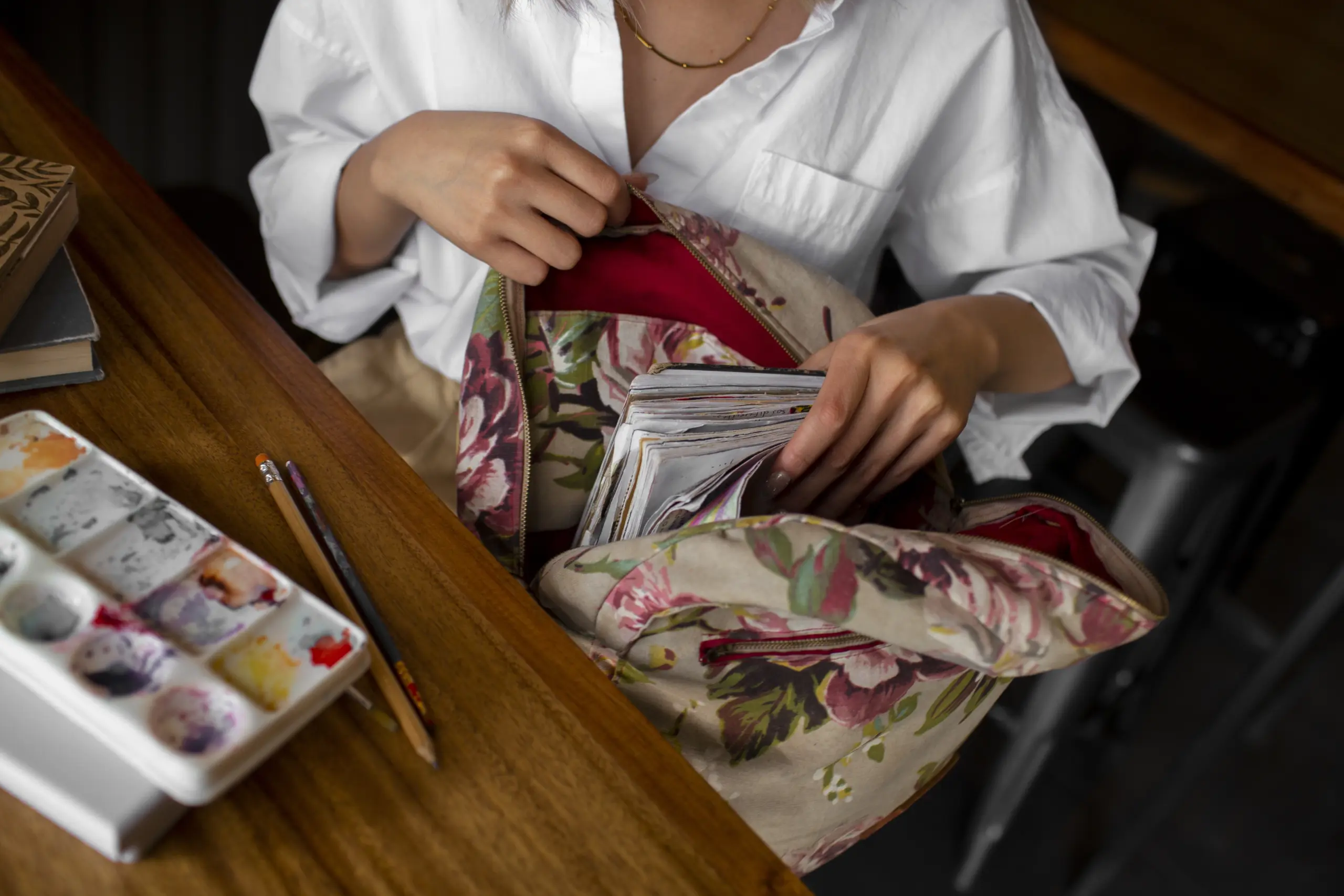
Fabric painting is the art of colouring cloth using special paints that are a world away from the ones used for paper or canvas.
Craft paint hardens up and becomes as stiff as a board. And yeah, it cracks when you bend the fabric and it’s washed out of the fabric after just one trip through the washing machine – never to be seen again. Which basically makes regular paint useless for anything you might need to wash – clothes for example.
Fabric paint is different in all the right ways. It contains a special ingredient that soaks into the cotton fibres, making the paint go on soft & flexible. You can bend it without it cracking, and it comes out of the washing machine time & time again, no problem.
Fabric painting is an art with many different techniques to get your imagination going. You can use a brush to create super detailed pictures, a sponge to get some soft textures on there, or even stamp out patterns with a block. Heck, you can even just squirt paint directly from the bottle to make dots and lines – simple but effective.
THE BENEFITS OF LEARNING FABRIC PAINTING
Fabric painting has got some pretty cool benefits that put it head & shoulders above other crafts.
First, fabric painting is dirt cheap. You can pick up fabric paint, a brush and a plain t-shirt for less than ten bucks. If you buy a designer shirt, you are paying 50 or more. Fabric painting is a great way to save money and create something all your own!
As a second step, you have a chance to express yourself. Everything in mass-market clothing is really… dull. Everyone buys the same shirt from the same store. With fabric painting, you can create something that no one else will be wearing. Your designs are a direct reflection of you; your ideas, your imagination.
Lastly, fabric painting is an eco-friendly way to give new life to old clothes. Tatty and stained clothes often end up in the rubbish. But with fabric painting, you can fix these flaws with pops of colour and patterns. That stained shirt becomes an artifact and that faded bag is bright & beautiful again.
Fourth, fabric painting will also help you to build your skills. Learn about colour mixing, brush control, design thinking, and it will help you in other forms of art such as drawing & regular painting. The person learning fabric painting is learning the basics of all visual art.
Finally, fabric painting is a great way to make gift they will remember. Giving someone a hand-painted tote bag shows you really care! You’ve taken the time to think about it. It shows you put some thought & effort into it. A hand painted pillowcase for mum or dad is a keepsake they will treasure for years to come. Handmade gifts are always more special than store bought gifts.
MATERIALS NEEDED FOR FABRIC PAINTING
Beginners need only a few basic supplies. Do not buy expensive items until you have finished your first few projects.
Fabric paint is the most important supply. Good brands include Jacquard, Pebeo, and Tulip. These paints cost three to five dollars per bottle. Start with the primary colours red, yellow, and blue plus white and black. These five bottles let you mix any colour you want.
Brushes come in different shapes and sizes. A flat brush makes straight lines and fills large areas. A round brush makes curved lines and small details. A liner brush makes very thin lines. Beginners should buy one small flat brush and one small round brush. Total cost is about five dollars.
Fabric to paint should be 100 percent cotton. Cotton t-shirts, cotton pillowcases, and cotton tote bags work perfectly. Wash the fabric first to remove factory chemicals. Do not use fabric softener because it repels paint.
Cardboard or plastic goes inside the fabric. Slide a piece of cardboard inside the shirt before painting. This stops paint from bleeding through to the back layer. Wrap the cardboard in plastic wrap so wet fabric does not stick to it.
Master Fashion Designing and Create Your Signature Style
Unlock your creative potential with our expert-led Fashion Designing course. Build in-demand skills and step confidently into the world of fashion!
Begin Your Fashion Career Today!EASY FABRIC PAINTING IDEAS FOR BEGINNERS
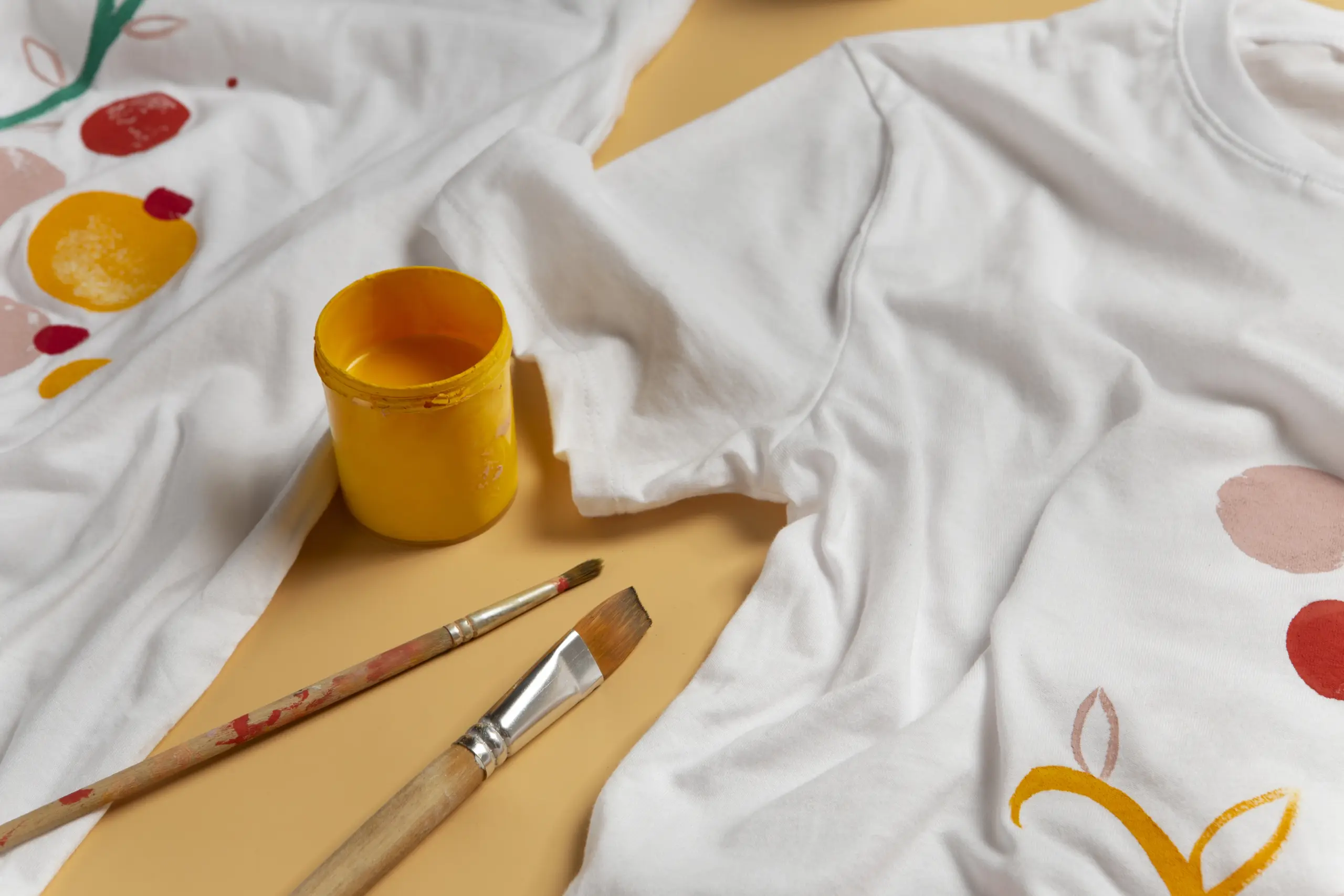
Now you learn the actual designs. These five ideas work for people who have never painted anything before. Each idea builds skills you use for more advanced work later.
Dot Patterns
Dots are the easiest thing a beginner can paint. Use the back end of a paintbrush or a cotton swab as your tool. Dip the end into fabric paint. Press it straight down onto the fabric. Lift straight up. The dot stays round and clean.
Practice making rows of dots. Make large dots and small dots. Make dots close together and far apart. This simple practice teaches pressure control and paint amount. A whole shirt covered in random dots looks modern and expensive.
Stripes
Stripes require painter tape or masking tape. Stick strips of tape across the fabric in parallel lines. Press the edges down firmly so paint cannot seep under. Paint the spaces between the tape lines. Let the paint dry for a few minutes. Peel the tape off slowly.
The result shows perfect straight lines. This method works for any width of stripe. Try thick stripes and thin stripes, vertical stripes and horizontal stripes. You can also try diagonal stripes for a more dynamic look.
Splatter Painting
Splatter painting has no rules and no mistakes. Dip a stiff brush into paint. Hold the brush over the fabric. Run your thumb across the bristles. The paint flies off in random droplets.
Each droplet lands in a different place. No two splatters look the same. This technique creates energetic, modern designs. It works best on jackets and bags where a chaotic pattern feels appropriate. Practice outside or over newspaper because paint flies everywhere.
FLORAL FABRIC PAINTING DESIGNS
Flowers are the most popular subject for fabric painting. They forgive mistakes because real flowers are not perfect either.
Five Petal Flower
Paint five dots arranged in a circle. Each dot is a petal. Make the dots large or small. Connect the dots with small brush strokes to fill the gaps. Paint a different colour dot in the center. This simple flower takes thirty seconds but looks like careful work.
Single Stroke Flower
Load a flat brush with two colours side by side. Yellow on one edge. Red on the other edge. Press the brush flat onto the fabric and twist. The two colours blend in the middle. Each brush stroke creates a petal with natural shading.
Paint five petals around a center dot. This advanced looking technique is actually very easy. The brush does the blending work for you.
Leaf Branches
Paint a thin wavy line across the fabric. This is your vine. Paint small leaf shapes coming off both sides of the vine. Each leaf is just two curved lines that meet at a point. Add many leaves along the whole vine. This design fills large areas quickly.
GEOMETRIC PATTERN IDEAS
Geometric patterns appeal to people who like order and precision. Tape makes these designs possible for beginners.
Checkerboard
Paint a grid of squares on the fabric. Use tape to mask off every other square. Paint the exposed squares one colour. Remove the tape. Let the paint dry. Mask off the remaining squares. Paint them a different colour. The result shows a perfect checkerboard pattern.
Triangles
Arrange three strips of tape to form a triangle shape. Paint inside the taped area. Remove the tape immediately. Repeat this process across the whole fabric. Overlapping triangles create complex, modern patterns that look like professional textile design.
Striped Color Block
Paint the bottom third of a shirt blue, the middle third white and the top third red. Use tape to create sharp boundaries between each colour section. This simple color block design looks bold and graphic. It works especially well on plain white t-shirts.
ABSTRACT ART ON FABRIC
Abstract painting lets you breathe a sigh of relief from painting real life – no flowers, no animals, no people – just shapes and colours that simply look great together.
The Wash Technique
Take a litre of fabric paint and basically water it down until it flows like juice. Next, brush those watered down paint splashes onto the still-damp fabric. Watch as the colours spread into soft, wobbly shapes.
Add some more colours & see them merge & blend together. Before you know it you’ve got a watercolour effect without ever having to worry about getting brushwork right.
Scribbly lines
Use a liner brush or the tip of a round brush and just let the paint flow. Paint long lines that curl & intersect with each other – & for goodness sake don’t even think about lifting the brush until that line is done.
These scribbly lines should look for all the world like abstract sketches. Just go ahead and fill the whole fabric with overlapping loops and see where it takes you. The more colours you use the more interesting things get.
Shape Collage
Just paint some big old’ circles, squares, and triangles all over the fabric. Honestly, it doesn’t even matter if the edges are a little wobbly. Let those shapes overlap each other and fill each one in with a different colour.
Watch as the areas where the shapes overlap start to create new colours all on their own. This is a great way to learn about colour mixing the natural way.
The Block Printing & Stencil Game
Block printing and stencils are two more fabric painting techniques that’ll let you have a go without needing to be a whiz with a pencil.
Stencil Magic
Just pick up a plastic stencil from the craft store and off you go. They’ve got them in all sorts of fun shapes like stars, hearts and leaves – you name it.
Stick the stencil down on the fabric & dip a sponge into your favourite fabric paint. Press the sponge into the holes in the stencil. Lift it all up and you’ll see the shape appears almost perfectly on the fabric.
Move the stencil around to a new spot & just repeat the process. Try to cover the whole fabric with all these repeating shapes. Plus, stencils will give you that lovely professional finish on the very first try.
Block Printing – No Drawing Required
Grab yourself a foam stamp or take an ordinary eraser and carve a simple shape out of it. That’s your stamp. Just brush some thin paint on the raised bit and then press it straight onto the fabric. Lift it straight up and the shape is on your fabric. Repeat the process in a nice grid pattern.
Make sure each stamp is the same distance from the last one as the last one from the one before it and you’ll start to see some really nice repeating patterns that would put a store-bought printed fabric to shame
Start Your Fashion Journey Today! Learn Advanced Designing & Boutique Skills with Experts!
CONCLUSION
Fabric painting opens up a new world of creative possibility. A plain t-shirt becomes a personal statement. An old tote bag becomes a gift. A simple pillowcase becomes art for your home.
The best part is how easy it is to start. Five dots make a flower. Three strips of tape make stripes. A loaded brush and a twist of the wrist make a shaded petal. None of these techniques requires talent or training. They just require trying.
Gather your materials tonight. Wash a plain cotton shirt. Slide cardboard inside. Open a bottle of fabric paint. Make your first dot. Then make another one. In one hour you will hold something you made with your own hands. That feeling is worth more than anything you could buy from a store.
Master Fashion Designing and Create Your Signature Style
Unlock your creative potential with our expert-led Fashion Designing course. Build in-demand skills and step confidently into the world of fashion!
Begin Your Fashion Career Today!Frequently Asked Questions
What is the difference between fabric paint and regular craft paint?
Fabric paint has a special binder that soaks into cotton fibres and stays flexible. Regular craft paint dries hard and cracks when the fabric bends. Regular paint also washes out completely after one laundry cycle. Fabric paint survives many washes and stays soft to touch.
Do I need to wash the fabric before painting?
Yes. New fabric has factory chemicals that repel paint and prevent absorption. Wash the fabric in hot water without fabric softener. Fabric softener leaves a coating that blocks paint from soaking in. Drying is fine. Then iron the fabric flat before painting.
How long does fabric paint take to dry completely?
Most fabric paints feel dry to touch within one to two hours. But the paint needs 24 to 72 hours to cure fully before heat setting. Do not wear or wash the painted item during this curing period. The paint is still settling into the fabric fibres.
How do I make fabric paint permanent and washable?
Heat setting is required. After the paint dries completely for 24 hours, turn the fabric inside out. Iron the back of the painted area for three to five minutes. Use high heat without steam. Place a paper between the iron and the paint to protect both surfaces.
Can I use fabric paint on dark coloured fabrics?
Yes but the results look different. Dark fabrics hide the paint colour unless you use opaque fabric paints. Opaque paints contain white pigment that blocks the dark colour underneath. Regular transparent paints will look muddy or invisible on black or navy fabric.
What fabrics work best for beginners to practice on?
100 percent cotton is the best fabric for beginners. Cotton t-shirts, cotton pillowcases, and cotton tote bags are perfect. Cotton absorbs paint evenly and holds colour well. Avoid polyester, nylon, spandex, and silk until you have more experience.
How do I fix a mistake or paint outside the lines?
Wet paint wipes off with a damp paper towel immediately. Do not let the paint dry first. Dry paint is permanent. For small mistakes, wait for the paint to dry completely. Then paint over the mistake with the original fabric colour or a new design.
What is the easiest fabric painting design for someone with no art skills?
Dot patterns are the easiest design. Use the back end of a paintbrush or a cotton swab. Dip it in paint and press straight down onto the fabric. The dot stays round every time. Make rows of dots, random dots, or dots in a circle to form a flower.
Do I need expensive brushes to get good results?
No. Inexpensive synthetic brushes work perfectly for fabric painting. Look for student grade brushes at craft stores. A flat brush and a round brush are all you need to start. Take care of your brushes by washing them with soap immediately after painting.