Table of Contents
Gold vs Platinum often confuses new investors. Many people wonder which metal performs better. Both metals look similar yet behave differently. This blog helps you understand those differences clearly. You will learn which suits your investment style. Each point is explained in simple language. Keep reading to choose wisely with confidence. This guide makes the decision much easier.
Gold protects wealth during uncertain global events. Platinum thrives when industries grow strongly. Your goals decide the right choice. Safety seekers usually prefer gold first. Opportunity seekers consider platinum exposure. The key is a balanced understanding always. This blog walks you through everything stepwise.
Learn Stock Marketing with a Share Trading Expert! Explore Here!
Quick Highlights
-
Learn how both metals create value.
-
Understand market behaviour and risk levels.
-
Discover which performs better long-term.
-
Find out who should pick which metal.
-
Helps beginners and experienced investors alike.
Introduction
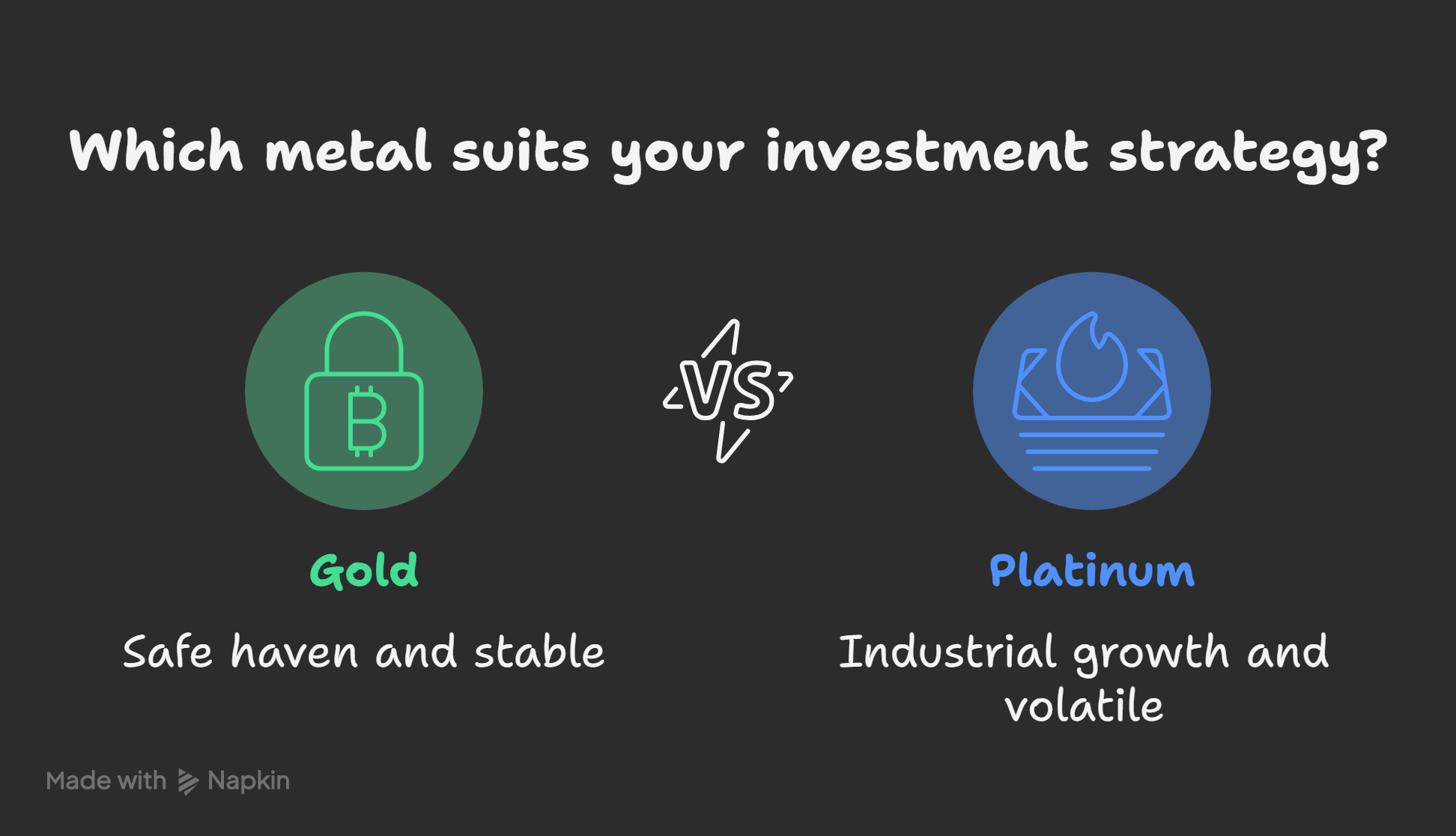
Investors always look for safe wealth assets. Precious metals often play that strong role. Among them, gold and platinum stand out. Each metal carries a unique investment purpose. Gold acts as a traditional safe haven. Platinum behaves like a high-growth industrial metal. Both can strengthen a smart investment portfolio. The difference lies mainly in risk levels.
Gold attracts cautious and long-term investors. It shines during crisis or inflation spikes. Platinum attracts bold and opportunity-driven buyers. Its price moves with global industrial demand. Understanding these differences prevents confusion later. This comparison helps you invest wisely ahead.
Why this Comparison Matters
-
Investors face rising global uncertainty.
-
Metal choices affect portfolio safety.
-
Gold protects better during market stress.
-
Platinum rewards grow faster.
-
Wrong selection increases avoidable risk.
-
Right understanding ensures balanced planning.
-
Knowledge gives confidence before investing.
Understanding the Two Metals
1: What is a stock?
Gold and platinum look similar but act differently. Their purpose, price movement, and usage also differ. Knowing these basics helps smarter investment choices. Gold serves mainly as a wealth protector. Platinum behaves more like a growth commodity. Both have value, but through different drivers.
1. What is Gold?
Gold is a monetary metal. It holds value across generations reliably. Central banks actively store gold reserves. People buy gold for financial security. It carries emotional and cultural value too. Demand mostly comes from investors and jewelry.
Key Features of Gold
| Aspect | Meaning |
|---|---|
| Role | Wealth preservation |
| Nature | Stable and defensive |
| Demand Base | Global and consistent |
| Price Movement | Slow but steady |
| Risk Level | Comparatively lower |
2. What is Platinum?
Platinum is an industrial precious metal. Its price depends mainly on manufacturing demand. Automobile industries use platinum heavily. Technology and green energy also need platinum. Mining supply is limited and concentrated. Industrial shifts affect platinum prices quickly.
Key Features of Platinum
| Aspect | Meaning |
|---|---|
| Role | Industry driven |
| Nature | Cyclical and dynamic |
| Demand Base | Automotive and technology |
| Price Movement | Faster and sharper |
| Risk Level | Comparatively higher |
3. Core Difference Between their Behaviour
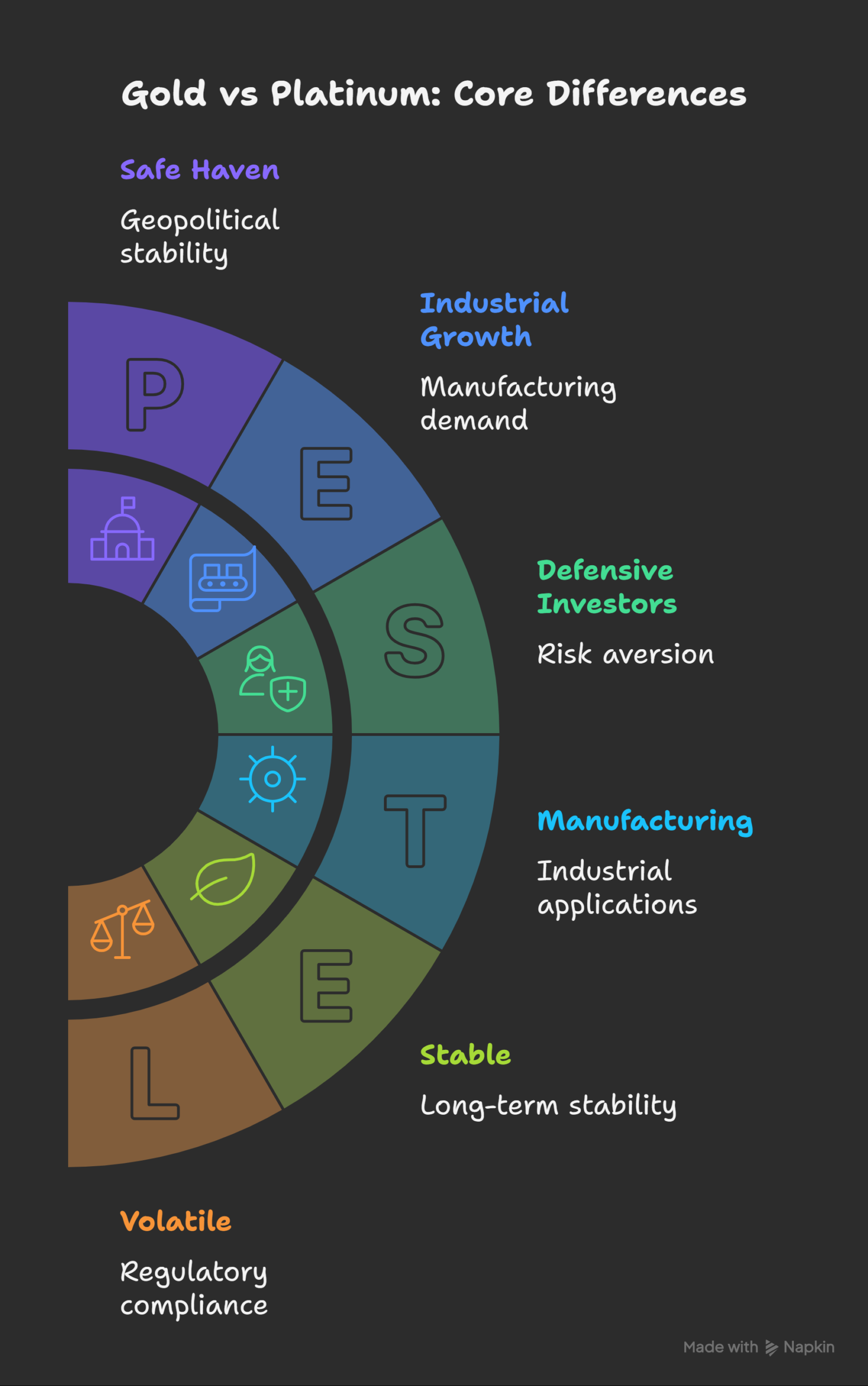
| Factor | Gold | Platinum |
|---|---|---|
| Main Purpose | Safe haven | Industrial growth |
| Usage Area | Finance | Manufacturing |
| Price Drivers | Fear and uncertainty | Industry demand |
| Investor Type | Defensive | Aggressive |
| Long-Term Nature | Stable | Volatile |
In Short
-
Gold reacts to global fear.
-
Platinum reacts to economic growth.
-
Gold is steady during recessions.
-
Platinum rises during expansion.
-
Gold suits safe wealth holding.
-
Platinum suits risk-based growth.
Gold and platinum have followed different journeys. Their price movements reflect their core roles. Gold shows higher stability over long periods. Platinum shows bigger swings and sharper rallies. History clearly separates safe haven from industry metal. Gold rises during global uncertainty periods. It protects purchasing power during inflation phases. Central banks also support gold demand globally. Gold rarely collapses without recovery later. Its overall trend stays upward long term. Platinum shows strong growth during expansion cycles. It reacts quickly to supply disruptions globally. Industrial demand pushes its price higher rapidly. However, price drops can also happen fast. Its chart shows wider price fluctuations historically. Gold grows slow but steady. Platinum rises fast during booms. Gold protects during global stress. Platinum benefits during growth cycles. Both react to different market triggers. Gold and platinum gain value from different sources. Their demand patterns come from separate industries. Understanding these drivers helps forecast performance. Gold thrives on sentiment and security demand. Platinum thrives on industrial and technology needs. Gold demand mostly comes from wealth protection. Its buyers focus more on safety needs. It benefits during financial or geopolitical stress. Demand also rises in festive seasons. Large institutions also support long-term demand. 2. Platinum Demand Sources Platinum demand mainly comes from heavy industries. Most consumption occurs in automotive production. Green technologies also require platinum inputs. Electronics and chemical plants boost additional demand. Economic expansion strengthens platinum outlook. Gold demand rises during crises. Platinum demand rises during growth cycles. Gold depends on investors mainly. Platinum depends on manufacturers mostly. Demand behaviour shapes risk profile. Gold and platinum offer different advantages. Each metal suits a different investment style. Knowing both sides helps smarter allocation decisions. Gold protects capital during uncertain times. It carries centuries of trust and acceptance. Its market is huge and highly liquid. It works as a proven inflation hedge. Central banks consistently support gold prices. Gold yields no interest or dividend. It can move slowly during expansion cycles. Industrial usage is relatively very small. Upside potential is safer but limited. Returns depend mostly on risk sentiment. Platinum offers higher growth potential. Industrial demand pushes stronger rallies. It is rarer compared to gold. Supply disruptions can boost price sharply. Use in clean energy aids long-term demand. Platinum prices fluctuate more often. Its demand weakens during economic slowdown. Supply depends on few mining regions. Lower liquidity makes exits slower sometimes. Risk exposure remains comparatively higher. Gold suits safe wealth building. Platinum suits aggressive growth seekers. Gold moves slow but steady. Platinum moves fast but risky. Choose based on risk appetite. Invest Smart, Learn Faster – Mutual Fund Course for Kerala Trusted, concepts to help you grow with confidence. Enroll now and learn to start investing the right way.
Gold shows fewer sharp swings. Platinum moves faster in either direction. Risk tolerance decides suitability here. Gold trades globally at massive volume. Platinum markets remain comparatively smaller. Exiting gold is easier in emergencies. Gold has minimal industrial requirement. Platinum powers many major applications. Industrial demand drives platinum momentum. Gold protects wealth during inflation. It acts like a savings anchor. Platinum responds less to inflation fears. Platinum is geologically scarcer than gold. However rarity alone does not ensure stability. Demand cycles impact its real value. Gold offers long-term dependable pricing. Platinum fluctuates with economic movements. Stability seekers usually choose gold first. Gold = safety + consistency. Platinum = growth + volatility. Liquidity remains gold’s strongest edge. Platinum benefits from industrial expansion. Selection depends on investment objective. Investors can buy both metals through many routes. Each option suits different goals and comfort levels. Some options give physical ownership and safety. Others give digital access with easy trading. Choosing the right format improves returns and control. Physical metals give direct personal ownership. They also create emotional trust for many buyers. However, they require storage and safety care. Pros Tangible and personally held. No counterparty involvement. Strong cultural demand always. Cons Storage risk remains present. Making charges on jewelry. Harder to trade instantly. These formats suit modern investors today. They allow simple buying through platforms. No physical storage is needed here. Pros Quick trading flexibility. Zero storage concerns. Lower overall transaction cost. Cons Platform risk sometimes exists. Not physically held personally. Depends on market infrastructure. These suit active traders seeking fast moves. They follow price momentum and leverage trends. These require higher knowledge and discipline. Pros High reward potential possible. Good for tactical positioning. Useful during short-term swings. Cons Higher risk exposure present. Timing mistakes cost heavily. Not suitable for beginners. Physical suits long-term stability. Digital suits modern convenience. Trading suits experienced investors. Platinum exposure remains narrower. Gold offers many wider formats. Both metals face different future trends ahead. Gold will remain a global safety asset. Platinum will depend on industrial expansion. Their long-term direction follows separate triggers. Investors should watch demand cycles closely. Gold may gain from rising global uncertainty. Central banks continue heavy reserve accumulation. Inflation concerns still support long-term buying. Geopolitical risks also keep gold stronger. Its role as safe haven remains unchanged. Platinum outlook depends on global recovery. Industrial growth can lift platinum demand strongly. Clean energy drives future structural needs. Automotive technology changes also influence demand. Supply disruption risk remains a key factor. Gold stays a defensive asset. Platinum stays a cyclical asset. Gold benefits from fear phases. Platinum benefits from growth cycles. Both remain relevant for diversification. Invest Smart, Learn Faster – Mutual Fund Course for Kerala Gold offers stability and long-term safety. Platinum offers higher growth potential. Gold demand comes mainly from investors. Platinum demand comes mainly from industries. Gold performs better during global crises. Platinum performs better during expansion cycles. Gold is more liquid in all markets. Platinum is rarer but more volatile. Gold suits conservative investment style. Platinum suits aggressive investment style. Diversification improves overall risk balance. Choice depends on risk tolerance and goal. Gold remains a trusted long-term wealth protector. It offers confidence during uncertain global periods. Investors use gold for financial stability. It helps preserve purchasing power over time. Platinum offers opportunity through industrial strength. Its performance depends on economic expansion cycles. Both metals serve different investment roles. The choice depends on personal risk style. Gold supports defensive portfolio planning effectively. Platinum supports growth-driven strategies successfully. Neither metal is universally better always. They simply serve different investor needs. Balanced diversification provides smarter benefits. Right timing improves platinum returns further. RELATED POSTS Trusted, concepts to help you grow with confidence. Enroll now and learn to start investing the right way.
Gold is generally considered better for long-term investment because it holds value consistently across decades and performs well during economic uncertainty. Even when markets crash, gold tends to stabilize portfolios by acting as a hedge against inflation and currency risk. Platinum can also perform well, but its long-term growth depends heavily on industrial demand and manufacturing cycles, which can fluctuate sharply. So for safety and capital protection, gold is more stable, while platinum works better as a strategic growth component. Gold is viewed as a safe haven because its value does not rely on industrial output or manufacturing cycles. It has a long history of being used as money, a store of value, and a central bank reserve across almost every major economy. During wars, recession, inflation, or financial panic, investors move money into gold for protection. Platinum, however, is mostly linked to industrial use, especially in automotive and technology sectors, which makes its price more dependent on business cycles rather than crisis-driven demand, so it is not considered a safe haven. Yes, platinum is geologically rarer than gold, and it is mined in far fewer locations, mainly South Africa and Russia. However, rarity alone does not guarantee higher or stable pricing. What actually determines price consistency is the strength of demand. Gold has stable and predictable demand from central banks, investors, and jewelry markets. Platinum demand is cyclical and depends mainly on industrial output, so even though it is rarer, its price still fluctuates more than gold due to inconsistent usage patterns. Gold typically performs much better during high inflation periods because investors turn to it as a hedge when currency value declines. Historically, when inflation rises, gold demand increases sharply because people want to preserve purchasing power. Platinum, on the other hand, is not as strongly linked to inflation and relies more on industrial consumption, so inflation alone does not automatically boost platinum prices unless there is industrial recovery alongside it. Yes, platinum can outperform gold during phases of strong industrial growth or supply shortages because its price reacts more sharply to economic expansion. If clean energy technologies, fuel cells, and renewed automotive catalytic demand continue to rise, platinum may witness sharp rallies. However, this upside comes with higher volatility. If the global economy slows down, platinum prices can also fall faster than gold. Therefore, its outperformance is possible, but it depends on economic conditions. Gold is easier to buy and sell quickly because it has much higher liquidity worldwide and a larger trading market. Gold ETFs, coins, bars, and digital gold are widely accepted and have immediate buyers almost everywhere. Platinum, however, has a smaller market size and lower trading volume, which means investors may not always find instant liquidity, especially in physical format. For emergency exits or quick cash conversion, gold is far more convenient. Both metals can be useful for diversification, but they serve different purposes within a portfolio. Gold reduces overall risk because it moves opposite to equity markets during downturns. Platinum enhances growth potential during industrial demand cycles. Together, they balance both safety and upside. A diversified investor might hold gold for security and add platinum for strategic growth, creating a more balanced metals allocation. Platinum is heavily used in automotive catalytic converters, clean energy equipment, electronics, and chemical manufacturing. Therefore, its price is directly linked to industrial production trends. If manufacturing slows or automotive demand drops, platinum prices may fall. Gold, on the other hand, has very limited industrial usage, so its price does not depend on factory output or industry conditions. This is why platinum is more cyclical and sensitive to economic growth phases. Gold is generally better for beginners because it is easier to understand, more stable, and less volatile. It can be purchased in multiple formats, including digital gold, coins, bars, ETFs, and sovereign gold bonds, making it highly accessible. beginners typically prefer predictable returns and lower risk, which gold provides. Platinum requires more market awareness, timing skill, and tolerance for price swings, making it better suited for experienced or risk-taking investors. Yes, investing in both metals together is actually a smart approach for long-term portfolio balance. Gold brings safety, stability, and hedge value, while platinum adds growth and industrial upside potential. Holding both reduces over-reliance on a single metal and makes your portfolio more resilient to different economic conditions. During crisis years gold performs better, and during expansion years platinum may outperform, giving you a dual benefit strategy.Price Trends and Historical Performance
1. Gold Price Behaviour Over Time
Key Highlights of Gold Performance
Aspect
Observation
Stability
Consistently stable
Crashes
Less frequent
Recovery
Usually quick
Long-Term Trend
Upward bias
Risk Level
Lower
2. Platinum Price Behaviour Over Time
Key Highlights of Platinum Performance
Aspect
Observation
Stability
Less stable
Crashes
More sudden
Recovery
Depends on industry
Long-Term Trend
Cyclical trend
Risk Level
Higher
3. Long-Term Comparison
Factor
Gold
Platinum
Price Trend
Gradual rise
Cyclical rise
Shock Resistance
High
Moderate
Demand Consistency
Strong
Variable
Recovery Pattern
Predictable
Situational
Investor View
Safe asset
Growth asset
In Short
Demand Drivers
1. Gold Demand Sources
Key Drivers of Gold Demand
Driver
Explanation
Central Banks
Increase reserves for stability
Investors
Prefer safe haven exposure
Jewelry Markets
High cultural demand
Inflation Hedge
Protects purchasing power
Global Uncertainty
Increases safe asset buying
Key Drivers of Platinum Demand
Driver
Explanation
Automotive Use
Catalytic converter demand
Technology
Used in sensors and chips
Clean Energy
Supports fuel cell growth
Manufacturing
Vital for industrial processing
Supply Limits
Mining shortages raise prices
3. Demand Comparison Table
Aspect
Gold
Platinum
Demand Nature
Emotional + financial
Industrial + technological
Key Users
Banks + investors
Manufacturers + automakers
Sensitivity
Geopolitics driven
Economy driven
Seasonality
Festivals and crises
Production cycles
Longevity
Very stable
Depends on industry
In Short
Pros and Cons
1. Pros of Gold
Summary Table – Gold Pros
Benefit
Explanation
Safety
Reliable during crises
Liquidity
Easy to buy or sell
Acceptance
Trusted across countries
Stability
Lesser price swings
Inflation Edge
Preserves purchasing power
2. Cons of Gold
Summary Table – Gold Cons
Drawback
Explanation
No Yield
Only capital gain
Slower Growth
Growth takes time
Limited Use
Mostly financial
Opportunity Loss
During booms
Sentiment Based
Heavily emotional
3. Pros of Platinum
Summary Table – Platinum Pros
Benefit
Explanation
Rarity
Scarcer than gold
Industrial Value
High manufacturing need
Growth Upside
Strong during booms
Supply Premium
Shortage raises price
Future Tech Use
Supports innovation
4. Cons of Platinum
Summary Table – Platinum Cons
Drawback
Explanation
Volatility
Wider price swings
Economic Risk
Drops during slowdown
Supply Limits
Depends on mines
Liquidity
Smaller trade volume
Uncertainty
More market shocks
Quick Comparison Points
Stock Market Training Reviewed & Monitored by SEBI Registered Investment Advisor
Factor-Based Comparison Table
Factor
Gold
Platinum
Volatility
Low
High
Liquidity
Very High
Moderate
Industrial Use
Limited
Strong
Inflation Hedge
Proven
Partial
Rarity
Less rare
More rare
Price Stability
Strong
Fluctuates
Understanding the Factors
1. Volatility
2. Liquidity
3. Industrial Use
4. Inflation Hedge
5. Rarity
6. Price Stability
In Short
Investment Options
1. Physical Investment Options
Common Physical Formats
Format
Details
Coins
Easy to buy or sell
Bars
Suitable for larger holding
Jewelry
Popular for cultural use
2. Digital and Paper-Based Options
Available Digital Formats
Format
Details
ETFs
Traded like stock units
Digital Gold
Small ticket buying option
E-Platinum
Limited but growing option
Sovereign Gold Bonds
Government backed holding
3. Market-Based Trading Options
Trading Formats
Format
Details
Futures
Short-term leveraged trades
Options
Derivative based exposure
Mining Stocks
Indirect metal exposure
Which Format Suits You?
Investor Type
Best Option
Conservative
Physical gold or bonds
Balanced
Gold ETFs or digital forms
Aggressive
Platinum ETFs or futures
Diversified
Mix of formats
In Short
Future Outlook (2025 & Beyond)
1. Outlook for Gold
Key Gold Forecast Drivers
Driver
Effect
Central Bank Buying
Supports long-term price
Inflation Fears
Boosts safe demand
Currency Weakness
Raises gold appeal
Global Tension
Pushes haven flows
Low Liquidity Risk
Attracts cautious investors
2. Outlook for Platinum
Key Platinum Forecast Drivers
Driver
Effect
Industrial Growth
Pushes prices upward
Clean Tech Demand
Adds long-term support
Supply Shortage
Creates sharp rallies
EV Transitions
Alters automotive usage
Mining Dependence
Increases risk exposure
3. Long-Term Outcome Comparison
Aspect
Gold Future
Platinum Future
Stability
High
Moderate
Growth Scope
Gradual
Higher potential
Main Support
Investors
Industries
Risk Level
Lower
Higher
Long-Term Role
Store of value
Growth metal
In Short
Key Takeaways
Conclusion
Gold cushions risk when markets weaken.
Gold Rate in Kerala Today
The Ultimate Guide to Personal Finance in India
Why Gold Price is Rising
Stock Market Training Reviewed & Monitored by SEBI Registered Investment Advisor
Frequently Asked Questions
Which is better for long-term investment: Gold or Platinum?
Why is gold considered a safe haven but platinum is not?
Is platinum more rare than gold, and does rarity affect price?
Which metal performs better during high inflation periods?
Can platinum outperform gold in the future?
Which metal is easier to buy and sell quickly?
Is gold or platinum better for portfolio diversification?
How does industrial demand influence platinum more than gold?
Which is better for beginners: gold or platinum?
Can I invest in both metals together for balance?