Table of Contents
Fashion designers who do well are also highly skilled in the art of art and have the talent to distinguish themselves from other hopefuls.
Fashion designers need to draw to capture ideas, colour theory to select harmonious combinations, and form understanding to create clothes that flatter a real person.
Without art ability, a fashion designer cannot convey his or her ideas to pattern makers, seamstresses, or clients.
Start Your Fashion Journey Today! Learn Advanced Designing & Boutique Skills with Experts!
Key Takeaways
- Art skills turn vague fashion ideas into clear, usable sketches.
- Drawing helps designers communicate exactly what they want to create.
- Colour theory stops designers from making ugly or clashing clothing combinations.
- Understanding human anatomy ensures clothes fit properly and flatter the body.
- Fashion design students need basic drawing practice before learning advanced software.
- A designer with weak art skills depends entirely on others to interpret their vision.
- The best fashion houses only hire designers who can sketch their own ideas.
- Art skills save time and money by getting designs right before fabric is cut.
Introduction
Most people think fashion design is about picking pretty fabrics and following trends. That is not the case. Fashion design is a visual profession based on art skills, and without those skills, a designer can’t do the basics of the job.
Just imagine what happens at a fashion house. A designer has an idea for a new dress. The idea stays only in their head until they make the sketch. The sketch becomes the blueprint for everything that follows. Pattern makers read the sketch. Seamstresses follow the sketch. Buyers approve or reject based on the sketch.
Master Fashion Designing and Create Your Signature Style
Unlock your creative potential with our expert-led Fashion Designing course. Build in-demand skills and step confidently into the world of fashion!
Begin Your Fashion Career Today!What are Art Skills in Fashion Design?
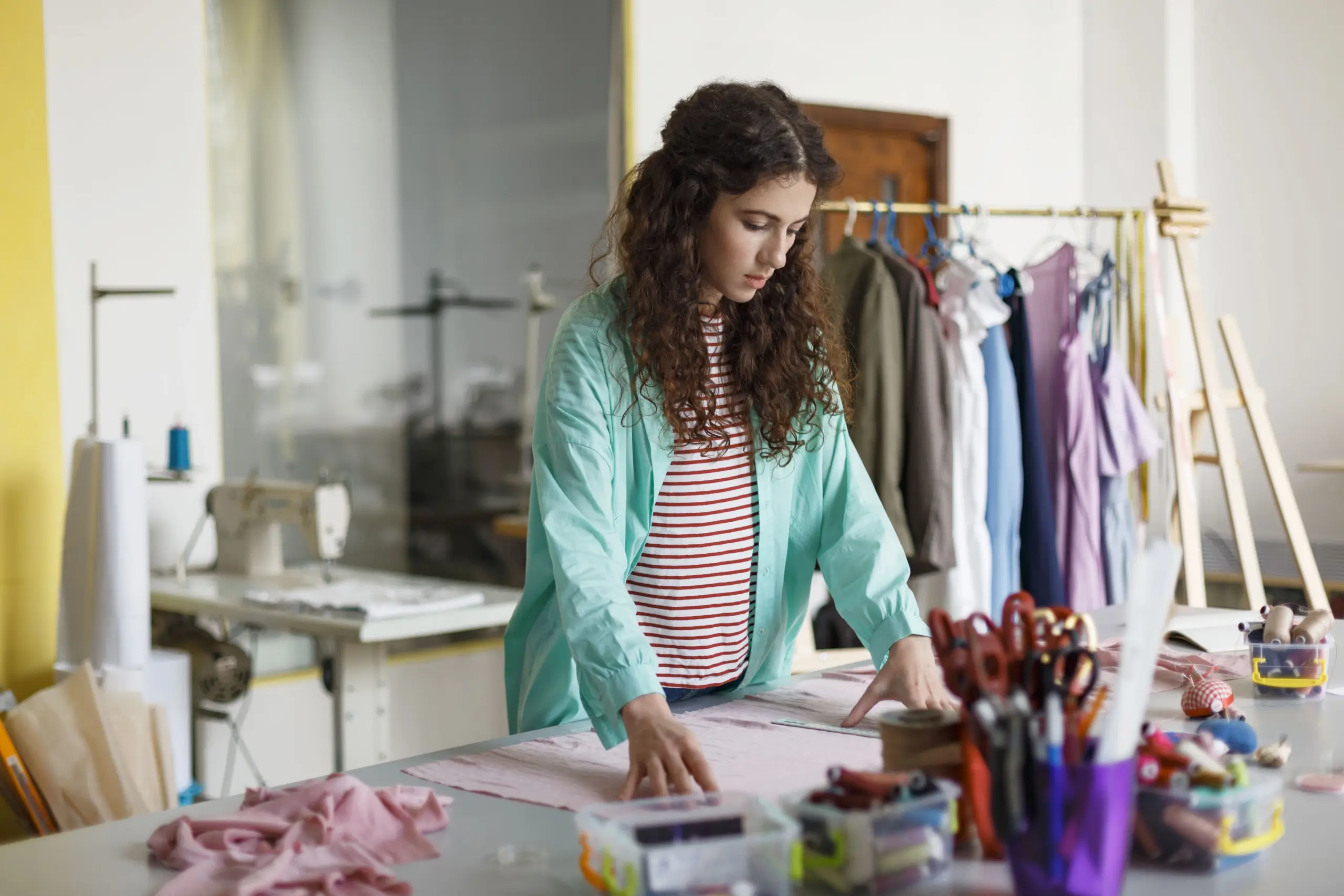
The art skills are the core abilities someone must have to create visual work. These include drawing, painting, mixing colours, shape and form, and they are vital skills that a fashion designer will be working with every day.
Drawing is the most important art skill for fashion designers. The designer draws every single garment in the first draft, showing everything from the length to the width, sleeve type to neckline to all other details.
Colour theory is the second most important art skill. An artist chooses colours well together. They know some colours clash while others make a harmonious combination. They know when to use bright colours for attention and when to use muted colours for calm.
These three art skills work together. Drawing captures the idea. Colour theory makes the idea beautiful. Understanding form makes the idea wearable.
Why Art Skills Matter for Fashion Designers?
Art skills in fashion matter because the industry is a visual language – clothes don’t speak for themselves so designers need to be able to tell their story through drawings and colour choices. A fashion designer without some art skill in their toolkit is a bit like a writer who still can’t spell – they’re missing the basics.
The main reason for this is communication. Designers are generally working with a whole team of other people – the pattern makers need to be able to see how seams go, fabric suppliers need to know how much material to send over & the factory workers need to be clear on which bits of the garment go where. A single, clear drawing can answer all those questions ahead of time, before anyone starts cutting fabric.
Speed is another good reason for having some sketching skills. Designers who can draw quickly can knock out a decent sketch in minutes, while the ones who can’t draw at all will spend hours trying to describe to colleagues what they’re after – & that lost time can cost money. Fashion is all about speed & the seasons are changing every few months – slow designers are just going to get left behind.
Art skills also help with quality control. At the end of the day, the designer is the only one who gets to see the whole picture – from original design to finished garment. When that designer does the initial sketch, they’re setting the standard for the whole rest of the team. Any mistakes they make in the sketch are going to become mistakes in the finished garment. Being good at drawing stops those mistakes from happening in the first place.
Drawing and Sketching
Now that we’ve talked about why you need to be able to draw, let’s get into the basics of fashion drawing. This is different from drawing for art galleries – we’re not trying to capture a person’s likeness, we’re trying to get the clothes to look right on paper. So our basic figure, called a croquis, has longer legs & a smaller head than a real person. This makes the clothes look a lot better.
Every fashion drawing starts the same way – with the croquis. You draw the basic body shape first, then you draw the clothes on top of it. The clothes follow the lines of the body underneath.
When it comes to fashion sketches, there are a few things you need to make sure you get right. First, you need to get the overall shape of the garment right. That’s all most people are going to see when they look at your drawing. Second, you need to get the important details like pockets, buttons & seams. And third, you need to get the way the fabric falls and moves right.
The best fashion drawings use clean, confident lines. Wobbly lines look like they were drawn by a sleep-deprived five-year-old – not good. Using thick & thin lines can add a bit of life to the drawing, though. Dark lines show where the garment ends, while light lines can suggest folds and shadows inside the garment.
When you’re starting out, practice drawing the croquis until it feels second nature. You need to be able to get it right every time before you can worry about adding clothes. Copy the work of other fashion illustrators to see how they handle fabric & movement – just be careful not to copy them too closely. And don’t worry too much about the quality of your materials – all you really need is a pencil, an eraser and a bit of paper.
Master Fashion Designing and Create Your Signature Style
Unlock your creative potential with our expert-led Fashion Designing course. Build in-demand skills and step confidently into the world of fashion!
Begin Your Fashion Career Today!Colour Theory and Fashion Illustration
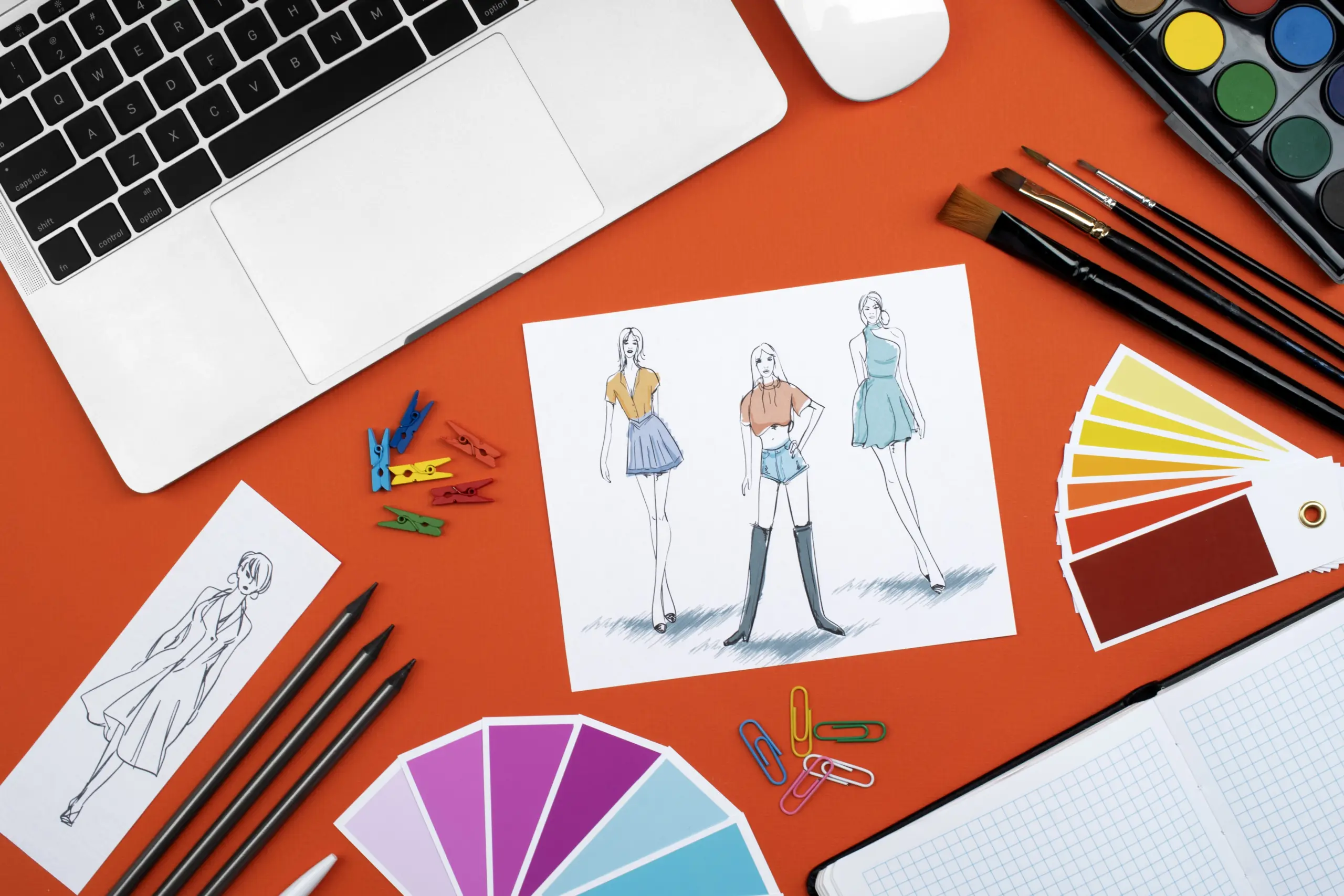
Colour theory is the secret to turning a good drawing into something truly beautiful. A designer can sketch the perfect shape for a new dress, but let all their hard work go to waste with the wrong colours. Colour theory gives designers the rules to pick colours that don’t just look good on paper, but actually work together in harmony.
The colour wheel is pretty much the starting point of any colour theory lesson. You’ve got your primary colours: red, yellow and blue. Then there are your secondary colours – orange, green and purple. And if that’s not enough, there’s a whole host of tertiary colours in between. Designers who understand how it all fits together will rarely have to guess at what colours will go well together – so don’t be surprised if your designs suddenly look a lot more polished than they did before.
One of the basics of colour theory is understanding complementary colours – these are colours that sit opposite each other on the wheel. So red and green are a classic partnership, while blue and orange team up in another popular pair. And then of course there’s yellow and purple – great for making a real statement. Complementary colours create loads of contrast and visual excitement. In fact, lots of fashion brands use them to create bold, attention-grabbing designs.
But what about when you want to create something a bit more mellow? That’s where analogous colours come in. These are colour combinations that sit right next to each other on the wheel – like blue, blue-green and green. It’s a really harmonious look – and is often used in evening wear, formal office wear or anything else that wants to create a sense of calm. For example.
And then of course there’s neutral colours – which is just a fancy way of saying black, white, grey and beige. These are supposed to go with just about anything – which is why designers use them to balance out bright colours or to keep things looking nice and simple.
Art Skills Required for Fashion Design Students – You’ve got this!
If you’re a fashion design student, there are a bunch of specific art skills you need to master before you can even begin thinking about graduating. These skills aren’t just nice to have – they’re actually vital if you want to make it in the fashion industry.
First off, you need to be able to do some serious figure drawing. This means drawing the human body from life models – so you learn all about how the bones and muscles create the shapes underneath the clothes, and how bodies move and bend. And this is actually pretty important because it helps you design clothes that fit properly, rather than just looking like they’ve been tossed on.
The next thing on the list is fashion illustration. Now this is where things get a bit more interesting, because you get to choose from a massive range of fabrics – from silk to wool to denim to leather. Each one behaves in its own special way, so you need to be able to capture that on paper. For example, silk is all drapey and shines whilst wool sits heavy and dense – denim holds stiff shapes, and leather reflects light in patches. Oh, and get this – an illustration has actually got to show these differences if you want to get it right.
And finally there’s technical drawing – a flat, diagram style sketch of a garment that includes every single detail – from seams to darts to buttons and stitches. Pattern makers use these drawings to create the actual patterns for cutting fabric. And let me tell you, a messy technical drawing can cause all sorts of problems – like wrong patterns, clothes that don’t fit and a whole host of other issues that can be a real nightmare to deal with.
Can You Become a Fashion Designer without Strong Drawing Skills?
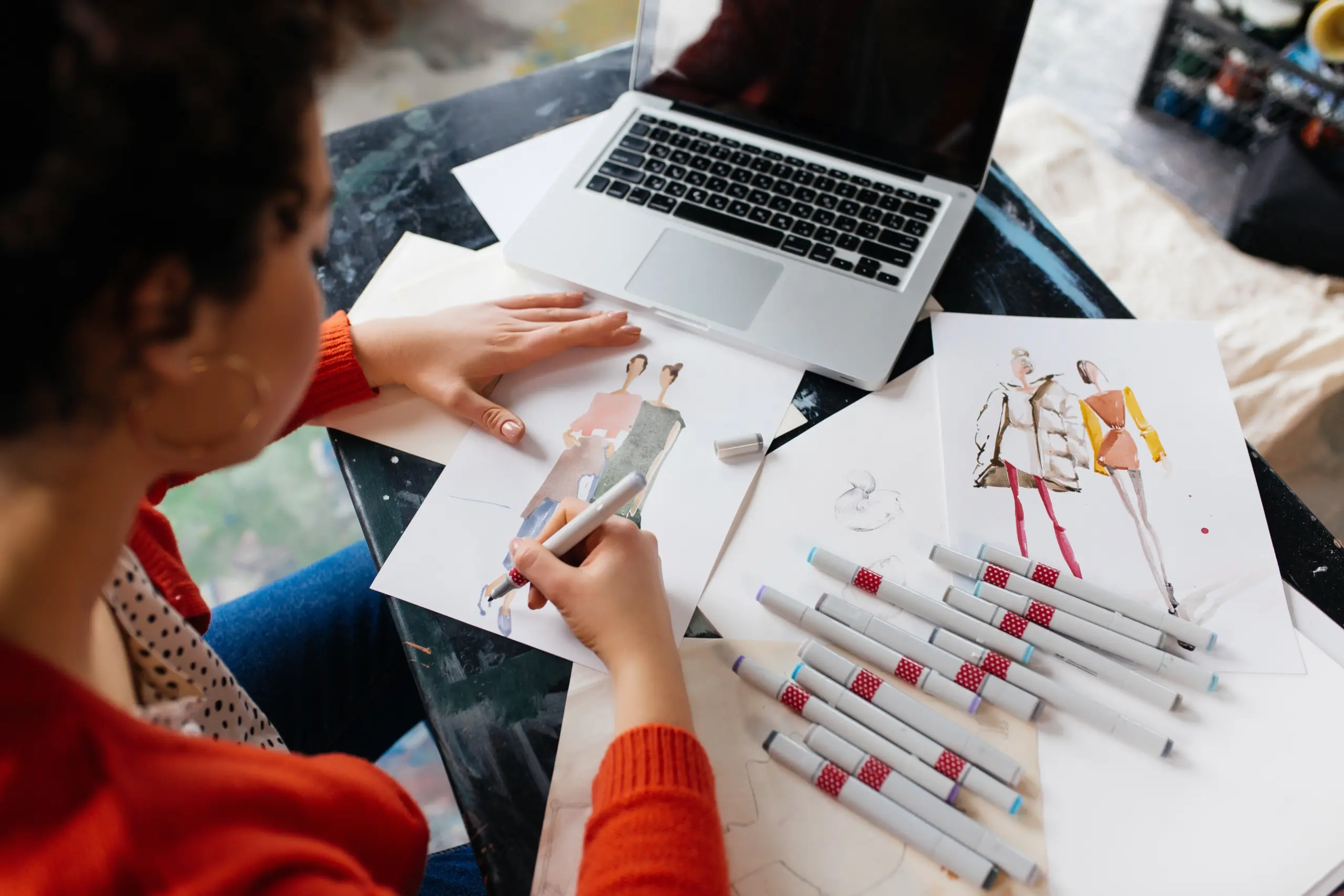
The short answer is no. The longer answer is almost no, with very rare exceptions.
Fashion design is a visual profession. Every single job in this field requires drawing at some level. Even design directors who manage teams still sketch ideas for their staff to develop further. Not drawing is not an option.
Some people think computer software replaces drawing skills. This is wrong. Software speeds up the drawing process. Software makes drawings cleaner. But software does not draw for you. You still need to know how shapes look on a body. You still need to understand proportion and movement. The computer follows your commands. If you give bad commands, you get bad drawings.
Some successful designers hire other people to draw for them. But these designers started with strong drawing skills of their own. They earned the right to delegate after years of doing the work themselves. A beginner cannot skip this step.
The only exception is designers who work exclusively with fabric draping. Draping means pinning fabric directly onto a mannequin to create a garment shape. A draper does not need to draw because they build the actual garment in three dimensions. But even drapers need to understand colour, form, and proportion. And most drapers learn drawing before switching to draping full time.
Start Your Fashion Journey Today! Learn Advanced Designing & Boutique Skills with Experts!
Conclusion
Art skills are not optional for fashion design. They are the foundation of the entire profession. Drawing turns ideas into plans. Colour theory turns plans into beautiful garments. Understanding form turns beautiful garments into clothes that fit real people.
A fashion designer without art skills cannot communicate with their team. They cannot create accurate sketches for pattern makers, build a portfolio that gets interviews or compete with thousands of other designers who draw well every single day.
Master Fashion Designing and Create Your Signature Style
Unlock your creative potential with our expert-led Fashion Designing course. Build in-demand skills and step confidently into the world of fashion!
Begin Your Fashion Career Today!Frequently Asked Questions
What basic art skills does a fashion designer need most?
Drawing and sketching are the most important art skills for fashion designers. Colour theory comes second. Understanding human form and proportion comes third. These three skills work together to turn fashion ideas into real garments that fit properly and look beautiful.
How long does it take to learn fashion drawing?
Most students need six months of daily practice to draw basic fashion sketches well. Reaching a professional level usually takes two to three years of consistent work. The speed of learning depends on how much time you spend practicing each week.
Can digital tools replace traditional drawing skills for fashion designers?
No. Digital tools speed up the drawing process but cannot replace the basic skill. A designer still needs to understand shape, proportion, and movement. The computer follows your commands. Bad drawing skills create bad digital drawings.
Do fashion design schools require a drawing portfolio for admission?
Yes. Almost every fashion design program asks for a portfolio of drawings. The portfolio shows your current skill level. Schools want to see figure drawings, fashion illustrations, and any creative work you have made. Weak portfolios get rejected.
What is a croquis and why do fashion designers use it?
A croquis is a stretched, elongated figure drawing used as a template for fashion sketches. The legs are longer and the head is smaller than a real human. These proportions make clothes look better on paper. Every fashion illustrator works with croquis figures.
How does colour theory apply to real fashion design work?
Colour theory stops designers from making ugly combinations. It teaches which colours work well together and which colours clash. Designers use complementary colours for bold, exciting looks. They use analogous colours for calm, harmonious looks. Neutral colours balance everything else.
Can someone become a fashion designer if they only drape fabric and never draw?
Very few designers work this way successfully. Drapers pin fabric directly onto mannequins without drawing first. But even drapers need to understand colour, form, and proportion. Most professional drapers learned drawing before switching to draping full time.
What is the difference between fashion illustration and technical drawing?
Fashion illustration shows how a garment looks on a body. It uses stretched proportions and artistic style. Technical drawing shows the flat, diagram style view of each garment piece. Pattern makers use technical drawings to cut fabric correctly. Both skills are required.
Which fabric is hardest to draw correctly for beginners?
Silk is the most difficult fabric to draw well. It drapes softly and reflects light in many directions. A silk dress looks completely different from a cotton dress or a wool coat. Beginners should practice drawing cotton and denim first before attempting silk.