Table of Contents
Building trust using content marketing works for entrepreneurs with continued effort. You will have to consistently deliver valuable authentic information that positions them as industry authorities. This helps create genuine relationships with the audience.
Paid advertising stops the moment your budget runs out. On the other hand, content marketing compounds over time. Each content – be it a video, article or case study – keeps attracting and converting prospects for months or, in some cases, even years.
Studies show that businesses that post blogs actively generate 67% more leads monthly than those that don’t. Content marketing produces 3x more leads than outbound marketing.
Join Our Online Digital Marketing Course & Learn the Fundamentals!
Key Takeaways
- Content marketing builds trust via consistency, expertise, and value – not self-promo.
- Regular blogging: +67% leads, +55% traffic.
- 2025 content ROI: $7.65 per $1.
- Top formats: how-tos, case studies, original research.
- Trust shows in 6 to 12 months; content compounds.
- AEO + Inverted Pyramid is essential.
- Track returning visitors, time on page, organic growth.
- Spend 5 to 10 hrs/week on quality content.
Why Content Marketing is the Most Powerful Trust Tool
1: What is the primary goal of SEO (Search Engine Optimization)?
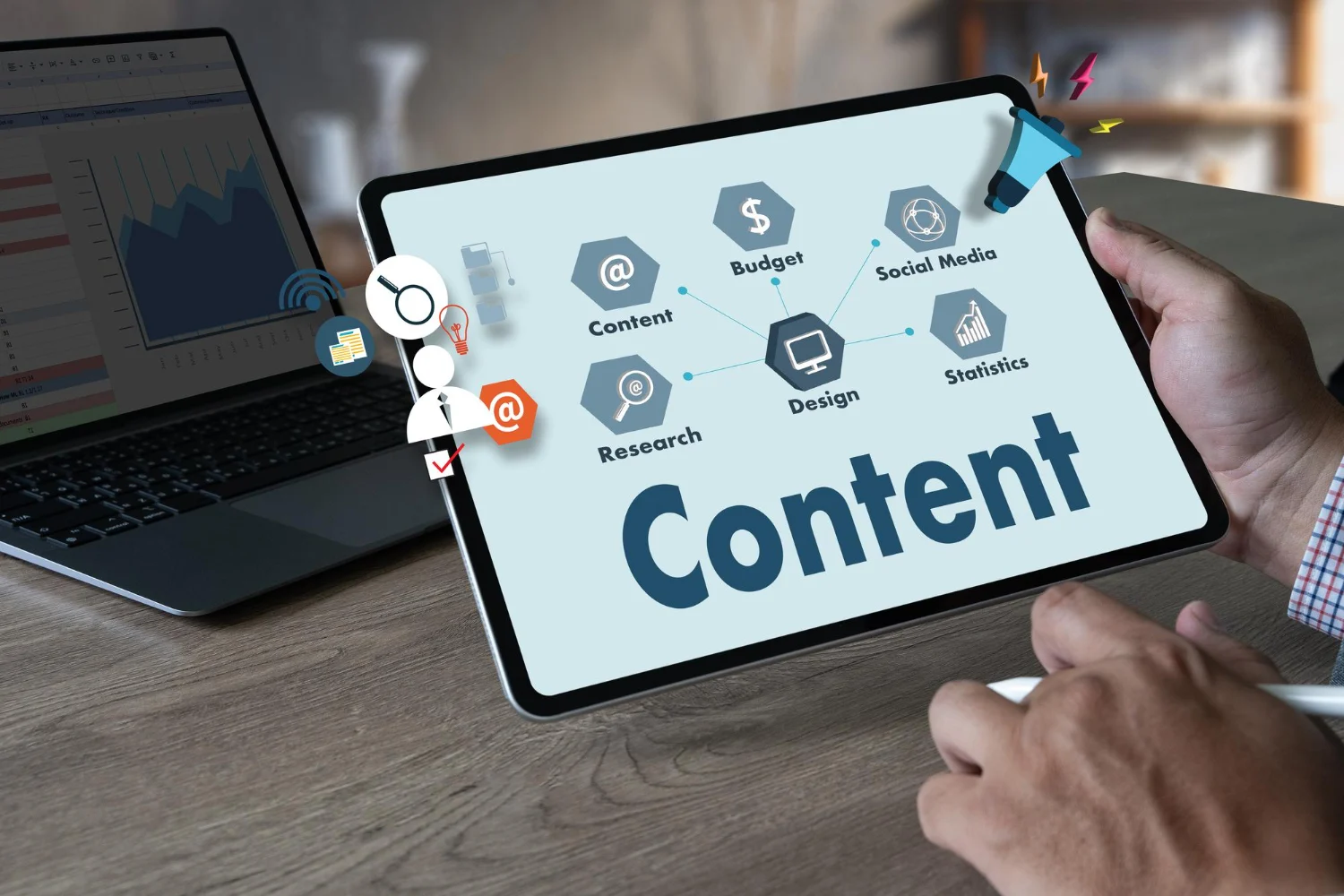
Think about the last time you hired someone, bought a course, or signed up for a service. Chances are, you read something they wrote, watched a video they made, or found an answer they published, long before you ever handed over money. That is content marketing at work, and it’s the most reliable trust-building engine available to any entrepreneur today.
A good percentage of B2B decision-makers cite trust and credibility as the single most important benefit of content marketing. This ranks it above lead generation and engagement. It means the businesses winning in 2026 are not the loudest advertisers. They are the ones who consistently show up, share genuine expertise, and give value without immediately asking for anything in return.
For entrepreneurs, this is the great equaliser. This is especially the case for those without big marketing budgets. A solo founder with deep knowledge and a clear writing voice can outperform a well-funded competitor that relies entirely on paid ads.
Here’s why content marketing works so durably, and how each trust factor plays out in practice:
| Trust Factor | How Content Marketing Delivers it | Impact for Entrepreneurs |
| Consistency | Regular publishing signals reliability and commitment | Builds audience expectation and long-term loyalty |
| Expertise Demonstration | In-depth tutorials, case studies, and analysis prove your knowledge | Positions you as authoritative without needing to say “trust me” |
| Transparency | Sharing failures, lessons learned, and real behind-the-scenes moments | Humanises your brand and significantly reduces buyer skepticism |
| Value-First Approach | Offering free, useful knowledge before any sales ask | Creates genuine reciprocity and goodwill |
| Social Proof Integration | Embedding customer results, testimonials, and data into content | Validates your claims with third-party evidence |
Become an AI-powered Digital Marketing Expert
Master AI-Driven Digital Marketing: Learn Core Skills and Tools to Lead the Industry!
Explore CourseThe Content Types that Build Trust Most Effectively in 2026
Not all content is created equal when it comes to earning trust. Some formats are specifically built for credibility. Here’s what the data shows for 2026:
| Content Type | Trust-Building Power | Best For Entrepreneurs Who… | 2026 Usage/Trend |
| How-To Guides & Tutorials | Highest | Want to solve specific audience problems | Blog posts among top 5 highest-ROI formats (HubSpot) |
| Case Studies | Very High | Have proven results to showcase | 75% of B2B marketers use them (CMI) |
| Original Research & Data | Highest | Can run surveys or analyse industry trends | Drives the strongest backlink and citation authority |
| Personal Stories & Vulnerability | High | Want to connect emotionally with their audience | 83% of B2B marketers credit content with building brand awareness |
| Expert Interviews | High | Want to borrow and build on established authority | Growing trend across LinkedIn and podcasts in 2026 |
| FAQs & Problem-Solving Content | High | Want to rank in AI search and voice results | Critical for AEO and featured snippet optimisation |
Note:
You don’t need to do all of these at once. Pick one format you’re naturally good at, go deep on it for 90 days, and only then expand.
How to Start Your Trust-Building Content Strategy Today

Step 1 – Define Your Content Pillars
Before you write a single word, you need clarity on what you’re building around. Four pillar categories work well for most entrepreneurs:
| Pillar | Example Topics | Search Intent |
| Educational | “How to [solve specific problem]”, beginner guides, explainers | Informational |
| Authority | Industry analysis, trend reports, original data | Commercial investigation |
| Relatability | Failure stories, lessons learned, day-in-the-life | Transactional (soft) |
| Proof | Case studies, client results, before-and-after | Commercial investigation |
Step 2 – Choose Your Primary Platform
Where you publish matters as much as what you publish. Here’s a practical breakdown based on current 2026 data:
| Platform | Best Content Type | Trust-Building Timeline | Resources Needed |
| Blog/Website | Long-form guides (1,500 to 2,000 words) | 6 to 12 months (compounds indefinitely) | Medium – writing and basic SEO |
| YouTube | Tutorials, behind-the-scenes videos | 4 to 8 months | High – video production |
| Professional insights, case study snippets | 2 to 4 months | Low-Medium | |
| Email Newsletter | Deep dives, personal stories, curated insights | 3 to 6 months | Medium – consistent writing |
LinkedIn is currently the top channel for thought leadership content at 76% adoption among marketers. If you’re a service-based entrepreneur or in B2B, start there alongside a blog.
Step 3 – Optimise for AEO (Answer Engine Optimization)
There is an increase in the number of Gen Z using AI platforms as their primary search method. So, it is important that you realize that optimizing your content purely for Google is no longer enough. Here’s what AEO-optimised content looks like in practice:
| AEO Element | How to Implement it | Why it Matters |
| Inverted Pyramid Structure | Lead every piece with the direct answer | AI tools extract answers from the opening paragraph |
| Direct Answer Blocks | Use H2/H3 in question format + a 40 to 60 word answer below each | Featured snippet and AI overview optimisation |
| Structured Data | Add FAQ schema and HowTo schema to your pages | Helps search engines and AI understand your content |
| Concise Sentences | Aim for 15 to 22 words per sentence in active voice | Easier for AI models to quote accurately |
| Cited Statistics | Include verified data with named sources | Builds credibility with both readers and AI systems |
How to Measure whether Your Content is Actually Building Trust
Many entrepreneurs publish content for months and then give up because they have set their focus on the wrong things.
Vanity metrics like follower counts, likes and impressions tell you very little about trust and loyalty. Here are the metrics that actually matter:
| Metric | What it Tells You | Good Benchmark (2026) | Tool |
| Returning Visitors Rate | Whether people want to come back | 30%+ returning visitors | Google Analytics 4 |
| Time on Page | Whether your content genuinely holds attention | 3+ minutes for blog posts | GA4 / Hotjar |
| Organic Traffic Growth | SEO authority is building over time | 15% to 20% month-on-month growth | Semrush / Ahrefs |
| Email Subscription Rate | Willingness to invite you into their inbox | 3% to 5% of visitors subscribing | Mailchimp / ConvertKit |
| Social Shares | Content resonance and peer endorsement | 50+ shares per post | Native social analytics |
| Backlinks Acquired | External authority and citation value | 10+ quality backlinks per pillar post | Ahrefs / Moz |
The most honest trust signal is email subscriptions. When someone gives you their inbox, they are saying that they trust you enough to invite you regular updates on a recurring basis. Protect that trust fiercely.
Become an AI-powered Digital Marketing Expert
Master AI-Driven Digital Marketing: Learn Core Skills and Tools to Lead the Industry!
Explore CourseThe Real Timeline: What to Expect and When
One of the biggest mistakes entrepreneurs make is expecting content marketing to behave like paid advertising. Looking for instant results tied to spend is a wrong idea here. It doesn’t work that way.
Here’s a realistic timeline:
Month 1–3:
Foundation. Your content is being indexed. Minimal traffic, but you’re building the habit and the library.
Month 3–6:
Early signals. Some posts start ranking. Returning visitors appear. You get your first organic lead or enquiry that mentions your content.
Month 6–12:
Measurable trust. Consistent organic traffic, a growing email list, and genuine relationships with readers who engage, share, and refer.
Year 2 and beyond:
Compounding returns. Posts from two years ago are still generating leads. Your name comes up in searches. People reach out saying “I’ve been reading your content for a while.”
Brands that publish content weekly are found to have 3.5x higher conversions than those publishing monthly. Consistency is not just a habit to build but encompasses the entire strategy.
Join Our Online Digital Marketing Course & Learn the Fundamentals!
Conclusion
Content marketing is not really a shortcut. Anyone selling it as one is not being genuine with you. In reality, it is the most durable trust-building asset an entrepreneur can create. It is one that works even when you don’t, compounds over years, and builds the kind of audience loyalty that paid advertising simply cannot buy.
As an entrepreneur who starts today, even with one blog post per week, you will have a compounding advantage over those who keep waiting for the “right time.”
Start with what you know and have. Write for one person and be consistent with it. The trust will follow.
Frequently Asked Questions
How long does it take for content marketing to build trust?
Expect measurable trust in 6 to 12 months; results compound and grow over years. Regular blogging boosts leads and momentum.
What content type builds the most trust for entrepreneurs?
Original research, case studies, and how-to guides inspire the most trust. Case studies remain a core format for B2B trust.
Can content marketing work for a solo entrepreneur with no team?
Yes, one high-value piece per week plus authentic engagement can outperform generic paid ads. Consistency and quality beat scale alone.
How much should an entrepreneur budget for content marketing?
You can start with near-zero if you create content yourself. As a guideline, allocate approximately 7% to 8% of revenue to marketing and prioritize content within that.
Can content marketing build trust faster than paid ads?
Paid ads create quick awareness; content builds deeper, longer-lasting trust. Content also costs less and creates evergreen assets.
What's the ROI of content marketing compared to other channels?
In 2025 the average ROI was $7.65 per $1, which is roughly double typical channel returns. It also drives more leads at lower cost than outbound.
How do I know if my content is actually building trust?
Watch returning visitor rate (target 30%+), time on page (3+ minutes), email sign-up rate (3% to 5%), and organic traffic growth. These show sustained engagement, not vanity metrics.
What are content pillars and how should entrepreneurs choose them?
Pillars are 3–5 core topic areas you regularly cover. Pick them from your expertise, audience pain points, and high-search keywords.
How important is email marketing as part of a content strategy?
Very important. Email yields high ROI (often cited around $42 per $1) and consolidates trust. Use content to grow and nurture your list.
How do I stay consistent with content marketing when I'm running a business alone?
Batch-create (2 to 3 pieces per session), use a simple editorial calendar, and repurpose content. One excellent weekly piece beats sporadic posting.