Table of Contents
Somatic Yoga is specifically a mindful movement practice that retrains the nervous system to release chronic muscle tension. This happens through slow and internally focused awareness and not any external form.
It primarily targets sensory-motor amnesia, which is the root cause of habitual tightness and recurring pain. Studies suggest that practitioners experienced significant reduction in lower back pain with eight weeks of regular practice.
Learn Yoga from the best teachers in the industry! Join the Entri app!
Key Takeaways
- Somatic Yoga reprograms the nervous system’s muscle habits. It goes beyond simple stretching.
- It stems from Thomas Hanna’s somatic education. It blends clinical therapy with yoga asanas.
- The core technique is pandiculation. You consciously contract and release muscles. It’s more effective for chronic tension than static stretching.
- Daily practice takes just 10–15 minutes. It improves flexibility, reduces pain, and boosts mental clarity.
- It’s ideal for beginners, injury recovery, and experienced yogis.
- Yoga teachers gain sharper cueing. They create adaptive, inclusive classes.
What is Somatic Yoga?
1: Which of these is the primary goal of yoga practice?
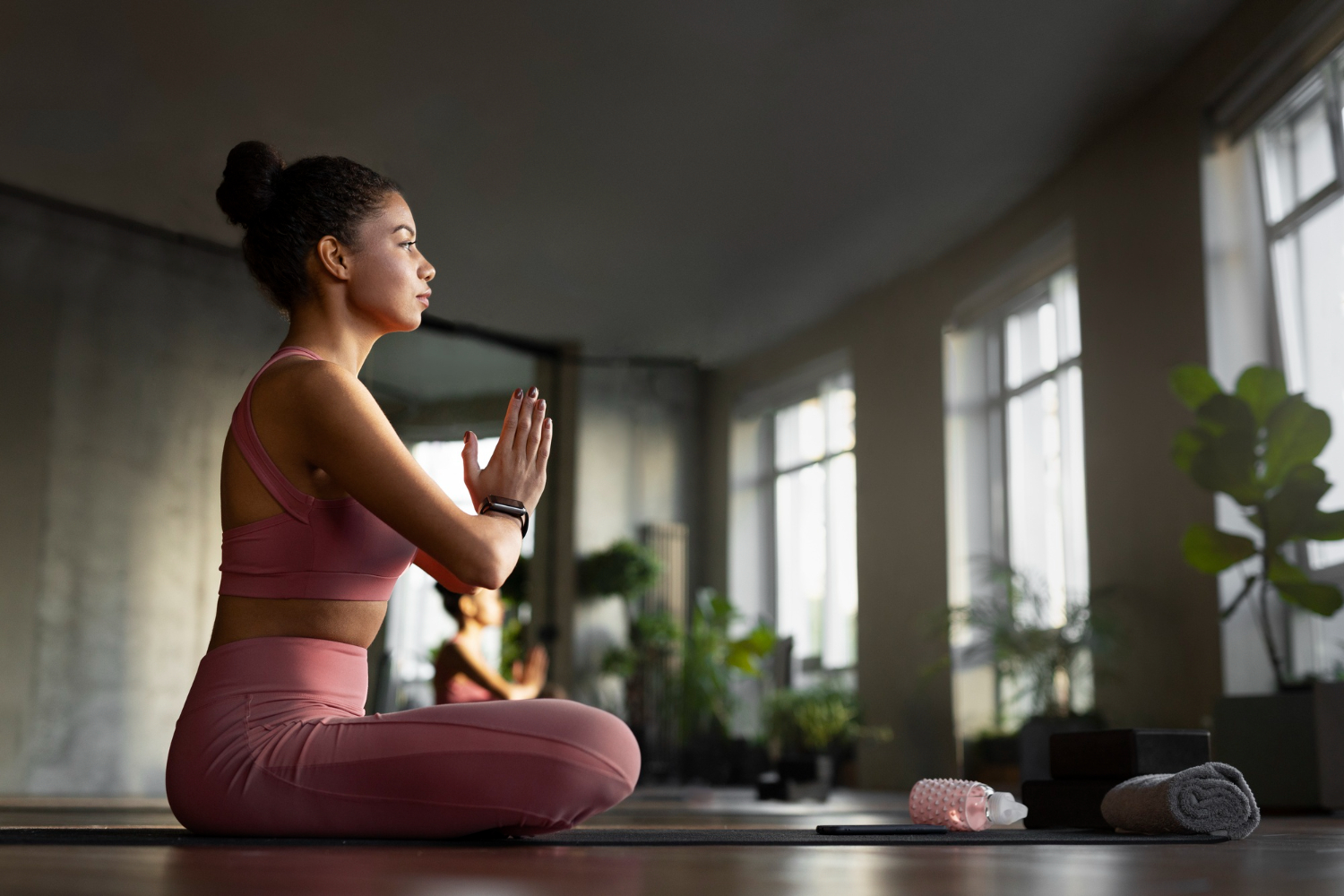
Somatic Yoga can be seen as a blend of neuroscience with ancient movement wisdom. It is a practice that works on the brain-muscle feedback loop.
This targets sensory-motor amnesia, which happens when muscles stay chronically contracted due to repeated stress, habitual posture or injury. Over time, the brain forgets how to fully relax these muscles. This is where Somatic Yoga can interrupt and break the pattern. This is done through deliberate and slow movement. It kind of re-educates the nervous system.
The practice emerged back in the 1990s when the yoga teachers began integrating Hanna’s somatic therapy techniques with traditional asana. The result gave a style of yoga that prioritizes internal sensation over external appearance.
This goes beyond just fixing your posture and finding pain-relief. It makes you realize what you feel and make things better.
Three Things that Make Somatic Yoga Distinct:
Pandiculation Over Static Stretching
You contract a muscle, hold briefly, then release slowly. This active process resets the nervous system more effectively than passive stretching.
Internal Sensing, not External Form
The goal is awareness of sensation, not achieving a picture-perfect pose.
Slow, Exploratory Movement
Speed is the enemy of somatic learning. The slower you move, the more your nervous system pays attention.
Research-Backed Benefits at a Glance
| Benefit | Key Outcome |
| Pain Relief | 40% reduction in lower back pain scores |
| Stress Reduction | 35% drop in cortisol after 6 sessions |
| Mobility Improvement | 25% increase in joint range of motion |
| Mental Clarity | Enhanced focus via improved proprioception |
Become a Certified Yoga Instructor
Yoga Teacher Training Course by Entri App: Master authentic yoga techniques, earn certification, and build a successful career as a professional yoga instructor.
Join Now!Why Somatic Yoga Matters Right Now
The modern way of living is a perfect breeding ground for sensory motor amnesia. Hours spent stuck in front of a desk, our regular routines turning a bit sedentary, and the constant screen time straining our eyes is enough to leave our muscles clenched up in a low-grade contraction all the time.
Traditional yoga can certainly offer some relief. But when you’ve got chronic pain or muscles locked up tight, then stretching just isn’t enough.
Somatic Yoga gets to the root cause – rather than just dealing with the symptoms. This is why it’s gaining more and more attention in wellness circles, yoga instruction programmes and even physio clinics.
5 Somatic Yoga Poses for Beginners (Step-by-Step)
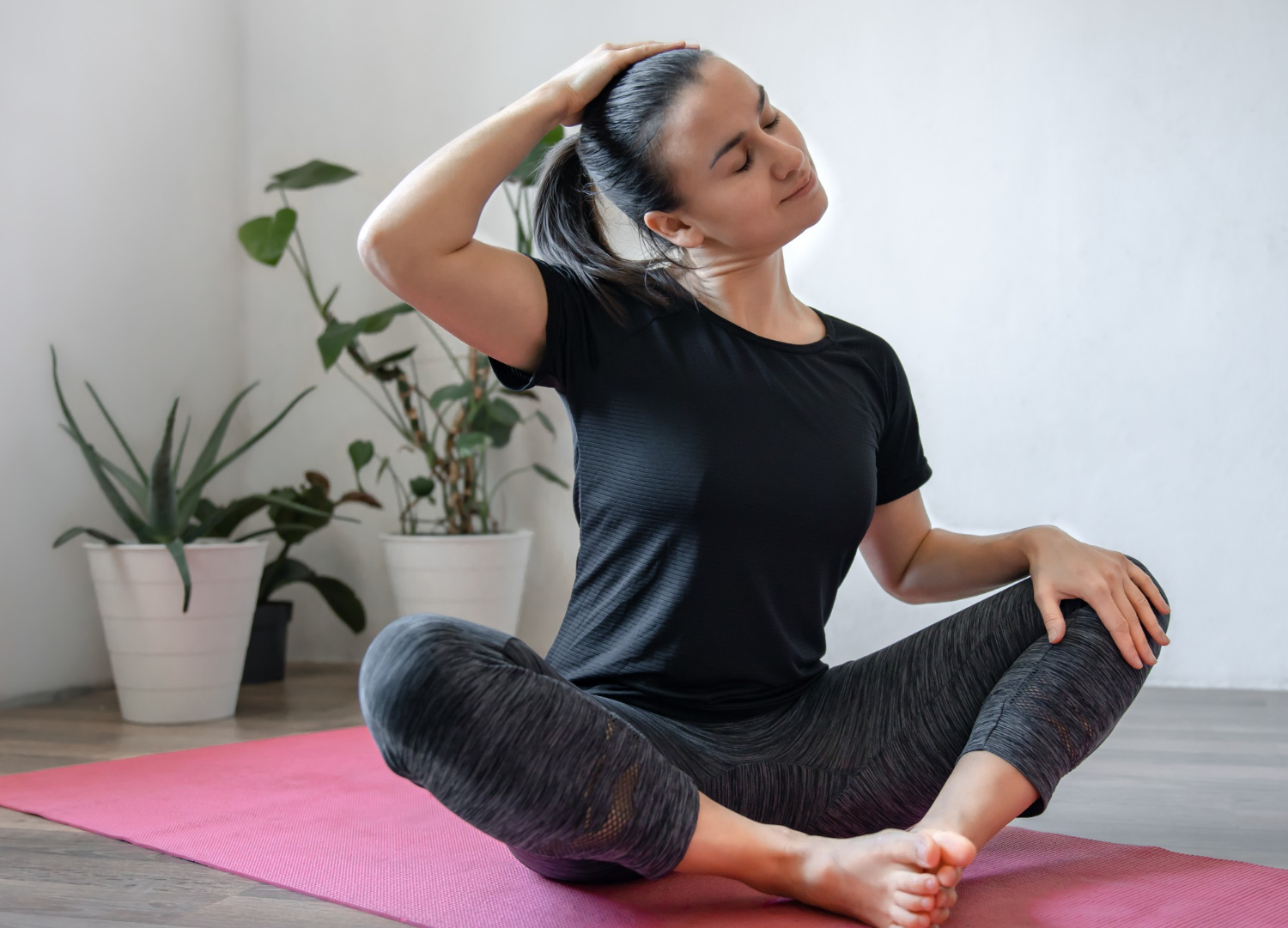
Here are 5 poses that can be considered as the ideal entry points. Each of them uses the signature somatic technique, pandiculation. These poses can be practised on a yoga mat with zero equipment.
1. Arch and Flatten – Core Release
Direct benefit:
Instantly relieves lower back tension by resetting the muscles along the lumbar spine.
Instructions:
- Lie on your back with knees bent and feet flat on the floor.
- Slowly arch your lower back away from the mat, contracting the muscles deliberately.
- Hold for five seconds. Then, just as slowly, flatten the back toward the mat and release all tension.
- Repeat five times. The key is to move with full attention — feel every layer of muscle engage and let go.
Teacher tip:
Cue students to “feel the release, not the stretch.” This language shift helps them stop performing and start sensing.
2. Cat-Cow Flow – Spinal Mobility
Direct benefit:
Unlocks stiff spinal patterns caused by prolonged sitting or stress-holding.
Instructions:
- Come onto all fours with wrists under shoulders and knees under hips.
- Inhale, letting the belly drop and the tailbone lift (Cow).
- Exhale, rounding the spine toward the ceiling (Cat).
The somatic approach here is to move slowly enough that you can feel the vertebral ripple travelling up and down the spine. Not about just the beginning and end of the movement. Eight breath cycles.
Teacher tip:
Encourage students to close their eyes and track the wave of sensation along each spinal segment.
3. Side Bend Exploration – Hip Opening
Direct benefit:
Eases chronic tightness along the lateral body – ribs, obliques, and outer hips.
Instructions:
- Sit cross-legged or in a chair. Slowly lean to one side, allowing one arm to slide along the floor or rest on the thigh.
- Rather than pushing into the stretch, pause and explore. You can feel the ribs on your top side gently separating.
- Breathe into that sensation for 30 seconds. Switch sides.
- Avoid forcing range as this pose is about discovery.
Teacher tip:
Avoid using the word “stretch.” Replace it with “explore the edge” – it keeps students in sensing mode rather than effort mode.
4. Pelvic Tilt Wave – Pelvis Reset
Direct benefit:
Balances the sacroiliac joint and releases deep hip flexors connected to lower back pain.
Instructions:
- Lie on your back with knees bent.
- Slowly tilt the pelvis forward (anterior tilt – lower back lifts slightly), then rock it back (posterior tilt – lower back flattens).
- Coordinate with breath: inhale to tilt forward, exhale to tilt back.
- Ten slow repetitions. The movement should feel like a wave, not a lever.
Teacher tip:
Link this to breath cues. The breath-pelvis connection deepens awareness and often unlocks tension that manual cueing cannot.
5. Diagonal Reach – Full-Body Integration
Direct benefit:
Improves cross-body coordination and proprioception – essential for advanced teaching and injury prevention.
Instructions:
- Sit comfortably on the floor or in a chair.
- Slowly reach your right arm forward and extend your left leg diagonally at the same time, feeling the gentle contraction across your torso.
- Hold for three seconds, then release slowly back to centre.
- Repeat six times per side.
This movement reintegrates the left-right hemispheric coordination that stress and sedentary habits disrupt.
Teacher tip:
Use this as a closing pose to help students embody what they’ve explored – it ties the session together.
Poses Quick Reference
| Pose | Target Area | Duration/Reps | Teacher Tip |
| Arch & Flatten | Lower back | 5 reps | Cue “feel the release, not the stretch” |
| Cat-Cow Flow | Spine | 8 breaths | Track the vertebral wave, eyes closed |
| Side Bend | Ribs, hips | 30s per side | Explore edges — never force |
| Pelvic Tilt Wave | Pelvis, SI joint | 10 reps | Pair with breath for deeper access |
| Diagonal Reach | Whole body | 6x per side | Close the session with integration |
How to Build a Daily Somatic Yoga Routine
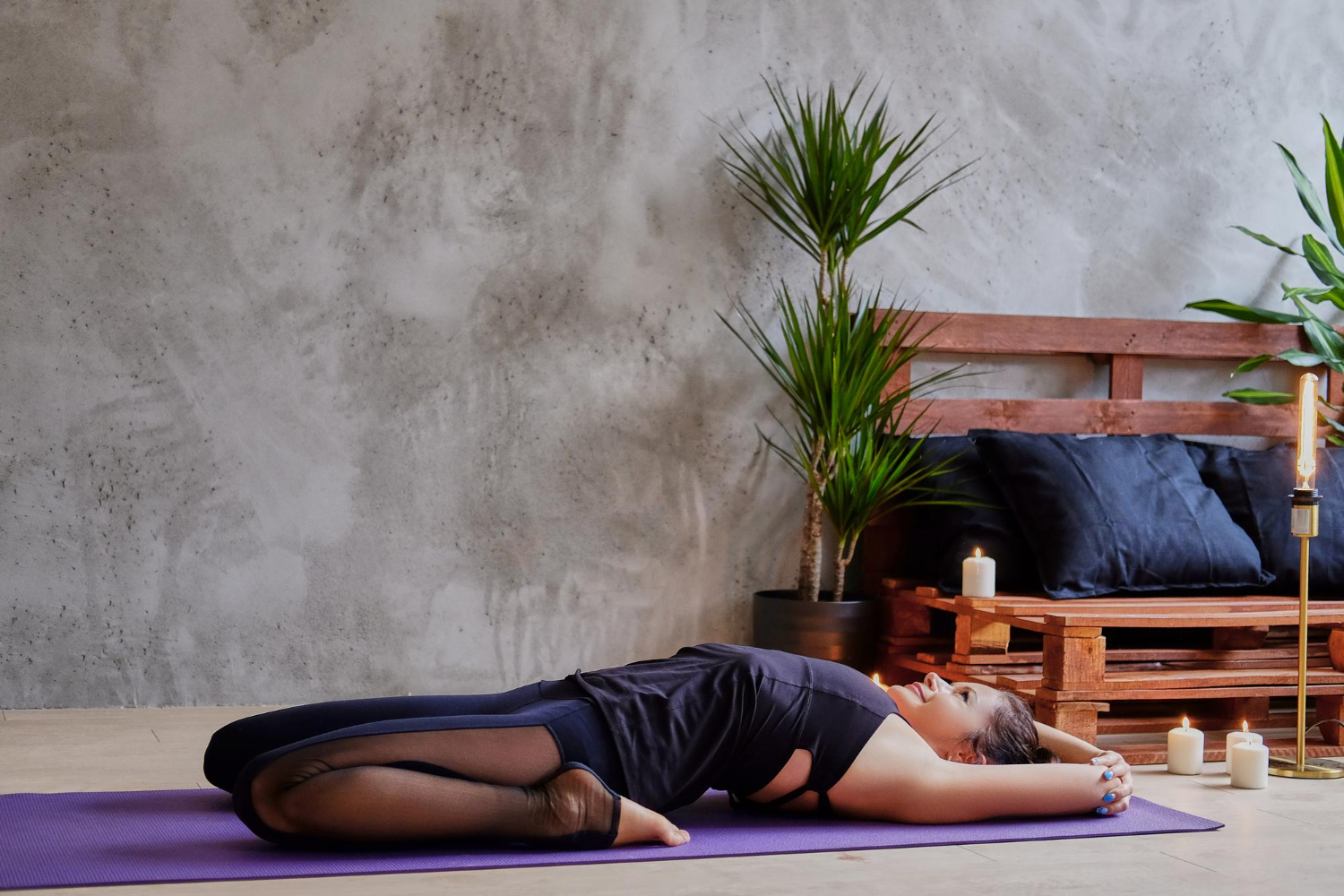
Like that old saying goes, consistency beats out duration in any workout you do. And even a quick 10 minute Somatic Yoga session every day can start to bring about some pretty tangible change in the nervous system within 4 to 6 weeks.
Here is how you can build that journey into a habit.
Sample 10-Minute Morning Routine
| Time | Activity | Focus |
| 0–2 min | Body scan & breath awareness | Locate areas of tension before moving |
| 2–7 min | 2–3 poses (e.g., Arch & Flatten + Pelvic Tilt) | Slow contract-release with full attention |
| 7–10 min | Full-body pandiculation + stillness | Notice what has shifted |
Four habits that deepen the practice:
- Start every session with a minute or so spent checking in with your body. Just quietly notice where you feel heavy or stuck.
- Pick out 2 or 3 poses to go with, based on where you’re feeling the tightest on that particular day. Don’t worry about sticking to the same order every time.
- Take a deep breath before you wrap it all up by spending a minute or so lying on the mat. Just feel your body out and let go.
- Lastly, keep a short practice journal going. Writing down what you’re feeling after a session can really help you get in the zone with Somatic learning. It also helps build up your vocabulary so you can pass on your newfound skills on to others.
Become a Certified Yoga Instructor
Yoga Teacher Training Course by Entri App: Master authentic yoga techniques, earn certification, and build a successful career as a professional yoga instructor.
Join Now!Somatic Yoga vs. Other Yoga Styles
| Feature | Somatic Yoga | Yin Yoga | Hatha Yoga |
| Primary mechanism | Nervous system re-education | Connective tissue release | Strength + flexibility |
| Technique | Active contract-release (pandiculation) | Passive, gravity-led holds | Static alignment-based poses |
| Ideal for | Chronic pain, neurological patterns | Deep tissue stiffness | General fitness and balance |
| Movement speed | Very slow, exploratory | Still and held | Moderate |
| Focus | Internal sensation | Patience and surrender | External form and alignment |
Learn Yoga from the best teachers in the industry! Join the Entri app!
Conclusion
Realize that Somatic Yoga is not a trend. It’s about fundamentally changing how we think of movement, pain, and healing. By actually working with the nervous system, rather than trying to fight against it, it gets to the very root of chronic tension. Rather than just trying to scrape the surface. That’s something most other fitness and wellness programmes can barely touch.
Whether you’re a total newbie looking to ease yourself gently into yoga, someone struggling with back pain that just won’t shift, or a yoga teacher looking to add a bit of depth to your practice, the somatic approach has something to offer.
So take it from the top. Start with five minutes. Move slow. Take heed of your body and listen. That really is the whole technique, and all it takes is to actually do it to see it start to work.
Become a Certified Yoga Instructor
Yoga Teacher Training Course by Entri App: Master authentic yoga techniques, earn certification, and build a successful career as a professional yoga instructor.
Join Now!Frequently Asked Questions
How is Somatic Yoga different from Yin Yoga?
Somatic Yoga uses active pandiculation (contract and release). Yin Yoga relies on passive, gravity-held stretches.
Can complete beginners practise Somatic Yoga?
Yes, no flexibility or experience needed. Start from your body’s current state – there’s no wrong way.
How long does it take to see results?
Many feel less tension after 2 to 3 sessions. Significant pain and mobility gains come in 4 to 8 weeks with daily practice.
Is Somatic Yoga the same as somatic therapy?
They share Hanna’s principles, but therapy is one-on-one clinical work. Somatic Yoga is self-directed group practice.
How does Somatic Yoga help with stress?
It shifts the nervous system from fight-or-flight tension. Cortisol drops about 35% after six sessions.
Can Somatic Yoga replace physical therapy?
It complements PT well but doesn’t replace it. Consult a doctor for injuries or conditions.
How is Somatic Yoga relevant to Yoga Teacher Training?
It sharpens cues for internal sensations over shapes. Teachers adapt better for pain, hypermobility, or restrictions.
How often should I practise Somatic Yoga?
Do 10 to 15 minutes daily for best results. Small, regular sessions rewire the nervous system effectively.
Can Somatic Yoga help with posture problems?
Yes, it fixes sensory-motor amnesia in habits. It retrains muscles neurologically.
What is the best pose to start with as a complete beginner?
Try Arch and Flatten first. It’s lying down, needs no flexibility, and teaches contract-release basics.