Table of Contents
Choosing the right makeup products for your skin type starts with knowing whether your skin is oily, dry, combination, or sensitive. Oily skin needs oil-free, matte, and non-comedogenic formulas to control shine and prevent clogged pores.
Dry skin thrives on creamy, hydrating products with dewy finishes that nourish and prevent flakiness. Sensitive skin requires hypoallergenic, fragrance-free, and mineral-based options that minimise irritation. Combination skin benefits from a balanced approach that treats different areas accordingly.
Master Certified Makeup Artist Online Course. Enrol Now!
KEY TAKEAWAYS
- Your skin type determines how makeup wears and which formulas suit you best .
- Oily skin needs mattifying, oil-free foundations and loose powders to control shine .
- Dry skin requires cream-based, hydrating products with dewy or satin finishes .
- Sensitive skin benefits from hypoallergenic, fragrance-free, mineral-based formulas .
- Combination skin needs a balanced approach, using different products on different face areas .
- Understanding your undertone helps you choose foundation and lip shades that blend naturally .
- Always test foundation on your jawline in natural light before purchasing .
- Primer and setting spray are essential for making your makeup last .
INTRODUCTION
Youve probably been there before – you buy a foundation that looks good as hell in the bottle but it ends up just sitting on your skin like a layer of plaster.
Your concealer’s all creased after an hour, your powder looks like its been sitting in the cake aisle and your skin just looks like its been slapped together with some makeup. The problem isn’t with the product itself though, its that the product just doesn’t suit your skin in the first place.
Your skin type has a massive impact on how your makeup behaves. Oily skin types tend to break down foundation pretty quickly, while dry skin makes powder products look all flaky and gross. Overly sensitive skin can react to even the smallest whiff of a fragrance or harsh chemicals, and combo skin just demands a totally different approach on different parts of your face.
Its a right old time waster and money- burner when you use products that just don’t agree with you. That’s where this guide comes in. You’ll figure out your skin type and then show you what makeup products are best for you, how to find your undertone and a few tips on how to try them out before you shell out the cash.
Master Makeup, Hair & Skincare to Build Your Beauty Identity
Unlock your creative potential with our expert-led Beauty & Wellness course. Build in-demand beauty skills and step confidently into the world of beauty!
Your Beauty Career Starts Here!Figuring out your skin type for dummies
Before you even think about picking out a makeup product, you need to work out your skin type. Now, I know its not the most glamorous thing in the world, but just hear me out. Cleanse your face, walk away for 10 mins and then just go with your gut – how does it feel? If you’ve got dry skin, it’ll either look all flaky or feel all tight.
When you’ve got combo skin, then your forehead, nose and chin will be all shiny but your cheek is just fine. If your whole face is shining like a beacon then you’ve got oily skin. And if your skin is nice and balanced then you can safely say you’ve got normal skin.
The only other one that’s any different is sensitive skin and that’s usually pretty easy to spot – it’s just nice and red most of the time. Your undertone is just as important as your skin type when it comes to picking out foundation and lip colour. Undertones are literally the colours that sit just beneath your skin – and yes, that sounds a bit weird but just roll with it.
If you’ve got cool undertones then you’ll see a bit of pink or red or blue poking through. If you’ve got warm undertones then you’ll see a bit of yellow or golden or peachy glow going on. And if you’ve got a mix of both then you’re just a lucky neutral.
Checking your veins is the first step to finding your undertone . If they’re blue or purple then that’s cool undertones for you. If they’re a bit greenish then that’s warm undertones all the way. And if you’ve got a bit of both then you’re a nice neutral. Getting a handle on these undertones will help you pick out foundation and lipstick that actually looks like its a part of you.
MAKEUP PRODUCTS FOR OILY SKIN
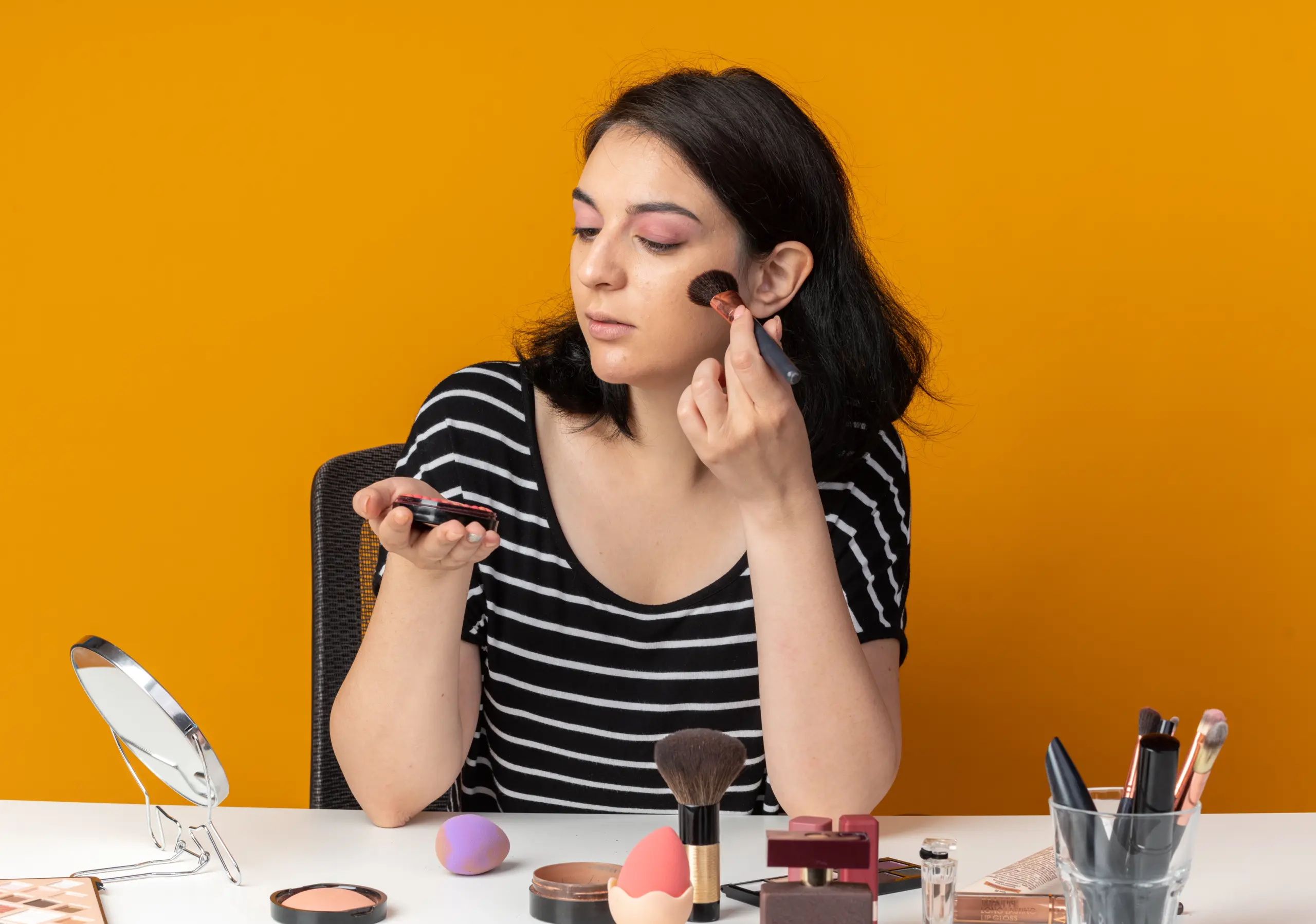
Oily skin is notorious for producing too much sebum, leaving your face looking like its glistening with a sheen – not exactly the most attractive look, especially with your makeup sliding off at the first sign of a hot day.
But never fear, there are some clever products that can tame the shine without leaving your skin feeling like the Sahara desert.
Primer:
Pick a mattifying primer that’s been designed to tackle oil and make your pores look smaller – that’s the one you want. Slap it on to your T-zone, as that’s where the shine is most likely to pop up.
Foundation:
When it comes to picking a foundation, look for ones that are oil-free and super lightweight . Non-comedogenic is a good place to start – it means they won’t clog your pores and let your skin breathe.
Matte finishes tend to work really well for oily skin as they’re great at controlling shine & will outlast those pesky hot flashes . Avoid the cream-based ones at all costs – they’ll weigh you down and you can basically guarantee they’ll slide right off .
Concealer:
Opt for a concealer that’s lightweight, oil-free and has buildable coverage – you can always add more, but you can never take it away. Matte concealers will do a way better job of hiding those blemishes than their creamy counterparts on oily skin.
Setting Powder:
Translucent powder is your best mate when it comes to getting rid of shine and locking in your makeup . Dust it on your T-zone and any other areas where you tend to get a bit greasier and you’re golden.
Ingredients to Keep an Eye Out for
Non-comedogenic labels are a must when it comes to avoiding clogged pores. Salicylic acid, green tea and tea tree oil are all known to help keep your pores squeaky clean. And silica and clay – they are basically oil-absorbers in a bottle.
MAKEUP PRODUCTS FOR DRY SKIN
Dry skin is just the pits – it’s flaky, tight and can look like you’ve just applied a thick layer of cake to your face . But, the right products can add some much-needed moisture and leave you looking silky smooth.
Primer:
Pick a hydrating primer that’s got the works – hyaluronic acid or glycerin will help lock in moisture and get you off to a great start.
Foundation:
Dewy and satin finishes are your best bet for foundation – cream and liquid ones that claim to be ‘hydrating’ or ‘moisturising’ are a good place to start . Avoid anything matte or powder-based, as it’ll suck the moisture right out of your skin and highlight all the dry patches .
Concealer:
Get yourself a concealer that’s been whipped up with some lovely hydrating ingredients – they will cover up those dark circles and fine lines without drying out the skin.
Setting Powder:
Use a dusting of powder, but not too much, or your dry skin will look all flaky and rough . A hydrating setting spray is the way to go – it’ll keep everything in place without looking all dry and cakey.
Blush and Highlighter:
Cream blushes and highlighters are the way to go for dry skin – they add that lovely dewiness and blend in seamlessly .
Master Makeup, Hair & Skincare to Build Your Beauty Identity
Unlock your creative potential with our expert-led Beauty & Wellness course. Build in-demand beauty skills and step confidently into the world of beauty!
Your Beauty Career Starts Here!MAKEUP PRODUCTS FOR SENSITIVE SKIN
Sensitive skin is really sensitive to fragrances, harsh chemicals and some ingredients – it practically falls apart if you use anything with harsh stuff in it. The right products will be gentle and they’ll actually help to minimise that redness and irritation.
Primer:
When it comes to primers , try to go for ones that don’t have any fragrances in them and are hypoallergenic . Ones with ingredients like centella asiatica or aloe vera can really help to calm it down.
Foundation:
Mineral-based foundations are a godsend for sensitive skin. When you’re shopping for one , look for the ‘hypoallergenic’ label and products that are free from perfume, alcohol and all the other strong stuff they put in there . Avoid chemical filters, and instead go for mineral sunscreens like zinc oxide or titanium dioxide.
Concealer:
For your concealer go for a fragrance-free, super gentle formula that’s especially designed for sensitive skin.
Setting Powder:
Mineral powders with very, very simple ingredient lists are your best bet here. Just steer clear of those heavy, scented powders.
Blush and Highlighter:
Mineral powders are pretty gentle. And they’re less likely to cause any irritation.
Ingredients to Look Out for
In terms of ingredients that help to soothe redness and strengthen the skin barrier you’ve got centella asiatica (cica), aloe vera and snail secretion – those are all winners.
On the other hand steer clear of fragrances, essential oils, drying alcohol and all the other harsh preservatives out there.
MAKEUP FOR PEOPLE WITH COMBINATION SKIN

Combination skin is an absolute nightmare . You’ve got areas that are nice and dry (usually on the cheeks) and then other areas that are just pure oil slick (the T-zone, usually). What you need to do is find a makeup approach that balances both of these out.
Primer: You might want to think about using two different primers – a mattifying one for the T-zone because, let’s be real, it’s going to get pretty oily, and a hydrating one for your dry cheeks. That way you can tackle both of those problems.
Foundation:
Liquid foundations that have a natural or satin finish are a good find . They should give enough hydration to the dry areas but won’t feel too heavy on the oily bits.
Concealer:
If you go for a cream or liquid formula it should blend alright.
Setting Powder:
Only apply translucent powder to the oily T-zone, because to be honest with you, it doesn’t need to be anywhere else. Leave it off your dry cheeks unless absolutely necessary.
Blush:
Cream blushes can work pretty well on dry skin, and they look nice.
TIPS FOR CHOOSING THE RIGHT MAKEUP SHADES
Once you know your skin type, finding the right shades is the next step .
Test Foundation on Your Jawline: Never test foundation on your hand . Your hand is a different colour. Swipe shades on your jawline and walk into natural light. The right shade disappears into your skin without leaving a visible line .
Wait 30 Minutes Before Deciding: Foundation can oxidise, turning darker or more orange after reacting with your skin oils. Apply a swatch and wait 30 minutes. If the colour shifts, choose a lighter shade or a different formula.
Match Concealer to Your Goal: For blemishes, choose a concealer that matches your foundation exactly. For under-eyes, choose a shade one or two shades lighter to brighten .
Choose Lip Shades by Undertone: For cool undertones, try blue-based reds, pinks, mauves, and berries. For warm undertones, try yellow-based reds, corals, peaches, and warm browns.
Deep skin tones shine in mauve, burgundy, and rich reds. Medium skin tones glow in roses, berries, and reds. Light skin tones suit soft pinks, peachy nudes, and light berries.
Master Certified Makeup Artist Online Course. Enrol Now!
CONCLUSION
Choosing the right makeup products for your skin type is the foundation of every beautiful look. Oily skin needs mattifying, oil-free formulas that control shine. Dry skin requires creamy, hydrating products with dewy finishes.
Sensitive skin benefits from hypoallergenic, fragrance-free options. Combination skin demands a balanced approach that treats different areas accordingly.
Understanding your undertone helps you choose foundation and lip shades that blend naturally. Always test products on your jawline in natural light before buying. With the right products and a little patience, you will create flawless looks that enhance your natural beauty.
Master Makeup, Hair & Skincare to Build Your Beauty Identity
Unlock your creative potential with our expert-led Beauty & Wellness course. Build in-demand beauty skills and step confidently into the world of beauty!
Your Beauty Career Starts Here!Frequently Asked Questions
How do I know my skin type before buying makeup?
Cleanse your face, leave it bare for ten minutes, and observe how it feels. Tight or flaky skin indicates dry skin. Shine across your whole face means oily skin. Shine only on your T-zone means combination skin. Redness or irritation often indicates sensitive skin.
What makeup ingredients should oily skin look for?
Oily skin should look for oil-free, non-comedogenic products that do not clog pores. Ingredients like salicylic acid (BHA), green tea, and tea tree oil help keep pores clean. Silica and clay absorb excess oil. Avoid heavy oils and pore-clogging ingredients like coconut oil and mineral oil.
What makeup ingredients should dry skin look for?
Dry skin needs hydrating ingredients like hyaluronic acid, glycerin, panthenol, and ceramides. These bind moisture and strengthen the skin barrier. Look for cream and liquid foundations with dewy or satin finishes. Avoid matte or powder foundations that absorb moisture and emphasise dry patches.
What is the best foundation for oily skin?
The best foundation for oily skin is oil-free, lightweight, and non-comedogenic with a matte finish. Liquid foundations with mattifying properties control shine without clogging pores. Avoid cream-based or luminous foundations that can feel heavy and slide off oily skin.
What is the best foundation for dry skin?
The best foundation for dry skin is cream or liquid with a dewy or satin finish. Look for words like “hydrating,” “moisturizing,” or “glow” on the label. Avoid matte or powder foundations that absorb moisture and make dry patches look flaky and obvious.
Should sensitive skin avoid any makeup ingredients?
Yes, sensitive skin should avoid fragrances, essential oils, drying alcohol, and harsh preservatives. These ingredients can trigger redness and irritation. Choose hypoallergenic, fragrance-free, mineral-based products with soothing ingredients like centella asiatica (cica) or aloe vera.
How do I test foundation shades before buying?
Test foundation shades along your jawline in natural daylight. The right shade should disappear into your skin without leaving a visible line. Never test on your hand because the colour is often different from your face. Wait 30 minutes before deciding because foundation can oxidise.
Can combination skin use the same primer all over?
No, combination skin benefits from using two different primers. Apply a mattifying primer to the oily T-zone (forehead, nose, chin). Apply a hydrating primer to dry cheeks. This custom approach addresses both needs and creates an even base for foundation.
How often should I change my makeup routine based on skin changes?
You should change your makeup routine whenever you notice significant changes in your skin. Seasonal changes, hormonal shifts, and aging all affect your skin type. A product that worked in summer may not work in winter. Reassess your products at least twice a year.