Table of Contents
Start crocheting today with just 3 stitches that will get you hooked. They are the chain, single crochet and half double crochet. These three simple stitches will equip you to make stylish scarves, headbands and other cool accessories through smooth practice.
When you first start getting into crochet, it can feel a bit overwhelming. Understand that it is totally obvious. Also know that these three basic stitches are the foundation of just about every pattern you’ll come across in the world of fashion and home decor.
Learn Advanced Designing & Boutique Skills with Experts. Join Now!
Key Takeaways
- You only need 5 basic tools to get started: some good quality worsted weight yarn, a 4.5 to 5.5mm crochet hook, a yarn needle, a pair of scissors, and a few stitch markers.
- 7 beginner stitches to get you hooked: chain, slip stitch, single crochet, half double crochet, double crochet. With this comes the all time classic granny square.
- Using a light, smooth yarn really makes it easier to see what you’re doing and get a feel for the stitches.
- It doesn’t take long to learn each stitch – probably about 30 minutes at most – just a bit of regular practice and you’ll be off to a flying start.
- The most common mistakes seem to be uneven tension and missing out stitches altogether. The good news is they’re pretty easy to sort out.
- A simple scarf or headband can be a good choice to start. It will really help you build up those muscle memories and work further.
What You Need to Get Started
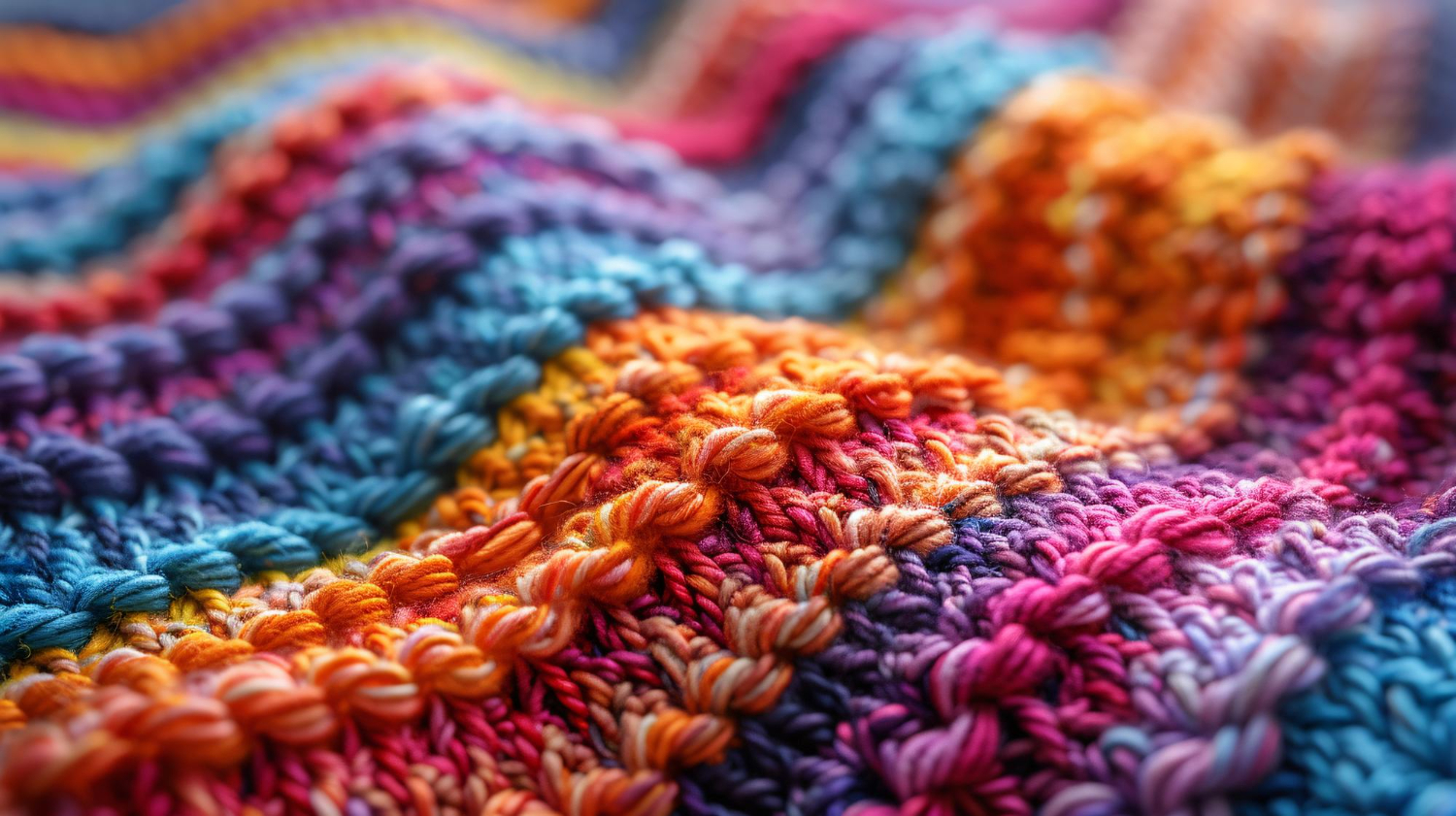
You’ll need some good quality medium weight yarn and a hook that’s somewhere between 4.5 to 5.5mm. Along with that a pair of scissors, a yarn needle and some stitch markers will come in handy. That’s all you really need to get started.
Choosing the right yarn weight and hook size is important. They really can make all the difference in the world to how your finished piece looks and feels. And to be honest, most beginner guides and starter kits reckon worsted weight yarn with a 5mm hook is the way to go. It’s a great balance between easy to handle and easy to see.
Most beginner guides will tell you to go for a 4 worsted weight yarn with a 5mm hook because it’s the perfect combo of being able to see your stitches and not be too hard to handle.
| Tool | Recommendation | Why it Matters |
| Yarn | Category 4 (worsted/Aran) – acrylic or cotton | Easy to handle; stitches are visible |
| Hook Size | US G–H / 4.5–5.5 mm | Balances tension and stitch definition |
| Yarn Colour | Light or pastel shades | Easier to count stitches while learning |
| Stitch Markers | Locking or ring type | Tracks turning chains and row counts |
| Yarn Needle | Blunt-tipped tapestry needle | Weaves in ends without splitting yarn |
A quick note on yarn fibre:
Acrylic is forgiving, machine washable, and affordable. This is a deal for your first few projects. Cotton works well for bags and dishcloths. but it has less stretch, so you can start using it once you have a feel for tension.
Master Fashion Designing and Create Your Signature Style
Unlock your creative potential with our expert-led Fashion Designing course. Build in-demand skills and step confidently into the world of fashion!
Begin Your Fashion Career Today!7 Easy Crochet Stitches
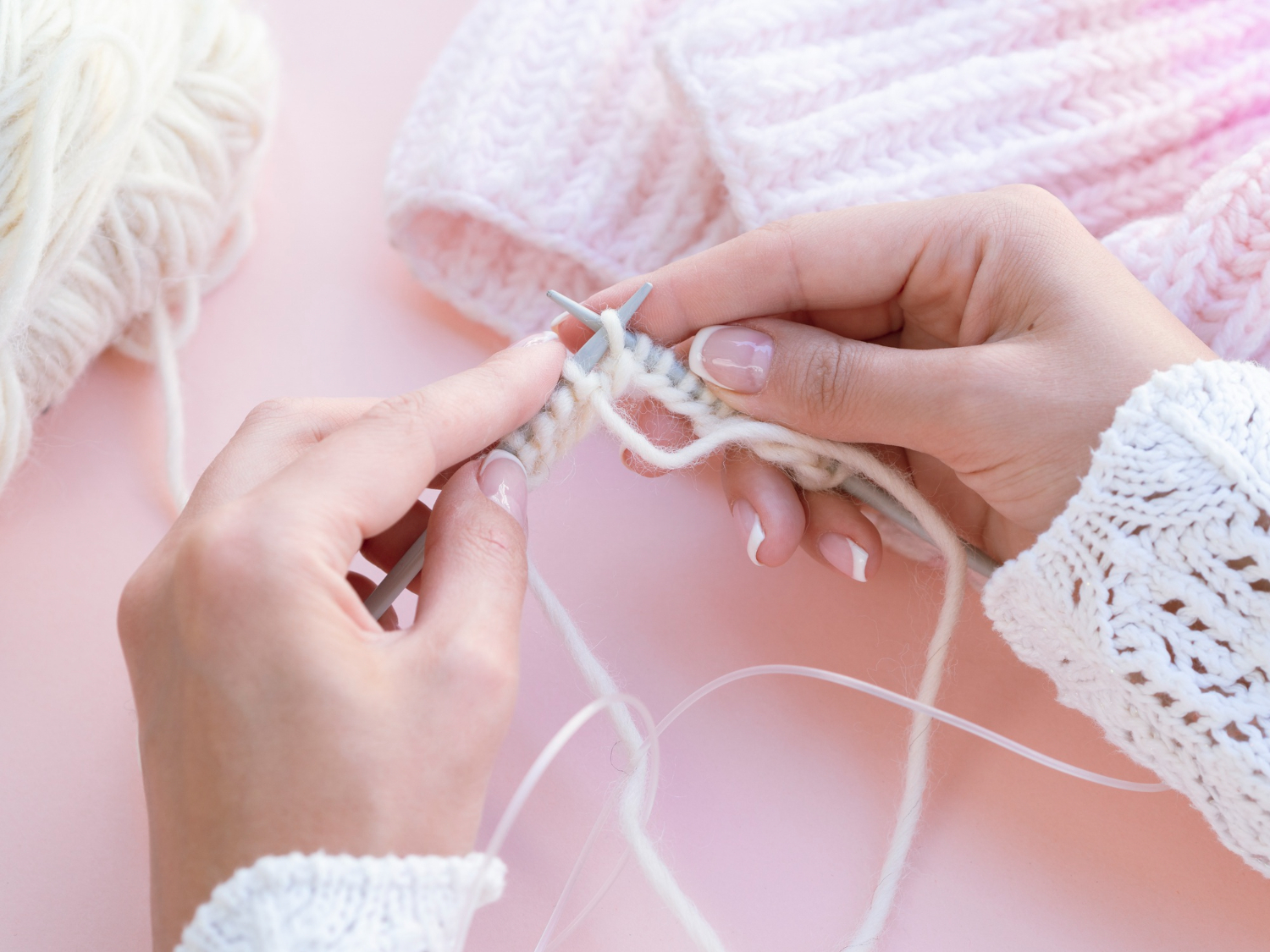
The seven stitches every beginner should learn first are
Chain, Slip Stitch, Single Crochet, Half Double Crochet, Double Crochet, Treble Crochet, and Granny Square
These stitches range from flat foundation work to tall, drapey fabric.
They give you the full toolkit for scarves, shawls, accessories, and motifs. Every beginner tutorial, yarn brand, and pattern library treats these as non-negotiables because they are.
1. Chain Stitch (ch) – The Foundation of Everything
The chain stitch is the starting point of almost every crochet project. It creates the foundation row from which all other stitches grow. This also works on how evenly your chain directly affects your finished piece.
Consistently tensioned chains keep your edges neat and your gauge accurate throughout.
How to make a chain stitch:
- Make a slip knot on your hook.
- Yarn over – wrap the yarn from back to front over the hook.
- Pull the yarn through the loop already on your hook.
- That’s one chain. Repeat steps 2 to 3 until you reach your desired length.
Tips:
Don’t pull your chains too tight. You’ll struggle to insert your hook later. Count chains with a stitch marker every 10 loops to avoid losing your place.
Common mistake:
Starting too tight. If your chain feels stiff or difficult to work into, try going up one hook size for the foundation chain only.
Great for:
Foundation rows for scarves, headbands, granny squares, and any flat or circular project.
2. Slip Stitch (sl st) – The Smallest, Most Useful Stitch
The slip stitch is the shortest stitch in crochet as it adds almost no height. This makes it essential for joining rounds, closing seams, and creating neat edges. It moves your yarn across stitches without adding bulk. You’ll use it constantly in motifs, granny squares, and circular projects.
How to make a slip stitch:
- Insert your hook into the designated stitch or space.
- Yarn over and pull the yarn through both the stitch and the loop on your hook in one motion.
- One slip stitch complete.
Tips:
Keep your tension loose. Slip stitches tend to tighten easily and can pucker seams.
Great for:
Joining rounds, finishing edges, seaming pieces together, and surface embellishment.
3. Single Crochet (sc) – Tight, Dense, Durable
Single crochet produces a dense, structured fabric, which is the most solid of the basic stitches. It’s the go-to stitch for amigurumi, edging, bags, and any project where you need shape and structure rather than drape. Many crocheters start their entire journey with a single crochet alone.
How to make a single crochet:
- Insert your hook into the stitch.
- Yarn over and pull up a loop – you now have 2 loops on your hook.
- Yarn over again and pull through both loops.
- One single crochet complete. Repeat across the row.
Gauge (approximate):
20 sc × 20 rows = 10 cm square with worsted yarn and a 4.5 mm hook.
Tips:
Use a slightly larger hook if your fabric feels too stiff. Always insert your hook under both loops of the stitch unless the pattern specifies otherwise.
Common mistake:
Skipping the last stitch of a row or accidentally crocheting into the turning chain. Count your stitches at the end of every row until it becomes second nature.
Great for:
Beanie brims, bag bodies, amigurumi, tight-lining accessories.
4. Half Double Crochet (hdc) – The Versatile Middle Ground
Half double crochet sits between single and double crochet in height, creating a soft, slightly drapey fabric that’s warmer than double crochet but less stiff than single crochet.
It’s a favourite for garments, shawls, and textured panels precisely because it balances structure with flow.
How to make a half double crochet:
- Yarn over first (before inserting your hook).
- Insert hook into the stitch.
- Yarn over and pull up a loop. You now have 3 loops on your hook.
- Yarn over and pull through all 3 loops at once.
- One hdc complete.
Tips:
The “extra” yarn over at the start is what distinguishes hdc from sc, don’t skip it. This creates a subtle ridge on the back of the stitch that adds texture.
Common mistake:
Pulling through only 2 loops instead of all 3. If your stitch looks like a regular double crochet, this is usually why.
Great for:
Lightweight shawls, headbands, tunic panels, baby blankets.
5. Double Crochet (dc) – Fast and Drapey
Double crochet is about twice the height of single crochet and works up quickly, making it the most commonly used stitch in patterns. It creates an open, drapey fabric ideal for garments, blankets, and anything where you want flow rather than stiffness.
How to make a double crochet:
- Yarn over, then insert hook into the stitch.
- Yarn over and pull up a loop – 3 loops on hook.
- Yarn over and pull through the first 2 loops – 2 loops remain.
- Yarn over and pull through the last 2 loops.
- One dc complete.
Tips:
Keep a consistent yarn-over before every insertion. Inconsistent tension here causes uneven rows.
Great for:
Scarves, blankets, granny squares, shawls, tops.
6. Treble Crochet (tr) – Tall and Open
Treble crochet is the tallest of the basic stitches, creating an airy, lace-like fabric. It’s less commonly used in pure beginner projects but opens the door to shells, fans, and decorative stitch patterns.
How to make a treble crochet:
- Yarn over twice, then insert hook into the stitch.
- Yarn over and pull up a loop – 4 loops on hook.
- Yarn over, pull through 2 loops – 3 loops remain.
- Yarn over, pull through 2 loops – 2 loops remain.
- Yarn over, pull through the last 2 loops.
- One tr complete.
Great for:
Lacy shawls, decorative borders, shell stitch patterns, open-work tops.
7. Granny Square – The Classic Crochet Motif
The granny square is a combination motif. It is not about a single stitch. But it belongs on every beginner’s list as it teaches joining, rounds, and colour changes all at once. Once you can make a granny square, you can make bags, blankets, cardigans, and totes.
Basic granny square (worked in rounds):
- Start with a magic ring or ch 4, join with sl st.
- Round 1: Ch 3 (counts as first dc), 2 dc in ring, ch 2. 3 dc in ring, ch 2. Repeat 3 times. Join with sl st to top of ch-3.
- Round 2: Sl st to corner space, ch 3, 2 dc, ch 2, 3 dc in the same corner. In the next corner: 3 dc, ch 2, 3 dc. Repeat around. Join.
- Continue adding rounds, placing corner clusters in corner spaces and side clusters along edges.
Tips:
Change colour at the start of each round for classic granny square colouring. Join squares using the slip stitch join for a flat finish, or the join-as-you-go method for seamless results.
Stitch Comparison at a Glance
| Stitch | Height | Fabric Feel | Best Uses |
| Chain (ch) | Foundation | N/A | Starting rows, spaces |
| Slip Stitch (sl st) | Minimal | N/A | Joining, edging |
| Single Crochet (sc) | Low | Dense, firm | Bags, amigurumi, edging |
| Half Double Crochet (hdc) | Medium-low | Soft, slight drape | Shawls, headbands, garments |
| Double Crochet (dc) | Medium | Drapey, open | Scarves, blankets, tops |
| Treble Crochet (tr) | Tall | Airy, lacy | Lace patterns, decorative borders |
| Granny Square | Motif | Varies | Bags, blankets, cardigans |
Simple Beginner Projects
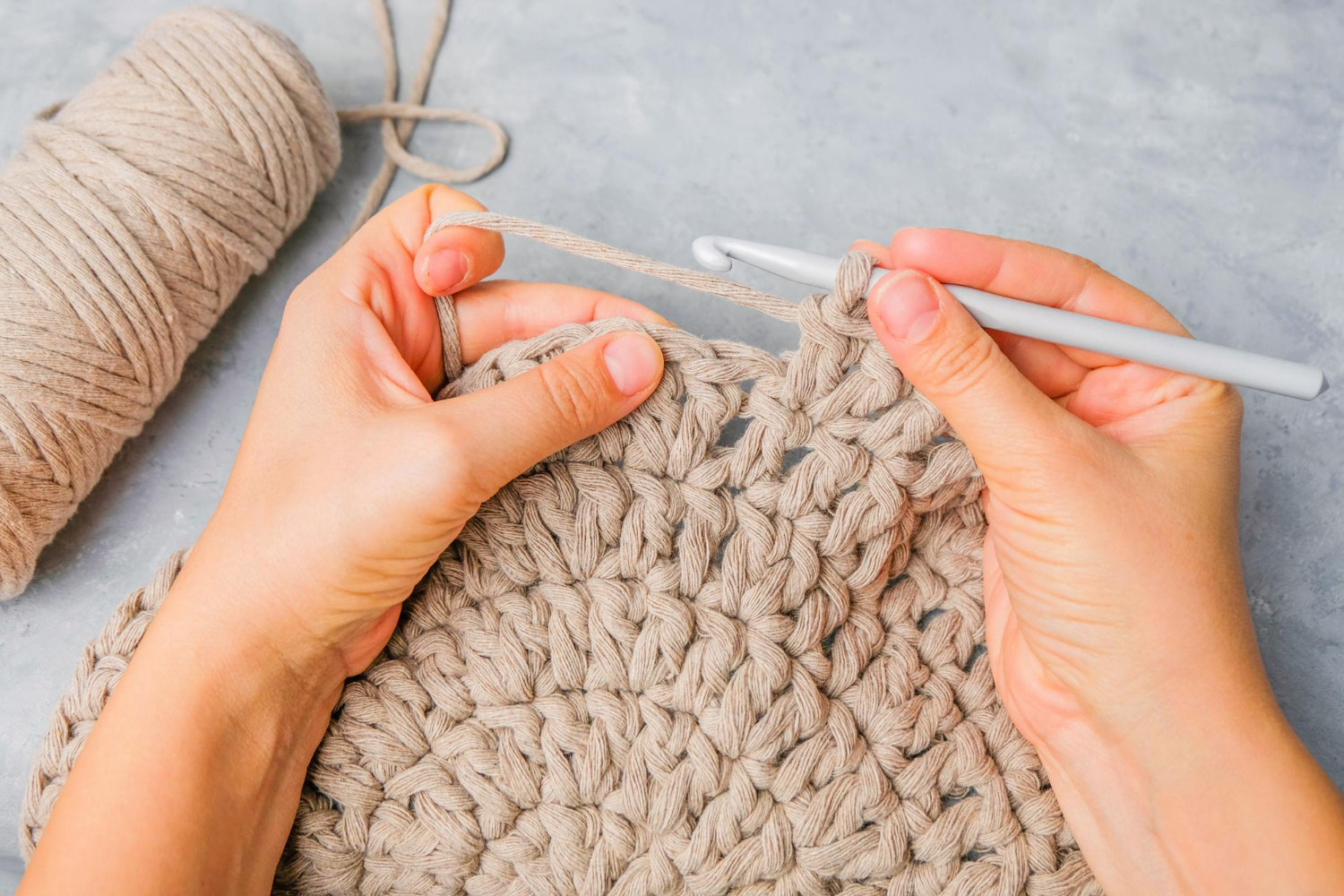
Project-A – Basic Scarf
- Stitches: ch + dc (or hdc for a warmer result)
- Materials: ~200 g worsted yarn, 5 mm hook
- How: Chain 20. Work dc across every row for 150 cm. Fasten off and weave in the end.
- Time: 3–5 hours for a first attempt
Project-B – Headband / Earwarmer
- Stitches: ch + sc
- Materials: ~50 g yarn, 5 mm hook
- How: Chain 10. Work sc rows until the band reaches 48–52 cm (head circumference). Seam the ends together with a yarn needle.
- Time: 1–2 hours
Project-C – Granny Square Tote
- Stitches: Granny Square motif (ch, dc, sl st)
- Materials: ~300 g yarn in 2–3 colours, 5 mm hook
- How: Make 18 granny squares (9 for each side). Join using the sl st join method. Add a sc border and attach handles.
- Time: 8–12 hours across multiple sessions
Master Fashion Designing and Create Your Signature Style
Unlock your creative potential with our expert-led Fashion Designing course. Build in-demand skills and step confidently into the world of fashion!
Begin Your Fashion Career Today!Troubleshooting Common Mistakes
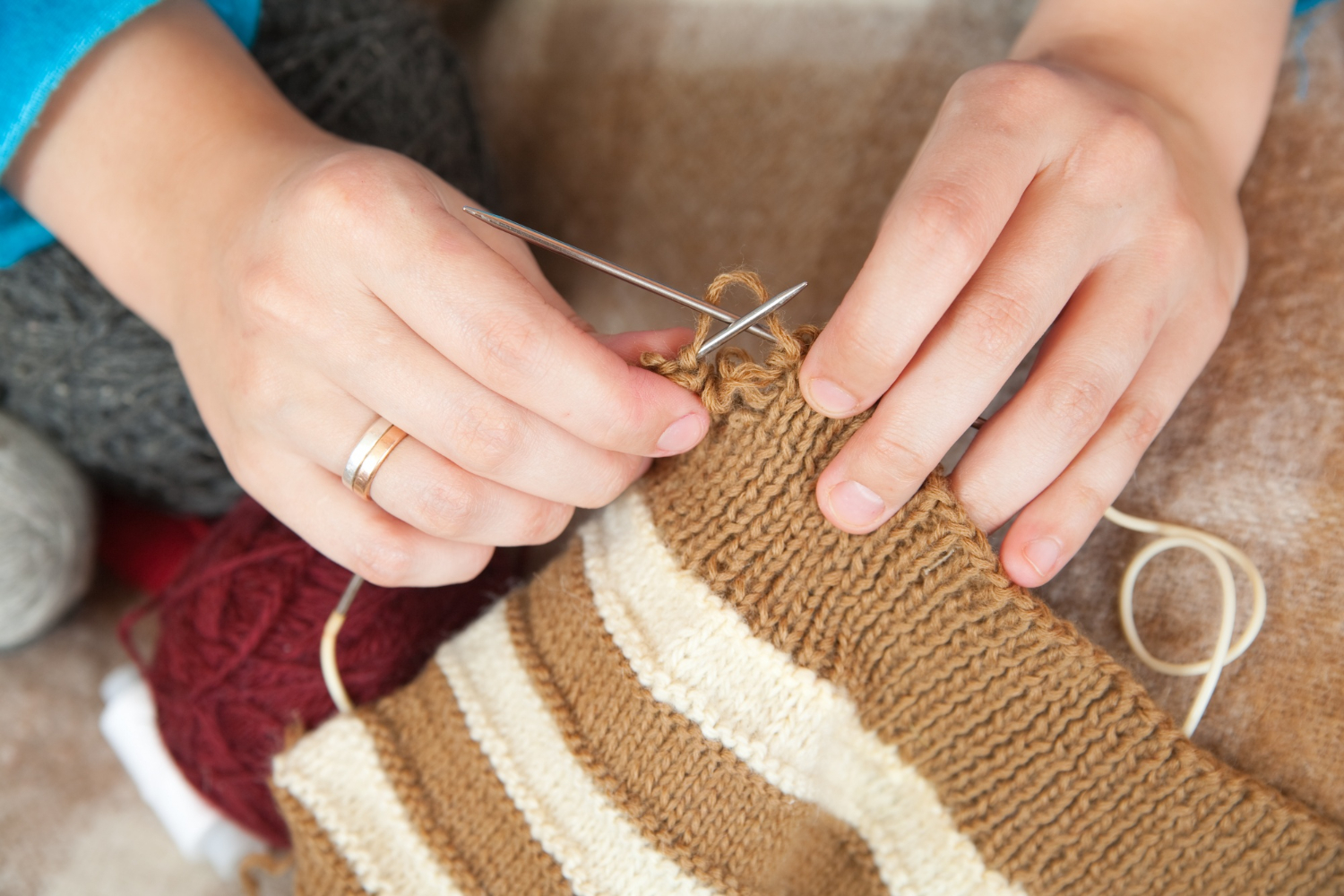
The most common beginner problems are uneven tension, missed stitches at row ends, and incorrect turning chains. The fact is, fixes are straightforward.
-
Uneven tension:
Practice with the same yarn and hook until your hands find a rhythm. Going up one hook size can also loosen overly tight fabric.
-
Work getting wider or narrower:
Check whether you’re accidentally crocheting into (or skipping) the turning chain. Unless your pattern says otherwise, do not count the turning chain as a stitch.
-
Fabric looks like it has a lot of holes:
Switch to a smaller hook or use a denser stitch like sc or hdc.
-
Losing your stitch count:
Place a stitch marker at the end of each row and recount every 10 to 15 rows.
-
Tight foundation chain:
Try chaining loosely, or go up one hook size for the starting chain only.
Glossary of Abbreviations
| Abbreviation | Meaning |
| ch | Chain |
| sl st | Slip Stitch |
| sc | Single Crochet |
| hdc | Half Double Crochet |
| dc | Double Crochet |
| tr | Treble Crochet |
| yo | Yarn Over |
| st / sts | Stitch / Stitches |
| sk | Skip |
| rep | Repeat |
| tog | Together |
| FO | Fasten Off |
| RS / WS | Right Side / Wrong Side |
Learn Advanced Designing & Boutique Skills with Experts. Join Now!
Conclusion
Crochet is one of those easy to conquer skills with a lower barrier to entry. A hook, some yarn, and 30 minutes of practice can take you from being a complete beginner to making your first scarf row. The seven stitches elaborated here will equip you to create real, wearable fashion pieces.
Start with the chain and single crochet. Once you get comfortable, move through the list at your own pace. The goal is improving while you enjoy it at its own pace and not about speed. Once these stitches feel natural in your hands, a whole world of pattern-making opens up for you. That’s exactly when crochet really gets exciting.
|
RELATED POSTS |
|
| Beginner Guide to Crochet | |
| Crochet vs Knitting: What’s the Difference? | |
| What is Art and Craft in Fashion Designing? | |
Master Fashion Designing and Create Your Signature Style
Unlock your creative potential with our expert-led Fashion Designing course. Build in-demand skills and step confidently into the world of fashion!
Begin Your Fashion Career Today!Frequently Asked Questions
What is the easiest crochet stitch for an absolute beginner?
The chain stitch is the very first stitch to learn as it requires only one repeated motion. Once that feels comfortable, the single crochet is the next logical step and forms the basis of hundreds of beginner patterns.
How long does it take to learn the basic crochet stitches?
Each basic stitch typically takes about 30 minutes to grasp with focused practice. You can expect to feel confident with all seven foundational stitches within two to three weeks of regular practice.
Can I make clothing with these beginner stitches?
Yes — the half double crochet and double crochet are particularly well-suited for garments because they create soft, drapey fabric. Simple tops, shawls, and cardigans all use these stitches as their primary technique.
Do I need stitch markers as a beginner?
Stitch markers are not strictly required but are highly recommended. They help you track turning chains, count stitches in rounds, and avoid the common mistake of losing stitches at row ends.
How do I start a crochet project?
Begin by making a slip knot and placing it on your hook, then chain to your desired starting length. Most patterns will specify how many chains to begin with, and this foundation chain sets the width or starting size of your project.
Why does my crochet work keep getting wider?
This is almost always caused by accidentally crocheting into the turning chain at the start of each row, adding an extra stitch every time. Count your stitches at the end of each row until the habit is ingrained.
How do I fix uneven tension in crochet?
Uneven tension usually comes from inconsistent hand positioning or grip pressure. Practice swatching with the same yarn and hook, focus on keeping your yarn-holding hand relaxed, and try going up one hook size if your fabric feels too stiff.
How do I finish off a crochet project?
Cut the yarn, leaving a 15 cm tail. Pull the tail through the last loop on your hook and tighten gently. Thread the tail onto a yarn needle and weave it in and out of nearby stitches on the wrong side, then trim any excess.
How do I read a crochet pattern as a beginner?
Start by familiarising yourself with the abbreviation key provided in the pattern, as all instructions are written in shorthand. Read the pattern one line at a time, checking your stitch count at the end of each row before moving on to the next.