Table of Contents
As a professional beautician you will need mainly 6 categories of tools to get the job done well. This ranges from quality brushes and sponges to specialty items for premium services. Once you get these things right, everything else can fall into place.
To pick the exact tools, you need to fix your specialization as a bridal makeup artist needs a different kit than someone up for editorial shoots. In fact, tone range, skin type and salon’s hygiene protocols influences what goes into your case.
Master Advanced Skincare, Makeup, Hair, and Salon Management. Enrol Now!
Key Takeaways
- Six kit pillars – brushes, sponges, precision tools, palettes, sanitation, lighting.
- Synthetic brushes perform naturally and are easier to sanitize.
- Damp sponges blend better. Replace them monthly.
- Sanitize with 70%+ isopropyl after clients; deep-clean weekly.
- Use 4800k to 5500k light, CRI ≥90.
- Airbrush/HD tools earn more but need training.
- Tier your kit – starter → pro → premium.
Core Application Tools: Brushes and Sponges
Brushes: The Backbone of Every Application
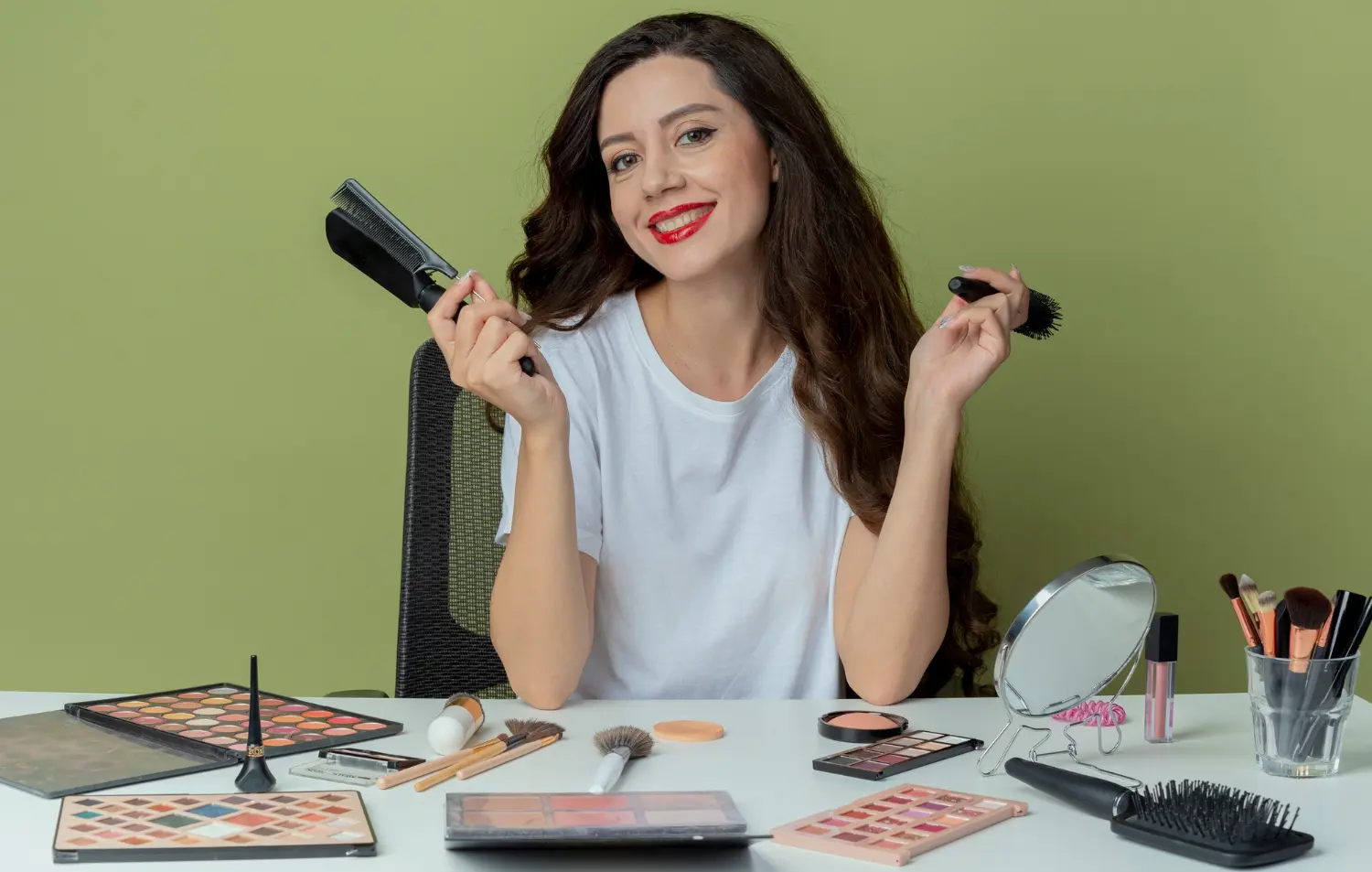
Brushes and sponges do more to affect your final result than almost anything else in your kit. The shape, density, and fibre type of a brush changes how a product sits on the skin. Creamy and liquid formulas blend best with synthetic fibres, while powders can work well with either natural or high-quality synthetic bristles.
In fact, modern synthetic brushes now blend liquid and cream products about as effectively as natural hair, with the added benefit of being easier to disinfect. This is a meaningful plus when you’re working on multiple clients a day.
| Brush | Best For | Key Feature |
| Foundation brush | Even liquid/cream coverage | Dense, flat-top or rounded kabuki shape |
| Stippling brush | Airbrushed, blended finish | Duo-fibre bristles |
| Powder/setting brush | Loose or pressed powder | Large, soft, fluffy head |
| Blending brush | Eyeshadow transitions | Medium, tapered, fluffy |
| Shader brush | Packing colour on the lid | Flat, paddle-shaped |
| Angled contour brush | Cheekbone definition | Tapered, angled edge |
| Concealer brush | Under-eye and spot coverage | Small, dense, rounded |
| Lip brush | Precise lip lines | Fine, tapered synthetic |
Buying and maintenance tips:
Choose brushes with securely glued or taped handles so bristles do not shed mid-application. Cruelty-free synthetic sets are a smart, low-maintenance choice, if most of your work involves creams and liquids.
- Wipe brushes down with an alcohol-based spray between clients.
- Set aside time weekly for a deeper wash with a gentle cleanser.
- Always dry them horizontally so water doesn’t seep and loosen the glue.
Sponges and Blenders: For a Seamless Skin Finish
Beauty sponges have become non-negotiable for a natural, skin-like foundation finish. A damp sponge gives sheerer, more blended coverage and noticeably reduces streaking compared to using one dry. This is why most professionals keep theirs soaked in a clean container before every service.
- Teardrop sponges – all-purpose blending across the face.
- Flat-edge sponges – precision work under the eyes and around contours.
- Wedge or mini sponges – detailed areas like the nose and eye corners.
Stick to latex-free hydrophilic foam for better hygiene. Do not forget to wash sponges after every single day of use. Keep up with replacing them monthly if you’re using the brushes professionally on multiple clients.
Master Makeup, Hair & Skincare to Build Your Beauty Identity
Unlock your creative potential with our expert-led Beauty & Wellness course. Build in-demand beauty skills and step confidently into the world of beauty!
Your Beauty Career Starts Here!Precision Applicators and Tools
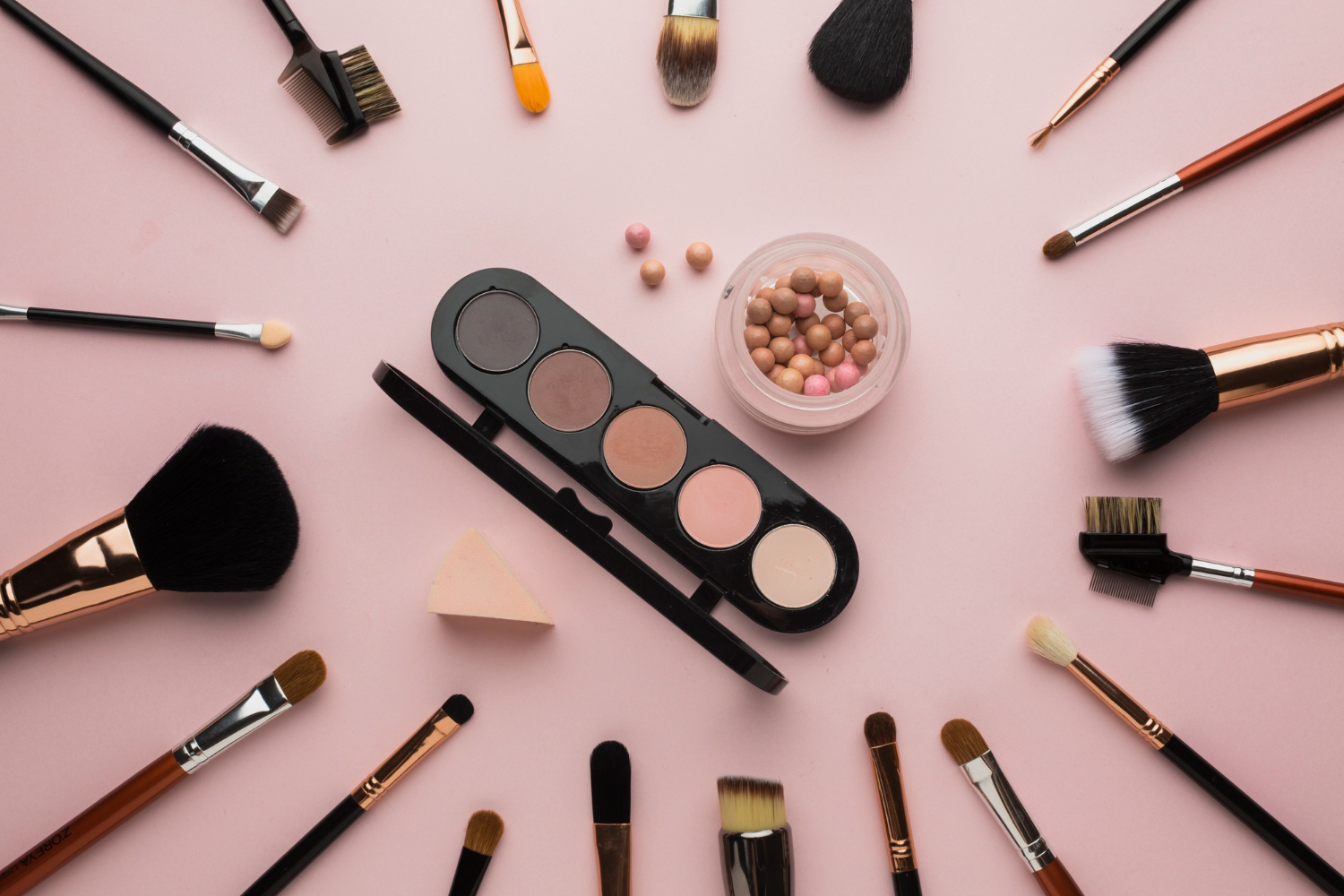
Fine detail work such as curling lashes, shaping brows, trimming calls for its own set of precision tools is where hygiene discipline matters the most. This primarily because many of these items come into contact with sensitive areas like the eyes and lips.
Stainless-steel, medical-grade tools are worth the investment because they are durable and can be properly sterilised. Single-use disposables, on the other hand, are the safer choice for anything touching mucous membranes.
Salons that enforce strict instrument sterilisation consistently report fewer cross-contamination issues. Just as importantly, clients notice and trust visibly hygienic setups more.
Your precision kit should include:
- slanted tweezers for shaping and pointed ones for finer work
- a rubber-tipped lash applicator
- an eyelash curler with silicone pads replaced regularly
- disposable mascara wands
- lip spatulas
- cotton buds that are used once and discarded
Palettes and Mixing Tools
Non-porous palettes and stainless-steel spatulas work well to mix custom shades and decant products without any direct contact. This can be a small habit that makes a big hygiene difference over a long line of client services.
Glass, ceramic, or stainless surfaces resist staining and are easy to sanitise. This really matters when you are matching foundation across a wide range of skin tones in a single day.
A solid setup includes
- a metal or ceramic foundation/concealer palette with labelled shade wells
- a magnetic eyeshadow palette you can refill and customize
- a glass or porcelain mixing palette paired with stainless spatulas for blending colours or activating cream products
Hygiene, Storage, and Organisation
Sanitation is a non-negotiable factor in the list. Visible hygiene routines don’t just prevent infections. They are one of the fastest ways to build client trust. This is especially true for repeat and bridal bookings where clients are researching artists carefully beforehand.
| Item | Use | Frequency |
| 70%+ isopropyl alcohol | Spray or soak metal tools and surfaces | After every client |
| Brush cleanser | Deep-wash brushes | Weekly (quick clean between clients) |
| Disposable applicators | Single-use wands, spatulas | Per client |
| Brush guards & cases | Protect bristles during storage/travel | Always |
| UV steriliser (optional) | Extra sanitation for small metal tools | Per salon protocol |
Master Makeup, Hair & Skincare to Build Your Beauty Identity
Unlock your creative potential with our expert-led Beauty & Wellness course. Build in-demand beauty skills and step confidently into the world of beauty!
Your Beauty Career Starts Here!Lighting and Mirrors: Getting Colour Right
Bad lighting is one of the most common reasons that makes the makeup look off once a client steps outside. A neutral, daylight-simulating light source is essential for judging skin tone, coverage, and texture accurately. This is backed by genuine colour science and not just artist preference.
Across lighting guides and manufacturer specs, the consistent sweet spot for makeup application sits between roughly 4800K and 5500K on the Kelvin scale. This can be paired with a CRI (Color Rendering Index) of 90 or above.
A ring light or LED panel with adjustable colour temperature in this range. In addition, a large vanity mirror and a magnified 1:1 mirror for close-up checks, covers most professional needs. This includes on-location bridal work, where portable LED kits are especially useful.
Specialty Tools for Premium Services
Tools like airbrush systems, HD brushes, and brow-lamination kits open the door to premium, higher-paying services, once your core kit is solid. Bridal, editorial, and film clients in particular often expect camera-ready finishes and these tools can deliver it consistently.
An airbrush setup that includes compressor, cups, and airbrush-rated foundations with adjustable PSI, and dense, low-shed HD brushes are the most common additions. Brow lamination or microblading should only be offered once you are properly certified for them.
Building Your Kit: A Tiered Buying Guide
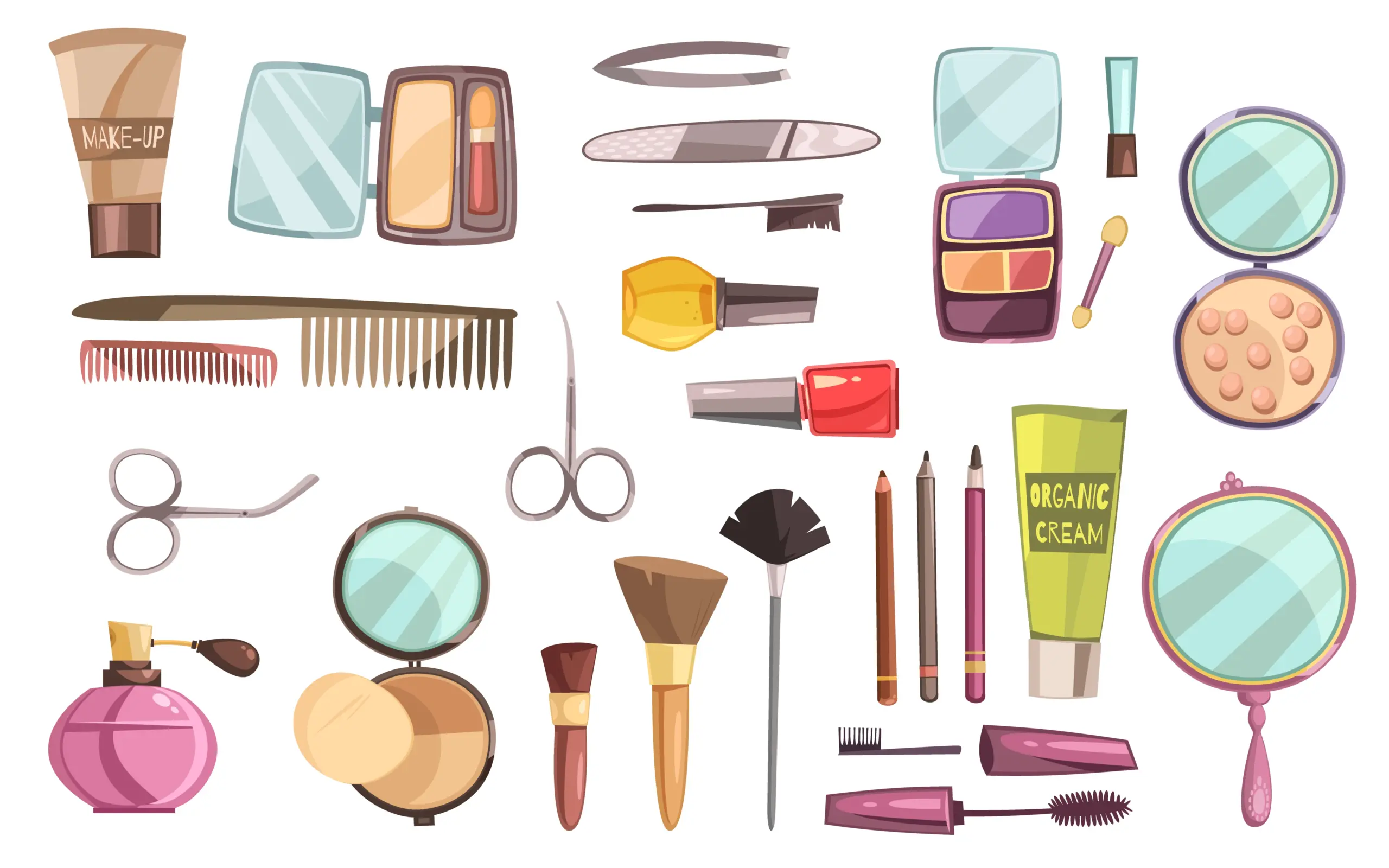
You don’t need every tool on day one. Building in tiers – starter, professional, and premium – helps you prioritise essentials without overspending. Mid-range professional tools tend to outlast cheaper ones by a wide enough margin to be worth the extra upfront cost.
-
Starter:
A 10 to 15-piece synthetic brush set, 2 to 3 sponges, basic tweezers, and a budget LED mirror.
-
Professional:
Branded synthetic brushes with a few natural-hair options, multiple sponges, stainless tools, a magnetic palette, and a proper ring light.
-
Premium:
An airbrush system, full HD brush set, UV steriliser, and a complete organised pro case.
Master Advanced Skincare, Makeup, Hair, and Salon Management. Enrol Now!
Conclusion
A well-built makeup kit isn’t about owning a lot of tools. It is about owning the “right” ones, and knowing how to keep them clean and functional through your work journey.
Start with quality brushes and sponges. You can then back them up with proper sanitation habits. Also get your lighting right. Keep adding specialty tools as your client base and skillset grow.
As a beautician, you should treat your kit as a long-term investment rather than a series of quick, cheap replacements. This will help you see faster application times, better finishes, and stronger client trust consistently over time. This kind of a reputation, more than any single tool, is what keeps clients coming back.
|
RELATED POSTS |
|
| How to Become a Makeup Artist | |
| Bridal Makeup Essentials for Aspiring Beauticians | |
| Benefits of Regular Skin Care Treatments | |
Master Makeup, Hair & Skincare to Build Your Beauty Identity
Unlock your creative potential with our expert-led Beauty & Wellness course. Build in-demand beauty skills and step confidently into the world of beauty!
Your Beauty Career Starts Here!Frequently Asked Questions
Are synthetic brushes suitable for powder products?
Yes. High-quality synthetic brushes now perform well with powders and are considerably easier to sanitise than natural-hair alternatives.
What's the ideal lighting setup for makeup application?
A neutral light source between 4800K and 5500K with a CRI of 90 or higher most closely mimics natural daylight and gives the most accurate colour reading.
What's the difference between natural and synthetic brushes?
Natural-hair brushes hold and blend powder well, but synthetic brushes now perform comparably for most products while being easier to clean and more affordable.
How long does a professional airbrush kit last?
With proper maintenance, the compressor and gun can last several years, though consumables like gaskets and filters need occasional replacing.
What's the most important hygiene habit for a beautician?
Sanitising every tool with 70%+ isopropyl alcohol between clients is the single most important habit for preventing cross-contamination.
Do I need an airbrush kit as a beginner?
Not necessarily. Airbrush systems are best added once you’re taking on bridal, editorial, or film clients who specifically need that finish.
What Kelvin range should I avoid for makeup lighting?
Avoid lighting below 4000K (too yellow, causes over-application of concealer) and above 6000K (too blue, can make skin look pale or dull).
What tools are essential for bridal makeup artists specifically?
Long-wear foundation brushes, a reliable setting spray applicator, portable LED lighting, and a well-stocked touch-up kit are especially important for full-day bridal work.