Table of Contents
Cardio exercise is frequently the first thing people should do when they’re attempting to reduce weight. Aerobic exercises such as running, cycling, swimming, brisk walking and dance can increase energy expenditure and promote general fitness. One technique to lose weight is to undertake cardiac activity. The other strategy to reduce weight is to not do cardio.
The bottom line to losing weight is creating a calorie deficit that is sustainable over the long term. Over time, this implies that your body has to burn more energy than it gets from meals. Physical activity can be effective in obtaining that deficit, but nutrition, daily mobility, sleep, recovery and consistency also play a considerable factor.
A comprehensive strategy that involves strength training, cardiovascular exercise, and a great diet could be quite effective because it helps to achieve fat loss while also helping to preserve muscle and fitness.
Become a General Fitness Trainer and turn your passion into a Profession!
Key Takeaways:
- You don’t need cardio to lose weight.
- Aerobic exercise can be good for your heart, stamina and endurance.
- Strength training has diverse benefits and can be a complement to cardio.
- Regular daily movement can help you stay in motion.
- Cardio could be as basic as walking, cycling, swimming or dancing.
- In addition to this, healthy food, sleep and regular lifestyle practices are also necessary to maintain general health.
Is Cardio Necessary for Weight Loss?

Cardiovascular exercise is not necessary for weight loss, contrary to popular belief. Nevertheless, it is merely one component of a healthy lifestyle that can help improve one’s heart health and increase the quantity of physical activity that one participates in. Healthy weight management and general health can also be maintained by engaging in regular physical activity, strength training, having a balanced diet, obtaining appropriate sleep, and maintaining healthy behaviors. These are all things that can be done.
How Does Cardio Helps with Weight Loss?
Continuous movement that raises your heart rate and increases the amount of energy that your body expends is what we mean when we talk about cardiovascular cardio workout. Depending on the activity, duration, and intensity of the cardio workout, it has the potential to add a sizeable number of calories to the total number of calories that you burn in a day.
1. Cardiovascular exercise increases the amount of energy that is consumed
Increasing the amount of energy that you burn is one of the most straightforward ways that cardio can assist you in managing your weight.
You can increase your level of physical activity by, for instance, walking briskly for the same amount of time during the same period of time as sitting. A calorie deficit can be achieved by the combination of this additional activity and good dietary decision-making.
Depending on a variety of circumstances, including the following, the actual quantity of calories burned can vary quite a bit:
- Size of the body
- The level of physical exertion
- Level of fitness
- Activity category
- Individual metabolic rate
In light of this, the calorie-burning estimations that your fitness monitor or workout machine provides have to be regarded as approximations rather than precise calculations.
2. It can make it easier to maintain a calorie deficit in your consumption.
Eating, working out, or doing both can help you achieve this goal.
Individuals have the option of making minor dietary alterations and increasing their level of physical activity rather than significantly reducing the amount of food they consume. This has the potential to make the overall approach more approachable for certain individuals.
An example of a routine might comprise the following:
a healthy diet, regular walking, strength training, and cardio exercise on occasion, and a balanced diet
as an alternative to relying solely on one’s restrictive eating habits.
3. Cardio enhances the fitness of the cardiovascular system
There is more to exercise than merely a means of shedding extra pounds.
Aerobic exercise has the potential to improve cardiovascular endurance and make activities related to daily life easier to do. Walking, cycling, swimming, and jogging are all activities that can be used to gradually build up one’s stamina.
Additionally, it may make it simpler to engage in other types of physical activities.
4. Cardiovascular exercise provides a more versatile range of options
If you want to get your cardio in, working out on the treadmill for an hour is not necessary.
You are able to select activities that correspond to your interests and level of physical fitness. If you don’t enjoy jogging, you could enjoy other forms of physical activity such as cycling, swimming, dancing, hiking, or even brisk strolling.
There is the potential for this variant to make a workout regimen more enjoyable and easier to stick to.
5. Physical activity might be beneficial to your overall health
Aerobic exercise on a regular basis has been linked to a range of health benefits, including improvements in cardiovascular fitness and physical functioning, in addition to the ability to control one’s body weight.
Benefits of Cardio Exercises
Including cardiovascular activities in a lifestyle that is both healthy and active is helpful because of the benefits that these activities provide. Not only do they boost your cardiovascular fitness and build your endurance, but they also help you maintain a physically active lifestyle. There are a variety of activities that can be conducted on a regular basis to increase overall well-being and to facilitate mobility in everyday life. Some examples of these activities include walking, cycling, swimming, and dancing.
There are many key benefits associated with cardio, some of which are as follows:
- Protects the lungs and the heart from any potential infections
- Provides the opportunity for enhanced endurance and stamina
- Makes it simpler to participate in the physical tasks I do on a regular basis
- Increases the amount of energy that is available
- The ability to improve one’s mood and reduce stress simultaneously
- Assists in the execution of ordinary duties and makes it possible to pursue an active lifestyle in a manner that is enjoyable
Also read: How Often Should You Do Cardio Exercise?
Strength Training vs Cardio
Both aerobic activity and strength training are good forms of exercise, albeit the benefits each brings are different. Strength training helps increase muscle strength and supports healthy bones . Cardiovascular exercise, meanwhile, is mainly concerned with improving the fitness of the heart and lungs. A well-rounded training routine can involve both sorts of physical activity.
| Strength Training | Cardio |
|---|---|
| Improves muscular strength | Enhances cardiovascular fitness |
| Builds stronger bones | Increases stamina and endurance |
| Squats and other resistance workouts are included in this series of exercises. | Including activities such as walking, cycling, swimming, and dancing |
| Aids in the development of physical strength | Aids in the enhancement of overall activity |
| Places an emphasis on muscularity and power | Focuses on conditioning the heart and lungs |
Turn Your Passion for Fitness into a Profession
Learn practical skills, get certified, and step into the growing fitness industry with confidence.
Join the CourseCan You Lose Weight Without Cardio?
Yes, it is possible to lose weight without engaging in conventional cardiovascular exercise.
Maintaining a calorie deficit that is reasonable over an extended period of time is the most critical factor.
For instance, a person who engages in resistance training and maintains an active lifestyle throughout the day may be able to lose weight without physically engaging in activities such as jogging, cycling, or completing aerobic workouts.
Boost your regular physical activity
Physical activity can take many forms, and exercise is just one of them.
Your everyday mobility can be increased by the following:
Move around more.
Taking the stairs when it is practical to do so
Interacting with games for recreation
Carrying out chores around the house
Having regular breaks for physical activity
Instead than continually relying on alternative modes of transportation, walking short distances
Other names for this kind of activity include non-exercise activity thermogenesis (NEAT), which is an abbreviation.
Pay attention to the diet
The amount of food that is consumed has a significant impact on total body weight.
An eating habit that is sustainable can make an emphasis on:
- Fruits and vegetables
- Whole grains
- Foods that are high in protein
- Beans and other legumes
- Fats that come from healthy sources
- Sufficient amounts of fluids
Sizes of portions and total calorie consumption are other important factors.
On the other hand, restricting one’s calorie intake to an extreme degree is not a wise technique. Diets that are extremely restrictive can be challenging to adhere to, and these diets may leave you feeling exhausted or depleted.
Strength training should be included
The practice of strength training can assist you in constructing or preserving muscle while also enhancing your strength and physical function.
It is not necessary for a weight loss program to center on cardiovascular exercise. The foundation of an effective program can be formed by incorporating resistance workouts, good diet, and frequent mobility into the regimen.
Remember that the process of losing weight is not completely linear
The fluctuations in body weight that occur naturally are caused by a variety of factors, including hydration, food intake, digestion, and other short-term shifting situations.
Consequently, changes that occur on a daily basis might not necessarily be indicative of changes in body fat.
It is more beneficial to look at trends over a longer period of time rather than becoming concerned about specific weigh-ins.
Also read: 10 Signs of Healthy Weight Loss Progress To Look Out For
Best Exercise Plan for Fat Loss
Look for a full fitness program that can assist you with your overall health and not simply fat loss. A general plan can include:
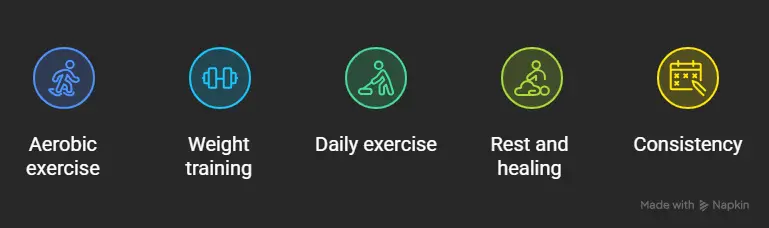
- Aerobic exercise: walking, cycling, swimming or other activities you enjoy
- Weight training: Age specific routines for various muscle groups
- Daily exercise: housework, sports, hard hobbies or walking
- Rest and healing: Give your body time to recuperate
- Consistency: Select things that you like and can do regularly
The goal should not be to try to lose body fat but to gain healthy growth, strength, fitness and great habits in teenage years. The correct plan of activities can be decided with the help of a parent, doctor or other certified health professional.
Become a General Fitness Trainer and turn your passion into a Profession!
Conclusion
In spite of the fact that cardiovascular activity is not essential for weight loss, it might be useful when it is incorporated into a regular exercise routine. The maintenance of an active lifestyle and the enhancement of cardiovascular fitness can be accomplished through participation in activities such as walking, cycling, swimming, and dancing. The benefits to one’s health that can be gained from engaging in daily physical activity and exercises that emphasize the development of strength are substantial. Instead of focusing just on weight loss, the most essential thing is to choose safe and enjoyable activities and to maintain positive behaviors on a consistent basis. This is more important than focusing solely on weight loss.
| Related Articles | |
| Importance of Hydration in Fitness | Keto vs Balanced Diet: Which Is Better? |
Turn Your Passion for Fitness into a Profession
Learn practical skills, get certified, and step into the growing fitness industry with confidence.
Join the CourseFrequently Asked Questions
Is walking considered cardio?
Yes. Brisk walking can be a form of moderate-intensity aerobic activity.
Is strength training better than cardio?
Neither is universally better. They provide different benefits, and a combination can support overall fitness.
Can I stay fit without doing cardio?
Yes. Strength exercises, sports, walking, and regular daily movement can all contribute to fitness.
How often should I exercise?
The appropriate amount depends on your age, health, and fitness level. For teenagers, regular age-appropriate physical activity is generally encouraged rather than following a weight-loss-focused exercise program.
Does cardio help burn calories?
Yes. Cardio uses energy during physical activity and can contribute to overall energy expenditure.