Table of Contents
Introduction
The sun usually damage the skin. Sunscreen protects it. SPF tells how well a sunscreen protects one from sunburn. Common options are SPF 30, SPF 50, and SPF 50+.
Choosing an SPF is confusing. Many options are available. Each option offers different level of protection. The difference are easy to understand. Regular sunscreen use protects the skin.
Master Beauty & Salon Skills. Enrol Now!
What Does SPF Mean?
SPF is Sun Protection Factor. Protection against UVB rays is measured.
- Sunburn is mainly caused by UVB rays.
- Skin cells can be damaged.
- Skin cancer risk increase over time.
- Sunscreen products are compared using SPF.
How Are SPF Ratings Measured?
SPF ratings are determined through controlled testing. Skin redness is measured after UV exposure.
– During testing.
- Protected skin is compared with unprotected skin.
- UV exposure is carefully measured.
- Results are used to determine SPF.
- Correct application is assumed.
– During everyday use.
- Protection can be reduced by underapplication.
- Coverage can be affected by sweating.
- Sunscreen can be removed through rubbing.
- Missed areas can remain exposed.
What Are UVA & UVB Rays?
They are found in sunlight. Different effects are caused by each type.
- UVA rays.
- Deeper skin layers are reached.
- Accelerate ageing of premature skin.
- Wrinkles become more visible.
- Dark spots can develop.
- UVB rays.
- Sunburn is mainly caused.
- Skin cells can be damaged.
- DNA damage can occur.
- Skin cancer risk can increase.
Why should both be considered?
- Both types affect skin health.
- UVB protection is measured by SPF.
- UVA protection should also be provided.
- Broad-spectrum sunscreen covers both.
What Does Broad-Spectrum Sunscreen Mean?
Protection against UVA and UVB rays is provided.
– SPF rating.
- UVB protection is indicated.
- Greater protection is generally offered by higher ratings.
- Correct application is assumed.
- Product labels should be checked.
– Broad-spectrum label.
- UVA and UVB coverage is indicated.
- Different types of UV damage are addressed.
- More complete protection is supported.
- Daily use is encouraged.
– Water resistance.
- Protection can be maintained during swimming.
- Sweating can also be accommodated.
- Complete waterproofing is not provided.
- Reapplication remains necessary.
– Expiry date.
- Product suitability can be checked.
- Reliability may decrease after expiry.
- Heat can affect product quality.
- Storage instructions to be followed.
What Does SPF 50+ Mean?
It indicates a higher protection category. Exact standards vary between markets.
It may be preferred when:
- Strong sunlight is expected.
- Outdoor activities are planned.
- Skin burns easily.
- Frequent sun exposure occurs.
Additional protection can be provided. Complete protection not guaranteed.
Master Makeup, Hair & Skincare to Build Your Beauty Identity
Unlock your creative potential with our expert-led Beauty & Wellness course. Build in-demand beauty skills and step confidently into the world of beauty!
Your Beauty Career Starts Here!How Does Sunscreen SPF Work?
The UV radiation reaching skin is reduced.
– Absorption.
- UV rays are absorbed by many filters.
- Energy is released through different processes.
- UV exposure is thereby reduced.
- Various wavelengths are absorbed.
– Scattering and reflection.
- Some radiation can be scattered.
- Some radiation can be reflected.
- Effects change with ingredients.
- Absorption remains important for many filters.
– Combined filters.
- Different ingredients are combined.
- Broader coverage can be achieved.
- UVA & UVB protection are provided.
- Correct application remains essential.
Which Ingredients Protect the Skin?
Two groups of sunscreen filters are commonly used.
- Mineral filters.
- Zinc oxide is commonly included.
- Titanium dioxide is an alternative.
- UV radiation is mainly absorbed.
- Some radiation can also be scattered or reflected.
- Organic filters.
- These are often called chemical filters.
- UV radiation is absorbed by their molecules.
- Several filters may be combined.
- Lightweight formulas can be selected.
Choosing a suitable formula.
- Skin sensitivity should be considered.
- Product texture should be checked.
- A comfortable finish should be preferred.
- Broad-spectrum protection to be selected.
Why Does Correct Application Matter?
Insufficient application reduces protection. Missed areas can remain exposed.
– Apply enough.
- All exposed skin should be covered.
- Very thin layers should be avoided.
- Follow product instruction.
- Sunscreen to be spread evenly.
– Cover every area.
- The ears and neck should be covered.
- Hands and feet should be remembered.
- The hairline should be checked.
- Other exposed areas should be covered.
– Apply correctly.
- Product directions should be followed.
- Apply sunscreen before outdoor exposure.
- Daily application should be maintained.
- Reapplication should be planned.
– Reapply when needed.
- Instructions has to be followed.
- Sunscreen need reapplication after swimming.
- Reapply after heavy sweating.
- Reapply after towel drying as well.
Can SPF Replace Other Sun Protection Methods?
Extra protection can be provided through simple habits.
– Wear a hat.
- The face can be shaded.
- The scalp can be protected.
- A wide brim can be chosen.
- Outdoor use is recommended.
– Use sunglasses.
- The eyes can be protected.
- Surrounding skin can be covered.
- UV-protective lenses should be chosen.
- Bright sunlight can be managed.
– Seek shade.
- Direct sunlight exposure can be reduced.
- Outdoor breaks can be taken.
- Shaded areas can be used.
- Prolonged exposure can be limited.
– Wear protective clothing.
- More skin can be covered.
- Suitable outdoor clothing can be chosen.
- Tightly woven fabrics can be preferred.
- Sunscreen can be used alongside clothing.
SPF 30 vs SPF 50 vs SPF 50+
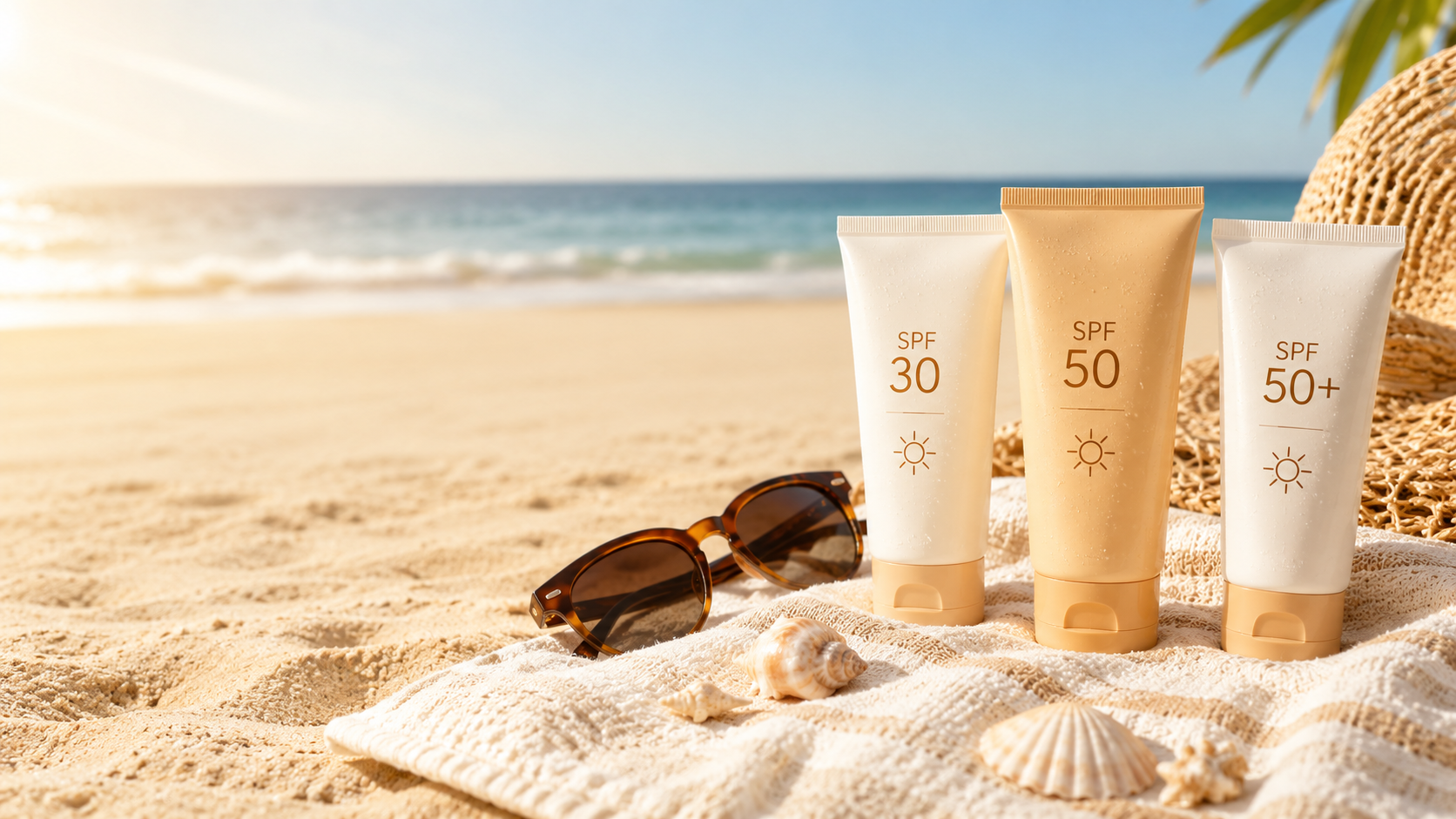
Different levels of UVB protection are provided. The percentage difference may appear small.
How Much UVB Protection Does Each SPF Provide?
These figures are approximate laboratory estimates.
| SPF Rating | UVB Rays Filtered | UVB Rays Reaching Skin |
| SPF 30 | 97% | 3% |
| SPF 50 | 98% | 2% |
| SPF 50+ | Higher tested category | Depends on rating |
These estimates assume correct application. Lower protection may be achieved in everyday use.
What Should You Know About SPF 30?
Strong everyday UVB protection is provided.
- It may suit limited outdoor exposure.
- Indoor workers may prefer it.
- Short daily commutes can be covered.
- A comfortable formula should be chosen.
For better results:
- Broad-spectrum protection should be selected.
- Enough sunscreen should be applied.
- Exposed areas should be covered.
- Reapplication instructions should be followed.
When Should SPF 50 Be Chosen?
Slightly higher UVB protection is provided.
- Supports longer outdoor activities.
- Manages strong sun exposure.
- Accommodates outdoor sports.
- Covers Sunny-weather travel .
For better protection:
- Broad-spectrum coverage should be selected.
- Sunscreen should be applied generously.
- Exposed skin should be covered.
- Reapplication should be maintained.
What Makes SPF 50+ Different?
A higher tested protection category is indicated.
– Broad-spectrum coverage.
- UVA protection should be included.
- UVB protection should be confirmed.
- Product labels should be checked.
- Outdoor activities should be considered.
– Water resistance.
- Swimming needs should be considered.
- Sweating should be accounted for.
- Reapplication instructions should be followed.
- Sunscreen should be reapplied after towel drying.
– Correct application.
- Enough sunscreen should be used.
- Every exposed area should be covered.
- Reapplication should not be skipped.
- Other sun protection methods should be combined.
Additional protection can be offered by higher SPF. Effective protection still depends on correct application.
Which SPF Is Best for Your Skin?
The right SPF should be chosen carefully. Daily activities should also be considered. Skin type should be considered too. A comfortable sunscreen should be selected. Regular use should be encouraged.
Which SPF Should Be Used Daily?
Different SPF options can be chosen for different activities.
– For everyday activities.
- SPF 30 can provide good protection.
- Broad-spectrum sunscreen should be chosen.
- Daily application should be maintained.
- Exposed skin should be covered.
- Lightweight formulas can be preferred.
- Sun protection should not be skipped.
– For outdoor activities.
- SPF 50 may be preferred.
- Higher UVB protection can be provided.
- Water-resistant formulas may be considered.
- Protective clothing should also be worn.
- Reapplication should be maintained.
- Direct sun exposure should be limited.
– Under strong sunlight.
- Broad-spectrum sunscreen should be applied.
- Higher SPF protection may be preferred.
- Shade should be used whenever possible.
- Direct sunlight should be limited.
- Protective clothing should also be worn.
- Sunglasses should be used outdoors.
Which Sunscreen Suits Different Skin Types?
Different formulas are available for different skin types.
– For oily skin.
- Lightweight formulas can be chosen.
- Non-comedogenic products may be preferred.
- Heavy textures can be avoided.
- Greasy finishes may be avoided.
- Matte finishes may be preferred.
- Comfortable formulas should be selected.
– For dry skin.
- Moisturising formulas can be considered.
- Moisture can be attracted by glycerin.
- Skin dryness can be reduced.
- Gentle products may be preferred.
- Apply Moisturiser.
- Skin comfort need be prioritised.
– On sensitive skin.
- Fragrance-free formulas may be chosen.
- Mineral sunscreen can be considered.
- Zinc oxide is a common mineral filter.
- Titanium dioxide is an alternative.
- Avoid strong fragrances.
- Monitor skin reactions.
– For combination skin.
- Lightweight moisturising formulas can be used.
- Heavy textures may be avoided.
- Dry areas should be moisturised.
- Oily areas should remain comfortable.
- Non-comedogenic products may be preferred.
- Balanced formulas can be selected.
Is SPF 50 Always Better Than SPF 30?
Slightly higher UVB protection is provided by SPF 50.
- About 97% of UVB rays are filtered by SPF 30.
- About 98% of UVB rays are filtered by SPF 50.
- Some UVB rays can still reach the skin.
- Correct application should always be maintained.
- Reapplication should never be skipped.
- Broad-spectrum protection should always be chosen.
Good sun habits should not be replaced by higher SPF. Shade and protective clothing should also be used.
Master Makeup, Hair & Skincare to Build Your Beauty Identity
Unlock your creative potential with our expert-led Beauty & Wellness course. Build in-demand beauty skills and step confidently into the world of beauty!
Your Beauty Career Starts Here!How Much Sunscreen Should Be Applied?
Enough sunscreen should be applied for proper protection. Reduced protection can result from using too little.
How Much Sunscreen Is Needed?
A generous, even layer should be applied. All exposed areas should be covered.
– For the face.
- The forehead should be covered.
- The nose and cheeks should be protected.
- The chin should not be missed.
- The ears should also be covered.
- The hairline should be checked.
- The eye area should be treated carefully.
– Across the neck.
- The front should be covered.
- The back should also be protected.
- Exposed sides should not be missed.
- Sunscreen should be spread evenly.
- The hairline should be checked.
- Reapplication should be maintained outdoors.
– For the body.
- All exposed areas should be covered.
- Arms and legs should be protected.
- The hands should not be forgotten.
- The feet should also be covered.
- The shoulders should receive enough protection.
- Missed areas should be checked carefully.
Product instructions should always be followed. Thin, uneven application should be avoided.
When Should Sunscreen Be Applied?
Sunscreen should be applied before sun exposure.
- Product instructions should be checked first.
- All exposed skin should be covered.
- Missed areas should be checked carefully.
- Sunscreen should also be used on cloudy days.
- Daily application should be maintained.
- Enough time should be allowed before sun exposure.
Clouds do not block all UV rays. Skin can still be exposed to UV radiation.
What Happens When Too Little Sunscreen Is Used?
Reduced protection can result from insufficient application.
- Sunburn risk may be increased.
- Skin damage may occur.
- Uneven protection may be received.
- Dark spots may become more noticeable.
- Long-term skin damage may be encouraged.
- The labelled SPF may not be achieved.
Enough sunscreen should always be applied. Even coverage should be checked before going outside.
Master Advanced Skincare, Makeup, Hair, and Salon Management. Enrol Now!
How Often Should Sunscreen Be Reapplied?
Sunscreen should usually be reapplied every two hours. Protection can be reduced by swimming and sweating. Sunscreen can also be removed by towel drying.
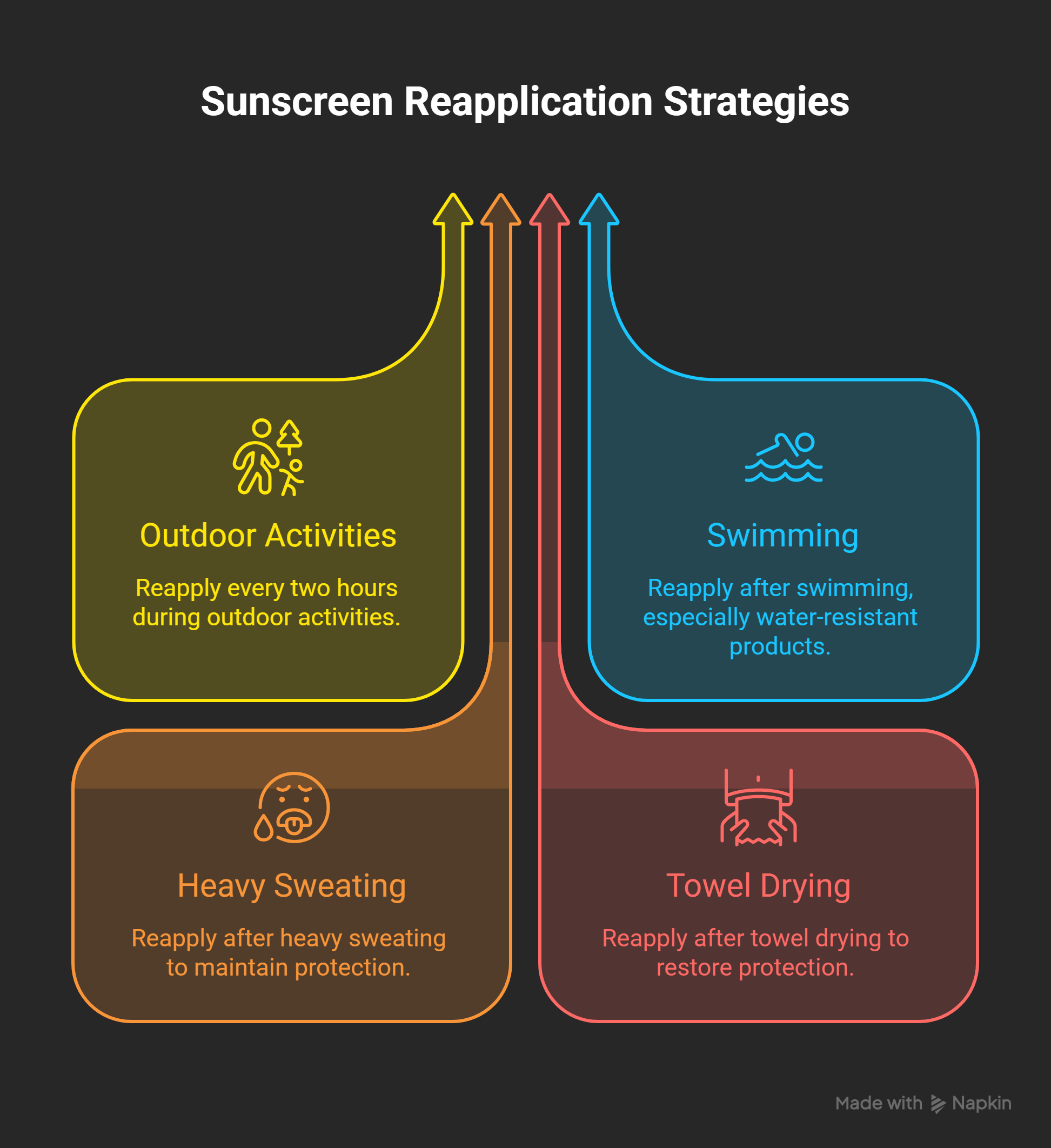
When Should Sunscreen Be Reapplied?
Regular reapplication should be maintained outdoors.
– During outdoor activities.
- Sunscreen should be reapplied every two hours.
- Exposed areas should be covered again.
- Missed spots should be checked.
- Product instructions should be followed.
- Protection should be maintained.
- Extra application may be needed after sweating.
– After swimming.
- Sunscreen should be reapplied.
- Water-resistant products may be preferred.
- The product label should be checked.
- All exposed skin should be covered.
- Protection should be restored.
- Label instructions should be followed.
– Following heavy sweating.
- Sunscreen should be applied again.
- Protection may have been reduced.
- Exposed areas should be checked.
- Even coverage should be maintained.
- Product instructions should be followed.
- Missed areas should be covered.
– After towel drying.
- Sunscreen should be reapplied.
- Some product may have been removed.
- Exposed areas should be covered again.
- Missed spots should be checked.
- Protection should be restored.
- Product instructions should be followed.
Water-resistant sunscreen should not be considered waterproof. Protection can still decrease during water activities.
Is Sunscreen Needed on Cloudy Days?
Sunscreen should still be used on cloudy days.
- UV rays can pass through clouds.
- Skin can be exposed without strong sunlight.
- Broad-spectrum sunscreen should be applied.
- Exposed skin should be covered.
- Reapplication should not be forgotten.
- Protective clothing should also be considered.
Sun protection should not be determined by weather alone.
Can Other Methods Improve Sun Protection?
Extra protection should be included in daily routines. Better protection can be achieved through combined methods.
How Can Clothing Help Protect the Skin?
Protective clothing can reduce direct sun exposure.
- Exposed skin can be covered by long sleeves.
- Protection can be improved by tightly woven fabrics.
- UV-protective clothing can also be considered.
- Lightweight fabrics may be preferred for comfort.
- Additional coverage can be provided by hats.
- Sunscreen should still be applied.
How Can Hats and Sunglasses Help?
Extra protection can be provided by hats and sunglasses.
- The face can be shaded by wide-brimmed hats.
- The ears and neck can also be covered.
- UV-protective sunglasses should be chosen.
- The eyes can be shielded from UV rays.
- Exposed skin should still be protected.
- Sunscreen should still be used.
Why Is Shade Important?
Direct sun exposure can be reduced by shade.
- Shaded areas should be used outdoors.
- Direct sunlight should be limited.
- Extra care should be taken around midday.
- Sunscreen should still be applied.
- Protective clothing should also be worn.
- Sunglasses should be used when needed.
Complete protection cannot be provided by one method. Several methods should be combined daily.
Conclusion
The right SPF should be chosen carefully. Useful protection can be provided by SPF 30. Slightly higher UVB protection is provided by SPF 50. Broad-spectrum sunscreen should always be preferred. Skin type and outdoor activities should be considered. Comfortable formulas should be selected for regular use.
Enough sunscreen should be applied each time. Reapplication should be maintained during outdoor activities. Water exposure should also be considered. Extra protection can be provided by clothing and shade. Skin damage can be reduced through daily sun protection. Better protection can be maintained through consistent habits.
Master Makeup, Hair & Skincare to Build Your Beauty Identity
Unlock your creative potential with our expert-led Beauty & Wellness course. Build in-demand beauty skills and step confidently into the world of beauty!
Your Beauty Career Starts Here!Frequently Asked Questions
What does SPF mean?
SPF stands for Sun Protection Factor. It measures protection against sunburn-causing UVB rays.
Is SPF 30 enough for daily use?
SPF 30 provides good UVB protection. Apply it correctly and reapply regularly.
Is SPF 50 better than SPF 30?
SPF 50 offers slightly higher UVB protection. Both work well when applied properly.
What does SPF 50+ mean?
SPF 50+ indicates protection above the SPF 50 level. The exact rating depends on local standards.
Should sunscreen be applied daily?
Yes, sunscreen helps protect skin from UV damage. Use it when spending time outdoors.
How often should sunscreen be reapplied?
Reapply sunscreen about every two hours outdoors. Reapply sooner after swimming, sweating, or towel drying.
Can sunscreen be used on sensitive skin?
Yes, suitable formulas can help protect sensitive skin. Choose a gentle product that suits the skin.
Should sunscreen be applied indoors?
Apply sunscreen near sunny windows or during daylight exposure. UV exposure can still occur indoors.
Does SPF 50 prevent all sun damage?
No, sunscreen does not block every UV ray. Shade and protective clothing provide extra protection.
How much sunscreen should be applied?
Apply enough to cover all exposed skin evenly. Follow the product instructions and avoid missing areas.