Table of Contents
Key Takeaways
- India crossed the 20% ethanol blending mark in petrol, achieving this target five years before the original 2030 deadline.
- In the ethanol vs petrol price India comparison, E20 is slightly cheaper at the pump but may reduce mileage slightly in older vehicles.
- E85 fuel, with 85% ethanol, is priced lower per litre in select cities, but its real-world running cost can match or exceed petrol due to lower fuel efficiency.
- Flex-fuel vehicles cost more upfront, thus savings depend on how much you drive and where you live.
- The bigger national benefit is reduced crude oil imports and farmer support, while personal savings remain modest for now.
Ace your personal finance journey with Entri’s Personal Finance Online Course. Join Now!
Introduction
1: What is a stock?
If you have filled fuel at a petrol pump recently, you may have noticed something new on the nozzle or the bill: E20. This simply means the petrol going into your car or bike already contains 20% ethanol mixed with regular petrol, and it is part of a nationwide shift India has been building towards for over a decade, now the default fuel across the country.
Naturally, this raises a practical question: does this fuel shift actually save you money, or is it mainly a policy decision that leaves your monthly fuel budget unchanged? This blog breaks down the ethanol vs petrol price India debate in simple terms, so you understand what is really happening at the pump and what it means for your wallet.
More about Ethanol-Blended Petrol
Ethanol is a type of alcohol made mostly from sugarcane, grains like maize and broken rice, and other agricultural sources. By mixing alcohol with petrol, it is sold as blended fuel. The most common version today is E20, where 20% of the fuel is ethanol and the remaining 80% is petrol.
This is the result of the Ethanol Blended Petrol programme, which the government accelerated over the past few years. Reaching 20% blending was originally planned as a 2030 target. However, it was achieved months ahead of schedule in 2025.
From just 1.5% in 2014, ethanol blending in petrol surged to 20% by 2025. To keep it simple, a nearly thirteen-fold increase over eleven years, making it one of the fastest fuel transitions any large country has carried out.
More recently, the government has gone a step further. It has notified new fuel standards for petrol blends containing up to 30% ethanol, with specifications laid down for E22, E25, E27, and E30 blends. This comes at a time when authorities are exploring even higher blends like E85 for specially designed vehicles. In a recent move to promote biofuels in the country, the Government of India exempted the levy of central excise duty on higher ethanol blended petrol between 22-30%.
Why is India Pushing Ethanol So Aggressively?
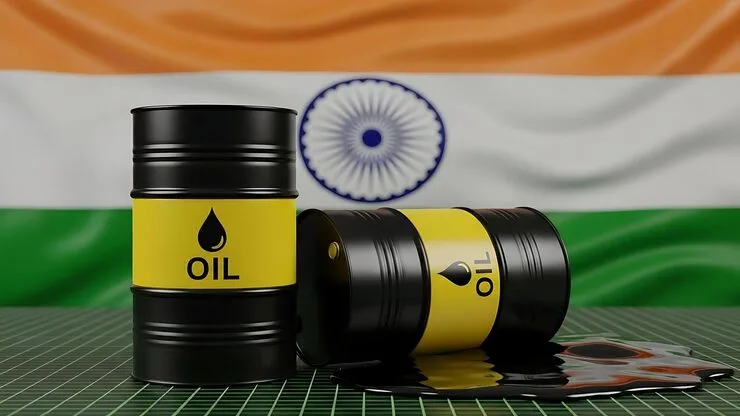
To understand why this matters, India imports the vast majority of its crude oil, so the country’s fuel bill is directly tied to global oil prices and currency rates. Every barrel of oil that India does not need to import is a saving in foreign exchange.
The numbers here are significant. Ethanol production has jumped from 38 crore litres in 2014 to 661.1 crore litres by June 2025. This shift has helped India save approximately ₹1.36 lakh crore in foreign exchange due to the reducing dependence on imported crude oil. Farmers have earned around ₹87,558 crore due to increased demand for feedstocks like sugarcane and grains.
When it comes to distilleries, they have generated close to ₹1,45,930 crore in revenue, supporting domestic manufacturing and employment.
It is also to be noted that the shift to biofuel, apart from saving ₹1.06 trillion ($12 billion) in crude oil imports, also helped get rid of 54.4 million tonnes of carbon emissions in a decade. This figure is equivalent to emissions from 12 million petrol cars a year.
Thus, the ethanol push is not merely about what happens at your local petrol pump. On the other hand, it is also a strategy to reduce import dependence, support rural incomes, and build a domestic fuel ecosystem that does not rely entirely on global crude prices.
Ethanol vs Petrol Price India: What Does It Cost You at the Pump?
Now let’s go through some interesting information for the average consumer. Pure petrol (often called E0) is no longer commonly available in most parts of the country. Hence, the real-world comparison is now between E20 petrol and higher ethanol blends like E85, rather than between ethanol and pure petrol.
During the time E85 fuel was introduced in Delhi, it was priced noticeably lower than standard E20 petrol. For the unknown, the price at which E85 was launched in Delhi was Rs 82.12 per litre. This was about Rs 20 cheaper than regular E20 petrol.
Now the government is planning to expand availability to 500 pumps by the end of 2026 and 5,000 pumps by the end of 2027. On the surface, this looks like a clear win for the consumer. Cheaper fuel per litre should mean lower running costs, right?
Not quite. Ethanol contains around 30% less energy per litre compared to pure petrol. In simple terms, vehicles running on higher ethanol blends often need more fuel to cover the same distance. This is the catch that many people miss when they only look at the price per litre.
According to the Automotive Research Association of India (ARAI), when running on E20 petrol, fuel efficiency drops by 1-6%. To add on, for vehicles running on E100 fuel, there could be a significant drop in mileage and this could go up to 30%, as per industry estimates.
Trusted, concepts to help you grow with confidence. Enroll now and learn to start investing the right way.
This is the most important part of the cost equation as many people get confused. A lower price per litre does not automatically mean a lower cost per kilometre. Real-world testing on a flex-fuel motorcycle shows this clearly. In a controlled mileage test, a flex-fuel two-wheeler achieved 38.1 km per litre on E20 fuel. However, it was only 28.81 km per litre on E85, a drop of around 24.4%. If we calculate running cost, this works out to about Rs 2.68 per km for E20 compared to Rs 2.85 per km for E85. In simple terms, the cheaper fuel actually costs more to ride per kilometre. This single example sums up the whole debate at the consumer level. The fuel that looks cheaper on the price board is not always cheaper in your pocket once mileage differences are factored in. It is worth noting that the impact is much smaller for standard E20 petrol compared to pure petrol, since the blending percentage is lower. The petroleum ministry has clarified that claims of a drastic mileage drop due to E20 are exaggerated. According to the Ministry of Petroleum and Natural Gas, vehicles designed for E10 and calibrated for E20 may see a mileage drop of only 1-2%. However, other vehicles could see a drop of around 3-6%. Field trials by Indian Oil Corporation, the Automotive Research Association of India, and the Society of Indian Automobile Manufacturers found no major negative effects, with experts noting that even legacy vehicles do not show significant drivability or performance issues on E20. A car typically clocking 15 km per litre on petrol still manages around 14.8 km per litre on E20. This is a gap most drivers would hardly notice. Flex-fuel vehicles (FFVs) are designed to run on higher ethanol blends like E85 with hardened fuel lines, ethanol sensors, and recalibrated engine control units. Currently, these vehicles constitute a small segment in India. This segment is mostly limited to a few two-wheeler models. Two practical points matter before choosing one. The first is the upfront cost as flex-fuel vehicles typically cost Rs 6,000 to 8,000 more than standard models for bikes. In the case of cars, it is roughly Rs 50,000 to 80,000 more. Second, there are limited E85 pumps, concentrated mainly in a few cities so far. With mixed mileage results and limited infrastructure, it’s better to take a cautious approach. In case you already own a flex-fuel vehicle, keep a track of your actual mileage. If the cost per kilometre with E85 turns out to be higher than that of E20, stick to standard fuel unless you are quite concerned about emissions. Now let’s take the example of someone buying a brand-new vehicle purely to save money. In that case, the current numbers do not yet make a compelling case unless you live close to an E85 outlet and drive enough to offset the higher purchase price. Do you own a regular petrol car or bike that is not a flex-fuel model? There’s reason to cheer as no special changes are needed. Currently, E20 is the default fuel sold at most petrol pumps across India. Also, the automotive bodies broadly agree it is safe for regular vehicles. Never make the mistake of putting E85 fuel into a standard petrol vehicle, as it is built only for engines designed to handle higher ethanol content. Owners of standard petrol cars should wait for factory-built flex-fuel vehicles or proper conversion kits, though they are not widely available yet. When it comes to daily driving, sticking with the standard E20 petrol available everywhere is without doubt the simplest, most practical choice. It is important to separate two different kinds of savings here. At the national level, the savings are substantial and well documented through reduced crude oil import bills and foreign exchange conservation. At the individual level, the picture is more nuanced: standard E20 petrol offers marginal cost differences with only a small dip in mileage for most vehicles, while higher blends like E85 offer a bigger price cut per litre that can be partly or fully offset by reduced fuel efficiency, depending on your vehicle and driving pattern. This does not mean the ethanol push is not worth it. The environmental benefits, reduced import dependence, and support to farmers are real and valuable outcomes for the country as a whole. However, if you are looking purely at your personal monthly fuel expenses, it is reasonable to expect modest rather than dramatic savings, at least with the current pricing structure and technology. A few simple steps can help you pick the fuel that best suits you. Check the specific fuel your vehicle manufacturer recommends. It’s always better to stick to it as the wrong fuel blend can affect performance and warranty in some cases. Now let’s take the case of those who own or are planning to buy a flex-fuel vehicle. If you are one among them, calculate your actual cost per kilometre rather than relying only on the price per litre displayed at the pump. Also monitor how E85 and other higher blends become more widely available in your city. It is because pricing and access are likely to evolve over the next few years as infrastructure expands. Ace your personal finance journey with Entri’s Personal Finance Online Course. Join Now! India’s fuel shift towards ethanol blending is one of the most ambitious energy transitions the country has undertaken in recent years. The best part is that this initiative has delivered genuine results at the national level, from foreign exchange savings to higher farmer incomes. However, the ethanol vs petrol price India question at a personal level is more layered than a simple “yes, you save money” or “no, you don’t.” Standard E20 petrol, which most Indians are already using without realising it, is largely similar in cost and performance to what came before. Higher blends like E85 offer a tempting lower price per litre. However, when it comes to actual savings, it depends on your vehicle’s efficiency on that fuel and how far you typically drive. The best approach is to stay informed and calculate your own running costs rather than going only by sticker price. Last but not least, also keep a track of how this fast-evolving fuel landscape develops in the months and years ahead. Trusted, concepts to help you grow with confidence. Enroll now and learn to start investing the right way.
Petrol blended with 20% ethanol and 80% regular petrol, now sold at most pumps across India. Yes. Most modern vehicles handle it well, with only a marginal mileage difference. Slightly. E20 may cut mileage by 1-6%, while E85 can cut it by 20-35%. Per litre, yes. But lower efficiency can make the actual cost per kilometre similar or higher. No. E85 is only for factory-built flex-fuel vehicles designed for high ethanol content. It cuts crude oil imports, saves foreign exchange, supports farmers, and lowers emissions. Only if you live near an E85 pump and drive enough to offset its higher purchase price.Stock Market Training Reviewed & Monitored by SEBI Registered Investment Advisor
The Real Catch: Price Per Litre vs Cost Per Kilometre
Should You Buy a Flex-Fuel Vehicle?
What about Standard Petrol Vehicles? Do You Need to Worry?
The Bigger Picture: National Savings vs Personal Savings
Top Tips for Indian Consumers
Conclusion
DISCLAIMER:
Stock Market Training Reviewed & Monitored by SEBI Registered Investment Advisor
Frequently Asked Questions
What is E20 petrol?
Is E20 safe for my car?
Does ethanol fuel reduce mileage?
Is E85 cheaper than E20?
Can I use E85 in a regular petrol car?
Why is India promoting ethanol blending?
Should I buy a flex-fuel vehicle to save money?