Table of Contents
Nykaa built India’s leading beauty platform by educating shoppers before selling to them. They prioritized content with which the creators and stores started earning trust.
Also lifecycle marketing helped drive repeat orders in a high-choice category with discount-heavy preferences.All this lets Nykaa compete on authenticity as well as guidance with consistency.
Join Our Online Next Gen AI Digital Marketing Course & Learn the Fundamentals!
Key Takeaways
- Nykaa treats content as a conversion asset, resolving buying doubts before checkout.
- Trust is its moat: inventory-led, curated brands counter counterfeit fears.
- Stores and digital reinforce each other. 324 outlets across 105 cities drive app loyalty and repeat.
- Owned brands lift the margins. House of Nykaa hit ₹3,176 crore GMV run-rate in FY26, up 49%.
- Marketing efficiency improved. Q1 FY27 costs fell to 14.8% of revenue from 15.2%.
- Prioritize repeat behaviour and LTV over first-order ROAS to validate content-led growth.
What is Nykaa’s Content-to-Commerce Model?
1: What is the primary goal of SEO (Search Engine Optimization)?
Nykaa’s content-to-commerce model uses editorial, video, creators, reviews and guided selling to educate shoppers first and convert them second.
Beauty is a high-involvement category where people worry about shade, skin type and fakes. So, guidance reduces purchase anxiety.
Nykaa’s leadership has described discovery as its “second moat” and it comes after trust. Its creator ecosystem now spans 170,000+ creators producing 2.3 million+ pieces of content a year, per its Q1 FY27 investor presentation.
Understand that Nykaa is an omnichannel retailer, and not a pure D2C brand. Its D2C playbook is most visible in House of Nykaa, its owned-brand arm, and in how it owns the customer relationship end to end.
Become an AI-powered Digital Marketing Expert
Master AI-Driven Digital Marketing: Learn Core Skills and Tools to Lead the Industry!
Explore CourseWhy did Nykaa’s Approach Work in Indian Beauty?
Nykaa’s approach worked as it solved three shopper problems at once:
- fear of counterfeits
- overwhelming choice
- uncertainty about what suits a specific skin or hair type
When Nykaa launched in 2012, organized beauty retail was thin and trust was low. Its assortment has since grown from about 300 brands in 2015 to over 4,200, according to Nykaa’s beauty e-commerce CEO Anchit Nayar.
Lesson for Founders:
Treat content as an acquisition and trust asset, not a support function. Content that answers what a product is, who it is for and how to use it lowers doubt, lifts conversion and sets up routines that drive replenishment.
How does Nykaa’s Content Engine Work?
Nykaa’s content engine layers four assets: editorial, video, community and guided selling. Each one supports a different stage of the buying decision, and together they shorten the path from question to purchase.
Nykaaland 3.0 shows the scale. It is reported to have drawn 30,000+ attendees, 60+ brands and 3,000+ creators, generating 190 million+ reach.
| Content layer | Funnel stage | Business outcome |
| Editorial (Beauty Book) | Awareness, consideration | Long-tail search visibility, trust |
| Video (Nykaa TV, YouTube, reels) | Consideration | Clarity on texture, finish, application |
| Reviews, creators, community | Consideration, conversion | Social proof, higher conversion |
| Guided selling (filters, routines, quizzes) | Conversion, retention | Personalisation, larger baskets |
| Events (Nykaaland) | Awareness, loyalty | Reach, brand affinity |
Nykaa is also adding AI to this layer. Its Virtual Closet tool in fashion has generated 200,000+ avatars since May 2026. Also, the users convert at twice the usual rate.
How does Nykaa’s Funnel Move from Discovery to Repeat Purchase?
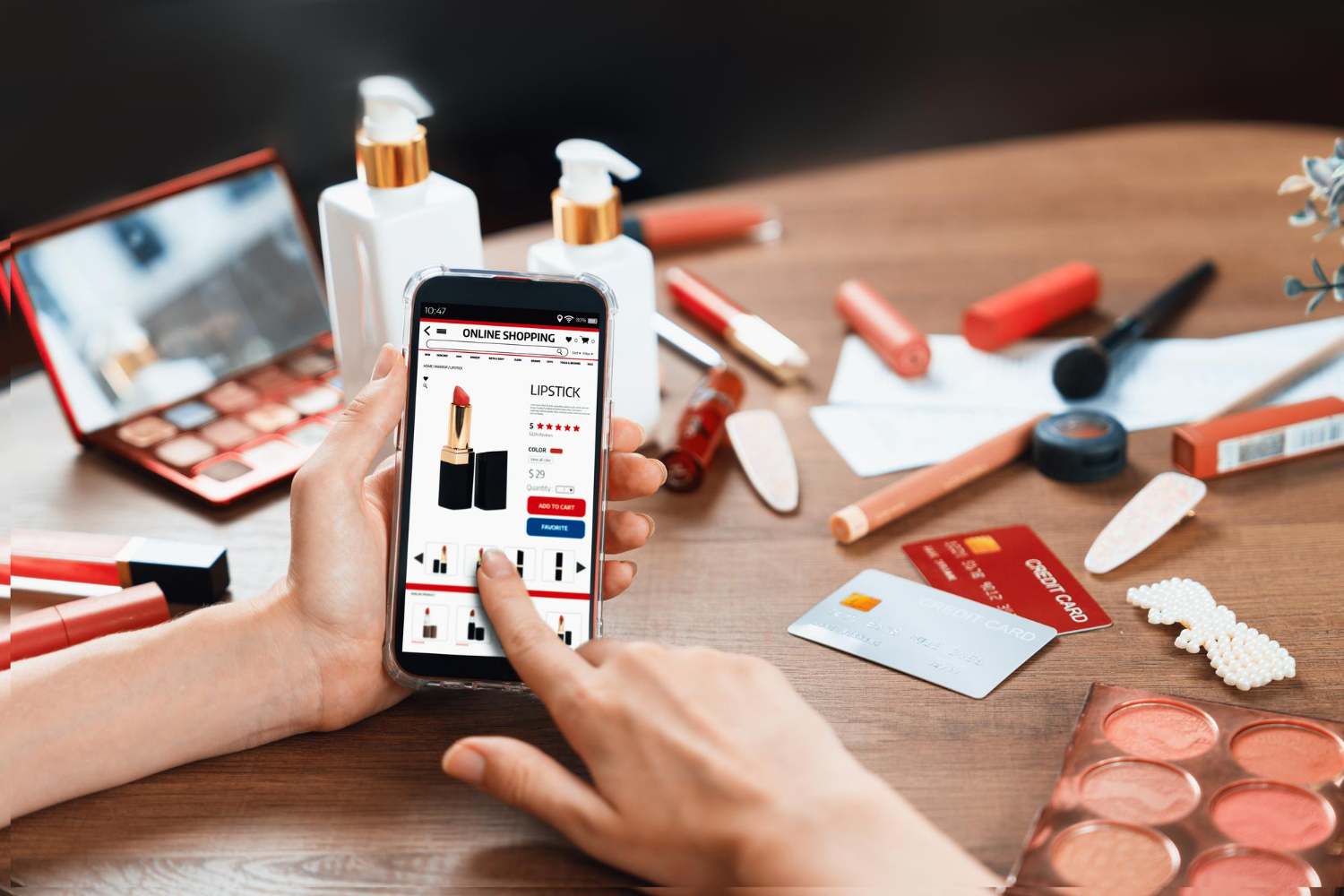
Nykaa’s funnel moves from education to consideration to purchase to repeat, with a different lever at each stage. Top-of-funnel content captures shoppers searching for routines, ingredients and looks, while reviews and guided selling settle doubts mid-funnel.
Repeat behaviour is the payoff. Nykaa has said its marketing expenses as a share of net sales value improve as the repeat customer mix rises.
| Stage | Key Nykaa lever | KPI to track |
| Awareness | Editorial, creator reels, Nykaaland | Organic sessions, branded search |
| Consideration | Reviews with photos, tutorials | Time on page, add-to-cart rate |
| Conversion | Guided selling, store try-outs | Visit-to-order rate |
| Retention | CRM flows, loyalty, owned brands | 90-day repurchase, repeat GMV share |
Become an AI-powered Digital Marketing Expert
Master AI-Driven Digital Marketing: Learn Core Skills and Tools to Lead the Industry!
Explore CourseHow do Stores and Owned Brands Strengthen Nykaa’s Moat?
Physical stores and owned brands strengthen the moat by adding trust, margin and repeat purchase on top of the digital engine.
Stores let shoppers test products before buying and push them into the app and loyalty programmes. Nykaa opened 76 stores in FY26, and management has set a target of 600+ stores by FY30.
House of Nykaa includes Dot & Key, Kay Beauty and Nykaa Cosmetics. It is reported to have reached a ₹3,176 crore GMV run-rate in FY26 and an annualized run-rate of about ₹3,758 crore in Q1 FY27. It now serves 18 million+ customers.
These brands tie so closely to repeat routines as they launch with
- content-first storytelling
- routine bundles
- detailed product pages
How much does Nykaa Spend on Marketing?
Nykaa’s marketing and selling expenses were ₹412 crore in Q1 FY27, or 14.8% of revenue from operations. That is up 26% in absolute terms but lower as a share of revenue than the 15.2% recorded a year earlier.
The company credited performance marketing efficiencies and better sales productivity.
| Period | Marketing and selling spend | Share of revenue |
| 9M FY26 | ₹1,157 crore | 15.7% |
| Q3 FY26 | ₹460 crore | About 16% |
| Q4 FY26 | ₹380 crore | 14.4% |
| Q1 FY27 | ₹412 crore | 14.8% |
What to Watch:
Marketing as a percentage of revenue, repeat share of GMV and the owned-brand mix. Together they show whether growth is becoming more efficient or more spend-dependent.
How can D2C Brands Apply Nykaa’s Playbook to Search and AI Answers?
D2C beauty brands can apply the playbook by organizing content around problems rather than products. This is primarily because the shoppers search for solutions first. Search engines and AI assistants can lift accurate answers if you give
- Clear definitions
- Step-by-step routines
- Comparison tables
- FAQs
Here are some examples:
-
Problem-first clusters:
Build hubs around concerns like acne-prone skin, pigmentation or frizz.
-
Answer-ready blocks:
Add “what it is, who it’s for, how to use it” sections to product pages.
-
Proof on the page:
Embed reviews with photos and before-and-after results.
-
Entity signals:
Keep brand, founder and event names consistent across channels.
Note: These are patterns to borrow, not confirmed Nykaa tactics.
What is a Replicable Framework for D2C Beauty Brands?
The replicable core is “educate to convert”: content, community and CRM working as one system. Start small and wire your content into product pages and messaging. You can judge success by repeat rate and lifetime value.
| Phase | Action | Success metric |
| Days 1-30 | Launch 3-5 concern-led content hubs | Organic traffic share |
| Days 31-60 | Seed reviews via early customers and micro-creators | Review velocity |
| Days 61-90 | Set up welcome, replenishment and win-back flows | 90-day repurchase rate |
| Ongoing | Add pop-ups or salon partnerships for trials | Repeat GMV share |
What are the Risks to this Model?
Owned brands and big campaigns raise near-term spending. Nykaa’s expansion into quick commerce needs upfront capital. The main risks are:
- Margin pressure
- Content saturation
- Platform dependence
Rival brands can copy content clusters and push up creator costs. Also, algorithm changes on search or social platforms can shift discovery overnight. The best defence can be ensured by diversified channels and strong first-party data.
Join Our Online Next Gen AI Digital Marketing Course & Learn the Fundamentals!
Conclusion
Nykaa’s story shows that in beauty, trust compounds faster than discounts. By bridging a collaboration of content, creators, stores, and owned brands, along with lifecycle marketing, the brand grew its GMV to ₹19,963 crore in FY26. This was made possible while improving margins.
For D2C founders, the takeaway is practical. Strategically build content that answers real questions. Then connect it to commerce. Keep tracking repeat behaviour as closely as acquisition cost.
Disclaimer: The statistics in this case study come from Nykaa’s public financial disclosures and are verified against reputable business publications as of September 2026. Company numbers change every quarter, so please refer to Nykaa’s investor relations page for the most recent figures.
Frequently Asked Questions
What is Nykaa's content-to-commerce model?
It uses editorial, video, creators, reviews and guided selling to educate shoppers before they buy. This reduces purchase anxiety and supports repeat orders.
How does content lower customer acquisition cost?
Content brings in organic and creator-driven traffic, which reduces reliance on paid ads. Reviews and tutorials also lift conversion, so each visit is more likely to become an order.
What role does Nykaaland play in marketing?
Nykaaland is Nykaa’s beauty and lifestyle festival that turns discovery into brand affinity. The third edition drew 30,000+ attendees and 3,000+ creators.
Why does authenticity matter so much in beauty retail?
Counterfeit products carry skin and safety risks, so shoppers pay attention to where products come from. Nykaa’s inventory-led, curated model is built to address that concern.
Which metrics should D2C beauty brands track?
Track organic traffic share, review velocity, 90-day repurchase rate and repeat share of revenue. These show whether content is compounding trust and lifetime value.
Can small D2C brands copy Nykaa's strategy?
Yes, by starting with a few concern-led content hubs, collecting reviews and automating lifecycle messages. Pop-ups and salon partnerships can replace full retail for early trials.
What are the biggest risks to Nykaa's model?
Margin pressure from owned brands, rising creator costs and platform algorithm changes are the main risks. Heavy capital needs for quick commerce and new store formats add to the list.