Table of Contents
Social commerce is buying stuff inside social media without ever having to leave. It is the new normal.
In 2026, it is something extra that retailers tuck into their strategy, it’ll be what gets done on the platforms everyone is already on all the time – the ones people open dozens of times a day.
Those are the platforms where they watch short clips, live shop and instantaneously check out all in one go seamlessly.
Join Our Online Digital Marketing Course & Learn the Fundamentals!
Key Takeaways
- Social commerce is a full-on, no-exit experience within social platforms.
- 2026 is going to be a big year for social commerce sales: they’re projected to hit $1.6 trillion globally, up by a third on the year before.
- US social commerce will be 8.9% of ecommerce in 2026 and exceed 10% by 2027.
- TikTok, Instagram, Facebook, YouTube, Pinterest, and Snapchat lead social commerce.
- AI personalization can lift revenue by up to 25%, increase AOV by 30–50%, and cut returns by 35–45%.
- Small businesses can start with one platform, consistent product tagging, and micro-creator partnerships.
- The entire buyer journey now occurs inside a single app.
What is Social Commerce?
1: What is the primary goal of SEO (Search Engine Optimization)?
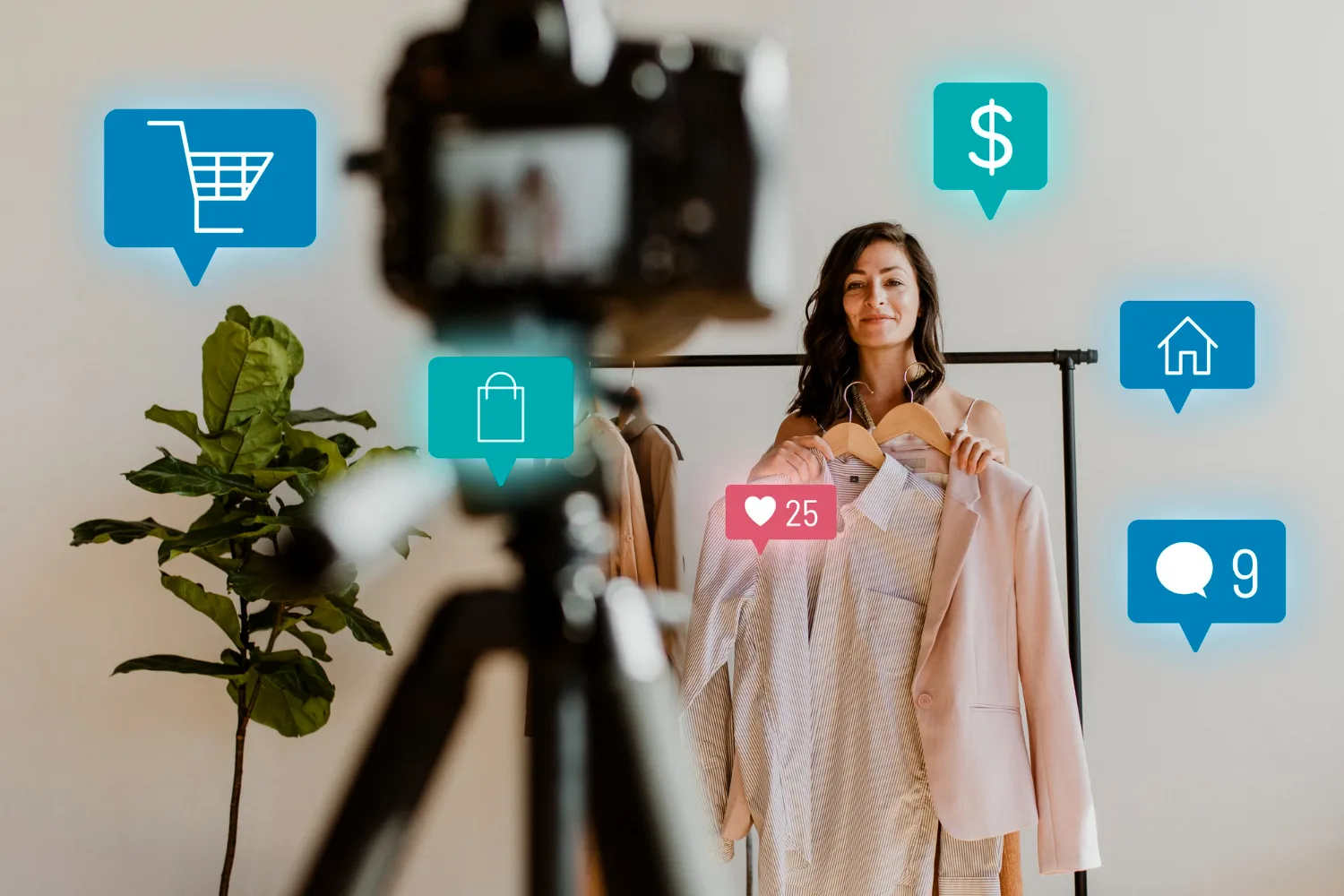
At its simplest, social commerce turns a social media feed into a complete shop. A user scrolling through Instagram spots a reel featuring a product, taps a tag, reads a few comments, and completes a purchase. All this within seconds and without switching apps. That is the essence of social commerce.
What separates it from traditional ecommerce is the removal of friction at every stage. There is no redirecting to a brand website, no re-entering payment details, no multi-step checkout. The entire funnel from discovery, consideration, purchase, and even post-purchase advocacy happens in one place.
| Dimension | Traditional Ecommerce | Social Commerce |
| Transaction Location | Brand’s website | Inside social media app |
| Discovery Path | Search engines, paid ads | Shoppable posts, creator content, livestreams |
| Checkout Process | Multi-step, external site | One-tap, native checkout |
| Social Proof | Product page reviews | Comments, UGC, live Q&A, creator endorsements |
| Customer Journey | Linear (search → browse → buy) | Full-funnel in-app (discover → purchase → advocate) |
The full-funnel journey inside a single platform is what makes social commerce fundamentally different than anything that came before it.
Become an AI-powered Digital Marketing Expert
Master AI-Driven Digital Marketing: Learn Core Skills and Tools to Lead the Industry!
Explore CourseWhy is Social Commerce Trending in 2026?
Several forces have converged to make 2026 a watershed year for social commerce.
Social platforms are the new search engines
According to recent data, 82% of consumers now use social media for product research. Among Gen Z, 49% use TikTok specifically to find their next purchase, and 70% use YouTube for product discovery. The search bar on Google is no longer always the first stop.
Short-form video has collapsed the viewing-buying gap
Video content accounts for 42.7% of social commerce revenue globally. When a creator demonstrates a product in a 30-second reel and a buy button sits right beneath it, the gap between “I want that” and “I bought that” becomes almost nothing.
In-app checkout has matured significantly
Platforms have invested heavily in native checkout features that support BNPL (Buy Now, Pay Later), biometric authentication, and saved payment details. Cart abandonment rates across major social platforms dropped from 67% to 41% between 2024 and early 2026 as a direct result.
Creator partnerships deliver outsized ROI
Consumers trust peers and creators far more than brand-to-consumer advertising. Long-term affiliate partnerships with creators produce compounding results and not just single campaign spikes.
AI personalization is now table stakes
AI-driven product recommendations, dynamic feed adjustments, and conversational shopping assistants are no longer premium features. They are expected and brands that deploy them see measurable lifts in conversion and retention.
The sheer scale is undeniable
There are 5.2 billion social media users worldwide. People spend an average of 143–151 minutes per day on social media and interact with around 6.8 platforms monthly. That is an enormous, highly engaged audience that brands can reach at the moment of purchase intent.
The Social Commerce Journey: How it Works

Understanding the full-funnel journey is key to building a social commerce strategy that actually converts.
Discovery begins with an algorithm-served post, reel, or TikTok video. It could be a sponsored ad or organic creator content what matters is that it stops the scroll and signals relevance to the viewer.
Consideration is accelerated by social proof. Comments, user-generated photos, live Q&A sessions, and creator reviews do the work that product pages used to do. This phase is faster on social platforms because the proof is right there, visible to everyone, and often real-time.
Purchase happens in-app, in as few taps as possible. Native checkout, BNPL options, and saved biometric credentials make conversion almost effortless.
Advocacy is where social commerce creates its real compounding advantage. A satisfied buyer posts about the product, tags the brand, and effectively becomes an unpaid ambassador. That content enters the discovery phase for a new set of potential buyers, and the loop begins again.
The brands winning in 2026 are the ones treating each stage with equal deliberateness — not just optimizing for the final checkout.
Best Social Commerce Platforms in 2026
Not every platform serves every brand equally. The right choice depends on audience demographics, content format strengths, and product category.
| Platform | Key Shopping Features | Best For |
| Shops, product tags, in-app checkout | Fashion, beauty, lifestyle | |
| TikTok | TikTok Shop, shoppable videos, live shopping | Viral products, Gen Z audiences |
| Marketplace, Shops, native checkout | Broad demographics, local businesses | |
| YouTube | Live Shopping, product overlays | Tutorial-based products, tech |
| Product Pins, shoppable ads | Home décor, DIY, weddings | |
| Snapchat | Shop Module, AR try-ons | Fashion, accessories, immersive experiences |
Over 51% of US social buyers will shop on TikTok in 2026. This is a number that has fundamentally changed how retail planners think about the platform.
Pinterest, often underestimated, sees 93% of its users actively planning purchases, and its shoppers spend 2x more per month compared to shoppers on other platforms.
Every platform has a distinct advantage; choosing the right one starts with knowing where your audience actually spends time.
Become an AI-powered Digital Marketing Expert
Master AI-Driven Digital Marketing: Learn Core Skills and Tools to Lead the Industry!
Explore CourseAI-Powered Personalization: The Engine Behind Social Shopping
Artificial intelligence is the reason social commerce feels so effortlessly relevant. The recommendations that appear on a feed are not random. They are the result of machine learning models analyzing browsing behaviour, purchase history, dwell time, and dozens of other signals in real time.Here is what AI actually delivers in social commerce:
- Predictive recommendations that surface products before a user knows they want them, increasing conversion likelihood by 30–50%
- Conversational shopping assistants that guide users through purchase decisions in natural language
- Visual similarity search that lets users upload a photo to find matching or similar products
- Tailored incentives — personalized discounts and offers triggered by behavioural data
- Dynamic feed layouts that adjust in real time based on what a specific user responds to
Retailers deploying AI see up to 25% revenue uplift and measurably stronger customer loyalty. Average Order Value increases by 15–20%, Customer Lifetime Value grows by 20–35%, and product return rates drop by 35–45% — largely because AI helps customers find the right product the first time.
Real-world examples make the scale clear. Sephora’s AI-powered personalization drove a 200% increase in engagement and a 35% boost in conversions.
Nike deployed a generative AI shopping assistant for its 170 million loyalty members, delivering tailored recommendations based on individual purchase and browsing history.
Walmart introduced AI-powered search and an AR interior design feature that lets shoppers visualize furniture inside their own homes before buying.
Tips for Small Businesses Entering Social Commerce in 2026

Social commerce is not exclusively for enterprise brands with large budgets. Small businesses have a genuine structural advantage — authenticity. A small brand with a real story, a genuine community, and consistent content can outperform a large brand with a generic presence.Here is how to start smart:
Pick one platform and master it
Spreading thin across five platforms produces mediocre results everywhere. Start with Instagram or TikTok depending on your audience, and learn its algorithm, features, and content patterns deeply before expanding.
Make every post shoppable
Tag products in every post and story. Your existing content should be working as a sales channel, not just a brand awareness channel.
Create one short video per month and reuse it
A 20–30 second video showing a product in real use or featuring a genuine customer story can be repurposed across multiple platforms with minor adjustments.
Prioritise image quality without expensive equipment
Good natural lighting and a clean background are more effective than a professional studio setup when the product is the star.
Partner with one micro-creator monthly
Creators with 5,000–50,000 followers in a relevant niche typically deliver higher engagement rates and more authentic conversion than macro-influencers at a fraction of the cost ($50–$300 or a product exchange).
Add one affordable AI tool
Auto-captioning tools and AI-powered chat responses cost between ₹800–₹2,500 per month and save significant time while improving customer engagement.
Treat DMs as a sales channel
Respond quickly, use saved replies for common questions, and close transactions inside the conversation when possible.
Best Practices for Social Commerce Success
Beyond the basics, these practices separate growing social commerce brands from ones that plateau:
- Keep your product catalogue connected and stock accurate in real time
Nothing damages trust faster than a sold-out product that appears shoppable.
- Go live with intention
Prepare a run sheet, pin your key offer on screen during the session, and have a moderator handling chat questions so the host can stay focused on selling.
- Lean into UGC systematically
Invite customers to tag their purchases, actively feature real customer photos, and reward top contributors. Authentic content outperforms polished brand content consistently.
- Use social listening tools
Monitor what customers are saying about your product and your category in real time. This feeds both product development and content strategy.
- Test and iterate relentlessly
Track which products, content formats, and platforms drive actual revenue and not just likes. Social commerce success is built on continuous optimization, not one viral post.
Join Our Online Digital Marketing Course & Learn the Fundamentals!
Conclusion
Social commerce in 2026 is not a trend to watch — it is a channel to build on. With global sales set to surpass $1.6 trillion, in-app checkout normalized across major platforms, and AI making hyper-personalization accessible to brands of every size, the question is no longer whether social commerce is real.
The question is how quickly your brand can show up where your customers are already buying.The path is clearer than it has ever been: start on one platform, make every post shoppable, invest in creator relationships, and let AI handle the personalization heavy lifting.
Whether you’re a growing DTC brand or a small business with a loyal community, the social commerce opportunity is genuinely wide open.
Frequently Asked Questions
How is social commerce different from ecommerce?
Social commerce embeds the full buyer journey, from discovery to advocacy, inside a social app instead of directing users to a brand website. It blends content, community, and checkout for a seamless, in-app purchase experience.
Why is social commerce growing so fast in 2026?
Short-form video and improved in-app checkout have compressed the time from inspiration to purchase. Social platforms also act like search engines, making discovery faster and more intuitive than traditional websites.
How big is the social commerce market in 2026?
Global social commerce sales are projected to exceed $1.6 trillion in 2026, growing about 33% year-over-year. In the US, social commerce will top $100 billion for the first time this year.
Which social media platforms are best for social commerce?
The leading platforms are TikTok, Instagram, Facebook, YouTube, Pinterest, and Snapchat. The right platform depends on your target audience, product type, and content strengths.
What role does AI play in social commerce?
AI powers recommendations, visual search, conversational shopping, and feed personalization to match products with intent. Brands using AI see up to ~25% revenue uplift and better retention.
Can small businesses succeed with social commerce?
Yes, authentic storytelling and community engagement often give small businesses an advantage over larger brands. Starting on one platform with consistent posting and product tagging can drive meaningful growth.
How does Pinterest fit into a social commerce strategy?
Pinterest users often have high purchase intent and use the platform to plan buys, making it strong for inspiration-led categories. Its shoppers also spend more per month, especially in home décor, DIY, and lifestyle niches.
What metrics should brands track in social commerce?
Track conversion rate, average order value (AOV), customer acquisition cost (CAC), cart abandonment, customer lifetime value (CLV), and revenue per visitor. AI-driven tools typically improve these metrics faster than organic-only approaches.