Table of Contents
Introduction
With arthritis, everyday movements is not easy. Activities gets affected by Joint pain and stiffness. One must practice slowly to get mobility and balance. Follow the exercises discussed in this blog. It will help Improve your muscle strength and flexibility.
One can start at home. Include light-weight activities. Perform them slowly. Practice tiny amount each day. Take shot breaks when required.
Key Takeaways:
- Exercise help in managing arthritis.
- It improves Flexibility.
- It also provides strength.
- Daily movement improves with light-weight activities.
- Strain can be reduced by Warm-ups.
- Take rest regularly.
- Never ignore Sharp pain.
- Attend to swellings immediately.
- Flare-ups demand medical help.
Become a General Fitness Trainer and turn your passion into a Profession!
Is Exercise Safe for People With Arthritis?
People with arthritis are safe to do exercise. Choose suitable movement which can be improved later on. Exercises are chosen based on one’s needs.
1. Start With Gentle Movements
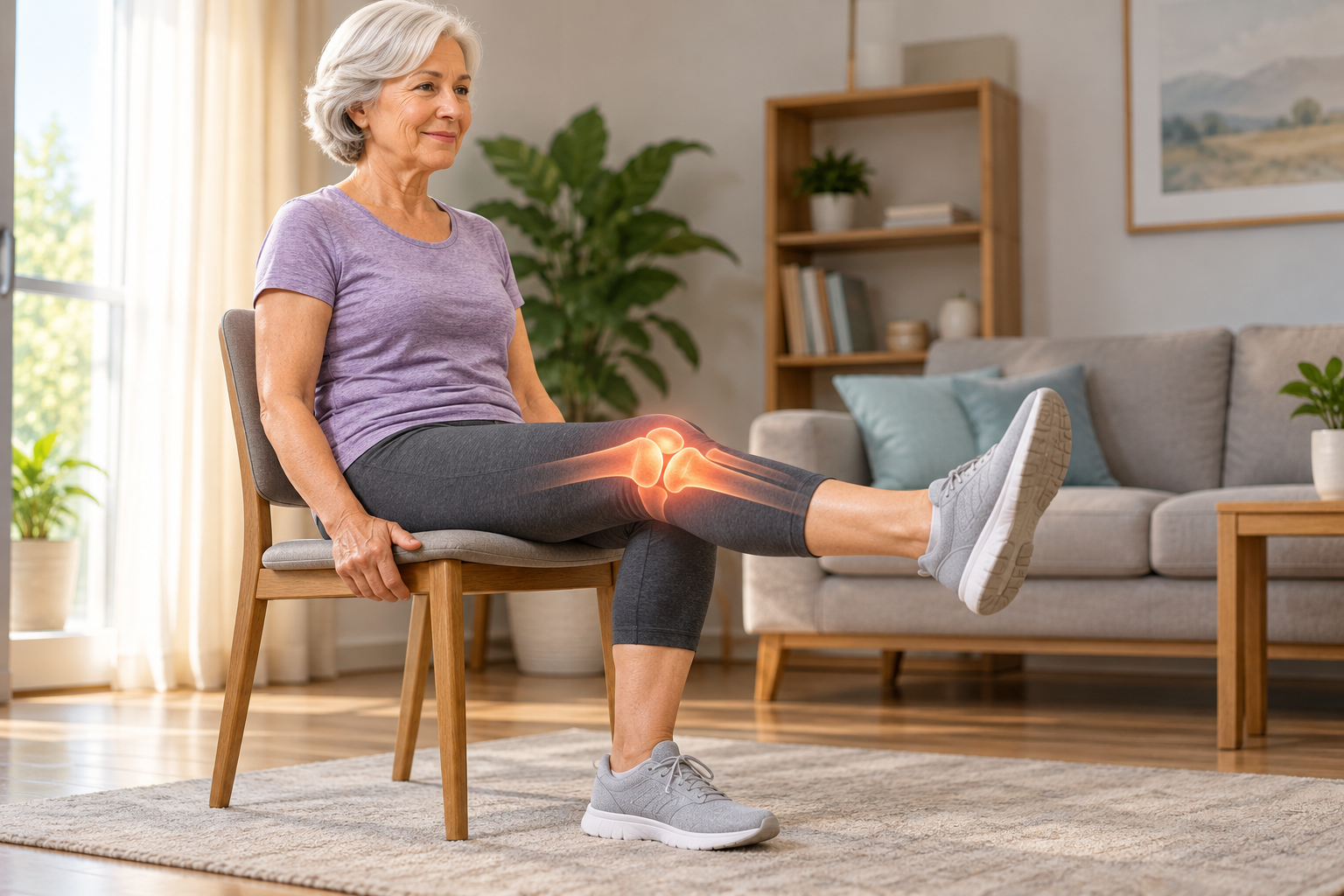
Starting activities
- Slow walking.
- Seated marching.
- Gentle stretching.
- Ankle circles.
- Shoulder rolls.
Short sessions
- Five minutes.
- Brief breaks.
- Light activity.
- Gradual increases.
- Comfortable pacing.
Comfort checks
- Relaxed muscles.
- Natural breathing.
- Controlled movements.
- Comfortable positions.
- Stable support.
2. Warm Up Before Exercise
Before one starts they need to prepare the body. Use slow movements for warming up.
Gentle walking
- Slow steps.
- Short distances.
- Easy pace.
- Flat surfaces.
Shoulder movements
- Small circles.
- Gentle rolls.
- Relaxed arms.
- Slow movements.
Hand movements
- Open fingers.
- Close fingers.
- Wrist circles.
- Relaxed hands.
Ankle movements
- Small circles.
- Slow rotations.
- Comfortable ranges.
- Gentle movements.
Warm-up duration
- Three minutes.
- Five minutes.
- Comfortable pace.
- No force.
3. Recognise Warning Signs
As activities increase one may become uncomfortable. Take sharp pain seriously. Also look for worsening symptoms.
Stop exercising
- Sharp pain.
- Sudden swelling.
- Severe discomfort.
- New weakness.
- Dizziness.
Watch joint changes
- Increased redness.
- Unusual warmth.
- Greater swelling.
- Reduced movement.
- New limping.
After exercise
- Pain should be checked.
- Stiffness should be noticed.
- Swelling should be monitored.
- Recovery time should be allowed.
- Intensity should be reduced when needed.
Seek medical advice
- Persistent pain.
- Worsening symptoms.
- Severe swelling.
- Difficult movement.
- Repeated flare-ups.
4. Get Personal Guidance
Some people need modified plans. Professionals must be consulted for right movements.
Seek advice
- Severe arthritis.
- Frequent flare-ups.
- Recent injuries.
- Recent surgery.
- Mobility problems.
Discuss limitations
- Painful knees.
- Stiff fingers.
- Shoulder problems.
- Balance difficulties.
- Walking difficulties.
Follow instructions
- Suitable exercises.
- Safe movements.
- Recommended repetitions.
- Rest periods.
- Movement limits.
During flare-ups
- Activity should be reduced.
- Painful movements should be avoided.
- Medical advice should be followed.
- Affected joints should be rested.
- Activity should be resumed gradually.
Benefits of Exercise for Arthritis
There are a lot of benefits one can get from exercise. It supports joint movement. One gets a lot of physical and emotional benefits.
1. Improve Joint Movement
One can maintain Joint flexibility via slow movements. It eases everyday work.
Better flexibility
- Easier bending.
- Slow stretching.
- Simple movement.
- Reduced stiffness.
- Improved mobility.
Daily activities
- Getting dressed.
- Walking indoors.
- Reaching objects.
- Climbing stairs.
- Standing comfortably.
Joint mobility
- Regular movement.
- Comfortable positions.
- Controlled motions.
- Gentle repetitions.
- Slow stretches.
Useful exercises
- Ankle circles.
- Knee extensions.
- Shoulder rolls.
- Hand opening.
- Gentle wrist bends.
2. Strengthen Supporting Muscles
Joint support can be improved through stronger muscles. Physical function may also be improved.
Muscle strength
- Stronger legs.
- Better arm strength.
- Improved stability.
- Easier standing.
- Better control.
Joint support
- Controlled movement.
- Better balance.
- Reduced strain.
- Improved function.
- Safer movement.
Suitable training
- Light resistance.
- Bodyweight exercises.
- Slow repetitions.
- Comfortable ranges.
- Supported movements.
Daily benefits
- Easier walking.
- Safer standing.
- Better stair climbing.
- Improved independence.
- Better mobility.
3. Manage Pain and Fatigue
A lot of Arthritis pain can be managed with a right exercise. General fitness also improve.
Pain management
- Gentle activity.
- Regular movement.
- Suitable exercises.
- Gradual progress.
- Comfortable pacing.
Energy levels
- Short sessions.
- Regular practice.
- Balanced activity.
- Adequate rest.
- Manageable goals.
Daily function
- Easier movement.
- Better mobility.
- Improved endurance.
- More independence.
- Greater confidence.
Recovery habits
- Rest periods.
- Comfortable pacing.
- Symptom monitoring.
- Enough sleep.
- Suitable hydration.
4. Support Balance and Mood
Exercise improves the mood of a person. One gets better sleep.
Better balance
- Controlled movements.
- Supported standing.
- Gentle walking.
- Safe surroundings.
- Stable footwear.
Emotional health
- Stress relief.
- Improved mood.
- Daily routines.
- Enjoyable activities.
- Personal goals.
Healthy sleep
- Regular activity.
- Suitable timing.
- Relaxation routines.
- Adequate rest.
- Consistent bedtime.
Long-term habits
- Weekly planning.
- Manageable goals.
- Regular practice.
- Gradual progress.
- Routine adjustments.
7 Safe Exercises for Arthritis at Home
Based on affected joints one chooses a right exercise. Use sturdy chair for support. Perform all the movements slowly.
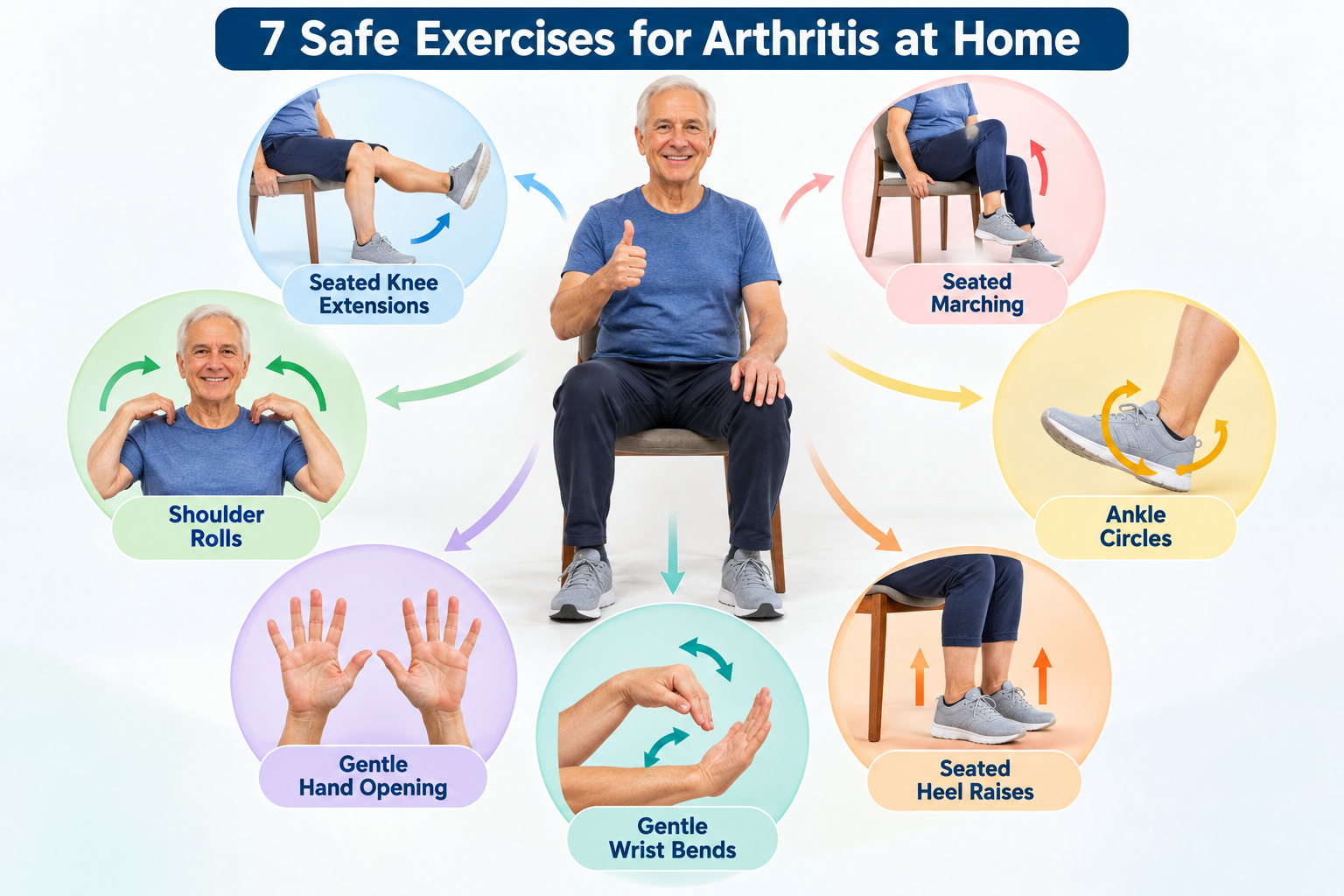
1. Seated Knee Extensions
Knee movement can be gently practised with this exercise.
Starting position
- Sturdy chair.
- Upright posture.
- Feet supported.
- Relaxed shoulders.
Movement steps
- One knee should be straightened.
- The leg should be lifted slowly.
- A brief pause should be taken.
- The foot should be lowered gently.
- The legs should be alternated.
Practice
- Three repetitions.
- Five repetitions.
- Both legs.
- Comfortable range.
- Slow movements.
Safety checks
- Kicking should be avoided.
- Swinging should be prevented.
- Do not ignore sharp pain.
- Take rest when tired.
- Breath naturally.
2. Seated Marching
It is easier to move hips and legs while sitting. Complete light activities without standing.
Starting position
- Stable chair.
- Upright posture.
- Feet grounded.
- Hands supported.
Movement steps
- One knee should be lifted.
- The foot should be lowered slowly.
- Alternate the legs.
- Breath naturally.
- Maintain balance.
Practice
- Thirty seconds.
- Short breaks.
- Slow movements.
- Gradual increases.
- Comfortable height.
Safety checks
- Small lifts should be used.
- Do not rush.
- Monitor hip comfort.
- Stable seating should be maintained.
- Painful movements should be stopped.
3. Shoulder Rolls
Gentle shoulder movement can be encouraged through shoulder rolls.
Starting position
- A comfortable seated position.
- A comfortable standing position.
- Relaxed arms.
- Loose shoulders.
Movement steps
- The shoulders should be lifted gently.
- They should be rolled backward.
- They should be lowered slowly.
- The movement should be repeated.
- The shoulders should be relaxed between rolls.
Practice
- Five rolls.
- Ten rolls.
- Slow circles.
- Relaxed breathing.
- Small movements.
Safety checks
- Small circles should be used.
- Force should not be applied.
- Sharp pain should be avoided.
- The movement should be stopped when needed.
- A relaxed posture should be maintained.
4. Ankle Circles
Ankle mobility can be maintained through gentle circles. This exercise can be completed while seated.
Starting position
- A secure seated position.
- Back support.
- One foot lifted.
- Leg relaxed.
Movement steps
- The ankle should be circled slowly.
- The direction should then be changed.
- The other foot should be lifted.
- The movement should be repeated.
- Natural breathing should be maintained.
Practice
- Five circles.
- Each direction.
- Both ankles.
- Short sessions.
- Gentle movements.
Safety checks
- Small circles should be used.
- Force should not be applied.
- A comfortable range should be maintained.
- Sharp pain should prompt stopping.
- Rest should be taken when needed.
5. Gentle Hand Opening
Finger movement can be maintained through gentle hand opening. This exercise may suit some people with hand stiffness.
Starting position
- A comfortable seated position.
- Forearm support.
- Relaxed wrist.
- Loose fingers.
Movement steps
- The hand should be opened.
- The fingers should be spread gently.
- Closed hands loosely.
- Repeated slowly.
- The fingers should be relaxed.
Practice
- Five repetitions.
- Ten repetitions.
- Both hands.
- Short sessions.
- Easy pace.
Safety checks
- Tight fists should be avoided.
- Avoid forceful squeezing.
- Monitor wrist comfort.
- Sharp pain should prompt stopping.
- Follow professional advice.
6. Gentle Wrist Bends
Mobility of wrist mobility can be manages. Use small, controlled movements.
Starting position
- A comfortable seated position.
- Forearm support.
- Supported elbow.
- Relaxed hand.
Movement steps
- The wrist should be bent gently.
- The hand should move upward slowly.
- Move hand downward slowly.
- Bring wrist to neutral.
- The movement should be repeated comfortably.
Practice
- Three repetitions.
- Five repetitions.
- Both wrists.
- Slow movements.
- Short sessions.
Safety checks
- Small movements should be used.
- Force should not be applied.
- Avoid heavy weights.
- Worsening pain should prompt stopping.
- Professional advice should be followed.
7. Seated Heel Raises
Heel raises activated the lower leg muscles. It can be done while seated.
Starting position
- A sturdy chair.
- An upright posture.
- Feet placed flat.
- Relaxed shoulders.
Movement steps
- Both heels should be lifted.
- The toes should remain grounded.
- A brief pause should be taken.
- The heels should be lowered slowly.
- The feet should be relaxed.
Practice
- Five repetitions.
- Ten repetitions.
- Short sessions.
- Gradual increases.
- Comfortable movements.
Safety checks
- Slow lifting should be maintained.
- Controlled lowering should be used.
- Ankle comfort should be monitored.
- Bouncing should be avoided.
- Painful movement should be stopped.
Become a General Fitness Trainer and turn your passion into a Profession!
Low-Impact Exercises for Arthritis
They give less stress on joints. Select activities based on abilities and symptoms.
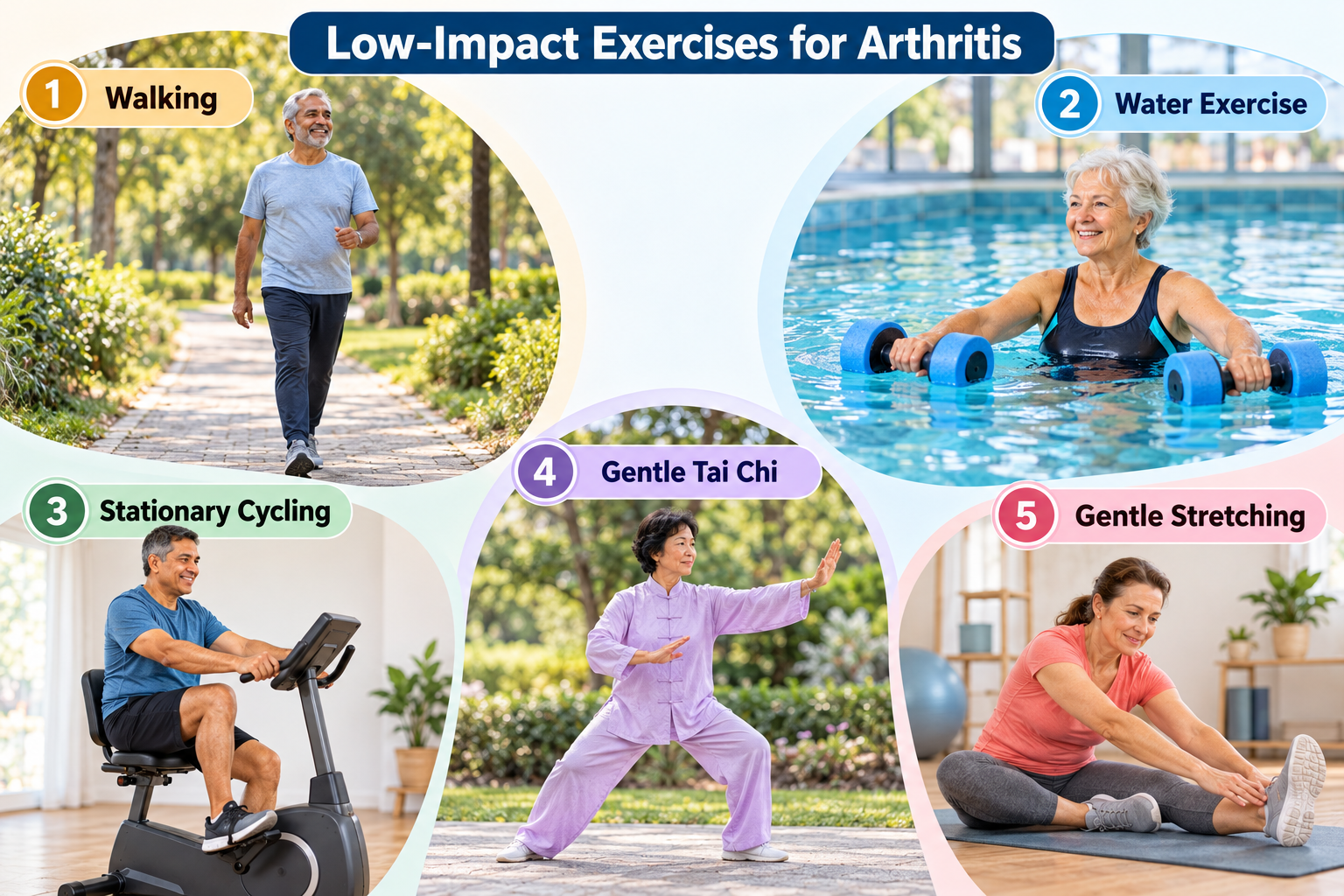
1. Walking
Walking supports general fitness. It improves everyday mobility.
Starting options
- Indoor walking.
- Short distances.
- Flat surfaces.
- Slow pace.
Progress
- Five minutes.
- Regular breaks.
- Longer walks.
- Comfortable speed.
Safety
- Supportive footwear.
- Clear pathways.
- Stable surfaces.
- Suitable weather.
Daily habits
- Indoor walking.
- Regular movement breaks.
- Comfortable progress tracking.
- Rest when needed.
2. Water Exercise
The body needs water while moving. Some drink warm water. It is comfortable for some people.
Suitable activities
- Water walking.
- Gentle leg movements.
- Arm movements.
- Supported exercises.
Possible benefits
- Lower joint loading.
- Easier movement.
- Gentle resistance.
- General fitness.
Safety
- Safe pool entry.
- Non-slip surfaces.
- Suitable supervision.
- Professional guidance.
Helpful habits
- A slow start.
- Shallow water.
- Regular breaks.
- Joint symptom monitoring.
3. Stationary Cycling
Stationary cycling provides Controlled, low-impact movement . It is good for people with knee arthritis.
Starting options
- Low resistance.
- Slow pedalling.
- Short sessions.
- Comfortable seat height.
Progress
- Five minutes.
- Gentle increases.
- Steady pace.
- Regular practice.
Safety
- Knee comfort.
- Easy resistance.
- Secure equipment.
- Stopping when pain increases.
Helpful habits
- Seat adjustment.
- Smooth movements.
- Low resistance.
- Rest when needed.
4. Gentle Tai Chi
Balance and body awareness can be supported through tai chi. Slow, controlled movements are used.
Practice
- Slow movements.
- Gentle weight shifts.
- Relaxed breathing.
- Comfortable positions.
Possible benefits
- Better balance.
- Body awareness.
- Gentle movement.
- Stress management.
Safety
- Stable support.
- Small steps.
- Suitable instruction.
- No forced positions.
Helpful habits
- Slow practice.
- Simple movements.
- Avoidance of painful bends.
- Chair support when needed.
5. Gentle Stretching
Flexibility can be maintained through gentle stretching. Every movement should remain comfortable.
Suitable areas
- Calves.
- Thighs.
- Shoulders.
- Hands.
Practice
- Slow movements.
- Short holds.
- Relaxed breathing.
- Gentle release.
Safety
- Bouncing should be avoided.
- Force should not be applied.
- Sharp pain should be avoided.
- Worsening discomfort should prompt stopping.
Helpful habits
- Stretching after warm-ups.
- Small movements.
- Natural breathing.
- Avoidance of painful positions.
Sample Home Workout Routine for Arthritis
Choose some easy movements for every session. Personal abilities should consider while making a routine. Take rest when tired.
1. Warm-Up
Gentle movements
- Slow walking.
- Shoulder rolls.
- Ankle circles.
- Hand opening.
Duration
- Three minutes.
- Five minutes.
- Comfortable pace.
Preparation
- The floor should be cleared.
- Supportive footwear should be worn.
- A sturdy chair should be prepared.
- Water should be kept nearby.
2. Main Exercises
Mobility exercises
- Seated knee extensions.
- Shoulder rolls.
- Ankle circles.
- Gentle wrist bends.
Strength exercises
- Seated heel raises.
- Supported sit-to-stands.
- Light resistance exercises.
- Gentle leg movements.
Light activities
- Indoor walking.
- Seated marching.
- Stationary cycling.
- Gentle water exercise.
Practice guidelines
- Three to five repetitions.
- Slow movements.
- Comfortable range.
- Rest between exercises.
3. Cool-Down
Gentle movements
- Slow walking.
- Relaxed breathing.
- Gentle stretches.
- Shoulder relaxation.
Duration
- Three minutes.
- Five minutes.
- Comfortable pace.
Recovery habits
- Water should be consumed.
- Muscles should be relaxed.
- Joint symptoms should be checked.
- Rest should be taken when needed.
4. Weekly Schedule
| Day | Suggested activity | Main focus |
| Monday |
|
|
| Tuesday |
|
|
| Wednesday |
|
|
| Thursday |
|
|
| Friday |
|
|
| Saturday |
|
|
| Sunday |
|
|
This schedule is a starting example. Adjustments should be made based on two factors. Symptoms and professional advice.
5. Adjust the Routine
When pain increases
- Repetitions should be reduced.
- Sessions should be shortened.
- Longer breaks should be taken.
- Painful movements should be stopped.
When movement feels easier
- Repetitions should be added gradually.
- Sessions should be extended slowly.
- Good technique should be maintained.
- Symptoms should be monitored.
During flare-ups
- Follow medical advice.
- Reduce exercise intensity.
- Avoid Painful movements.
- Activity should be resumed gradually.
Exercises to Avoid With Arthritis
Some movements may increase joint stress. Avoid activities that worsen symptoms. Suitable alternatives should be selected for affected joints and abilities.
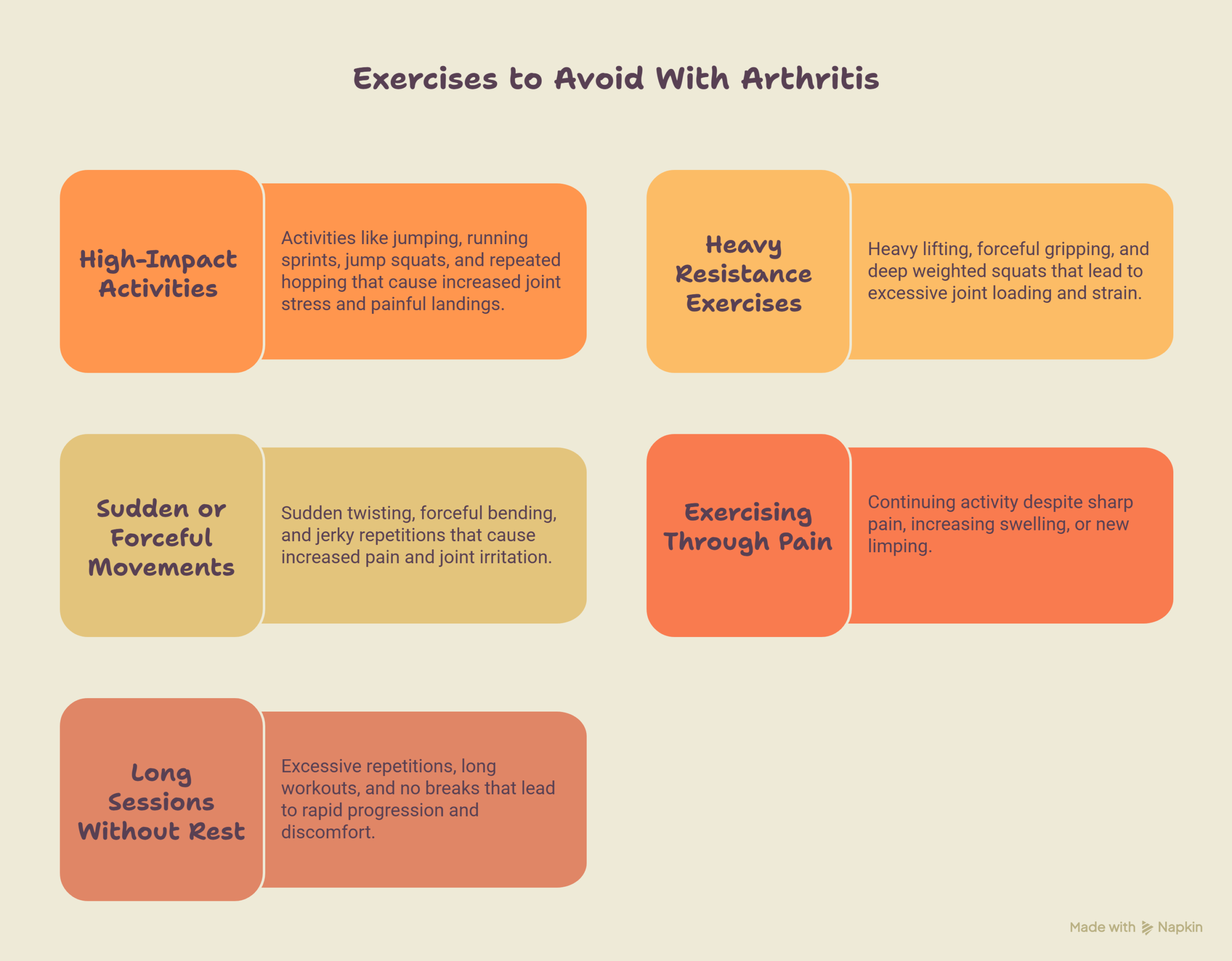
1. High-Impact Activities
Examples
- Jumping exercises.
- Running sprints.
- Jump squats.
- Repeated hopping.
Possible concerns
- Increased joint stress.
- Painful landings.
- Greater discomfort.
- Difficult recovery.
Safer choices
- Walking.
- Water exercise.
- Stationary cycling.
- Gentle marching.
2. Heavy Resistance Exercises
Examples
- Heavy lifting.
- Forceful gripping.
- Deep weighted squats.
- Painful resistance exercises.
Possible concerns
- Excessive joint loading.
- Increased discomfort.
- Poor movement control.
- Greater strain.
Safer choices
- Light resistance.
- Bodyweight movements.
- Supported exercises.
- Professional guidance.
3. Sudden or Forceful Movements
Examples
- Sudden twisting.
- Forceful bending.
- Jerky repetitions.
- Deep painful stretches.
Possible concerns
- Increased pain.
- Reduced control.
- Joint irritation.
- Greater discomfort.
Safer choices
- Slow movements.
- Small ranges.
- Controlled repetitions.
- Comfortable positions.
4. Exercising Through Pain
Warning signs
- Sharp pain.
- Increasing swelling.
- New limping.
- Reduced movement.
Safer responses
- The exercise should be stopped.
- The joint should be rested.
- Intensity should be reduced.
- Medical advice should be sought.
5. Long Sessions Without Rest
Common problems
- Excessive repetitions.
- Long workouts.
- No breaks.
- Rapid progression.
Safer habits
- Short sessions.
- Regular breaks.
- Gradual progress.
- Symptom monitoring.
Quick Guide to Safe Home Exercise
| Situation | Suitable response |
| Mild stiffness | Gentle movement can be tried. |
| Low energy | Shorter sessions should be chosen. |
| Increasing pain | Activity should be reduced. |
| Joint swelling | Medical advice should be sought. |
| Poor balance | Suitable support should be used. |
| Painful exercise | The movement should be stopped. |
Conclusion
Arthritis symptoms may be managed with suitable exercise. Strength, flexibility, and mobility can be supported.
- A slow start should be maintained.
- Suitable exercises should be chosen.
- Regular breaks should be taken.
- Joint symptoms should be monitored.
- Activity should be increased gradually.
- Professional guidance should be sought when needed.
Daily movement can be supported through a simple, consistent routine.
Frequently Asked Questions
Is exercise safe for arthritis?
Gentle exercise is usually safe for people with arthritis. A doctor can recommend suitable activities based on joint health.
Which exercises help arthritis?
Walking, stretching, and seated exercises can improve movement. Choose activities that feel comfortable and manageable.
Can exercise reduce arthritis pain?
Regular exercise may help reduce stiffness and discomfort. Stop if pain becomes sharp or symptoms worsen.
How often should I exercise?
Short exercise sessions can be performed regularly. Increase activity slowly according to comfort and medical advice.
Is walking good for arthritis?
Walking can improve mobility and support general fitness. Start slowly and choose safe, even surfaces.
Should I exercise during flare-ups?
Rest may be needed when joints become painful or swollen. Ask a healthcare professional about suitable movements during flare-ups.
Can I exercise at home?
Many gentle arthritis exercises can be done at home. Use a stable chair and keep the area clear.
Which exercises should I avoid?
High-impact activities may place extra stress on joints. Avoid movements that cause pain or increase swelling.
Should I warm up before exercising?
A gentle warm-up prepares the body for movement. Try slow walking or easy joint movements before starting.
When should I stop exercising?
Stop if sharp pain, unusual swelling, or severe discomfort develops. Seek medical advice if symptoms continue or worsen.