
Table of Contents
Introduction
A hospital needs more than doctors and nurses. Many people work behind the scenes. They help the hospital run every day.
Some workers book appointments. Others prepare bills or keep patient files. Another team cleans rooms and checks equipment.
Hospital administration brings all this work together. It helps all the teams in understanding its duties. It also gives the patients the support that they need.
Consider a scenario of a patient arriving for an operation. A bed must be ready. Nurses must be available. Medicines and equipment must be in place. Someone should arrange all these things.
Key Takeaways:
- Plan daily hospital work.
- Manage staff and duties.
- Keep patient records safe.
- Prepare correct patient bills.
- Keep hospital supplies ready.
- Guide patients and families.
What Is Hospital Administration?
1: Who was the first woman President of India?
Hospital administration means managing the daily work of a hospital.
It covers the people and things needed to provide care. This includes workers, money, rooms, records and supplies.
Doctors decide on treatment. Nurses provide nursing care. The administration team helps arrange the support around them.
For example, a patient needs a scan. Staff book the scan and find earlier reports. Other workers keep the machine working and prepare the bill.

The main tasks are:
- Plan work
- Set duties.
- Arrange shifts.
- Prepare rooms.
- Check needs.
- Support staff
- Hire workers.
- Explain rules.
- Arrange training.
- Hear concerns.
- Manage things
- Hospital beds.
- Medical supplies.
- Patient files.
- Hospital money.
- Check services
- Waiting times.
- Patient complaints.
- Repair requests.
- Unfinished work.
A small hospital may have one team handling several tasks. A large hospital usually has more teams. Both need clear plans and regular updates.
Explore Your Future in Hospital Administration! Enroll now
Free UPSKILLING Courses!
Take your first step toward mastering in-demand skills, acing interviews, and securing top-tier jobs with Entri's free upskilling courses.
Start Learning!Top 10 Functions of Hospital Administration
The shared video explains ten main functions. Each one handles a different part of hospital work.
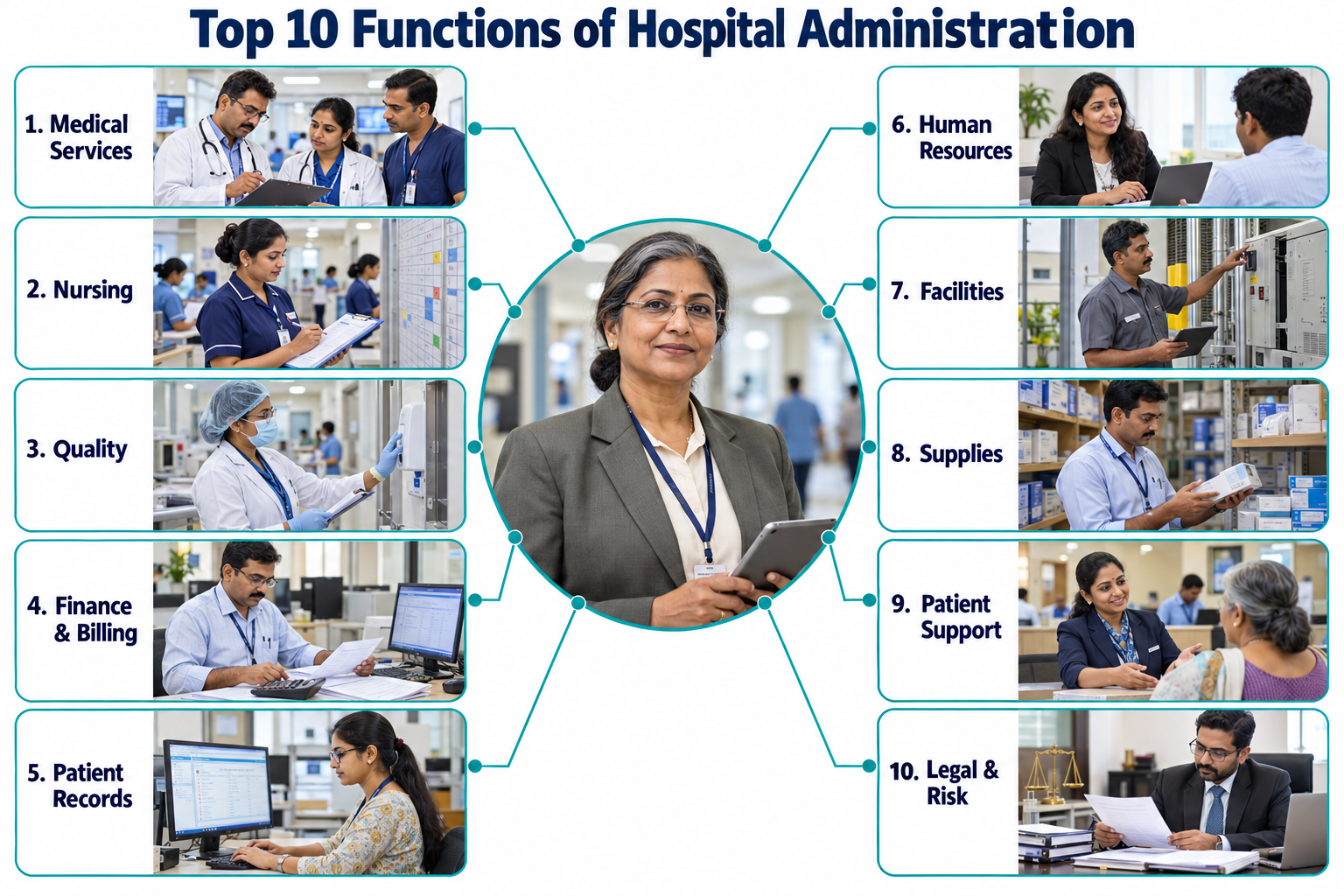
1. Medical Services Management
This team helps doctors and hospital managers work together.
A senior doctor may lead it. The team discusses what doctors need to provide care.
Main tasks:
- Plan services
- Doctor availability.
- Consultation hours.
- Room needs.
- Equipment needs.
- Check problems
- Service delays.
- Patient concerns.
- Missing equipment.
- Department needs.
- Arrange support
- Share requests.
- Hold discussions.
- Plan changes.
- Check progress.
For example, doctors may need an extra room. This team helps explain the need to management. It then follows up on the request.
2. Nursing Administration
Patients need nurses during the day and night. Nursing administration plans nursing work across different shifts.
It helps make sure wards have suitable nursing staff.
Main tasks:
- Plan duties
- Morning shifts.
- Evening shifts.
- Night shifts.
- Leave cover.
- Assign nurses
- Ward needs.
- Patient numbers.
- Staff skills.
- Available nurses.
- Share updates
- Patient needs.
- Pending tasks.
- Important changes.
- Care instructions.
- Support nurses
- Work guidance.
- Training sessions.
- Team meetings.
- Helpful feedback.
At each shift change, nurses share important information. This helps the next team continue patient care.
3. Quality Assurance
Quality assurance means checking whether hospital work meets the required standards.
The team finds problems and helps fix them. It checks many areas across the hospital.
Main tasks:
- Check cleanliness
- Patient rooms.
- Waiting areas.
- Toilets.
- Food areas.
- Check safety
- Hand washing.
- Patient identification.
- Safe procedures.
- Infection prevention.
- Review problems
- Patient complaints.
- Staff concerns.
- Service mistakes.
- Repeated delays.
- Plan improvements
- Find causes.
- Discuss solutions.
- Assign tasks.
- Check results.
This team also helps with hospital accreditation. Examples include NABH and JCI. These involve checking the hospital against set standards.
4. Finance and Billing
The finance team manages hospital money. The billing team prepares patient bills.
They check what the hospital earns and spends.
Main tasks:
- Pay expenses
- Staff salaries.
- Medicine costs.
- Electricity bills.
- Repair charges.
- Plan spending
- Monthly costs.
- New purchases.
- Department needs.
- Future repairs.
- Prepare bills
- Room charges.
- Test charges.
- Medicine charges.
- Treatment charges.
- Help patients
- Explain charges.
- Check mistakes.
- Give receipts.
- Collect documents.
The team also handles insurance paperwork. Correct details help avoid confusion and delays.
5. Health Information Management
This team looks after patient records. These records show the care a patient has received.
Records may be on paper, on computers or both.
Main tasks:
- Keep details
- Patient name.
- Contact number.
- Patient number.
- Visit dates.
- Store reports
- Medical history.
- Test results.
- Treatment notes.
- Discharge papers.
- Arrange files
- Correct labels.
- Proper order.
- Safe storage.
- Easy access.
- Protect privacy
- Locked cabinets.
- Secure accounts.
- Limited access.
- Careful sharing.
Staff must find the correct record when needed. They must also protect the patient’s private information.
6. Human Resource Management
Human Resources, or HR, handles staff matters.
The team helps hire workers. It also supports them after they join.
Main tasks:
- Find workers
- List vacancies.
- Explain jobs.
- Review applications.
- Arrange interviews.
- Check documents
- Education certificates.
- Work experience.
- Required licences.
- Professional registration.
- Welcome staff
- Hospital introduction.
- Team introduction.
- Duty explanation.
- Initial training.
- Handle concerns
- Leave requests.
- Attendance records.
- Work problems.
- Staff questions.
HR works with department heads. Together, they check how many workers each department needs.
7. Operations and Facility Management
This team keeps the hospital building and facilities working.
It arranges regular checks and repairs. It also prepares for service failures.
Main tasks:
- Check basics
- Electricity.
- Water.
- Lights.
- Lifts.
- Arrange repairs
- Leaking pipes.
- Broken fittings.
- Electrical faults.
- Equipment problems.
- Plan maintenance
- Service dates.
- Safety checks.
- Repair visits.
- Work records.
- Prepare backups
- Emergency power.
- Stored water.
- Replacement equipment.
- Service contacts.
For example, a power cut can affect hospital work. The team helps keep backup power ready.
8. Supply Chain and Logistics
This team makes sure the hospital has enough supplies.
It orders items, checks deliveries and sends supplies to departments.
Main tasks:
- Arrange supplies
- Medicines.
- Gloves.
- Masks.
- Bandages.
- Check stock
- Available items.
- Required amounts.
- Expiry dates.
- Storage conditions.
- Place orders
- Review requests.
- Contact suppliers.
- Compare options.
- Confirm orders.
- Check deliveries
- Correct items.
- Correct amounts.
- Good condition.
- Delivery records.
Ordering at the right time helps prevent shortages. Stock checks also help reduce waste.
9. Patient Experience and Guest Relations
This team helps patients and families during hospital visits.
People may feel worried or confused. Staff listen and explain what to do next.
Main tasks:
- Welcome people
- Speak politely.
- Listen carefully.
- Answer questions.
- Offer guidance.
- Explain services
- Registration steps.
- Department locations.
- Waiting areas.
- Visiting hours.
- Hear concerns
- Patient questions.
- Family worries.
- Service complaints.
- Useful suggestions.
- Find help
- Contact departments.
- Report problems.
- Share updates.
- Check responses.
A simple explanation can save someone from walking between departments.
10. Legal and Risk Management
This team helps the hospital follow rules. It also looks at problems that could harm people or interrupt services.
Main tasks:
- Check papers
- Hospital permissions.
- Service agreements.
- Consent forms.
- Official records.
- Handle matters
- Read notices.
- Collect documents.
- Seek advice.
- Arrange replies.
- Find risks
- Unsafe areas.
- Reported incidents.
- Repeated problems.
- Missing procedures.
- Plan action
- Find causes.
- Suggest changes.
- Assign duties.
- Check progress.
The team helps departments learn from problems. This can help prevent similar problems later.
| Function | Main job |
|---|---|
| Medical services | Support medical work |
| Nursing administration | Plan nursing work |
| Quality assurance | Check service standards |
| Finance and billing | Manage money |
| Health information | Keep patient records |
| Human resources | Handle staff matters |
| Operations and facilities | Maintain hospital facilities |
| Supply chain | Arrange supplies |
| Patient experience | Help patients |
| Legal and risk | Check rules and risks |
Patient Care and Service Management
Patients need help at different stages of a hospital visit.
Some come for a consultation. Others need tests or admission. Staff guide them through each step.

1. Registration
Staff check the patient’s details first.
- Check information
- Full name.
- Contact number.
- Patient number.
- Earlier visits.
- Arrange records
- Find files.
- Create entries.
- Check details.
- Update information.
Correct details help staff find the right person’s records.
2. Appointments
Patients need to know where and when to go.
- Give information
- Doctor name.
- Appointment time.
- Room number.
- Waiting area.
- Share updates
- Changed timings.
- Doctor availability.
- Expected delays.
- Next steps.
3. Admission and Discharge
Patients staying in hospital need more arrangements.
- Before admission
- Check beds.
- Inform ward.
- Complete forms.
- Explain charges.
- Before discharge
- Prepare papers.
- Complete billing.
- Arrange medicines.
- Share follow-up details.
Doctors and nurses explain medical instructions. Other staff help finish the remaining work.
Hospital Staff and Human Resource Management
Hospitals need people with different skills.
Doctors, nurses, cleaners, technicians and reception workers all have duties. HR helps find suitable people for these jobs.
1. Check Staff Needs
Department heads explain where more help is needed.
- Work needs
- Patient numbers.
- Service hours.
- Daily workload.
- Staff availability.
- Job needs
- Suitable skills.
- Required education.
- Relevant experience.
- Proper training.
2. Teach Hospital Procedures
New workers need guidance before starting their duties.
- Basic training
- Patient privacy.
- Safe working.
- Emergency steps.
- Clear communication.
- Practical help
- Work demonstrations.
- Supervisor support.
- Practice sessions.
- Useful feedback.
3. Hear Staff Concerns
Workers need to know where to ask for help.
- Staff support
- Leave guidance.
- Rule explanations.
- Problem discussions.
- Complaint handling.
Clear duties and support help workers understand their jobs better.
Free UPSKILLING Courses!
Take your first step toward mastering in-demand skills, acing interviews, and securing top-tier jobs with Entri's free upskilling courses.
Start Learning!Financial and Budget Management
A hospital needs money for daily work. It also needs money for repairs and new equipment.
A budget is a spending plan. It helps the hospital decide how to use its money.
1. List Expenses
Some expenses happen every month. Others happen when something needs buying or replacing.
- Regular costs
- Staff salaries.
- Medical supplies.
- Cleaning materials.
- Utility bills.
- Other costs
- New machines.
- Extra beds.
- Building repairs.
- Computer systems.
2. Check Spending
The finance team checks where money goes.
| Task | Why it matters |
|---|---|
| Prepare budget | Plan expenses |
| Track spending | Check costs |
| Review bills | Find mistakes |
| Check invoices | Confirm payments |
| Review stock | Reduce waste |
3. Explain Patient Bills
Patients should understand what they are paying for.
- Billing help
- List services.
- Explain charges.
- Check questions.
- Correct mistakes.
- Payment details
- Amount due.
- Payment options.
- Insurance papers.
- Payment receipt.
Clear bills can reduce confusion for patients and families.
Medical Records and Information Management
Patient records help connect one visit with another.
A doctor may need an earlier test report. A nurse may need treatment details. Organised records help them find this information.
1. Check Patient Details
Wrong details can lead to confusion.
- Basic checks
- Correct name.
- Patient number.
- Contact details.
- Visit date.
2. Keep Papers Together
Records should follow a clear order.
- Important papers
- Consultation notes.
- Test reports.
- Treatment records.
- Discharge papers.
- File work
- Label clearly.
- Arrange papers.
- Check pages.
- Track movement.
3. Keep Information Private
Only authorised people should access patient records.
- Computer safety
- Secure accounts.
- Strong passwords.
- Limited access.
- Regular backups.
- Paper safety
- Locked storage.
- Careful handling.
- Controlled access.
- Safe disposal.
Staff should follow hospital rules when sharing records.
Hospital Operations and Facility Management
A hospital needs clean spaces and working facilities.
Staff check these every day. They report faults and arrange repairs.
1. Check Patient Areas
Patients and workers need safe spaces.
- Room checks
- Clean floors.
- Working lights.
- Usable toilets.
- Clear entrances.
- Shared areas
- Waiting rooms.
- Corridors.
- Stairways.
- Reception areas.
2. Maintain Basic Services
Small faults need attention before they grow.
| Area | Regular work | Backup need |
|---|---|---|
| Electricity | Check systems | Emergency power |
| Water | Check supply | Stored water |
| Equipment | Arrange servicing | Replacement options |
| Lifts | Arrange checks | Other routes |
| Fire safety | Check equipment | Staff training |
3. Arrange Repairs
Staff need a simple way to report problems.
- Repair steps
- Report fault.
- Check urgency.
- Arrange repair.
- Confirm completion.
- Team updates
- Work assigned.
- Repair timing.
- Service changes.
- Job completion.
Why Are Hospital Administration Functions Important?
Hospital teams depend on one another.
A missing file can delay a consultation. Missing supplies can interrupt work. Poor communication can leave patients confused.
Good administration helps reduce these problems.
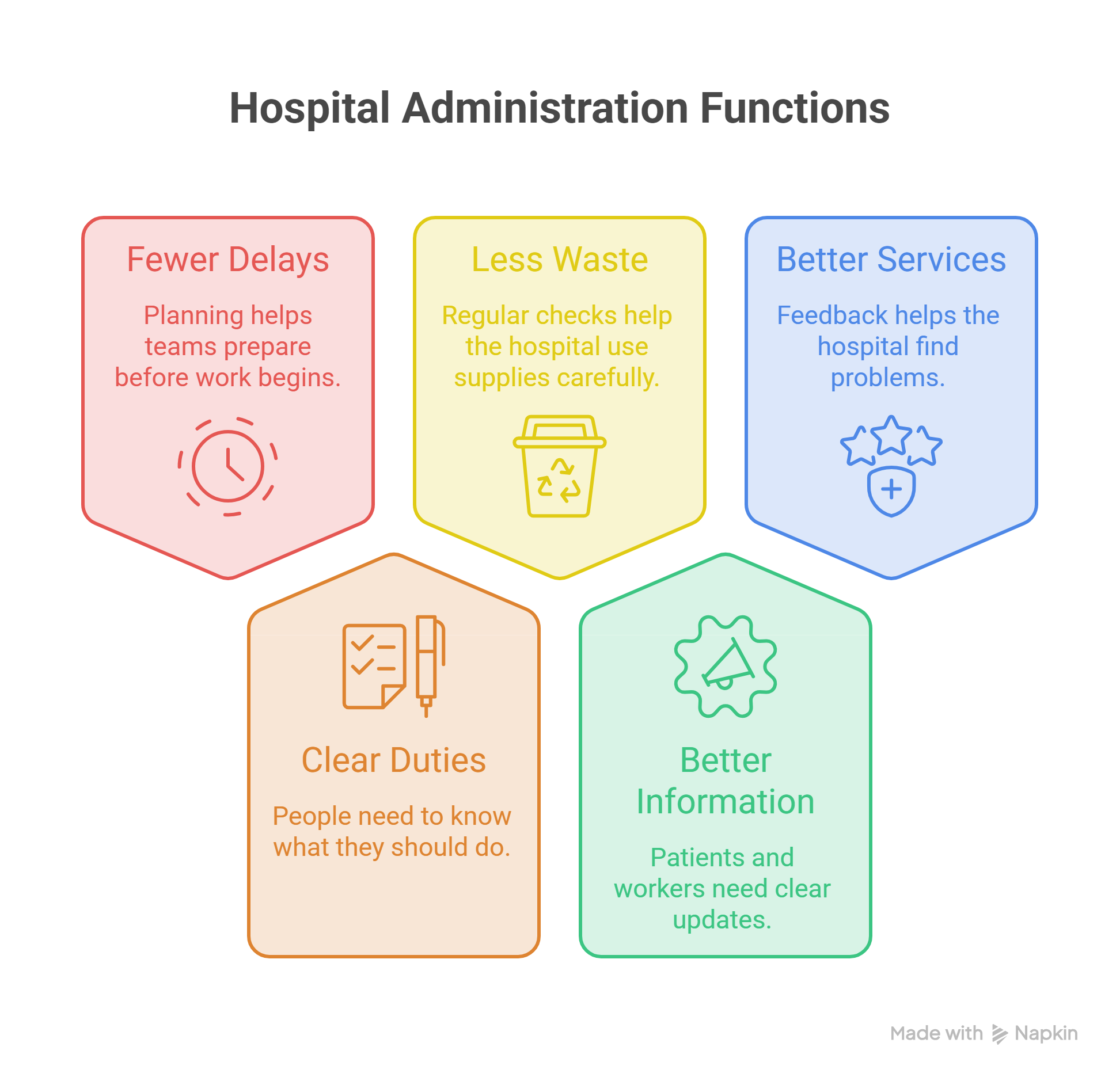
1. Fewer Delays
Planning helps teams prepare before work begins.
- Ready resources
- Available staff.
- Prepared rooms.
- Working machines.
- Needed supplies.
2. Clear Duties
People need to know what they should do.
- Work guidance
- Assigned tasks.
- Named contacts.
- Clear instructions.
- Proper handovers.
3. Less Waste
Regular checks help the hospital use supplies carefully.
- Useful checks
- Stock levels.
- Expiry dates.
- Purchase needs.
- Repair costs.
4. Better Information
Patients and workers need clear updates.
- Helpful updates
- Service timings.
- Waiting information.
- Changed arrangements.
- Pending work.
5. Better Services
Feedback helps the hospital find problems.
- Learning sources
- Patient comments.
- Staff suggestions.
- Complaint records.
- Incident reports.
The hospital can then make changes and check the results.
Conclusion
Hospital administration helps the hospital run each day. It manages staff, money, records, supplies and facilities.
Each team has an important job. Clear plans and good communication help everyone work together. This helps patients get more organised service during their visit.
Free UPSKILLING Courses!
Take your first step toward mastering in-demand skills, acing interviews, and securing top-tier jobs with Entri's free upskilling courses.
Start Learning!Frequently Asked Questions
What is hospital administration?
Hospital administration means planning and managing the daily work needed to run a hospital. It covers staff, money, patient records, supplies and facilities so different departments can work together.
What does a hospital administrator do?
A hospital administrator plans daily work, supports department heads and checks whether services are running properly. They also help solve problems, arrange resources and follow up on tasks that need attention.
Why is hospital administration important?
Doctors and nurses need available staff, clean rooms, working equipment and enough supplies to provide care. Hospital administration helps arrange these needs and reduce delays caused by poor planning or missing resources.
How does hospital administration help patients?
Hospital staff guide patients through appointments, registration, admission, billing and discharge. They also explain service procedures, answer questions and help patients or families reach the right person for support.
What is the role of HR in a hospital?
The HR team helps hire suitable workers, checks their qualifications and explains their duties when they join. It also arranges training, maintains employee records and helps staff raise questions about leave, rules or workplace problems.
How are hospital finances and bills managed?
The finance team prepares spending plans, tracks income and expenses, and handles payments such as salaries and supplier bills. The billing team records patient charges, checks bills and helps patients understand payments and required insurance documents.
How are patient records kept safe?
Hospitals protect patient records through secure computer accounts, limited access, locked cabinets and clear rules for handling information. Only authorised people should access these records, and staff must follow hospital procedures when sharing or releasing them.
What does the hospital quality team check?
The quality team checks areas such as cleanliness, patient identification, infection prevention and whether staff follow hospital procedures. It also reviews complaints and reported incidents, then works with departments to make improvements and check progress.
Who manages hospital equipment and supplies?
The facilities team arranges regular equipment checks, servicing and repairs with trained workers or service providers. The supply team orders medicines and other items, checks quantities and expiry dates, and delivers supplies to the departments needing them.
How is hospital administration different from medical care?
Doctors and nurses assess patients, provide treatment and make care decisions within their professional roles. Hospital administrators manage the staff, money, records, supplies and facilities that help these professionals carry out their work.