Table of Contents
Introduction
Pilates is becoming popular across India. It is practised to improve strength, balance, and flexibility. More job opportunities are being created for trained instructors.
Pilates exercises consists of controlled body movements. It improve posture. One also gets body control. With proper training. It can be taught safely.
Key Takeaways:
- Learn basic Pilates movements.
- Select suitable certification course.
- Check Course fees.
- Understand entry requirements.
- Practice teaching under supervision.
- Improve Communication.
- Upgrade exercise skills.
- Explore Jobs in studios
- Gyms are also good option.
Become a General Fitness Trainer and turn your passion into a Profession!
What Does a Pilates Instructor Do?
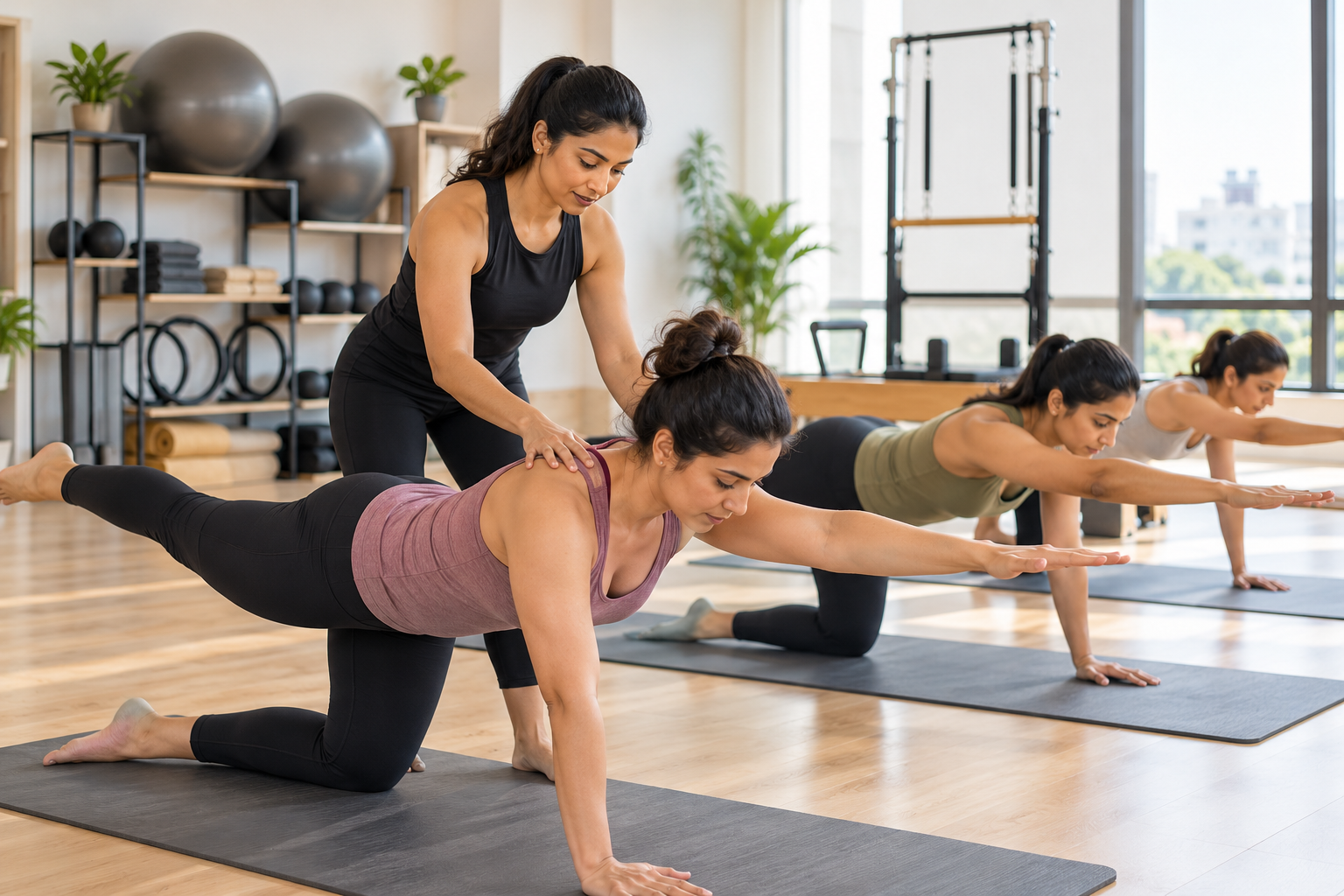
Pilates instructors guide people through exercise sessions. Strength, balance, and body control are developed through these sessions. Exercises are selected according to each client’s needs.
1. Teach Pilates Exercises
Movements are demonstrated and explained by instructors. Clients are guided through each exercise.
Movement guidance
– Demonstrations.
- Correct positions.
- Slow movements.
- Clear examples.
- Proper alignment.
– Instructions.
- Simple words.
- Clear directions.
- Short explanations.
- Helpful corrections.
– Breathing.
- Steady breathing.
- Natural rhythm.
- Controlled movements.
- Breath awareness.
– Posture.
- Body alignment.
- Stable positions.
- Gentle corrections.
- Balanced movement.
2. Plan Exercise Sessions
Different fitness goals are set by different clients. Exercises are selected according to their needs.
Session planning
– Assessment.
- Fitness level.
- Personal goals.
- Movement ability.
- Exercise history.
– Exercise selection.
- Suitable movements.
- Safe difficulty.
- Clear sequence.
- Appropriate equipment.
– Progress.
- Gradual increases.
- Regular practice.
- Better control.
- Skill development.
– Review.
- Client feedback.
- Progress checks.
- Exercise comfort.
- Goal updates.
3. Keep Clients Safe
One must ensure the safely of the clients while teaching. Feel free to change exercises if required.
Safety practices
– Screening.
- Health concerns.
- Previous injuries.
- Exercise limits.
- Movement problems.
– Modifications.
- Easier movements.
- Smaller movements.
- Suitable support.
- Alternative positions.
– Observation.
- Body position.
- Movement control.
- Signs of discomfort.
- Balance changes.
– Referrals.
- Medical advice.
- Specialist support.
- Physiotherapy guidance.
- Further assessment.
Medical conditions should not be diagnosed by instructors. Teaching must remain within their training.
4. Teach Different Clients
The requirements of client may differ. Adjust the exercises based on their requirements.
Common clients
– Beginners.
- Basic movements.
- Simple instructions.
- Gentle progress.
- Confidence building.
– Fitness enthusiasts.
- Stronger muscles.
- Better flexibility.
- Body control.
- Regular exercise.
– Older adults.
- Balance practice.
- Gentle movement.
- Better mobility.
- Stable positions.
– Athletes.
- Core strength.
- Body awareness.
- Better control.
- Flexibility training.
– Special groups.
- Adapted exercises.
- Individual needs.
- Professional guidance.
- Suitable referrals.
Turn Your Passion for Fitness into a Profession
Learn practical skills, get certified, and step into the growing fitness industry with confidence.
Join the CourseHow to Become a Pilates Instructor in India
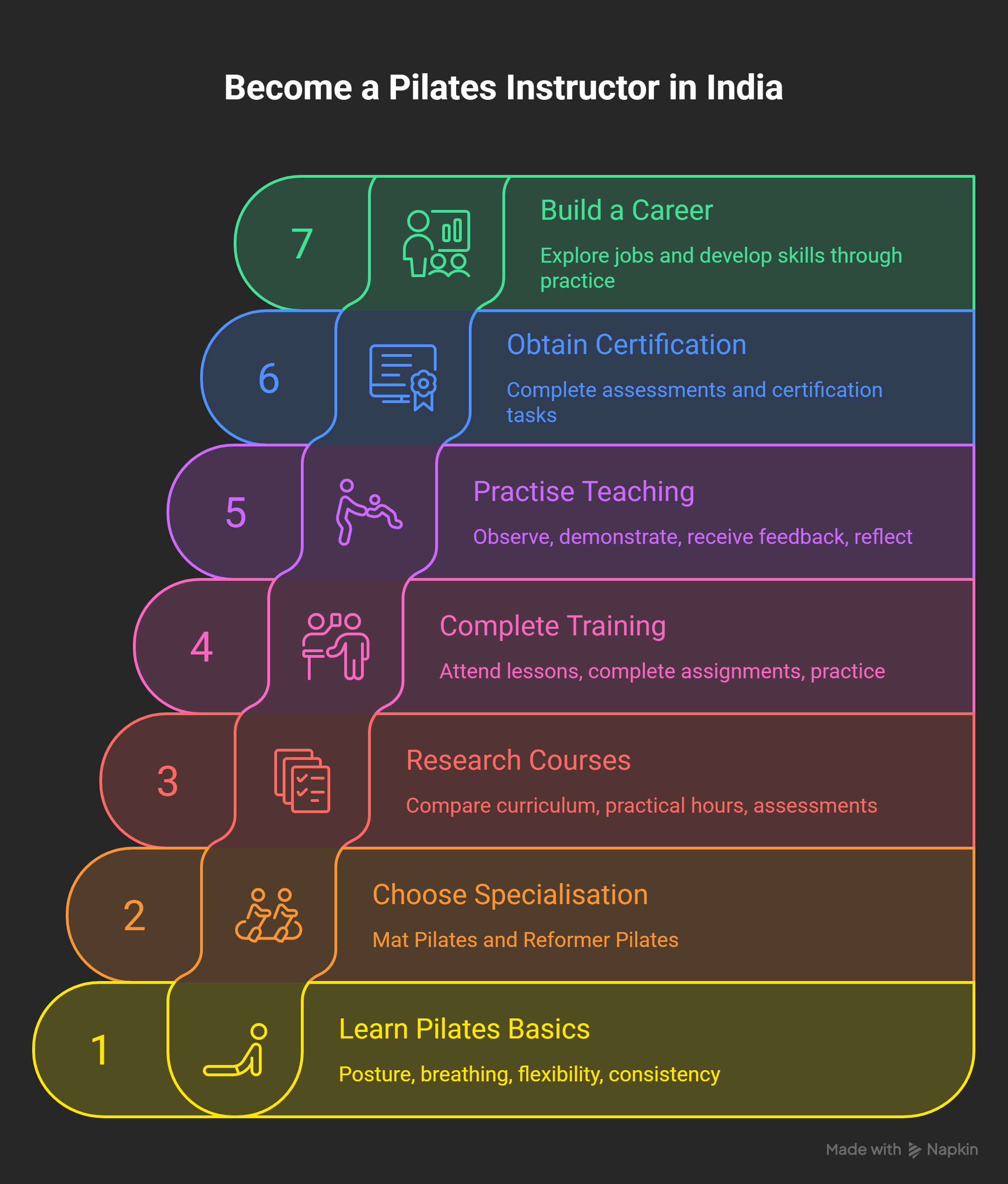
A number steps are taken to become a Pilates instructor. One learn first.
Step 1: Learn the Basics of Pilates
Basic Pilates movements should be learned first. Classes should be attended with a qualified instructor.
Learning areas
– Posture.
- Body alignment.
- Stable positions.
- Correct form.
- Balanced movement.
– Breathing.
- Steady rhythm.
- Controlled breathing.
- Natural movement.
- Breath awareness.
– Flexibility.
- Gentle stretches.
- Body awareness.
- Muscle control.
- Comfortable positions.
– Consistency.
- Regular classes.
- Home practice.
- Weekly sessions.
- Gradual learning.
More and more practice help get better understanding of Pilates. Identify areas needing improvement.
Step 2: Choose a Pilates Specialisation
Different types of Pilates are taught through different courses. A specialisation should be selected according to career goals.
Mat Pilates
– Equipment.
- Exercise mat.
- Body weight.
- Small accessories.
- Resistance bands.
– Focus.
- Floor exercises.
- Core strength.
- Body control.
- Controlled breathing.
– Work settings.
- Group classes.
- Fitness studios.
- Private sessions.
- Online classes.
Reformer Pilates
– Equipment.
- Reformer machine.
- Moving carriage.
- Adjustable springs.
- Footbar settings.
– Focus.
- Controlled resistance.
- Body alignment.
- Equipment handling.
- Movement control.
– Training needs.
- Practical lessons.
- Machine safety.
- Supervised practice.
- Equipment knowledge.
Select a comprehensive course. It covers both mat and reformer Pilates. Check Course details before starting.
Step 3: Research Training Courses
Course quality should be checked before fees are paid. Several programmes should be compared.
Course checks
– Curriculum.
- Anatomy basics.
- Exercise techniques.
- Teaching methods.
- Class planning.
– Practical hours.
- Guided practice.
- Class observation.
- Teaching sessions.
- Trainer feedback.
– Assessments.
- Written tests.
- Practical exams.
- Teaching demonstrations.
- Course assignments.
– Trainer experience.
- Relevant qualifications.
- Teaching background.
- Practical knowledge.
- Industry experience.
– Recognition.
- Provider credentials.
- Industry acceptance.
- Course standards.
- Assessment quality.
Confirm Course fees and practical requirements. Also check certification claims.
Step 4: Complete the Training
Attend all the lessons. Complete the assignments. Practice exercises under proper supervision.
Important subjects
– Anatomy.
- Muscles.
- Joints.
- Body structure.
- Posture basics.
– Technique.
- Correct form.
- Safe positions.
- Controlled movement.
- Proper breathing.
– Teaching.
- Clear instructions.
- Exercise demonstrations.
- Helpful feedback.
- Client communication.
– Planning.
- Exercise order.
- Session planning.
- Goal setting.
- Progress reviews.
– Adaptation.
- Easier options.
- Individual needs.
- Movement limits.
- Safe adjustments.
Step 5: Practise Teaching
Practical experience provides teaching confidence. Receive guidance from experienced instructors.
Practice activities
– Observation.
- Watch classes.
- Study instructions.
- Observe corrections.
- Learn techniques.
– Demonstration.
- Show movements.
- Explain positions.
- Maintain control.
- Give clear cues.
– Feedback.
- Mentor advice.
- Skill corrections.
- Regular review.
- Technique improvements.
– Reflection.
- Identify strengths.
- Improve weaknesses.
- Track progress.
- Set goals.
The practical hours required by the course must be completed.
Step 6: Obtain Certification
Assessments are included in most structured courses. Requirements are set by each training provider.
Certification tasks
– Examinations.
- Written tests.
- Practical tests.
- Teaching assessments.
- Knowledge checks.
– Documents.
- Course certificate.
- Training records.
- Practice hours.
- Assessment results.
– Preparation.
- Review lessons.
- Practise movements.
- Revise anatomy.
- Improve teaching.
Step 7: Start Building a Career
Suitable entry-level jobs can be explored after training. Skills should continue to be developed through practice.
First opportunities
– Studios.
- Assistant roles.
- Trainee positions.
- Instructor openings.
- Group classes.
– Gyms.
- Fitness classes.
- Client support.
- Exercise guidance.
- Member instruction.
– Private teaching.
- Individual sessions.
- Small groups.
- Flexible timings.
- Personal programmes.
– Networking.
- Trainer contacts.
- Studio visits.
- Fitness workshops.
- Industry events.
Prepare a proper CV . Include all relevant qualifications. Include practical experience and first-aid training.
Eligibility Requirements for Pilates Instructor Courses
Eligibility requirements changes with training providers. Some courses accept beginners. Others need fitness experience.
1. Educational Requirements
Some provides need basic education. Check course rules before applying.
Common requirements
– Education.
- School completion.
- Basic literacy.
- Required documents.
- Application forms.
– Language.
- Clear communication.
- Reading skills.
- Course understanding.
- Written responses.
2. Fitness Background
Previous fitness experience can be helpful. Some beginner courses may accept new learners.
Useful experience
– Personal practice.
- Regular Pilates.
- Yoga practice.
- General exercise.
- Stretching routines.
– Teaching background.
- Fitness instruction.
- Group classes.
- Exercise demonstrations.
- Client support.
– Physical readiness.
- Controlled movement.
- Basic flexibility.
- Body coordination.
- Movement awareness.
3. Age and Health Requirements
Minimum age requirements may be set by providers. Practical participation requirements may also apply.
Before applying
– Age.
- Check course rules.
- Confirm minimum age.
- Review admission criteria.
– Health.
- Review physical demands.
- Share relevant limitations.
- Follow medical advice.
– Commitment.
- Attend lessons.
- Complete practice.
- Pass assessments.
- Meet deadlines.
4. Helpful Additional Qualifications
Extra qualifications can improve professional preparation. Safer teaching practices can also be supported.
Useful additions
– First aid.
- Emergency response.
- Basic safety.
- Initial assistance.
– Anatomy.
- Muscle knowledge.
- Joint knowledge.
- Movement basics.
– Fitness training.
- Exercise planning.
- Client communication.
- Training principles.
Requirements should always be confirmed with the chosen provider.
Eligibility Comparison Table
| Requirement | Why It Matters | What to Check |
| Education |
|
|
| Fitness background |
|
|
| Age |
|
|
| Health |
|
|
| First aid |
|
|
Become a General Fitness Trainer and turn your passion into a Profession!
Best Pilates Instructor Certification Courses in India
The best course depends on career goals and budget. The syllabus, practical hours, equipment access, and recognition should be compared.
1. Mat Pilates Certification
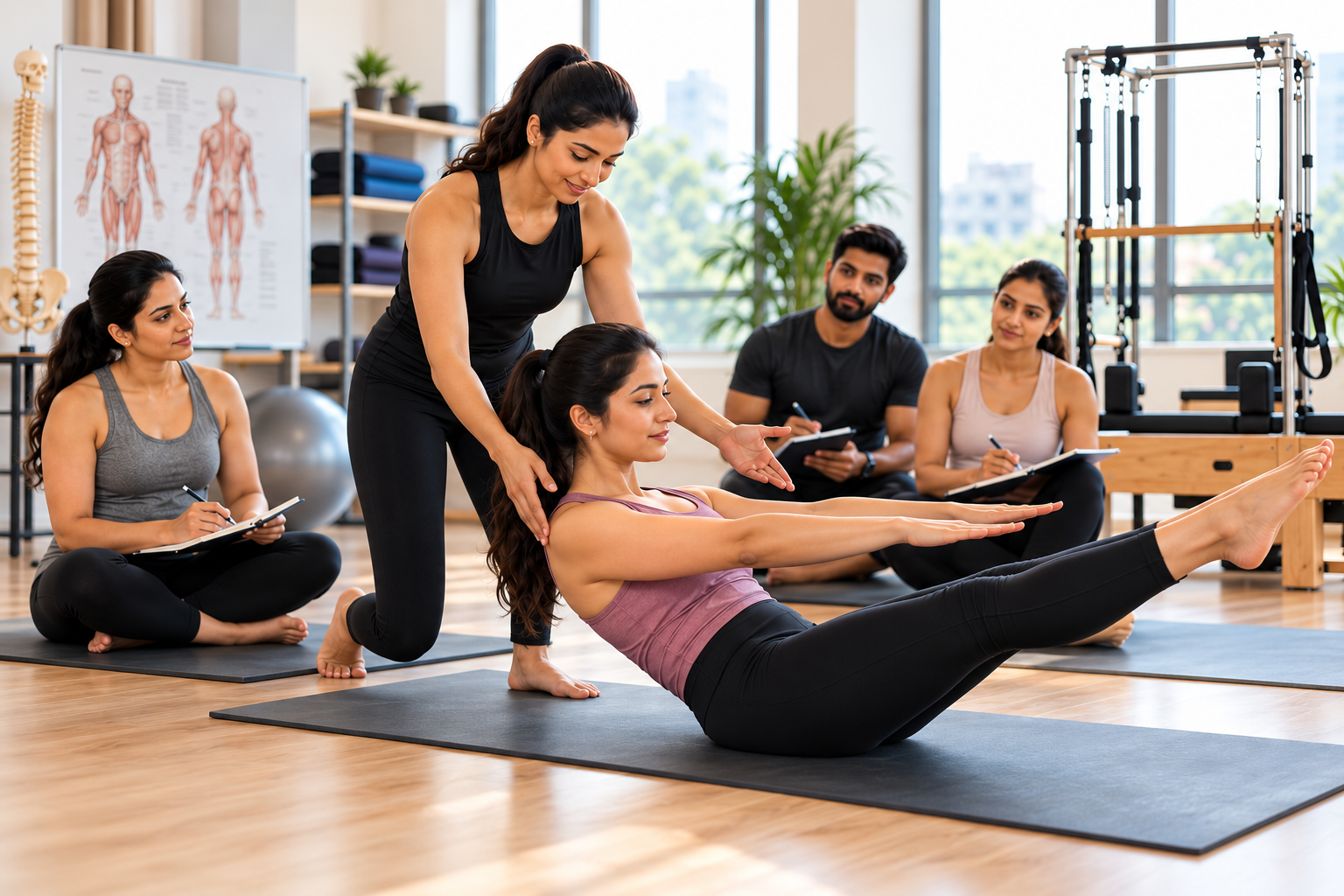
Mat Pilates courses focus on floor-based exercises. They can be selected as a starting point by new instructors.
Course focus
– Movements.
- Core exercises.
- Floor sequences.
- Controlled breathing.
- Gentle stretches.
– Teaching.
- Class planning.
- Clear instructions.
- Movement correction.
- Exercise demonstrations.
– Suitable roles.
- Mat classes.
- Group sessions.
- Beginner instruction.
- Fitness centres.
2. Reformer Pilates Certification
Reformer courses cover exercises using specialised equipment. Practical training is needed for safe machine use.
Course focus
– Equipment.
- Machine setup.
- Spring adjustments.
- Safe positioning.
- Carriage movement.
– Technique.
- Controlled resistance.
- Movement accuracy.
- Exercise changes.
- Body alignment.
– Suitable roles.
- Reformer studios.
- Private sessions.
- Equipment-based classes.
- Specialist studios.
3. Comprehensive Pilates Certification
Mat and equipment-based Pilates may both be covered. A wider range of classes can then be taught.
Course focus
– Training.
- Mat exercises.
- Reformer exercises.
- Other equipment.
- Practical teaching.
– Knowledge.
- Anatomy.
- Exercise planning.
- Teaching practice.
- Safety principles.
– Career options.
- Studio instruction.
- Private teaching.
- Multiple class formats.
- Group instruction.
4. How to Choose a Course
Course selection should not be based on price alone. Quality and professional value should also be checked.
Comparison points
– Recognition.
- Provider reputation.
- Industry acceptance.
- Clear credentials.
- Course requirements.
– Practical work.
- Supervised lessons.
- Teaching hours.
- Skills assessments.
- Mentor feedback.
– Course costs.
- Tuition fees.
- Exam charges.
- Equipment expenses.
- Travel costs.
– Career support.
- Placement assistance.
- Mentor guidance.
- Professional contacts.
- Job preparation.
5. Check Certification Standards
The provider should be researched before payment. The purpose and value of the certificate should be confirmed.
Verification steps
– Provider.
- Check credentials.
- Review experience.
- Confirm contact details.
– Curriculum.
- Read course details.
- Confirm practical hours.
- Review assessments.
– Recognition.
- Verify claims.
- Check industry standards.
- Ask about acceptance.
– Outcomes.
- Ask about graduates.
- Review career support.
- Check placement claims.
No single course suits everyone. Training should be selected according to career plans.
Course Comparison Table
| Course Type | Main Focus | Suitable Goal |
| Mat Pilates |
|
|
| Reformer Pilates |
|
|
| Comprehensive Pilates |
|
|
| Specialist training |
|
|
Turn Your Passion for Fitness into a Profession
Learn practical skills, get certified, and step into the growing fitness industry with confidence.
Join the CourseSkills Needed to Become a Pilates Instructor
Exercise knowledge and teaching skills are needed by Pilates instructors. Clear communication helps movements to be understood.
1. Pilates Knowledge
Strong subject knowledge is needed for safe instruction.
Core knowledge
– Anatomy.
- Muscles.
- Joints.
- Body alignment.
- Movement patterns.
– Technique.
- Correct positions.
- Movement control.
- Breathing patterns.
- Safe alignment.
– Exercise planning.
- Suitable sequences.
- Gradual progress.
- Individual adjustments.
- Goal setting.
2. Communication Skills
Clear instructions should be given during every session. Clients should be helped to understand each movement.
Teaching skills
– Cueing.
- Simple language.
- Short instructions.
- Clear timing.
- Useful reminders.
– Demonstration.
- Accurate movements.
- Visible positions.
- Controlled actions.
- Clear examples.
– Listening.
- Client concerns.
- Exercise feedback.
- Personal goals.
- Comfort levels.
3. Observation Skills
Client movements should be watched carefully. Adjustments can then be made when needed.
Observation areas
– Posture.
- Body alignment.
- Stable positions.
- Balanced movement.
– Control.
- Smooth movement.
- Suitable pace.
- Correct technique.
– Comfort.
- Pain reports.
- Signs of strain.
- Fatigue levels.
4. Personal Qualities
Good professional behaviour helps create a positive learning environment.
Useful qualities
– Patience.
- Allow learning.
- Repeat instructions.
- Support progress.
– Empathy.
- Respect concerns.
- Understand limits.
- Listen carefully.
– Discipline.
- Regular practice.
- Continued learning.
- Consistent preparation.
– Professionalism.
- Clear boundaries.
- Reliable conduct.
- Respectful behaviour.
5. Business Skills
Basic business skills are also needed by independent instructors.
Business tasks
– Scheduling.
- Manage bookings.
- Plan sessions.
- Confirm timings.
– Communication.
- Answer enquiries.
- Explain services.
- Share instructions.
– Marketing.
- Build visibility.
- Share qualifications.
- Create useful content.
– Recordkeeping.
- Track payments.
- Maintain client records.
- Review attendance.
Career Opportunities and Salary for Pilates Instructors in India
Pilates instructors can be employed in different fitness settings. Income is affected by experience, location, qualifications, and working hours.
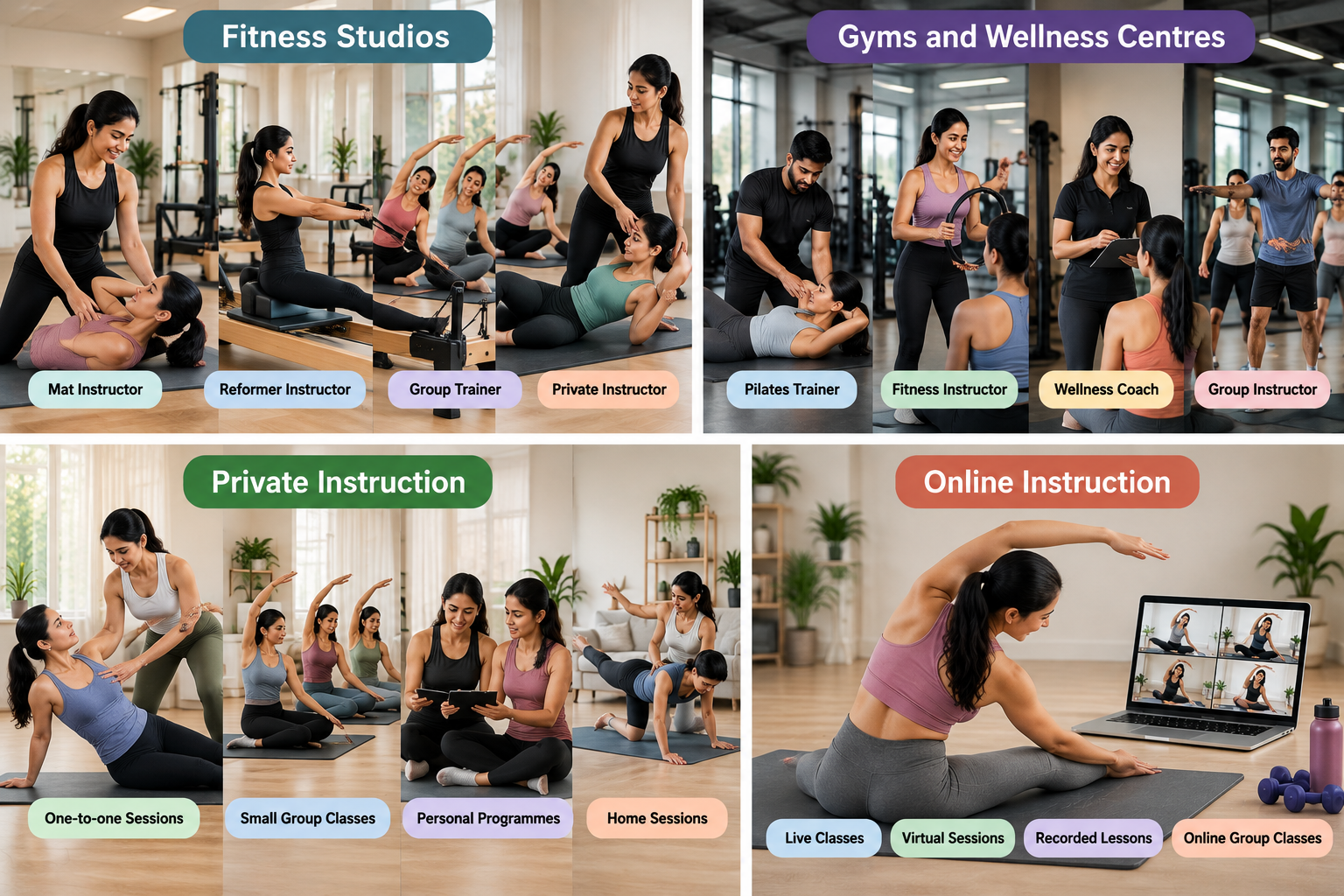
1. Career Opportunities
Fitness studios
– Roles.
- Mat instructor.
- Reformer instructor.
- Group trainer.
- Private instructor.
– Work.
- Sessions are led.
- Clients are guided.
- Classes are planned.
- Progress is tracked.
Gyms and wellness centres
– Roles.
- Pilates trainer.
- Fitness instructor.
- Wellness coach.
- Group instructor.
– Work.
- Classes are taught.
- Members are supported.
- Progress is tracked.
- Exercises are explained.
Private instruction
– Services.
- One-to-one sessions.
- Small group classes.
- Personal programmes.
- Home sessions.
– Benefits.
- Flexible schedules.
- Direct client contact.
- Business growth.
- Individual planning.
Online instruction
– Formats.
- Live classes.
- Virtual sessions.
- Recorded lessons.
- Online group classes.
– Requirements.
- Clear communication.
- Suitable space.
- Reliable equipment.
- Stable internet.
2. Pilates Instructor Salary in India
Salary levels vary between employers and cities. Higher pay may be offered to experienced instructors. Fees may be charged per session by independent instructors.
Income factors
– Experience.
- Beginner: ₹15,000–₹25,000/month.
- Experienced: ₹25,000–₹40,000/month.
- Senior: ₹40,000–₹60,000/month.
– Location.
- Delhi: ₹15,000–₹60,000/month.
- Bengaluru: ₹15,000–₹35,000/month.
- Chandigarh: ₹25,000–₹55,000/month.
– Work model.
- Full-time: Monthly salary.
- Part-time: ₹15,000–₹25,000/month in some listings.
- Freelance: Earnings depend on session rates and bookings.
3. How to Increase Earning Potential
Career growth can be supported through continued learning. A strong reputation can be built through reliable teaching.
Growth strategies
– Specialisation.
- Reformer Pilates.
- Advanced techniques.
- Suitable client groups.
- Equipment expertise.
– Experience.
- Regular classes.
- Client feedback.
- Mentor support.
- Practical learning.
– Networking.
- Studio contacts.
- Fitness events.
- Professional groups.
- Trainer connections.
– Business growth.
- Client referrals.
- Flexible services.
- Clear pricing.
- Regular communication.
Local job listings should be checked before income estimates are made. Salary, commission, and session rates should be confirmed with employers.
Career and Salary Factors Table
| Factor | Possible Effect |
| Experience |
|
| Specialisation |
|
| Location |
|
| Work setting |
|
| Client base |
|
Conclusion
Becoming a Pilates instructor in India requires proper training, practice, and dedication. Essential teaching skills can be developed through a suitable certification course. Practical experience is also needed to guide different clients safely.
Pilates basics should be learned and practised regularly. Training should be selected according to career goals. Teaching experience should be gained, and communication skills should be improved. Opportunities can be explored in studios, gyms, and wellness centres. Professional growth can be supported through continued learning.
Turn Your Passion for Fitness into a Profession
Learn practical skills, get certified, and step into the growing fitness industry with confidence.
Join the CourseFrequently Asked Questions
How can I become a Pilates instructor in India?
Start by learning Pilates basics and choosing a suitable instructor certification course. Complete the required training, practical hours, and assessments before applying for teaching roles.
What qualifications are needed to become a Pilates instructor?
Requirements vary between training providers, and some courses accept beginners. Fitness experience, anatomy knowledge, and first-aid training can be helpful.
How long does Pilates instructor training take?
Training duration depends on the course type and certification provider. Comprehensive programmes usually require more study and practical training than basic mat courses.
Which Pilates certification course is best in India?
Mat Pilates suits those interested in floor-based exercises, while reformer training focuses on specialised equipment. Comprehensive courses cover more formats, so compare practical hours, assessments, and recognition before enrolling.
Can I become a Pilates instructor without a fitness background?
Yes, some beginner courses accept candidates without previous fitness qualifications. Regular practice and suitable training will be needed to develop teaching skills.
What is the salary of a Pilates instructor in India?
Entry-level instructors may earn around ₹15,000–₹25,000 monthly in some advertised roles. Experienced instructors may earn ₹35,000–₹60,000 or more, depending on location and qualifications.
Is Mat Pilates certification enough to become an instructor?
Mat certification can prepare candidates to teach suitable floor-based Pilates classes. Reformer or comprehensive training may be needed for equipment-based teaching roles.
Where can Pilates instructors work in India?
Employment opportunities may be available in Pilates studios, gyms, wellness centres, and fitness facilities. Private and online teaching can also be considered after suitable training.
What skills are required to become a Pilates instructor?
Knowledge of anatomy, exercise techniques, posture, and breathing is important. Clear communication, observation, patience, and safe exercise modifications are also needed.
Can Pilates instructors work independently in India?
Yes, qualified instructors can offer private sessions or small-group classes. Income will depend on session fees, client numbers, experience, and business expenses.