Table of Contents
Introduction
Fitness trainers work either online or in gym. One can build a good brand using any of the two. A good brand provides more clients. It also builds trust and loyalty.
Online coaching is to reach people in far of places. In Gym training trainers can help clients directly. Both methods help business grow. The best choice depends on personal goals and the skills that one has.
Key Takeaways:
- Online coaching reaches clients across locations.
- Gym training provides direct, personal guidance.
- Strong branding helps attract and retain clients.
- Social media builds visibility and trust.
- Clear packages help clients choose services.
- Combining both models can increase business opportunities.
Become a General Fitness Trainer and turn your passion into a Profession!
What Is Online Fitness Coaching?
Online fitness coaching is done through the internet. Workout plans are shared with clients online. Progress is checked through messages and video calls. Clients can train at home or elsewhere.
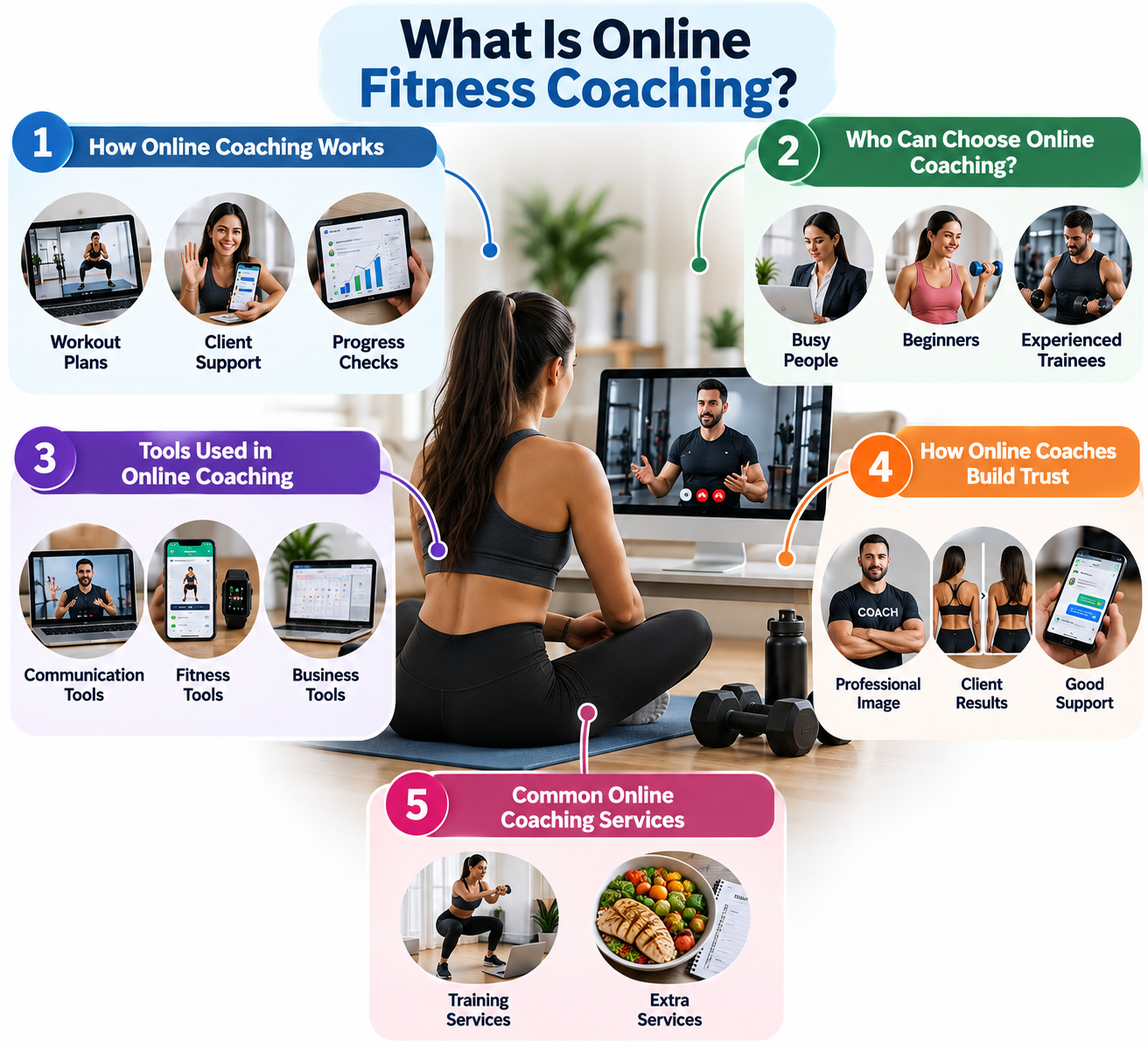
1. How Online Coaching Works
Workout Plans
- Weekly plans.
- Daily exercises.
- Fitness goals.
- Rest days.
- Home workouts.
- Gym workouts.
- Exercise videos.
- Plan updates.
Client Support
- Video calls.
- Text messages.
- Email support.
- Weekly checks.
- Progress reports.
- Form checks.
- Goal reviews.
- Regular feedback.
Progress Checks
- Weight records.
- Workout logs.
- Body measurements.
- Strength levels.
- Fitness tests.
- Monthly reviews.
- Goal updates.
- Progress charts.
2. Who Can Choose Online Coaching?
Online coaching can suit people with busy lives. It can also suit people who prefer home workouts.
Busy People
- Work schedules.
- Home workouts.
- Flexible timings.
- Quick check-ins.
- Travel-friendly plans.
- Remote support.
- Simple tracking.
- Personal goals.
Beginners
- Basic exercises.
- Easy instructions.
- Simple plans.
- Fitness habits.
- Regular feedback.
- Goal setting.
- Safe movements.
- Gradual progress.
Experienced Trainees
- Strength goals.
- Advanced workouts.
- Fitness targets.
- Progress checks.
- Training updates.
- Recovery plans.
- Exercise reviews.
- Performance tracking.
3. Tools Used in Online Coaching
Online coaches use digital tools for training. These tools also help manage clients.
Communication Tools
- Video calls.
- Messaging apps.
- Email services.
- Group chats.
- Voice messages.
- Online meetings.
- Client portals.
- Support channels.
Fitness Tools
- Workout apps.
- Exercise videos.
- Fitness trackers.
- Training logs.
- Food diaries.
- Progress charts.
- Digital calendars.
- Measurement records.
Business Tools
- Websites.
- Booking apps.
- Payment tools.
- Client records.
- Social media.
- Online forms.
- Email newsletters.
- Feedback surveys.
4. How Online Coaches Build Trust
Trust helps clients stay with a coach. Good service can help build that trust.
Professional Image
- Clear branding.
- Good photos.
- Helpful posts.
- Clean designs.
- Updated profiles.
- Clear information.
- Useful videos.
- Regular posts.
Client Results
- Client reviews.
- Success stories.
- Progress photos.
- Fitness goals.
- Strength gains.
- Client feedback.
- Training results.
- Personal milestones.
Good Support
- Quick replies.
- Clear advice.
- Regular checks.
- Helpful feedback.
- Timely updates.
- Safe guidance.
- Personal attention.
- Honest advice.
5. Common Online Coaching Services
Many fitness services can be offered online.
Training Services
- Strength training.
- Weight management.
- Home workouts.
- Beginner plans.
- Cardio training.
- Mobility exercises.
- Sports training.
- Fitness tests.
Extra Services
- Habit coaching.
- Meal guidance.
- Goal reviews.
- Progress tracking.
- Group programs.
- Video sessions.
- Monthly plans.
- Personal check-ins.
Turn Your Passion for Fitness into a Profession
Learn practical skills, get certified, and step into the growing fitness industry with confidence.
Join the CourseWhat Is Gym-Based Personal Training?
Gym-based training happens inside a gym. Trainers guide clients during their workouts. Exercises are shown and corrected in person. Clients receive direct support during each session.
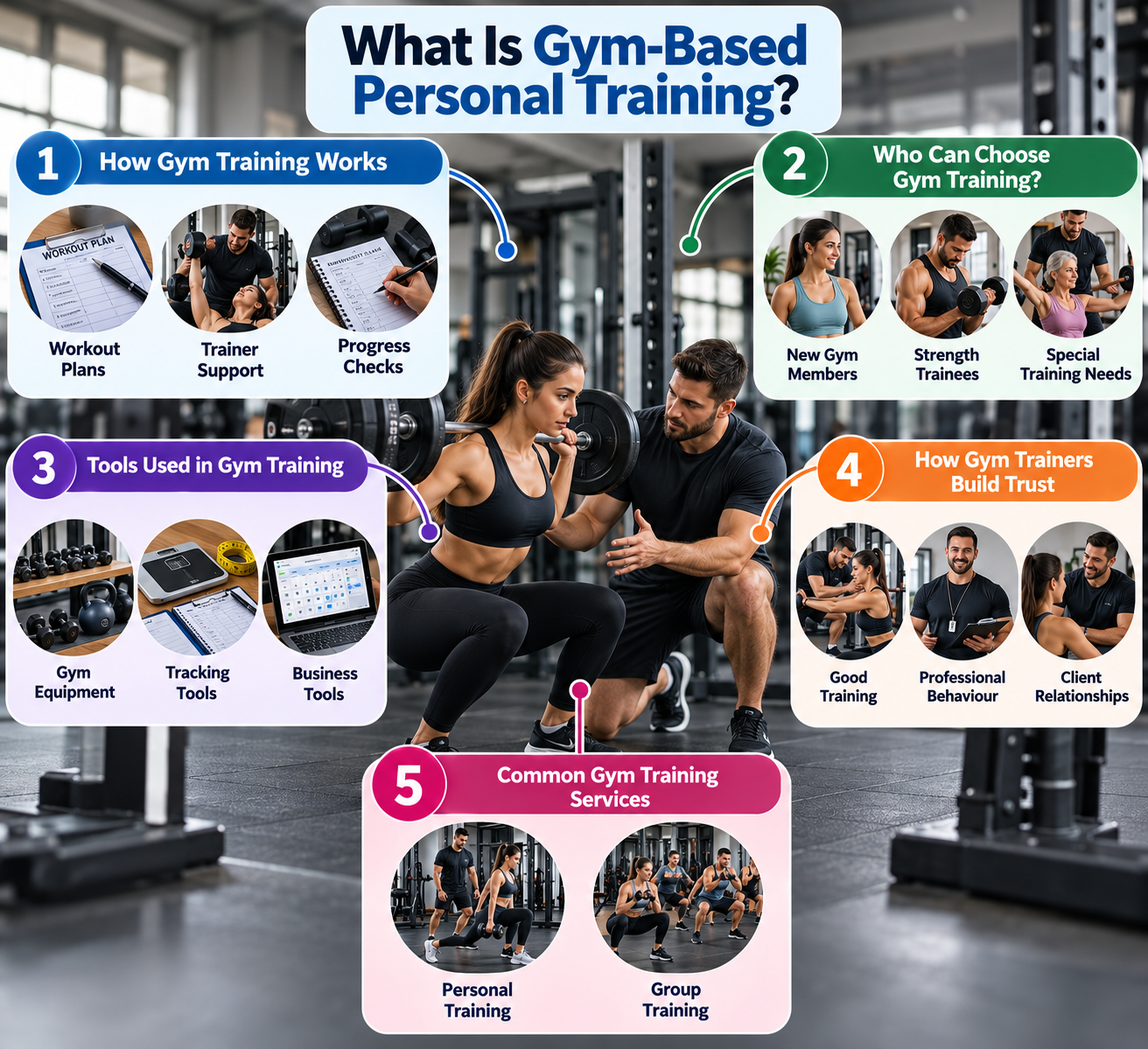
1. How Gym Training Works
Workout Plans
- Fitness goals.
- Exercise plans.
- Training schedules.
- Rest periods.
- Weight selection.
- Exercise order.
- Progress checks.
- Plan changes.
Trainer Support
- Exercise demonstrations.
- Form correction.
- Safety advice.
- Equipment guidance.
- Weight adjustments.
- Movement checks.
- Personal feedback.
- Workout supervision.
Progress Checks
- Weight records.
- Repetition counts.
- Strength levels.
- Fitness tests.
- Session notes.
- Attendance records.
- Goal reviews.
- Progress charts.
2. Who Can Choose Gym Training?
Gym training can suit people who need direct guidance.
New Gym Members
- Basic guidance.
- Simple exercises.
- Equipment lessons.
- Safe movements.
- Easy routines.
- Trainer support.
- Form practice.
- Fitness habits.
Strength Trainees
- Weightlifting guidance.
- Strength goals.
- Form correction.
- Weight increases.
- Recovery plans.
- Progress checks.
- Training changes.
- Personal supervision.
Special Training Needs
- Easy movements.
- Mobility exercises.
- Balance training.
- Strength building.
- Safe workouts.
- Gradual progress.
- Exercise changes.
- Regular checks.
3. Tools Used in Gym Training
Gym trainers use equipment during training. They also use tools to track progress.
Gym Equipment
- Dumbbells.
- Barbells.
- Resistance bands.
- Cable machines.
- Treadmills.
- Exercise benches.
- Weight machines.
- Medicine balls.
Tracking Tools
- Measuring tapes.
- Weighing scales.
- Heart monitors.
- Training logs.
- Fitness tests.
- Progress charts.
- Session notes.
- Attendance sheets.
Business Tools
- Booking apps.
- Payment systems.
- Client records.
- Membership plans.
- Referral cards.
- Social media.
- Review websites.
- Business websites.
4. How Gym Trainers Build Trust
Clients value trainers who provide good guidance. Professional behaviour can also build trust.
Good Training
- Clear instructions.
- Safe exercises.
- Personal attention.
- Proper corrections.
- Useful feedback.
- Regular sessions.
- Realistic goals.
- Progress checks.
Professional Behaviour
- Being punctual.
- Clean equipment.
- Respectful speech.
- Honest advice.
- Clear rules.
- Client privacy.
- Reliable service.
- Professional appearance.
Client Relationships
- Goal discussions.
- Regular check-ins.
- Progress updates.
- Friendly guidance.
- Client feedback.
- Personal support.
- Fitness milestones.
- Long-term trust.
5. Common Gym Training Services
Gym trainers can offer different training services.
Personal Training
- Strength training.
- Weight management.
- Beginner workouts.
- Mobility training.
- Fitness tests.
- Cardio training.
- Sports training.
- Form correction.
Group Training
- Circuit training.
- Cardio classes.
- Strength groups.
- Bootcamp sessions.
- Mobility classes.
- Beginner groups.
- Fitness challenges.
- Small-group training.
Online Coaching vs Gym Training: Key Differences
Both methods can help clients reach fitness goals. However, their daily work can be different.
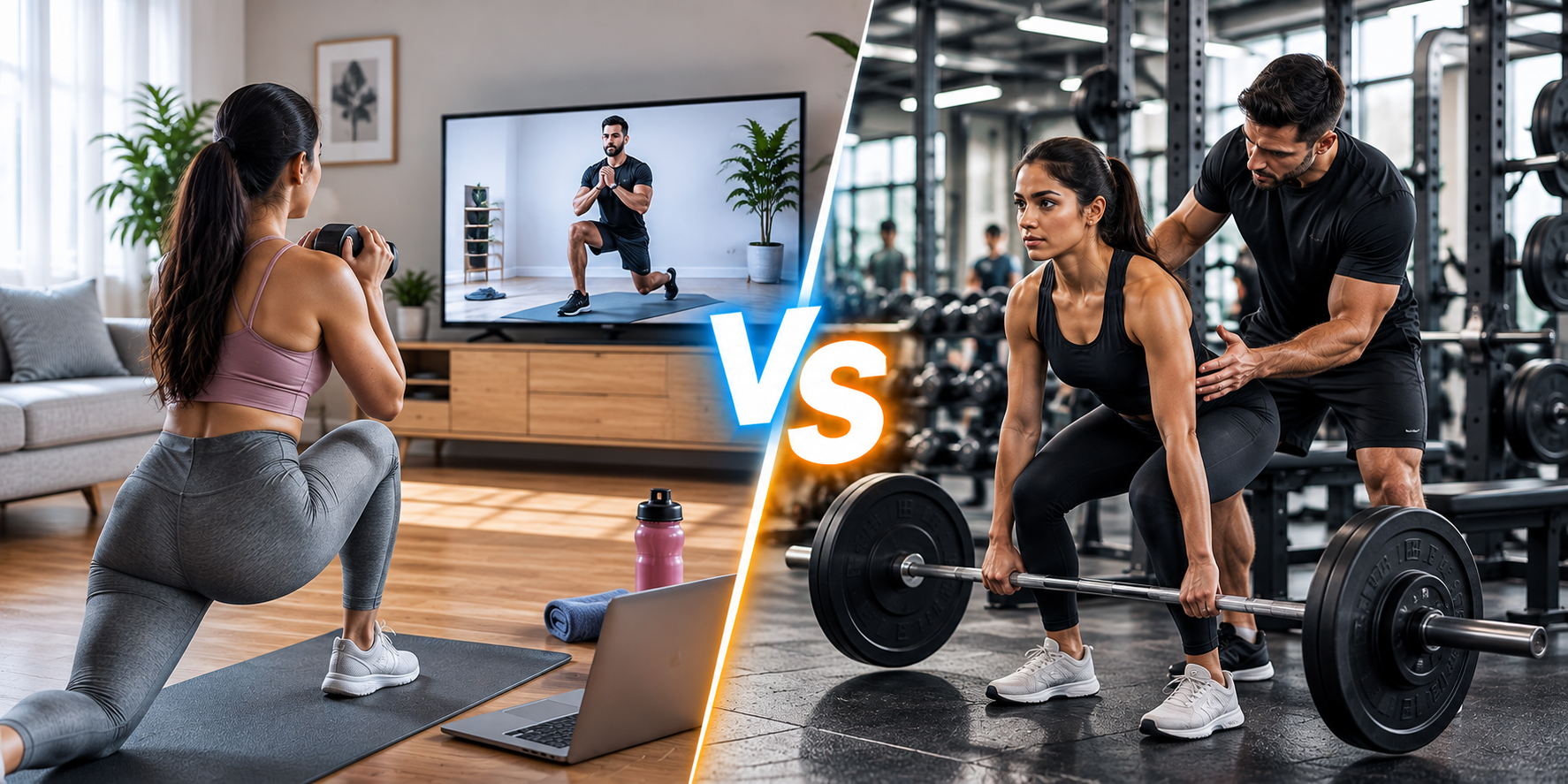
1. Location and Access
Online Coaching
- Home workouts.
- Remote sessions.
- Flexible locations.
- Wider reach.
- Online support.
- No travel.
- Flexible schedules.
- Digital check-ins.
Gym Training
- Physical location.
- Face-to-face sessions.
- Gym equipment.
- Direct guidance.
- Local clients.
- Fixed appointments.
- Quick corrections.
- Personal support.
2. Costs and Expenses
Online Coaching
- No gym rent.
- Fewer expenses.
- Online tools.
- Home office.
- Digital marketing.
- Remote sessions.
- Flexible packages.
- Limited equipment.
Gym Training
- Gym rent.
- Equipment costs.
- Travel expenses.
- Facility fees.
- Cleaning costs.
- Insurance costs.
- Local advertising.
- Equipment repairs.
3. Feedback and Support
Online Coaching
- Video feedback.
- Written advice.
- Online calls.
- Progress reports.
- Remote check-ins.
- Exercise videos.
- App reminders.
- Digital reviews.
Gym Training
- Live guidance.
- Quick corrections.
- Direct supervision.
- Form checks.
- Personal feedback.
- Equipment help.
- Face-to-face talks.
- Workout monitoring.
4. Business Growth
Online Coaching
- More clients.
- Online courses.
- Group programs.
- Monthly memberships.
- Video lessons.
- Online workshops.
- Referral programs.
- Digital products.
Gym Training
- Local referrals.
- Gym partnerships.
- Group classes.
- Fitness events.
- Client referrals.
- Local workshops.
- Fitness challenges.
- Studio partnerships.
5. Main Differences
| Feature | Online Coaching | Gym Training |
| Location | Anywhere | Inside gyms |
| Clients | Wider reach | Local reach |
| Support | Online guidance | Direct guidance |
| Costs | Usually lower | Often higher |
| Equipment | Depends on client | Gym equipment |
| Schedule | More flexible | Set appointments |
| Feedback | Remote | Face-to-face |
| Growth | Online audience | Local community |
6. Building a Strong Brand
A strong brand helps clients recognise a trainer. Different methods can be used for each model.
Online Brand
- Good website.
- Helpful videos.
- Clear prices.
- Client reviews.
- Regular posts.
- Success stories.
- Professional photos.
- Useful advice.
Gym Brand
- Local reputation.
- Gym partnerships.
- Client referrals.
- Printed flyers.
- Client results.
- Fitness events.
- Personal introductions.
- Professional service.
Benefits of Online Fitness Coaching
Online coaching offers several benefits for trainers. It can also help a business reach more people.
1. Reach More Clients
Client Groups
- Busy workers.
- Home trainees.
- Beginners.
- Remote clients.
- Different cities.
- Fitness groups.
- International clients.
- Special interest groups.
Online Visibility
- Social media.
- Helpful videos.
- Fitness blogs.
- Client stories.
- Online reviews.
- Website articles.
- Email updates.
- Educational posts.
2. Manage Work Easily
Daily Tasks
- Flexible hours.
- Online bookings.
- Digital payments.
- Remote meetings.
- Client records.
- Shared schedules.
- Automatic reminders.
- Progress updates.
Training Services
- Personal plans.
- Group coaching.
- Recorded lessons.
- Online sessions.
- Monthly programs.
- Video feedback.
- Fitness workshops.
- Progress reviews.
3. Spend Less on Facilities
Lower Costs
- No gym rent.
- Fewer bills.
- Less equipment.
- No daily travel.
- Online meetings.
- Digital resources.
- Home office.
- Online promotion.
Business Growth
- Better software.
- Website design.
- Video equipment.
- Brand design.
- Coach training.
- Client support.
- Marketing materials.
- New skills.
Become a General Fitness Trainer and turn your passion into a Profession!
Turn Your Passion for Fitness into a Profession
Learn practical skills, get certified, and step into the growing fitness industry with confidence.
Join the CourseBenefits of Gym-Based Personal Training
Gym-based personal training offers direct client support. Trainers can guide clients during each exercise. Personal contact can help build trust. A good reputation can also bring new clients.
1. Better Client Support
Direct Guidance
- Exercise demonstrations.
- Form correction.
- Safety advice.
- Weight adjustments.
- Movement checks.
- Personal feedback.
- Training support.
- Quick answers.
Personal Contact
- Face-to-face talks.
- Goal discussions.
- Progress reviews.
- Fitness advice.
- Regular sessions.
- Personal attention.
- Client encouragement.
- Trust building.
2. Access to Equipment
Gym Equipment
- Dumbbells.
- Barbells.
- Weight machines.
- Cable machines.
- Treadmills.
- Resistance bands.
- Exercise benches.
- Medicine balls.
Training Options
- Strength training.
- Cardio workouts.
- Weight training.
- Balance exercises.
- Mobility training.
- Circuit training.
- Sports training.
- Fitness testing.
3. Strong Local Reputation
A good local reputation can attract new clients. Satisfied clients may recommend a trainer.
Client Referrals
- Personal recommendations.
- Client reviews.
- Success stories.
- Progress photos.
- Word-of-mouth.
- Friend referrals.
- Family referrals.
- Online reviews.
Local Connections
- Gym partnerships.
- Fitness events.
- Local businesses.
- Community groups.
- Health workshops.
- Sports clubs.
- Fitness classes.
- Local campaigns.
4. More Personal Training Services
Different services can attract different clients. Trainers can offer sessions based on client needs.
Individual Services
- Personal training.
- Strength coaching.
- Weight management.
- Beginner training.
- Mobility sessions.
- Fitness assessments.
- Cardio coaching.
- Sports conditioning.
Group Services
- Group workouts.
- Circuit classes.
- Fitness challenges.
- Bootcamp sessions.
- Beginner classes.
- Strength groups.
- Cardio classes.
- Mobility groups.
How to Build Your Personal Training Brand Online and Offline
A personal brand helps clients recognise a trainer. It shows the trainer’s skills, values, and services. A clear brand can help attract suitable clients. The same brand can work online and offline.
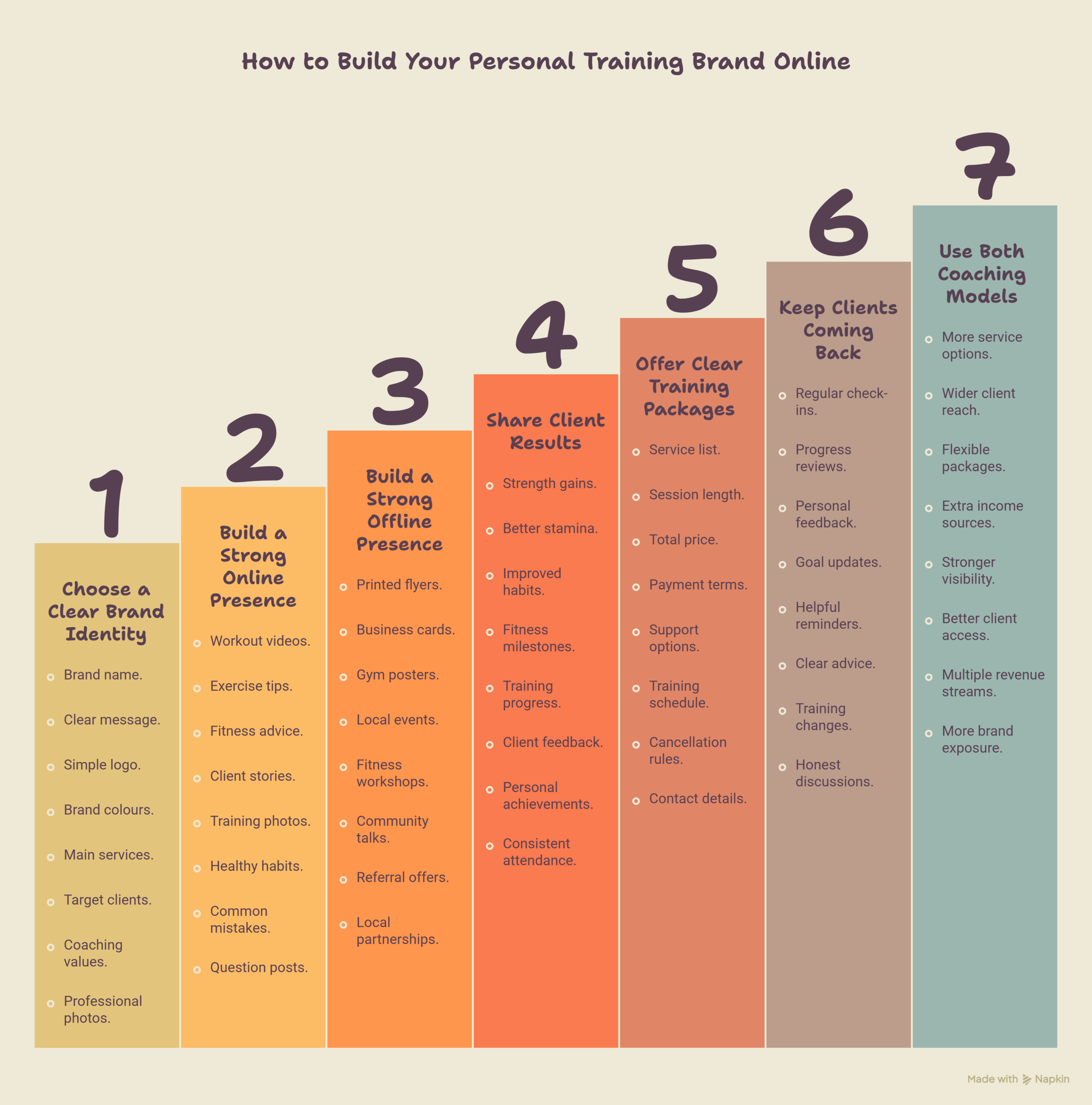
1. Choose a Clear Brand Identity
A clear identity helps clients understand the service. It also helps a trainer stand out.
Brand Basics
- Brand name.
- Clear message.
- Simple logo.
- Brand colours.
- Main services.
- Target clients.
- Coaching values.
- Professional photos.
Choose a Focus
- Weight management.
- Strength training.
- Home workouts.
- Beginner fitness.
- Sports training.
- Mobility coaching.
- Senior fitness.
- General fitness.
Build Recognition
- Same logo.
- Same colours.
- Clear descriptions.
- Regular posts.
- Consistent messaging.
- Matching designs.
- Professional appearance.
- Helpful information.
2. Build a Strong Online Presence
An online presence helps people find a trainer. Useful content can also build trust.
Social Media
- Workout videos.
- Exercise tips.
- Fitness advice.
- Client stories.
- Training photos.
- Healthy habits.
- Common mistakes.
- Question posts.
Website Content
- About page.
- Service details.
- Training prices.
- Client reviews.
- Contact details.
- Booking options.
- Fitness articles.
- Frequently asked questions.
Useful Content
- Beginner guides.
- Workout plans.
- Exercise demonstrations.
- Training tips.
- Recovery advice.
- Goal-setting advice.
- Fitness myths.
- Safety tips.
3. Build a Strong Offline Presence
Offline branding helps trainers connect with local clients. Personal contact can support long-term relationships.
Local Promotion
- Printed flyers.
- Business cards.
- Gym posters.
- Local events.
- Fitness workshops.
- Community talks.
- Referral offers.
- Local partnerships.
Client Experience
- Clean equipment.
- Friendly service.
- Clear instructions.
- Personal attention.
- Timely sessions.
- Safe workouts.
- Regular reviews.
- Helpful advice.
Local Networking
- Gym owners.
- Sports coaches.
- Health professionals.
- Fitness groups.
- Local businesses.
- Community leaders.
- Sports clubs.
- Event organisers.
4. Share Client Results
Real client progress can show coaching quality. Results should always be shared with permission.
Success Stories
- Strength gains.
- Better stamina.
- Improved habits.
- Fitness milestones.
- Training progress.
- Client feedback.
- Personal achievements.
- Consistent attendance.
Build Trust
- Honest results.
- Clear timelines.
- Realistic goals.
- Client permission.
- Accurate claims.
- Respectful sharing.
- Private records.
- Honest reviews.
Online Sharing
- Client testimonials.
- Progress photos.
- Short interviews.
- Training clips.
- Written reviews.
- Success posts.
- Progress updates.
- Client stories.
5. Offer Clear Training Packages
Simple packages help clients choose suitable services. Clear prices can also prevent confusion.
Online Packages
- Monthly coaching.
- Workout plans.
- Video sessions.
- Group programs.
- Weekly check-ins.
- Progress reviews.
- Habit coaching.
- Personal feedback.
Gym Packages
- Single sessions.
- Monthly training.
- Small groups.
- Fitness assessments.
- Beginner programs.
- Strength coaching.
- Goal reviews.
- Personal sessions.
Package Details
- Service list.
- Session length.
- Total price.
- Payment terms.
- Support options.
- Training schedule.
- Cancellation rules.
- Contact details.
6. Keep Clients Coming Back
Good service can help clients continue training. Regular support can also improve client satisfaction.
Client Support
- Regular check-ins.
- Progress reviews.
- Personal feedback.
- Goal updates.
- Helpful reminders.
- Clear advice.
- Training changes.
- Honest discussions.
Client Retention
- Realistic goals.
- Flexible plans.
- Friendly service.
- Regular communication.
- Progress tracking.
- Client rewards.
- Referral programs.
- Continued learning.
Professional Growth
- New skills.
- Fitness courses.
- Industry events.
- Client feedback.
- Better systems.
- Updated knowledge.
- New services.
- Stronger branding.
7. Use Both Coaching Models
Online and gym training can support each other. A combined model can reach different client groups.
Online Services
- Remote coaching.
- Video consultations.
- Digital programs.
- Online check-ins.
- Group coaching.
- Recorded lessons.
- Monthly memberships.
- Fitness resources.
Gym Services
- Personal sessions.
- Group workouts.
- Fitness assessments.
- Equipment guidance.
- Strength coaching.
- Beginner sessions.
- Technique checks.
- Local workshops.
Combined Benefits
- More service options.
- Wider client reach.
- Flexible packages.
- Extra income sources.
- Stronger visibility.
- Better client access.
- Multiple revenue streams.
- More brand exposure.
Which Fitness Coaching Model Is Right for You?
The best model depends on skills and resources. Personal goals should also guide the decision.
1. Choose Online Coaching If
Online coaching can suit trainers who prefer digital work. It can also support flexible business growth.
Suitable Skills
- Clear communication.
- Digital knowledge.
- Video creation.
- Time management.
- Online teaching.
- Client support.
- Program planning.
- Progress tracking.
Suitable Goals
- Wider reach.
- Flexible hours.
- Lower facility costs.
- Remote services.
- Digital products.
- Group programs.
- Online growth.
- Location freedom.
2. Choose Gym Training If
Gym training can suit trainers who enjoy direct contact. It can also help build a local reputation.
Suitable Skills
- Exercise demonstrations.
- Face-to-face teaching.
- Form correction.
- Equipment knowledge.
- Personal communication.
- Client motivation.
- Session planning.
- Safety guidance.
Suitable Goals
- Local clients.
- Direct support.
- Gym partnerships.
- Personal sessions.
- Group classes.
- Community connections.
- Hands-on teaching.
- Local reputation.
3. Compare Your Options
| Factor | Online Coaching | Gym Training |
| Main setting | Online | Physical gym |
| Client reach | Wider | Mostly local |
| Initial costs | Often lower | Can be higher |
| Client contact | Remote | Face-to-face |
| Equipment | Client-dependent | Gym-based |
| Work schedule | Flexible | Session-based |
| Main marketing | Digital content | Local promotion |
| Growth options | Digital services | Local services |
4. Start With Your Resources
Available resources can guide the first step. Skills can be developed as the business grows.
Check Resources
- Available budget.
- Training skills.
- Work schedule.
- Local demand.
- Digital skills.
- Equipment access.
- Business goals.
- Client needs.
Plan Your Start
- Choose one model.
- Define your services.
- Set fair prices.
- Create a brand.
- Find first clients.
- Collect feedback.
- Track progress.
- Improve services.
5. Review Your Progress
Regular reviews can show what works well. Changes can then be made when needed.
Business Checks
- Client numbers.
- Monthly income.
- Client feedback.
- Service demand.
- Marketing results.
- Repeat bookings.
- Business expenses.
- Client retention.
Next Steps
- Improve weak areas.
- Update packages.
- Learn new skills.
- Test new services.
- Improve communication.
- Strengthen branding.
- Build partnerships.
- Review goals.
Conclusion
Online coaching and gym training offer different opportunities. Both can help build a strong fitness brand. Online coaching can reach clients across many locations. Gym training can build trust through direct support.
A clear brand can support either business model. Good service can also encourage client referrals. Trainers can begin with one coaching model. Online and gym services can then be combined. The final choice should match skills, goals, and resources.
Turn Your Passion for Fitness into a Profession
Learn practical skills, get certified, and step into the growing fitness industry with confidence.
Join the CourseFrequently Asked Questions
What Is Online Fitness Coaching?
Online fitness coaching is provided through the internet. Workout plans and feedback are shared digitally.
What Is Gym-Based Personal Training?
Gym-based training happens inside a fitness centre. Trainers guide clients during their workouts.
Is Online Coaching Better Than Gym Training?
Both options offer different benefits. The best choice depends on personal needs and goals.
Which Coaching Model Costs Less?
Online coaching often has lower operating costs. Gym training may include rent and equipment expenses.
Can Beginners Choose Online Coaching?
Yes, beginners can follow online fitness plans. Regular guidance can help them learn basic exercises.
What Equipment Is Needed for Online Coaching?
Equipment depends on the workout plan. Dumbbells, resistance bands, or bodyweight exercises may be used.
How Can Fitness Trainers Build Their Brand?
Trainers can share helpful content and client reviews. Consistent branding can improve recognition and trust.
How Can Online Coaches Attract Clients?
Online coaches can use social media and websites. Helpful fitness content can attract potential clients.
Can Trainers Offer Online and Gym Training?
Yes, trainers can combine both coaching models. This can help them reach different client groups.
How Can Trainers Retain Their Clients?
Regular feedback and clear training plans can help. Good communication can encourage clients to continue.