Table of Contents
Key Takeaways:
- Multi-speciality hospitals have many job options
- Jobs are in medical and non-medical fields
- Different departments need different skills
- Administrative jobs help manage hospital work
- Many non-medical jobs are available (billing, lab, patient care)
- Good communication and basic knowledge help you do well
Introduction
Multi-speciality hospitals like Aster Medcity are modern healthcare centers that bring together different medical departments under one roof. From cardiology and neurology to orthopaedics and emergency care, these hospitals provide complete treatment and support to patients. But beyond patient care, they also create a wide range of career opportunities for people from different educational backgrounds.
Whether you are from a medical field or a non-medical background, there are many roles you can explore. Hospitals need not only doctors and nurses, but also administrators, front office staff, lab technicians, billing executives, and patient coordinators to ensure smooth daily operations. This makes multi-speciality hospitals a great place to build a stable and meaningful career.
With the growing demand for quality healthcare in India, hospitals like Aster Medcity continue to expand, opening doors for skilled professionals. If you are looking for a career that combines job security, growth, and the chance to make a difference in people’s lives, the healthcare sector is a great choice to consider.
Explore Your Future in Hospital Administration! Enroll now
What are Multi-Speciality Hospitals?
Multi-speciality hospitals are large hospitals. They treat many health problems in one place. Patients can get different types of treatment without going to many clinics.
Different Departments
- These hospitals have many departments
- Example:
- Heart care (Cardiology)
- Brain care (Neurology)
- Bone care (Orthopaedics)
- Child care (Paediatrics)
- Each department has special doctors and nurses
Complete Care in One Place
- Patients get full treatment in one hospital
- No need to travel to different places
- Saves time and effort
Teamwork of Doctors
- Doctors from different departments work together
- They share ideas for better treatment
- Example: heart and diabetes care together
- Helps in faster recovery
Modern Medical Facilities
- Hospitals have advanced machines
- Example: MRI, CT scan, lab tests
- Well-equipped operation theatres
- Helps in correct diagnosis and treatment
Emergency Services
- Open 24/7 for urgent cases
- Treats accidents and serious health problems
- ICU (Intensive Care Unit) for critical patients
Extra Patient Services
- Pharmacy for medicines
- Counselling and support services
- Rehabilitation for recovery
- Helps patients feel comfortable and safe
Departments in a Multi-Speciality Hospital
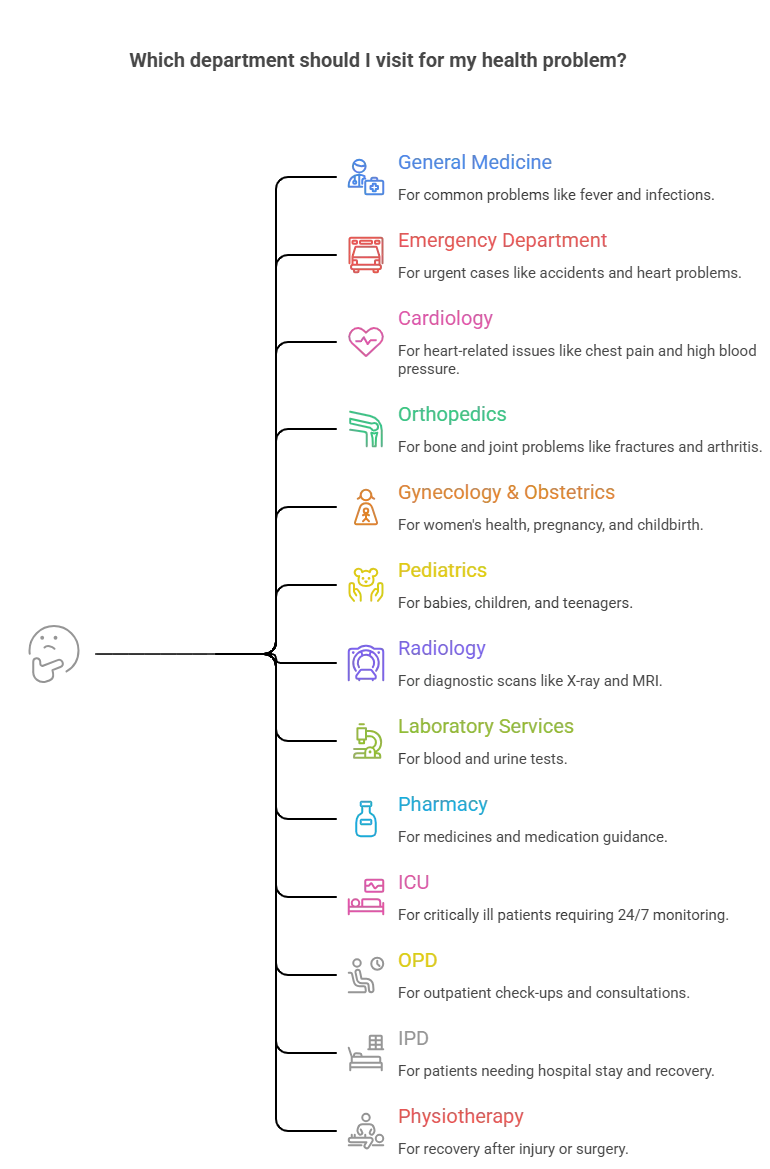
1. General Medicine
- First place for most patients
- Treats common problems like fever, cold, and infections
- Doctors guide patients to specialists if needed
2. Emergency Department
- Handles urgent and serious cases
- Works 24/7 (always open)
- Treats accidents, injuries, and heart problems
- Gives fast medical care
3. Cardiology
- Treats heart problems
- Handles chest pain and high blood pressure
- Helps in heart disease treatment
4. Orthopedics
- Treats bones and joints
- Handles fractures and injuries
- Helps with back pain and arthritis
5. Gynecology & Obstetrics
- Takes care of women’s health
- Pregnancy and childbirth care
- Treats reproductive health problems
6. Pediatrics
- Treats babies, children, and teenagers
- Handles common childhood illnesses
- Monitors child growth and health
7. Radiology
- Uses scans like X-ray, CT, MRI, and ultrasound
- Helps doctors find health problems
- Important for correct diagnosis
8. Laboratory Services
- Tests blood, urine, and other samples
- Helps doctors understand diseases
- Supports treatment decisions
9. Pharmacy
- Gives medicines to patients
- Explains how to take medicines safely
- Ensures correct medication use
10. ICU (Intensive Care Unit)
- For very serious patients
- Provides 24/7 monitoring
- Uses special machines and care
11. OPD (Outpatient Department)
- For patients who do not stay in hospital
- Used for check-ups and consultations
- Patients go home after visiting doctor
12. IPD (Inpatient Department)
- For patients who need hospital stay
- Includes rooms and wards
- Care given until recovery
13. Physiotherapy Department
- Helps recovery after injury or surgery
- Uses exercises and physical therapy
- Improves movement and strength
Administrative Job Roles in Hospitals
Administrative jobs help hospitals work properly. These jobs do not treat patients directly. They manage daily hospital work and office tasks. These jobs are good for freshers and also for women who want to restart their careers.
1. Hospital Administrator
- Manages overall hospital work
- Looks after staff and daily operations
- Handles budget and hospital rules
- Ensures smooth hospital services
- Needs leadership and organizing skills
2. Front Office Executive
- First person to meet patients
- Greets and guides visitors
- Manages appointments and phone calls
- Helps patients with basic information
- Needs good communication and computer skills
3. Medical Records Executive
- Keeps patient records safe and updated
- Maintains digital and paper files
- Ensures correct data entry
- Very careful and detail-oriented job
- Important for hospital information system
4. Patient Care Coordinator
- Helps patients during treatment process
- Schedules doctor appointments
- Explains procedures to patients
- Connects patients with doctors
- Needs good communication and care
5. Billing & Insurance Executive
- Makes hospital bills
- Handles insurance claims
- Checks patient coverage details
- Works with numbers and records
- Accuracy is very important
6. HR Executive
- Hires hospital staff
- Maintains employee records
- Manages attendance and leave
- Supports hospital employees
- Keeps workplace organized
7. Operations Executive
- Manages daily hospital activities
- Coordinates between departments
- Solves basic operational problems
- Ensures smooth teamwork
- Important for hospital flow
8. Receptionist
- Welcomes patients
- Answers basic questions
- Manages appointments
- Gives hospital information
- Simple entry-level job
9. Office Assistant
- Helps with paperwork and filing
- Supports admin staff
- Organizes documents
- Easy job for beginners
- Good for gaining experience
10. Quality & Compliance Executive
- Checks hospital safety rules
- Ensures proper standards are followed
- Maintains quality of services
- Monitors hospital processes
- Important for patient safety
Clinical Support & Non-Clinical Opportunities
Healthcare is not only for doctors and nurses. There are many other job options that help hospitals run smoothly. These jobs are divided into clinical support roles and non-clinical roles. Both are very important in the healthcare system.
Clinical Support Roles
Clinical support jobs help doctors and nurses care for patients. People in these jobs work closely with patients in hospitals. Basic training is needed, but a full medical degree is not required.
Examples of Clinical Support Jobs:
Lab Technician: Collects blood, urine, and other samples. Tests the samples in the laboratory.
Phlebotomist: Takes blood from patients for medical tests. Works carefully and safely.
Patient Care Assistant: Helps patients with daily activities. Supports them with eating, moving, and basic care.
Radiology Assistant: Helps during X-rays, CT scans, and MRI tests. Supports technicians during procedures.
Non-Clinical Roles
Non-clinical jobs do not involve direct patient treatment. These jobs focus on hospital management and office work. Basic communication and computer skills are important for these roles.
Examples of Non-Clinical Jobs
Hospital Administration: Manages daily hospital work and staff. Helps keep the hospital organized.
Medical Coding and Billing: Handles patient bills and insurance information. Works with medical records.: Front Office Executive
Welcomes patients at the hospital. Manages appointments and registration.
Medical Records Staff: Keeps patient files and records updated. Maintains data safely.
Insurance Coordinator: Handles health insurance claims. Helps patients complete paperwork.
Who Can Choose These Jobs?
Clinical support jobs are good for people who enjoy caring for patients. Non-clinical jobs are suitable for people who prefer office and management work. Both options are good for freshers with basic training.

Skills Required to Work in Top Hospitals
Working in top hospitals needs some basic skills and a good attitude. You don’t need very advanced skills at the beginning, but these simple skills will help you do well and grow in your career.
1. Communication Skills
- Speak clearly with patients, doctors, and staff
- Be polite and respectful
- Listen carefully to others
- Good communication creates a positive work environment
2. Basic Computer Knowledge
- Know how to use a computer
- Send emails and messages
- Use basic hospital software
- Helps in managing records and data
3. Teamwork
- Work well with doctors, nurses, and staff
- Support your team members
- Share responsibilities
- Hospitals need teamwork to run smoothly
4. Time Management
- Complete tasks on time
- Handle busy work without stress
- Manage multiple duties easily
- Very important in hospitals
5. Attention to Detail
- Be careful while doing work
- Avoid small mistakes
- Check records and reports properly
- Important for patient safety
6. Problem-Solving Skills
- Stay calm in difficult situations
- Find simple solutions quickly
- Handle unexpected problems
- Helps in daily hospital work
7. Empathy and Caring Nature
- Be kind to patients
- Understand their feelings
- Help patients feel comfortable
- Caring attitude is very important
8. Adaptability
- Be ready for changes in work
- Adjust to new situations easily
- Learn new systems and tools
- Helps in fast-moving hospital work
9. Professionalism
- Be punctual and responsible
- Follow rules and discipline
- Respect everyone at work
- Builds trust and good reputation
Explore Your Future in Hospital Administration! Enroll now
Conclusion
1: What is the primary role of a hospital administrator?
Multi-speciality hospitals offer many job opportunities. People with different skills can find jobs there. There are medical, office, and management jobs. Hospitals need a good team to work properly and take care of patients. These hospitals give stable jobs and help people learn and grow in their careers. With basic skills and training, it is easier to get a job. A good attitude is also important. Multi-speciality hospitals are good for long-term careers. They are helpful for freshers and for people starting their careers again. Overall, they are a good place to build a safe and successful career in healthcare.
Hospital Administration Course with Assured Career Growth
Hospital Administration Course by Entri App: Master essential healthcare management skills, gain certification, and secure top roles in leading hospitals
Join Now!Frequently Asked Questions
What are the main work opportunities in multi-speciality hospitals like Aster Medcity?
Multi-speciality hospitals offer a wide range of roles including clinical positions (nurses, lab technicians), clinical support roles (patient care assistants), and non-clinical roles (administration, billing, front office, and HR). These hospitals require a large team to manage different departments efficiently.
Do I need a medical degree to work in a multi-speciality hospital?
No, a medical degree is not required for all roles. Many non-clinical and support positions only need basic qualifications or short-term certification courses, making it easier to enter the healthcare field.
What are the best non-clinical jobs in hospitals?
Popular non-clinical roles include hospital administration, medical coding and billing, receptionist, patient coordinator, and medical records executive. These roles are ideal for those who prefer office-based work.
Are there entry-level job opportunities in multi-speciality hospitals?
Yes, there are many entry-level roles such as receptionist, office assistant, data entry operator, and patient care assistant. These jobs help beginners gain experience and grow in their careers.
What skills are required to work in top hospitals?
Basic skills like communication, teamwork, computer knowledge, time management, and attention to detail are important. A positive attitude and willingness to learn also play a key role.
Do multi-speciality hospitals offer career growth?
Yes, these hospitals provide good career growth opportunities. With experience and additional training, employees can move into higher positions like supervisors, managers, or specialized roles.
Are flexible or shift-based jobs available in hospitals?
Yes, hospitals operate 24/7, so they offer flexible work options including shift-based jobs, part-time roles, and sometimes contract-based positions. This helps employees manage their work-life balance effectively.