Table of Contents
Answer First
AI agents can be used for different HR tasks. Instructions can be followed and routine work can be completed. Several HR activities can be handled through these tools.
-
-
Recruiting and Sourcing Agent: Shortlist candidates.
-
Resume Screening Agent: Review and organise application.
-
Interview Scheduling Agent : Arrange interviews.
-
Onboarding Agent: Manage joining tasks .
-
Employee Helpdesk Agent: Handle employee questions & HR requests
-
Learning and Development Agent: Suggest Courses & training plans.
-
Performance and Engagement Agent: Get Feedback & review performance trends.
-
Workforce Analytics and Payroll Agent: Keep workforce data & payroll records
-
Routine HR tasks are handled via these agents. However, human judgement is maintained. Hiring, pay, and employee decisions reviewed. Human involvement retained for important decisions.
Is being an HR your dream? Enrol now for our course on Human Resource!
Introduction
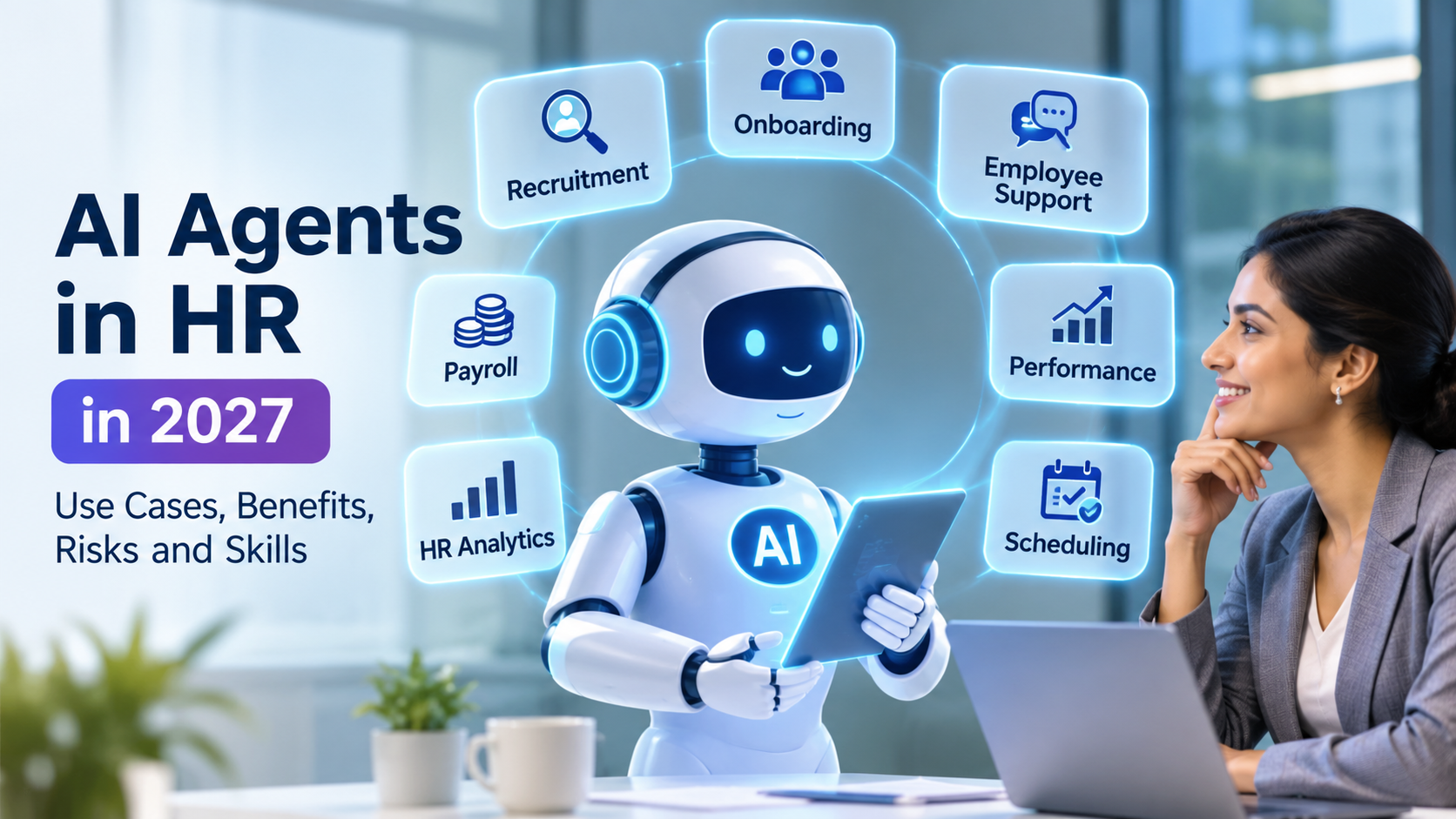
HR work is moving into a new stage. Earlier AI assistants mainly answered questions. Newer agents can also complete tasks. Interviews arranged through connected calendars. Employee records updated. Routine requests handled.
This shift will shape HR work in 2027. Here eight major AI agent types are discussed. Their tasks, tools, benefits, and risks explained. Skills needed by HR professionals covered.
Become an HR Expert – Enroll in Our HR Management Course Today!
Unlock the secrets to effective Human Resource Management with our expert-led course! Learn recruitment, employee relations, performance management, and more to build a thriving workplace. Start your journey toward a successful HR career today!
Know MoreWhat Are AI Agents in HR?
AI agents are software tools built for specific tasks. Instructions can be understood and assigned goals can be followed. Information can be collected from connected systems. Actions can then be completed with limited human input.
For example, a recruiting agent can search candidate profiles. Skills can be compared with job requirements. Suitable profiles can then be grouped. A recruiter can review each result.
Different levels of independence may be provided. Some agents need approval before each action. Others can complete approved tasks automatically. Access and permissions should always be controlled.
AI Agent vs Chatbot vs Automation
These terms may sound similar. However, each one performs different work.
| Type | What it does | Example in HR |
|---|---|---|
| Chatbot | Questions are answered through conversation. | Leave rules are explained. |
| Basic automation | Fixed steps are followed. | Interview reminders are sent. |
| AI agent | Tasks are understood and completed across systems. | Candidates are found and contacted. |
Information mainly provided by chatbots. Fixed rules followed by basic automation. Several connected steps can be managed by AI agents. New information can also be considered.
For example, reminders can be sent automatically. An AI agent can also check calendar changes. Another interview time can then be suggested. Updated details shared with candidates.
Why Adoption Is Rising in 2027
AI use in HR rising. However, adoption vary. A 2026 SHRM study had 1,908 HR professionals. 39% reported AI use. Recruiting, HR technology, and learning were main areas.
Several benefits are linked to it.
1. Faster Task Completion
Routine HR tasks completed faster.
- Repeated tasks are automated.
- Employee record is updated.
- Paperwork is reduced.
2. Quicker Employee Support
Faster support can be provided to employees.
- Common questions can be answered.
- Employee requests can be handled.
- Company policies can be shared.
3. Easier Recruitment
Recruitment tasks can be handled easily.
- Suitable candidates can be found.
- Resumes can be reviewed.
- Interviews can be arranged.
4. Personalised Employee Learning
Suitable learning suggestions can be provided.
- Training plans can be prepared.
- Learning needs can be reviewed.
- Skill development can be supported.
5. Better Workforce Analysis
Workforce information can be reviewed faster.
- Employee data can be analysed.
- Important patterns can be recognised.
- HR decisions can be better supported.
6. Low Administrative Work
Repeated administrative tasks reduced.
- Employee records maintained.
- Attendance records updated.
- Manual work is reduced.
7. Growing Need for AI Training
A skills gap was also reported by CIPD. Around 75% of people professionals had received no AI training. More training will therefore be required.
- Basic AI knowledge should be developed.
- HR teams should receive proper training.
- AI tools should be used correctly.
- Practical skills should be improved.
- Human judgement should be maintained.
Best 8 AI Agents for HR Professionals in 2027
Different agents support different HR functions. Recruitment tasks can be handled by some. Employee services and daily operations can be supported by others. Eight useful types are explained below.
1. Recruiting and Sourcing Agent
Recruiting agents help find suitable candidates. Talent pools and professional profiles can be searched. Existing candidate records can also be reviewed.
These agents can support several recruitment tasks.
- Candidate sourcing. Suitable profiles are identified.
- Talent search. Skills and experience matched.
- Talent rediscovery. Previous applicants reviewed.
- Candidate outreach. Initial messages prepared.
- Job descriptions. Draft descriptions created.
- Recruitment planning. Candidate pipelines organised.
Example tools include:
- Eightfold Talent Acquisition offers AI-powered recruiting features.
- Workday provides a Recruiting Agent.
- Both support different parts of talent acquisition.
Important risks should also be considered.
- Suitable candidates may be missed.
- Past hiring data create bias.
- Candidate details need protection.
Search results needs checking by recruiters. Suitable candidates must not be rejected automatically.
2. Resume Screening and Shortlisting Agent
They help review job applications. Candidate details are compared with job requirements. Relevant skills and experience can be identified.
Manual screening work can be reduced. Large numbers of applications can also be organised.
Common tasks include:
- Candidate details can be extracted from resumes.
- Relevant skills identified.
- Work experience can be compared with job needs.
- Matching profiles can be grouped.
- Application summaries can be prepared.
- Shortlisting support can be provided.
- Missing information highlighted.
Example tools include:
- Workday. Has AI-supported recruiting features.
- Eightfold. Supports candidate matching.
- HireVue. AI-supported assessment tools are offered.
Different features are provided by these products. Not every feature works as an independent agent.
Some important risks should also be considered.
- Poor job descriptions can affect results.
- Biased data affect candidate rankings.
- Suitable applicants overlooked.
Screening results checked.. Final hiring decisions made.
3. Interview Scheduling Agent
Interview scheduling agents manage calendar tasks. Available time slots can be identified. Candidates and interviewers can then be contacted.
Changes can also be managed. Repeated emails and calls reduced.
Common tasks include:
- Available slots checked.
- Interviews arranged.
- Send reminders to candidates.
- Reshedule changed appointments.
- Interview details shared.
Example tools include:
- Paradox provides interview scheduling.
- Olivia assistant supports communication.
- Scheduling is connected with hiring systems.
Important risks should also be considered.
- Calendar information become outdated.
- Time zones cause booking errors.
- Incorrect details confuse candidates.
Interview details should be checked regularly. Clear updates should be shared with candidates.
Is being an HR your dream? Enrol now for our course on Human Resource!
4. Onboarding Agent
Onboarding agents support newly hired employees. Joining activities can be organised through connected systems. Step-by-step guidance can also be provided.
The process begins after offer acceptance. Documents and joining tasks managed.
Common tasks include:
- Doument request.
- Collect details of employee.
- Explain company policies.
- Inform about pending task.
- Start access requests.
- Provide orientation information.
Example tools include:
- Oracle Fusion Cloud HCM – helps onboarding agents.
- Workday is for AI-assisted onboarding journeys.
- ServiceNow HR Service Delivery supports employee workflows.
Important risks should also be considered.
- Exposure of sensitive docs.
- Incorrect instructions leading to delay in joining.
- Personal support feel unnatural.
5. Employee Helpdesk and HR Policy Agent
Employee helpdesk agents answer common HR questions. Approved company policies can be used. Employees can ask questions through chat systems.
Some agents can also manage requests. Complex cases can be sent to HR staff.
Common tasks include:
- Leave rules can be explained.
- Payslip questions can be answered.
- Company policies can be shared.
- Employee requests can be tracked.
- Complex cases can be sent to HR.
- Common HR steps can be explained.
- Updates can be shared with employees.
Example tools include:
- Workday offers an HR Service Agent.
- ServiceNow HR Service Delivery uses AI agents.
- Both support employee requests and case handling.
Important risks should also be considered.
- Outdated policies may produce wrong answers.
- Private employee details need protection.
- Sensitive cases may require personal support.
Only approved policy documents should be connected. Complex employee concerns should reach HR staff.
6. Learning and Development Agent
Learning agents help employees develop new skills. Role requirements and learning goals can be reviewed. Suitable courses can then be recommended.
Training plans can also be prepared. HR teams can use these tools for employee development.
Common tasks include:
- Existing employee skills can be reviewed.
- Suitable courses can be recommended.
- Personal learning plans can be prepared.
- Course completion can be monitored.
- Possible career paths can be suggested.
- Training questions can be answered.
- Skill gaps can be highlighted.
Example tools include:
- Workday offers a Talent Mobility Agent.
- Oracle HCM includes career and learning-related AI features.
- Degreed supports skills-based learning and development.
These platforms offer different levels of AI support. Their features should be checked before selection.
Important risks should also be considered.
- Course suggestions may not match employee needs.
- Skill records may be incomplete.
- Learning data can reveal private information.
Important learning plans should be reviewed by managers. Employee preferences should also be considered.
7. Performance and Engagement Agent
Performance agents support employee review processes. Goals and feedback can be organised. Workforce patterns can also be identified.
Engagement agents review employee survey responses. Common concerns can then be highlighted.
Common tasks include:
- Progress against goals can be reviewed.
- Employee feedback can be organised.
- Performance records can be prepared.
- Survey results can be analysed.
- Changes in feedback can be highlighted.
- Coaching information can be provided.
- Common employee concerns can be identified.
Example tools include:
- Workday includes Talent Management Agents.
- Oracle HCM offers Manager Edge Agent features.
- Lattice provides AI-supported performance and engagement features.
Important risks should also be considered.
- Feedback may lack important context.
- Employee monitoring can affect trust.
- Scores may lead to unfair decisions.
Performance decisions should remain with managers. Employee concerns should be discussed directly.
8. Workforce Analytics and Payroll Agent
Workforce analytics agents review employee data. HR teams can use them to understand workforce patterns. Payroll agents support pay-related checks.
Different records can be reviewed together. Missing or unusual information can also be highlighted.
Common tasks include:
- Employee data can be organised into reports.
- Staffing levels can be reviewed.
- Payroll records can be checked.
- Attendance information can be examined.
- Compliance dates can be highlighted.
- Workforce changes can be identified.
- Unusual records can be flagged for review.
Example tools include:
- Workday offers payroll and workforce-related agents.
- Oracle HCM includes a Pay Analyst AI Agent.
- UKG provides workforce management and payroll technology.
Important risks should also be considered.
- Incorrect records can affect payroll.
- Local labour rules may be misunderstood.
- Employee data requires strong protection.
Payroll results should be checked before payment. Compliance decisions need qualified HR support.
AI Agents at a Glance
Each agent supports a different HR function. Time savings depend on workload and system quality. Risk also depends on tasks and decisions.
| Agent | HR function | Time saved | Risk level | Human oversight needed |
| Recruiting | Talent sourcing | High | High | High |
| Resume screening | Candidate review | High | High | Very high |
| Scheduling | Interview coordination | High | Low | Medium |
| Onboarding | Joining activities | Medium | Medium | Medium |
| Helpdesk | Employee support | High | Medium | Medium |
| Learning | Skill development | Medium | Medium | Medium |
| Performance | Reviews and engagement | Medium | High | Very high |
| Analytics and payroll | HR operations | High | High | Very high |
These levels are indicative. Actual results depend on workload and system quality. Human checks remain important for sensitive tasks.
Become an HR Expert – Enroll in Our HR Management Course Today!
Unlock the secrets to effective Human Resource Management with our expert-led course! Learn recruitment, employee relations, performance management, and more to build a thriving workplace. Start your journey toward a successful HR career today!
Know MoreHow HR Teams Are Using AI Agents Today
AI adoption can differ by company size. Smaller teams may begin with simple tasks. Larger organisations may connect several HR systems.
Small businesses.
- Employee questions can be answered.
- Interview slots can be arranged.
- Joining reminders can be sent.
- Basic HR records can be organised.
Medium-sized businesses.
- Applications can be reviewed.
- Onboarding tasks can be tracked.
- Training needs can be identified.
- Employee requests can be managed.
Large organisations.
- Large talent pools can be searched.
- Workforce trends can be reviewed.
- Payroll checks can be supported.
- Multiple HR systems can be connected.
A suitable starting point should be selected. A small team may begin with helpdesk support. A large hiring team may begin with screening.
Benefits of AI Agents for HR
AI agents can reduce repeated administrative work. More time can then be given to other duties.
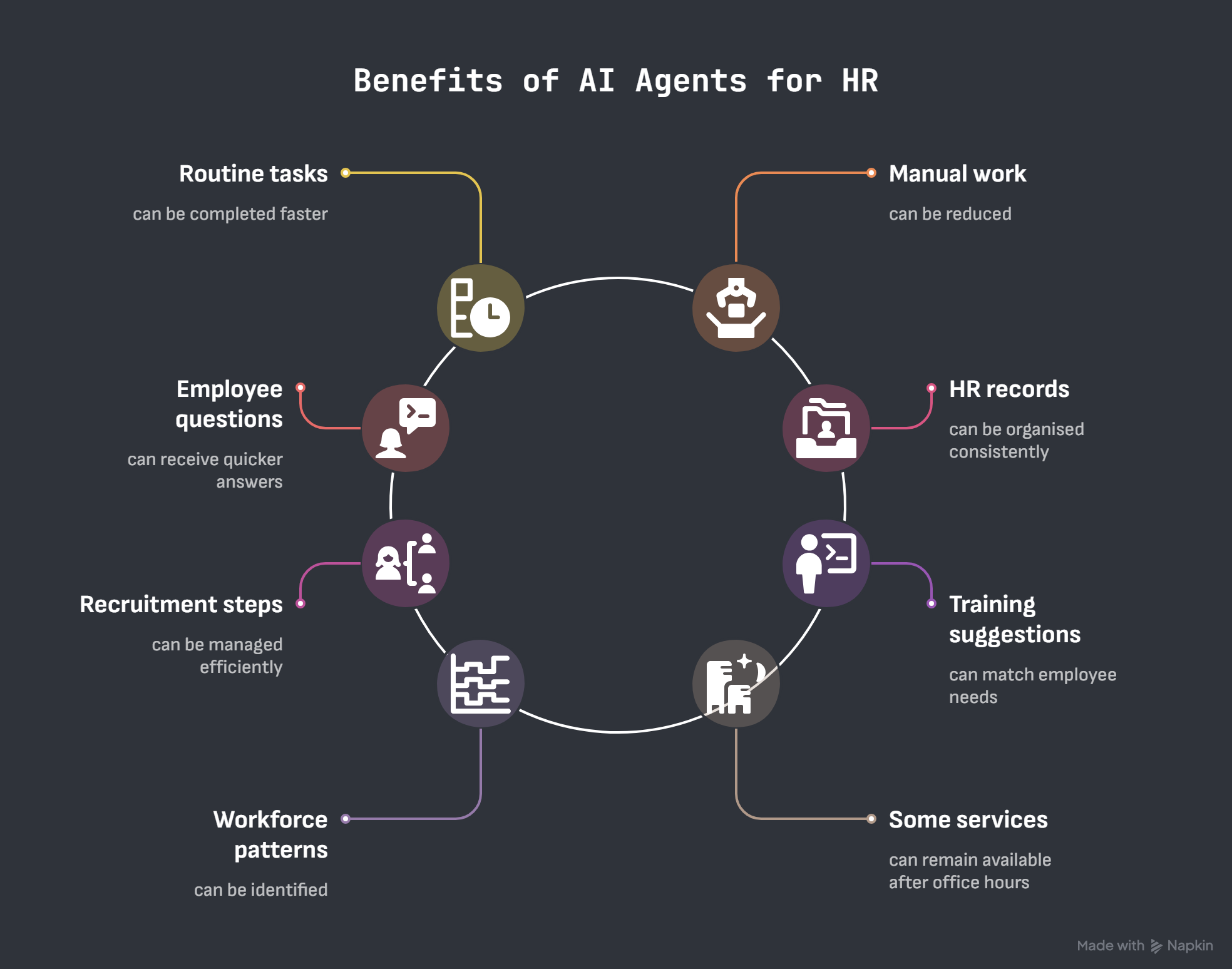
Several benefits can be gained.
- Routine tasks can be completed faster.
- Manual work can be reduced.
- Employee questions can receive quicker answers.
- HR records can be organised consistently.
- Recruitment steps can be managed efficiently.
- Training suggestions can match employee needs.
- Workforce patterns can be identified.
- Some services can remain available after office hours.
Results depend on proper setup. Poor data can reduce accuracy. Regular checks should also be carried out.
Risks, Bias and Compliance Concerns
AI agents handle sensitive employee data. Their decisions can also affect employees. Regular checks are essential.
Bias and Fairness
Hiring agents may repeat existing biases.
- Past data may contain bias.
- Suitable candidates may be overlooked.
- Rankings should be reviewed regularly.
- Hiring decisions need human checks.
Data Privacy
HR records must remain protected.
- Access should be limited.
- Only needed data should be collected.
- Employee consent should be considered.
- Records should be stored securely.
Legal Compliance
Relevant laws must be followed.
- India’s DPDP Rules, 2025.
- EU AI Act requirements.
- NYC Local Law 144.
HR teams remain responsible for decisions. Vendor claims do not replace legal duties.
How to Choose and Roll Out an AI Agent in HR
A careful rollout can help prevent problems. One clear HR task should be selected first.
Step 1: Pick One Use Case
A simple task should be selected for testing.
- Interview scheduling.
- Employee FAQs.
- Onboarding reminders.
- Resume screening.
Step 2: Assess Vendors
Available tools should be checked carefully.
- Required features should be verified.
- Data security should be reviewed.
- Costs and support should be compared.
Step 3: Run a Pilot
A small group should be selected first.
- Limited data should be used.
- Errors should be recorded.
- User feedback should be collected.
Step 4: Keep Human Review
Important tasks should receive human approval.
- Hiring decisions should be reviewed.
- Payroll changes should be checked.
- Employee complaints should reach HR.
Step 5: Measure Results
Clear results should be tracked regularly.
- Time saved should be measured.
- Errors and costs should be checked.
- Employee feedback should be collected.
Wider use should follow successful testing.
Skills HR Professionals Need in the AI Era
AI knowledge will become useful across HR roles. Professionals should understand how agents work. Their results should also be checked carefully.
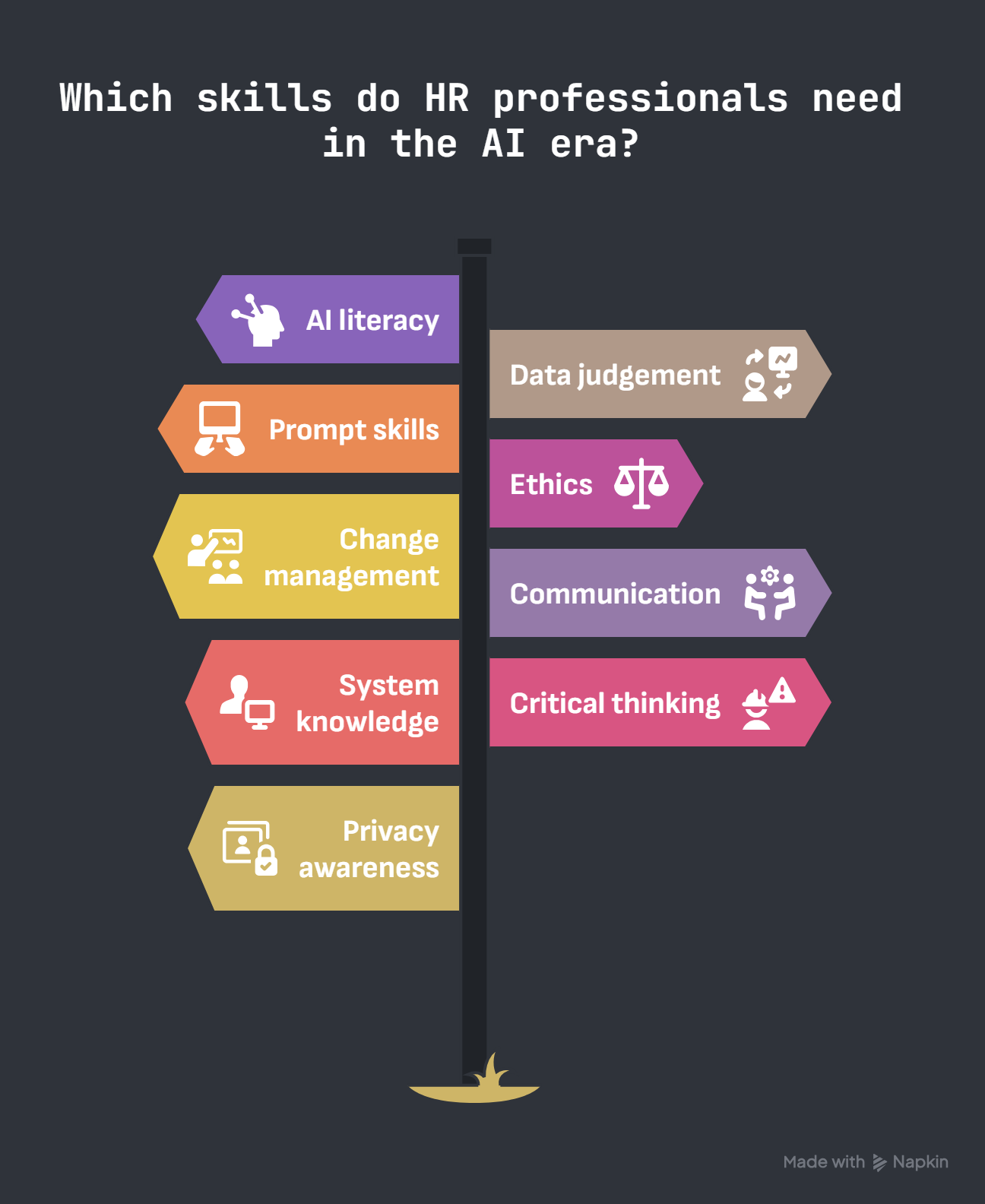
Important skills include:
- AI literacy. Basic AI concepts should be understood.
- Data judgement. Information should be checked carefully.
- Prompt skills. Clear instructions should be written.
- Ethics. Fair and responsible use should be followed.
- Change management. Employees should be guided through changes.
- Communication. New processes should be explained clearly.
- System knowledge. HR software should be used confidently.
- Critical thinking. Incorrect outputs should be identified.
- Privacy awareness. Employee information should be handled carefully.
Practical training can help build these skills. New tools and rules should also be followed.
Will AI Agents Replace HR Jobs?
AI agents will change many HR tasks. Routine work may need less manual effort. Some administrative duties may also be reduced.
However, human judgement remains important. Employee concerns need care and understanding. Conflicts require personal communication. Important decisions need human responsibility.
HR professionals can prepare for this change. AI and data skills should be developed. More time can then be given to employee support, planning, and decision-making.
Conclusion
AI agents can change daily HR work. Recruitment and employee services can be supported. Routine processes can also be handled faster. Careful use will remain important.
HR professionals should learn how these tools work. Their limits should also be understood. Human judgement must guide important decisions. With suitable skills, HR teams can use AI responsibly in 2027.
| Related Links | |
| Top Human Resource Blogs to Follow | How to build a remote HR career |
| HR Certification vs HR Degree | Which one to choose? | 15 HR Intern Interview Questions and Sample Answers |
Become an HR Expert – Enroll in Our HR Management Course Today!
Unlock the secrets to effective Human Resource Management with our expert-led course! Learn recruitment, employee relations, performance management, and more to build a thriving workplace. Start your journey toward a successful HR career today!
Know MoreFrequently Asked Questions
What are AI agents in HR?
AI agents are software tools that complete HR tasks. Instructions can be understood and connected tools can be used. Some tasks can be managed with limited human input. Examples include candidate sourcing, interview scheduling, onboarding, and employee support. Human review remains important for sensitive decisions.
How are AI agents different from HR chatbots?
HR chatbots mainly answer employee questions. Information is shared through text or voice. AI agents can also take action. Records can be updated, interviews arranged, and employee cases routed. Their abilities depend on system access and approval settings.
Which HR tasks can AI agents automate?
Recruitment and onboarding tasks can be supported. Interview scheduling and employee questions can also be handled. Training suggestions, workforce reports, and payroll checks can be prepared. Sensitive decisions should remain under human control. Each task should be reviewed before automation.
Are AI agents safe to use in hiring?
AI agents can support hiring when properly managed. However, biased data can produce unfair results. Candidate information also needs protection. Screening results should be reviewed and relevant tools audited. Final hiring decisions should involve qualified people.
Will AI agents replace HR professionals?
AI agents will mainly change how HR work gets done. Routine administrative tasks may be automated. Human skills will remain important. Employee relations, conflict handling, and planning need judgement. AI and data skills should be developed by HR professionals.
How should a small HR team start with AI agents?
One simple task should be selected first. Employee FAQs or interview scheduling can be suitable. A small pilot should then be tested. Results should be measured carefully. Human review and data protection should remain in place.