Table of Contents
Answer First: 6 Steps to Get HR Experience as a Fresher
HR experience can be gained through simple steps. Basic knowledge and practical skills should be developed. Internships and small projects can also be taken up. These steps can also be followed by career switchers.
- Learn HR Basics. Understand main HR duties.
- Take an HR Course. Develop basic HR skills.
- Apply for Internships. Gain practical work experience.
- Volunteer or Run Projects. Handle small HR tasks.
- Build a Resume and LinkedIn Profile. List skills and projects.
- Apply for Entry-Level Jobs. Target fresher-friendly roles.
Is being an HR your dream? Enrol now for our course on Human Resource!
Introduction
Many freshers face the same problem. HR jobs often ask for experience. This can make the first step difficult. However, experience can be gained in different ways.
A degree in HR can be helpful. Other degrees can also be accepted. Basic knowledge and practical skills are important. Internships and volunteer work can also be useful.
This guide is for graduates and MBA students. Career switchers can also follow these steps. HR courses, skills, jobs, and salaries are covered. Simple ways to gain experience are also explained.

Become an HR Expert – Enroll in Our HR Management Course Today!
Unlock the secrets to effective Human Resource Management with our expert-led course! Learn recruitment, employee relations, performance management, and more to build a thriving workplace. Start your journey toward a successful HR career today!
Know MoreCan Freshers Start a Career in HR Without Experience?
Yes, freshers can start an HR career. Previous full-time experience is not required every time. Many entry-level roles are for beginners. Basic knowledge and suitable skills are expected.
A first role may be offered in recruitment. HR assistance and office support are other options. Experience can then be gained through daily work.
Degrees and Backgrounds That Work
Different degrees can be accepted for HR roles. The required qualification depends on the employer. Some companies prefer HR-related studies. Others accept graduates from different subjects.
Common educational backgrounds include:
- BBA in HR. Basic HR subjects are covered.
- BA. Allows communication-related roles.
- BCom. Allows business-related roles.
- BSc. Allows general graduate roles.
- MBA in HR. Provides advanced HR knowledge.
- PGDM in HR. Provides HR and management knowledge.
- Other Degrees. Allows applications from different graduates.
An MBA is not required for every HR job. Some companies ask only for graduation. Other roles may prefer an HR qualification. The job description should always be checked.
What Recruiters Actually Look for in Freshers
Basic skills are usually checked during recruitment. Good communication is expected in many HR roles. Record keeping is also required for daily tasks. A suitable attitude is also preferred.
The following skills may be checked:
- Communication. Clear speaking and writing skills.
- Basic HR Knowledge. Main HR duties should be understood.
- Excel Skills. Employee records should be maintained.
- Organisation. Daily tasks are completed on time.
- Confidentiality. Employee details are protected.
- Teamwork. Work should be completed with others.
- Problem Solving. Simple workplace issues should be handled.
- Learning Ability. New tasks should be learned quickly.
Practical examples may also be requested. A sample recruitment tracker can be prepared. A mock interview record can also be created. Small projects can support a fresher’s application.
Understand the Main HR Functions First
HR work covers several important areas. Each area has different daily tasks. These functions should be understood before applying.
Recruitment, Onboarding, Payroll, Employee Engagement, L&D and HR Operations
Recruitment
Candidates are found for open positions. Resumes are checked and shortlisted. Interviews are also arranged.
- Job descriptions.
- Resume screening.
- Interview scheduling.
- Candidate follow-ups.
Onboarding
New employees are welcomed into the company. Joining documents are collected. Company details are also shared.
- Joining forms.
- Document collection.
- Employee records.
- Orientation sessions.
Payroll
Monthly salaries processed for employees. Attendance and leave details checked. Salary records maintained.
- Attendance records.
- Leave details.
- Salary inputs.
- Payroll documents.
Employee Engagement
Activities are arranged for employees. Feedback is also collected. Workplace concerns may be shared.
- Team activities.
- Employee feedback.
- Staff events.
- Workplace communication.
Learning and Development (L&D)
Employee training is planned and supported. Training needs are also identified. Learning records are maintained.
- Training schedules.
- Learning sessions.
- Skill development.
- Training records.
HR Operations
Daily HR activities are managed. Employee details are kept updated. Basic HR documents are also prepared.
- Employee records.
- Attendance tracking.
- HR documents.
- Policy support.
Choosing a Function to Start With
The first HR function can be selected by interest. Recruitment may suit people who enjoy communication. Payroll may suit people who prefer numbers. HR operations may suit organised candidates.
- Recruitment. Candidate communication and screening.
- Onboarding. Joining support and document checks.
- Payroll. Salary records and attendance details.
- Employee Engagement. Staff activities and feedback.
- L&D. Training support and learning records.
- HR Operations. Daily records and office tasks.
One function can be selected initially. Basic experience can then be gained. Other HR areas can be explored later.
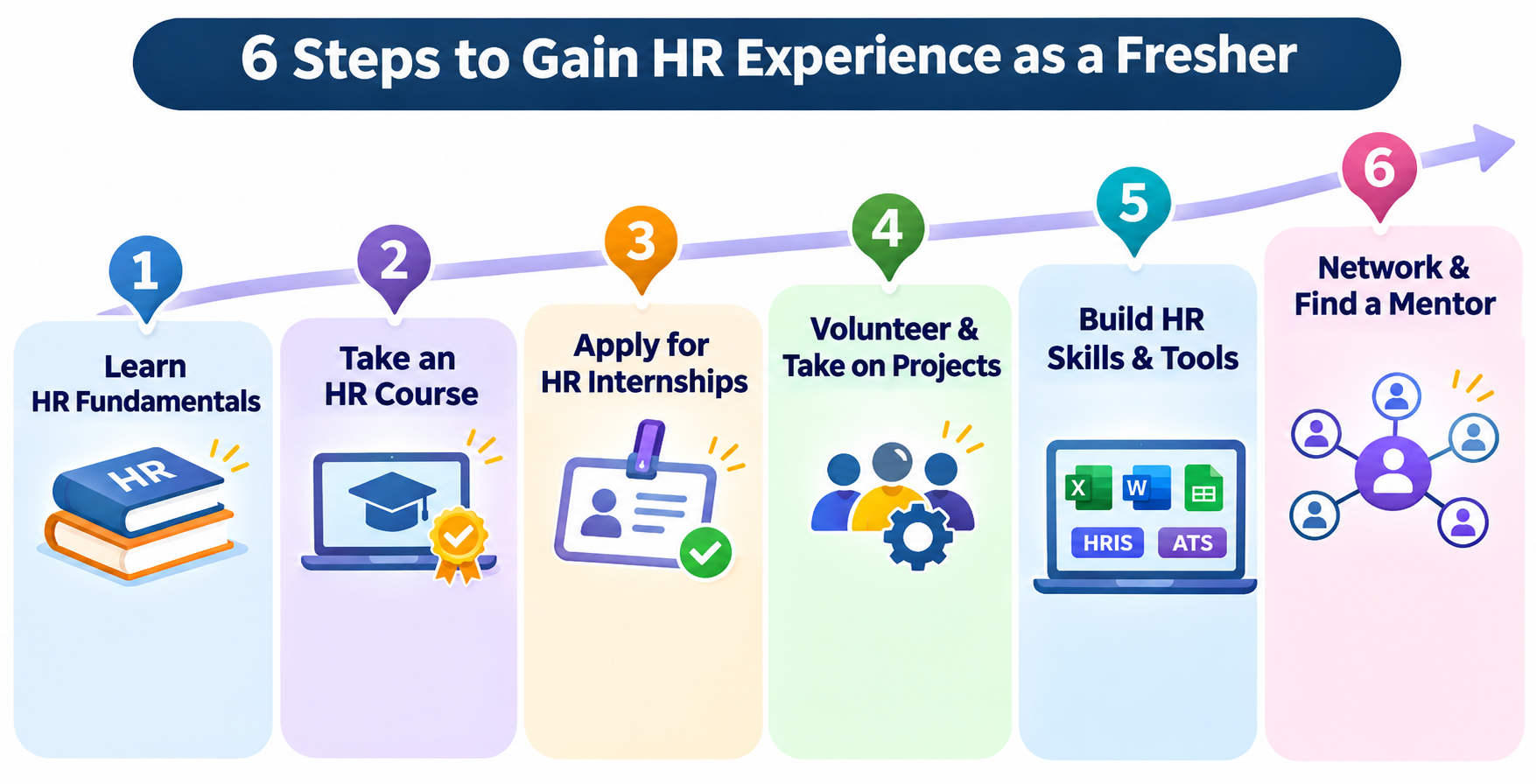
Step-by-Step: How to Gain HR Experience as a Fresher
HR experience can be gained gradually. Six main steps can be followed. Each step can help with job preparation.
Step 1: Learn HR Fundamentals
Basic HR topics should be learned first. The main functions should be understood. Simple workplace terms should also be studied.
Important topics include:
- Recruitment. How candidates are selected.
- Onboarding. Covers new employee joining procedures.
- Payroll. Covers employee salary management.
- Attendance. Covers daily work hour records.
- Training. Covers employee learning activities.
- Employee Relations. Covers workplace issues and concerns.
- HR Policies. Covers company rules and guidelines.
- Labour Law Basics. Covers employee rights and duties.
Books and online lessons can be used. Basic HR topics can be studied daily. Notes should be prepared for each topic. Simple examples can also be practised.
Step 2: Take an HR Course or Certification
An HR course can provide basic knowledge. Important topics can be learned in order. A certificate can also be added to the resume.
Different course options are available. Some are short and beginner-friendly. Others cover several HR functions. The course should match the career goal.
Useful course areas include:
- Human Resource Management.
- Recruitment and Talent Acquisition.
- Payroll Management.
- HR Operations.
- Labour Law Basics.
- Employee Relations.
- HR Analytics.
A course should include practical examples. Assignments can also be completed. The learning should be applied through small projects.
Step 3: Apply for HR Internships
An internship can provide practical experience. Daily HR tasks can be observed. Basic duties may also be assigned.
Internships can be searched through job portals. College placement cells can also help. Local companies may accept direct applications.
Common internship duties include:
- Resume screening.
- Interview scheduling.
- Candidate calls.
- Employee data entry.
- Attendance tracking.
- Joining document collection.
- Training support.
- Meeting arrangements.
A short internship can provide useful exposure. Work records should be maintained. A certificate or reference can be requested. The tasks completed should also be listed.
Is being an HR your dream? Enrol now for our course on Human Resource!
Step 4: Volunteer and Take on Projects
Experience can also be gained outside companies. College activities can provide useful practice. Volunteer work can also develop HR skills.
Possible activities include:
- College Events. Volunteers can be selected and managed.
- Student Clubs. Member records can be maintained.
- NGO Activities. Volunteer schedules can be prepared.
- Mock Recruitment. Sample interviews can be arranged.
- College Placements. Student details can be organised.
- Training Sessions. Attendance can be recorded.
- Team Projects. Duties can be assigned.
- Event Planning. Small teams can be coordinated.
These activities can be added to a resume. The work completed should be explained clearly. Simple results can also be mentioned.
Step 5: Build HR Skills and Tools Knowledge
Basic HR skills should be developed regularly. Common office tools should also be learned. Practical knowledge can support job applications.
Useful tools include:
- MS Excel. Employee data can be organised.
- MS Word. HR letters can be prepared.
- Google Sheets. Records can be updated.
- Email Tools. Interview messages can be sent.
- HRIS. Employee information can be stored.
- ATS. Candidate applications can be tracked.
HRIS means Human Resource Information System. ATS means Applicant Tracking System. These tools are used in many HR teams. Basic working knowledge can be helpful.
Step 6: Network and Find a Mentor
Professional contacts can help with job searches. HR events and online groups can be joined. Advice can also be received from experienced people.
The following steps can be followed:
- Create a LinkedIn Profile. Education and skills should be added.
- Follow HR Professionals. Useful posts can be read.
- Join HR Groups. Job updates can be received.
- Attend Webinars. Basic HR topics can be learned.
- Contact Alumni. Career advice can be requested.
- Find a Mentor. Guidance can be received.
- Ask About Openings. Suitable roles can be identified.
- Stay Connected. Professional contacts can be maintained.
Messages should be short and polite. A clear introduction should be included. A resume can be shared when requested.
Become an HR Expert – Enroll in Our HR Management Course Today!
Unlock the secrets to effective Human Resource Management with our expert-led course! Learn recruitment, employee relations, performance management, and more to build a thriving workplace. Start your journey toward a successful HR career today!
Know MoreWhere to Find HR Internships and Entry Roles
Entry-level HR openings can be found online and locally.
Job Portals, LinkedIn and Campus Placements
Popular platforms can be checked regularly.
- LinkedIn Jobs. HR roles can be searched.
- Naukri. Fresher vacancies can be explored.
- Indeed. Entry-level jobs can be found.
- Campus Placements. College openings can be checked.
Search terms include HR intern and HR assistant.
Startups, Staffing Agencies and HR Consultancies
Smaller organisations may offer practical experience.
- Startups. Daily HR tasks assigned.
- Staffing Agencies. Candidate screening handled.
- HR Consultancies. Recruitment support provided.
Training, duties, and stipends should be confirmed.
Cold Outreach and Referrals
Unadvertised openings can also be explored.
- Company Websites. Career pages checked.
- HR Contacts. Direct messages sent.
- Alumni. Referrals requested.
- Professional Groups. Job updates followed.
A short resume should be attached. Follow-ups should remain polite.
Is being an HR your dream? Enrol now for our course on Human Resource!
Ways to Build Experience Without a Job
Practical experience can be gained through small activities. These activities can be completed during college. They can also be done after graduation.
- College Clubs. Member details can be maintained.
- Placement Cells. Student information can be organised.
- NGO Volunteering. Volunteer schedules can be prepared.
- Freelance Recruitment Support. Candidate lists can be created.
- Mock HR Projects. Sample recruitment tasks can be completed.
- Student Events. Volunteers can be selected and guided.
- Training Activities. Attendance can be recorded.
- Employee Surveys. Sample feedback forms can be prepared.
A small project can show practical ability. For example, a recruitment tracker can be created. Candidate names and interview dates can be added. A sample onboarding checklist can also be prepared.
HR Skills to Build
Different skills are needed in HR. Communication is important for daily work. Technical skills are also useful. Both types should be developed.
Soft Skills
People-related work is handled in HR. Clear communication is needed every day. Employee details should also be handled carefully.
- Communication. Clear messages should be shared.
- Listening. Employee concerns should be understood.
- Teamwork. Tasks should be completed together.
- Time Management. Work should be completed on time.
- Problem Solving. Simple issues should be handled.
- Confidentiality. Personal details should be protected.
Technical Skills
Basic computer skills are useful in HR. Employee records are often managed digitally. Simple reports may also be prepared.
- Excel. Data and attendance can be tracked.
- HRIS. Employee records can be managed.
- ATS. Candidate details can be tracked.
- Payroll Basics. Salary inputs can be understood.
- Labour Law Basics. Basic workplace rules should be known.
- Documentation. HR letters and forms can be prepared.
HR Courses and Certifications for Freshers
HR courses are available in different formats. Short courses can cover basic topics. Longer programmes can cover several HR areas.
The following options can be considered:
| Option | Duration | Best for |
| NPTEL: Principles of Human Resource Management | 8 weeks | HR fundamentals |
| Coursera: Human Resources by Pearson | About 3 hours | A short beginner introduction |
| HRCI Human Resource Associate Certificate | About 5 months | Broad entry-level HR learning |
| Coursera: HR for People Managers | About 2 months | Recruitment and people management |
Entry-Level HR Jobs to Target
Several beginner roles are available in HR. The duties may differ by company. Basic support tasks are often assigned first.
| Role | What you do | Starting salary range |
| HR Intern | Recruitment and record support | Stipend varies |
| HR Assistant | Employee records and office support | ₹2.4–2.7 LPA |
| HR Recruiter | Candidate sourcing and interview calls | ₹2.1–2.5 LPA |
| HR Executive | Joining, attendance, and HR support | ₹2.5–3.5 LPA |
| Payroll Assistant | Salary inputs and attendance records | ₹2.5–3.5 LPA |
| Training Coordinator | Training schedules and records | ₹2.3–2.5 LPA |
Salary figures are indicative estimates for India. Actual offers depend on location, company, skills, and role duties.
How to Write an HR Fresher Resume and LinkedIn Profile
A fresher resume should be clear and simple. Education and skills should be listed. Internships and projects should also be included.
The following details can be added:
- Contact Details. Phone and email should be listed.
- Career Objective. The HR career goal should be stated.
- Education. Degrees and marks should be included.
- HR Courses. Completed certificates should be listed.
- Internships. Duties and tasks should be explained.
- Projects. Practical HR work should be described.
- Skills. Excel and communication should be included.
- Achievements. Relevant activities should be mentioned.
LinkedIn Profile
A LinkedIn profile should be kept updated. A clear photo can be added. Education and skills should be listed.
- A suitable headline should be written.
- HR interests should be mentioned.
- Courses should be added.
- Projects should be listed.
- Internship details should be included.
- Professional contacts should be connected.
A resume should be checked before applying. Spelling mistakes should be corrected. The same resume should not be sent blindly. Relevant skills should be highlighted for each role.
Common Mistakes Freshers Make
Some mistakes can affect job applications. These problems should be avoided.
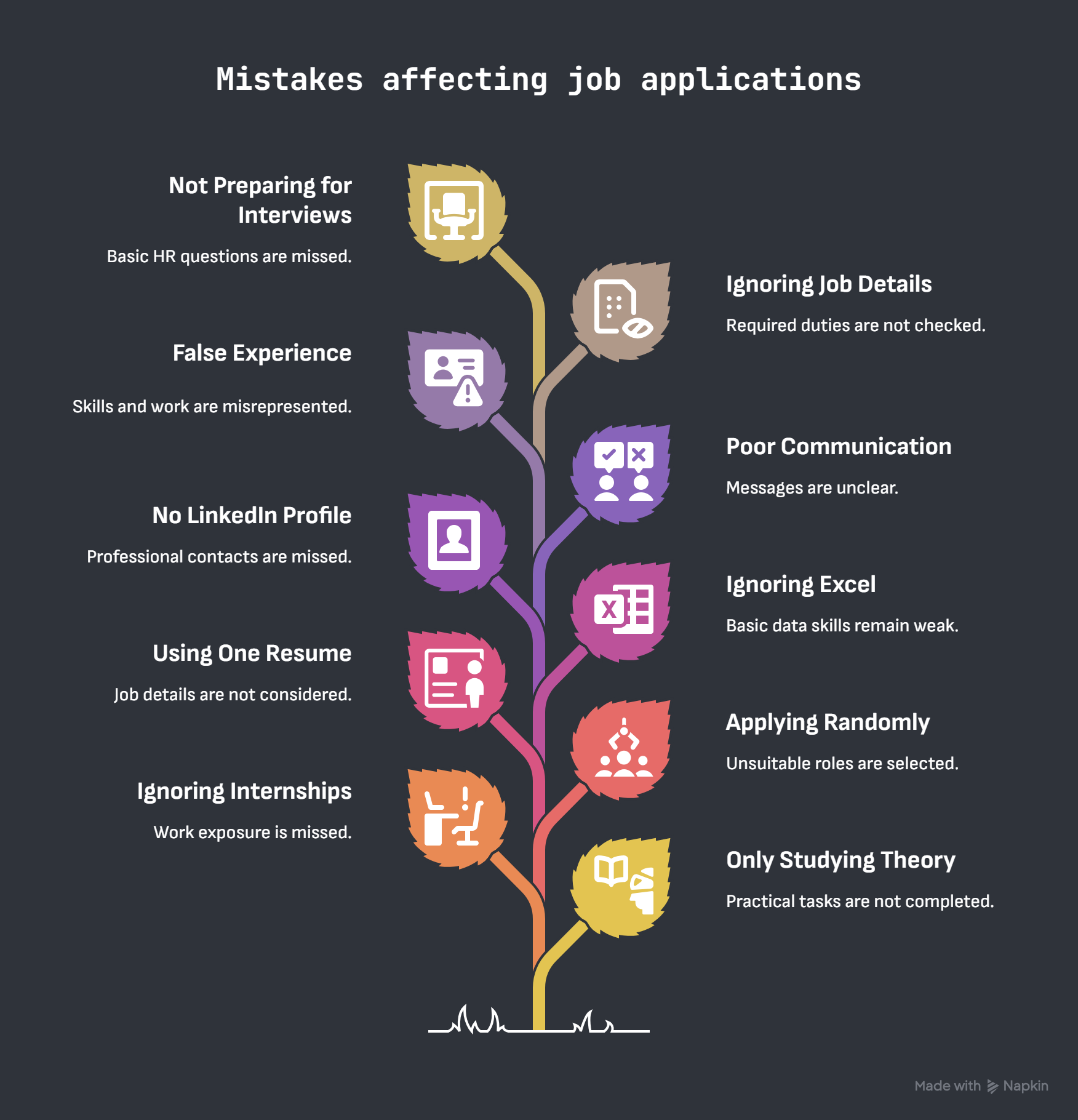
- Only Studying Theory. Practical tasks are not completed.
- Ignoring Internships. Work exposure is missed.
- Applying Randomly. Unsuitable roles are selected.
- Using One Resume. Job details are not considered.
- Ignoring Excel. Basic data skills remain weak.
- No LinkedIn Profile. Professional contacts are missed.
- Poor Communication. Messages are unclear.
- False Experience. Skills and work are misrepresented.
- Ignoring Job Details. Required duties are not checked.
- Not Preparing for Interviews. Basic HR questions are missed.
Practical skills should be developed early. Job descriptions should be read carefully. Resume details should always be correct. Interview answers should also be practised.
Career Growth Path in HR
An HR career can grow through experience. Different roles may be taken over time. More duties are usually assigned at higher levels.
| Level | Role | Typical experience |
| Entry level | HR Intern or HR Assistant | 0–1 year |
| Junior level | HR Executive or Recruiter | 1–3 years |
| Mid-level | HR Generalist or Senior Executive | 3–5 years |
| Management | HR Manager or Talent Acquisition Manager | 5–8 years |
| Senior level | HR Head or HR Director | 8+ years |
The experience ranges are general guides. Actual growth depends on performance and company size. Specialised skills can also affect career progress.
Entry Level
Basic HR tasks are handled at this stage. Records and recruitment support are common duties. Guidance is usually provided by senior staff.
Junior Level
More tasks are assigned gradually. Recruitment or HR operations may be managed. Employee queries may also be handled.
Mid-Level
Independent HR duties are handled. Policies and employee matters may be managed. Team coordination may also be included.
Management Level
HR activities are planned and supervised. Team performance is reviewed. Hiring and employee matters are managed.
Senior Level
Major HR decisions are handled. Company policies are guided. Workforce planning may also be managed.
Conclusion
An HR career can be started without experience. Basic knowledge should be gained first. Courses and internships can provide useful support. Volunteer work can also build practical skills. A clear resume should be prepared. Entry-level roles should then be targeted. With regular learning and practice, a first HR job can become easier to reach.
| Related Links | |
| Top Human Resource Blogs to Follow | How to build a remote HR career |
| HR Certification vs HR Degree | Which one to choose? | 15 HR Intern Interview Questions and Sample Answers |
Become an HR Expert – Enroll in Our HR Management Course Today!
Unlock the secrets to effective Human Resource Management with our expert-led course! Learn recruitment, employee relations, performance management, and more to build a thriving workplace. Start your journey toward a successful HR career today!
Know MoreFrequently Asked Questions
How Can a Fresher Get Into HR With No Experience?
HR basics should be learned first. A short HR course can be completed. Internship and volunteer opportunities should also be explored. Small HR projects can be added to the resume. Entry-level roles such as HR assistant and recruiter can then be targeted.
Which Course Is Best for HR Freshers?
A basic HR management course is a good start. NPTEL and beginner courses on Coursera can be considered. A broader certificate can also be selected. The course should cover recruitment, employee relations, and HR operations. Practical assignments should also be included.
Do I Need an MBA to Work in HR?
An MBA is not required for every HR job. Many entry-level roles accept graduates. A BBA, BA, BCom, or other degree may be accepted. Some companies prefer an MBA in HR. The required qualification should be checked in each job listing.
What Is the Salary of an HR Fresher?
HR fresher salaries vary by role and location. Many entry-level roles offer around ₹2 lakh to ₹3.5 lakh per year. Recruitment and HR operations may have different pay. Company size and qualifications can also affect the offer. The job details should be checked carefully.
Which HR Role Is Best for Beginners?
HR assistant and recruiter roles are common starting options. Recruitment offers exposure to candidate handling. HR assistant roles provide experience with records and daily tasks. The best choice depends on personal interest. Basic skills should also match the role.
How Long Does It Take to Get a First HR Job?
The time can differ for each person. Basic HR learning may take a few weeks. A short course can take several weeks. Internship experience may take a few months. Job applications may need more time. Regular practice and applications can improve readiness.