Table of Contents
A Diploma in Electrical Engineering opens up four broad paths. Private-sector technician and engineering roles, government and PSU jobs, B.Tech through lateral entry, or a specialised skill such as MEP, solar PV, PLC/SCADA or EV charging.
The right path depends on whether you want immediate income, long-term technical depth, or job security. India’s power, renewable-energy, construction and EV sectors are all expanding right now, and diploma holders with practical and software skills are getting the first look at fresher openings.
Master EV architecture with Hands-On Training at Entri App. Join Now!
Key Takeaways
- Diploma holders can start careers as electrical, MEP, solar, PLC/SCADA or EV technicians.
- Eligible candidates can pursue B.Tech/B.E. through lateral entry.
- SSC JE 2026 offers 1,748 tentative vacancies. Applications close on 22 September 2026.
- Kerala PSC accepts electrical diplomas for select technical posts.
- Fresher salaries generally range from ₹1.8 LPA to ₹5.5 LPA.
- AutoCAD Electrical, Revit MEP, PLC programming and testing skills improve job prospects.
Career Options After Diploma In Electrical Engineering
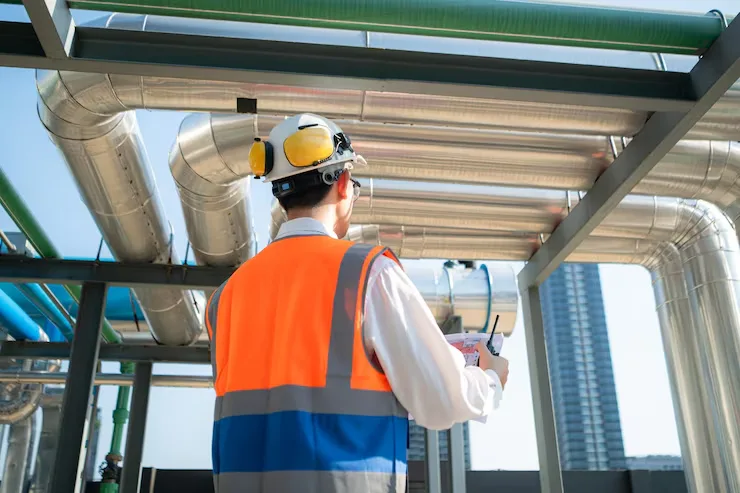
A diploma qualifies you for hands-on technical roles from day one, and for supervisory or design roles once you build experience. Here are the 15 most common entry points:
Career Option |
What the Role Involves |
| Electrical Technician | Installs, tests and repairs wiring, panels and equipment in factories, buildings and plants |
| Electrical Maintenance Technician | Runs preventive maintenance and troubleshoots motors, panels and backup systems |
| Junior Electrical Engineer | Assists senior engineers with installation, testing, site supervision and documentation |
| Electrical Site Supervisor | Coordinates electricians and contractors on construction and infrastructure sites |
| MEP Electrical Technician | Handles lighting, power, fire alarm and low-voltage systems on building projects |
| Electrical Design Technician | Prepares layouts, schedules and drawings using AutoCAD, Revit MEP and Dialux |
| Solar PV Technician | Installs and maintains rooftop and ground-mounted solar systems and inverters |
| Renewable Energy Technician | Works on wind, battery storage and hybrid renewable-energy projects |
| PLC/SCADA Technician | Programs and maintains automated production lines and control systems |
| Substation Technician | Inspects and maintains transformers, switchgear and protection equipment |
| Testing & Commissioning Technician | Verifies that electrical installations are safe and ready to operate |
| EV Charging Technician | Installs and maintains AC/DC charging stations and related infrastructure |
| Field Service Technician | Visits client sites to install, inspect and repair electrical equipment |
| Power Plant Technician | Supports generators, switchyards and control rooms in power-generation plants |
| Electrical Quality Inspector | Checks installation quality and test reports against project specifications |
Your ideal starting point depends on whether you prefer fieldwork, design software, or steady government service — more on choosing below.
Master MEP Design with Industry-Leading Training!
Gain in-depth knowledge of Mechanical, Electrical, and Plumbing (MEP) Design with expert-led courses. Learn HVAC, fire safety, sustainable building strategies, and BIM applications to excel in the construction industry.
Know MoreWhy Choose Electrical Engineering in 2026?
Electrical skills stay relevant because power, automation and electronics now touch nearly every industry. A few sectors are hiring diploma holders faster than others right now.
Renewable energy and EVs are scaling up. Solar, wind and battery-storage projects need installation and O&M technicians.
EV charging is growing fast too. India had installed 67,657 EV chargers nationwide as of 7 August 2026, including battery-swapping stations. The PM E-DRIVE scheme has separately approved ₹689 crore to deploy 6,562 public chargers via oil-marketing companies and states, per a July 2026 parliamentary update.[pib.gov]
Power infrastructure keeps expanding. India’s installed power capacity reached 548.86 GW by June 2026, and the government expects this to touch 874 GW by 2031–32. This is a strong signal for sustained hiring in generation, transmission and substations.[powermin.gov]
Automation and MEP hiring are steady. Factories are adding PLCs and sensors, while hospitals, airports and data centres need MEP technicians for electrical installation, testing and BIM coordination.
Higher Studies After Diploma
B.Tech/B.E. lateral entry: Eligible diploma holders can join the second year or third semester of a B.Tech programme through state-level lateral-entry exams, university entrance tests, or counselling based on diploma marks. Eligibility and branch mapping vary by state, so check the latest official notification before applying. A degree can open doors to roles like design engineer, power-systems engineer or project engineer.
Specialised certificate courses: If a degree isn’t immediately practical, courses in MEP design, Revit MEP, solar PV installation, EV charging systems, PLC/SCADA or electrical estimation can build job-ready skills faster. Pick programmes with hands-on projects and software training, not just theory.
Apprenticeships: A structured apprenticeship gives fresh diploma holders real workplace exposure. Check the stipend, duration, certification and whether it leads to a permanent role before joining. It isn’t guaranteed, but it does strengthen your résumé.
Government Jobs After Diploma Electrical Engineering
Government and PSU roles remain attractive for stability, and several are open to diploma holders right now.
SSC JE 2026 is live. The Staff Selection Commission released its Junior Engineer 2026 notification on 2 September for 1,748 tentative vacancies across Civil, Electrical, Mechanical, Electrical & Mechanical and Telecom posts in departments including CPWD, MES and BRO.
Applications close on 22 September 2026, with Paper-I tentatively scheduled for October–November 2026.[ssc.gov.in] Depending on the post, candidates need a relevant degree or a three-year diploma, sometimes with additional experience.
State-level opportunities exist too. Kerala PSC, for instance, has accepted a Diploma in Electrical Engineering for posts such as LSGD Sub Engineer, subject to that notification’s specific conditions.[entri] Eligibility, age limits and experience differ by notification. So always check the official PDF before applying.
Other channels worth tracking: state electricity boards, Railway Recruitment Boards, municipal corporations and defence infrastructure organisations.
Master MEP Design with Industry-Leading Training!
Gain in-depth knowledge of Mechanical, Electrical, and Plumbing (MEP) Design with expert-led courses. Learn HVAC, fire safety, sustainable building strategies, and BIM applications to excel in the construction industry.
Know MorePrivate Jobs After Diploma Electrical Engineering
| Industry | Typical Roles |
| Construction & MEP | Site supervisor, MEP technician, testing technician |
| Manufacturing | Maintenance technician, automation technician, junior engineer |
| Renewable Energy | Solar technician, O&M technician, site supervisor |
| Power Sector | Substation technician, commissioning technician, plant technician |
| EV & Mobility | EV charging technician, service technician |
| Automation | PLC technician, SCADA technician, control-panel technician |
| Facilities Management | Electrical operator, maintenance supervisor |
| Equipment Service | Field service technician, installation technician |
When comparing offers, weigh the actual job responsibilities, training support, safety standards, travel requirements and promotion path — not just the starting pay.
Diploma Electrical Engineering Salary
Salaries vary by employer, location, industry and skill set. These are indicative ranges for India.
| Role | Fresher Salary | With Experience |
| Electrical Technician | ₹1.8–3.2 LPA | ₹3.5–6 LPA |
| Maintenance Technician | ₹2–3.8 LPA | ₹4–7 LPA |
| Junior Electrical Engineer | ₹2.5–4.5 LPA | ₹5–9 LPA |
| Electrical Site Supervisor | ₹2.5–4.5 LPA | ₹5–9 LPA |
| MEP Electrical Technician | ₹2.5–4.5 LPA | ₹5–10 LPA |
| Solar PV Technician | ₹2.2–4.5 LPA | ₹4.5–8 LPA |
| PLC/SCADA Technician | ₹3–5.5 LPA | ₹6–12 LPA |
| EV Charging Technician | ₹2.8–5 LPA | ₹5–10 LPA |
| Government Junior Engineer | As per pay matrix | As per department rules |
LPA stands for lakh per annum. Pay tends to run lower at small local firms and higher at large EPC contractors, MNCs and government service.
Skills to Learn After Diploma
Technical:
AC/DC machines, transformers and switchgear, industrial wiring, motor control, earthing and lightning protection, single-line diagrams, solar PV and battery basics, and PLC/SCADA fundamentals.
Software:
AutoCAD and AutoCAD Electrical, Revit MEP, Navisworks, Dialux, PLC programming platforms and electrical estimation tools.
Workplace:
Technical reporting, site coordination, troubleshooting, documentation and comfort with shift work or travel.
A candidate who can read drawings, run relevant software and troubleshoot equipment on-site usually gets shortlisted over someone with only textbook knowledge. A certificate matters most when backed by a real project.
How to Choose the Right Career Path

- Prefer hands-on work? Maintenance, site supervision, solar installation and commissioning suit practical, equipment-focused interests.
- Prefer computer-based work? Electrical design, BIM, estimation and documentation suit candidates who enjoy drawings and planning software.
- Want stability? Prepare for government exams like SSC JE or state PSC notifications while gaining practical experience through an apprenticeship.
- Ready to specialise? Pick one lane such as power systems, MEP, industrial automation, renewable energy, EV mobility, or design, rather than spreading thin across all of them.
- Open to relocating? Many entry-level roles are at project sites, industrial parks and solar installations; check accommodation, safety and working hours before accepting.
Career Roadmap After Diploma
First 6 months:
Build a professional résumé, revise fundamentals, learn to read electrical drawings, and apply for apprenticeships or trainee roles.
6 to 18 months:
Pick one specialisation, learn its core software, and start gaining site, maintenance or commissioning experience.
1 to 3 years:
Move into a specialised technician, supervisor or junior engineer role. Consider a relevant certification, B.Tech lateral entry, or government exam preparation.
After 3 years:
Progress toward roles such as senior technician, electrical supervisor, project coordinator, MEP coordinator, automation specialist or electrical contractor. Driven largely by practical depth and project exposure rather than the diploma alone.
Conclusion
A Diploma in Electrical Engineering is less a fixed destination than a starting point with several open doors. You can go ith a technician role today, an MEP or automation specialisation next year, or a government post or B.Tech degree down the line.
Candidates who move fastest pick one direction early, back it with real project experience, and stay open to relocating for the right opportunity.
With power, renewable-energy and EV-charging infrastructure all expanding through 2026, the timing favours those who pair fundamentals with practical, in-demand skills.
Master MEP Design with Industry-Leading Training!
Gain in-depth knowledge of Mechanical, Electrical, and Plumbing (MEP) Design with expert-led courses. Learn HVAC, fire safety, sustainable building strategies, and BIM applications to excel in the construction industry.
Know MoreFrequently Asked Questions
What can I do after a Diploma in Electrical Engineering?
You can work as a technician, junior engineer, MEP technician, solar technician, PLC technician or EV charging technician, apply for eligible government posts, join an apprenticeship, or pursue B.Tech through lateral entry.
Is a diploma enough to get a job?
Yes. A diploma qualifies you for many technician, maintenance and supervisory roles. Practical skills, software knowledge and relevant experience improve your prospects further.
Can I do B.Tech after a diploma?
Yes, through lateral entry, usually into the second year or third semester — though eligibility and admission rules vary by state and institution.
What is the salary after a Diploma in Electrical Engineering?
Freshers typically earn ₹1.8–5.5 LPA depending on the role, employer and industry. Automation, MEP, and EV-charging skills tend to support faster salary growth.
Is a job or B.Tech the better choice after diploma?
A job suits candidates needing immediate income and experience; B.Tech helps if your goal needs a degree. Many diploma holders work first and study later.
Which skills are in demand right now?
PLC/SCADA, AutoCAD, Revit MEP, solar PV, EV charging, electrical testing and commissioning, and electrical safety are consistently useful.
Are government jobs available for diploma holders?
Yes. SSC JE 2026 is currently accepting applications (closing 22 September 2026) for Electrical, Civil, Mechanical and Telecom posts, and several state PSC notifications also accept a three-year diploma, subject to each post’s specific conditions.