Table of Contents
Munich is a popular city for students because it has good universities and many job opportunities. But it is also one of the most expensive cities in Germany. Rent and daily expenses are very high compared to other cities. Students usually need around €900 to €1,500 per month for food, rent, transport, and other basic needs. With proper planning and good budgeting, students can manage their expenses and live comfortably while enjoying their student life in Munich.
Learn German language in your own language! Get free Demo Classes Here!
Key Takeaways:
- Munich is expensive for students
- Monthly cost is around €900 to €1,500
- Rent is the biggest cost
- Cooking at home helps save money
- Part-time jobs help manage expenses
Average Monthly Cost Overview
- Living in Munich is expensive for students
- Monthly cost depends on lifestyle
- Most students spend around €900 to €1,500 per month
- Costs can change based on personal choices
| Expense Category | Monthly Cost (€) |
|---|---|
| Accommodation | 500 – 900 |
| Food | 150 – 300 |
| Transportation | 50 – 100 |
| Health Insurance | 110 – 130 |
| Miscellaneous | 100 – 200 |
Accommodation Costs
Accommodation is the biggest expense for students in Munich. There are different options available based on budget and comfort. Choosing the right one can help you save money.
1. Student Dorms (€300–€600)
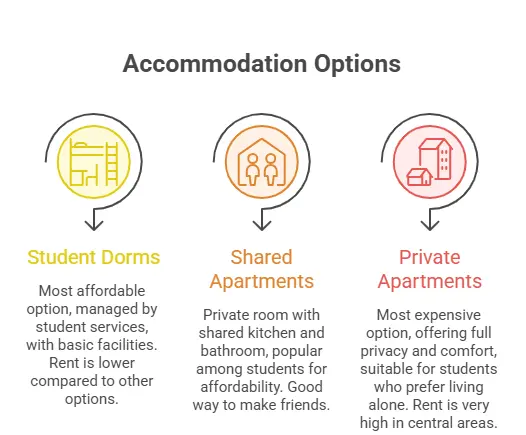
- Student dorms are the most affordable option
- Managed by student services and offer basic facilities
- Rent is lower compared to other options
- Rooms are limited, so you need to apply early
- Best for students looking for budget-friendly living
2. Shared Apartments (€500–€900)
- Also called WG (shared flats)
- You get a private room but share kitchen and bathroom
- Popular among students because it is more affordable than living alone
- Good way to make friends and adjust to a new place
- Rent depends on location and size of the room
3. Private Apartments (€900+)
- Most expensive option in Munich
- Offers full privacy and comfort
- Suitable for students who prefer living alone
- Rent is very high in central areas
- Finding a place in the city center costs more money
Platforms to Find Accommodation
- Students use websites like WG-Gesucht
- It helps find shared flats and rooms easily
- You can search by budget and location
- It is very popular in Germany for student housing
Tips to Save Money
- Start searching for rooms early
- Choose shared flats instead of private apartments
- Look for places outside the city center
- Compare different options before choosing
- Share bills like electricity and internet with roommates
- This helps reduce monthly expenses
Food & Grocery Expenses
- Food is an important monthly cost for students
- Students spend around €150 to €300 per month on food and groceries
- Cost depends on lifestyle and eating habits
Cooking vs Eating Out
- Cooking at home saves money
- Students can buy groceries and cook simple food
- It is cheaper than eating outside
- It is also healthier than restaurant food
- Eating out is expensive and increases monthly cost
- A small restaurant meal costs €8 to €15
- Mid-range restaurants cost €15 to €25 or more
- Eating out regularly increases total budget quickly
- It is better to cook most of the time
- Eat out only sometimes for change
Popular Supermarkets
- Munich has many affordable supermarkets for students
- Aldi is cheap and offers basic daily items
- Lidl is also budget-friendly with many products
- These stores sell fruits, vegetables, and dairy items
- Prices are low compared to other stores
- Students can save money by shopping here
Key Points:
- Cooking at home is the best way to save money
- Supermarkets like Aldi and Lidl help reduce expenses
- Eating out should be occasional, not regular
- Good planning helps manage food budget easily
Transportation Costs
- Transportation in Munich is easy and student-friendly
- Public transport is well-developed and reliable
- Students can travel anywhere without a car
Student Discounts
- Students get special discounts on transport
- This helps reduce monthly travel cost
- Always carry student ID for benefits
- Discounts make daily travel more affordable
Semester Ticket (€30–€70 per month approx.)
- Most students use a semester ticket
- It allows unlimited travel in selected zones
- Covers buses, trams, U-Bahn, and S-Bahn
- Cost is around €30 to €70 per month
- No need to buy daily tickets
- Saves both time and money
- Very useful for students
MVV (Public Transport System)
- Munich transport is managed by MVV.
- Includes trains, buses, and trams
- Connects all parts of the city
- Also connects nearby areas
- System is clean, safe, and reliable
- Services run frequently throughout the day
- Easy for students to use
Key Points:
- Transport in Munich is simple and efficient
- Semester ticket helps reduce cost
- Public transport makes daily travel easy and affordable
Health Insurance
1: How do you say "Good Morning" in German?
Free German A1 Mock Tests – Powered by AI!
Test your skills on our interactive platform. Get instant feedback from our AI to help you communicate better and track your progress. Start your free German mock test now.
Test Your German A1 for FreeMiscellaneous Expenses
Total Monthly Cost Summary
The total cost of living in Munich depends on your lifestyle and spending habits. Some students prefer to live on a tight budget, while others spend more for comfort and convenience. Here are three common budget levels to help you understand better:
- Budget depends on how you live
- Shared living saves money
- Cooking at home reduces cost
- Planning helps manage expenses easily
- All lifestyles are possible in Munich
Budget Student (€900–€1,100 per month)
- This is a low-cost lifestyle
- Stay in dorms or shared flats (WG)
- Cook most meals at home
- Use semester ticket for transport
- Very less spending on shopping and entertainment
- Good planning helps save money
Moderate Lifestyle (€1,100–€1,400 per month)
- This is the most common student budget
- Stay in shared apartment or good room
- Cook at home and eat out sometimes
- Normal spending on transport and daily needs
- Small budget for shopping and leisure
- Balanced and comfortable lifestyle
High Lifestyle (€1,500+ per month)
- This is a comfortable lifestyle
- Stay in private apartment or premium room
- Eat out more often
- Spend more on travel, gym, and entertainment
- Less financial stress in daily life
- Higher cost but more comfort and freedom

Cost Comparison
Understanding the cost of living in different cities can help students choose the right place based on their budget. Munich, Berlin, and Frankfurt are all popular student cities, but their costs are different.
- Munich is most expensive
- Berlin is more budget-friendly
- Frankfurt is in between
- Choose city based on your budget and needs
- Planning helps manage costs easily
1. Munich (Most Expensive)
- Munich is the costliest city in Germany
- Rent is very high, especially in city areas
- Food and daily expenses are also expensive
- Finding cheap rooms is difficult
- Needs a high budget to live comfortably
- Offers good quality of life but costly
2. Berlin (More Affordable)
- Berlin is cheaper than Munich
- Rent is lower but increasing slowly
- Food and daily costs are moderate
- More shared housing options are available
- Good balance of cost and opportunities
- Suitable for students with medium budget
3. Frankfurt (Moderately Expensive)
- Frankfurt is expensive but less than Munich
- Rent is high due to strong job demand
- Transport and daily costs are similar to other big cities
- Good job and internship opportunities
- Needs careful monthly budgeting
- Mix of city life and career growth
|
Goethe 2026 Exam Dates: Multiple Test Centers |
|
| Trivandrum Goethe Exam Dates | Kochi Goethe Exam Dates |
| Chennai Goethe Exam Dates | Coimbatore Goethe Exam Dates |
Money-Saving Tips
Living in Munich can be expensive, but students can reduce their costs by following some simple and practical tips. Small changes in daily habits can make a big difference in your monthly budget.
- Smart planning helps reduce costs
- Small savings make a big difference
- Student discounts, cooking, and shared living help a lot
- Part-time work supports extra income
Learn German language in your own language! Get free Demo Classes Here!
Free German A1 Mock Tests – Powered by AI!
Test your skills on our interactive platform. Get instant feedback from our AI to help you communicate better and track your progress. Start your free German mock test now.
Test Your German A1 for FreeConclusion
- Munich is a good city for students
- It has top universities and good opportunities
- Quality of life is high in the city
- But it is also one of the most expensive cities in Germany
- Rent and daily expenses are very high
How to manage costs
- Plan your monthly budget properly
- Choose shared accommodation to save rent
- Cook food at home instead of eating out
- Use student discounts for daily expenses
- Take part-time jobs for extra income
Final Point
- With smart planning, students can manage expenses easily
- Even in an expensive city like Munich, student life is possible and comfortable
Free German A1 Mock Tests – Powered by AI!
Test your skills on our interactive platform. Get instant feedback from our AI to help you communicate better and track your progress. Start your free German mock test now.
Test Your German A1 for FreeFrequently Asked Questions
How much does it cost to live in Munich as a student?
Students usually need around €900 to €1,500 per month. This covers rent, food, transport, health insurance, and other daily expenses.
Is Munich expensive for students?
Yes, Munich is one of the most expensive cities in Germany, especially for accommodation. Proper budgeting is important to manage costs
What is the cheapest accommodation option in Munich?
Student dorms and shared apartments (WG) are the most affordable options. They help reduce rent and utility costs.
How much do students spend on food in Munich?
Students usually spend around €150 to €300 per month. Cooking at home helps save money compared to eating out.
Are there student discounts for transport in Munich?
Yes, students get discounts and can use a semester ticket, which costs around €30 to €70 per month for unlimited travel.
Is health insurance mandatory for students in Munich?
Yes, it is compulsory. Students need valid health insurance for visa approval and university enrollment. It usually costs €110 to €130 per month.
Can students work part-time in Munich?
Yes, international students can work up to 120 full days or 240 half days per year. This helps cover living expenses.
How can students save money while living in Munich?
Students can save money by choosing shared housing, cooking at home, using student discounts, and managing their budget carefully.