
Table of Contents
Introduction
The ability to code is an indispensable component of today’s technology. Software developers are able to design websites, mobile applications, computer software, smart devices, and automated systems with the assistance of this instrument. It should be noted, however, that the code for each program is unique. Two forms of coding that are frequently used are conventional coding and embedded coding. Both entail creating instructions for computers, but they are not the same in terms of their aim, the programming languages they use, the hardware requirements they demand, or the applications they use.
The majority of the time, normal coding is utilized in the process of developing software for computers, smartphones, and online platforms. Embedded coding is a programming technique that is utilized for the purpose of programming electrical items including washing machines, automobiles, medical equipment, and connected watches. Gaining an understanding of these distinctions might assist novices in selecting the appropriate programming path to pursue in accordance with their interests and professional objectives.
Key Takeaways
- Electronic devices are controlled by embedded code.
- Creating software and applications is the result of normal coding.
- The programming languages C and C++ are frequently used in embedded systems. I
- In the course of typical programming, Python, Java, and JavaScript are utilized.
- Hardware and embedded programming are closely intertwined.
- The area of software is the primary focus of normal coding.
- Having the ability to solve problems and program is necessary for both.
- Both provide prospects for successful careers.
Kickstart your embedded systems career and turn your tech passion into high-demand skills!
What Is Embedded Coding?
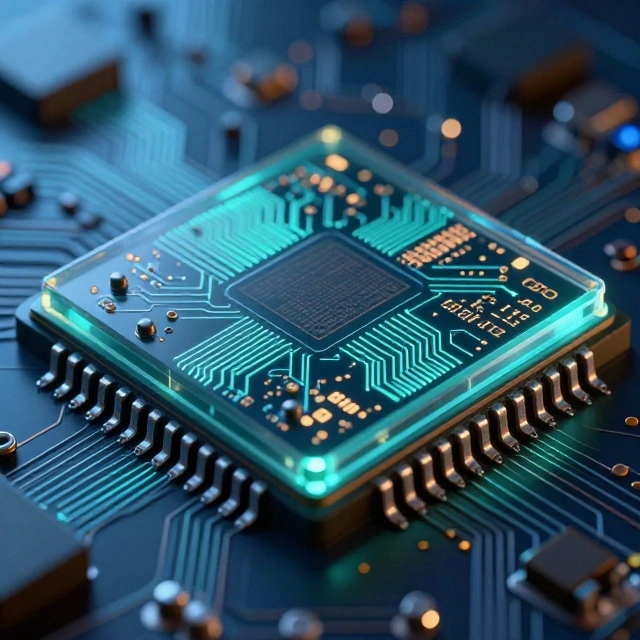
In the context of embedded systems, the process of writing software is referred to as embedded coding. The combination of hardware and software that is used to carry out a particular function within a device or machine is known as an embedded system.
For instance, a washing machine has software that is incorporated within it that controls the washing cycles, the amount of water, and the degree of spinning. Similarly, embedded software is utilized by automobiles in order to manage the functioning of the engine, sensors, and safety systems.
Microcontrollers, sensors, motors, and communication modules are some examples of the types of hardware components that embedded programmers are responsible for communicating with through the writing of code.
Key Features of Embedded Coding
- Hardware interaction: The program communicates directly with electronic components through hardware interfaces.
- Limited resources: Numerous devices have limited memory and processing power, which are both examples of limited resources.
- Real-time performance: Certain systems are required to respond within predetermined time constraints.
- Reliability: In order to be reliable, the program must function in a secure and consistent manner.
- Specific functions: In order to carry out specific functions, the code was developed specifically for that purpose.
The programming languages C and C++ are among the most widely used for embedded programming. The programming language Python is excellent for testing and prototyping, whereas Rust is also utilized in certain applications.
Master Embedded Systems Programming!
Launch your tech career with our Embedded Systems Course, designed for hands-on learning and industry readiness.
Know MoreWhat Is Normal Coding?

Creating programs for electronic devices such as computers, cellphones, internet, and cloud platforms is an example of normal coding, which is often referred to as general-purpose software development.
The development of shopping websites, financial applications, social media platforms, mobile games, and instructional software are all examples of applications that developers create using plain old coding.
Normal programming, as contrast to embedded programming, is typically more concerned with the features of software and the user experience than it is with the direct management of physical hardware.
Key Features of Normal Coding
- Application development: Application development is the process of developing software for corporate and individual users.
- Flexible resources: Programs are typically executed on computers that have a bigger amount of memory and processing power.
- User interaction: In order to facilitate user engagement, applications may use graphical user interfaces, buttons, and menus.
- Multiple languages: Developers have the ability to select languages according to the project they are working on.
- Easy updates: A large number of programs can be updated without requiring additional hardware to be changed.
Python, Java, JavaScript, C#, C++, and Swift are considered to be among the most popular programming languages.
Embedded Coding vs Normal Coding: Key Differences
| Feature | Embedded Coding | Normal Coding |
|---|---|---|
| Purpose | Controls electronic devices | Develops software applications |
| Environment | Microcontrollers and embedded processors | Computers, smartphones, and servers |
| Hardware interaction | Usually direct | Often through operating systems and APIs |
| Memory | Frequently limited | Often more available |
| Performance | May require real-time responses | Depends on application requirements |
| Languages | Mainly C and C++ | Python, Java, JavaScript, C#, and others |
| Testing | May require physical devices and hardware tools | Often uses software testing tools |
| Applications | Cars, robots, and appliances | Websites, mobile apps, and business software |
1. Difference in Purpose
The key distinction is what each sort of coding is supposed to do.
Embedded coding controls or monitors physical equipment. For example, a programmer can write software that will detect a change in temperature and then automatically activate a cooling fan.
Normal coding is writing applications that do something for the user. For instance, a developer may build an online shopping app where customers can look for things, order them, and pay for them.
Embedded coding is used for aiding electronic gadgets to fulfill their operations. Normal coding is utilized more regularly to construct apps and software services.
Master Embedded Systems Programming!
Launch your tech career with our Embedded Systems Course, designed for hands-on learning and industry readiness.
Know More2. Difference in Programming Languages
While embedded and regular coding may utilize the same languages, their typical choices differ.
Embedded developers often use C because it can make optimal use of memory and give low level control over the hardware. C++ is also utilized for more complicated embedded programs.
Regular software developers have a broader selection of possibilities. JavaScript is used for developing websites . Python is utilized in automation and data science . Java is common in enterprise applications .
The type of coding is not only dictated by the programming language. More essential are what the software does and the context in which it executes.
3. Difference in Hardware Interaction
In order to practice embedded programming, one must have an understanding of how software interacts with various hardware components.
Sensors, timers, memory registers, motors, and input/output pins are all examples of components that programmers may work with. When the temperature hits a predetermined threshold, for instance, an embedded computer may read data from a temperature sensor and activate a fan in response to the obtained information.
Conventional programming is typically accomplished through the utilization of application programming interfaces (APIs), frameworks, libraries, and operating systems. For example, a web developer is able to obtain information from a server without having direct control over the server’s actual hardware.
4. Difference in Performance
Within the realm of embedded systems, performance is of utmost significance. Some gadgets are required to respond within very specific time constraints.
When it comes to automobile safety systems, for instance, certain systems are required to process sensor information and respond within a predetermined amount of time. If there is a delay, it may affect the system’s capacity to function in a safe manner.
The time requirements for normal applications are different from one another, yet they all require acceptable performance. A video-streaming program ought to load content without any hiccups, but a business application ought to function accurately in terms of processing information.
There are certain embedded systems that do not have stringent real-time requirements, and there are also some traditional software applications that require incredibly quick responses.
5. Difference in Tools and Testing
Microcontroller development boards, hardware debuggers, oscilloscopes, and logic analyzers are some of the specialized tools that embedded programmers frequently make use of. It’s possible that they will need to test the code in addition to the actual device.
Coding editors, integrated development environments (IDEs), automated testing tools, and software debuggers are all technologies that are frequently utilized by development professionals. It is possible to test a wide variety of apps on computers or in virtual environments.
In spite of the fact that testing is necessary for both forms of coding, embedded development typically entails additional hardware testing.
6. Difference in Learning Difficulty
The ability of beginners to develop simple programs using a regular computer makes normal coding a potentially simpler path to get started with. In order to construct a calculator, for instance, they may use Python, and JavaScript could be used to make a simple webpage.
Additional knowledge of electronics, computer architecture, memory management, and microcontrollers may be required for embedded coding (also known as embedded programming).
Nevertheless, embedded programming is not completely out of reach for novices. Beginning with straightforward projects and gradually acquiring knowledge of C or C++ might make the process more manageable.
7. Difference in Real-World Applications
Devices such as smartwatches, washing machines, traffic-control equipment, medical instruments, and vehicle control systems use embedded code.
Normal coding is used to develop websites, mobile apps, banking applications, online shopping platforms and school management software.
Some goods use both styles of coding. For example, a smartwatch might have inbuilt software to collect sensor information and monitor its battery, and a mobile application shows that information to the user.
This is an example of embedded and regular coding working together to make modern technologies.
Careers in Embedded Coding
Among the most common employment roles are:
- Embedded Software Engineer
- Firmware Engineer
- Embedded Systems Engineer
- Automotive Embedded Engineer
- Robotics Software Engineer
- IoT Developer
The fields of automotive technology, robotics, consumer electronics, medical equipment, and industrial automation are all possible places of employment for these knowledgeable individuals.
Careers in Normal Coding
Among the most common employment roles are:
- Software Developer
- Web Developer
- Mobile Application Developer
- Backend Developer
- Full-Stack Developer
- AI or Machine Learning Engineer
The fields of banking, education, healthcare, e-commerce, and technological services are all possible places of employment for these professions.
The location, level of experience, technical capabilities, and company all have a role in determining salaries and job chances. There is no assurance that anyone will receive a greater wage in any circumstance.
Which Is Better: Embedded Coding or Normal Coding?
Neither choice is better in any case. It is contingent upon your passions and what you want to do with your work.
If you like electronics, hardware, robotics, and microcontrollers, and want to understand how things work in the real world, you might want to consider embedded coding as a profession.
When you’re building websites, mobile apps, computer programs, or any kind of online platform, you should stick to standard code.
If you are unclear how to proceed, discover the principles of programming. Check out a simple software project. Check out a microcontroller project that is good for beginners. This will help you discover what kind of coding interests you the most.
Kickstart your embedded systems career and turn your tech passion into high-demand skills!
Conclusion
The two primary subfields that make up software development are normal coding and embedded coding. For the purpose of controlling electronic devices and interacting with hardware, embedded programming is primarily concerned. Building applications for use on computers, mobile devices, and the internet is the primary focus of normal coding.
Some of the most important differences include the hardware interface, the programming languages, the performance requirements, the testing procedures, and the employment opportunities. Thinking rationally, having experience in programming, and being able to solve problems are all required for both of these.
Robots, smart devices, automotive systems, artificial intelligence, and digital services are just a few of the fields that continue to be significant as a result of the ongoing breakthroughs in technology. Learning the fundamentals of programming is a fantastic way to get started in either of the two career paths that are available.
Master Embedded Systems Programming!
Launch your tech career with our Embedded Systems Course, designed for hands-on learning and industry readiness.
Know MoreFrequently Asked Questions
What is the main difference between embedded coding and normal coding?
Embedded coding is used to control electronic devices and interact with hardware, while normal coding is generally used to develop websites, mobile applications, and computer software.
Which programming languages are used in embedded coding?
C and C++ are the most commonly used languages in embedded development. Rust and Python are also used for certain applications, testing, and prototyping.
Is embedded coding harder than normal coding?
Embedded coding can be more challenging because it often requires knowledge of electronics, microcontrollers, memory management, and hardware communication. However, both fields require practice and problem-solving skills.
Can beginners learn embedded coding?
Yes, beginners can learn embedded coding by starting with programming fundamentals, learning C, and practising simple microcontroller projects.
Which is better for a career: embedded coding or normal coding?
Both offer good career opportunities. Embedded coding is useful in robotics, automotive technology, and IoT, while normal coding offers opportunities in web development, mobile applications, and AI.
Is C necessary for embedded coding?
C is highly useful and widely used in embedded development. Learning C provides a strong foundation for understanding memory, hardware interaction, and low-level programming.
Where is embedded coding used in everyday life?
Embedded coding is used in washing machines, smartwatches, cars, medical devices, security systems, traffic lights, and smart home appliances.
Does normal coding require knowledge of electronics?
No, most normal coding jobs do not require electronics knowledge. Developers generally focus on programming, software design, databases, and application development.
Can embedded coding and normal coding work together?
Yes. Many modern products use both. For example, a smartwatch uses embedded software to collect sensor data, while a mobile application displays and analyses that information.
What career options are available in embedded coding?
Popular career options include Embedded Software Engineer, Firmware Engineer, Embedded Systems Engineer, Automotive Embedded Engineer, Robotics Software Engineer, and IoT Developer.