Table of Contents
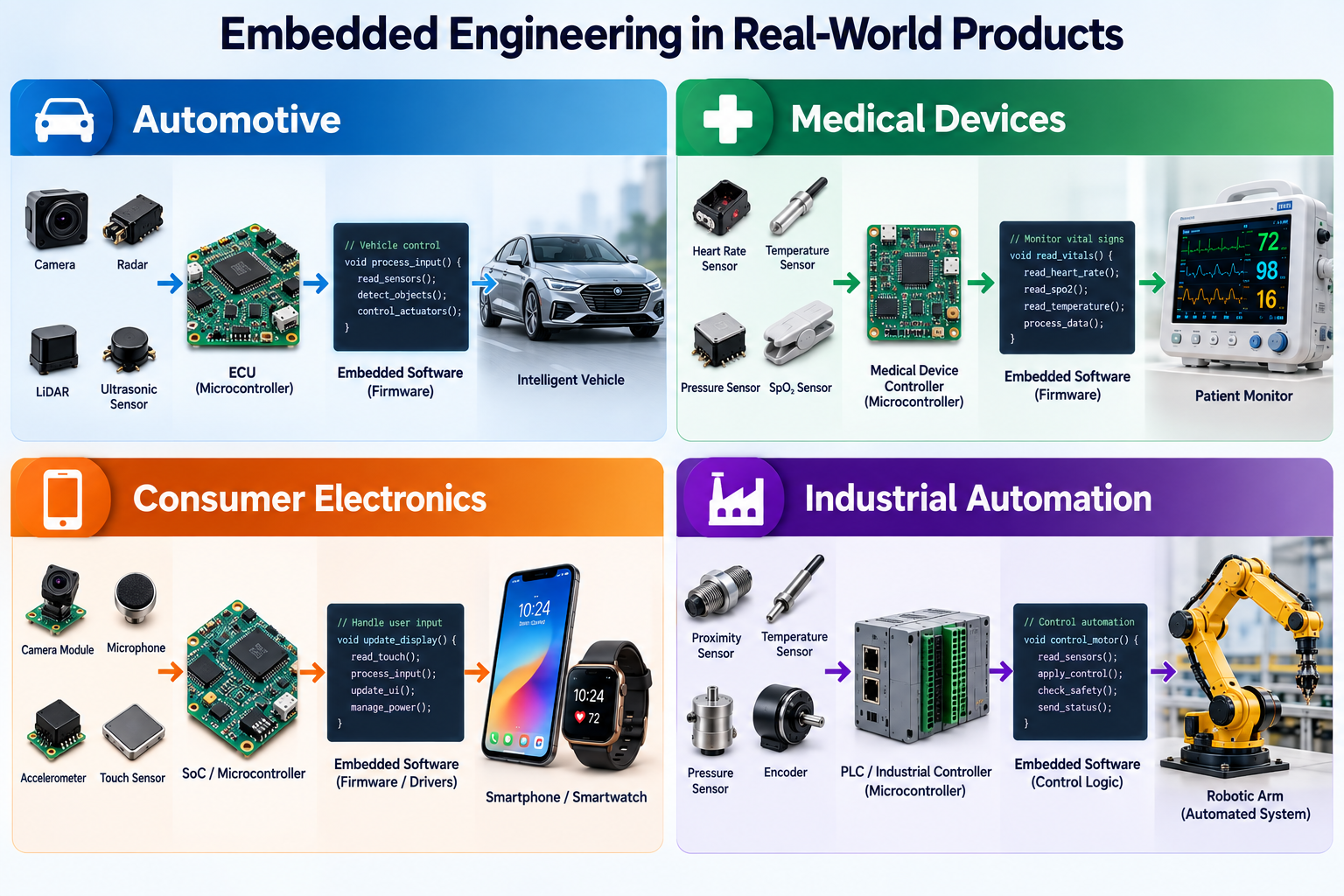
Embedded technology powers countless modern electronic products. These products depend on hardware and software together. Cars, medical devices, and appliances use embedded systems. Industrial machines also rely on embedded technologies.
Embedded engineering has several specialized career paths. Hardware and software engineering are two major paths. Both require technical knowledge and practical problem-solving.
Understanding their differences helps students choose wisely. It also helps professionals plan their careers better.
Kickstart your embedded systems career and turn your tech passion into high-demand skills!
Embedded Hardware vs Embedded Software Engineer
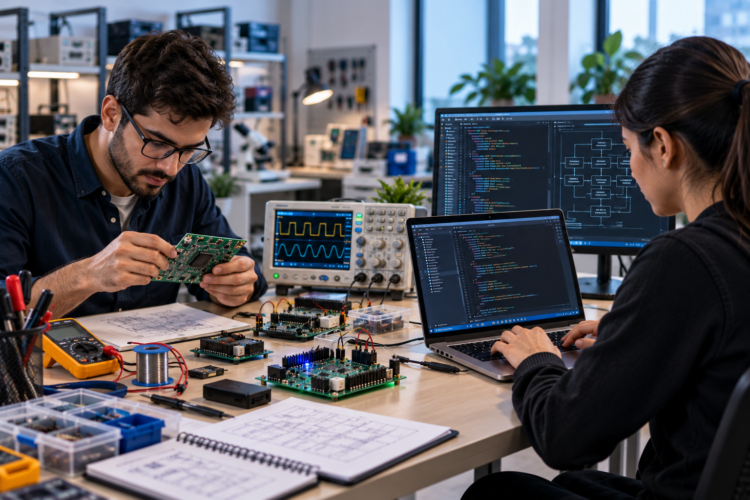
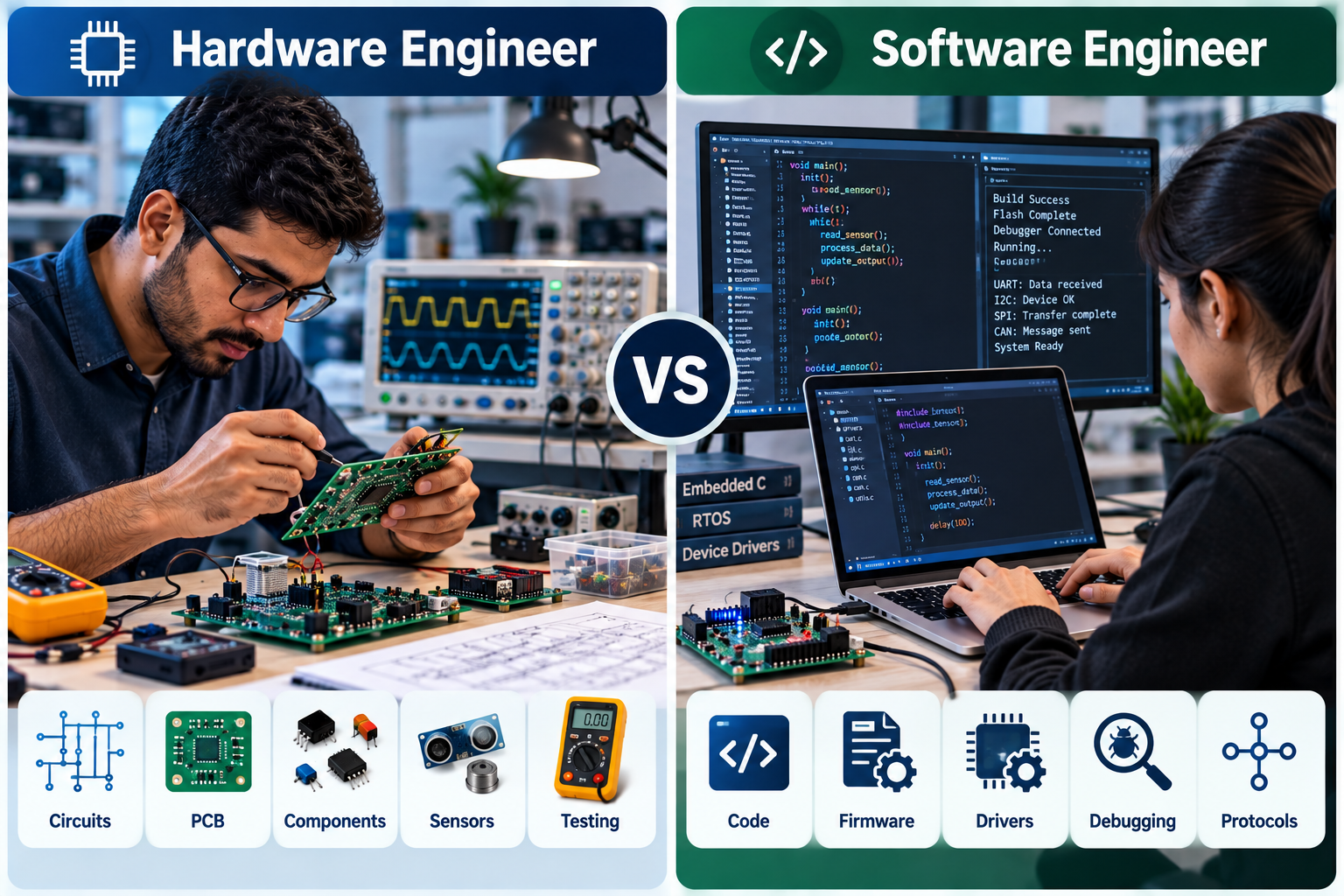
An embedded hardware engineer designs electronic circuits. An embedded software engineer develops device software. Hardware engineers work with physical components and circuits. Software engineers mainly work with code and firmware. Both roles work closely during product development.
- Hardware engineers: Design PCBs, circuits, and components.
- Software engineers: Develop firmware, drivers, and applications.
- Main difference: Hardware builds the physical platform.
- Software makes that platform perform tasks.
- Some engineers develop skills across both areas.
The two roles often overlap during projects. Both require strong embedded systems knowledge. However, their daily responsibilities can differ significantly.
Why are these Roles Often Confused?
Both engineers work on embedded products. Their work also happens within the same projects.
However, their technical responsibilities differ.
- Hardware engineers focus on physical electronics.
- Software engineers focus on programmable functionality.
- Hardware engineers design electronic architectures.
- Software engineers create firmware and control logic.
- Both engineers perform extensive testing and debugging.
Some projects require engineers with broader skills. Such professionals can work across both domains.
What is an Embedded System?
An embedded system is a specialized computing system. It performs specific functions inside another product. Unlike computers, it serves a focused purpose.
An embedded system combines hardware and software. Both parts must work together correctly.
Common Embedded System Components
- Microcontroller: Executes programmed instructions.
- Processor: Performs computational operations.
- Memory: Stores programs and required data.
- Sensors: Capture information from the environment.
- Actuators: Perform physical actions.
- Communication interfaces: Enable device communication.
- Power circuits: Supply and regulate electrical power.
- Firmware: Controls hardware through programmed instructions.
For example, consider a washing machine.
Its microcontroller manages different washing cycles. Sensors monitor water levels and temperature. Motors perform drum movement based on instructions. Firmware controls these operations automatically.
The hardware provides the physical foundation. Software determines how that foundation behaves.
Where are Embedded Systems Used?
Embedded systems appear across many industries.
- Automotive systems
- Medical equipment
- Consumer electronics
- Industrial automation
- Telecommunications
- Aerospace systems
- Robotics
- Smart home devices
- Wearable technology
- Energy management systems
These applications require different technical capabilities. Some prioritize speed and real-time performance. Others prioritize reliability, power efficiency, or safety.
Master Embedded Systems Programming!
Launch your tech career with our Embedded Systems Course, designed for hands-on learning and industry readiness.
Know MoreWhat does an Embedded Hardware Engineer Do?
An embedded hardware engineer designs electronic systems. Their work focuses on physical device architecture.
They decide how components work together. They also ensure the design meets specifications.
1. Hardware Architecture Design
Hardware engineers define system architecture first.
They determine required electronic components. They also identify necessary interfaces and connections.
Their work may include:
- Microcontroller selection
- Processor selection
- Memory selection
- Sensor selection
- Communication interface selection
- Power architecture
- Input and output design
Good architecture supports reliable product performance.
2. Circuit Design
Hardware engineers create electronic circuits. These circuits connect different components together.
They consider several electrical requirements.
- Voltage levels
- Current requirements
- Signal integrity
- Power consumption
- Component compatibility
- Electrical safety
Circuit designs must satisfy technical specifications. They must also operate reliably under expected conditions.
3. PCB Design
Printed circuit boards connect electronic components. Hardware engineers often work with PCB designers.
Their responsibilities can include:
- Component placement
- Circuit routing
- Power distribution
- Grounding
- Signal routing
- Board size
- Thermal considerations
A well-designed PCB improves system reliability. Poor layouts can create electrical problems.
4. Component Selection
Hardware engineers choose suitable electronic components. Selection depends on technical and commercial requirements.
Important factors include:
- Performance
- Cost
- Availability
- Power consumption
- Physical size
- Operating temperature
- Reliability
- Product lifespan
Component availability can influence product designs. Engineers must sometimes identify suitable alternatives.
5. Prototyping
Hardware designs require physical prototypes. Engineers build prototypes before final production.
Prototypes help verify design assumptions. They also reveal potential hardware problems.
Testing can identify:
- Circuit failures
- Power issues
- Signal problems
- Component overheating
- Communication errors
- Mechanical limitations
Engineers then modify the design accordingly.
6. Hardware Testing and Debugging
Hardware engineers test circuits under different conditions. They use specialized laboratory equipment.
Common equipment includes:
- Oscilloscopes
- Multimeters
- Logic analyzers
- Power supplies
- Signal generators
- Electronic loads
These tools help identify electrical problems. Engineers analyze measurements and locate faults.
7. Hardware Validation
Validation checks whether hardware meets requirements. Engineers test the complete physical system.
They may evaluate:
- Performance
- Reliability
- Power consumption
- Temperature behavior
- Communication
- Electrical safety
- Environmental performance
Hardware validation reduces risks before production.
Skills Needed for Hardware Engineers
Hardware engineers need strong electronics knowledge.
Important skills include:
- Analog electronics
- Digital electronics
- Circuit design
- PCB design
- Microcontrollers
- Sensors
- Power electronics
- Communication interfaces
- Hardware debugging
- Testing equipment
Knowledge of embedded programming is also useful. It improves hardware-software collaboration.
Common Hardware Tools
Hardware engineers use several specialized tools.
- PCB design software
- Circuit simulation software
- Oscilloscopes
- Logic analyzers
- Multimeters
- Debugging equipment
- Development boards
Tool requirements depend on project complexity.
What does an Embedded Software Engineer Do?
An embedded software engineer develops device software. Their work controls embedded hardware functions.
They write programs for processors and microcontrollers. Their software allows devices to perform specific tasks.
1. Firmware Development
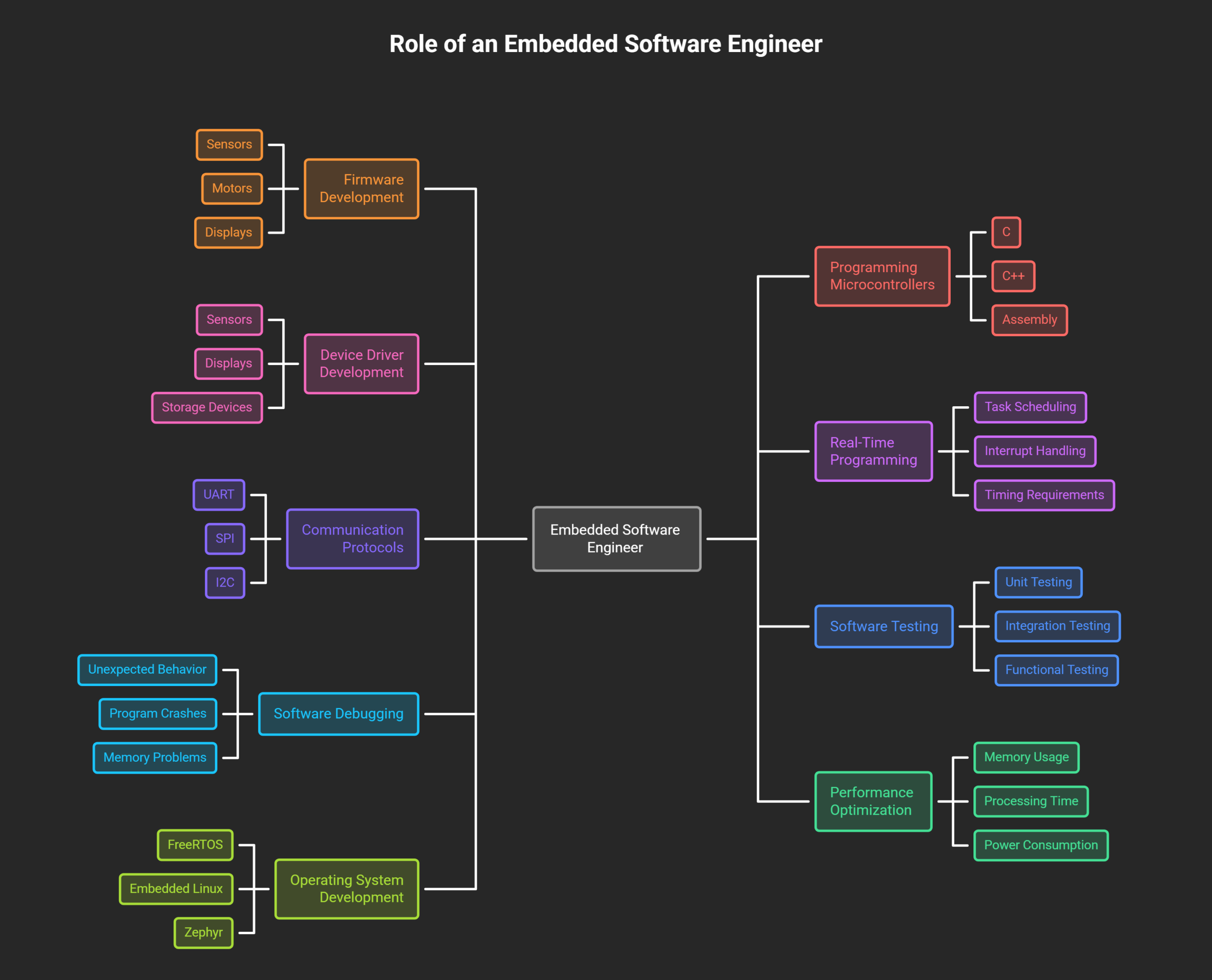
Firmware is central to embedded software development. It provides instructions for electronic hardware.
Firmware can control:
- Sensors
- Motors
- Displays
- Communication interfaces
- Memory
- Power functions
- User inputs
Engineers write firmware using embedded programming languages.
2. Programming Microcontrollers
Embedded software often runs on microcontrollers. Engineers develop programs for these devices.
Common programming languages include:
- C
- C++
- Assembly
- Python for selected embedded applications
C remains widely used in embedded development. It provides efficient control over hardware resources.
3. Device Driver Development
Device drivers connect software with hardware. They allow software to communicate with components.
Drivers can control:
- Sensors
- Displays
- Storage devices
- Communication modules
- Input devices
- Peripheral hardware
Proper drivers ensure reliable hardware interaction.
4. Real-Time Programming
Many embedded devices require immediate responses. These systems often use real-time operating systems.
Engineers manage:
- Task scheduling
- Interrupt handling
- Timing requirements
- Resource allocation
- Communication
- Memory management
Real-time programming requires careful timing control.
5. Communication Protocols
Embedded devices often communicate with other systems. Software engineers implement communication protocols.
Common protocols include:
- UART
- SPI
- I2C
- CAN
- USB
- Ethernet
- Bluetooth
- Wi-Fi
Protocol selection depends on application requirements.
6. Software Testing
Embedded software requires extensive testing. Engineers verify individual functions and complete systems.
Testing can include:
- Unit testing
- Integration testing
- Functional testing
- Performance testing
- Regression testing
- System testing
Testing helps identify software defects early.
7. Software Debugging
Debugging identifies problems within embedded programs. Engineers use specialized debugging tools.
They investigate:
- Unexpected system behavior
- Program crashes
- Memory problems
- Timing issues
- Communication failures
- Incorrect sensor readings
Debuggers help engineers examine program execution.
8. Performance Optimization
Embedded devices have limited resources. Software must therefore use resources efficiently.
Engineers optimize:
- Memory usage
- Processing time
- Power consumption
- Code size
- Response time
- Data handling
Optimization can improve overall device performance.
9. Operating System Development
Some embedded products use operating systems. Engineers may work with embedded operating systems.
Examples include:
- FreeRTOS
- Embedded Linux
- Zephyr
- Other real-time operating systems
The choice depends on project requirements.
Skills Needed for Software Engineers
Embedded software engineers need strong programming skills.
Important skills include:
- C programming
- C++ programming
- Data structures
- Algorithms
- Microcontrollers
- Firmware development
- Operating systems
- Debugging
- Communication protocols
- Version control
- Real-time systems
Basic electronics knowledge also provides an advantage.
Common Software Tools
Embedded software engineers use development environments. They also use debugging and testing tools.
Common tools include:
- Integrated development environments
- Cross-compilers
- Debuggers
- Version control systems
- Logic analyzers
- Hardware development boards
- Simulation tools
Tool choices depend on the processor and platform.
Hardware and software engineers ultimately share one goal. They must create a reliable embedded product. Their responsibilities differ, but their work remains closely connected.
Master Embedded Systems Programming!
Launch your tech career with our Embedded Systems Course, designed for hands-on learning and industry readiness.
Know MoreFrequently Asked Questions
What does an embedded hardware engineer do?
An embedded hardware engineer designs electronic components. Their work includes circuits, PCBs, processors, sensors, and power systems. They also test physical prototypes and troubleshoot hardware problems.
What does an embedded software engineer do?
An embedded software engineer develops software for electronic devices. They create firmware, device drivers, and real-time programs. They also test, debug, and optimize embedded software.
What is the main difference between hardware and software engineers?
Hardware engineers focus on physical electronic systems. Software engineers focus on programs controlling those systems. Both professionals collaborate to develop complete embedded products.
Do embedded hardware engineers need programming skills?
Basic programming knowledge can benefit hardware engineers. It helps them understand microcontrollers and hardware-software interaction. However, advanced programming is usually more important for software-focused roles.
Do embedded software engineers need electronics knowledge?
Yes, basic electronics knowledge is highly useful. It helps software engineers understand processors, sensors, interfaces, and circuits. This knowledge also makes hardware debugging easier.
Which role is easier to learn?
Neither role is universally easier to learn. Hardware requires electronics and circuit knowledge. Software requires programming and debugging skills. Your existing interests and technical background can influence the learning experience.
Which embedded engineering role has better career opportunities?
Both hardware and software offer strong career opportunities. Software roles are common across firmware, IoT, automotive, and robotics. Hardware roles remain important in electronics, automotive, medical, and industrial products.
Can one person handle both hardware and software?
Yes, some engineers develop skills in both areas. Such professionals are often called embedded systems engineers. They can work on circuits, microcontrollers, firmware, debugging, and system integration.
Which programming languages are useful for embedded software?
C is one of the most important embedded languages. C++ and Assembly are also used in many projects. Python can support selected embedded applications, testing, and development tasks.
How do hardware and software engineers work together?
Hardware engineers create the electronic platform. Software engineers develop firmware for that platform. Both teams test interfaces, troubleshoot problems, and validate the complete embedded system together.