Table of Contents
Cybersecurity can be learned within three to twelve months. Job-ready skills depend on practice and consistency levels. Advanced roles may take more time and deeper learning. Your learning speed depends on effort and daily practice. This blog explains realistic timelines and learning stages clearly. It covers factors that affect your learning speed. You will also learn a step-by-step roadmap easily. Different learning paths and their duration are explained simply. It also shares tips to learn faster and smarter. Follow this guide to plan your cybersecurity journey confidently.
Enroll in Entri’s AI-Powered Cybersecurity course now!
Key Takeaways
- Basic knowledge can be built in 3–6 months
- Job-ready skills take around 6–12 months
- Advanced roles may take 1–2 years
- Hands-on practice speeds up learning significantly
- Consistency matters more than long study hours
1. Introduction
Many beginners feel confused before starting cybersecurity learning. They often wonder how long learning will actually take. Different answers online make the decision even harder. Some promise fast results, while others suggest long journeys. The truth depends on your approach and daily effort. There is no fixed timeline for every learner. Each person progresses at a different pace and style.
This guide simplifies the learning journey for beginners. It explains timelines based on clear and practical goals. It also breaks down steps into easy learning stages.
❓ What Will This Guide Help You Understand?
- Learn realistic timelines for different learning goals
- Understand how your effort affects your progress
- Discover stages from beginner to job-ready level
- Get clarity on skills and learning priorities
- Avoid confusion from mixed information online
🎯 Who Is This Guide For?
- Beginners starting cybersecurity with no experience
- Students exploring career options in technology fields
- Learners switching from non-technical backgrounds
- Anyone looking for a clear and simple roadmap
This guide helps you start with confidence and clarity.
2. What Factors Affect Learning Time?
Learning speed varies for each cybersecurity beginner. Several factors influence how quickly skills develop. Understanding these factors helps plan learning better.
📚 Prior IT Knowledge
- Basic IT knowledge makes learning easier and faster.
- Familiarity with computers reduces confusion in early stages.
- Beginners may need more time to understand concepts.
- Learning basics first helps build strong foundations.
⏱️ Learning Consistency
- Daily study improves understanding and memory retention.
- Short sessions daily work better than long irregular sessions.
- Irregular practice slows down progress significantly.
- Consistency builds confidence and steady improvement.
🎯 Learning Method
- Structured courses provide clear and guided learning paths.
- They help avoid confusion and unnecessary topics.
- Self-learning offers flexibility but requires strong discipline.
- Good resources are important for effective self-learning.
🔐 Specialization Choice
- Ethical hacking requires deeper technical understanding.
- It involves tools, scripting, and vulnerability analysis.
- SOC roles focus more on monitoring and response tasks.
- Beginners may find SOC roles easier to start.
🧪 Hands-on Practice
- Practical labs improve skills faster than theory alone.
- Real scenarios help understand attacks and defenses clearly.
- Practice builds confidence and problem-solving ability.
- Theory without practice limits real-world understanding.
📊 Summary Table
| Factor | Impact on Learning Speed |
|---|---|
| Prior Knowledge | Speeds up initial understanding |
| Consistency | Ensures steady progress |
| Learning Method | Affects clarity and direction |
| Specialization | Changes difficulty level |
| Hands-on Practice | Builds real skills faster |
3. Cybersecurity Learning Roadmap (Step-by-Step)
A clear roadmap helps beginners learn cybersecurity efficiently. It breaks learning into simple and manageable stages. Each stage builds skills needed for the next level.
🟢 Stage 1: Basics (1–2 Months)
Start with understanding core technical foundations clearly. Focus on how systems and networks actually function.
- Learn networking fundamentals and communication basics
- Understand IP addresses, protocols, and data transfer
- Study operating systems like Linux and Windows
- Learn file systems, users, and permissions basics
- Understand common threats like malware and phishing
- Build a strong base before moving forward
🔵 Stage 2: Core Skills (2–4 Months)
Now start building practical and technical skills gradually. Focus on applying concepts in real scenarios.
- Learn Linux basics and command-line usage daily
- Practice file handling and system navigation tasks
- Start using beginner-friendly cybersecurity tools
- Explore tools like Wireshark and Nmap slowly
- Understand different types of cyber threats clearly
- Learn how attacks work in real situations
🟣 Stage 3: Specialization (2–6 Months)
Choose a specific path based on your interests. Specialization helps build deeper and focused skills.
- Choose ethical hacking, SOC, or cloud security
- Learn advanced tools related to your chosen path
- Practice real-world techniques using hands-on labs
- Understand vulnerabilities and security testing methods
- Start certifications like CompTIA Security+ or CEH
- Certifications help validate your knowledge professionally
🟡 Stage 4: Job Preparation (1–2 Months)
Prepare yourself for real job opportunities confidently. Focus on showcasing skills and practical experience.
- Build small projects to demonstrate your abilities
- Create a portfolio with your practical work
- Write a clear and strong resume
- Highlight skills, tools, and certifications properly
- Prepare for interviews with common questions
- Practice explaining concepts in simple terms
Enroll in Entri’s AI-Powered Cybersecurity course now!
4. Different Learning Paths & Duration
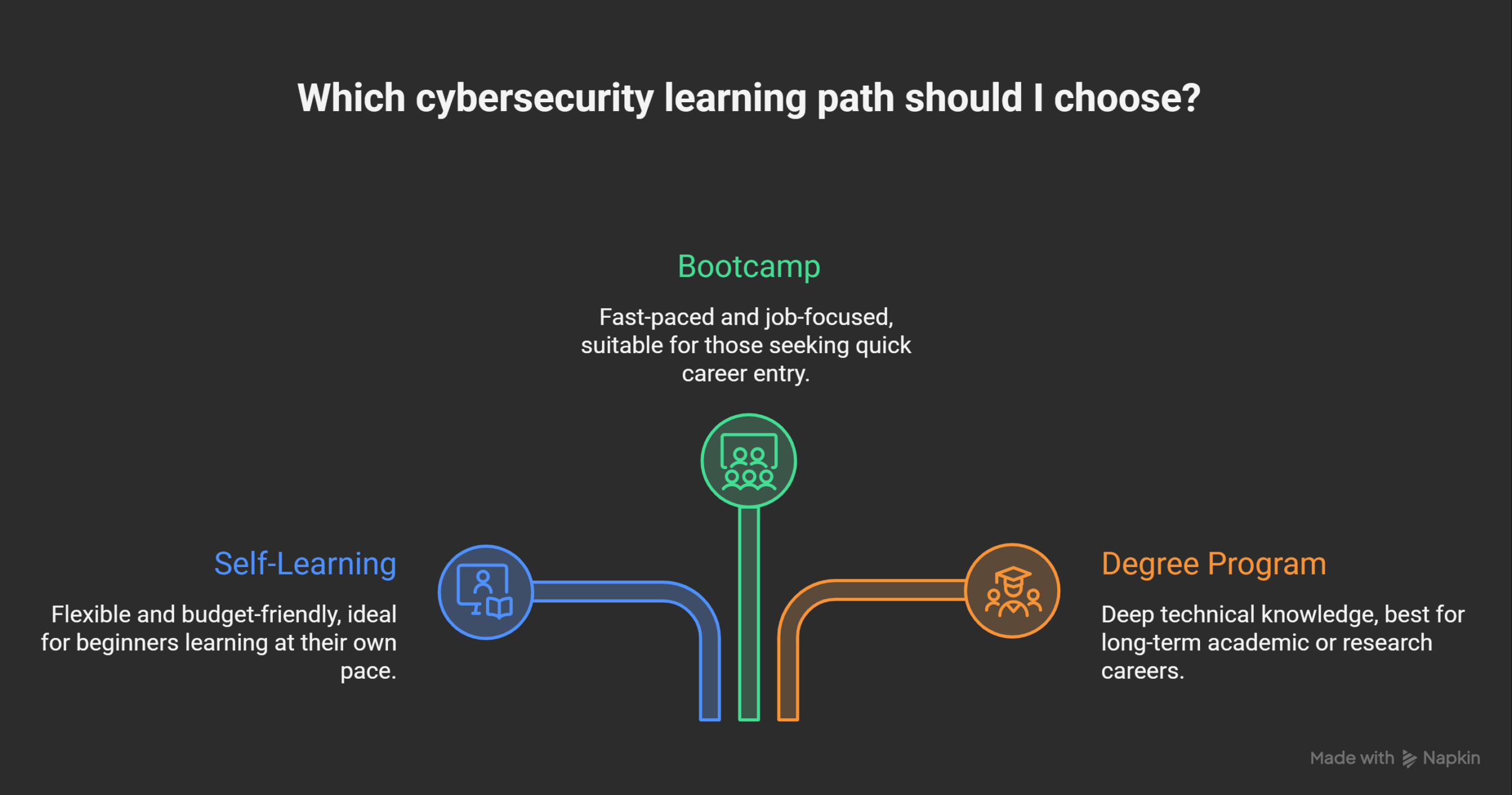
Cybersecurity can be learned through different learning paths. Each path has its own speed and learning style. Choosing the right path depends on your goals.
📘 Self-Learning Path
Self-learning is flexible and budget-friendly for beginners. It allows learning at your own pace and comfort.
- Learn using free and online resources daily
- Follow tutorials, blogs, and video lessons regularly
- Practice using labs and simple projects consistently
Duration:
- Usually takes around 6 to 12 months
- May take longer without proper guidance
Key Points:
- Requires discipline and strong consistency
- Choosing the right resources is very important
🎓 Bootcamp Learning Path
Bootcamps provide structured and fast-paced learning programs. They focus on practical skills and job readiness quickly.
- Follow a fixed curriculum with guided lessons
- Practice hands-on labs and real-world scenarios
- Get mentorship and support from instructors
Duration:
- Usually takes around 3 to 6 months
- Faster than most other learning methods
Key Points:
- Suitable for focused and full-time learners
- Can be expensive compared to self-learning
🏫 Degree Program Path
Degree programs offer deep and detailed technical knowledge. They cover theory along with practical learning methods.
- Learn computer science and security concepts in depth
- Study multiple subjects related to IT and security
- Gain academic knowledge and structured understanding
Duration:
- Usually takes around 2 to 4 years
- Longest but most detailed learning path
Key Points:
- Good for long-term academic and research careers
- Not necessary for entry-level cybersecurity roles
5. Can You Learn Cybersecurity in 3 or 6 Months?
Many beginners expect quick results in cybersecurity learning. Short timelines are possible with focused effort and consistency. However, expectations must remain realistic and practical.
⏳ Learning in 3 Months
- You can learn basic concepts within three months
- Understand networking, systems, and security fundamentals
- Learn common threats like phishing and malware basics
- Start using simple tools and beginner labs
- Build a basic understanding, not job-ready skills
⏱️ Learning in 6 Months
- You can develop stronger and more practical skills
- Learn tools and perform basic security tasks
- Practice hands-on labs and real-world scenarios
- Understand attack methods and defense techniques
- Become closer to entry-level job readiness
⚠️ Important Reality Check
- Cybersecurity cannot be mastered in a few months
- Learning requires patience, effort, and regular practice
- Skills improve gradually with consistent learning
📌 Key Tip
- Focus on learning daily instead of rushing timelines
- Combine theory with hands-on practice regularly
- Follow a structured roadmap for better results
Six months can build a strong beginner foundation.
6. Tips to Learn Cybersecurity Faster
Learning cybersecurity requires smart strategies. You also need consistency. Focus on practical learning. Spend less time on reading concepts. Apply small daily efforts. It creates strong long-term progress.
⚡ Follow a Structured Learning Plan
- Use a clear roadmap. This avoids confusion.
- Learn topics step by step. It will provide a proper order.
- Avoid jumping between topics. This leads to confusion.
- Stick to one plan. Start next after completing it fully.
🧪 Practice Daily with Hands-on Labs
- Practice using labs like TryHackMe regularly
- Apply concepts instead of only reading theory
- Solve small challenges to build real skills
- Daily practice improves confidence and understanding
🛠️ Learn Tools One at a Time
- Focus on one tool before moving to others
- Understand how each tool works in detail
- Practice real use cases for better clarity
- Avoid learning too many tools at once
💡 Build Small Real-World Projects
- Create simple projects to apply your knowledge
- Try network scanning or basic vulnerability testing
- Projects help connect theory with practical skills
- They also improve your portfolio for job applications
🌐 Join Cybersecurity Communities
- Join forums and beginner-friendly learning groups
- Ask questions. Learn from others’ experiences
- Follow experts. Stay updated with trends
- Community support helps solve doubts faster
📌 Stay Consistent and Patient
- Practice daily. Even short durations helps.
- Avoid expecting fast results. There are no shortcuts
- Track your progress. Try to improve gradually
- Consistency matters more than long study hours
Following these tips helps you learn faster and smarter.
7. Career Opportunities After Learning
Cybersecurity offers many career opportunities. It increases for skilled learners. It provides stable jobs. This gives strong long-term growth. Demand for professionals is increasing. Every industry need them.
🎯 Entry-Level Roles
Beginners can start with simple and practical roles. These roles help build experience and core skills.
- SOC Analyst
- Monitors systems and detects security threats early
- Handles alerts and responds to incidents quickly
- Security Analyst
- Analyzes risks and protects systems from attacks
- Works on improving security policies and controls
- IT Support with Security Focus
- Supports systems while ensuring basic security practices
- Helps maintain safe and secure IT environments
📈 Mid-Level Roles
After gaining experience, roles become more specialized. These roles require deeper knowledge and practical skills.
- Ethical Hacker
- Tests systems to find vulnerabilities and weaknesses
- Uses tools to simulate real-world attacks safely
- Penetration Tester
- Performs controlled attacks to check system security
- Provides reports and suggestions for improvements
- Security Consultant
- Advises companies on improving their security systems
- Helps design better protection strategie
🚀 Advanced Roles
Experienced professionals move into advanced technical roles. These roles involve designing and managing secure systems.
- Security Engineer
- Builds and maintains secure systems and networks
- Works on advanced tools and security architecture
- Cloud Security Specialist
- Secures cloud platforms and online infrastructure systems
- Focuses on modern cloud-based security solutions
- Security Architect
- Designs complete security systems for organizations
- Plans long-term security strategies and frameworks
💰 Salary Overview (India)
Salaries increase based on skills and experience levels. Higher roles offer better pay and global opportunities.
| Level | Role | Salary Range (India) |
|---|---|---|
| Entry Level | SOC Analyst | ₹3 – ₹6 LPA |
| Entry Level | Security Analyst | ₹4 – ₹8 LPA |
| Mid Level | Ethical Hacker | ₹6 – ₹12 LPA |
| Mid Level | Penetration Tester | ₹7 – ₹15 LPA |
| Advanced Level | Security Engineer | ₹10 – ₹20+ LPA |
🌍 Global Demand and Opportunities
Cybersecurity professionals are needed across the world. Many companies offer remote jobs. They also give flexible roles. There are jobs in different sectors. They include banking, healthcare, and technology. Global demand ensures strong career. It promises stability and growth.
Cybersecurity offers a clear path. It provides a strong career path.
8. Conclusion
Learning cybersecurity does not follow a fixed timeline. Progress depends on three factors. Consistency, practice, and approach. Beginners should build strong basics. This can be done through step by step approach. Learn networking, systems. Followed by core security concepts first. Hands-on practice turns knowledge to actual skills. A clear roadmap reduces confusion. It also saves time. Choose the right path. It improves learning speed. Small daily efforts create steady progress over time.
Avoid rushing. Focus on simple, clear learning. Set realistic goals. Track progress regularly. Practice often. Apply concepts in real situations. Build small projects. This improves practical understanding. Certifications can support learning. Cybersecurity needs patience. It also needs discipline, and curiosity. Start today. Make a simple and clear plan. Consistent effort leads to long-term success.
Frequently Asked Questions
How long does it take to become job-ready in cybersecurity?
Most beginners can become job-ready within 6 to 12 months. This requires a structured roadmap, consistent practice, and hands-on learning.
Can I learn cybersecurity without an IT background?
Yes, beginners from non-IT backgrounds can learn cybersecurity. Start with basic computer and networking concepts, then move to security topics.
Is 3 months enough to learn cybersecurity?
Three months is enough to understand basic concepts clearly. It is not enough to become job-ready without deeper practice.
What is the best way to start learning cybersecurity?
Start with networking basics and operating systems like Linux. Then learn security concepts and practice using hands-on labs regularly.
Do I need certifications to get a cybersecurity job?
Certifications help validate your knowledge and improve job chances. However, practical skills and projects are equally important.
Which cybersecurity role is best for beginners?
SOC Analyst and Security Analyst roles are beginner-friendly. They focus on monitoring systems and handling basic security tasks.
How many hours should I study daily?
Studying 1 to 2 hours daily is enough for steady progress. Consistency matters more than long study sessions.
Is coding necessary for cybersecurity?
Coding is not required at the beginning of learning. Basic programming like Python can help later for automation.
How important is hands-on practice in cybersecurity?
Hands-on practice is very important for real understanding. It helps you learn real-world scenarios and problem-solving skills.
Can I switch to cybersecurity as a career?
Yes, many people switch from different fields successfully. Consistent learning and practical experience make the transition easier.