Table of Contents
How Can You Become an HR Recruiter?
A bachelor’s degree in psychology, business administration, human resources, or a related field is typically necessary for human resources recruiting. These are the skills you need to be good at hiring: Communication, interviews, contacts, and networking are important. You need to know about recruitment technology such as ATS. Experience in human resources can be gained through an internship or an entry-level position. • Build your professional network with LinkedIn. As you gain experience, you can apply for human resources recruiter, talent acquisition executive, staffing coordinator, and coordinator positions. Job experience, advanced education, and certifications can lead to talent acquisition and senior recruiting leadership roles.
Key Takeaways:
Is being an HR your dream? Enrol now for our course on Human Resource!
Why Is HR Recruitment a Popular Career Choice?
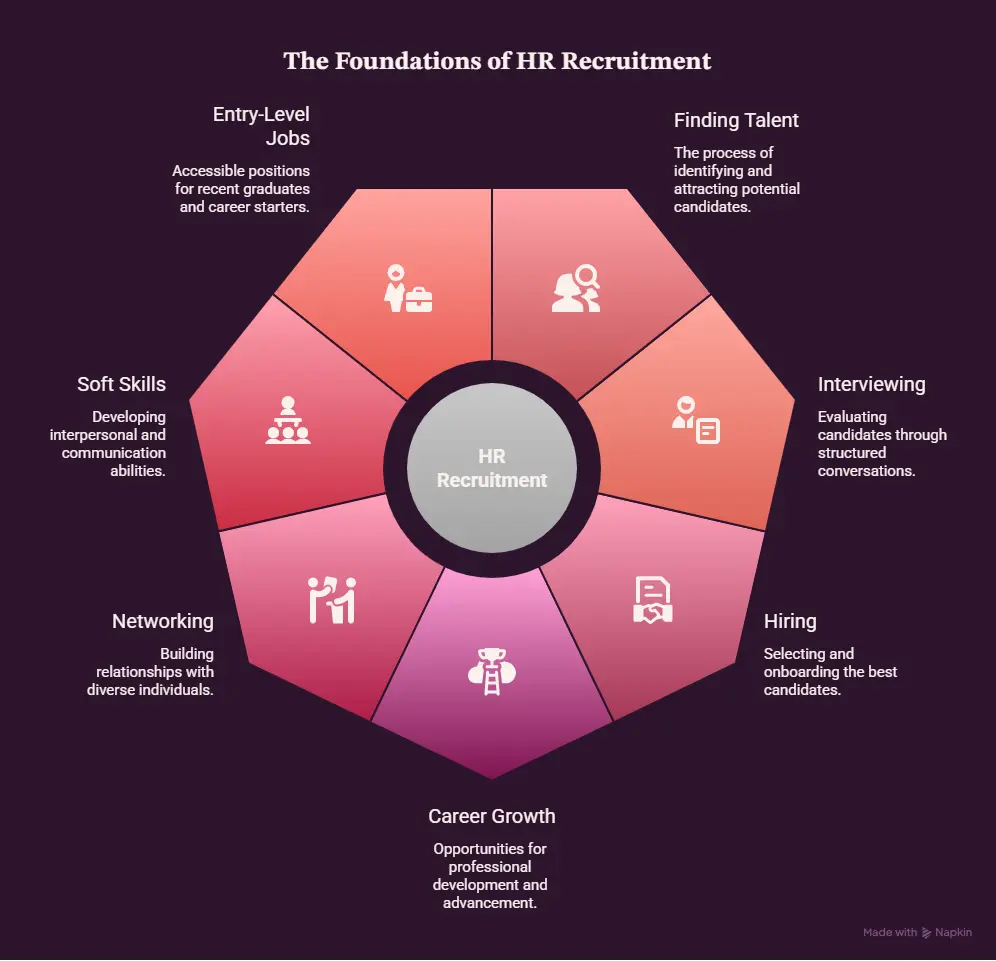
Any business has to deal with the challenge of finding, interviewing, and hiring the best people. That’s why the human resources recruiting field is growing so quickly. Recruiters are what keep a business going. They help businesses and people looking for work find each other by matching them with good candidates and job openings. This is a very popular field with lots of job openings. Working in it can help you move up in your career, meet interesting new people, and improve your soft skills like speaking and managing people. Human resources recruitment is also a great field for recent college grads and people just starting out in their careers because it is one of the few HR specialties with a lot of entry-level jobs.
Become an HR Expert – Enroll in Our HR Management Course Today!
Unlock the secrets to effective Human Resource Management with our expert-led course! Learn recruitment, employee relations, performance management, and more to build a thriving workplace. Start your journey toward a successful HR career today!
Know MoreWho Is an HR Recruiter?

An HR recruiter is an expert in the field of human resources who is tasked with the job of discovering, recruiting, screening, and selecting qualified employment possibilities for open positions within a business. Human resources recruiters are required to fulfill this responsibility. During the time when job seekers are seeking employment, they serve as a bridge between employers and job seekers, ensuring that the proper talent is matched with the suitable function.
The core responsibilities are the following:
- Obtaining an understanding of the job needs from the hiring supervisors.
- Posting advertisements for available jobs on a variety of sites.
- Recruiting potential applicants by using social networks and online job communities.
- Examining applications and resumes for candidates is also part of the process.
- Interviews are being conducted initially.
- Interviews are being conducted in conjunction with the hiring supervisors.
- The process of negotiating job offers and benefits packages.
- The management of candidate communication throughout the entire process of hiring.
Difference Between HR Recruiter and HR Generalist
Recruiters and generalists in human resources are both employed by the human resources department; nevertheless, their responsibilities are distinct from one another. On the other hand, an HR recruiter is responsible for recruiting, screening, and employing employees, while an HR generalist is in charge of managing employee relationships, training, performance management, and the application of policies. A comparison table is given below:
| Aspect | HR Recruiter | HR Generalist |
|---|---|---|
| Main Emphasis | Recruiting and acquiring talent | Management of employees and overall human resources |
| Principal Duty | Recruitment and employment | Supervising a variety of human resources tasks |
| Engagement in the Hiring Process | Fundamental duty | Backs up hiring efforts as required |
| Relations with Employees | Very little participation | Addresses problems and concerns raised by employees |
| Education and Growth | Typically not held accountable | Manages training initiatives for staff |
| Compensation and Perks | Typically disengaged | Could provide a hand with benefits and payroll processing |
| Assessment of Work Performance | Low level of participation | Backs evaluations and reviews of performance |
| Career Path | Experienced Recruiter, Manager of Talent Acquisition | Human Resources Director, HR Business Partner, and HR Manager |
Types of Recruiters
Many different kinds of recruiters are employed by various organizations, including
- Employees of the company
A person who works directly for a firm and is responsible for hiring people for that company.
- Recruiter for A Company
Performs work for recruiting agencies and is responsible for hiring individuals for a variety of clients.
- Technical Recruiter
IT, engineering, and technology specialists are the focus of this company’s hiring expertise.
- Senior Executive Recruiter
A primary focus is placed on the recruitment of senior-level executives and positions of leadership.
- A Recruiter for Campus
college and university students, as well as recent graduates, are recruited for this position.
Educational Requirements to Become an HR Recruiter
Most employers prefer candidates with a bachelor’s degree. Common educational backgrounds include:
- Candidates must be graduates of BBA, B.COM, BBM, BA, or obtain a degree in sociology or psychology
Getting more certifications can make your image stronger:
- Certifications in Human Resource Management
- Courses for Getting Talent
- Training programs for hiring and picking employees
- HR certifications for professionals
Step-by-Step Process to Become an HR Recruiter
HR recruiters need education, skills, experience, and field knowledge. Talent acquisition and recruitment strategy can launch your career.
Step 1: Get the correct degree
A psychology, business administration, HR, or commerce bachelor’s degree. Education helps explain organizational behaviour and HR procedures.
Step 2: Recruiting research
The strategies of problem-solving, networking, interviewing, and negotiation ought to be given significant importance. It is necessary for applicants and hiring managers to possess these skills in order to conduct productive interviews.
Step 3: Gaining experience in the real world
Experience in human resources, recruitment, or entry-level human resources internships can be gained through activities such as candidate screening, interview coordinating, and recruiting.
Step 4: Learn about the different kinds of technology that the job process uses.
Learn how to use job boards, LinkedIn Recruiter, HR software, and application tracking systems (ATS) as well as other tools used by the whole company to hire people.
Step 5: Set up a professional network for your company.
If you make a good impact on LinkedIn, recruiters, hiring managers, HR experts, and other professionals in your field will want to work with you. Going to networking events is one way to find out about new job openings and stay up to date on business news.
Step 6: Find entry-level jobs
HR occupations include recruiting supervisor, talent acquisition executive, staffing executive, and HR assistant.
Step 7: Learn and get blessed
HR and job-related seminars, certifications, and training can improve your skills. Keeping up with the ever-changing job market requires continuing education.
Step 8: Complete one assignment before moving on
You can specialise on college recruiting, technology, business, or healthcare depending on your interests and education. You can get better jobs and more money by attracting top talent.
Become an HR Expert – Enroll in Our HR Management Course Today!
Unlock the secrets to effective Human Resource Management with our expert-led course! Learn recruitment, employee relations, performance management, and more to build a thriving workplace. Start your journey toward a successful HR career today!
Know MoreSalary of an HR Recruiter in India
A salary that human resource recruiters in India make is determined by a number of criteria, including their level of experience, the region they work in, the industry they work in, the size of their company, and the recruiting specialisation they specialise in. In general, the earnings that first-year recruiters make at the beginning of their employment are considered to be entry-level. However, experienced recruiters, particularly those who work in information technology or executive recruitment, can earn far more than their rookie counterparts.
| Based on experience level | Annual salary |
|---|---|
| 0–1 Year | ₹2.0 LPA – ₹4.0 LPA |
| 1–3 Years | ₹3.0 LPA – ₹6.0 LPA |
| 3–5 Years | ₹5.0 LPA – ₹8.0 LPA |
| 5–8 Years | ₹8.0 LPA – ₹12.0 LPA |
| 8+ Years | ₹12.0 LPA–₹20.0+ LPA |
Is HR Recruitment a Good Career for Freshers
Certainly, human resource recruitment is a fantastic job path for recent graduates. There are a lot of companies that hire recent graduates who have no prior experience and provide training on the various recruitment methods and tools.
A Fresher can benefit from the following:
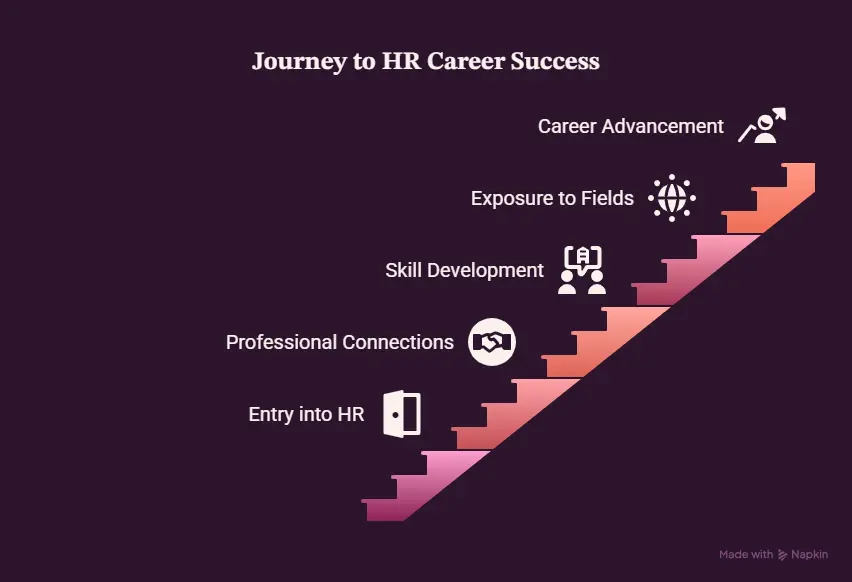
- It is simple to enter the field of human resources.
- Chances to establish professional connections and relationships.
- Skills in communication and interviewing are being developed.
- Being exposed to a variety of fields and job functions.
- The clearest possible career advancement paths.
Is being an HR your dream? Enrol now for our course on Human Resource!
Conclusion
A career as a human resources recruiter is a fantastic alternative for people who take pleasure in engaging with others and providing assistance to organisations in the process of building powerful teams. Individuals who possess the appropriate education, practical experience, communication skills, and knowledge of recruitment tools have the potential to successfully begin and advance their careers in human resource recruitment. Whether you are just starting out in your career or are thinking about making a move in your line of work, recruitment provides you with excellent prospects for advancement, competitive compensation, and essential professional development.
| Related Articles | |
| Top Human Resource Blogs to Follow | How to build a remote HR career |
| HR Certification vs HR Degree | Which one to choose? | 15 HR Intern Interview Questions and Sample Answers |
Become an HR Expert – Enroll in Our HR Management Course Today!
Unlock the secrets to effective Human Resource Management with our expert-led course! Learn recruitment, employee relations, performance management, and more to build a thriving workplace. Start your journey toward a successful HR career today!
Know MoreFrequently Asked Questions
Can freshers become HR recruiters?
Yes, many companies hire freshers for entry-level HR recruiter or talent acquisition roles and provide on-the-job training.
Is HR recruitment a good career option?
Yes, it is a good career choice with strong demand, growth opportunities, and exposure to different industries and roles.
What skills are important for an HR recruiter?
Key skills include communication, interpersonal skills, interviewing, negotiation, networking, and time management.
What tools do HR recruiters use?
Recruiters commonly use Applicant Tracking Systems (ATS), LinkedIn Recruiter, job portals like Naukri and Indeed, and HR software.
What is the career growth path for an HR recruiter?
You can grow from HR Recruiter to Senior Recruiter, Talent Acquisition Specialist, Talent Acquisition Manager, and eventually HR Manager or HR Director.
Is HR recruitment a stressful job?
It can be target-driven and fast-paced, but it is also rewarding when successful hires are made.
Do HR recruiters work only in companies?
No, they can work in companies (internal recruiters) or recruitment agencies serving multiple clients.