Table of Contents
To become an LKG/UKG teacher in India, you generally need a Class 12 pass plus a recognised early childhood teaching qualification. This includes NTT, ECCE, Montessori training, or the NCTE-approved Diploma in Preschool Education (DPSE).
The exact requirement varies by school type and state. But almost every preschool hiring for this role expects that same academic-plus-training combination.
Unlock your passion for education and shape young minds as a Montessori teacher!
Key Takeaways
- Minimum qualification: Class 12 pass; some institutes accept Class 10 for certificate entry.
- Best courses: NTT, ECCE, and Montessori training; DPSE is NCTE‑recognised.
- Salary: Freshers ₹10,000 to ₹18,000; experienced teachers ₹25,000–₹30,000+ in top schools.
- Core skills: Patience, clear communication, creativity, classroom management, observation.
- Career growth: LKG/UKG leads to senior teacher, coordinator, or curriculum developer roles.
- 2026 outlook: NEP 2020’s FLN push has increased demand for certified early childhood educators.
Why This Role Matters
1: What is the primary focus of the first plane of development in the Montessori method?
-
It helps children develop early learning habits.
-
It builds confidence through simple guided tasks.
-
It supports emotional growth in safe surroundings.
-
It prepares children for primary school learning.
-
It strengthens communication and social interaction skills.
Get Certified & Start Your Montessori Career
Montessori Teacher Training Course by Entri App: Gain expert skills, earn certification, and kickstart your teaching career.
Join Now!What You Will Learn Ahead
-
Who an LKG or UKG teacher is.
-
Their main daily responsibilities and tasks.
-
Required qualifications for preschool teaching.
-
The best courses for early teaching careers.
-
Skills needed for strong classroom performance.
-
Steps to start your kindergarten teaching journey.
Who is an LKG/UKG Teacher?
An LKG or UKG teacher works with very young children. They teach kids between three and six years old. Their role supports early learning in simple daily ways. They guide children through stories, songs, and playful tasks. They create warm classrooms that feel safe and happy. Their care helps children grow with confidence and joy. Many people feel inspired to Become a LKG/UKG Teacher.
LKG teachers handle younger children with gentle routines. UKG teachers guide older children with slightly advanced tasks. Both teachers help children learn important early skills. Their work builds a strong base for future learning. They make learning fun through simple, engaging activities.
Main Traits of LKG/UKG Teachers
-
They stay patient with every child.
-
They use simple and clear teaching styles.
-
They support emotional and social growth.
-
They keep classrooms lively and joyful.
-
They build trust with kind behaviour.
Focus Areas for LKG Teachers
-
Early language sounds and small words.
-
Basic counting through simple games.
-
Shape and colour recognition tasks.
-
Gentle habit building every day.
Focus Areas for UKG Teachers
-
Early reading and writing practice.
-
Number patterns and easy sums.
-
Clear communication through speaking tasks.
-
Group activities for social learning.
Simple Comparison Table
| Aspect | LKG Teacher | UKG Teacher |
|---|---|---|
| Age Group | Younger kids, 3–4 years | Older kids, 4–6 years |
| Learning Level | Very basic concepts | Slightly advanced concepts |
| Lesson Style | Playful, simple, colourful | Structured, playful, focused |
| Activities | Rhymes, toys, colours | Phonics, worksheets, stories |
Why This Role Matters
-
It shapes early habits gently.
-
It builds confidence in small learners.
-
It makes school feel friendly and safe.
Roles and Responsibilities of an LKG/UKG Teacher
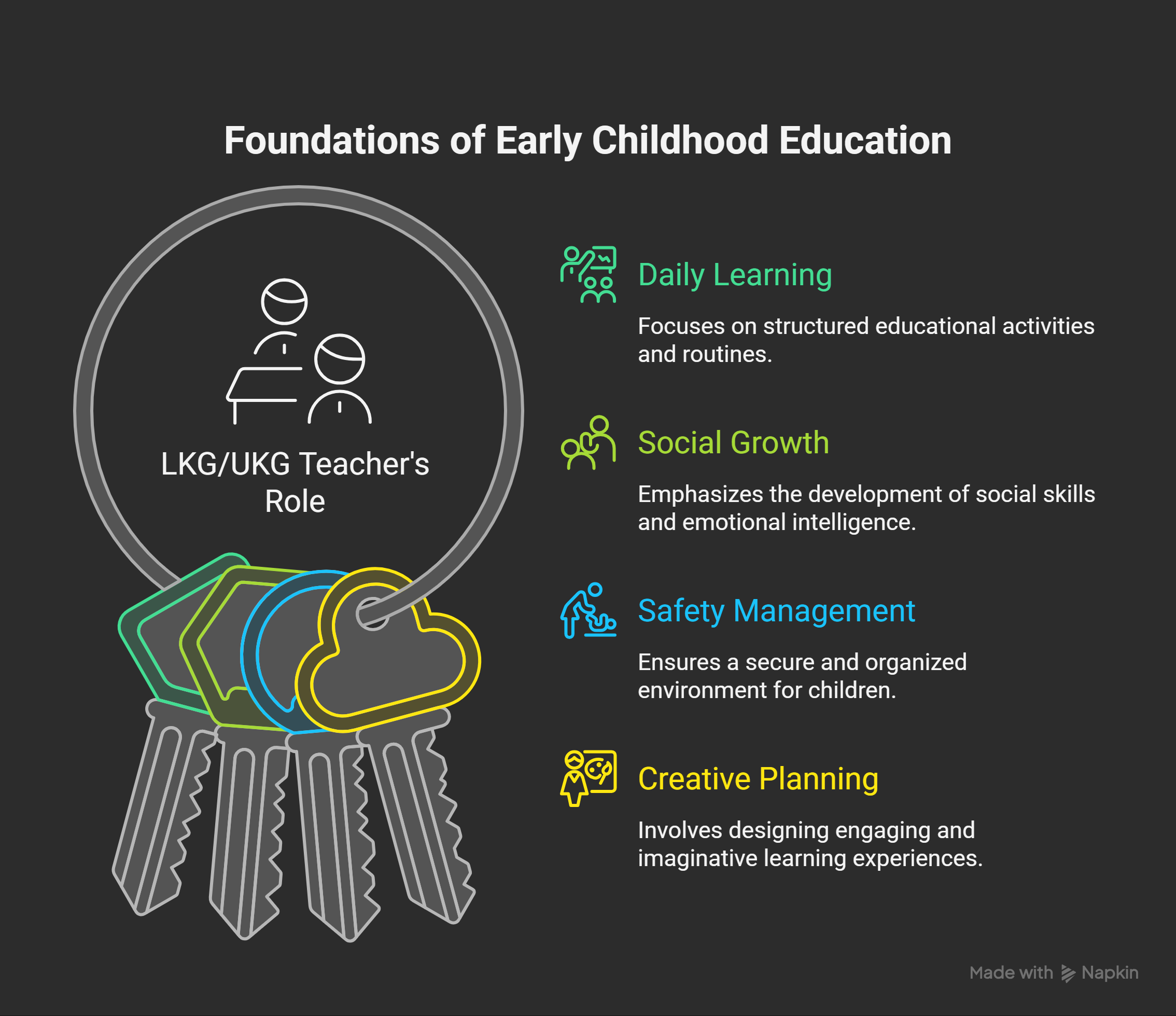
1. Supporting Daily Classroom Learning
LKG and UKG teachers guide each day with structure. They introduce simple activities for steady skill building. Their teaching supports language, thinking, and basic awareness.
Main Tasks
-
Planning easy lessons for young children.
-
Using pictures for simple concept explanations.
-
Helping children complete small tasks independently.
-
Encouraging participation in every classroom moment.
Subtasks
-
Showing examples before starting activities.
-
Offering help when children feel confused.
-
Giving praise for small achievements.
2. Guiding Social and Emotional Growth
Teachers support children beyond academic learning too. They help children manage feelings in healthy ways. They guide friendships through kind and gentle methods.
Main Tasks
-
Teaching children to speak kindly.
-
Helping children handle small disagreements.
-
Encouraging calm behaviour during group tasks.
-
Supporting shy children with gentle guidance.
Subtasks
-
Creating quiet corners for settling emotions.
-
Giving comfort during difficult moments.
-
Encouraging teamwork through simple games.
3. Maintaining Classroom Safety and Order
Teachers ensure safe spaces for daily learning. They watch children closely during all activities. Their presence keeps the environment calm and organised.
Main Tasks
-
Checking the room before class starts.
-
Keeping materials safe for child use.
-
Guiding children during active sessions.
-
Managing movement within the classroom.
Subtasks
-
Arranging chairs neatly each morning.
-
Securing sharp items away from children.
-
Reminding children about safe behaviour.
4. Planning Creative Learning Experiences
Teachers design activities that keep learning joyful. They plan simple tasks with colourful materials. Their ideas make lessons more interesting daily.
Main Tasks
-
Creating fun games for early concepts.
-
Preparing crafts for seasonal themes.
-
Using music to support movement sessions.
-
Introducing stories related to classroom topics.
Subtasks
-
Cutting materials for craft work.
-
Designing playful concept boards.
-
Choosing songs for learning rhythms.
Simple Responsibility Table
| Area | What the Teacher Handles |
|---|---|
| Daily Learning | Lesson plans, activity support, routines |
| Social Growth | Manners, emotions, teamwork guidance |
| Safety Management | Supervision, organisation, safe materials |
| Creative Planning | Crafts, games, stories, joyful lessons |
Get Certified & Start Your Montessori Career
Montessori Teacher Training Course by Entri App: Gain expert skills, earn certification, and kickstart your teaching career.
Join Now!Minimum Qualifications Required to Become an LKG/UKG Teacher
Most preschools accept basic school-level education first. Some schools prefer higher studies for better readiness. Additional training makes candidates stronger and more skilled. Practical experience also increases overall teaching confidence. Each requirement supports strong early childhood teaching abilities.
1. Basic Educational Requirements
Schools expect minimum school-level education from candidates. This ensures basic knowledge for handling young learners. It prepares candidates for further early education training.
Required Basics
-
Completion of Class 10 in any stream.
-
Some schools prefer Class 12 completion.
-
English understanding for simple communication.
Additional Advantages
-
Clear handwriting for classroom instruction.
-
Basic communication skills with children.
-
Interest in early education fields.
2. Specialized Early Childhood Courses
These courses train candidates for preschool teaching roles. They offer knowledge about young child behaviour. They prepare teachers for classroom planning and handling.
Accepted Courses
-
Nursery Teacher Training certificate.
-
Early Childhood Care and Education certificate.
-
Montessori Training certificate from recognised institutes.
Course Benefits
-
Understanding child growth patterns.
-
Learning simple teaching methods.
-
Handling classrooms with confidence.
3. Optional Higher Studies
Some schools prefer higher qualifications for teaching roles. Higher studies give deeper understanding of child learning. They help teachers grow professionally in early education.
Useful Higher Studies
-
Diploma in Early Childhood Education.
-
Bachelor degree in Education fields.
-
Postgraduate programs in child development.
Benefits of Higher Studies
-
Better job opportunities in schools.
-
Stronger subject knowledge always helps.
-
Improved confidence during teaching tasks.
4. Practical Training or Internships
Practical experience strengthens classroom handling skills. Internships show real classroom situations to new teachers. They help teachers understand children more clearly.
Internship Tasks
-
Assisting senior teachers daily.
-
Supporting children during activities.
-
Observing routines and discipline methods.
Internship Benefits
-
Better control over classroom behaviour.
-
Stronger activity planning skills.
-
Clear understanding of child responses.
Qualification Summary Table
| Category | Minimum Requirement |
|---|---|
| Basic Education | Class 10 or Class 12 completion |
| Training Courses | NTT, ECCE, or Montessori certificate |
| Higher Studies (Optional) | Diploma or degree in education |
| Practical Experience | Internship or classroom training |
Which Course Should You Take? (NTT, ECCE, Montessori – Explained)
Most courses focus on child behaviour and classroom strategies. Some courses offer creative learning techniques for young learners. Others focus on emotional growth and natural learning styles. Each course supports different parts of early teaching work. Selecting the right course depends on your comfort level.
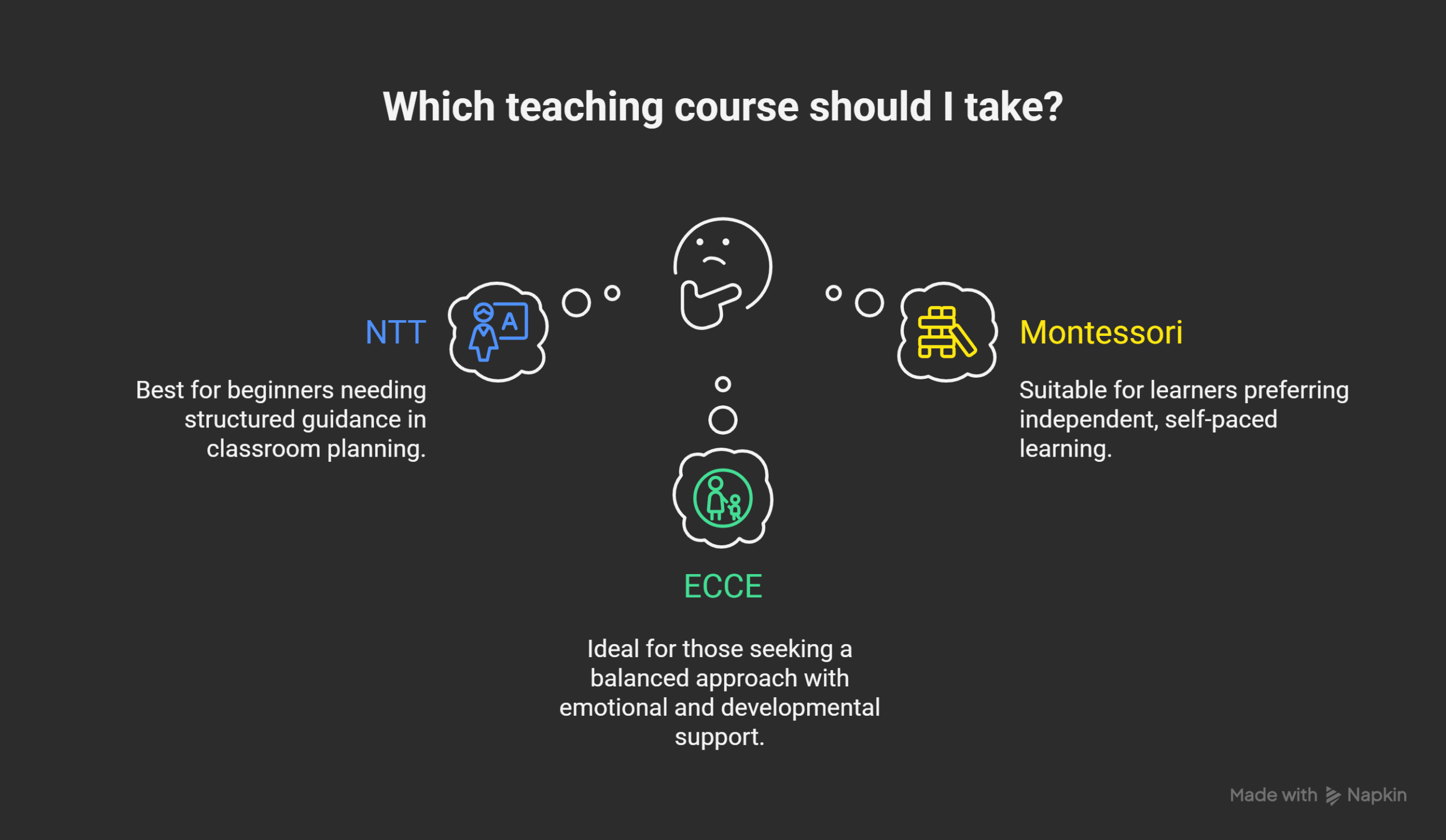
1. Nursery Teacher Training Course(NTT)
NTT is a popular choice for kindergarten teaching. It focuses on structured methods for simple child learning. It teaches clear steps for guiding small children daily. NTT supports teachers who want systematic classroom planning.
Key Features of NTT
-
Gives strong basis of early child teaching.
-
Covers activity planning for classroom routines.
-
Teaches simple methods for skill development.
-
Uses worksheets and playful tasks for learning.
Who Should Choose NTT
-
People want structured teaching frameworks.
-
Candidates preferring planned daily schedules.
-
Learners want clear classroom guidance steps.
NTT Benefits
-
Helps manage classrooms with confidence.
-
Builds clear teaching habits for beginners.
-
Offers easy learning materials for practice.
2. Early Childhood Care and Education (ECCE)
ECCE focuses on a child’s overall growth patterns. It teaches emotional, physical, social, and cognitive needs. The course supports teachers who want complete child understanding. ECCE builds strong foundations for balanced early development.
Key Features of ECCE
-
Gives knowledge of child growth stages.
-
Teaches simple strategies for emotional support.
-
Includes practical ideas for healthy routines.
-
Offers guidance for balanced learning tasks.
Who Should Choose ECCE
-
People want broad child development knowledge.
-
Candidates who enjoy caring classroom environments.
-
Learners seeking an understanding of child behaviour.
ECCE Benefits
-
Strengthens emotional support skills.
-
Improves classroom connection with children.
-
Helps teachers guide children with sensitivity.
Unlock your passion for education and shape young minds as a Montessori teacher!
3. Montessori Teacher Training
Montessori training supports natural learning experiences. It focuses on child freedom and gentle guidance methods. Montessori classrooms use calm spaces and self-learning tools. This approach builds independence in young children.
Key Features of Montessori Training
-
Uses learning materials for self-guided tasks.
-
Encourages silent observation by teachers.
-
Teaches peaceful classroom organisation techniques.
-
Supports slow and steady learning habits.
Who Should Choose Montessori
-
People liking gentle teaching approaches.
-
Candidates preferring calm classroom spaces.
-
Learners who value independence in children.
Montessori Benefits
-
Helps children build natural curiosity daily.
-
Creates confident and independent young learners.
-
Supports deep understanding through hands-on tasks.
Simple Comparison of Courses
| Course Type | Teaching Method Style | Ideal For | Key Focus |
|---|---|---|---|
| NTT | Structured and planned | Beginners needing clear steps | Classroom planning and activity work |
| ECCE | Balanced and holistic | Learners wanting overall growth | Emotional and developmental support |
| Montessori | Calm and independent | Learners preferring gentle styles | Natural and self-paced learning |
How to Choose the Right Course
Choosing depends on your comfort with teaching styles. Some prefer fixed routines and structured systems. Others prefer balanced approaches with emotional focus.
Some enjoy peaceful classrooms with natural learning. Your strengths help you select the right option. Think about your personality before choosing any program. Also think about the environment you wish to create.
Things to Check Before Selecting a Course
1. Check the Course Duration
-
Short programs give quick training experience.
-
Long programs provide deeper subject knowledge.
2. Check the Institute Quality
-
Look for recognised training centres.
-
Ask about teaching practice opportunities.
3. Check Your Personal Interest
-
Choose a teaching style you enjoy.
-
Select methods matching your nature.
4. Check Job Requirements
-
Some schools prefer structured training.
-
Others want holistic early education skills.
Course Outcome Table
| Requirement | Best Course Choice |
|---|---|
| Structured learning | NTT |
| Child development | ECCE |
| Natural methods | Montessori |
| Emotional support | ECCE |
| Independent learning | Montessori |
Skills Needed to Become a Successful Kindergarten Teacher
A kindergarten teacher needs many soft and practical skills. These skills help teachers guide children smoothly each day. Strong skills also build trust between teachers and children. These abilities support calm classrooms and steady learning progress. Each skill adds value to early childhood teaching. Together, they shape a warm and effective classroom space. These skills also help anyone Become a LKG/UKG Teacher.
1. Communication Skills
Clear communication is very important in kindergarten classes. Children understand better through simple words and gentle tone. Teachers share ideas in short and easy sentences. Communication builds strong bonds with young learners daily.
Key Communication Points
-
Use simple language for clear understanding.
-
Keep a warm and caring tone always.
-
Repeat instructions when needed.
-
Encourage children through positive words.
2. Patience and Calm Behaviour
Kindergarten teaching needs steady patience. Children learn slowly and need repeated guidance. Calm behaviour helps classrooms stay peaceful. Patience supports steady emotional growth in children.
Why Patience Matters
-
Children take time to understand tasks.
-
Mistakes are part of early learning.
-
Calm teachers reduce classroom stress.
-
Patience builds safe relationships.
3. Creativity and Activity Planning
Young children enjoy learning through creative tasks daily. Teachers design fun activities using simple materials. Creativity helps hold attention for longer periods. Play-based ideas make learning fresh and enjoyable.
Creative Teaching Ideas
-
Story-based theme learning sessions.
-
Craft tasks using paper and colors.
-
Songs for memory-building activities.
-
Movement games for better focus.
4. Classroom Management Skills
A teacher manages many children at once. A good organisation helps maintain smooth routines. Classroom rules keep learning steady. Management creates a comfortable daily rhythm.
Classroom Management Points
-
Follow a fixed daily schedule.
-
Keep materials arranged neatly.
-
Encourage positive behaviour patterns.
-
Guide children during group tasks.
5. Observation and Child Understanding
Teachers observe children very closely each day. Observation helps note learning progress early. It also helps detect emotional needs quickly. Understanding each child supports better teaching plans.
Observation Areas
-
Social behaviour in group activities.
-
Response to new tasks.
-
Comfort during classroom routines.
-
Interest in learning materials.
Skill Summary Table
| Skill Category | Purpose in Classroom |
|---|---|
| Communication | Builds clarity and trust |
| Patience | Supports calm learning pace |
| Creativity | Makes lessons engaging and fun |
| Classroom Management | Keeps routines smooth |
| Observation | Helps understand children better |
Step-by-Step Guide to Becoming an LKG/UKG Teacher
Step 1: Learn About the Teaching Role
Understand what kindergarten teachers do every day. Know how young children learn through simple tasks. Learn how teachers guide children through gentle routines. This step builds clarity before beginning training.
Things to Learn
-
Basic duties in kindergarten classes.
-
Daily rhythm in child-friendly classrooms.
-
Teacher interaction with young learners.
-
Classroom atmosphere expected daily.
Step 2: Check Eligibility Requirements
Eligibility rules guide learners before course selection. These rules help you prepare required documents easily. Understanding them saves time during admission.
Typical Needs
-
Minimum schooling qualification required.
-
Age requirement for course enrollment.
-
Basic ID and address verification.
-
Simple health confirmation if needed.
Step 3: Select the Right Training Course
Choosing the right course shapes teaching success. Courses teach essential techniques for young learners. They prepare teachers for practical classroom demands.
How to Choose
-
Compare topics taught in each course.
-
Check duration and learning schedule offered.
-
Understand training methods used by trainers.
-
Match course goals with personal goals.
Step 4: Build Core Teaching Skills
Skill building improves teaching quality greatly. Training programs help sharpen essential teaching skills. Stronger skills support calm and confident teaching.
Skills to Build
-
Clear communication with young children.
-
Simple activity planning and delivery.
-
Basic classroom coordination methods.
-
Child observation for better understanding.
Step 5: Gain Classroom Experience
Practical exposure improves teaching confidence quickly. It shows how real classrooms function daily. Experience builds stronger professional readiness.
Ways to Gain Experience
-
Join training-based internships.
-
Observe senior teachers regularly.
-
Assist with group tasks daily.
-
Teach short sessions when guided.
Step 6: Create a Good Teaching Profile
A good profile highlights training and skills. It helps during preschool job applications. A clear profile increases selection chances.
Profile Must Have
-
Completed course details listed well.
-
Skills gained during training period.
-
Internship or classroom experience.
-
Basic personal and contact details.
Step 7: Apply for Preschool Openings
Many schools hire trained kindergarten teachers. Apply to nearby preschools and learning centers. Be confident during interviews and discussions.
Application Steps
-
Search for openings in local schools.
-
Share resume and training certificates.
-
Attend interviews with positive attitude.
-
Understand role expectations clearly.
Step 8: Continue Professional Learning
Teaching needs ongoing learning and growth. New ideas improve classroom experience daily. Regular learning supports career development.
Ways to Keep Learning
-
Join online training sessions often.
-
Attend workshops on early learning.
-
Explore new activity-based ideas.
-
Update teaching practices regularly.
Conclusion
Becoming an LKG/UKG teacher in India in 2026 is a realistic, well-defined career path. Class 12, a recognised training course suited to your goals, and some hands-on classroom exposure are usually enough to get started.
The salary isn’t the biggest draw in the early years. But the growth path, from classroom teacher to coordinator to curriculum roles, is steady for those who stay in the field and keep training.
If working with young children genuinely appeals to you, this remains one of the more accessible entry points into India’s education sector.
Get Certified & Start Your Montessori Career
Montessori Teacher Training Course by Entri App: Gain expert skills, earn certification, and kickstart your teaching career.
Join Now!Frequently Asked Questions
What does an LKG/UKG teacher do?
An LKG/UKG teacher uses play and activities to teach basic language, number, social, and emotional skills to 3–6‑year‑olds. They provide a safe, nurturing classroom while combining teaching and caregiving for each child’s development.
What is the minimum educational qualification required to become an LKG/UKG teacher?
Most schools require Class 10 or Class 12 (state-dependent) plus a recognised early childhood course like NTT, ECCE, or Montessori. Basic language proficiency and practical experience or training are also valued alongside formal qualifications.
Which course is best for starting a kindergarten teaching career?
NTT is structured, activity-based teaching. ECCE is broad child development. Montessori is self‑paced, hands‑on learning. Choose the course that fits your style and career goals.
How long does training take for these courses?
Course length varies by institute: NTT and ECCE usually run 6 to 12 months, while Montessori programmes often take 1 to 2 years. Longer courses include practical internships for stronger preparation, while shorter ones allow quicker entry but may need extra on‑the‑job learning.
Is practical classroom experience necessary before teaching?
Yes. Practical experience is highly recommended and often mandatory. Internships and supervised classroom practice build confidence, improve communication, and teach real-world classroom management beyond theory.
What skills are most important for a successful kindergarten teacher?
Key skills are clear communication, patience, creativity, classroom management, observation, and empathy. These let teachers give simple instructions, design engaging activities, spot learning or emotional needs, and create a nurturing classroom.
Can I become an LKG/UKG teacher without a formal certificate?
Some schools hire experienced but uncertified candidates, though most prefer certified teachers. A recognised certificate shows knowledge of child development and teaching methods, improving employability and long‑term career prospects.
How can I gain practical experience before joining a school?
Gain experience by assisting senior teachers, volunteering at preschools, or doing institute internships. Observing classes and practising small teaching tasks under supervision builds confidence and prepares you for independent handling.
Is continuous learning necessary for kindergarten teachers?
Yes. Continuous learning is essential because child development research and teaching methods evolve. Attending workshops, webinars, and refresher courses improves classroom effectiveness, creativity, and career prospects.
Who can Become an LKG/UKG Teacher?
Anyone with patience, interest in children, and a willingness to learn can become a kindergarten teacher. Training, practical experience, passion, empathy, and commitment make you ready and help build a successful LKG/UKG career.