Table of Contents
Yes, video editing is a good career today. Demand continues growing every year. Businesses need video content daily. Creators publish videos regularly. Online learning also creates new opportunities. Skilled editors remain highly valuable.
Success needs more than software knowledge. Creativity also plays a major role. Strong storytelling builds engaging videos. Practice improves editing quality. A professional portfolio attracts better clients. Continuous learning supports long-term career growth.
Build a Career in AI-Powered Video Editing
Quick Overview
| Category | Answer |
|---|---|
| Is video editing a good career? | Yes, with growing demand |
| Job demand | High across many industries |
| Average earning potential | Varies by skills and experience |
| Freelancing opportunities | Excellent |
| Remote work availability | Widely available |
| Skills required | Editing, storytelling, creativity, communication |
| Degree required? | No, skills matter more |
| Career growth | Strong with specialization |
| AI impact | Supports editors, not replaces them |
What Does a Video Editor Actually Do?
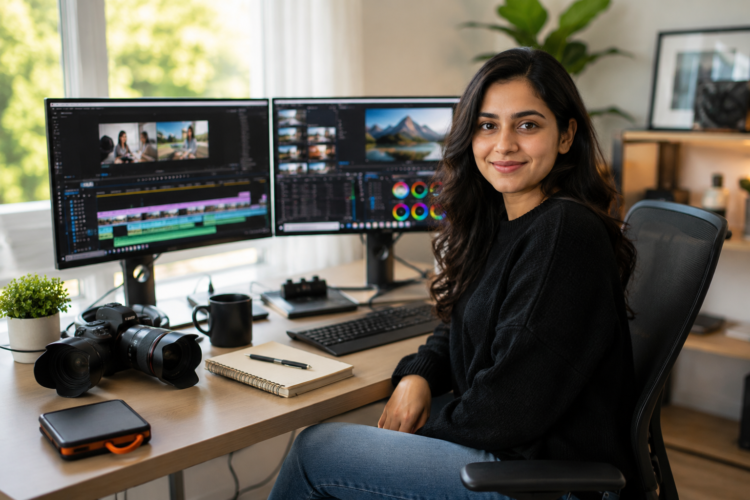
Modern video editors do much more. They create engaging visual stories. They organize raw footage carefully. Every edit supports the final message. Good editing keeps viewers interested.
Common responsibilities include:
Storytelling
Storytelling connects every scene naturally. Good pacing keeps viewers engaged. Every cut supports the story. Strong storytelling improves viewer experience.
Editors often:
- Build emotional flow.
- Arrange scenes logically.
- Improve viewer attention.
- Remove unnecessary footage.
Cutting and Trimming
Editors remove unwanted clips. They shorten long scenes. Smooth transitions improve viewing. Every second should matter.
This includes:
- Cutting extra footage.
- Trimming awkward pauses.
- Improving scene timing.
- Creating smooth sequences.
Audio Editing
Good sound improves every video. Clear audio feels professional. Poor sound reduces quality quickly.
Editors usually:
- Remove background noise.
- Balance audio levels.
- Add background music.
- Sync sound correctly.
Color Correction
Every camera records differently. Color correction creates consistency. Balanced colors improve visual quality.
Editors adjust:
- Brightness.
- Contrast.
- White balance.
- Color consistency.
Motion Graphics
Many videos need moving graphics. Simple animations improve presentations. Motion graphics increase viewer attention.
Examples include:
- Animated titles.
- Lower thirds.
- Logo animations.
- Simple text effects.
Basic Visual Effects
Editors also use visual effects. Simple effects improve storytelling. They should support the content.
Common effects include:
- Blur effects.
- Screen replacements.
- Speed changes.
- Background adjustments.
Client Communication
Communication remains very important. Clients explain project goals. Editors clarify expectations early. Regular updates build confidence.
Good communication includes:
- Quick responses.
- Clear timelines.
- Honest progress updates.
- Professional discussions.
File Management
Organized files save valuable time. Good organization prevents mistakes. Clients also appreciate clean workflows.
Editors should:
- Create project folders.
- Name files properly.
- Backup important work.
- Organize media assets.
Exporting Videos
Every platform needs different settings. Correct exports improve video quality. Proper formats reduce upload problems.
Editors prepare videos for:
- YouTube.
- Instagram.
- Facebook.
- LinkedIn.
- Websites.
- Television.
Become an AI-powered Video Editor
Master the future of video editing with AI-powered tools and techniques. Learn how to create professional-quality videos faster, automate repetitive editing tasks, generate engaging content, and boost your creative productivity.
Start Learning!Why Video Editing Is a Growing Career
Video content dominates digital platforms. People watch videos every day. Businesses also depend on videos. Demand continues increasing worldwide.
Several industries now require skilled editors.
YouTube Creators
Millions upload YouTube videos daily. Many creators hire professional editors. Regular uploads create continuous work.
Editors help by:
- Improving storytelling.
- Saving creators time.
- Increasing viewer retention.
- Maintaining upload schedules.
Short-Form Content
Short videos attract massive audiences. Businesses use them for marketing. Fast editing skills remain valuable.
Popular platforms include:
- Instagram Reels.
- TikTok.
- YouTube Shorts.
- Facebook Reels.
Corporate Marketing
Companies invest heavily in videos. Marketing teams need skilled editors. Professional videos improve brand image.
Corporate projects include:
- Product launches.
- Company introductions.
- Employee training.
- Brand campaigns.
Online Education
Online learning grows every year. Teachers create digital lessons. Educational companies publish video courses.
Editors improve:
- Course quality.
- Visual clarity.
- Student engagement.
- Learning experience.
OTT Platforms
Streaming platforms publish original content. Every production needs editing. High-quality editing improves viewer satisfaction.
Editors work on:
- Series.
- Documentaries.
- Movies.
- Promotional trailers.
Podcasts
Video podcasts continue growing. Many creators publish interview videos. Editors prepare content for multiple platforms.
Typical tasks include:
- Audio cleanup.
- Camera switching.
- Title animations.
- Social media clips.
Digital Advertising
Brands promote products through videos. Advertisements appear everywhere online. Creative editing improves campaign success.
Editors create:
- Product promotions.
- Social media ads.
- Brand awareness videos.
- Customer testimonials.
AI Workflows
AI speeds up editing tasks. It automates repetitive work. Editors still guide creative decisions. Human creativity remains essential.
AI helps with:
- Auto captions.
- Scene detection.
- Background removal.
- Basic editing assistance.
Businesses still prefer skilled editors. Human judgment creates stronger storytelling.
Pros of Choosing Video Editing as a Career
Video editing offers many advantages. It combines creativity with technology. Career options continue expanding. Flexible work also attracts many professionals.
High Demand
Demand keeps increasing yearly. Every industry uses videos. Skilled editors remain valuable.
Opportunities exist in:
- Businesses.
- Agencies.
- Schools.
- Media companies.
- Startups.
Remote Work
Many editors work remotely. Home offices reduce travel. Global clients become accessible.
Remote work offers:
- Flexible schedules.
- Better work-life balance.
- International projects.
- Comfortable environments.
Freelancing Flexibility
Freelancers choose preferred clients. They set working hours. Different projects improve experience.
Benefits include:
- Flexible workload.
- Multiple income sources.
- Diverse industries.
- Independent career growth.
Creative Satisfaction
Editors create meaningful content. Every project feels different. Creative freedom keeps work interesting.
Editors enjoy:
- Solving creative challenges.
- Building visual stories.
- Learning new techniques.
- Seeing finished results.
Multiple Industries
Editing skills apply everywhere. Industry changes remain possible. Career options continue expanding.
Editors work in:
- Education.
- Sports.
- Healthcare.
- Entertainment.
- Real estate.
- Marketing.
Global Opportunities
Remote work removes location limits. International businesses hire online. Global experience increases growth.
International work offers:
- Better exposure.
- Diverse projects.
- Higher learning opportunities.
- Stronger portfolios.
Scalable Income
Income grows with experience. Better skills attract better clients. Specialized editors often earn more.
Income improves through:
- Better portfolios.
- Faster workflows.
- Long-term clients.
- Premium services.
Continuous Learning
Editing constantly evolves. New tools appear regularly. Learning creates better opportunities.
Editors improve by:
- Practicing daily.
- Following industry trends.
- Learning new software.
- Watching professional work.
Challenges of a Video Editing Career
Every career has challenges. Video editing requires patience. Good planning solves many problems. Preparation improves long-term success.
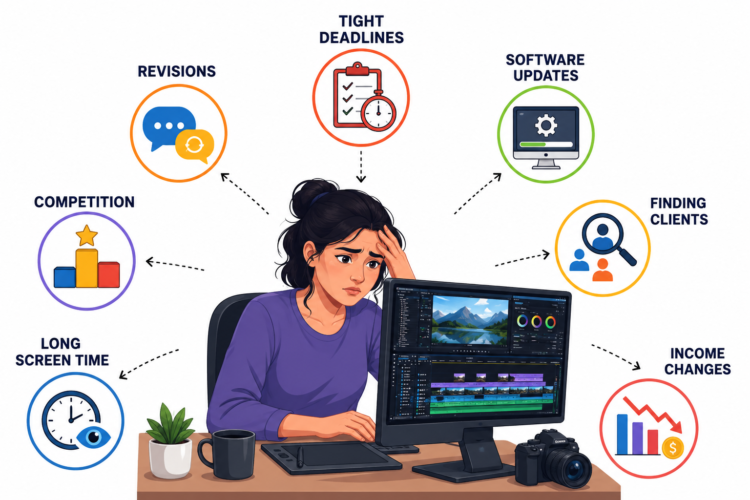
Tight Deadlines
Clients often need quick delivery.
Manage deadlines by:
- Planning projects early.
- Following schedules.
- Avoiding unnecessary delays.
Frequent Revisions
Clients sometimes request changes.
Handle revisions by:
- Confirming expectations early.
- Limiting revision rounds.
- Keeping communication clear.
Competitive Market
Many editors offer similar services.
Stand out by:
- Building a niche.
- Improving quality.
- Creating unique portfolios.
Long Screen Time
Editing requires many hours.
Reduce fatigue by:
- Taking regular breaks.
- Maintaining good posture.
- Using proper lighting.
Software Updates
Editing software changes frequently.
Stay updated through:
- Practice.
- Tutorials.
- New feature exploration.
Finding First Clients
Starting feels challenging.
Gain experience through:
- Personal projects.
- Internships.
- Volunteer work.
- Networking.
Freelance Income Changes
Freelance income varies monthly.
Reduce uncertainty by:
- Keeping repeat clients.
- Saving emergency funds.
- Finding multiple clients.
Become an AI-powered Video Editor
Master the future of video editing with AI-powered tools and techniques. Learn how to create professional-quality videos faster, automate repetitive editing tasks, generate engaging content, and boost your creative productivity.
Start Learning!Skills You Need to Become a Successful Video Editor
Successful editors develop technical skills. Soft skills matter equally. Both support long-term career growth.
Technical Skills
Learn important editing tools:
- Adobe Premiere Pro.
- DaVinci Resolve.
- Final Cut Pro.
- Motion graphics.
- Audio editing.
- Color grading.
- File organization.
Soft Skills
Professional behavior creates better opportunities.
Develop skills like:
- Communication.
- Time management.
- Creativity.
- Storytelling.
- Problem-solving.
- Client handling.
- Attention to detail.
Strong skills build successful careers. Continuous improvement creates lasting opportunities.
Is Video Editing a Good Career for Beginners?
Yes, beginners can build successful careers. Every expert started as a beginner. Learning takes time and patience. Regular practice builds confidence gradually. Small projects develop important skills. Consistency matters more than speed.
Learning Curve
Editing becomes easier with practice. Every project teaches something new. Beginners should master basic skills first.
Focus on learning:
- Timeline editing.
- Cutting clips.
- Audio balancing.
- Simple transitions.
- Export settings.
Strong basics support future growth.
Entry-Level Opportunities
Many beginner-friendly jobs exist. Small projects build practical experience. Every completed project improves confidence.
Common beginner opportunities include:
- YouTube editing.
- Social media videos.
- School projects.
- Local business videos.
- Internship projects.
Experience grows with every assignment.
Build a Portfolio
A portfolio shows practical skills. Clients prefer seeing completed work. Strong projects attract better opportunities.
Include projects like:
- Travel videos.
- Product videos.
- Tutorials.
- Reels.
- Promotional videos.
Quality matters more than quantity.
Self-Learning or Courses?
Both methods work well. Self-learning offers flexibility. Courses provide structured guidance. Many learners combine both methods.
Choose based on:
- Learning style.
- Available budget.
- Career goals.
- Practice time.
Learning never completely stops.
First-Year Expectations
The first year builds experience. Income may remain modest. Skills improve through consistent practice. Better opportunities come gradually.
During the first year:
- Learn editing basics.
- Complete many projects.
- Build confidence.
- Improve communication.
- Create a stronger portfolio.
Patience supports long-term success.
Career Paths in Video Editing
Video editing offers many career options. Every industry needs different skills. Choosing one path builds expertise.
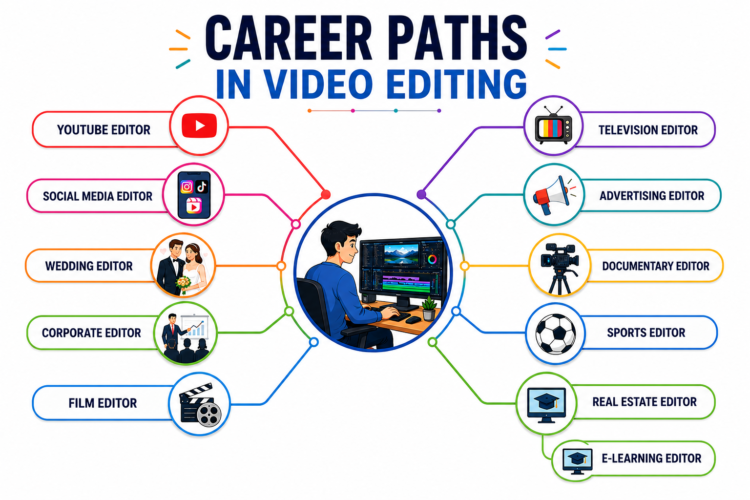
YouTube Editor
Responsibilities include:
- Editing creator videos.
- Adding captions.
- Improving viewer retention.
- Creating engaging content.
Growth comes through long-term creators.
Social Media Editor
Responsibilities include:
- Editing Reels.
- Creating Shorts.
- Producing TikTok videos.
- Optimizing vertical content.
Fast editing improves opportunities.
Wedding Editor
Responsibilities include:
- Creating highlight films.
- Editing ceremonies.
- Adding music.
- Building emotional stories.
Creativity matters greatly here.
Corporate Editor
Responsibilities include:
- Company presentations.
- Marketing videos.
- Training content.
- Brand promotions.
Professional editing remains essential.
Film Editor
Responsibilities include:
- Organizing footage.
- Building story flow.
- Working with directors.
- Improving pacing.
Film editing needs patience.
Television Editor
Responsibilities include:
- Editing TV programs.
- Managing broadcast deadlines.
- Following production schedules.
- Preparing final broadcasts.
Accuracy becomes very important.
Advertising Editor
Responsibilities include:
- Product commercials.
- Brand campaigns.
- Promotional videos.
- Social media advertisements.
Creative editing attracts audiences.
Documentary Editor
Responsibilities include:
- Organizing interviews.
- Building narratives.
- Managing research footage.
- Supporting factual storytelling.
Attention to detail matters.
Sports Editor
Responsibilities include:
- Match highlights.
- Athlete profiles.
- Promotional clips.
- Event coverage.
Fast editing remains essential.
Real Estate Editor
Responsibilities include:
- Property walkthroughs.
- Drone footage.
- Promotional videos.
- Luxury home showcases.
Presentation improves property value.
E-learning Editor
Responsibilities include:
- Course videos.
- Educational tutorials.
- Webinar recordings.
- Training programs.
Clear communication improves learning.
Freelancing vs Full-Time Video Editing
Both career paths offer benefits. The right choice depends on personal goals. Some editors even combine both.
| Factor | Freelancing | Full-Time Job |
|---|---|---|
| Income stability | Varies monthly | Stable salary |
| Flexibility | High | Limited |
| Employee benefits | Usually unavailable | Often included |
| Client acquisition | Personal responsibility | Company provides work |
| Career growth | Depends on business growth | Promotion opportunities |
| Work-life balance | Flexible | Structured routine |
| Skill development | Wide project variety | Industry specialization |
Freelancing suits people who:
- Prefer flexibility.
- Enjoy independence.
- Like finding new clients.
- Want multiple income sources.
Full-time jobs suit people who:
- Prefer stable income.
- Enjoy structured work.
- Value employee benefits.
- Want predictable schedules.
How Much Can Video Editors Earn?
Income varies widely. Many factors affect earnings. Experience plays an important role. Portfolio quality also matters.
Income depends on:
- Experience level.
- Editing specialization.
- Client type.
- Geographic location.
- Employment type.
- Portfolio strength.
Beginners usually earn less. Experienced editors often earn more. Specialized skills increase opportunities. Strong client relationships also improve income. Consistent quality supports long-term growth.
Can AI Replace Video Editors?
AI tools continue improving rapidly. They automate repetitive tasks. Editing becomes faster through automation. Human creativity remains essential.
AI can help with:
- Auto captions.
- Scene detection.
- Background removal.
- Basic color correction.
- Noise reduction.
- Automatic clipping.
Human editors still provide:
- Creative storytelling.
- Emotional pacing.
- Brand consistency.
- Client collaboration.
- Creative decision-making.
- Original visual ideas.
AI supports editors daily. Skilled professionals remain highly valuable.
How to Build a Successful Video Editing Career
Building a career requires planning. Every step builds confidence. Consistency creates better opportunities.
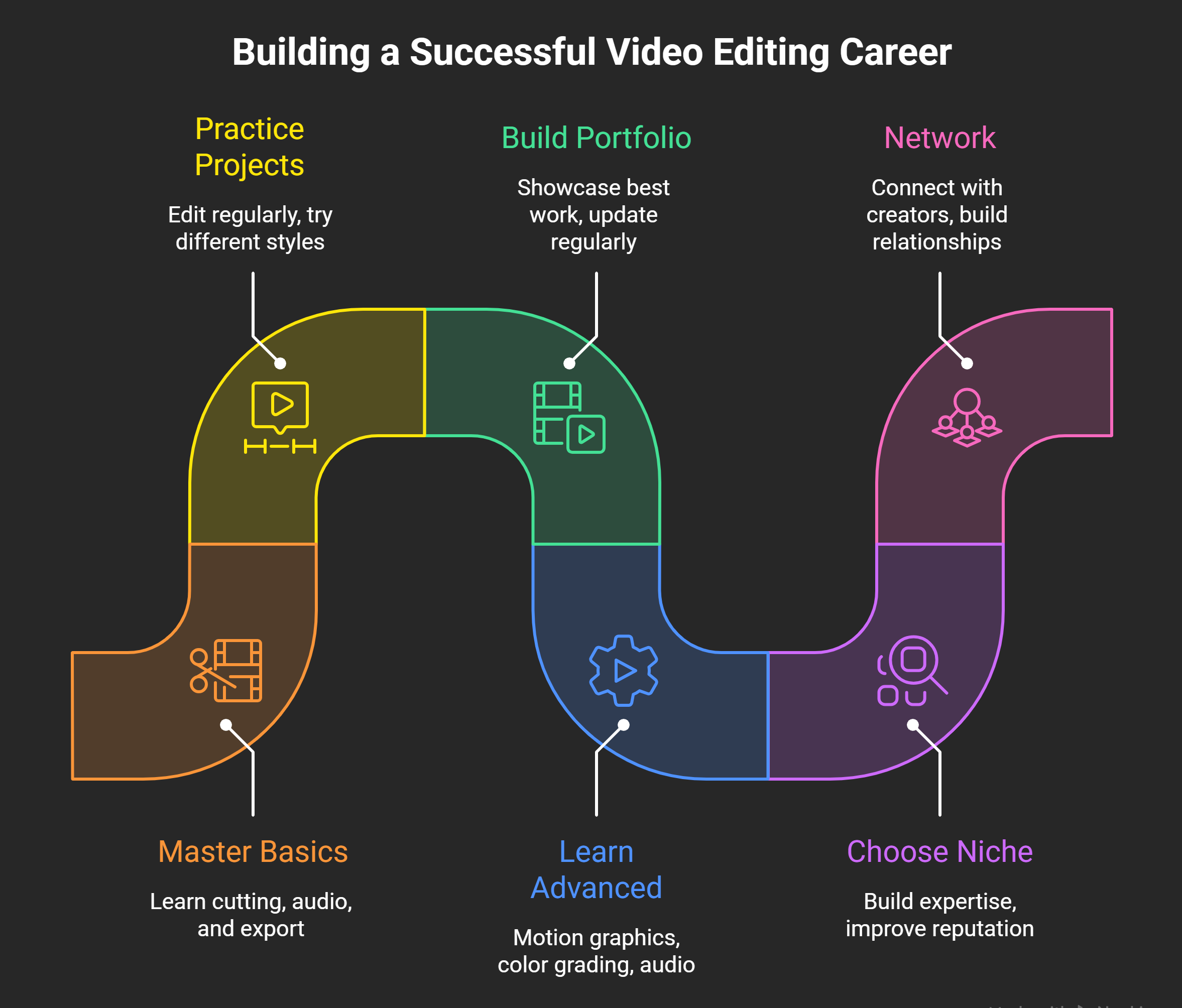
Follow this roadmap:
1. Learn one editing software.
- Avoid switching frequently.
- Build strong foundations.
2. Master editing basics.
- Learn cutting.
- Improve audio.
- Export correctly.
3. Complete practice projects.
- Edit regularly.
- Try different styles.
4. Build a portfolio.
- Showcase best work.
- Update projects regularly.
5. Learn advanced techniques.
- Motion graphics.
- Color grading.
- Audio enhancement.
6. Choose a niche.
- Build expertise.
- Improve reputation.
7. Network consistently.
- Connect with creators.
- Join professional communities.
- Build client relationships.
8. Continue learning.
- Follow industry trends.
- Learn new tools.
- Practice regularly.
Small improvements create lasting success.
Common Mistakes that Slow Career Growth
Many editors repeat common mistakes. Avoiding them saves time. Better habits improve career growth.
Common mistakes include:
- Learning many software together.
- Ignoring storytelling.
- Building a weak portfolio.
- Charging too little.
- Missing deadlines.
- Poor client communication.
- Avoiding specialization.
- Ignoring constructive feedback.
- Never updating skills.
- Ignoring AI editing tools.
- Failing to market services.
- Comparing progress constantly.
Avoid these mistakes by:
- Learning one software well.
- Practicing storytelling daily.
- Improving portfolio quality.
- Pricing services fairly.
- Meeting every deadline.
- Communicating clearly.
- Choosing one niche.
- Accepting useful feedback.
- Learning continuously.
- Using AI wisely.
- Promoting your work.
- Focusing on steady improvement.
Good habits build successful careers.
Upskill with AI Video Editing Skills
Who Should Choose Video Editing as a Career?
Video editing suits many people. Creative thinking helps greatly. Patience also supports success.
This career suits:
Students
- Learn practical skills.
- Build early experience.
- Create strong portfolios.
Career Changers
- Start flexible careers.
- Learn through projects.
- Explore freelancing opportunities.
Content Creators
- Edit personal content.
- Improve audience engagement.
- Save production costs.
Designers
- Expand creative skills.
- Offer additional services.
- Increase career opportunities.
Photographers
- Add video services.
- Grow business offerings.
- Reach new clients.
Freelancers
- Work independently.
- Choose preferred projects.
- Build flexible careers.
Creative Professionals
- Enjoy visual storytelling.
- Solve creative problems.
- Build rewarding careers.
People enjoying creativity usually adapt well.
Final Verdict
Video editing remains a strong career choice. Demand continues growing worldwide. Many industries need skilled editors. Creative professionals have many opportunities. Learning never truly ends. Continuous improvement supports long-term success. Strong portfolios attract quality clients.
Choosing one niche builds expertise. Professional communication creates lasting relationships. AI improves productivity but cannot replace creativity. Patience, practice, and professionalism build rewarding careers. Start learning today. Stay consistent every day. Better opportunities will follow over time.
Become an AI-powered Video Editor
Master the future of video editing with AI-powered tools and techniques. Learn how to create professional-quality videos faster, automate repetitive editing tasks, generate engaging content, and boost your creative productivity.
Start Learning!Frequently Asked Questions
Is video editing a good career?
Yes. Demand continues growing across businesses, creators, and digital platforms.
Do I need a degree to become a video editor?
No. Employers usually value skills, creativity, and a strong portfolio more.
How long does it take to learn video editing?
Most beginners learn the basics within a few months. Advanced skills take regular practice.
Can beginners get video editing jobs?
Yes. Internships, freelance projects, and entry-level roles offer good starting opportunities.
Which software should beginners learn first?
Adobe Premiere Pro and DaVinci Resolve are popular beginner-friendly choices.
Can video editors work from home?
Yes. Many professionals work remotely for clients around the world.
Can AI replace video editors?
No. AI helps with repetitive tasks, but creativity still matters.
Which industries hire video editors?
Marketing, education, media, real estate, entertainment, and corporate companies hire editors.
Is freelancing better than a full-time job?
Both offer benefits. The right choice depends on personal career goals.
How can I build a successful career?
Practice regularly, build a strong portfolio, and continue learning new skills.