Table of Contents
Cybersecurity success needs strong skills and real practice. Basic technical knowledge helps protect systems and data. Problem-solving helps you handle real security problems. Degrees can help. However skills matter more today. Practice helps you understand things faster. This blog explains important skills in simple words. It covers technical, thinking, and soft skills clearly. You will learn tools, certifications, and easy steps. It also shows how beginners can start easily. Follow this guide to grow your skills confidently.
Enroll in Entri’s AI-Powered Cybersecurity course now!
Key Takeaways:
- Learn networking and operating systems first.
- Practice tools and real-world scenarios regularly.
- Build both technical and soft skills together.
- Certifications support but do not replace skills.
- Continuous learning is needed in cybersecurity.
1. Introduction
Cyber threats are growing faster. They are growing ever than before. Businesses face risks from hackers. They get attacked online daily. Cyber criminals target sensitive data. Hence, skilled security professionals are needed.
Companies now look for people with real skills. Practical knowledge matters more than theoretical understanding. Experience helps solve real problems. Many beginners get confused on where to start. They often do not know which skills matter most. A clear guide helps remove confusion and build direction.
This guide explains important cybersecurity skills simply. It helps beginners understand what to learn first. It also shows how to build skills step by step.
❓ What Will You Learn Here?
- Learn which skills are important for cybersecurity roles
- Understand how to start learning from the basics
- Get clarity on building practical knowledge step by step
- Know what employers expect from beginners today
🎯 Who Should Read This Guide?
- Beginners starting cybersecurity with no prior knowledge
- Students exploring careers in technology and security
- Learners looking for a clear and simple direction
This guide helps you start your learning journey confidently.
2. Why Cybersecurity Skills Matter in 2026
Cybersecurity skills are very important. As the world today is digital. Technology is growing fast. It has entered all industries globally. With this growth, cyber risks has also increased. This makes skilled professionals more valuable than ever.

🌍 Growing Cyber Attacks Globally
Cyber attacks are increasing. They are spread across countries and industries. Hackers target data. They also attack systems, and online services. Common attacks include three types. Phishing, ransomware, and data breaches. Small and large companies both face serious threats.
- Data theft is becoming more frequent today
- Businesses lose money due to security incidents
- Attacks can damage trust and company reputation
💼 High Demand for Skilled Professionals
Companies want experts. They protect systems and data. Need for cybersecurity professionals is rising. They are needed worldwide. More and more industries depend on secure digital systems now.
- Job opportunities are increasing in multiple sectors
- Skilled professionals get better career growth options
- Companies offer competitive salaries for skilled candidates
⚠️ Skills Gap in the Industry
There is a shortage of skilled professionals. There are very few cybersecurity professionals. Many job positions remain unfilled due to this. Employers struggle to find candidates. There are no candidates practical skills.
- Skills gap creates more opportunities for learners
- Beginners can enter the field with proper training
- Continuous learning helps stay relevant in this field
Cybersecurity skills are essential for future career growth.
3. Core Technical Skills for Cybersecurity
Technical skills are the foundation of cybersecurity learning. They help you understand systems, networks, and tools clearly. Strong basics make advanced topics easier to learn later.
🌐 a. Networking Fundamentals
Networking explains how devices connect and communicate daily. It is one of the most important cybersecurity skills.
- Core Concepts to Learn
- Learn TCP/IP and how data travels online
- Understand DNS and how websites are accessed
- Study HTTP and how web communication works
- Learn ports and how services run on systems
- Security Focus Areas
- Understand how firewalls filter network traffic
- Learn how attackers exploit weak network setups
- Identify unusual network activity patterns
Networking knowledge helps detect attacks and vulnerabilities early.
💻 b. Operating Systems Knowledge
Operating systems control how computers function internally. Understanding them helps find system-level security issues.
- Key Systems to Learn
- Learn Linux basics and command-line operations
- Understand Windows system structure and features
- Important Topics
- Study file systems and directory structures
- Learn user roles and permission management
- Understand processes and background services
- Security Relevance
- Identify system vulnerabilities and misconfigurations
- Learn how attackers gain system access
Operating system knowledge improves overall security understanding.
🧾 c. Programming & Scripting
Programming helps automate tasks and analyze data efficiently. It is useful for solving security problems quickly.
- Languages to Start With
- Learn Python for automation and scripting
- Use Bash for Linux-based commands
- Learn PowerShell for Windows tasks
- Practical Use Cases
- Automate repetitive security tasks easily
- Analyze logs and detect unusual patterns
- Write scripts for simple security testing
Basic programming improves efficiency and problem-solving ability.
🛠️ d. Security Tools & Technologies
Security tools help detect and prevent cyber threats. They are essential for practical cybersecurity work.
- Important Tools to Learn
- Learn SIEM tools for monitoring events
- Understand firewalls and filtering systems
- Study IDS and IPS for threat detection
- Practical Skills
- Analyze logs and system activities regularly
- Use tools to identify suspicious behavior
- Understand how tools respond to attacks
Tools help connect theory with real-world scenarios.
☁️ e. Cloud Security Basics
Cloud platforms are widely used by modern companies. Security in cloud environments is very important today.
- Core Concepts
- Learn basics of AWS and Azure platforms
- Understand data storage and protection methods
- Study identity and access management systems
- Security Focus
- Learn how cloud systems handle security risks
- Understand shared responsibility models clearly
- Protect data and applications in cloud environments
Cloud security skills are important for future job roles.
4. Essential Analytical & Problem-Solving Skills
Analytical skills are very important in cybersecurity roles. They help understand threats and system behavior clearly. Problem-solving helps fix issues quickly and effectively.
🔍 Threat Analysis
Understanding threats is a key cybersecurity skill. It helps identify unusual and harmful system activity.
- What to Focus On
- Identify suspicious patterns in system behavior
- Analyze logs and alerts from security tools
- Understand how different attacks work
- Why It Matters
- Helps detect attacks early before damage occurs
- Improves ability to respond quickly to threats
⚖️ Risk Assessment
Risk assessment helps evaluate possible security dangers. It helps decide which threats need immediate attention.
- What to Focus On
- Identify system weaknesses and vulnerabilities
- Evaluate impact of potential security risks
- Prioritize issues based on severity level
- Why It Matters
- Helps protect important data and systems first
- Supports better decision-making in security planning
🚨 Incident Response Thinking
Quick thinking is needed during security incidents. It helps control damage and restore systems faster.
- What to Focus On
- Understand steps to handle security incidents
- Learn how to isolate affected systems quickly
- Practice responding to real-world scenarios
- Why It Matters
- Reduces impact of attacks and system failures
- Improves confidence during critical situations
Strong analytical skills improve cybersecurity performance daily.
Enroll in Entri’s AI-Powered Cybersecurity course now!
5. Must-Have Soft Skills
Soft skills are important for success in cybersecurity roles. They help professionals work better and solve problems clearly. Technical skills alone are not enough for long-term growth.
🗣️ Communication Skills
Clear communication is important in daily security work.
It helps explain issues to both technical and non-technical teams.
- What to Focus On
- Explain technical problems in simple words
- Write clear reports about security incidents
- Share updates with team members regularly
- Why It Matters
- Helps teams understand risks and solutions easily
- Improves teamwork and faster problem resolution
🔎 Attention to Detail
Cybersecurity requires careful observation and accuracy always.
Small mistakes can lead to serious security problems.
- What to Focus On
- Notice unusual system behavior and small changes
- Check logs and data carefully for hidden issues
- Avoid missing important warning signs
- Why It Matters
- Helps detect threats before they become serious
- Reduces chances of security failures
⚖️ Ethical Mindset
Ethics are very important in cybersecurity work.
Professionals must follow rules and act responsibly always.
- What to Focus On
- Use knowledge only for legal purposes
- Respect privacy and data protection rules
- Follow company and industry guidelines
- Why It Matters
- Builds trust with employers and clients
- Ensures safe and responsible security practices
📚 Continuous Learning Attitude
Cybersecurity is always changing with new threats.
Learning must continue to stay updated and relevant.
- What to Focus On
- Follow security news and latest trends regularly
- Learn new tools and techniques over time
- Improve skills through courses and practice
- Why It Matters
- Keeps knowledge updated with industry changes
- Helps grow and adapt in the field
Strong soft skills support long-term cybersecurity success.
6. Certifications That Boost These Skills
Certifications help prove your cybersecurity skills. They show your knowledge and commitment. They also improve job chances. It also helps in career growth.
🎓 Beginner-Level Certifications
These certifications are good for starting your journey. They cover basic concepts and practical understanding.
- CompTIA Security+
- Covers:
- core security concepts and best practices
- Focuses on:
- networking, threats, and risk management
- Covers:
- Google Cybersecurity Certificate
- Designed for beginners. No prior experience needed
- Covers :
- tools, basics, and real-world scenarios
🛠️ Intermediate-Level Certifications
These certifications build stronger technical skills. It also provides practical skills. They focus on real-world security. Testing and analysis is also taken care of.
- Certified Ethical Hacker (CEH)
- Teaches:
- ethical hacking
- tools and techniques
- Helps:
- understand how attackers exploit systems
- Teaches:
- Cisco CyberOps Associate
- Focuses on:
- SOC roles
- security monitoring
- Covers:
- incident response
- threat analysis
- Focuses on:
🚀 Advanced-Level Certifications
These certifications are for experienced professionals. They focus on advanced security knowledge and leadership roles.
- CISSP (Certified Information Systems Security Professional)
- Covers:
- security management
- system design
- Recognized globally for advanced cybersecurity roles
- Covers:
Certifications support learning but skills matter most.
7. How to Start Learning Cybersecurity Skills
Starting cybersecurity learning can be confusing. Especially for beginners. Make a simple and structured approach. This makes learning easier. Focus on basics first. Then move to practical skills.
📚 Learn from Online Courses
Online courses help build strong foundation. They provide step-by-step guidance.
- Choose beginner-friendly cybersecurity courses. Preferably online.
- Learn networking, systems. Also understand security basics clearly
- Follow structured lessons. Do not skip topics.
🧪 Practice with Hands-on Labs
Practical learning is very important. It helps understand real-world scenarios.
- Use platforms like TryHackMe for guided labs
- Practice solving challenges and security tasks regularly
- Apply concepts instead of only reading theory
🕹️ Use Practice Platforms
Practice platforms improve skills through real challenges. They help build confidence and problem-solving ability.
- Try Capture The Flag challenges for learning
- Explore lab environments for real attack simulations
- Learn by doing and experimenting safely
💡 Build Small Projects
Projects help apply knowledge in practical situations. They show your skills clearly to employers.
- Create simple security-related projects regularly
- Try network scanning or vulnerability testing tasks
- Document your work and learning progress
8. Common Mistakes to Avoid
Many beginners struggle due to avoidable learning mistakes. These mistakes reduce progress and create unnecessary confusion. Understanding them helps you learn in a better way.
🚫 Skipping the Basics
- Starting advanced topics too early creates confusion
- Weak basics make learning harder later
- Build a strong foundation before moving ahead
🎥 Depending Only on Courses
- Watching courses alone does not build real skills
- Passive learning reduces understanding over time
- Active practice is needed for real improvement
🎯 Not Setting Clear Goals
- Learning without goals leads to lack of direction
- Clear goals help track progress easily
- Small targets make learning more manageable
⚡ Avoiding Challenges
- Many beginners avoid difficult tasks or labs
- Challenges help improve problem-solving ability
- Mistakes during practice help you learn better
🔄 Comparing Progress with Others
- Everyone learns at a different speed
- Comparison can reduce motivation and confidence
- Focus on your own learning journey
9. Career Opportunities After Learning These Skills
Cybersecurity skills open many career opportunities today. Different roles suit different skills and interests. Beginners can start small and grow step by step.
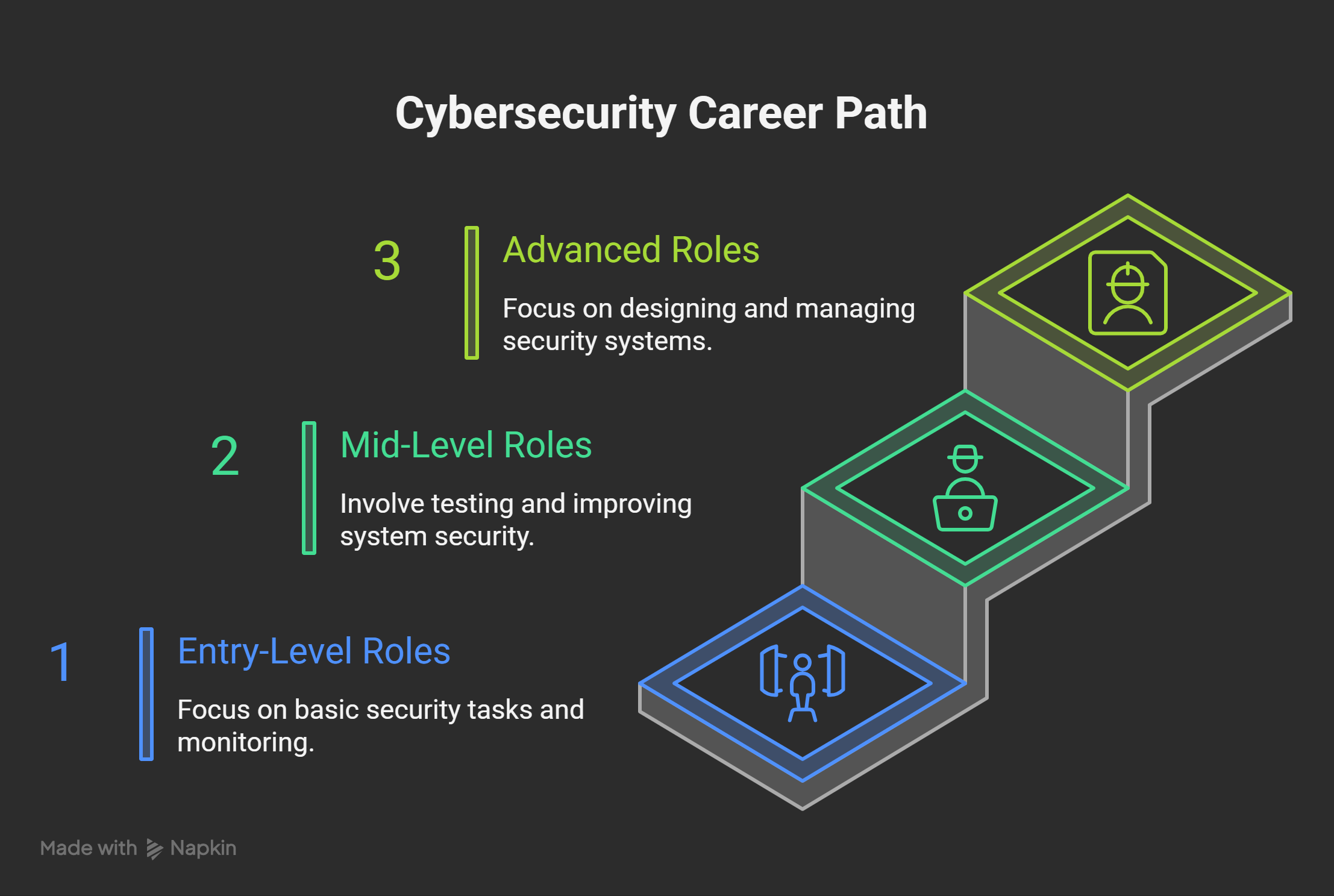
🎯 Entry-Level Roles
These roles are suitable for beginners starting careers. They focus on basic security tasks and monitoring.
- Security Analyst
- Monitors systems for unusual activities
- Analyzes threats and reports security issues
- SOC Analyst
- Works in security operations centers
- Handles alerts and responds to incidents
🔐 Mid-Level Roles
These roles require more skills and practical experience. They involve testing and improving system security.
- Penetration Tester
- Tests systems for vulnerabilities
- Simulates attacks to find weaknesses
- Ethical Hacker
- Identifies security gaps in systems
- Uses tools to improve system protection
🚀 Advanced Roles
These roles focus on designing and managing security systems.
They require deep knowledge and experience.
- Security Engineer
- Builds secure systems and infrastructures
- Works on advanced security tools
- Security Architect
- Designs complete security frameworks
- Plans long-term security strategies
Cybersecurity offers strong growth and global opportunities.
Conclusion
Cybersecurity offers strong career growth and many job options. You can start with entry-level roles and gain experience. As your skills improve, better roles become available. Each step helps you learn and grow professionally. There are opportunities in many industries worldwide. Skilled professionals are always in high demand. Career growth depends on your effort and learning. With time, you can move to advanced roles easily. Cybersecurity provides stable and long-term career options. Consistent learning helps you achieve success in this field.
Frequently Asked Questions
What are the most important cybersecurity skills in 2026?
Key skills include networking, operating systems, and security tools. Soft skills like communication and problem-solving are also important.
Do I need a degree for cybersecurity?
A degree can help but is not required. Skills and hands-on experience matter more to employers.
Which programming language should beginners learn?
Python is a good starting language for beginners. It is useful for automation and basic scripting tasks.
How can I start learning cybersecurity skills?
Begin with networking and system basics first. Then practice regularly using labs and simple projects.
Are certifications necessary for jobs?
Certifications help improve job chances and credibility. However, practical skills are equally important.
How long does it take to build skills?
Basic skills can be learned in a few months. Advanced skills need more time and consistent practice.
What tools should beginners learn first?
Start with tools like Wireshark, Nmap, and Burp Suite. Learn one tool properly before moving ahead.
Can non-technical students learn cybersecurity?
Yes, anyone can start with basic computer knowledge. Consistent practice makes learning easier over time.
What mistakes should beginners avoid?
Avoid skipping basics and relying only on theory. Regular practice is very important for improvement.
Is cybersecurity a good career in 2026?
Yes, it is a growing field with high demand. It offers good career growth and stability.