Table of Contents
Introduction
Strength training is a simple technique which is used to support a woman’s health. Regular exercises help in maintaining the strength of the Muscles. They also help in the improvement of bones. It becomes easier to do daily activities.
All Simple workouts can be easily performed from the comfort of a home. In the start, try working on bodyweight exercises. Light dumbbells can be added on by one. Make sure that you are using the proper technique. Always take rest as and when needed.
Key Takeaways:
- Train daily for:
- Muscle mass and
- strength.
- Women can improve bone health as they age.
- One’s Balance and daily movement can be improved.
- One can maintain healthy weight with exercise.
- Physical fitness can be maintained at the time of menopause.
Become a General Fitness Trainer and turn your passion into a Profession!
Why Is Strength Training Important for Women Over 40?
Resistance exercises challenge muscles. Resistance is provided through:
- body weight,
- bands, or
- external weights.
Regula practice maintain physical strength .
1. Maintaining Muscle Mass
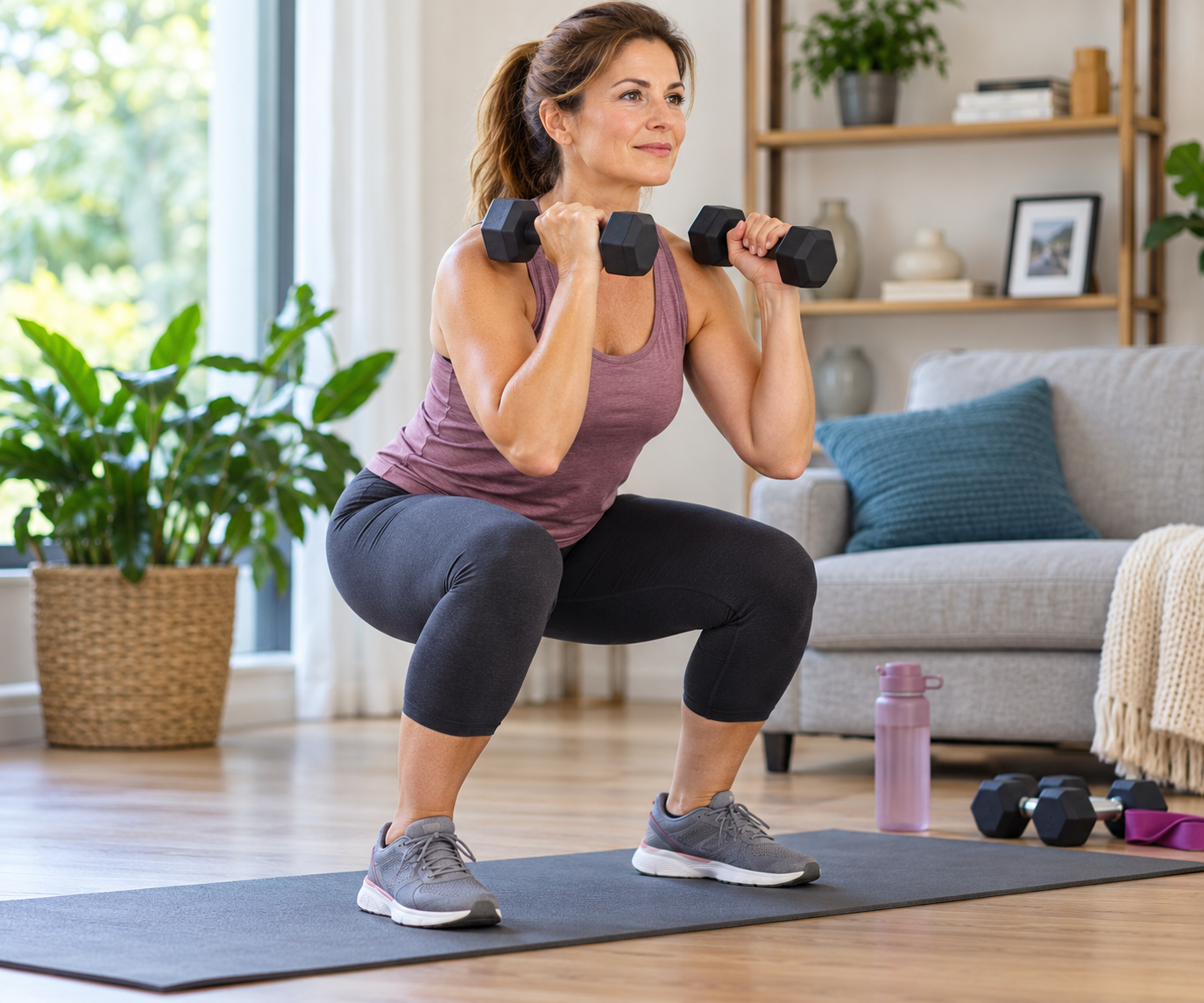
Muscle tissue decrease with age slowly. Resistance training help maintain the muscle strength. It also helps in Everyday activities.
Muscle maintenance.
– Lean tissue.
- Muscle preservation.
- Physical strength.
- Better function.
- Improved movement.
– Daily activities.
- Walking.
- Stair climbing.
- Chair rising.
- Bringing groceries.
– Physical independence.
- Easier tasks.
- Higher mobility.
- Greater confidence.
- Daily comfort.
Suitable exercises.
– Bodyweight work.
- Chair squats.
- Wall push-ups.
- Standing raises.
- Supported lunges.
– Resistance tools.
- Light dumbbells.
- Exercise bands.
- Weight machines.
- Household weights.
Training progress.
– Start gently.
- Light resistance.
- Simple movements.
- Fewer repetitions.
- Controlled technique.
– Build gradually.
- More repetitions.
- Better control.
- Heavier weights.
- Longer sessions.
2. Supporting Bone Health
Bone density reduces with age in women. This becomes evident at the time of menopause. Suitable exercises provide bone health.
Bone support.
– Weight-bearing work.
- Supported squats.
- Step-ups.
- Standing exercises.
- Brisk walking.
– Muscle loading.
- Dumbbell exercises.
- Resistance bands.
- Machine training.
- Bodyweight movements.
– Daily habits.
- Food with Calcium.
- Vitamin D.
- Regular activity.
- Proper meals.
Extra care.
– Osteoporosis.
- Medical guidance.
- Suitable exercises.
- Safe movements.
- Individual assessment.
– Previous fractures.
- Professional advice.
- Exercise modifications.
- Careful progression.
- Supervised training.
3. Supporting Healthy Weight Management
Maintaining weight provides more energy. One’s every day activities becomes easier. Resistance training improves body composition. There are several factors for weight changes.
Helpful habits.
– Muscle maintenance.
- Lean tissue.
- Physical strength.
- Daily movement.
- Better function.
– Food choices.
- Proper meals.
- Enough protein.
- Correct portions.
- Healthy snacks.
– Movement habits.
- Regular walking.
- Strength sessions.
- Active breaks.
- Household activities.
Other factors.
– Sleep quality.
- Proper bedtime.
- Required rest.
- Quiet environment.
- Consistent routine.
– Steady progress.
- Manageable goals.
- Regular practice.
- Progress tracking.
- Healthy habits.
Healthy routines.
– Daily activity.
- Walking breaks.
- Household tasks.
- Gentle movement.
- Outdoor exercise.
– Food awareness.
- Meal planning.
- Balanced choices.
- Regular meals.
- Suitable portions.
4. Improving Balance and Mobility
Stable movement is obtained from strong muscles. It helps in simple activities like:
- standing
- walking
- Sitting etc.
Balance practice provides movement control.
Everyday benefits.
– Leg strength.
- Stair climbing.
- Chair rising.
- Longer walks.
- Easier standing.
– Core strength.
- Better posture.
- Trunk stability.
- Controlled movement.
- Back support.
– Balance practice.
- Supported standing.
- Heel raises.
- Single-leg practice.
- Slow marching.
Safer movement.
– Extra support.
- Stable chair.
- Nearby wall.
- Secure footing.
- Clear floor.
– Gradual practice.
- Slow movements.
- Controlled repetitions.
- Regular sessions.
- Suitable difficulty.
Daily independence.
– Home activities.
- Getting dressed.
- Carrying groceries.
- Reaching shelves.
- Standing longer.
– Outdoor movement.
- Walking paths.
- Stepping onto curbs.
- Climbing stairs.
- Uneven surfaces.
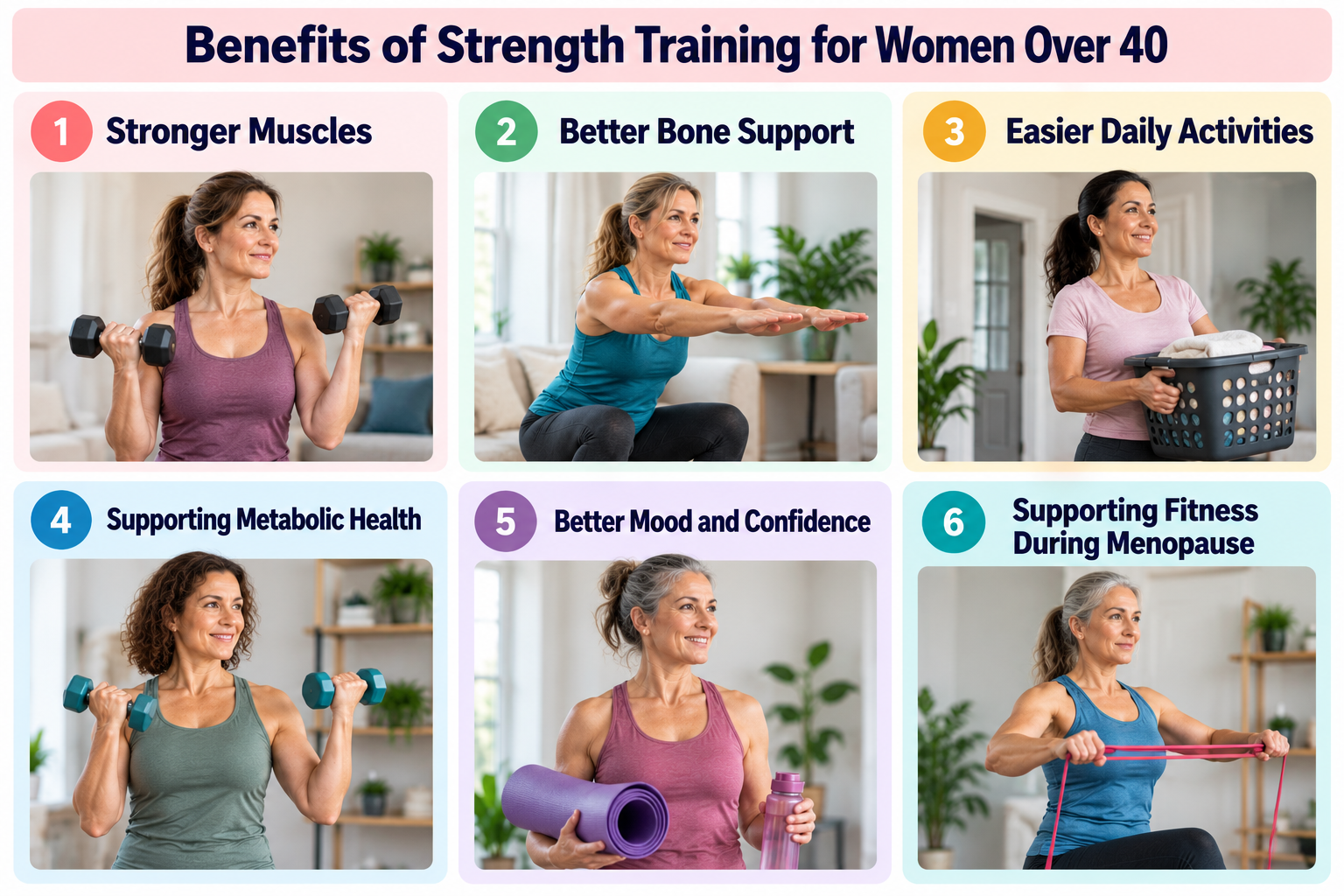
Benefits of Strength Training for Women Over 40
Several physical benefits can be gained through strength training. Daily comfort and independence can also be supported. Results are influenced by practice and recovery.
1. Stronger Muscles
Major muscle groups can be challenged through resistance training. Strength can gradually be improved through regular practice. Everyday activities can be supported by stronger muscles.
Lower-body strength.
– Leg exercises.
- Squats.
- Step-ups.
- Chair stands.
- Supported lunges.
– Hip exercises.
- Glute bridges.
- Side leg raises.
- Standing extensions.
- Clamshells.
Upper-body strength.
– Arm exercises.
- Bicep curls.
- Light presses.
- Wall push-ups.
- Tricep extensions.
– Back exercises.
- Band rows.
- Seated rows.
- Light pulls.
- Reverse flyes.
Core strength.
– Trunk control.
- Standing marches.
- Bird dogs.
- Modified planks.
- Dead bugs.
Training habits.
– Proper form.
- Controlled movements.
- Stable posture.
- Careful technique.
- Full attention.
– Regular practice.
- Planned sessions.
- Gradual increases.
- Recovery days.
- Progress tracking.
2. Better Bone Support
Muscles and bones can be challenged through strength exercises. Additional support can be provided by weight-bearing activities. Bone health can benefit from suitable training.
Helpful habits.
– Regular exercise.
- Planned sessions.
- Weight-bearing activity.
- Gradual progression.
- Consistent practice.
– Good nutrition.
- Calcium sources.
- Protein foods.
- Vitamin D.
- Balanced meals.
– Health checks.
- Bone assessments.
- Medical advice.
- Personal guidance.
- Risk evaluation.
Important precautions.
– Low bone density.
- Exercise modifications.
- Professional supervision.
- Safe movements.
- Suitable resistance.
– Bone conditions.
- Medical assessment.
- Careful progression.
- Individual planning.
- Regular reviews.
3. Easier Daily Activities
Common movements can be practised through functional exercises. Everyday tasks can become easier with stronger muscles. Physical confidence can also be improved.
Daily tasks.
– Sitting down.
- Chair squats.
- Controlled lowering.
- Steady standing.
- Better control.
– Carrying items.
- Grip strength.
- Arm strength.
- Stable posture.
- Safe lifting.
– Using stairs.
- Leg strength.
- Hip control.
- Better balance.
- Steady steps.
– Reaching upward.
- Shoulder movement.
- Arm strength.
- Controlled lifting.
- Better reach.
Practical benefits.
– Greater confidence.
- Easier movement.
- Better control.
- More independence.
- Daily comfort.
– Physical function.
- Stronger muscles.
- Better mobility.
- Improved stability.
- Easier routines.
4. Supporting Metabolic Health
Glucose can be used by muscles for energy. Insulin sensitivity may be improved through strength training. Healthy body composition can also be supported.
Main benefits.
– Glucose use.
- Muscle activity.
- Energy production.
- Blood sugar support.
- Insulin sensitivity.
– Healthy habits.
- Regular workouts.
- Balanced meals.
- Adequate sleep.
- Daily movement.
– Muscle maintenance.
- Resistance exercises.
- Enough protein.
- Recovery time.
- Gradual progression.
Daily support.
– Active lifestyle.
- Walking.
- Household activities.
- Regular movement.
- Outdoor exercise.
– Healthy routine.
- Meal planning.
- Sleep schedule.
- Exercise planning.
- Water intake.
5. Better Mood and Confidence
Mental well-being can be supported through regular exercise. Confidence can be improved by reaching fitness goals. A useful daily routine can also be established.
Mental benefits.
– Stress management.
- Movement breaks.
- Relaxation time.
- Regular activity.
- Quiet recovery.
– Growing confidence.
- Small goals.
- Visible progress.
- New skills.
- Personal achievements.
– Healthy routine.
- Planned workouts.
- Progress records.
- Weekly targets.
- Consistent habits.
Social support.
– Group training.
- Shared goals.
- Exercise partners.
- Regular attendance.
- Friendly support.
– Professional support.
- Trainer guidance.
- Technique feedback.
- Suitable modifications.
- Progress reviews.
Building consistency.
– Small targets.
- Weekly goals.
- Short workouts.
- Simple exercises.
- Manageable plans.
– Progress tracking.
- Repetitions completed.
- Weight increases.
- Improved control.
- Better endurance.
6. Supporting Fitness During Menopause
Sleep patterns can change during menopause. Body composition may also be affected. Bone health requires continued attention. Physical function can be maintained through suitable strength training.
Training priorities.
– Muscle strength.
- Full-body exercises.
- Resistance training.
- Gradual increases.
- Regular sessions.
– Bone support.
- Suitable loading.
- Weight-bearing movements.
- Professional advice.
- Safe progression.
– Energy management.
- Short workouts.
- Rest periods.
- Flexible scheduling.
- Manageable goals.
Recovery habits.
– Sleep routine.
- Regular bedtime.
- Quiet surroundings.
- Enough rest.
- Consistent schedule.
– Symptom awareness.
- Energy changes.
- Joint discomfort.
- Exercise adjustments.
- Recovery needs.
Extra guidance.
– Persistent pain.
- Medical advice.
- Exercise review.
- Suitable modifications.
- Individual support.
– Unusual symptoms.
- Prompt assessment.
- Professional support.
- Exercise adjustments.
- Personal guidance.
Become a General Fitness Trainer and turn your passion into a Profession!
Turn Your Passion for Fitness into a Profession
Learn practical skills, get certified, and step into the growing fitness industry with confidence.
Join the CourseBest Strength Training Exercises for Women Over 40
Major muscle groups should be trained through suitable exercises. Bodyweight movements can be used by beginners. Resistance can be increased as strength improves.
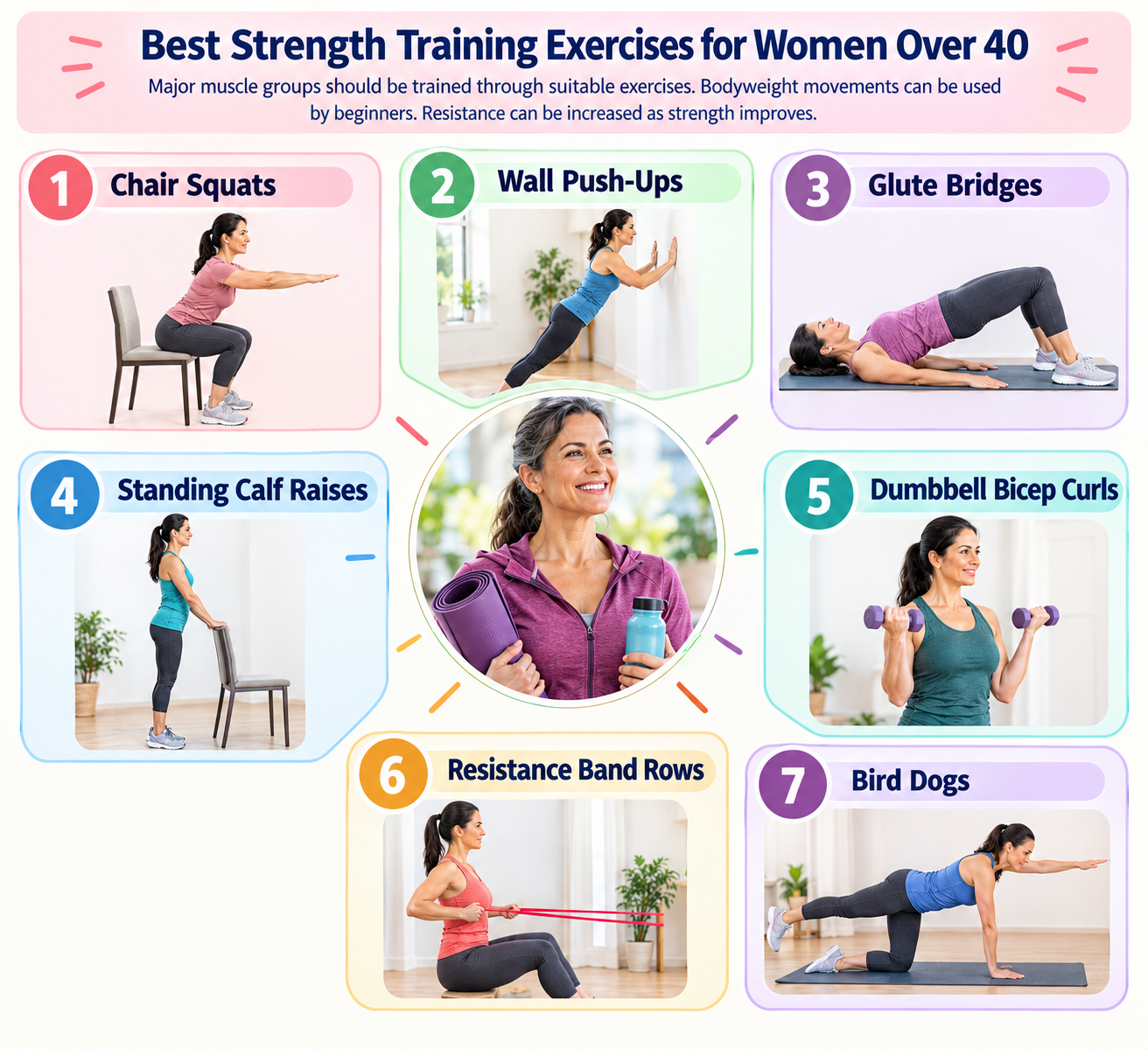
1. Chair Squats
Leg and hip strength can be improved through chair squats. Sitting and standing movements can also be practised.
Main benefits.
– Leg strength.
- Thigh muscles.
- Hip muscles.
- Better stability.
– Daily movement.
- Chair rising.
- Controlled sitting.
- Easier standing.
How to perform.
– Starting position.
- Stable chair.
- Feet hip-width.
- Upright posture.
– Movement.
- Knees bent.
- Hips moved backward.
- Body lowered slowly.
- Body raised steadily.
– Beginner target.
- Eight repetitions.
- One set.
- Comfortable range.
2. Wall Push-Ups
Chest and arm strength can be developed through wall push-ups. An easier alternative to floor push-ups is provided.
Main benefits.
– Upper-body strength.
- Chest muscles.
- Shoulder muscles.
- Arm muscles.
– Movement control.
- Stable posture.
- Controlled lowering.
- Smooth pushing.
How to perform.
– Starting position.
- Wall faced.
- Hands shoulder-width.
- Feet slightly back.
– Movement.
- Elbows bent.
- Chest moved closer.
- Body pushed gently.
- Back kept straight.
– Beginner target.
- Eight repetitions.
- One set.
- Slow movement.
3. Glute Bridges
Hip and buttock strength can be improved through glute bridges. Core muscles are also engaged during this exercise.
Main benefits.
– Hip strength.
- Glute muscles.
- Hip control.
- Pelvic stability.
– Core support.
- Trunk control.
- Controlled movement.
- Stable positioning.
How to perform.
– Starting position.
- Body lying down.
- Knees bent.
- Feet kept flat.
– Movement.
- Buttocks tightened.
- Hips lifted.
- Brief pause.
- Hips lowered slowly.
– Beginner target.
- Eight repetitions.
- One set.
- Comfortable range.
4. Standing Calf Raises
Lower-leg strength can be developed through calf raises. Ankle control and balance can also be challenged.
Main benefits.
– Calf strength.
- Lower-leg muscles.
- Ankle control.
- Walking support.
– Balance support.
- Stable standing.
- Controlled movement.
- Better coordination.
How to perform.
– Starting position.
- Body upright.
- Chair held.
- Feet kept flat.
– Movement.
- Heels raised.
- Brief pause.
- Heels lowered slowly.
- Balance maintained.
– Beginner target.
- Ten repetitions.
- One set.
- Chair support.
5. Dumbbell Bicep Curls
Upper-arm strength can be developed through bicep curls. Light weights can be used initially.
Main benefits.
– Arm strength.
- Bicep muscles.
- Lifting ability.
- Carrying support.
– Movement control.
- Stable elbows.
- Controlled lifting.
- Slow lowering.
How to perform.
– Starting position.
- Light weights held.
- Elbows kept close.
- Body held upright.
– Movement.
- Elbows bent.
- Weights lifted.
- Weights lowered slowly.
- Swinging avoided.
– Beginner target.
- Eight repetitions.
- One set.
- Light resistance.
6. Resistance Band Rows
Upper-back strength can be developed through band rows. The arms and shoulders are also engaged.
Main benefits.
– Back strength.
- Upper-back muscles.
- Shoulder support.
- Posture control.
– Daily movement.
- Pulling tasks.
- Carrying items.
- Upper-body stability.
How to perform.
– Starting position.
- Secure band used.
- Both ends held.
- Body kept upright.
– Movement.
- Elbows pulled backward.
- Shoulder blades squeezed.
- Brief pause.
- Arms returned slowly.
– Beginner target.
- Eight repetitions.
- One set.
- Light resistance.
7. Bird Dogs
Core strength can be challenged through bird dogs. Balance and controlled movement can also be practised.
Main benefits.
– Core strength.
- Trunk stability.
- Back support.
- Controlled posture.
– Balance practice.
- Body awareness.
- Coordination.
- Slow movement.
How to perform.
– Starting position.
- Hands beneath shoulders.
- Knees beneath hips.
- Back kept neutral.
– Movement.
- One arm extended.
- Opposite leg extended.
- Brief hold.
- Sides changed.
– Beginner target.
- Five repetitions.
- Each side.
- Slow movements.
How Often Should Women Over 40 Do Strength Training?
Major muscle groups should be trained regularly. Two weekly sessions can provide a useful starting point. Recovery time should be allowed between demanding workouts.
1. Weekly Frequency
Beginner schedule.
– Monday.
- Full-body workout.
- Light resistance.
- Comfortable pace.
– Thursday.
- Full-body workout.
- Same exercises.
- Controlled movements.
– Other days.
- Walking.
- Gentle stretching.
- Everyday activity.
2. Training Duration
Session length.
– First weeks.
- Fifteen minutes.
- Simple exercises.
- Longer rest.
– Later weeks.
- Twenty minutes.
- More repetitions.
- Better control.
– Further progress.
- Longer sessions.
- Added resistance.
- More exercises.
3. Recovery Between Sessions
Recovery habits.
– Rest days.
- Muscle recovery.
- Reduced fatigue.
- Better readiness.
– Sleep.
- Regular bedtime.
- Adequate rest.
- Consistent schedule.
– Nutrition.
- Enough protein.
- Balanced meals.
- Regular hydration.
Beginner Strength Training Routine for Women Over 40
A manageable routine should be selected first. Major muscle groups should be included. Resistance can be increased gradually.
1. Sample Weekly Routine
| Day | Activity | Duration |
| Monday |
|
|
| Tuesday |
|
|
| Wednesday |
|
|
| Thursday |
|
|
| Friday |
|
|
| Saturday |
|
|
| Sunday |
|
|
2. Beginner Workout Plan
| Exercise | Repetitions | Sets |
| Chair squats |
|
|
| Wall push-ups |
|
|
| Glute bridges |
|
|
| Calf raises |
|
|
| Bicep curls |
|
|
| Band rows |
|
|
Workout structure.
– Warm-up.
- Marching.
- Shoulder circles.
- Gentle movement.
– Main workout.
- Controlled repetitions.
- Comfortable resistance.
- Regular breathing.
– Cool-down.
- Gentle stretching.
- Slow walking.
- Relaxed breathing.
3. Progressing Safely
First two weeks.
– Movements learned.
- Correct technique.
- Light resistance.
- Slow repetitions.
Weeks three and four.
– Consistency built.
- More repetitions.
- Better control.
- Recovery maintained.
Following weeks.
– Challenge increased.
- Heavier weights.
- Extra repetitions.
- Additional sets.
Turn Your Passion for Fitness into a Profession
Learn practical skills, get certified, and step into the growing fitness industry with confidence.
Join the CourseSafety Tips for Strength Training After 40
Suitable exercises should be selected carefully. Resistance should match current ability. Pain should never be ignored.
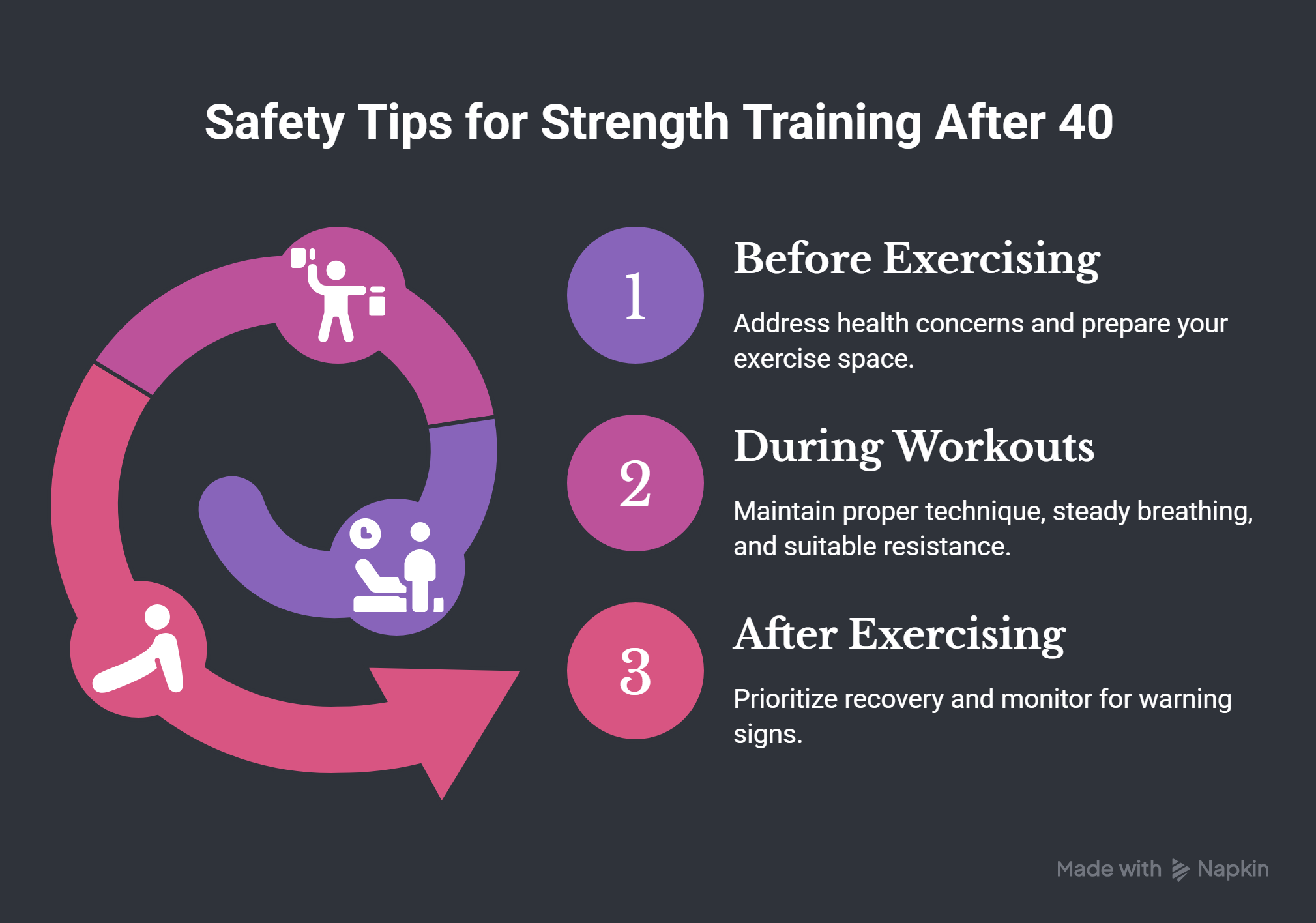
1. Before Exercising
– Health concerns.
- Existing conditions.
- Previous injuries.
- Medical advice.
– Exercise space.
- Clear floor.
- Stable chair.
- Secure equipment.
2. During Workouts
– Proper technique.
- Controlled movement.
- Stable posture.
- Full attention.
– Breathing.
- Continuous breathing.
- Breath holding avoided.
- Steady movement.
– Suitable resistance.
- Light weights.
- Sudden increases avoided.
- Control maintained.
3. After Exercising
– Recovery.
- Rest days.
- Enough sleep.
- Balanced meals.
– Warning signs.
- Sharp pain.
- Dizziness.
- Chest discomfort.
Exercise should be stopped when concerning symptoms occur. Medical care should be sought for severe or persistent symptoms.
Conclusion
Women’s health can be supported through strength training. Muscle strength, bone health, and balance can be maintained. Daily movement can also be made easier.
Simple home routines can be followed regularly. Gradual progress should be prioritised. Proper technique should be maintained. Adequate recovery should be provided. Long-term fitness can be supported through consistency.
Turn Your Passion for Fitness into a Profession
Learn practical skills, get certified, and step into the growing fitness industry with confidence.
Join the CourseFrequently Asked Questions
Is strength training safe for women over 40?
Yes, strength training can be safe for most women over 40 when suitable exercises are performed correctly. Light weights, proper technique, and gradual progress can help reduce injury risks.
How many days a week should women over 40 do strength training?
Strength training can be performed two to three days per week, depending on fitness levels and recovery needs. Rest days should be included to allow muscles to recover and become stronger.
Can strength training help women over 40 lose weight?
Yes, strength training can support weight management by helping maintain muscle mass and increasing daily energy use. Better results can be supported through balanced meals, regular activity, and consistent exercise.
What are the best strength training exercises for women over 40?
Squats, wall push-ups, glute bridges, resistance band rows, and light dumbbell exercises are useful options. These movements can help strengthen major muscle groups and support everyday activities.
Can strength training improve bone health after 40?
Yes, weight-bearing exercises and resistance training can help maintain bone strength as women age. Women with osteoporosis or a high risk of fractures should seek medical guidance before starting a new routine.
Should women over 40 lift heavy weights?
Heavy weights are not necessary when beginning strength training, as lighter resistance can help build strength safely. Weight can be increased gradually when the exercises can be completed with proper form and control.
Can strength training help during menopause?
Strength training can help maintain muscle mass, support bone health, and improve physical function during menopause. Regular exercise may also support mood and sleep, although individual results can vary.
How long should a strength training session last?
A beginner session may last around 20 to 30 minutes, including a short warm-up and the main exercises. The duration can be increased gradually as fitness and exercise tolerance improve.
What should women over 40 eat for muscle growth?
Protein-rich foods, whole grains, vegetables, fruits, and healthy fats can support muscle recovery and overall health. Eggs, fish, beans, lentils, dairy products, and nuts can help provide important nutrients.
How can women over 40 avoid injuries during strength training?
Injuries can be reduced through warm-ups, controlled movements, suitable weights, and adequate rest between sessions. Persistent pain, dizziness, or unusual shortness of breath should be taken seriously, and medical advice should be sought when needed.