Table of Contents
Toddlers who are learning to walk can do simple toe exercises to practise foot movement and balance. These exercises can include picking up soft objects with their toes, moving their toes, and walking on safe surfaces.
You can follow simple toe exercises for toddlers, how to do them safely, and how they can support foot movement and early walking skills.
Key Takeaways:
- Simple toe exercises can help toddlers move their toes.
- Toe play can give children more foot practice.
- Picking up soft objects can work the toes.
- Safe floor play can support natural foot movement.
- Exercises should be easy and fun.
- Never force a child to do an exercise.
- Let the child practise at their own pace.
Register for the Entri Elevate Montessori Teacher Training Program! Join Now!
Why are Toe Exercises Important for Toddlers?
Toe exercises are easy to add to a toddler’s play time. A child can wiggle their toes, curl them, or try to pick up a soft cloth with their toes.
These small games let the child move their toes while playing. They can also be fun when the child is learning to stand and walk. These small activities give their feet more practice.
Helps Toes Move Better
Toddlers are learning to move their feet. Toe exercises let them move their toes.
They can:
- Wiggle their toes.
- Curl their toes.
- Stretch their toes.
- Relax their toes.
These are simple movements. They can be done during play.
Helps with Balance
A toddler needs good balance to walk. The feet help the child stay steady. Simple foot play gives the child more time to use their feet. This can help them practise standing and moving.
Helps Children Feel Their Feet
Toddlers are learning about their bodies. Toe play helps them notice their feet. They can touch their toes, look at them. They can also move them during play. This helps children learn how their feet move.
Gives More Foot Practice
Walking needs practice. Toddlers need time to stand, move, and take small steps. Simple toe activities give them extra foot movement. They do not need to do the exercises for a long time. A few minutes of fun play is enough.
Helps with Small Foot Movements
Toes can make small movements. Children can practise these movements during simple games.
For example, they can try to pick up a soft cloth with their toes. This gives the toes something simple to do.
Makes Walking Practice Fun
Toddlers like to learn through play. Toe exercises can be made into small games.
Parents can ask the child to:
- Wiggle their toes.
- Touch their toes.
- Pick up a soft cloth.
- Move their feet to music.
- Walk on a safe floor.
The activity should feel like play. Do not force the child to continue.
Lets Children Explore Different Surfaces
Children can sometimes walk barefoot on a clean and safe floor. They can feel the surface with their feet.
A soft mat and a firm floor may feel different. This gives the child a chance to notice how the floor feels under their feet. Always stay close to the child during this play.
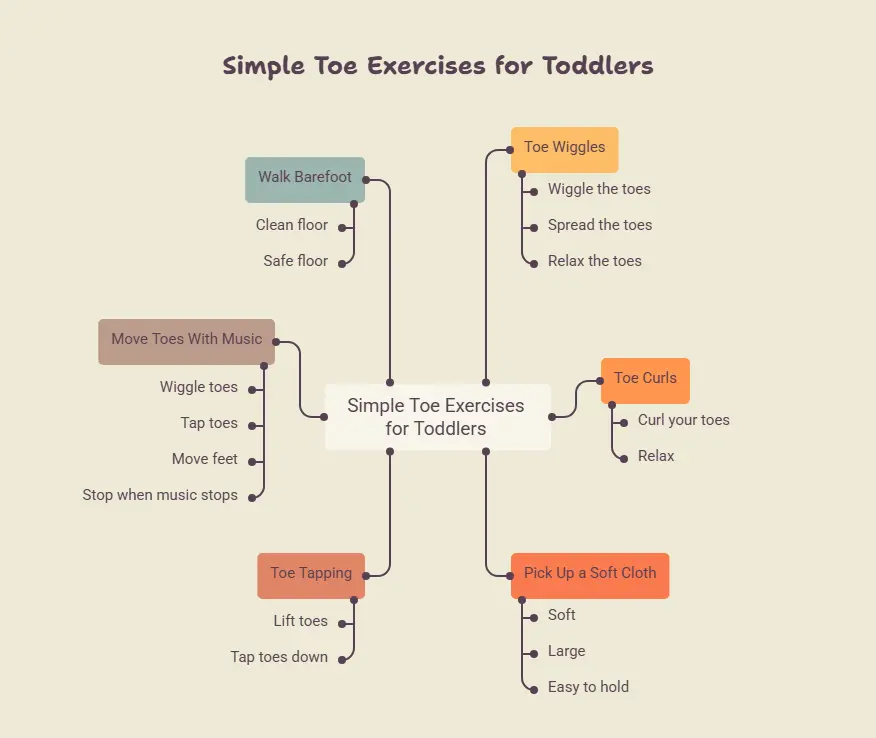
Simple Toe Exercises for Toddlers
Toddlers can try simple toe exercises during play. These small activities give them time to move their toes and feet.
Toe Wiggles
Ask your child to wiggle their toes. They can move them up and down or spread them apart.
Try these simple movements:
- Wiggle the toes.
- Spread the toes.
- Relax the toes.
Keep it fun and easy.
Toe Curls
Ask the child to curl their toes. Then ask them to relax. You can make it a small game. Say, “Curl your toes” and then “Relax.”
Do it only a few times. There is no need to make the child do it for a long time.
Pick Up a Soft Cloth
Place a soft cloth on the floor. Ask the child to pick it up with their toes. Let the child try on their own. It is okay if they cannot pick it up.
Use something that is:
- Soft
- Large
- Easy to hold
Do not use small items that the child may put in their mouth.
Toe Tapping
Let the child sit with their feet on the floor. Ask them to lift their toes and tap them down.
You can tap your own toes first. The child can watch and copy you. This can be a simple game during play.
Move Toes with Music
Play a fun song and ask the child to move their toes. They can move their feet as they listen to the music.
They can:
- Wiggle their toes.
- Tap their toes.
- Move their feet.
- Stop when the music stops.
This makes the activity feel like play.
Walk Barefoot
Let the child walk barefoot on a clean and safe floor. This gives them a chance to feel the floor with their feet. A clean mat or smooth floor can be used. Stay close to the child while they walk.
Toe Curling Exercise
Toe curling is a simple foot activity for toddlers. It lets them move their toes and feet during play. The child can sit on the floor or on a soft mat. Ask them to curl their toes and then relax them.
How to Do it
Let the child sit in a comfortable place. Ask them to curl their toes slowly. Then ask them to relax the toes.
The child can repeat it a few times:
- Curl the toes.
- Relax the toes.
- Curl them again.
- Relax again.
Do not worry if the child cannot do it well. Let them try.
Make it Fun
Toddlers enjoy simple games. You can make toe curling into a small game.
Say simple things like:
- “Curl your toes.”
- “Open your toes.”
- “Show me your toes.”
- “Do it again.”
You can also do it with the child. Let them copy you.
Use a Soft Towel
You can also use a soft towel for this activity. Place it near the child’s feet. Ask the child to try to move the towel with their toes. They may find it hard at first.
Let them try without help. Do not force them to do it.
What can Children Practise?
Toe curling gives children time to move their toes. It also helps them notice their feet during play.
They can practise:
- Moving their toes.
- Curling their toes.
- Relaxing their toes.
- Using their feet during play.
Let the Child Move Alone
Do not pull or bend the child’s toes. Let the child make the movement on their own. Keep the activity easy and fun. The main aim is to give the child some simple foot movement during play.
Toe Picking-Up Activities
Picking up things with the toes can be a fun foot game for toddlers. It gives them a chance to use their toes in a new way.
For this activity, place a soft cloth on the floor. Let the child try to catch the cloth with their toes and move it closer to them.
Pick Up a Soft Cloth
A small soft towel or cloth works well for this game. Place it near the child’s feet.
The child can try to grip the cloth with their toes. They may not pick it up on the first try. Let them keep trying without pressure.
Move the Cloth
The child can also try to pull the cloth towards them with their toes.
This makes the game a little more interesting. They can sit, move their toes, and slowly bring the cloth closer.
Try With a Sock
A clean sock can also be used for this activity. Place it on the floor and ask the child to catch it with their toes. The child can try to lift one end of the sock. It is okay if they only move it a little.
Use Both Feet
After the child understands the game, they can try it with both feet. They can first use one foot and then try the other. This gives them a chance to notice how each foot moves.
Let the Child Explore
There is no need to show the child every movement. Give them some time to find their own way. Some children may use their toes well. Others may simply touch or push the cloth at first. Both are fine.
Choose Safe Things
Use only soft and clean items for this game. Do not use coins, beads, buttons, or other small objects.
Stay near the child while they play. This is especially important because toddlers may put small things in their mouth.
Walking Barefoot on Safe Surfaces
Walking barefoot can be a simple activity for toddlers. It lets them feel the ground with their feet while they move.
The child can walk barefoot for a short time on a safe surface. This gives the feet a chance to feel different textures.
Start at Home
A clean floor is a simple place to start. Let the child walk around without shoes for a few minutes.
Before starting, check the floor for:
- Small toys
- Sharp objects
- Broken pieces
- Wet areas
The floor should be clean and dry.
Try a Soft Mat
A soft mat can be comfortable for a toddler. Let the child walk slowly on the mat. They may enjoy feeling the soft surface under their feet. You can also sit nearby and let the child move around.
Walk on Clean Grass
Clean grass can give a different feeling to the feet. If there is a safe grassy area, let the child take a few steps without shoes.
Check the grass first. Make sure there are no:
- Stones
- Thorns
- Glass pieces
- Sharp objects
- Insects
Stay close while the child walks.
Let the Child Notice the Floor
Different surfaces may feel different. A carpet may feel soft, while a smooth floor may feel harder.
You can ask simple questions such as:
- “Is it soft?”
- “How does it feel?”
- “Do you like it?”
This can make the activity more interesting for the child.
Let the Child Walk Slowly
A toddler who is learning to walk may take small steps. There is no need to make the child walk fast.
Give the child time to:
- Stand
- Take a step
- Stop
- Start again
Stay close and offer support when needed.
Do not Make the Child Do it
Some children may not like walking barefoot. They may want to wear their shoes or socks. Let the child get used to it slowly. Do not force them to walk on a surface they do not like.
Balance and Foot Strengthening Activities
Toddlers use their feet a lot while learning to walk. Simple games can give them more chances to stand, step, and move.
These activities do not need special tools. A safe floor and some space to move are enough.
Stand and Reach
Ask the child to stand and reach for a toy. Keep the toy close so they can reach it safely.
The child can reach:
- Up
- In front
- To one side
This makes them move while keeping their feet on the floor.
Walk Over a Soft Mat
Place a firm mat on the floor. Let the child walk across it slowly. The child may take small steps at first. Let them move at their own speed.
Step Over a Small Line
Make a small line on the floor with tape. Ask the child to step over it.
They can practise:
- Lifting one foot
- Moving it forward
- Putting it down
- Taking the next step
Keep the line low and easy to cross.
Stand on One Foot With Help
A toddler who is ready may try standing on one foot. Stay close and hold their hand if needed.
Let them lift one foot for a moment. Then they can put it down and try the other foot. It is fine if they can only do this for a short time.
Walk and Stop Game
Make walking into a simple game. Ask the child to walk when you say “go” and stop when you say “stop.”
This gives them practice with:
- Walking
- Stopping
- Standing still
- Starting again
The game can be done in a clear space at home.
Push a Light Toy
A stable push toy can encourage a toddler to take steps. Let the child push it slowly across the floor.
Choose a toy that:
- Is light enough to move
- Does not roll too fast
- Is easy for the child to hold
Stay near the child while they play.
Move from Sitting to Standing
A simple toy can also encourage the child to stand up. Place it on a low table or another safe surface.
The child can sit, hold the surface, and try to stand to reach the toy. This gives them a chance to use their legs and feet during play. 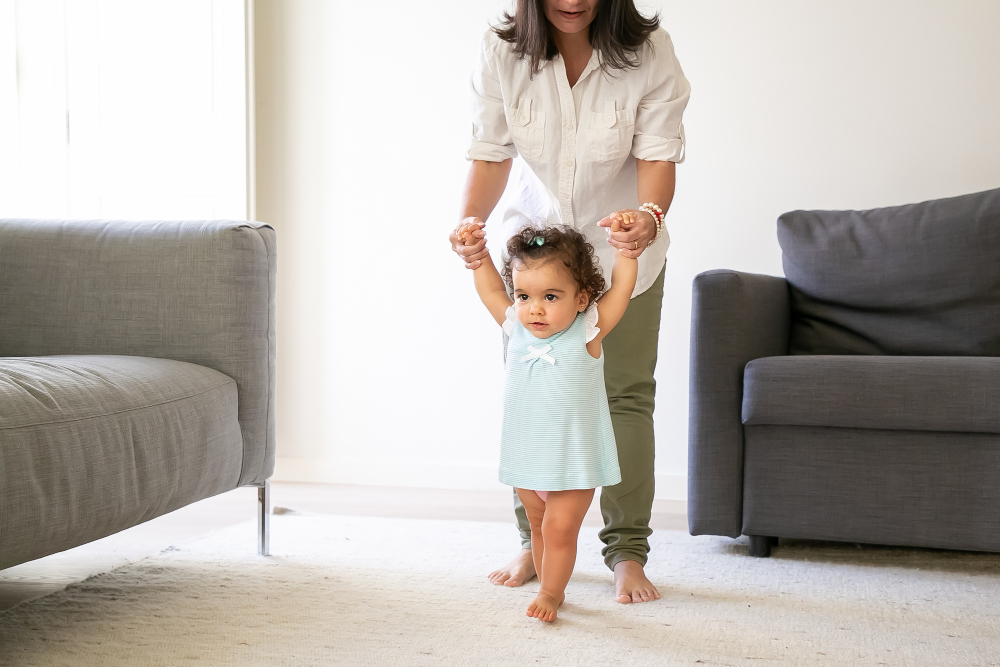
Safety Tips for Toddler Foot Exercises
Foot exercises should be easy and safe for toddlers. Children are still learning how to control their feet and body. A little care can make these activities more comfortable. An adult should stay nearby while the child is playing.
Choose a Safe Place
Give the child enough space to move. The floor should be clean and dry.
Before starting, remove:
- Sharp things
- Small toys
- Loose wires
- Slippery mats
- Broken items
This gives the child a safer place to move.
Let the Child Wear Comfortable Clothes
The child should be able to move their legs and feet freely. Tight clothes can make movement harder. Soft and comfortable clothes are a good choice for play.
Do not Force Any Movement
Let the child move their feet on their own. Never pull the toes or bend the foot forcefully. If the child does not want to do an activity, stop and try again another time.
Use Safe Objects
If an activity uses a cloth, toy, or other object, make sure it is safe for the child.
Avoid:
- Small beads
- Coins
- Buttons
- Tiny toys
- Sharp objects
Toddlers may put small things in their mouths.
Register for the Entri Elevate Montessori Teacher Training Program! Join Now!
Do not Make the Child Exercise for Long
Toddlers do not need long exercise sessions. A few minutes during play is enough. Give the child a break when they become tired or lose interest.
Stop if the Child is Uncomfortable
Watch the child during the activity. Stop if the child feels pain or does not want to continue. Let the child try again later.
Use a Safe Floor
Use a clean and dry floor. Do not use wet or slippery floors. Check the floor before barefoot play. Remove stones, glass, thorns, and other sharp things.
Conclusion
Simple toe and foot activities can be a fun part of a toddler’s daily play. They give children time to move their toes, feet, and legs in different ways.
Activities like toe curling, picking up a soft cloth, walking barefoot on a safe surface, and simple balance games can give useful movement practice.
Parents do not need special tools for these activities. A safe floor, a little space, and some time are enough. The child should be allowed to try at their own speed.
Always stay close during the activities. Do not force any movement or continue if the child feels uncomfortable. The main goal is simple. Let the child move, play, and explore their feet in a safe and happy way.
Get Certified & Start Your Montessori Career
Montessori Teacher Training Course by Entri App: Gain expert skills, earn certification, and kickstart your teaching career.
Join Now!Frequently Asked Questions
Why are toe exercises useful for toddlers?
Toe exercises give toddlers a chance to move and use their toes. They can also help children become more aware of their feet while playing and learning to walk.
When can toddlers start simple toe exercises?
A toddler can try simple foot games when they are ready to move and play on their own. The activity should match the child’s age and ability. There is no need to force a child to do an exercise.
What are some easy toe exercises for toddlers?
Simple activities include toe curling, toe tapping, picking up a soft cloth with the toes, and moving the toes during songs. Walking barefoot on a safe surface can also be included.
Should parents help toddlers during foot exercises?
Parents should stay nearby and help when needed. However, let the child make the movement by themselves. Do not pull, bend, or force the child’s toes or feet.
Can a toddler pick up things with their toes?
Yes, this can be used as a simple foot game. A soft cloth or clean sock can be placed near the child’s feet. Avoid small objects such as coins, beads, and buttons.
How long should toddlers do foot exercises?
There is no fixed time for these activities. A few minutes during normal play is enough. Let the child stop when they become tired or lose interest.
Can foot exercises help toddlers with balance?
Simple standing and walking games give toddlers more chances to practise balance. Activities such as reaching while standing or stepping over a low line can be used during play.
Is toe walking normal when toddlers are learning to walk?
Some toddlers may walk on their toes while learning to walk. If it happens often or you are concerned, talk to a paediatrician or physiotherapist.
When should I talk to a doctor about my toddler's walking?
Talk to a doctor if your child has pain, falls often, has trouble walking, or you notice something that worries you.