Table of Contents
Electronics engineers need both technical and soft skills to get placed in good companies. Essential skills include basic electronics knowledge, programming, communication, problem-solving, teamwork, and practical experience.
By learning new technologies and improving their technical skills can help students get better job opportunities in the electronics industry.
Key Takeaways:
- Electronics engineers need technical and soft skills
- Basic electronics knowledge is very important
- Programming and practical skills improve placements
- Communication and teamwork help in interviews
- Projects and internships give real experience
- Learning new technologies improves career growth
- Skilled students get better job opportunities
- Continuous learning helps build a successful career
New to Robotics? Start from the Basics. Join Now!
Introduction
Many students think electronics engineering is only about studying subjects and passing exams. But companies today look for more than marks. They want students who have the right skills and practical knowledge. To get placed in good companies, electronics engineers need both technical and soft skills.
Basic electronics knowledge is very important. Students should understand circuits, electronic devices, and simple programming. Along with this, communication skills, teamwork, and problem-solving skills are also needed. Companies prefer students who can learn new technologies and work well with others.
Practical experience also plays a big role in getting a job. Mini projects, internships, and hands-on training help students understand real work better. Students who improve their skills regularly have better placement opportunities and career growth. In this blog, we will discuss the top skills electronics engineers need to get placed in good companies and build a successful career in the electronics industry.
Background / Context
Electronics engineering is one of the most popular career fields. They works in many industries, including electronics, communication, automation, IT, manufacturing, and robotics.
Many students think that getting placed only depends on marks. But most of companies are additionally looking for technical and soft skills. Students need practical knowledge, communication skills, and problem-solving skills to get a good job.
♦️ Electronics Engineers are Needed in Many Industries
Electronics engineers can work in different industries.
- Electronics companies
- IT companies
- Telecommunication industry
- Automation and robotics
- Manufacturing companies
♦️ Technical Skills are very Important
Companies look for students with good technical knowledge.
- Basic electronics concepts
- Circuit design
- Programming basics
- Microcontrollers and embedded systems
♦️ Soft Skills are also Needed
Good communication and teamwork are important in every company.
- Communication skills
- Problem-solving ability
- Teamwork
- Confidence
♦️Practical Experience Gives Better Opportunities
Companies prefer students with practical knowledge.
- Mini projects
- Internships
- Hands-on training
- Workshop experience
♦️ Learning New Technologies is Important
Technology changes very fast in the electronics field.
- IoT
- Automation
- Embedded systems
- Artificial Intelligence basics
Top Skills Electronics Engineers Need
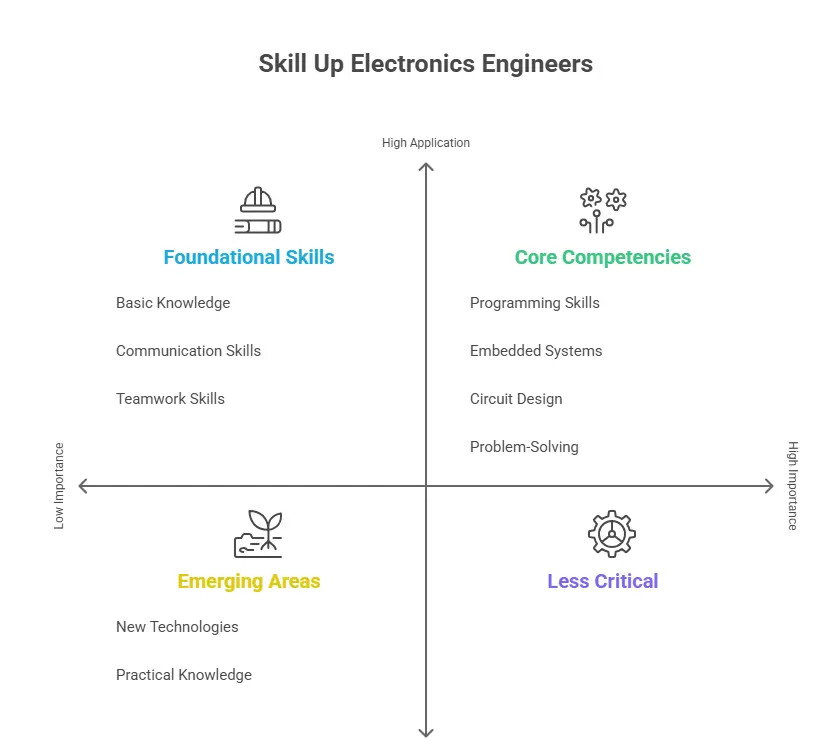
Electronics engineers need good skills to get jobs in companies. Mostly companies look for students with technical knowledge and communication skills. Learning these skills helps students do well in interviews and build a good career.
🔶 Basic Electronics Knowledge
Every electronics engineer must understand the basics of electronics clearly. This is one of the most important skills for getting placed.
Students should know:
- Electronic components
- Circuits and circuit design
- Resistors, capacitors, and transistors
- Diodes and integrated circuits
- Analog and digital electronics
Companies often ask basic electronics questions during interviews and tests.
🔶 Programming Skills
Basic programming knowledge is useful for electronics engineers. Many electronics jobs require coding skills.
Students can learn:
- C programming
- C++ basics
- Python basics
- Embedded programming
Programming helps in:
- Microcontroller projects
- Automation systems
- Embedded systems
- IoT projects
🔶 Embedded Systems Knowledge
Embedded systems are used in many electronic devices like TVs, washing machines, cars, and medical equipment.
Students should learn:
- Microcontrollers
- Arduino
- Raspberry Pi
- Sensors and actuators
- Embedded C programming
Many electronics companies hire students with embedded systems knowledge.
🔶 Circuit Design and Troubleshooting
Every electronics engineers should know how to design and test the circuits. They should also know how to find and fix problems in the entire circuits.
Important areas include:
- PCB basics
- Circuit testing
- Using multimeters
- Troubleshooting electronic devices
🔶 Communication Skills
Very important to have a good communication skills are for every job. Also the engineers should be able to explain ideas clearly.
Communication skills help in:
- Interviews
- Team discussions
- Presentations
- Workplace communication
Students should improve:
- Speaking skills
- Listening skills
- Basic English communication
🔶 Problem-Solving Skills
Companies want engineers who can solve problems quickly and logically.
Students should learn how to:
- Analyze problems
- Think clearly
- Find simple solutions
- Handle technical issues
Problem-solving skills are important during:
- Technical interviews
- Projects
- Workplace tasks
🔶 Teamwork Skills
Electronics engineers often work in teams. Good teamwork helps projects finish successfully.
Students should learn:
- How to work with others
- How to share ideas
- How to support team members
- How to manage responsibilities
🔶 Practical Knowledge
Practical learning is very important for electronics students. Companies prefer students who have hands-on experience.
Students can gain practical knowledge through:
- Mini projects
- Internships
- Lab work
- Workshops
- Industrial training
🔶 Knowledge of New Technologies
Technology changes very fast in the electronics field. Students should learn about modern technologies.
Useful areas include:
- Internet of Things (IoT)
- Automation
- Robotics
- Artificial Intelligence basics
- VLSI basics
Skilled vs Non-Skilled Electronics Graduate
Many students complete electronics engineering, but not all students get placed easily. Companies mainly look for students who have good skills, practical knowledge, and confidence. Students who improve their skills usually get better job opportunities. Students who only depend on marks may find placements more difficult.
The table below shows the difference between a skilled electronics graduate and an average candidate.
| Factor | Skilled Candidate | Average Candidate |
|---|---|---|
| Technical Knowledge | Understands electronics concepts clearly | Knows only basic theory |
| Practical Exposure | Has project and internship experience | Has very little practical experience |
| Job Readiness | Ready to work in companies | Needs extra training |
| Placement Success Rate | Higher chance of getting placed | Lower placement opportunities |
1. Technical Knowledge
Technical knowledge is one of the most important things companies check during placements.
🟠Skilled Candidate:
A skilled student has strong knowledge of:
- Basic electronics
- Circuits and components
- Programming basics
- Embedded systems
- Modern technologies
They understand both theory and practical concepts clearly. They can answer technical interview questions confidently.
🟠Average Candidate:
An average student may only study to pass exams. They may know theory but may not understand how electronics works in real situations.
They may face difficulty during:
- Technical interviews
- Aptitude tests
- Practical tasks
2. Practical Exposure
Practical learning is very important in electronics engineering.
🟠Skilled Candidate:
A skilled student usually has:
- Mini project experience
- Internship experience
- Workshop participation
- Lab practice
- Hands-on training
These activities help students understand real industry work and improve confidence.
🟠Average Candidate:
An average student may only focus on classroom studies and may not have much practical exposure.
They may not know how to:
- Work with electronic devices
- Use tools and equipment
- Solve real technical problems
3. Job Readiness
Companies prefer students who are ready to work from the beginning.
🟠Skilled Candidate:
A skilled student can:
- Work in teams
- Communicate clearly
- Solve problems
- Learn quickly
- Handle workplace tasks
They are more confident during interviews and company training.
🟠Average Candidate:
An average student may need more guidance and training after joining a company.
They may face problems with:
Communication
Confidence
Technical work
Teamwork
4. Placement Success Rate
Placement success depends on skills, confidence, and preparation.
🟠Skilled Candidate:
Students with good skills usually:
- Perform better in interviews
- Clear aptitude tests easily
- Answer technical questions confidently
- Get more placement opportunities
🟠Average Candidate:
Students with fewer skills may struggle during placement processes.
They may face difficulty in:
- Technical rounds
- Group discussions
- HR interviews
Impact / Practical Implications
Learning important electronics skills can help students get better job opportunities. Companies prefer students who have technical knowledge, practical experience, and good communication skills.
Students with the right skills can:
- Get placed more easily
- Perform better in interviews
- Work confidently in companies
- Handle real technical tasks
- Grow faster in their careers
♦️ Career Opportunities After Learning Electronics Skills
Students with good skills can apply for different job roles.
- Electronics Technician
- Embedded Systems Engineer
- Testing Engineer
- Production Engineer
- Automation Support Staff
- Technical Support Engineer
♦️ Benefits of Practical Skills
Practical learning helps students understand real work better.
- Mini projects improve confidence
- Internships give industry experience
- Hands-on practice improves technical skills
- Workshop training helps students learn faster
♦️ Importance of Soft Skills
Soft skills are also important for getting jobs.
- Good communication helps in interviews
- Teamwork improves workplace performance
- Problem-solving helps in technical work
- Confidence creates a good impression
♦️ Career Growth Opportunities
Electronics engineering offers good career growth.
- Entry-level jobs for freshers
- Better salary with experience
- Opportunities in many industries
- Chance to learn new technologies
Master Robotics and AI!
Ready to build the future? Join our comprehensive robotics course to bridge the gap between complex code and physical motion. You’ll gain hands-on experience giving you the technical edge needed to lead in the age of automation.
Know MoreAdvantages & Concerns
Learning some electronics skills helps students get better jobs and build a good career. But students may also face some difficulties while preparing for the placements.
🔶Advantages of Learning Electronics Skills
1. Better Job Opportunities
Students with good skills can apply for many jobs.
- Electronics companies
- IT companies
- Automation companies
- Manufacturing industries
2. Better Placement Chances
Companies prefer students with technical and practical skills.
- Better interview performance
- More confidence
- Higher chance of selection
3. Good Career Growth
Electronics engineering offers good career growth.
- Better salary with experience
- Learning new technologies
- Higher job positions
4. Practical Learning Improves Confidence
Hands-on learning helps students understand real work.
- Mini projects
- Internships
- Lab practice
- Workshop training
5. Jobs in Many Industries
Electronics engineers can work in different fields.
- Electronics
- Telecommunication
- Automation
- Robotics
- IT companies
🔶Concerns / Challenges
1. Technology Changes Fast
Technology changes very quickly.
- Students must learn new skills regularly
- Old technologies may become outdated
2. Practical Skills are Important
Only theory knowledge is not enough.
- Companies need practical experience
- Students may struggle without practice
3. High Competition
Many students apply for electronics jobs.
- Students need better skills to stand out
- Interview preparation is important
4. Communication Problems
Some students have weak communication skills.
- Difficulty during interviews
- Less confidence in discussions
New to Robotics? Start from the Basics. Join Now!
Conclusion
Getting placed in a good company depends on the skills you have. Learning electronics well and practicing regularly can improve your chances of getting a job.
Good communication and confidence also help during the interviews. With hard work and the right skills, every electronics engineers can find good jobs and grow well in their careers.
Master Robotics and AI!
Ready to build the future? Join our comprehensive robotics course to bridge the gap between complex code and physical motion. You’ll gain hands-on experience giving you the technical edge needed to lead in the age of automation.
Know MoreFrequently Asked Questions
What skills do electronics engineers need for placements?
Electronics engineers need technical skills and soft skills. Important skills include basic electronics knowledge, programming, communication, teamwork, and problem-solving.
Is programming important for electronics engineers?
Yes, basic programming knowledge is useful for electronics engineers. Languages like C, C++, and Python help in embedded systems and automation projects.
Why is practical experience important for placements?
Practical experience helps students understand real work better. Projects, internships, and lab practice improve technical skills and confidence during interviews.
What soft skills are important for electronics engineers?
Communication skills, teamwork, confidence, and problem-solving are important soft skills. These skills help students perform well in interviews and workplace tasks.
Can freshers get electronics jobs easily?
Yes, freshers can get electronics jobs if they have good technical knowledge, practical skills, and basic communication skills.
Which industries hire electronics engineers?
Electronics engineers can work in electronics companies, IT companies, telecommunication, automation, robotics, and manufacturing industries.
How can students improve their placement chances?
Students can improve placement chances by learning technical skills, doing projects, attending internships, improving communication skills, and practicing interview questions.
Is electronics engineering a good career choice?
Yes, electronics engineering is a good career choice. It offers many job opportunities, career growth, and chances to work with new technologies.