Table of Contents
Introduction
As most Indians are vegetarians; Soy chunks are widely eaten here. It is a plant-based protein. It is used in a lot of Indian dishes. They are used to make curries and pulao. They contain Iron and fiber as well. Their benefits depend on a lot of factors. Let us discuss them in this blog.
Key Takeaways:
- Plenty of protein is provided by soy chunks.
- They provide muscle growth and repair as well.
- All nine essential amino acids are present.
- Some iron and fibre are also provided.
- Very little fat is found in plain chunks.
- Gas and bloating may occur after large servings.
- Extra calories are added through excess oil.
- Better nutrition is supported by varied meals.
Become a General Fitness Trainer and turn your passion into a Profession!
What Are Soy Chunks?
Soy chunks are made from soybeans. Much of the soybean oil is removed. The remaining material is processed into chunks. A chewy texture is created through heating.
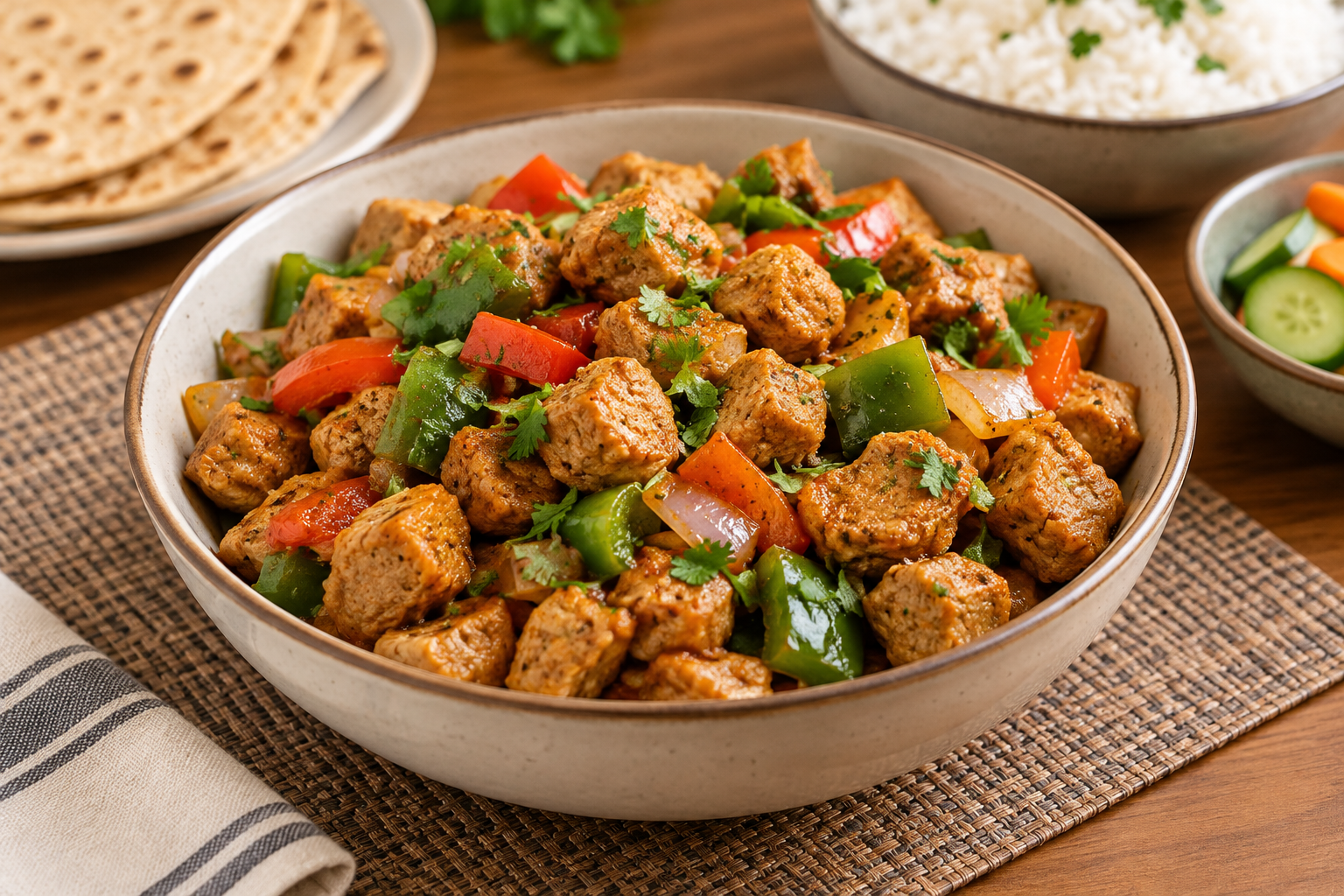
Soy chunks are sold in dry form.
- Easy storage: Airtight containers are recommended.
- Simple cooking: Boiling is needed before use.
- Mild taste: They absorb spices easily.
- Many uses: Curries and pulao can be prepared.
- Plant protein: They enrich vegetarian food.
How Are Soy Chunks Made?
A few simple steps are followed.
- Soybean Preparation
- Mature soybeans are selected.
- The beans are cleaned.
- The beans are prepared for processing.
- Oil Removal
- Much of the oil is removed.
- Soy flour is produced.
- Protein-rich material is retained.
- Chunk Making
- Heat and pressure are applied.
- A chewy texture is created.
- The material is shaped into chunks.
- Drying and Packing
- Extra moisture is removed.
- The chunks are dried.
- The product is packed.
- Final Package is stored
What Nutrients Do Soy Chunks Contain?
They contain protein and carbohydrates.
- It has very little fat.
- Some iron is supplied.
- Dietary fiber is also provided.
- Nutrient amounts depends on brands.
- They absorb water during cooking.
Table 1: Nutrition in Dry Soy Chunks
| Nutrient | Approximate Amount per 100 g |
| Calories | 330–350 kcal |
| Protein | 50–52 g |
| Carbohydrates | 30–35 g |
| Fat | 1–2 g |
| Fibre | 10–15 g |
These figures are approximate.
- Protein:
- Support Muscle growth and repair are supported
- Carbohydrates:
- Provide Energy to the body.
- Fat:
- Provide some dietary fat.
- Fibre:
- Help in proper bowel movements.
- Iron:
- Carries oxygen through the blood.
Exact amount will be given on the packet.
How Are Soy Chunks Different From Other Soy Foods?
Different soy foods have different textures.
- Soy Chunks
- A dry texture is provided.
- High protein content is offered.
- Easy storage is possible.
- Curries can be prepared.
- Pulao can be enriched.
- Spices are absorbed easily.
- Vegetarian meals are supported.
- Portions can be measured.
- Preparation is simple.
- Recipes can be varied.
- Tofu
- A soft texture is provided.
- Soy milk is used.
- A mild taste is offered.
- Protein is supplied.
- Stir-fries can be prepared.
- Soups can be enriched.
- Refrigeration is usually needed.
- Sauces are absorbed easily.
- Different dishes can be made.
- Meal variety is increased.
- Other Soy Foods
- Tempeh.
- Edamame.
- Soy milk.
- Whole soybeans.
- Fermented soybeans.
- Different textures.
- Varied recipes.
- Plant-based nutrition.
- More food choices.
- Greater meal variety.
Turn Your Passion for Fitness into a Profession
Learn practical skills, get certified, and step into the growing fitness industry with confidence.
Join the CourseAre Soy Chunks Healthy?
Yes, they are. They provide a lot of protein. Hence they are main part of Vegetarian diets.
Their benefits depend on day to day habits.
- Portions:
- Suitable amounts should be eaten.
- Cooking:
- Use Less extra oil.
- Variety:
- Include more protein foods.
- Health:
- Consider personal needs.
Why Can Soy Chunks Be Healthy?
- Protein Is Provided
Protein is needed for growth and repair.
- Muscle growth.
- Muscle repair.
- Tissue repair.
- Body growth.
- Muscle recovery.
- Cell maintenance.
- Enzyme production.
- Daily protein needs.
- Normal body functions.
- General nutrition.
- Very Little Fat Is Present
Plain soy chunks contain very little fat.
- Low fat content.
- Simple meal planning.
- Easy portion control.
- Flexible cooking methods.
- Vegetarian protein.
- Everyday food.
- Varied recipes.
- Easy storage.
- Convenient preparation.
- Balanced meals.
Fat content can increase during cooking.
- More fat is added through deep-frying.
- Extra calories are added through oil.
- Creamy gravies can increase calorie content.
- Less added fat is needed for boiling.
- Vegetarian Meals Are Supported
Protein can be obtained without meat.
- Plant protein.
- Meat alternative.
- Vegetarian meals.
- Essential amino acids.
- Affordable food.
- Easy storage.
- Flexible recipes.
- Simple cooking.
- More protein choices.
- Everyday meals.
- Many Dishes Can Be Prepared
Soy chunks can be used in different recipes.
- Soy curry.
- Vegetable pulao.
- Soy biryani.
- Dry soy fry.
- Soy stir-fry.
- Soy masala.
- Mixed vegetable curry.
- Spiced soy roast.
- Rice dishes.
- Simple gravies.
Nutritional Benefits of Soy Chunks
They provide several useful nutrients. Protein is their main benefit.
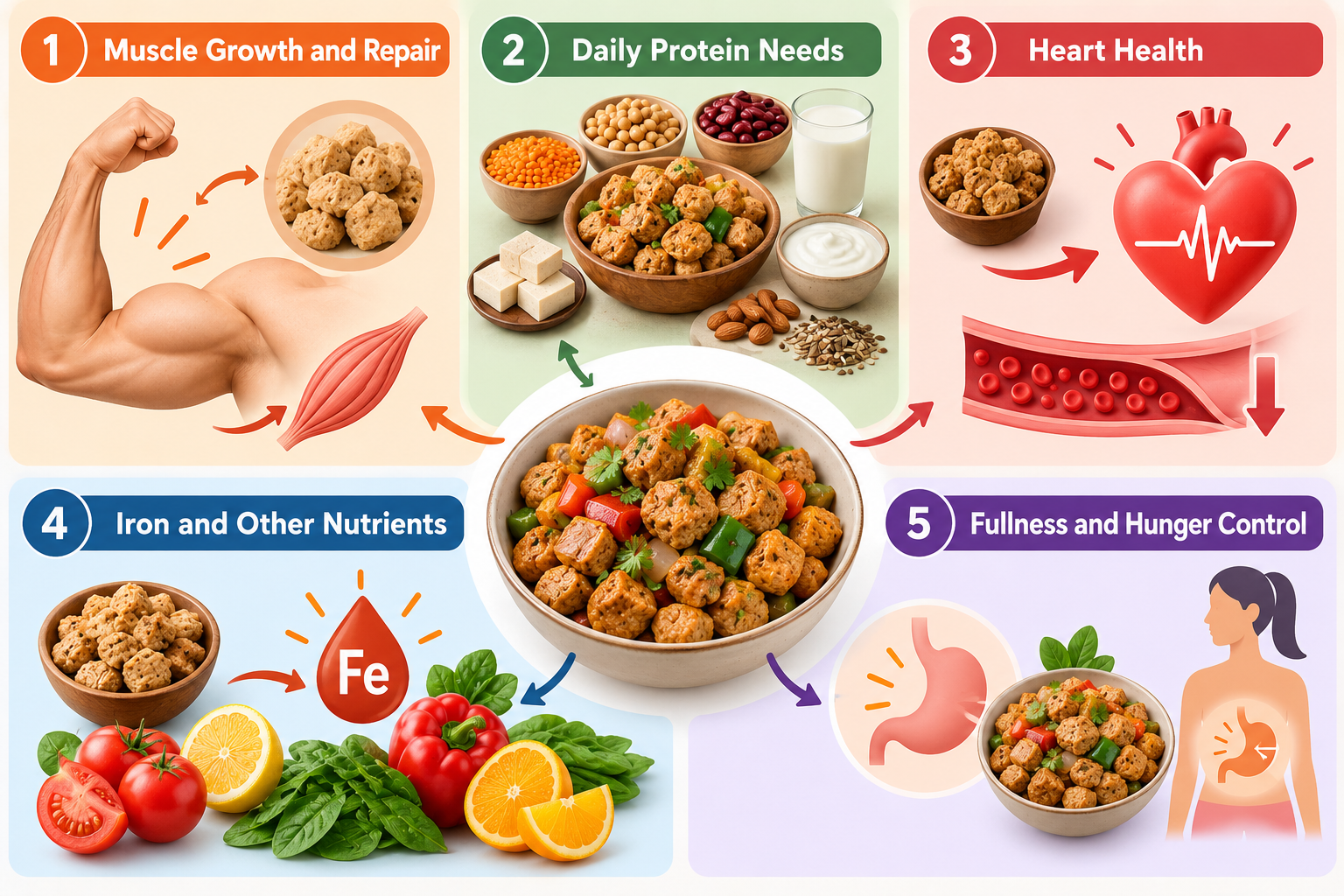
1. Muscle Growth and Repair Are Supported
Soy chunks provide protein. Protein provides muscle growth and repair. They also provide amino acids as well.
- Muscle growth.
- Muscle repair.
- Tissue repair.
- Protein supply.
- Body growth.
- Exercise recovery.
- Daily nutrition.
- Vegetarian protein.
- Muscle support.
- Normal growth.
Muscle strength can also be improved through exercise.
- Regular movement.
- Strength exercises.
- Enough food.
- Proper sleep.
- Balanced meals.
2. Daily Protein Needs Can Be Met
Protein is needed by everyone. Individual needs can vary.
- Age.
- Body size.
- Activity level.
- Health.
- Growth.
- Exercise.
- Daily meals.
- Overall diet.
- Protein intake.
- Food choices.
Protein can also be obtained from other foods.
- Lentils.
- Chickpeas.
- Kidney beans.
- Milk.
- Yoghurt.
- Eggs.
- Nuts.
- Seeds.
- Tofu.
- Fish, if eaten.
3. Heart Health May Be Supported
LDL cholesterol may be lowered by soy protein. Saturated fat may be reduced by replacing fatty meat. The whole diet remains important.
Helpful habits include:
- More vegetables.
- Whole grains.
- Less added oil.
- Less excess salt.
- Suitable portions.
- Different protein foods.
- Balanced meals.
- Fewer fried foods.
- Healthy eating habits.
- Medical advice when needed.
Heart disease cannot be prevented by soy chunks alone.
4. Iron and Other Nutrients Are Provided
Some iron is supplied by soy chunks. Iron carries oxygen through the blood. Plant-based iron cannot be absorbed easily.
Vitamin C improves Iron absorption.
- Tomatoes can be added.
- Fresh lemon can be used.
- Capsicum can be included.
- Vegetables can be served.
- Vitamin-C-rich fruits can be eaten.
- Varied meals can be chosen.
- Different nutrients can be included.
- Colourful vegetables can be added.
- Suitable foods can be combined.
- Balanced meals can be prepared.
5. Fullness May Be Increased
A feeling of fullness may be improved by protein. More protein is provided when soy chunks are added. Hunger may then be easier to manage.
- Meal satisfaction.
- Protein intake.
- Hunger awareness.
- Suitable portions.
- Regular meals.
- Vegetable additions.
- Fibre intake.
- Water intake.
- Balanced meals.
- Food variety.
Food affects everyone differently.
- Look for hunger signals.
- Eat suitable portions.
- Include vegetables.
- Choose different protein foods.
- Avoid dependence on one food.
Table 2: Soy Chunks and Their Benefits
| Nutrient | Simple Benefit |
| Protein | Muscle growth and repair are supported. |
| Iron | Oxygen is carried through the blood. |
| Fibre | Regular bowel movements are supported. |
| Amino acids | Growth and body functions are supported. |
| Low fat | Less fat is provided by plain chunks. |
- Protein:
- Muscles are helped to grow and recover.
- Iron:
- Oxygen is carried around the body.
- Fibre:
- Bowel movements are supported.
- Amino acids:
- Growth and normal functions are supported.
- Low fat:
- This applies before oil is added.
Become a General Fitness Trainer and turn your passion into a Profession!
Possible Problems and Side Effects of Soy Chunks
Soy chunks are considered safe for most people. However, some side effects may be experienced. Portion sizes and health conditions should be considered.
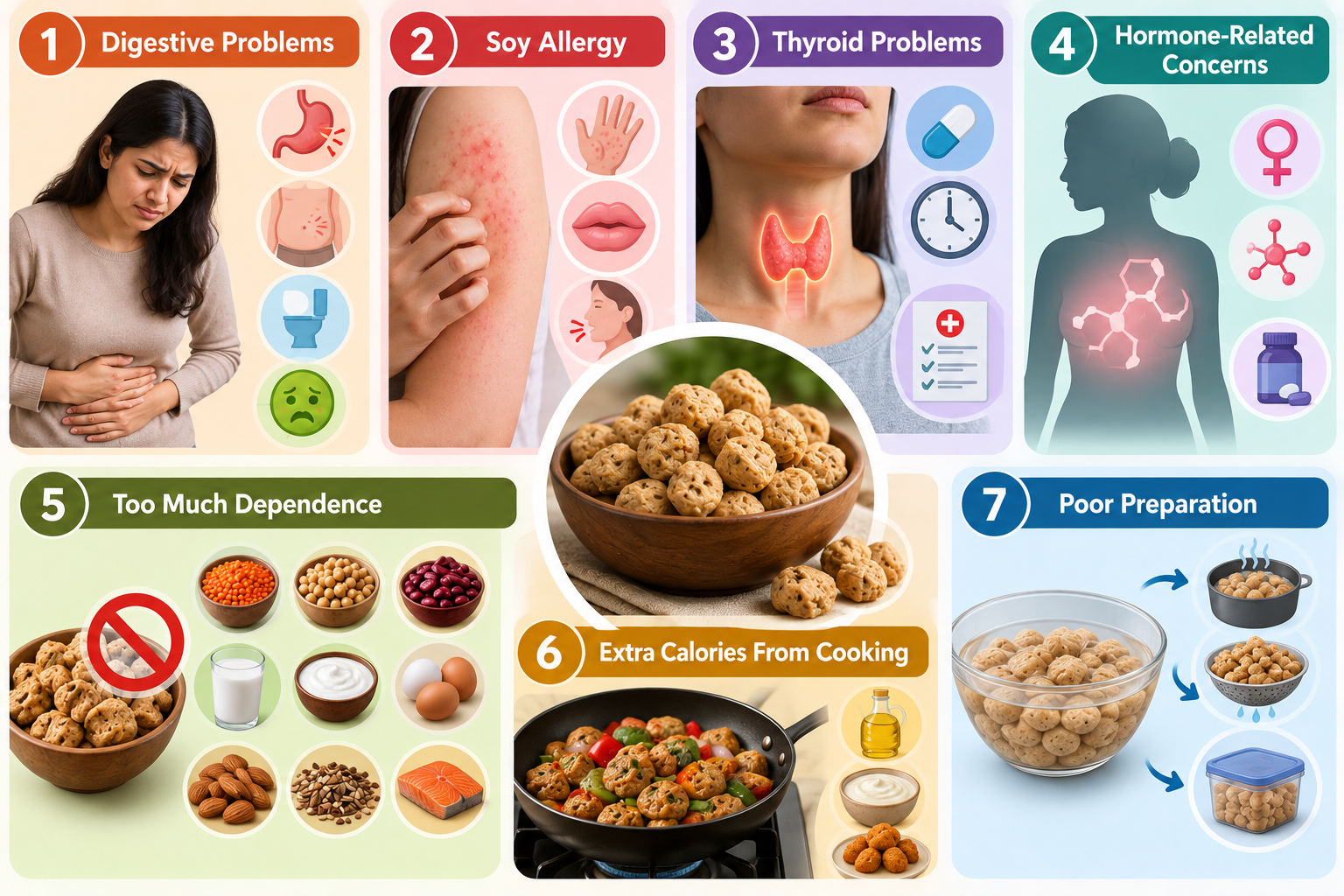
1. Digestive Problems
Stomach discomfort may be experienced by some people.
- Gas.
- Bloating.
- Stomach cramps.
- Loose stools.
- Mild nausea.
- Feeling full.
- Digestive sensitivity.
- Large portions.
- Sudden dietary changes.
- Food intolerance.
Ways to reduce discomfort:
- Smaller portions.
- Slow increases.
- Proper cooking.
- Enough water.
- Careful chewing.
- Regular meals.
- Gentle preparation.
- Symptom tracking.
- Balanced eating.
- Medical advice.
Persistent symptoms should be checked by a doctor.
2. Soy Allergy
Soy chunks must be avoided by people who are allergic to soy.
Possible symptoms include:
- Itchy skin.
- Skin rashes.
- Swollen lips.
- Facial swelling.
- Stomach pain.
- Vomiting.
- Coughing.
- Wheezing.
- Swelling of throat.
- Difficulties in breathing.
Safety steps:
- Labels should be checked.
- Ingredients should be reviewed.
- Soy should be avoided.
- Prevent Cross-contact.
- Follow medical advice.
- Carry prescribed medication.
- Monitor symptoms.
- Inform food handlers.
- Avoid unknown ingredients.
- Look for emergency care.
Breathing problems must be treated as emergencies.
3. Thyroid Problems
Thyroid medicine absorption may be affected by soy. This mainly concerns people taking levothyroxine.
- Medicine timing.
- Regular routines.
- Correct dosage.
- Blood tests.
- Doctor guidance.
- Diet changes.
- Consistent intake.
- Symptom monitoring.
- Follow-up appointments.
- Medication instructions.
Thyroid disease is not automatically caused by soy.
4. Hormone-Related Concerns
Soy contains isoflavones. Certain estrogen receptors are affected by them.
- Plant compounds.
- Natural isoflavones.
- Estrogen receptors.
- Food portions.
- Hormone concerns.
- Research findings.
- Individual differences.
- Supplement strength.
- Medical conditions.
- Personal guidance.
Ordinary soy foods are generally considered safe. Greater caution should be used with concentrated supplements.
5. Too Much Dependence on Soy Chunks
Useful protein is provided by soy chunks. However, dietary variety may be reduced by relying on them alone.
Other protein foods should be included:
- Lentils.
- Chickpeas.
- Kidney beans.
- Milk.
- Yoghurt.
- Eggs.
- Nuts.
- Seeds.
- Tofu.
- Fish.
Meal variety can be improved through:
- Whole grains.
- Fresh vegetables.
- Seasonal fruits.
- Different legumes.
- Balanced portions.
- Varied proteins.
- Healthy fats.
- Regular meals.
- Simple recipes.
- Nutrient balance.
6. Extra Calories From Cooking
Very little fat is contained in plain soy chunks. Their nutritional content can be changed by added ingredients.
Cooking methods should be considered:
- Boiling:
- Little oil is needed.
- Stir-frying:
- Oil should be measured.
- Curries:
- Calories are affected by gravy ingredients.
- Deep-frying:
- Extra fat is added.
- Creamy sauces:
- More calories may be added.
- Large portions:
- More energy is consumed.
- Extra oil:
- Calorie content is increased.
- Rich gravies:
- Saturated fat may be increased.
- Simple recipes:
- Added fat can be reduced.
- Balanced servings:
- Portion control can be maintained.
7. Problems From Poor Preparation
Proper preparation is needed before soy chunks are eaten.
- Instructions should be followed.
- Chunks should be soaked properly.
- Chunks should be boiled thoroughly.
- Drain excess water.
- Cook completely.
- Refrigerate the left overs properly.
- Dry packets should be sealed.
- Avoid moisture.
- Check expiry dates.
- Discard spoilt food.
Storage helps in maintaing the food quality.
Turn Your Passion for Fitness into a Profession
Learn practical skills, get certified, and step into the growing fitness industry with confidence.
Join the CourseIs It Safe to Eat Soy Chunks Every Day?
Yes, it is generally safe to consume everyday. Include moderate portions in the diet. Consider individual needs.
What About Daily Consumption?
Daily intake should be planned around the overall diet.
- Protein needs.
- Suitable portions.
- Food variety.
- Digestive comfort.
- Proper preparation.
- Vegetable intake.
- Whole grains.
- Water intake.
- Cooking methods.
- Personal health.
Can Daily Soy Intake Affect Hormones?
Ordinary soy foods are generally considered safe.
- Natural isoflavones.
- Plant compounds.
- Estrogen receptors.
- Normal food portions.
- Research findings.
- Individual differences.
- Supplement strength.
- Medical conditions.
- Hormone concerns.
- Personal guidance.
High-dose supplements should be avoided without medical advice.
How Much Soy Chunks Should You Eat?
A single serving size is not suitable for all. Needs are affected by three factors. Age, activity, and diet.
A starting portion of 25–30 grams of dry soy chunks may be suitable for many adults. This is a general serving suggestion. It is not a strict daily limit.
Table 3: Practical Soy Chunk Portions
| Dry Amount | Possible Use |
| 15–20 g | Smaller meal portion. |
| 25–30 g | Moderate protein serving. |
| 40–50 g | Larger serving, depending on needs. |
These are examples. They are not official limits.
- Water increases the weight of the cooked food.
- Nutrition values depends on the brand.
- Other food provides additional protein.
- Serving sizes depend on individual needs.
How Should Your Portion Be Chosen?
- Daily Diet
- Total protein.
- Daily energy.
- Food variety.
- Vegetable intake.
- Meal sizes.
- Activity levels.
- Age and growth.
- Personal appetite.
- Digestive comfort.
- Health conditions.
- Smaller Starting Portions
- Small servings.
- Proper cooking.
- Slow increases.
- Vegetable combinations.
- Symptom tracking.
- Water intake.
- Comfortable portions.
- Regular meals.
- Food variety.
- Medical advice.
- Other Protein Foods
- Lentils.
- Chickpeas.
- Beans.
- Milk.
- Yoghurt.
- Eggs.
- Nuts.
- Seeds.
- Tofu.
- Fish.
Different nutrients are supplied by different foods.
Who Should Limit or Avoid Soy Chunks?
Soy chunks can be eaten safely by most people. Extra care is needed by certain groups.
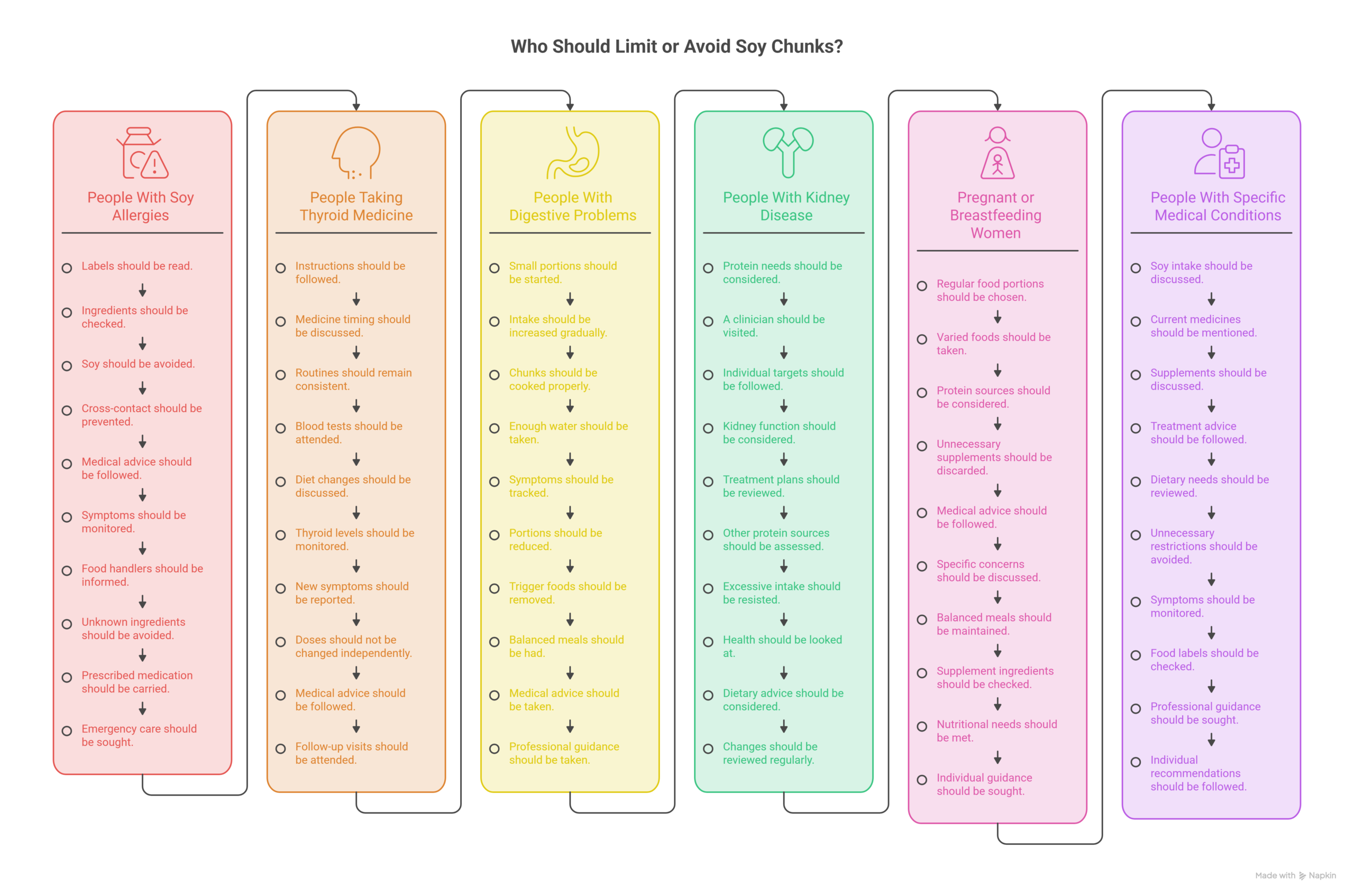
1. People With Soy Allergies
- Labels should be read.
- Ingredients should be checked.
- Soy should be avoided.
- Cross-contact should be prevented.
- Medical advice should be followed.
- Symptoms should be monitored.
- Food handlers should be informed.
- Unknown ingredients should be avoided.
- Prescribed medication should be carried.
- Emergency care should be sought.
2. People Taking Thyroid Medicine
- Instructions should be followed.
- Medicine timing should be discussed.
- Routines should remain consistent.
- Blood tests should be attended.
- Diet changes should be discussed.
- Thyroid levels should be monitored.
- New symptoms should be reported.
- Doses should not be changed independently.
- Medical advice should be followed.
- Follow-up visits should be attended.
3. People With Digestive Problems
- Small portions should be started.
- Intake should be increased gradually.
- Chunks should be cooked properly.
- Enough water should be taken.
- Symptoms should be tracked.
- Portions should be reduced.
- Trigger foods should be removed.
- Balanced meals should be had.
- Medical advice should be taken.
- Professional guidance should be taken.
4. People With Kidney Disease
- Protein needs should be considered.
- A clinician should be visited.
- Individual targets should be followed.
- Kidney function should be considered.
- Treatment plans should be reviewed.
- Other protein sources should be assessed.
- Excessive intake should be resisted.
- Health should be looked at.
- Dietary advice should be considered.
- Changes should be reviewed regularly.
5. Pregnant or Breastfeeding Women
- Regular food portions should be chosen.
- Varied foods should be taken.
- Protein sources should be considered.
- Unnecessary supplements should be discarded.
- Medical advice should be followed.
- Specific concerns should be discussed.
- Balanced meals should be maintained.
- Supplement ingredients should be checked.
- Nutritional needs should be met.
- Individual guidance should be sought.
6. People With Specific Medical Conditions
- Soy intake should be discussed.
- Current medicines should be mentioned.
- Supplements should be discussed.
- Treatment advice should be followed.
- Dietary needs should be reviewed.
- Unnecessary restrictions should be avoided.
- Symptoms should be monitored.
- Food labels should be checked.
- Professional guidance should be sought.
- Individual recommendations should be followed.
Conclusion
Plant-based protein is provided by soy chunks. Some iron and fibre are provided too. Balanced meals can be supported by suitable portions.
Soy chunks should be served with vegetables and grains. Different protein foods should be included weekly. Proper cooking should be practised. Excess oil should be limited. Personal medical advice should be followed when needed.
Turn Your Passion for Fitness into a Profession
Learn practical skills, get certified, and step into the growing fitness industry with confidence.
Join the CourseFrequently Asked Questions
Can soy chunks be eaten daily?
Yes, many people can eat soy chunks daily. Moderate portions and varied meals are recommended.
Are soy chunks healthy?
Yes, soy chunks provide protein, iron, and fibre. They can be included in balanced meals.
How much soy chunks should be eaten daily?
A serving of 25–30 grams of dry soy chunks can be a practical starting point. Individual needs may vary with age, activity, and diet.
Do soy chunks help build muscles?
Yes, soy chunks provide protein for muscle growth and repair. Regular exercise and balanced nutrition also support muscle development.
Can soy chunks cause gas?
Yes, some people may experience gas and bloating. Smaller portions and proper cooking may help reduce discomfort.
Do soy chunks affect hormones?
Soy chunks contain natural compounds called isoflavones. Ordinary soy foods have not consistently shown harmful hormonal effects in humans.
Are soy chunks good for weight management?
Soy chunks provide protein and may help people feel full. Portion sizes and cooking methods affect their total calorie content.
Can people with thyroid problems eat soy chunks?
Many people with thyroid conditions can eat soy foods. Those taking thyroid medicine should ask about suitable meal and medication timing.
Who should avoid soy chunks?
People with confirmed soy allergies should avoid soy chunks. People with certain medical conditions may need individual dietary advice.
Are soy chunks better than paneer?
Soy chunks generally provide more protein per 100 grams when measured dry. Paneer provides protein and calcium, but the best choice depends on portion size and overall nutrition.