Table of Contents
Answer First: Top 7 Negotiation Tips for HR Professionals
Good negotiation skills are needed in HR. Fair decisions can be reached through clear discussions.
- Preparation Should Be Completed First.
- The issue should be understood.
- Useful facts should be collected.
- Clear goals should be set.
- Both Sides Should Be Heard.
- Enough time should be given.
- Each concern should be understood.
- Questions should be asked when needed.
- A Calm Approach Should Be Maintained.
- Polite words should be used.
- Angry reactions should be avoided.
- Attention should be kept on the issue.
- Fair Solutions Should Be Considered.
- Both sides should be understood.
- Different options should be reviewed.
- A fair result should be selected.
- Clear Communication Should Be Used.
- Each point should be explained.
- Confusing words should be avoided.
- Important details should be confirmed.
- Compromises Should Be Considered.
- Flexible points should be identified.
- Important needs should be protected.
- Suitable agreements should be reached.
- Final Agreements Should Be Recorded.
- Decisions should be written down.
- Duties should be clearly assigned.
- Final details should be shared.
Is being an HR your dream? Enrol now for our course on Human Resource!
Introduction
Negotiation is used in many HR activities. Different workplace discussions may require this skill. Salary talks are one common example. Employee complaints may also need attention. Hiring and policy discussions may involve negotiation.
Different needs may be brought into discussions. Employees may ask for better pay. Managers may need to control costs. Candidates may request flexible work conditions. Each concern should be considered carefully.
With good negotiation skills, problems can be managed. Clear decisions can also be reached. Better workplace relationships can be supported. This skill is useful for HR professionals.

Become an HR Expert – Enroll in Our HR Management Course Today!
Unlock the secrets to effective Human Resource Management with our expert-led course! Learn recruitment, employee relations, performance management, and more to build a thriving workplace. Start your journey toward a successful HR career today!
Know MoreWhy Is Negotiation Important for HR Professionals?
Many workplace issues can be handled through negotiation. Better communication can also be encouraged. Fair solutions can be reached through discussions.
1. Employee Relations
Different concerns may be raised by employees. These concerns should be discussed carefully.
- Complaints. Workplace concerns should be heard.
- Workload. Duties may be reviewed fairly.
- Leave. Suitable dates can be discussed.
- Work Hours. Better schedules may be considered.
- Conflicts. Disagreements should be handled calmly.
2. Hiring and Recruitment
Negotiation is often required during recruitment. Different job expectations may be discussed.
- Salary. Pay expectations should be reviewed.
- Benefits. Available benefits may be discussed.
- Joining Date. A suitable date should be agreed.
- Work Location. Work arrangements may be considered.
- Job Duties. Role expectations should be explained.
3. Workplace Decisions
Company policies may need to be discussed. Different opinions may also be presented.
- Policies. Changes should be explained.
- Budgets. Financial limits should be discussed.
- Schedules. Work plans may be adjusted.
- Training. Employee needs should be reviewed.
- Performance. Improvement plans may be discussed.
What Are the Main Principles of HR Negotiation?
Some basic principles should guide negotiations. These principles can support fair discussions.
1. Fairness
Fair treatment should be provided to everyone.
- Both sides should be heard.
- Relevant facts should be checked.
- Personal bias should be avoided.
- Company rules should be followed.
- Everyone should be treated respectfully.
2. Clear Communication
Every important point should be explained clearly.
- Simple words should be used.
- A calm tone should be maintained.
- Direct questions should be asked.
- Unclear promises should be avoided.
- Important details should be confirmed.
3. Respect
Respect should be maintained during discussions.
- Enough time should be given.
- Interruptions should be avoided.
- Personal comments should be avoided.
- Different views should be considered.
- Private details should be protected.
4. Practical Solutions
Suitable solutions should be considered carefully.
- Company limits should be checked.
- Employee needs should be understood.
- Available options should be reviewed.
- Future effects should be considered.
- Realistic actions should be selected.
How Should HR Professionals Prepare for Negotiations?
Good preparation can prevent confusion. A clear plan can also be created.
1. Understand the Issue
The main problem should be understood first.
- The request should be read.
- Relevant records should be checked.
- The background should be understood.
- Main concerns should be identified.
- Important dates should be noted.
2. Know the People Involved
The needs of each person should be understood.
- All parties should be identified.
- Their roles should be understood.
- Their expectations should be considered.
- Their concerns should be noted.
- Earlier discussions should be reviewed.
3. Set Clear Goals
Clear goals should be decided before discussions.
- The main result should be identified.
- Important needs should be listed.
- Flexible points should be noted.
- Company limits should be understood.
- Other options should be prepared.
4. Collect Useful Information
Relevant facts should be collected beforehand.
- Salary details.
- Company policies.
- Job requirements.
- Employee records.
- Market information.
5. Plan the Discussion
The discussion should be planned properly.
- A suitable place should be selected.
- A meeting time should be fixed.
- Important questions should be prepared.
- Required documents should be kept ready.
- Enough time should be allowed.
Become an HR Expert – Enroll in Our HR Management Course Today!
Unlock the secrets to effective Human Resource Management with our expert-led course! Learn recruitment, employee relations, performance management, and more to build a thriving workplace. Start your journey toward a successful HR career today!
Know More7 Effective Negotiation Tips for HR Professionals
Different methods can be used during negotiations. These tips can help HR professionals.

1. Listen Carefully
Each person’s concerns should be heard. Important details may be understood through listening.
- Give Time. Enough time should be provided.
- Avoid Interruptions. Each person should finish speaking.
- Ask Questions. Unclear points should be checked.
- Take Notes. Important details should be recorded.
- Confirm Understanding. Main points should be repeated when needed.
2. Keep Emotions Under Control
Some discussions may become difficult. A calm approach should be maintained.
- Stay Calm. A steady voice should be used.
- Pause. Time should be taken before responding.
- Avoid Blame. Attention should remain on the issue.
- Stay Professional. Personal feelings should be kept aside.
- Focus. The main concern should be discussed.
3. Explain the HR Position Clearly
Company rules may affect final decisions. These limits should be explained properly.
- Company Rules. Relevant policies should be explained.
- Budget Limits. Financial restrictions should be shared.
- Job Needs. Work requirements should be explained.
- Available Choices. Possible options should be presented.
- Next Steps. The next actions should be explained.
4. Find Common Ground
Shared needs may be found during discussions. These points can help an agreement.
- Similar Goals. Shared goals should be identified.
- Priorities. Important needs should be discussed.
- Options. Different solutions should be reviewed.
- Changes. Suitable adjustments may be suggested.
- Agreement. Accepted points should be confirmed.
5. Be Ready to Compromise
Some requests may need changes. Suitable compromises should be considered.
- Know Your Limits. Important limits should be understood.
- Stay Flexible. Other options should be reviewed.
- Offer Choices. Different options should be presented.
- Avoid Rushing. Enough decision time should be allowed.
- Check Fairness. The final arrangement should be reviewed.
6. Use Facts During Discussions
Facts can support better decisions. Confusion can also be reduced.
- Records. Available information should be checked.
- Data. Relevant figures should be compared.
- Policies. Approved rules should be followed.
- Details. Information should be confirmed first.
- Decisions. The reasons should be explained.
7. Confirm the Final Agreement
Every important decision should be recorded. Clear responsibilities should also be assigned.
- Write Details. Agreed points should be recorded.
- Assign Duties. Responsibilities should be clearly shared.
- Set Dates. Important deadlines should be included.
- Share Updates. Everyone involved should be informed.
- Keep Records. Documents should be stored safely.
Is being an HR your dream? Enrol now for our course on Human Resource!
Common HR Situations That Need Negotiation
Negotiation may be required in many HR activities. Different approaches may be needed for each situation.
Common Examples
| HR Situation | Main Discussion | Possible Outcome |
| Salary discussion | Pay expectations | Salary agreement |
| Leave request | Leave dates | Approved schedule |
| Employee conflict | Different concerns | Shared solution |
| Job offer | Pay and benefits | Accepted offer |
| Work schedule | Working hours | Adjusted schedule |
1. Salary Negotiation
Higher pay may be requested by candidates. Each request should be reviewed carefully.
- The approved salary range should be checked.
- Candidate experience should be reviewed.
- Salary expectations should be understood.
- Available offers should be explained.
- Possible changes should be discussed.
2. Employee Complaints
Workplace concerns may be raised by employees. Each issue should be understood first.
- The employee should be heard.
- Relevant details should be collected.
- Involved people should be consulted.
- Company policies should be reviewed.
- Possible solutions should be discussed.
3. Leave Requests
Work schedules may be affected by leave requests. Suitable dates should be discussed.
- The reason should be understood.
- Leave balance should be checked.
- Team requirements should be reviewed.
- Other dates may be suggested.
- The final decision should be confirmed.
4. Workplace Conflicts
Work-related disagreements may occur between employees. A fair discussion should be arranged.
- Both sides should be heard.
- The main issue should be identified.
- Personal bias should be avoided.
- Possible solutions should be discussed.
- Agreed actions should be recorded.
Salary Negotiation: A Simple Step-by-Step Guide
Salary negotiation is often required during recruitment. A clear process should be followed.
Step 1: Review the Salary Range
The approved salary range should be checked.
- The job level should be checked.
- The company budget should be reviewed.
- Similar roles should be compared.
- Salary limits should be noted.
Step 2: Understand the Candidate’s Request
The candidate’s expectations should be understood.
- Expected pay should be discussed.
- Relevant experience should be reviewed.
- Required skills should be checked.
- Other expectations should be understood.
Step 3: Explain the Offer
The job offer should be explained clearly.
- The salary amount should be shared.
- Available benefits should be explained.
- Work conditions should be discussed.
- The joining date should be mentioned.
Step 4: Discuss Possible Changes
Some parts of the offer may be flexible.
- Salary options should be reviewed.
- Joining dates may be discussed.
- Available benefits should be checked.
- Approved alternatives may be considered.
Step 5: Confirm the Agreement
The final offer should be recorded.
- The salary should be confirmed.
- Written details should be shared.
- Next steps should be explained.
- Required approval should be obtained.
How Can HR Handle Difficult Negotiations?
Some negotiations may become challenging. Strong emotions or different expectations may arise.
1. When Someone Becomes Angry
Discussions may become difficult during such moments. A calm approach should be maintained.
- A calm voice should be used.
- The person should be allowed to speak.
- Arguments should be avoided.
- The main concern should be understood.
- The discussion may continue later.
2. When Both Sides Disagree
Some issues may not be solved quickly. Other options should be considered.
- Relevant facts should be reviewed.
- Shared needs should be identified.
- Different options should be discussed.
- Company limits should be explained.
- Another meeting may be arranged.
3. When No Agreement Is Reached
An agreement may not always be possible. The next steps should be clearly explained.
- Discussion points should be recorded.
- Unresolved issues should be explained.
- Company procedures should be checked.
- The right manager should be involved.
- A follow-up date should be fixed.
Common Negotiation Mistakes HR Professionals Should Avoid
Some mistakes can affect workplace discussions. These should be avoided during negotiations.
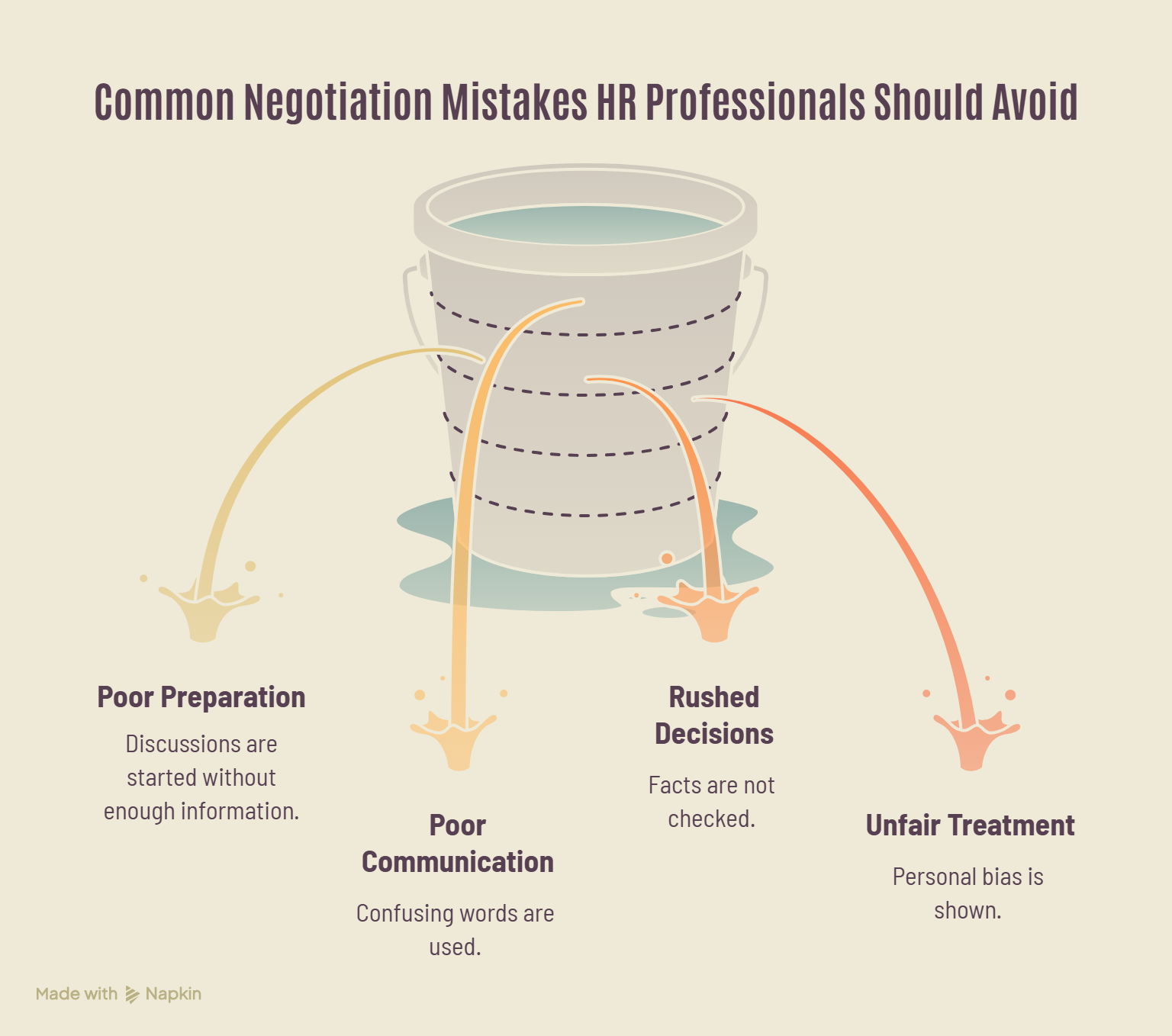
1. Poor Preparation
- Discussions are started without enough information.
- Company policies are ignored.
- Important details are forgotten.
- Clear goals are not set.
2. Poor Communication
- Confusing words are used.
- Other people are interrupted.
- Unclear promises are made.
- Important questions are ignored.
3. Rushed Decisions
- Facts are not checked.
- Company limits are ignored.
- Required approvals are skipped.
- Decisions are not recorded.
4. Unfair Treatment
- Personal bias is shown.
- One side is ignored.
- Unsupported decisions are made.
- Private information is shared.
Skills That Help HR Professionals Negotiate Better
Several skills are needed during negotiations. These skills can be improved through practice.
1. Communication Skills
Clear communication should be maintained.
- Clear speaking should be practised.
- Careful listening should be encouraged.
- Useful questions should be asked.
- Decisions should be explained.
2. Problem-Solving Skills
Workplace problems may need practical solutions.
- The main issue should be identified.
- Possible options should be compared.
- Risks should be checked.
- Suitable actions should be selected.
3. Decision-Making Skills
HR decisions may affect many people. Each decision should be considered carefully.
- Relevant facts should be reviewed.
- Company policies should be followed.
- Different needs should be considered.
- Fair choices should be made.
4. Emotional Control
Patience is needed during difficult discussions.
- Calm behaviour should be maintained.
- Frustration should be managed.
- Personal reactions should be controlled.
- Different views should be respected.
Skills and Their Uses
| Skill | How It Helps |
| Listening | Concerns are understood |
| Communication | Discussions are made clear |
| Problem-solving | Suitable solutions are found |
| Patience | Calm discussions are supported |
| Decision-making | Fair choices are made |
How Can HR Professionals Improve Negotiation Skills?
Negotiation skills can be improved over time. Regular practice can help build confidence.
1. Practise Through Role-Play
Practice situations can be created for HR teams.
- Sample salary talks can be practised.
- Employee discussions can be simulated.
- Conflict situations can be reviewed.
- Each conversation can be discussed.
2. Learn from Experienced HR Staff
Useful lessons can be learned from experienced professionals.
- Their discussions can be observed.
- Questions can be asked about difficult cases.
- Their decisions can be studied.
- Different approaches can be discussed.
3. Attend Training Programmes
Training can help improve negotiation skills.
- HR workshops can be attended.
- Communication sessions can be joined.
- Conflict management can be studied.
- Negotiation methods can be practised.
4. Review Past Discussions
Past cases can provide useful lessons.
- Successful methods should be identified.
- Communication gaps should be noted.
- Difficult moments should be reviewed.
- Improvement areas should be recorded.
Training Methods and Benefits
| Training Method | Main Benefit |
| Role-play | Practical skills are developed |
| HR workshops | New methods are learned |
| Team discussions | Different views are understood |
| Case studies | Real situations are reviewed |
| Feedback sessions | Improvement areas are identified |
Negotiation is an important HR skill. It is needed in many workplace activities. Salary talks and employee concerns are included. Hiring decisions may also require negotiation.
Good preparation can make discussions easier. Clear communication can prevent confusion. Different needs should be understood. Fair solutions should be considered.
These skills can be improved through practice. Useful lessons can be learned from experience. Training can also support skill development. A calm and fair approach should be maintained.
| Related Links | |
| Top Human Resource Blogs to Follow | How to build a remote HR career |
| HR Certification vs HR Degree | Which one to choose? | 15 HR Intern Interview Questions and Sample Answers |
Become an HR Expert – Enroll in Our HR Management Course Today!
Unlock the secrets to effective Human Resource Management with our expert-led course! Learn recruitment, employee relations, performance management, and more to build a thriving workplace. Start your journey toward a successful HR career today!
Know MoreFrequently Asked Questions
Why are negotiation skills important in HR?
Workplace discussions can be handled through negotiation. Fair decisions and solutions can also be supported. Better communication can also be maintained. Workplace disagreements can be resolved more easily.
What are the main negotiation skills for HR?
Listening and communication skills are important. Problem-solving and patience are also needed. Clear decision-making is equally useful. Emotional control can also support difficult discussions.
How can HR negotiate salary with candidates?
The approved salary range should be checked first. Candidate expectations can then be discussed. Relevant experience and skills should be reviewed. A suitable salary offer can then be presented.
How can HR handle employee conflicts?
Both sides should be heard carefully. The issue should then be discussed fairly. Relevant facts should also be collected. Suitable solutions should be considered by everyone involved.
Can negotiation skills be learned?
Negotiation skills can be improved through practice. Training and feedback can also be helpful. Role-play activities can provide useful experience. Past discussions can also offer important lessons.
What should HR do when negotiations fail?
The discussion and unresolved points should be recorded. Company procedures should then be followed. Further discussions may be arranged when needed. Support from managers may also be required.
What is the role of HR in workplace negotiations?
HR discussions are guided by company policies. Employee needs and concerns are also considered. Fair solutions should be explored by HR. Communication between both sides should also be maintained.
How can HR prepare for a negotiation?
Relevant information should be collected beforehand. Clear goals and possible solutions should be prepared. Company policies and limits should be checked. Important questions should also be listed.
What are common HR negotiation situations?
Salary talks and leave requests often require negotiation. Employee conflicts and job offers may also involve discussions. Work schedules and employee benefits may be discussed. Policy changes can also require negotiation.
How can negotiation mistakes be avoided?
Proper preparation should be completed before discussions. Clear communication and careful decisions should be maintained. Company policies should always be checked. Important agreements should also be recorded.